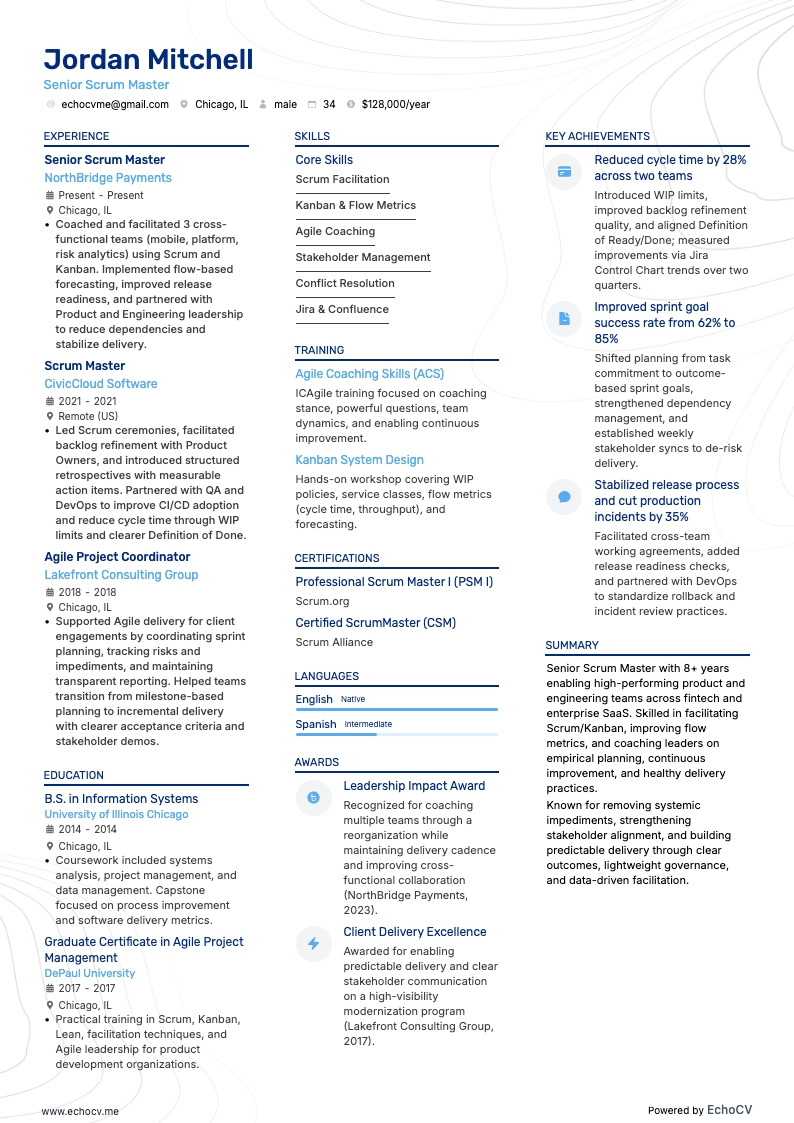
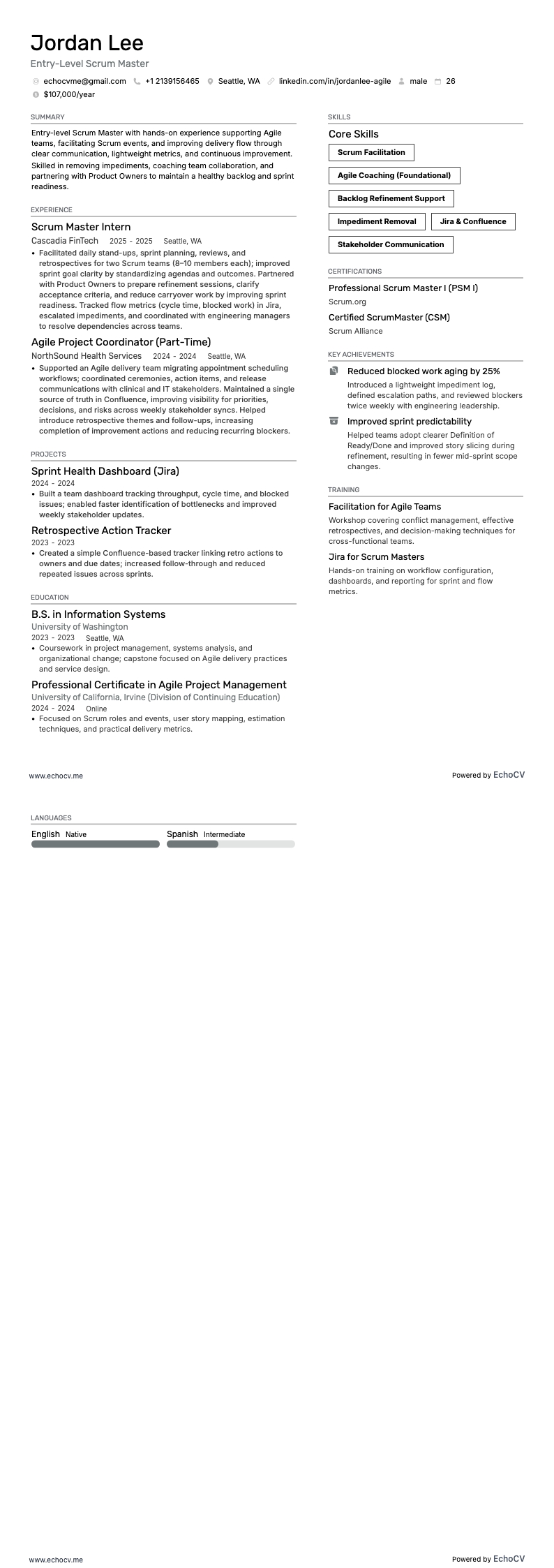
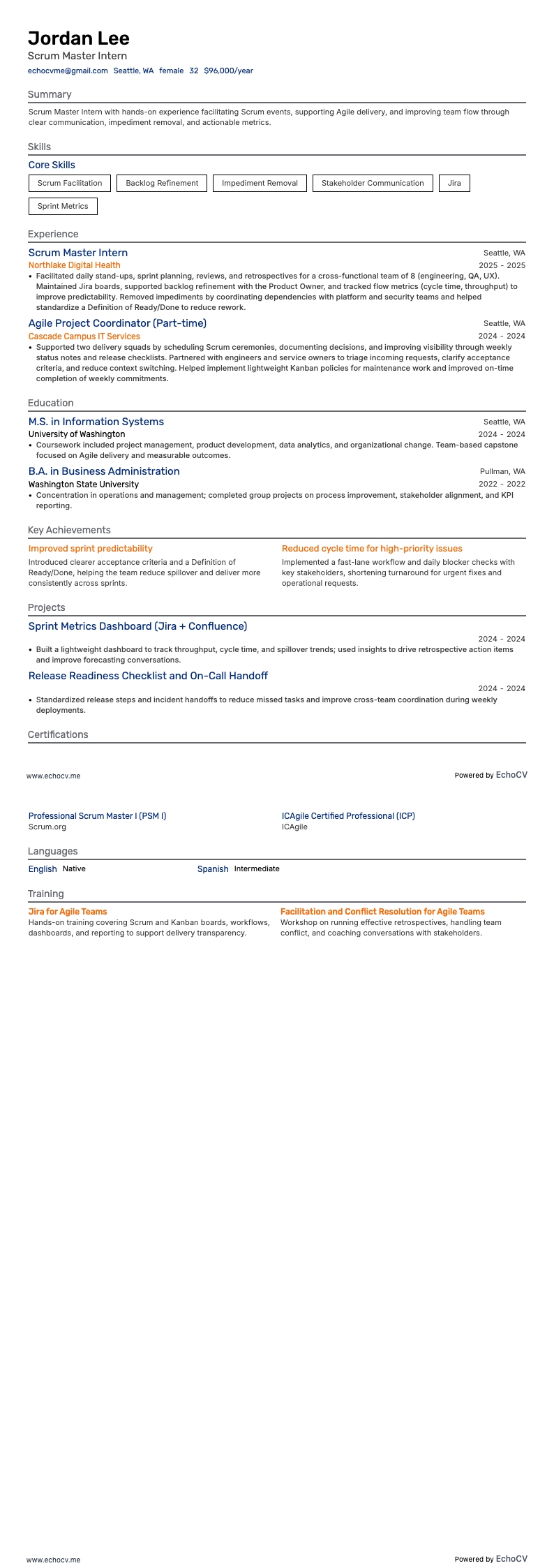
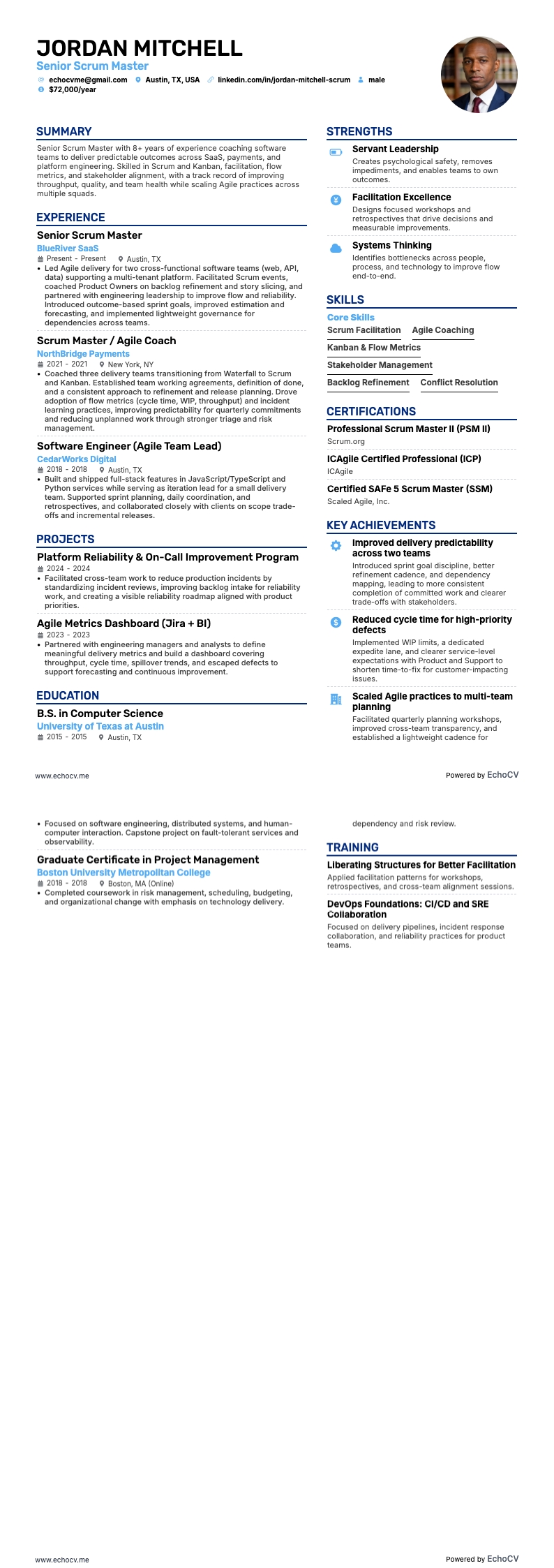
Now that you’ve identified the sections your senior Scrum Master resume needs, you can focus on writing your senior Scrum Master resume experience to show impact within each one.
How to write your senior Scrum Master
Wait, let me reconsider. "Scrum" is a proper noun (a specific methodology/framework), so it should be capitalized. "Master" as part of the "Scrum Master resume experience
The experience section is where you prove you've driven meaningful results as a senior Scrum Master—not just facilitated ceremonies. Hiring managers prioritize demonstrated impact on team delivery, organizational agility, and continuous improvement over descriptive task lists of Scrum events you've run. Building a targeted resume ensures every bullet in this section speaks directly to what the hiring team needs.
Each entry should include:
- Job title
- Company and location (or remote)
- Dates of employment (month and year)
Three to five concise bullet points showing what you owned, how you executed, and what outcomes you delivered:
- Ownership scope: the teams, programs, value streams, or product areas you were accountable for coaching and guiding toward agile maturity.
- Execution approach: the agile frameworks, facilitation techniques, coaching models, or impediment-resolution strategies you used to improve how teams delivered work.
- Value improved: changes to sprint predictability, cycle time, release frequency, team health, or process efficiency that resulted directly from your interventions.
- Collaboration context: how you partnered with product owners, engineering leads, portfolio managers, or enterprise stakeholders to align delivery with business objectives.
- Impact delivered: outcomes expressed through improvements in delivery throughput, organizational agility adoption, or reduction in waste and dependencies—framed as results rather than activities.
Every bullet you write should tie back to what a senior Scrum Master uniquely owns: removing systemic impediments, elevating team performance, and embedding agile principles across the organization. Focus on the work you shipped, the frameworks you leveraged, and the measurable change you created.