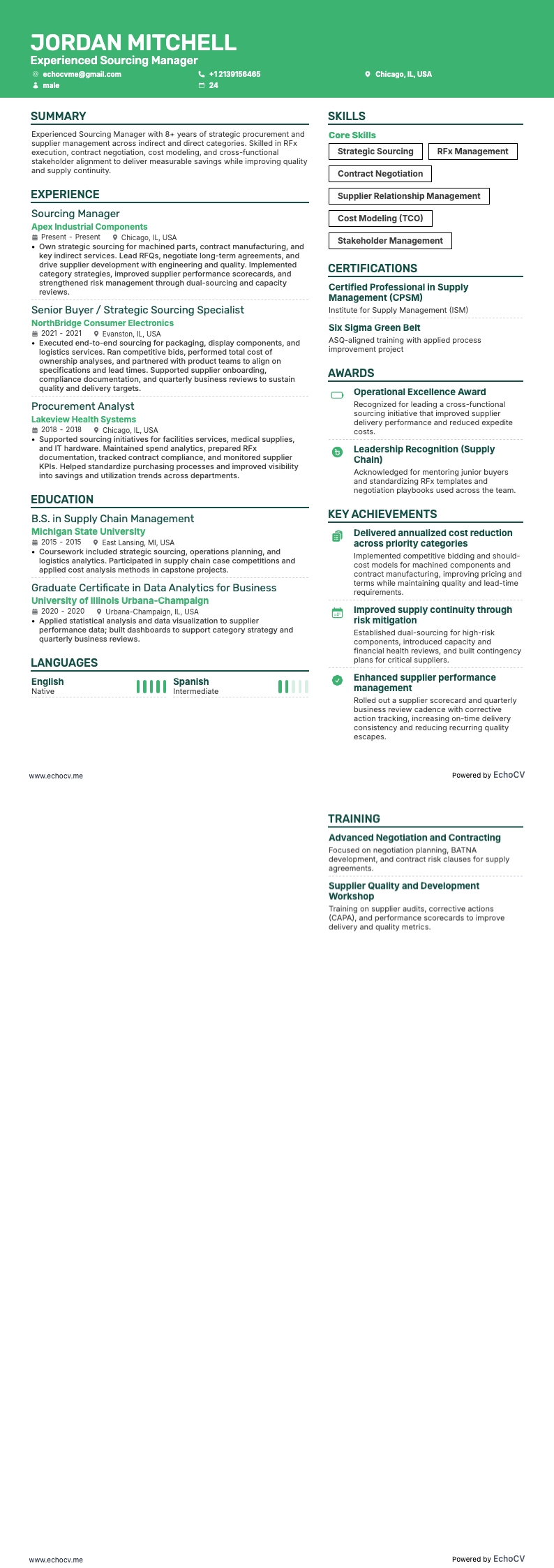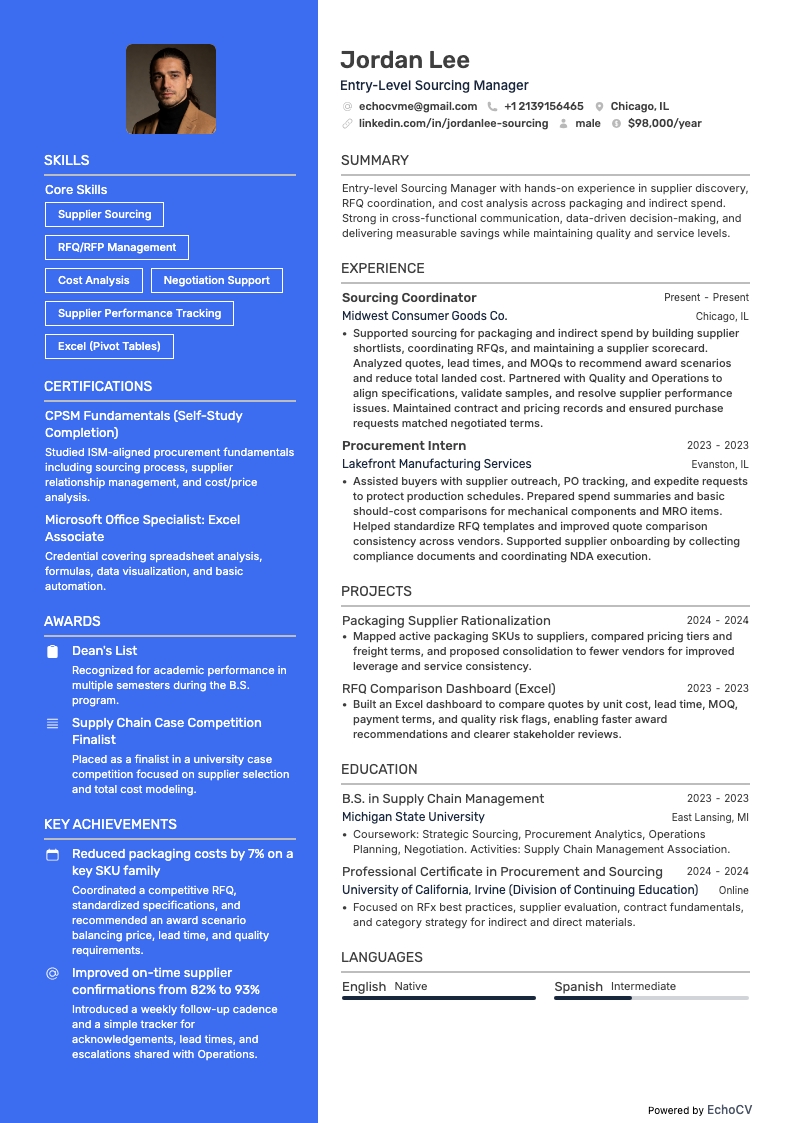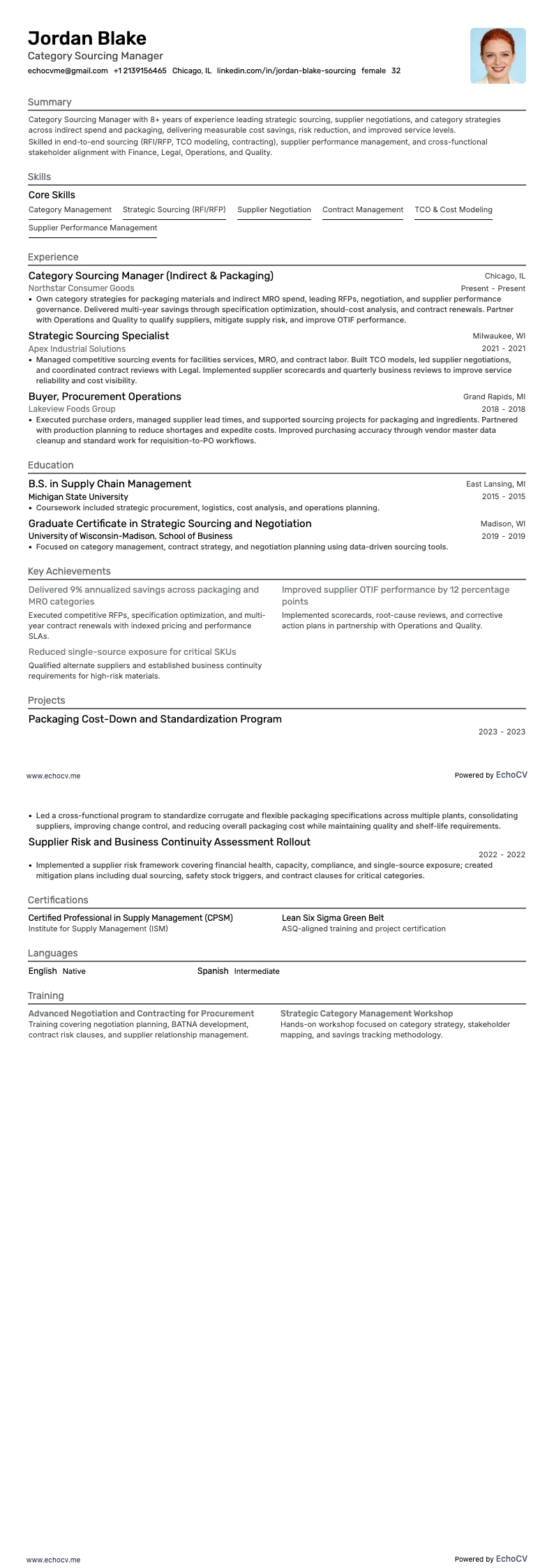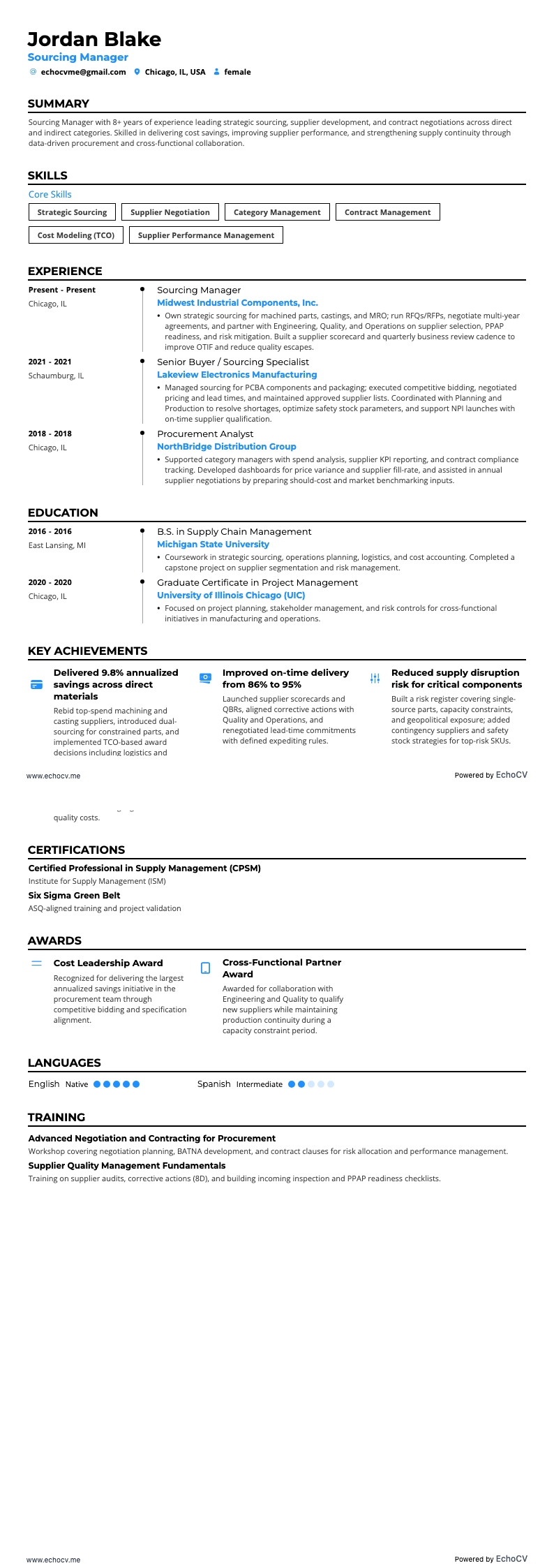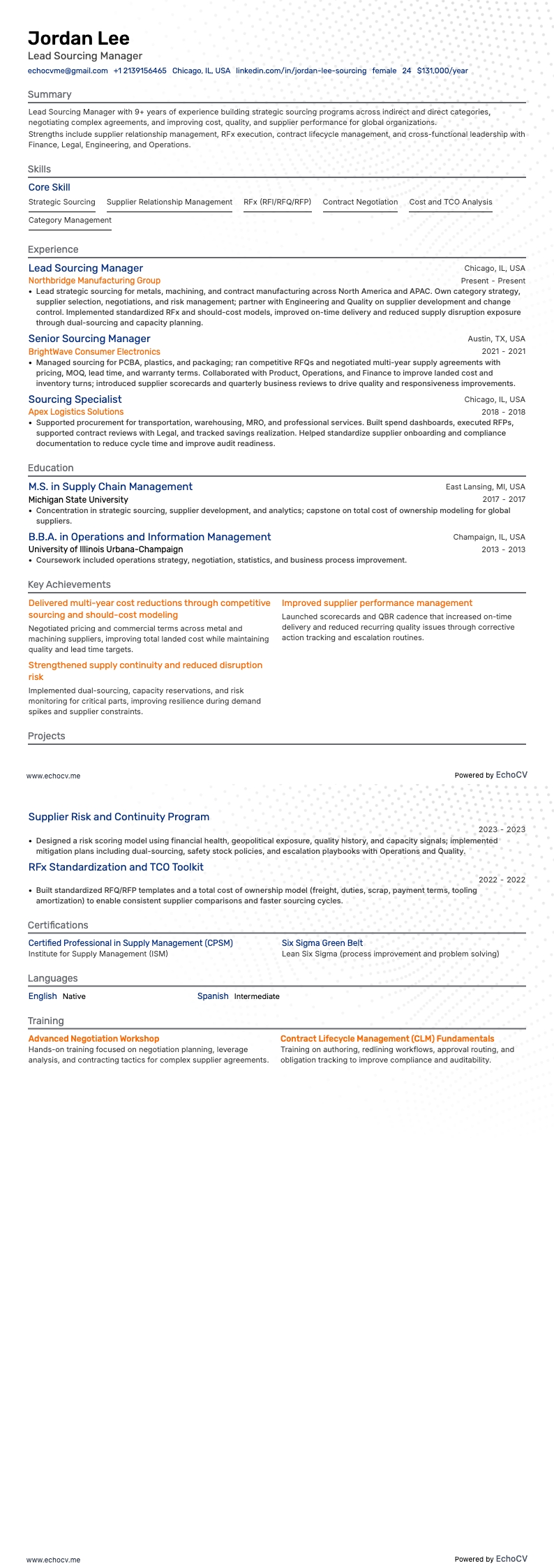
Once you’ve organized the main resume components to highlight your sourcing background, the next step is to write your sourcing manager resume experience section to show impact within that structure.
How to write your sourcing manager resume experience
Your experience section should prove you've driven real procurement outcomes—through strategic supplier selection, cost optimization, and supply chain improvements that moved the business forward. Hiring managers prioritize demonstrated impact over descriptive task lists, so focus each entry on what you delivered, the sourcing tools and methods you applied, and the measurable results you achieved. Building a targeted resume that aligns each bullet with the role's priorities will strengthen your candidacy significantly.
Each entry should include:
- Job title
- Company and location (or remote)
- Dates of employment (month and year)
Three to five concise bullet points showing what you owned, how you executed, and what outcomes you delivered:
- Ownership scope: the sourcing categories, supplier portfolios, spend areas, procurement systems, or cross-regional supply networks you were directly accountable for as a sourcing manager.
- Execution approach: the procurement platforms, negotiation frameworks, supplier evaluation methodologies, market analysis tools, or contract management processes you used to inform sourcing decisions and deliver work.
- Value improved: changes to cost efficiency, supplier quality, lead times, procurement cycle speed, supply chain resilience, compliance adherence, or risk mitigation that resulted from your sourcing strategies.
- Collaboration context: how you partnered with internal stakeholders such as operations, finance, legal, and engineering teams—or with external suppliers and vendors—to align sourcing initiatives with broader business objectives.
- Impact delivered: outcomes framed as tangible business results, such as savings achieved, supplier consolidation at scale, improved fulfillment reliability, or strengthened vendor performance—expressed through results and scope rather than activity descriptions.