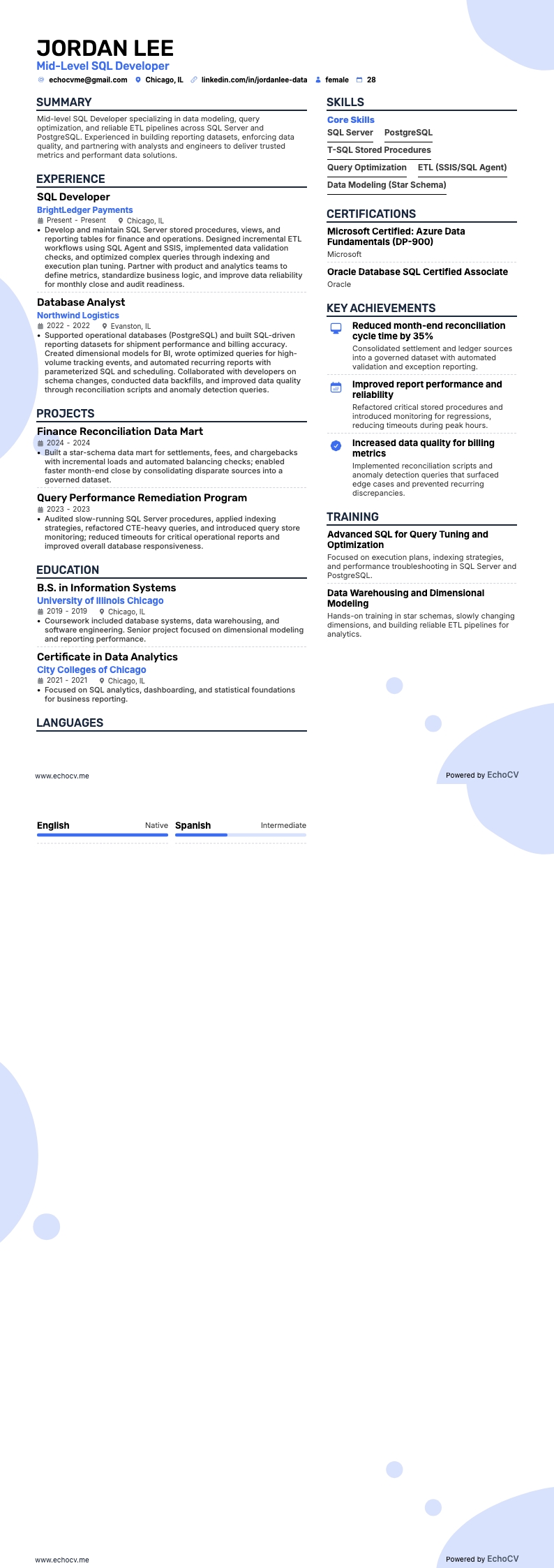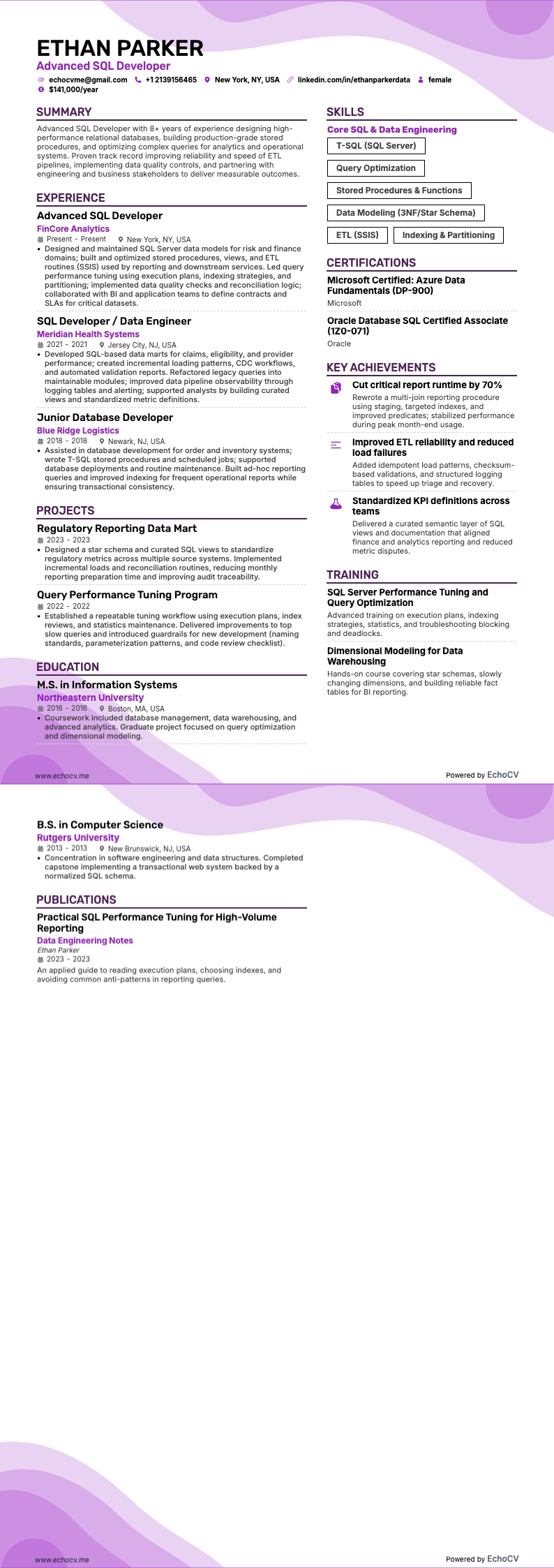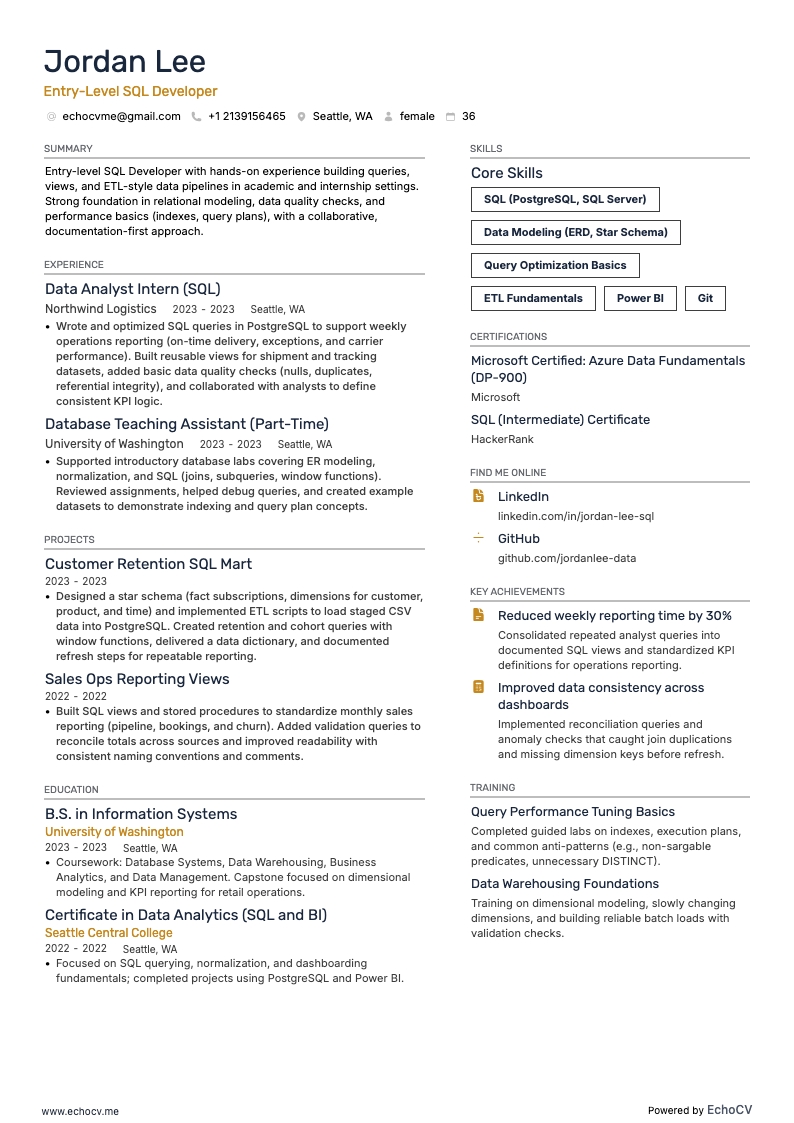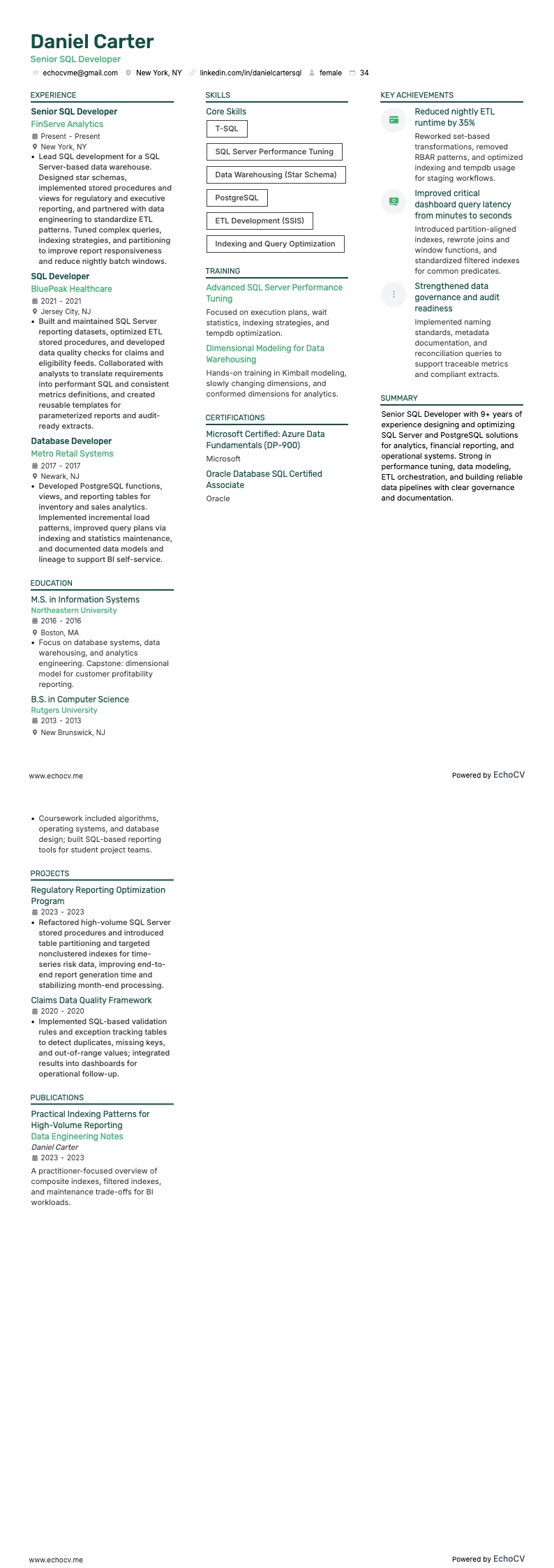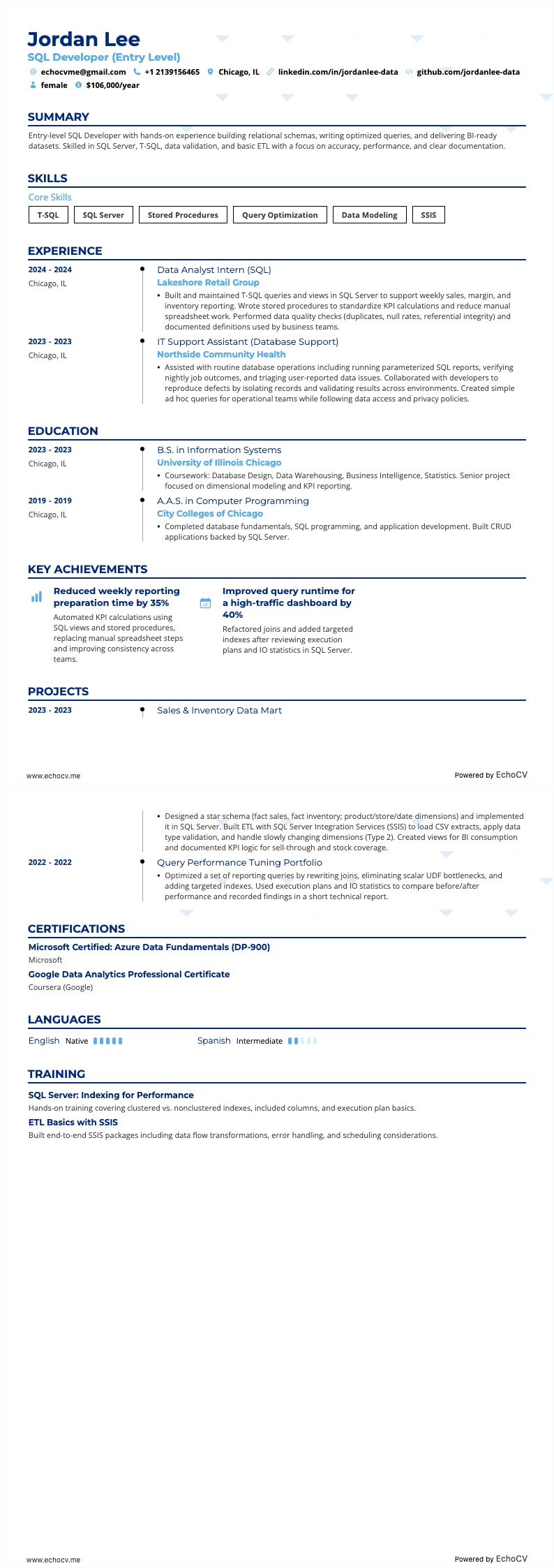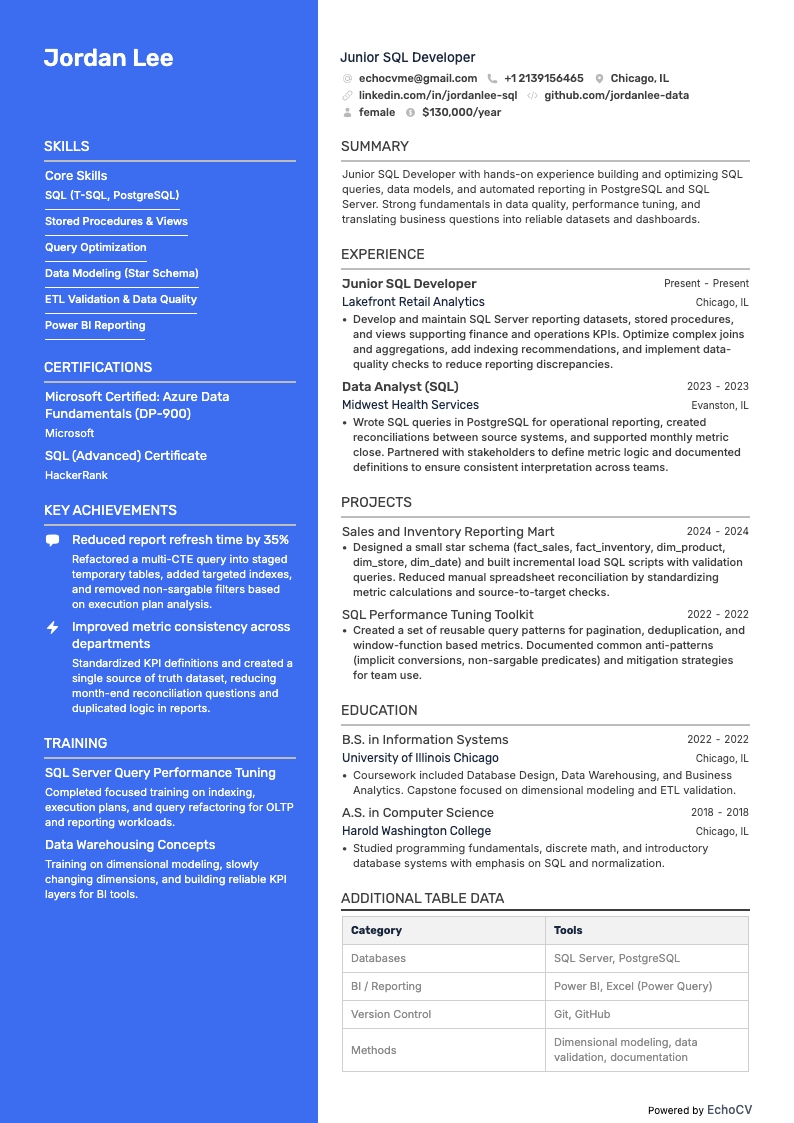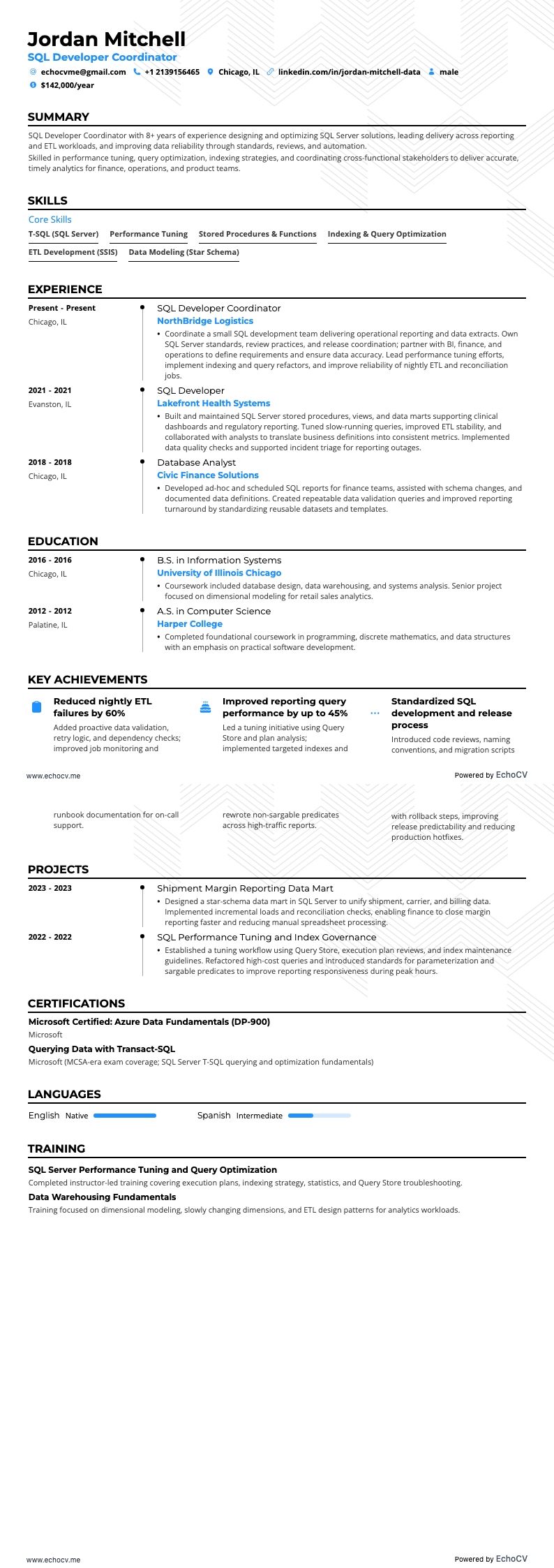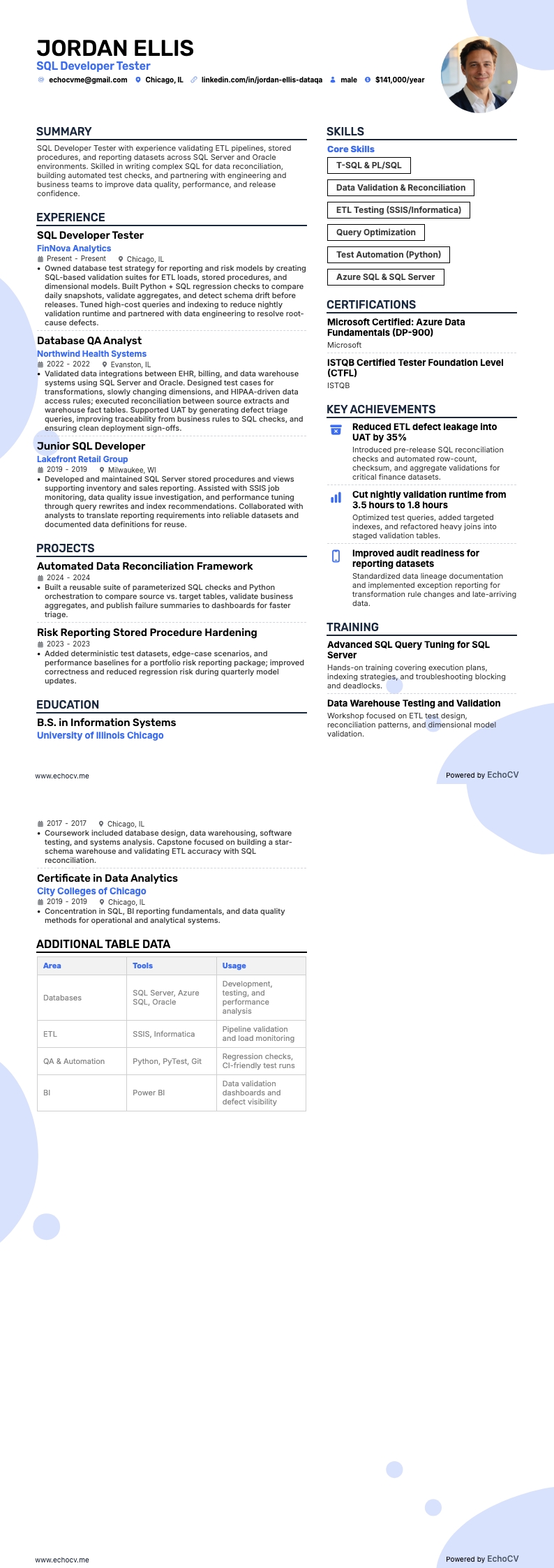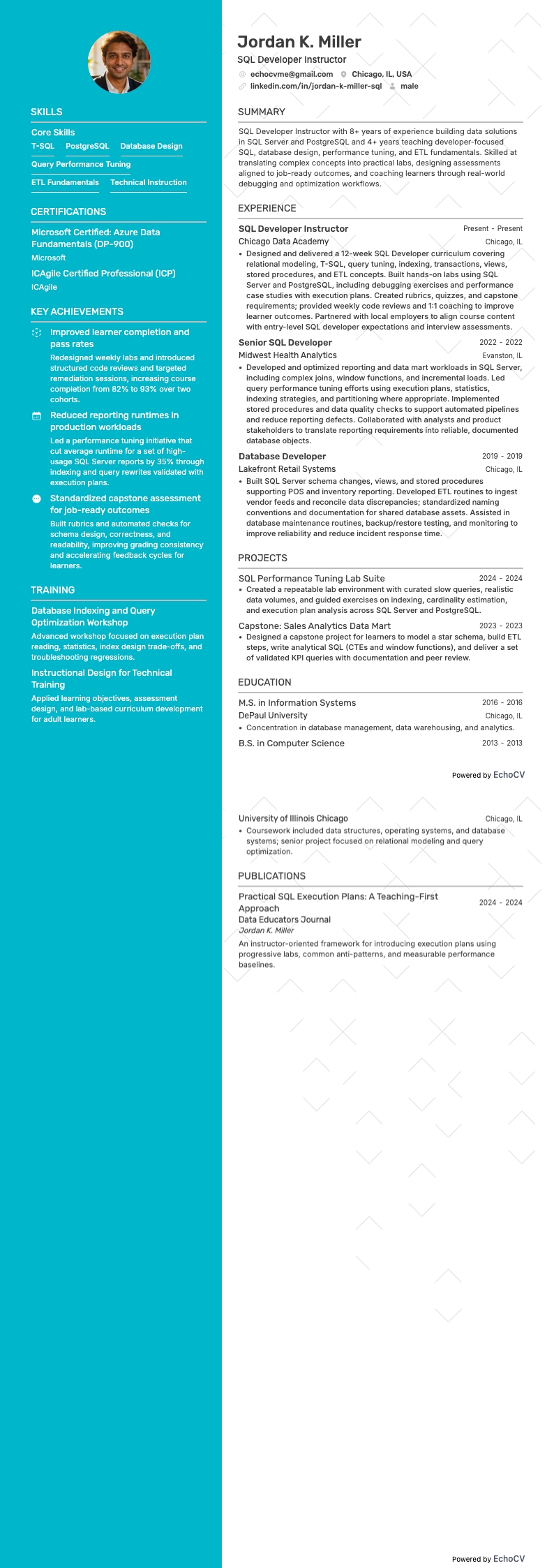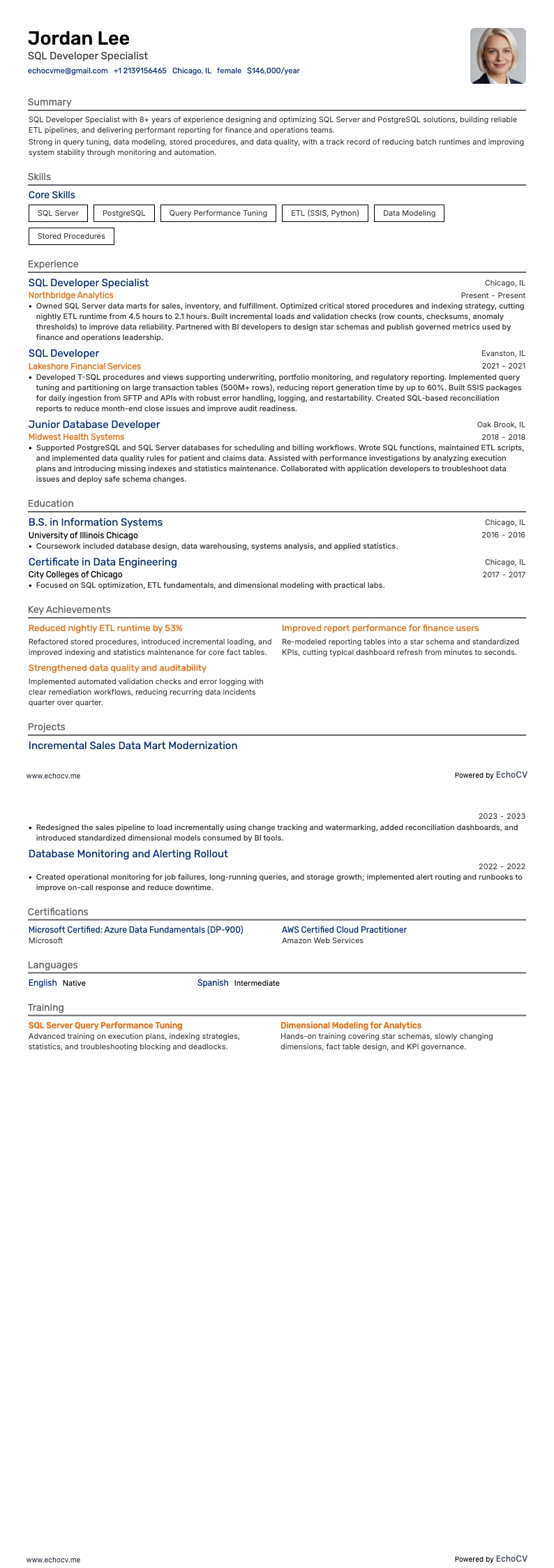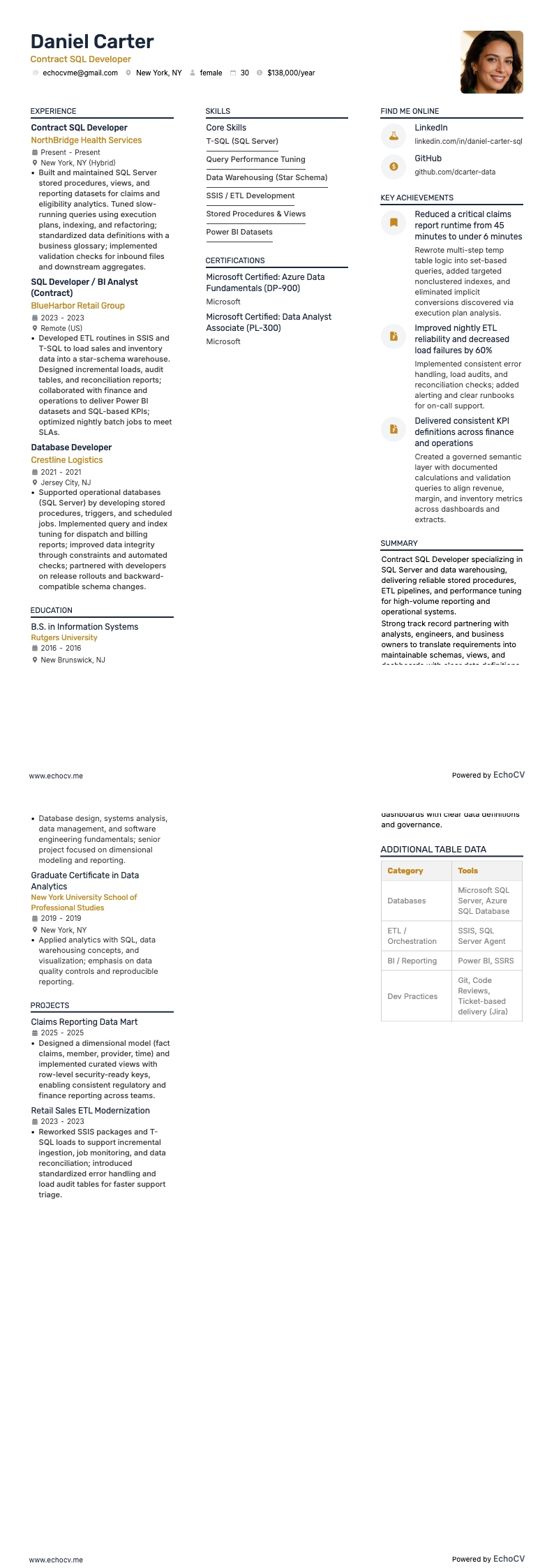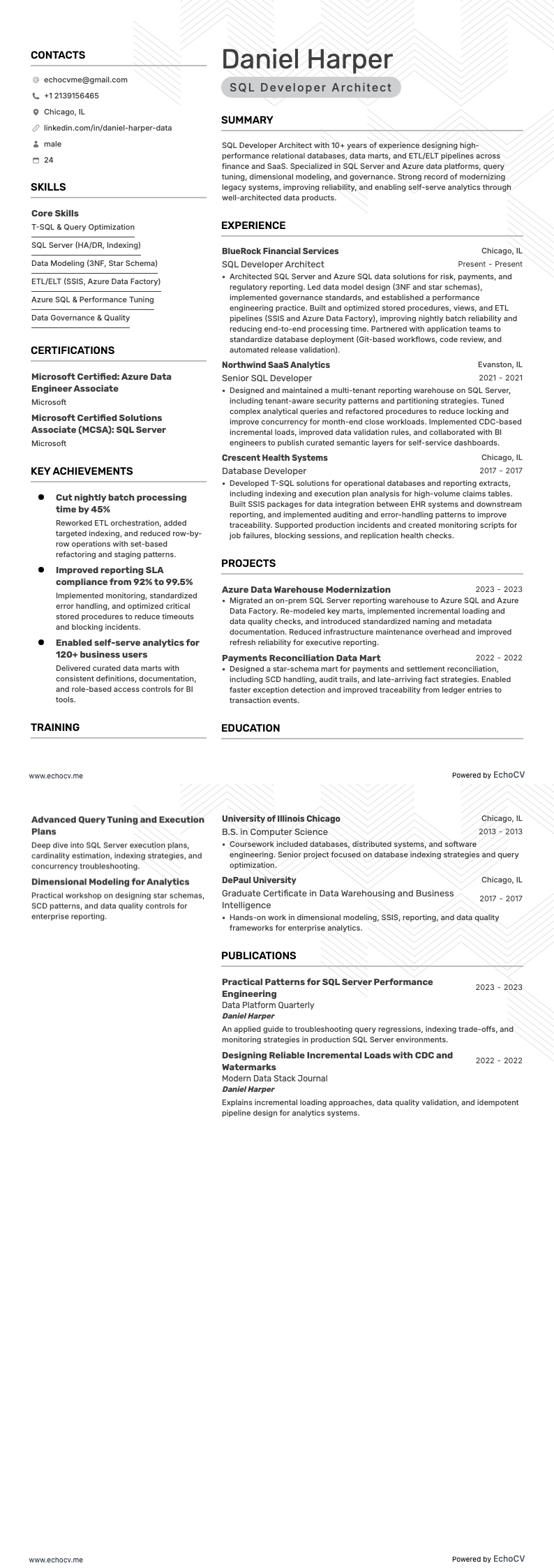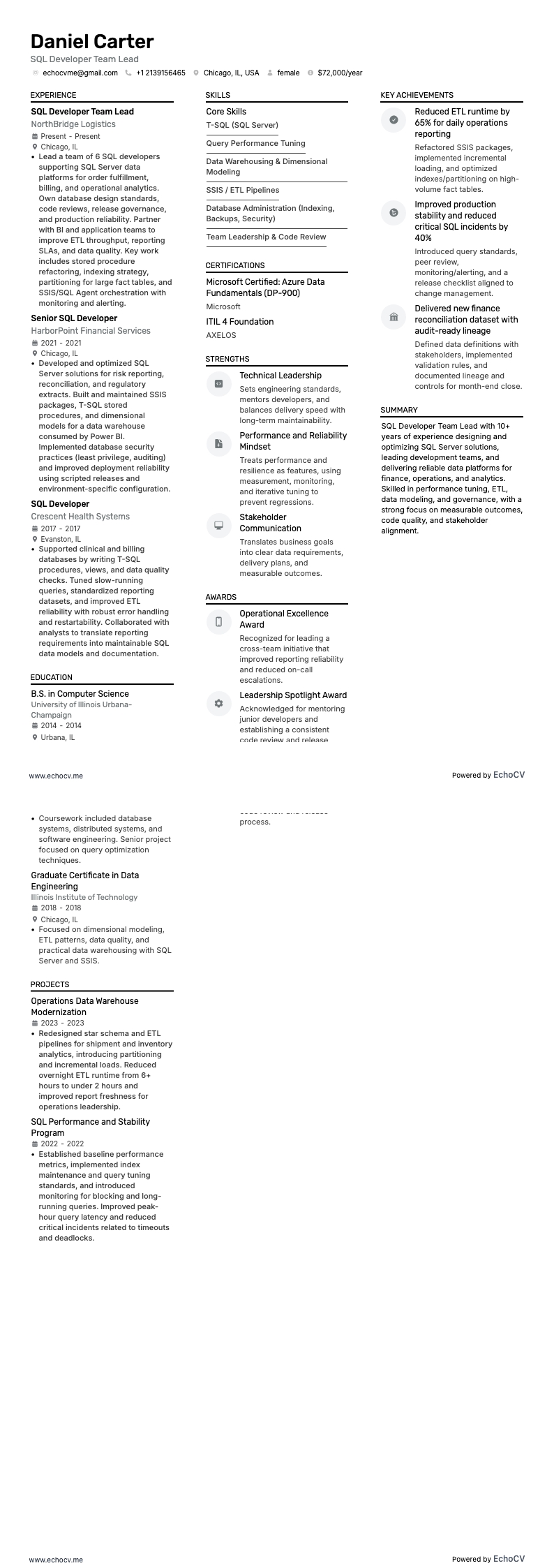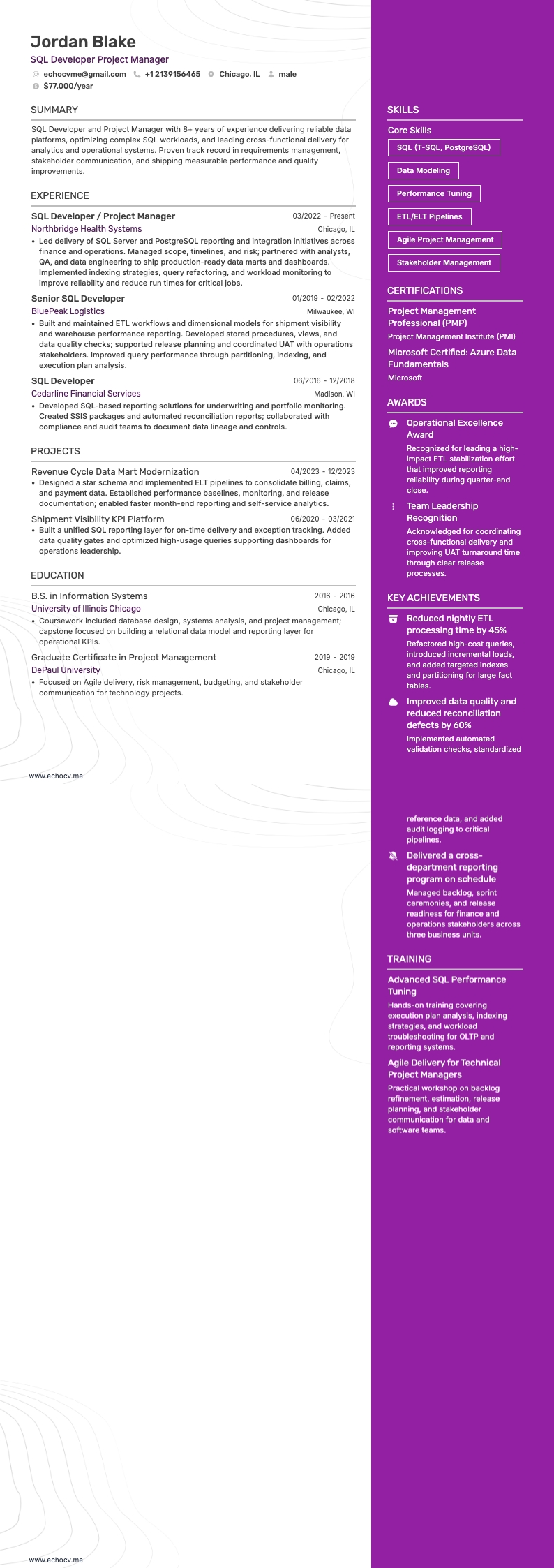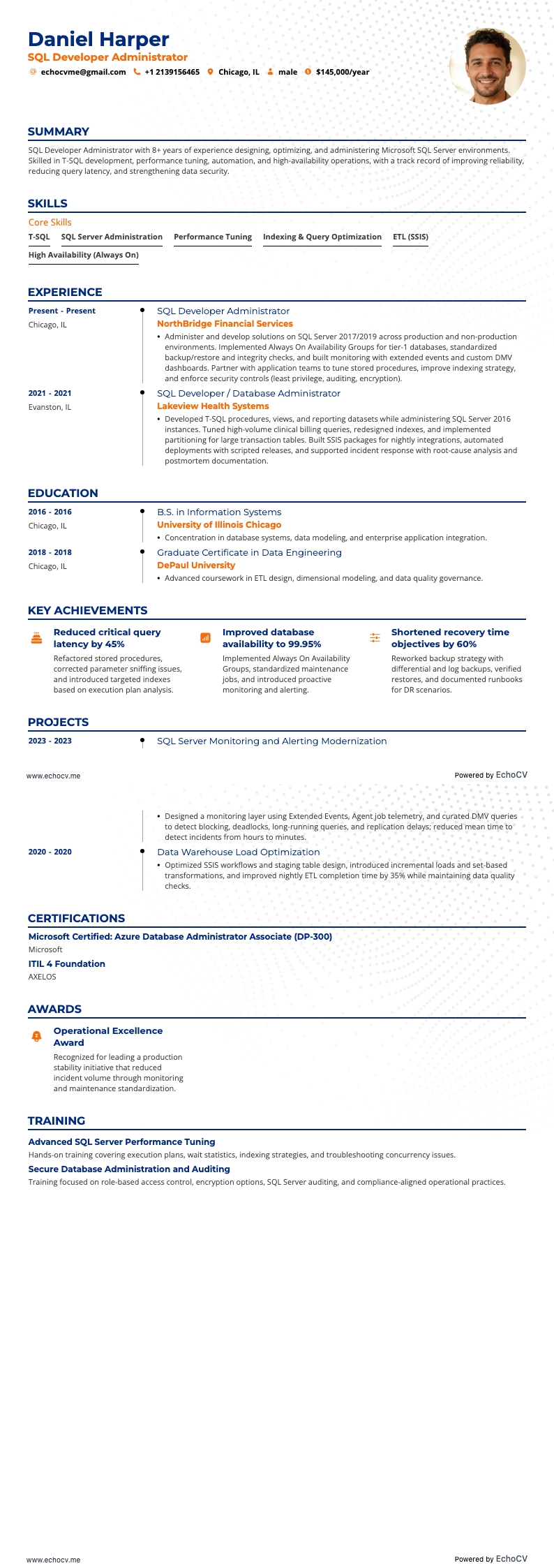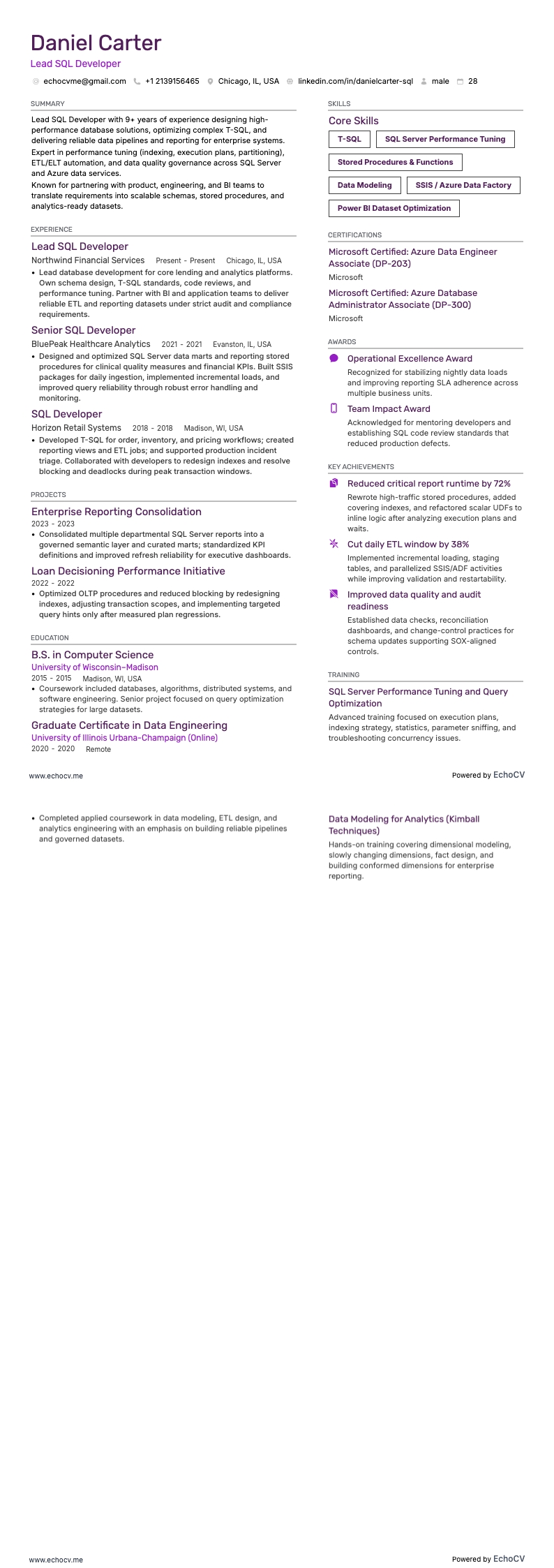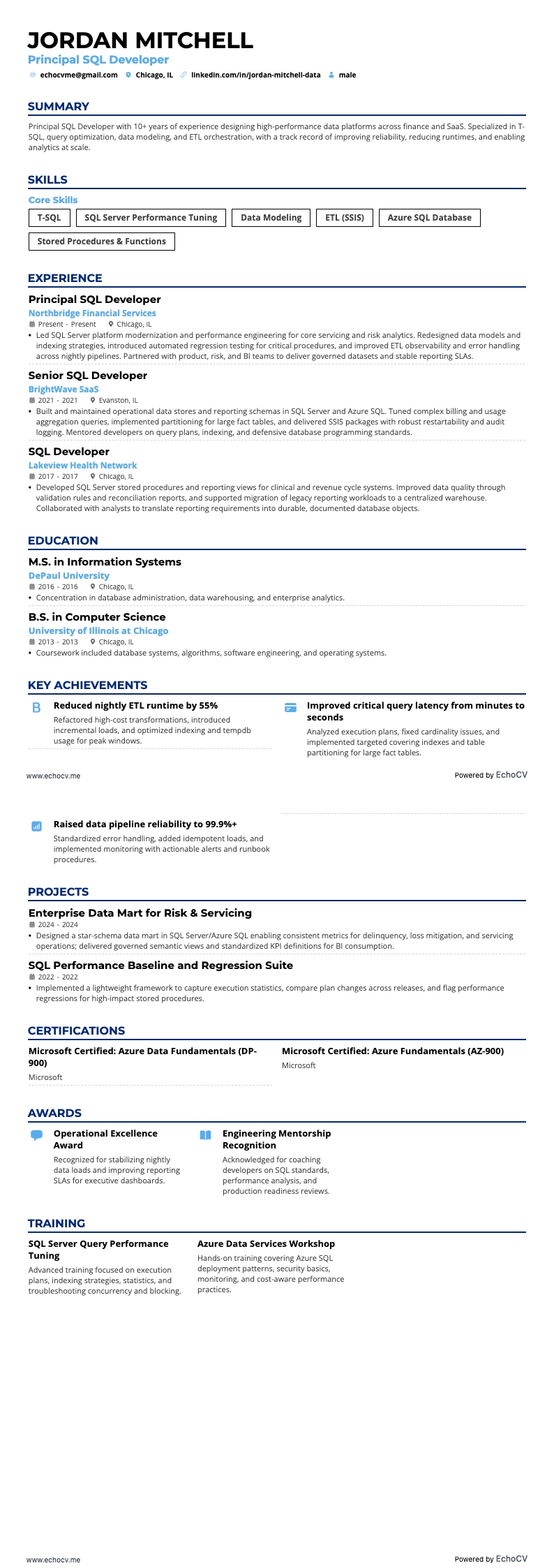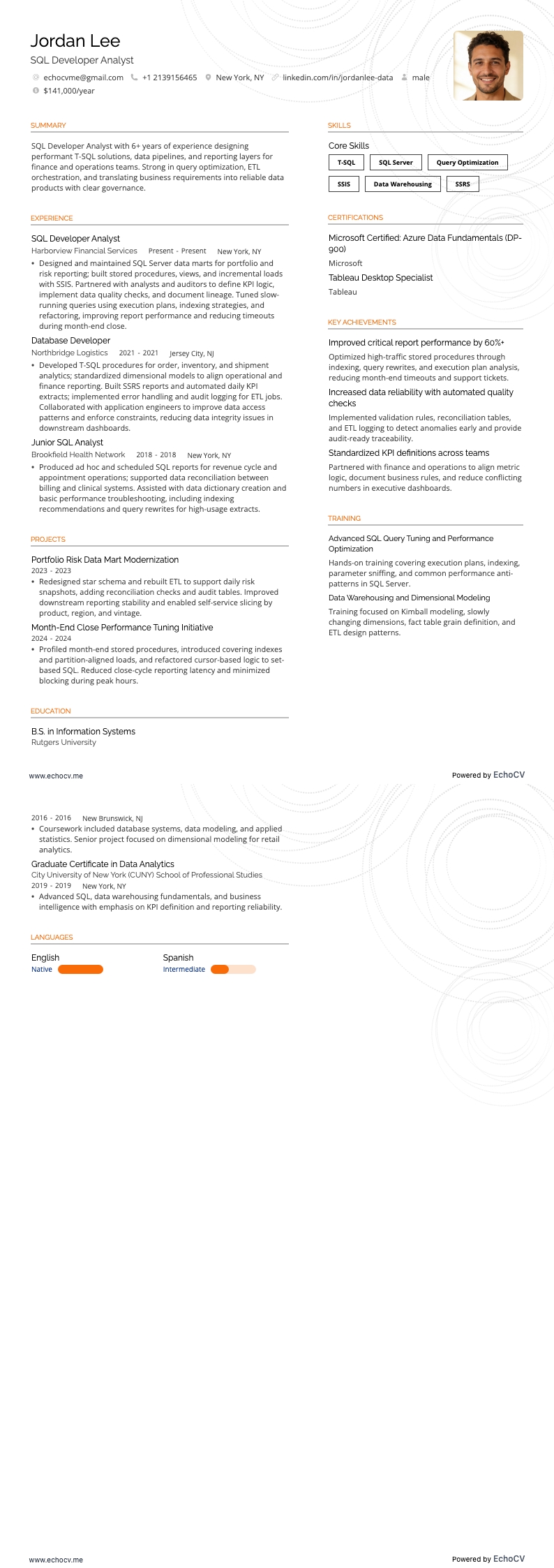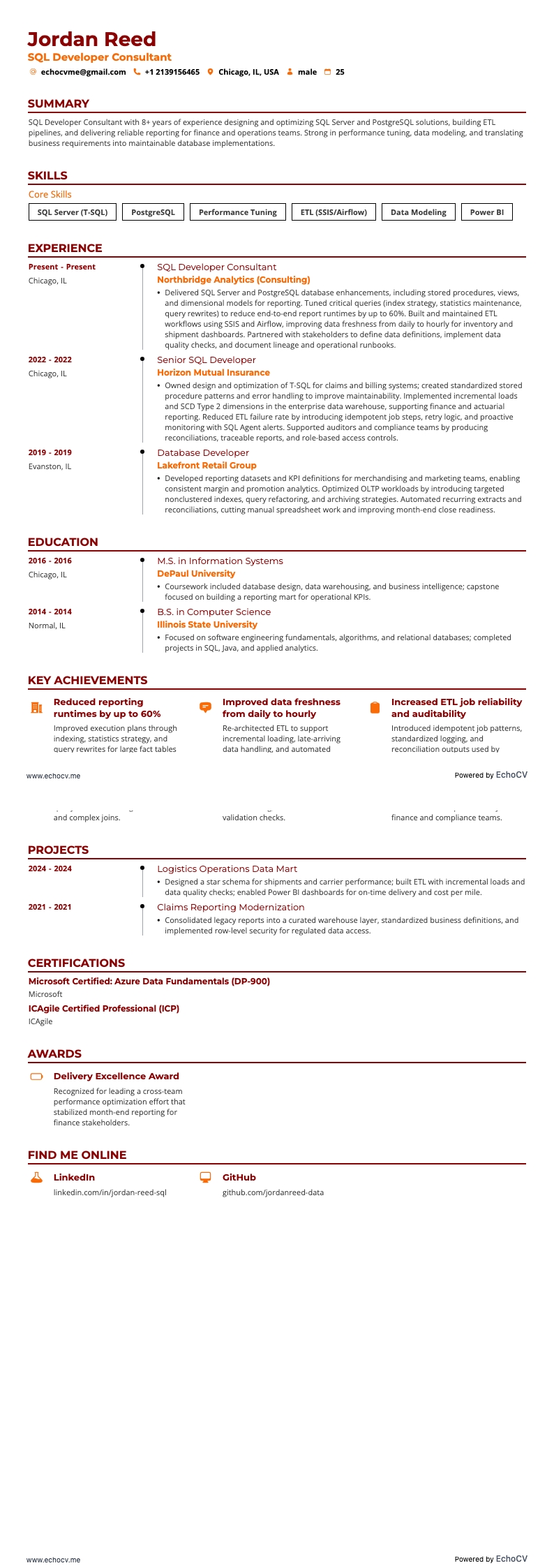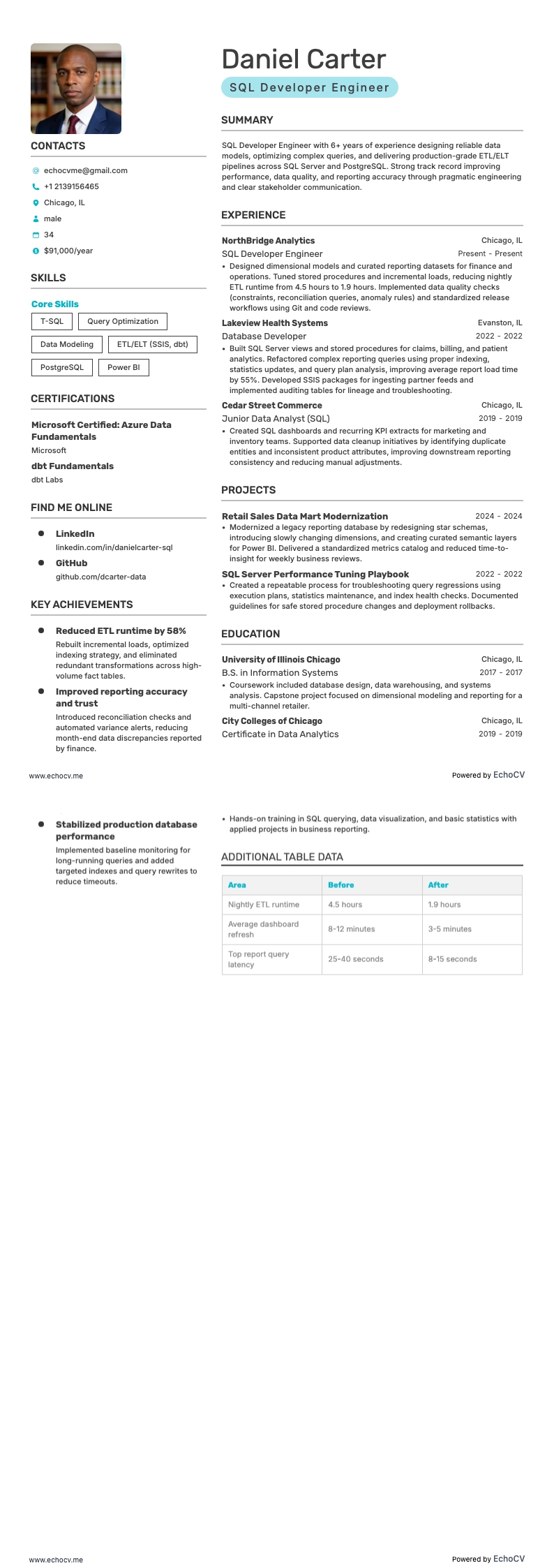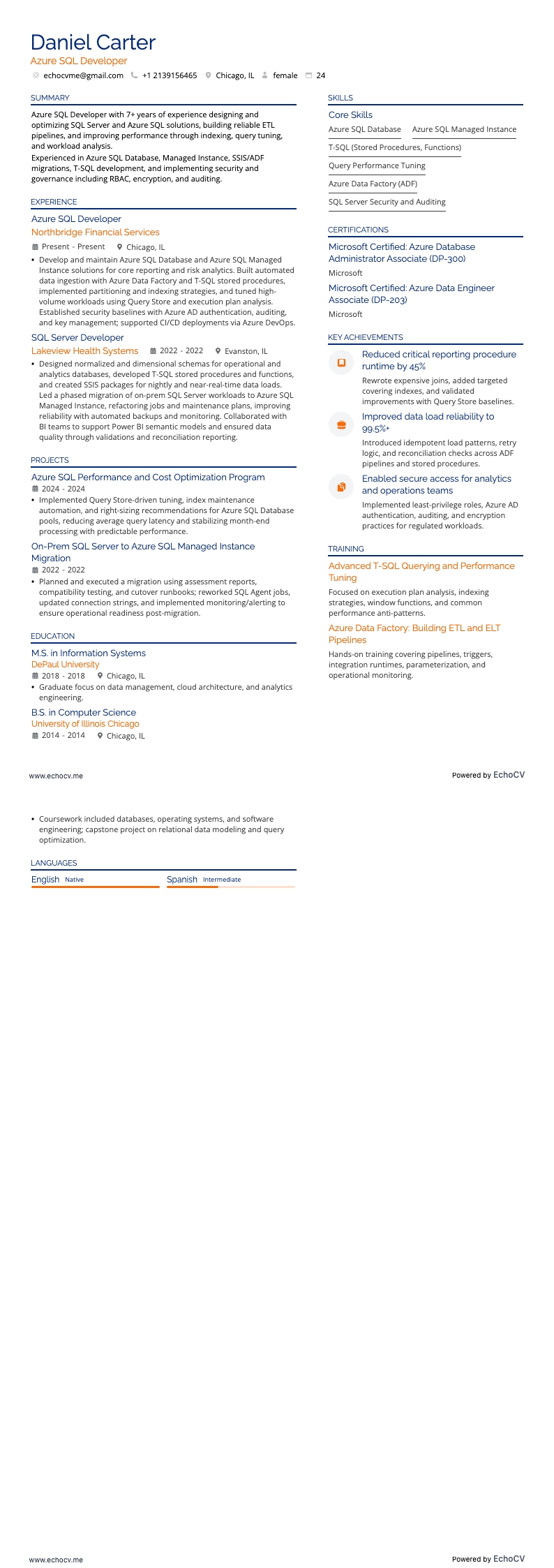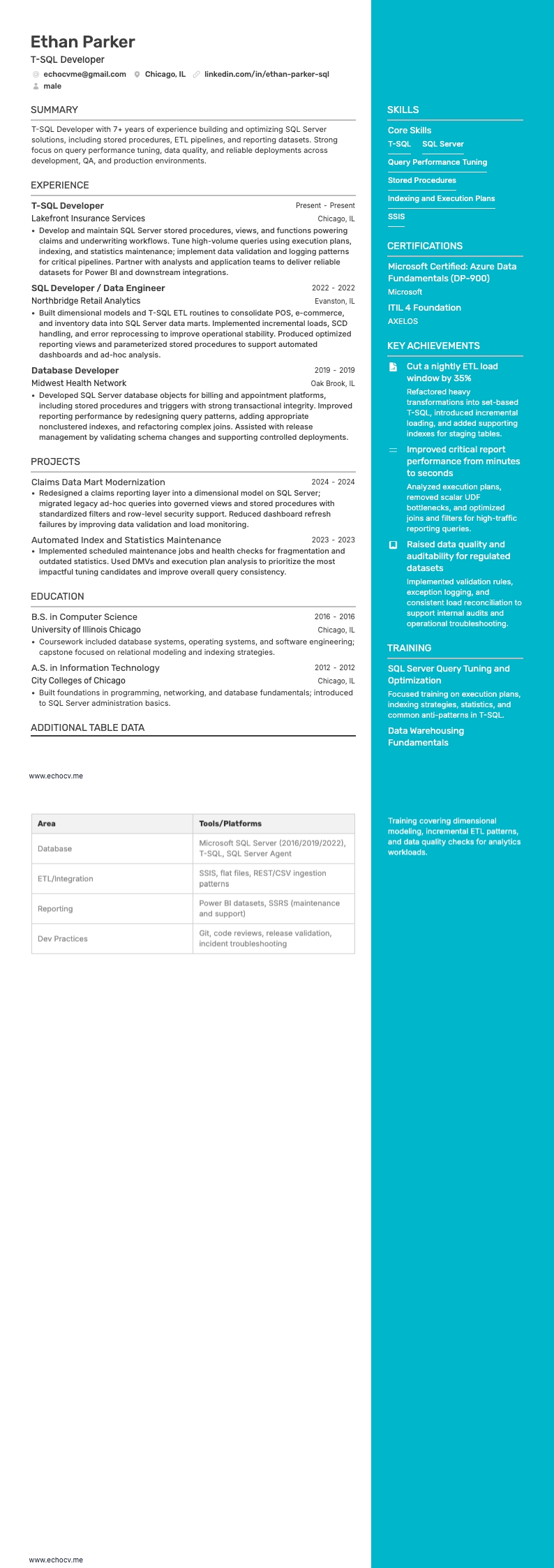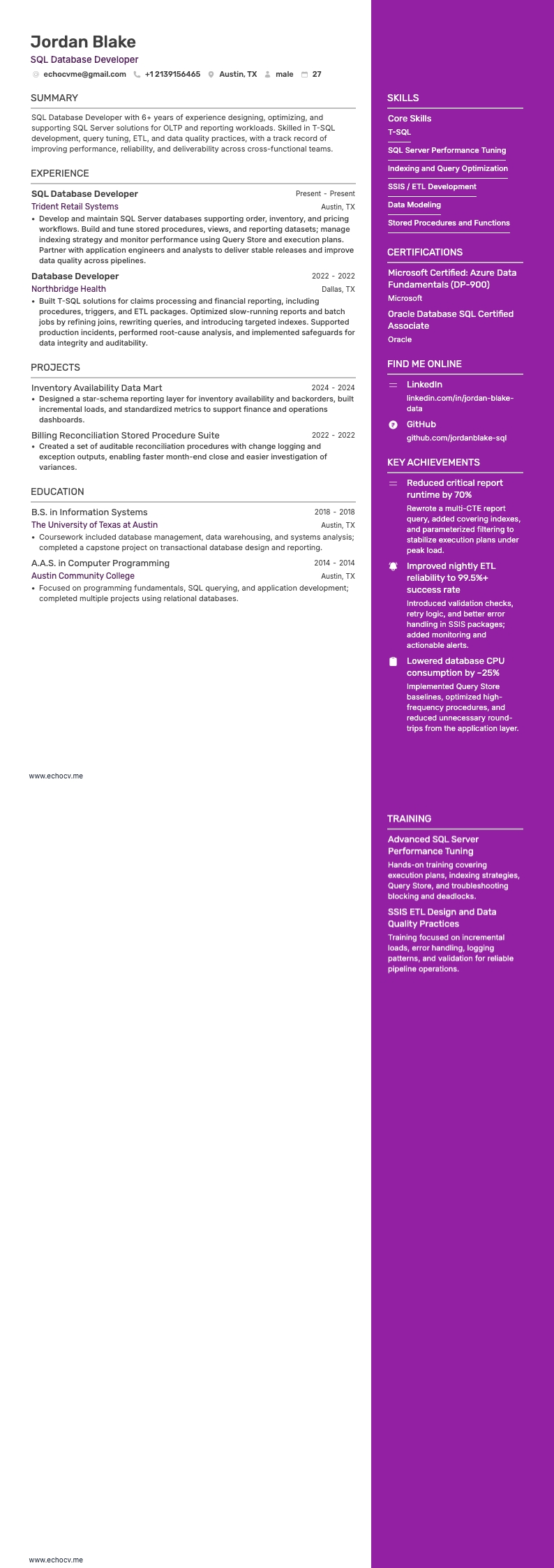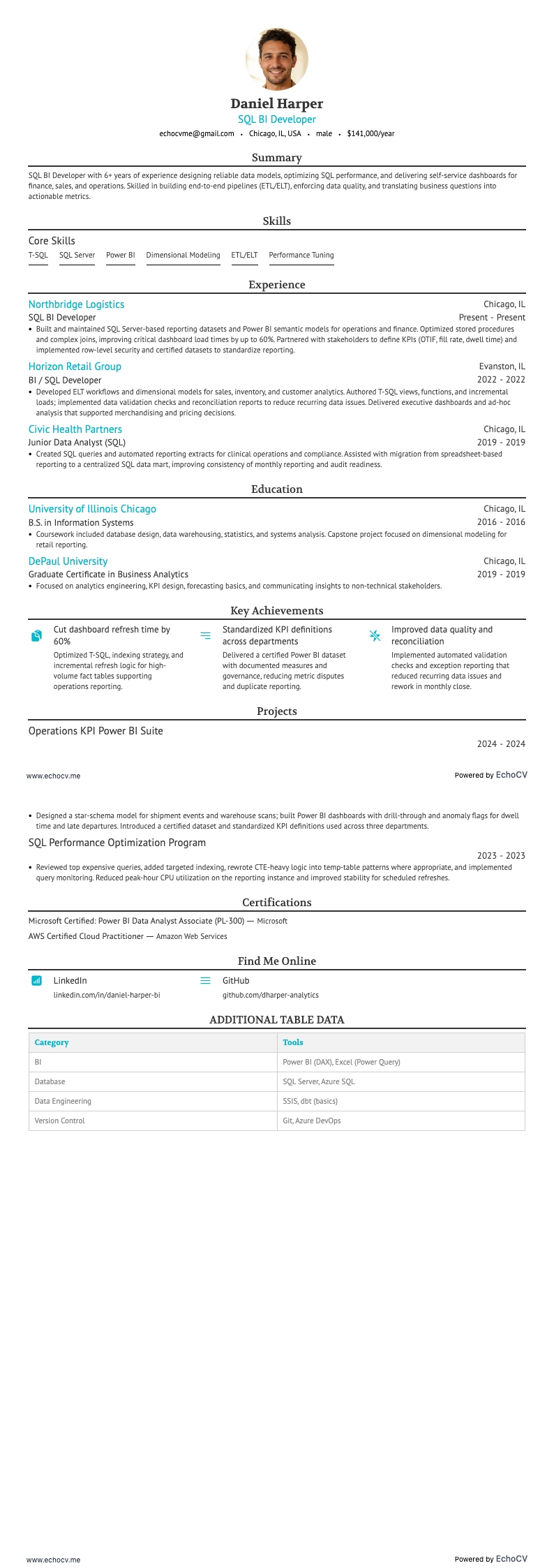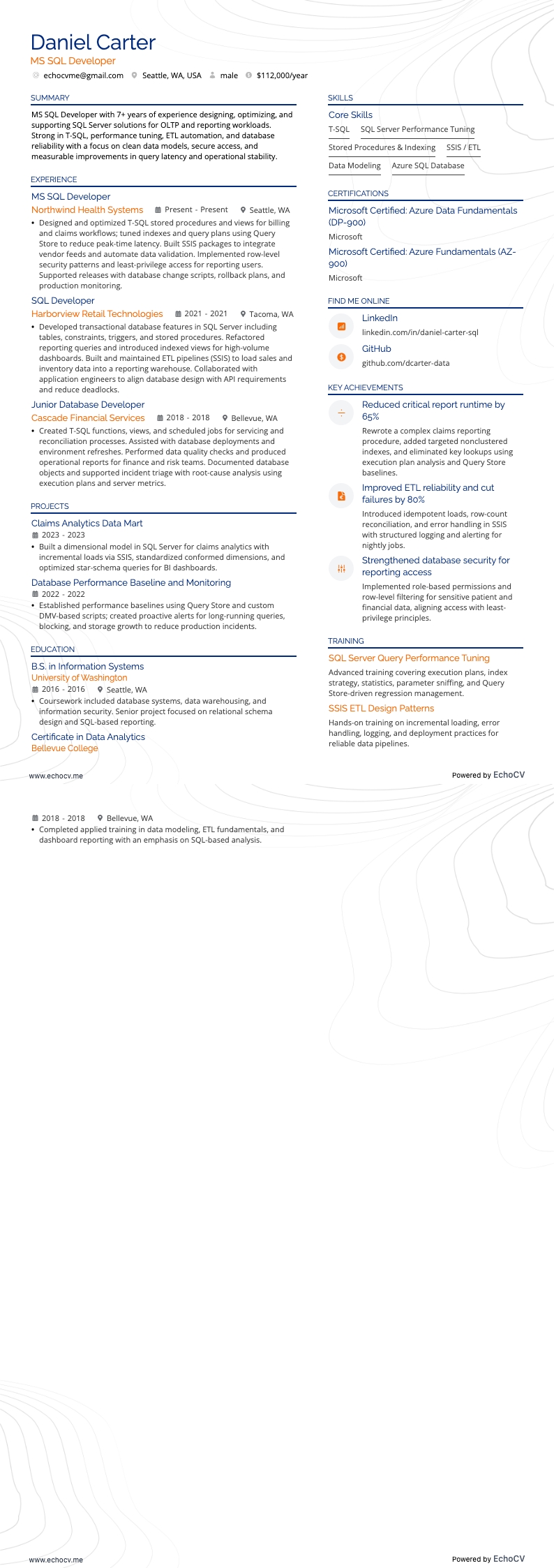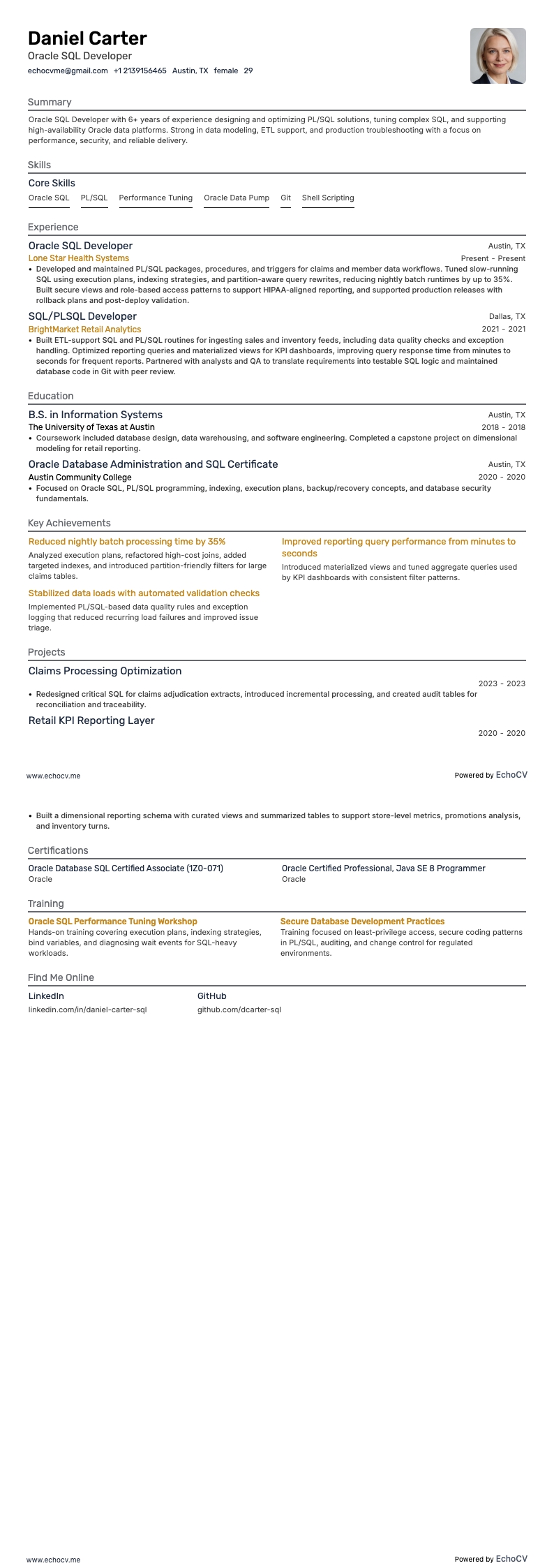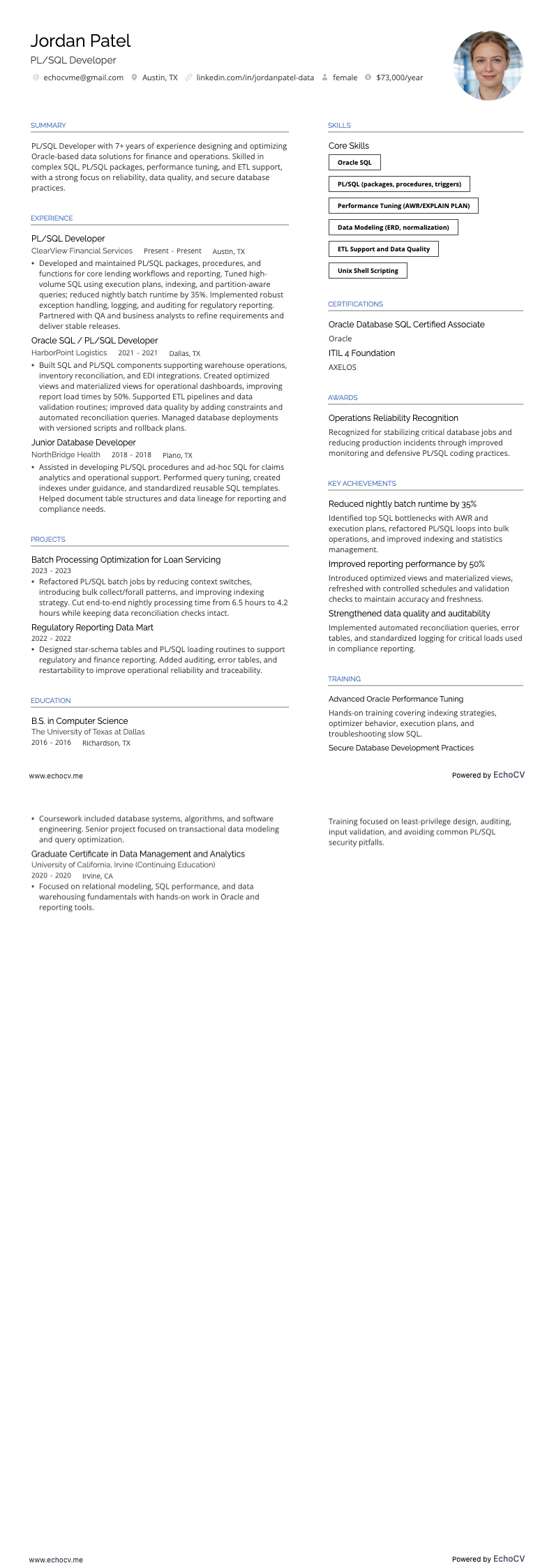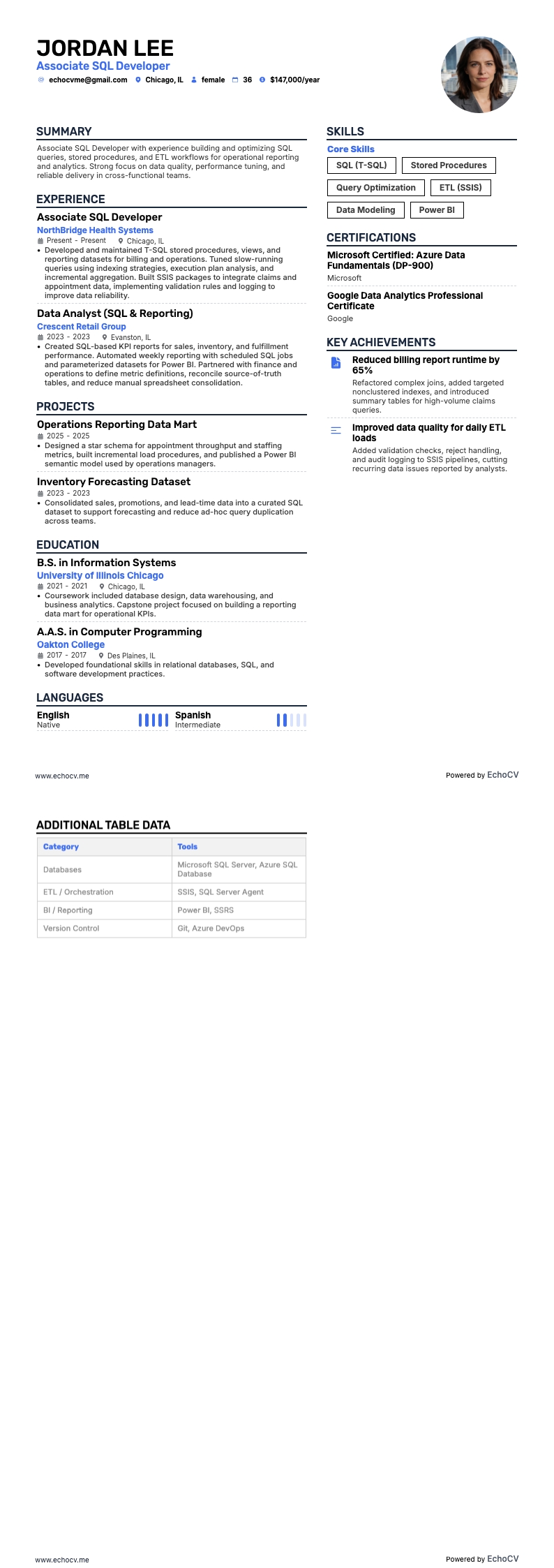
Much more impressive now, isn’t it? Here’s what this resume experience example does well:
- It includes the location of the company and a brief statement about what they do.
- It uses actionable words like ‘designed and implemented’ vs. ‘design and implement.’
- It shows how their work increased revenue using percentages and numbers.
- It uses industry-specific keywords, like ‘ETL processes’ that applicant tracking systems look for.
This is the kind of resume experience recruiters want to see and what you should aim for when adding your past work experience. You want to focus on how your work improved the company’s backend performance and not simply rewrite the job description.
One final word about adding work experience to your resume. Do not assume the person reading your resume understands technical terms. If you flood your resume with too much technical jargon, it may hurt your chances of getting an interview.
How to quantify the impact on your resume
Saying your SQL queries and database optimization scripts work well is one thing. Demonstrating how they achieved quantifiable results is another.
Recruiting departments want to see numbers and percentages that show how your SQL queries and processes can benefit them.
If you created a process that increased query performance times, optimized database accuracy and reliability, or shortened XML file lengths, point it out. Include exact numbers that show the increase in performance or a reduction in processing times to show recruiters how they can benefit from your masterful SKL skills.
Here are some examples of how to quantify the impact of your resume:
- Include the number of databases you managed – “Managed and maintained 15 individual store databases with a focus on improving inventory control.”
- Mention specific data sizes to demonstrate you can handle large volumes of data – “Managed MSSQL database of up to 100TB.”
- Quantify performance improvements in SQL queries you optimized – “Increased database performance by 13% using optimized SQL queries to limit the amount of data they return.”
- Include the number of data integration projects you completed and their results – “Oversaw 47 data integration projects that incorporate data from new stores without affecting overall database performance.”
- Detail any reduction in data retrieval times using percentages and numbers – “Improved data retrieval times by adjusting database access and indexing strategies, which reduced the lag time by 5%.”
- List the number of reports and dashboards created – “Created 30 transactional reports that analyze sales data from each location along with 10 dashboards to show key metrics for 100+ stores based on region and store location.”
- Detail any data migrations or improvements to the database – “Oversaw the migration of company database from MySQL to PostgreSQL to increase query optimization, support more data types, and adhere more closely to SQL standards.”
- Focus on any increases in data accuracy and reliability– “Designed and implemented a data warehouse solution, resulting in a 40% improvement in data accessibility and a 25% reduction in reporting time for business stakeholders.”
Having little to no SQL developer experience doesn’t mean you shouldn’t go after that dream job. Next, we will go over how to add relevant work experience to your resume.
How do I write a SQL developer resume with no experience
For those of you who are searching for your first SQL developer role, you can include relatable work experience that showcases your programming and database skills and passion for managing and analyzing data.
Every high-paid SQL developer once stood in your shoes, anxious to find their first developer role.
Follow these tips for creating a SQL developer resume with no experience:
- Highlight your education first, as you want to show them you have the necessary hard skills for the position.
- List any internships, freelance work, or volunteering where you used your SQL skills, including the programming or web development languages used, and any quantifiable results from the queries and processes you created.
- Showcase your advanced technical skills by listing any certifications you have earned or are currently working on.
- Indicate which programming languages you are familiar with along with your proficiency level
- Include any personal hobbies that point to superior problem-solving skills, like playing chess, solving mystery rooms, and strategic gameplay.
Another key section of your resume for SQL developers with or without experience is your hard and soft skills.
How to list your hard skills and soft skills on your resume
All jobs will have a set of specific hard and soft skills that should be on your resume. The trick is knowing which ones to highlight for the specific job.
- Hard skills – These are the skills you learn at school and through on-the-job training. They include necessary skills like, ETL processes, writing various programming and web application languages, and database design and optimization.
- Soft skill – This section lists the natural skills you learn through various life experiences at home, school, and work. They include valuable skills like analytical thinking, adaptability, and showing resilience under pressure.
When listing your technical skills, you want to list those skills that are included in the job description first. That way, applicant tracking systems will give your resume a high score.
Also, keep in mind that the hard and soft skills applicant tracking systems look for are a specific set of keywords entered by the recruiting team. You need to make sure your hard and soft skills match those listed in the job description precisely.
If the job description says “multi-technology database architecture” and your resume says “Tier 1-3 database architecture types,” the software will not recognize it as the same thing.