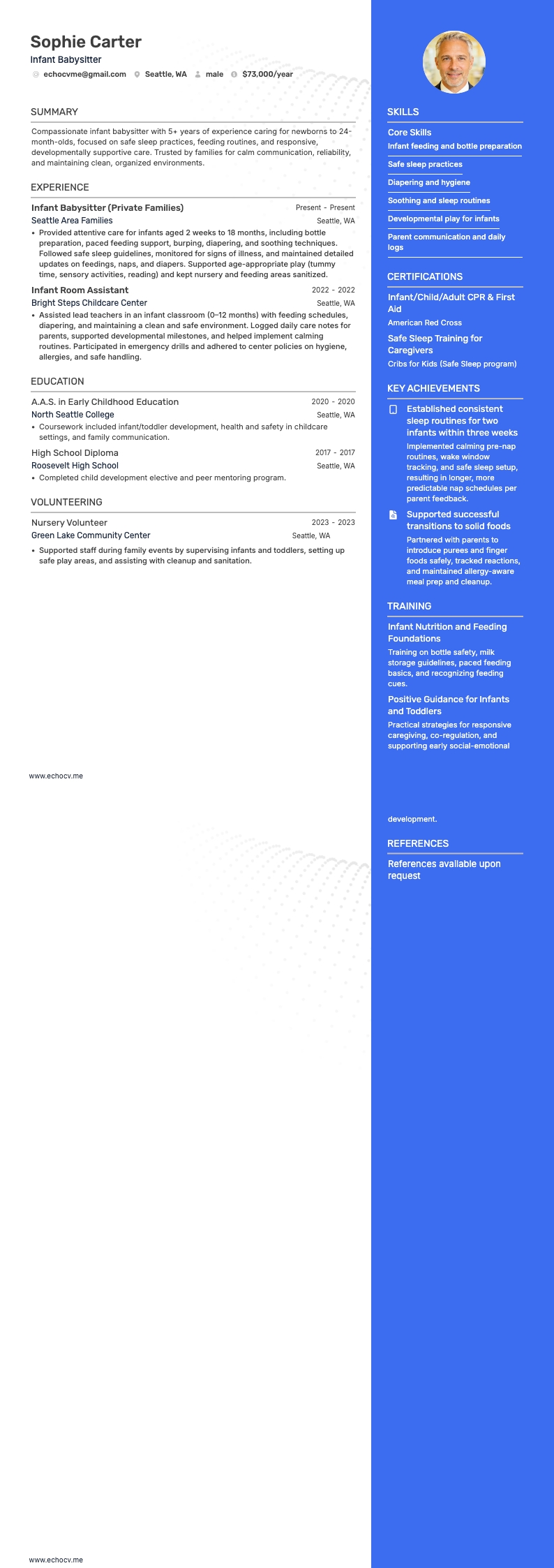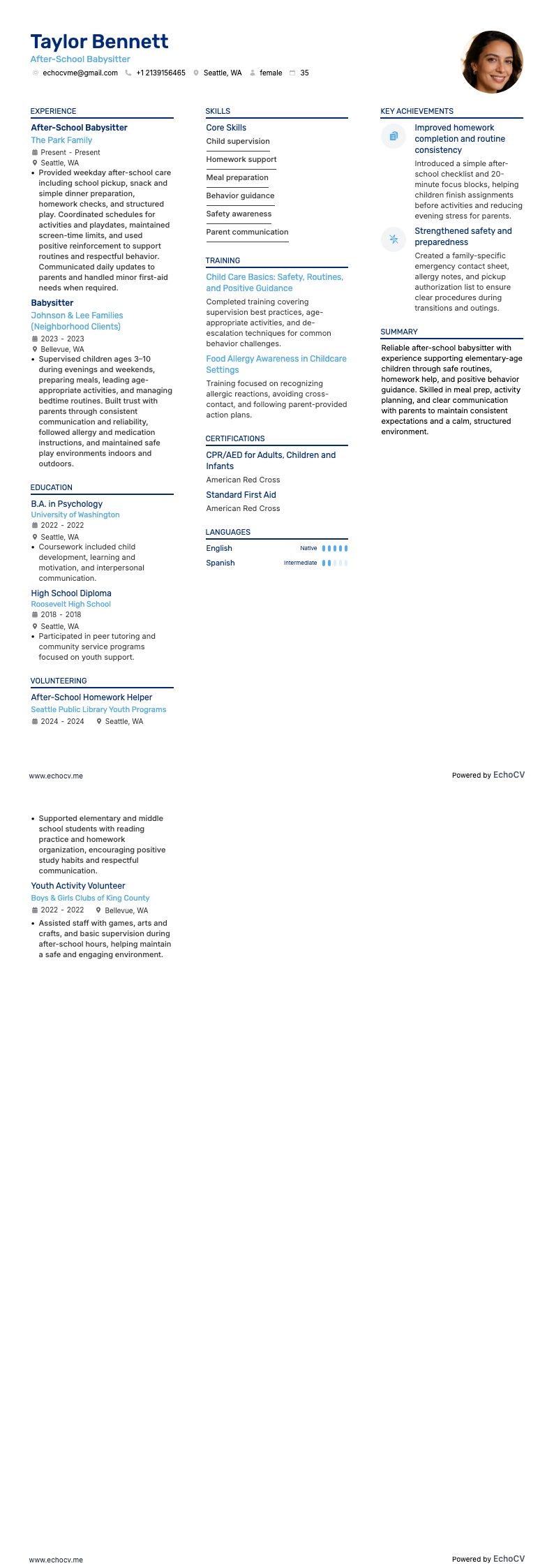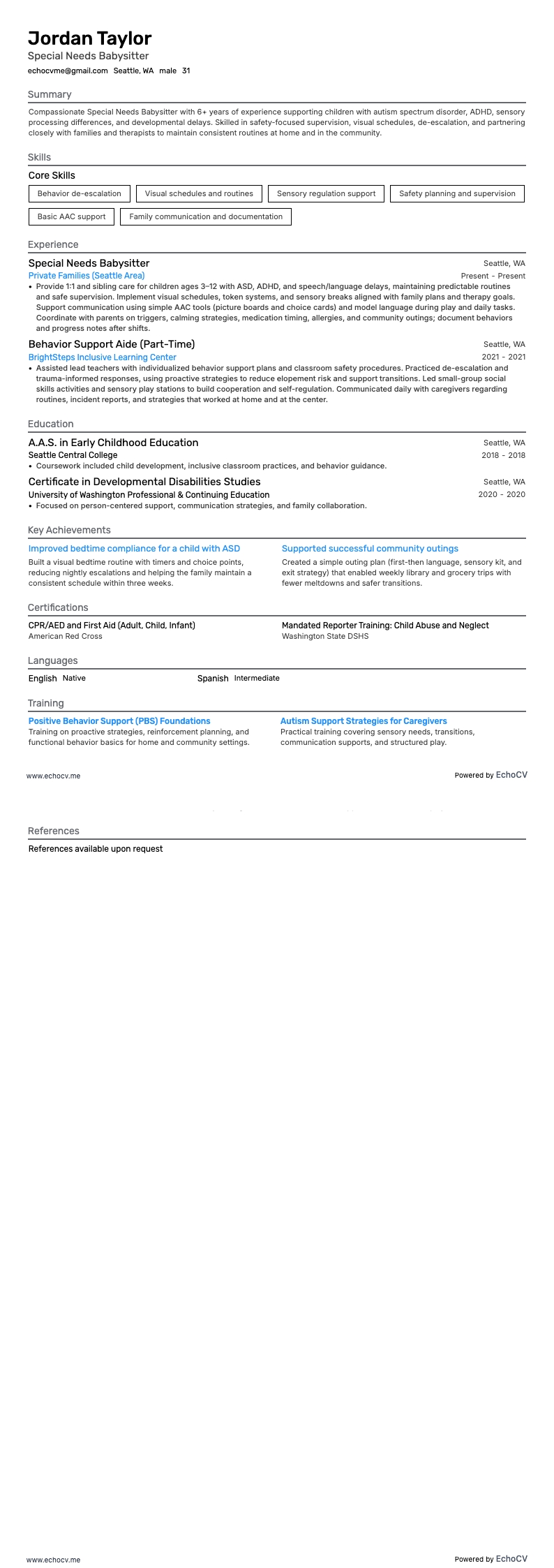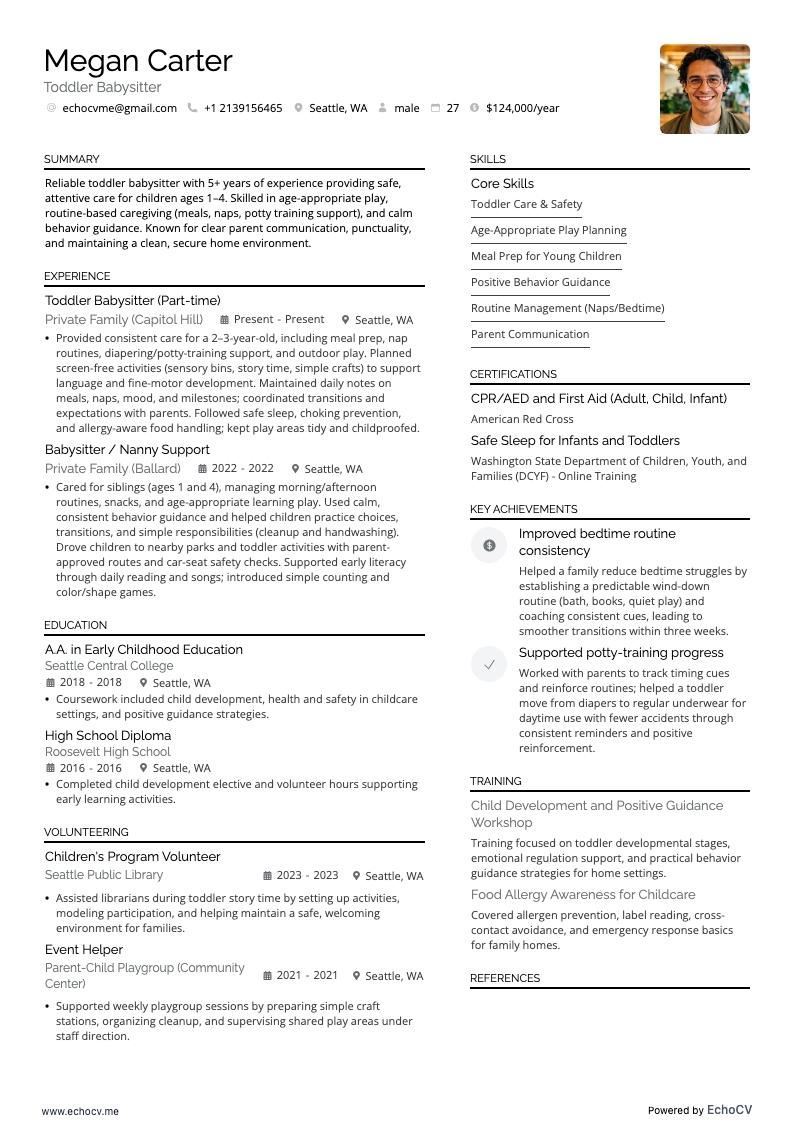
Imagine parents scrolling through countless profiles, searching for the perfect caregiver to entrust with their little ones. How can you stand out in this crowd?
In the lively world of childcare, where every day is an adventure and every child a new friend, the journey to finding reliable babysitting opportunities can sometimes feel more challenging than convincing a two-year-old to eat their veggies. Aspiring babysitters face the daunting challenge of securing consistent work amidst a barrage of hopeful applicants and varying expectations.
In this dynamic landscape, where trust is paramount, and safety is non-negotiable, a well-crafted babysitter resume is the key to unlocking doors to fulfilling experiences and meaningful connections with families.
This guide includes examples and pro tips to help you overcome common challenges babysitters face when writing their resumes. It’ll assist you in crafting a resume that showcases your unique talents and capabilities, paving the way to your next unforgettable babysitting adventure.
For additional childcare resume writing guides, check out the following:
How to format a babysitter resume
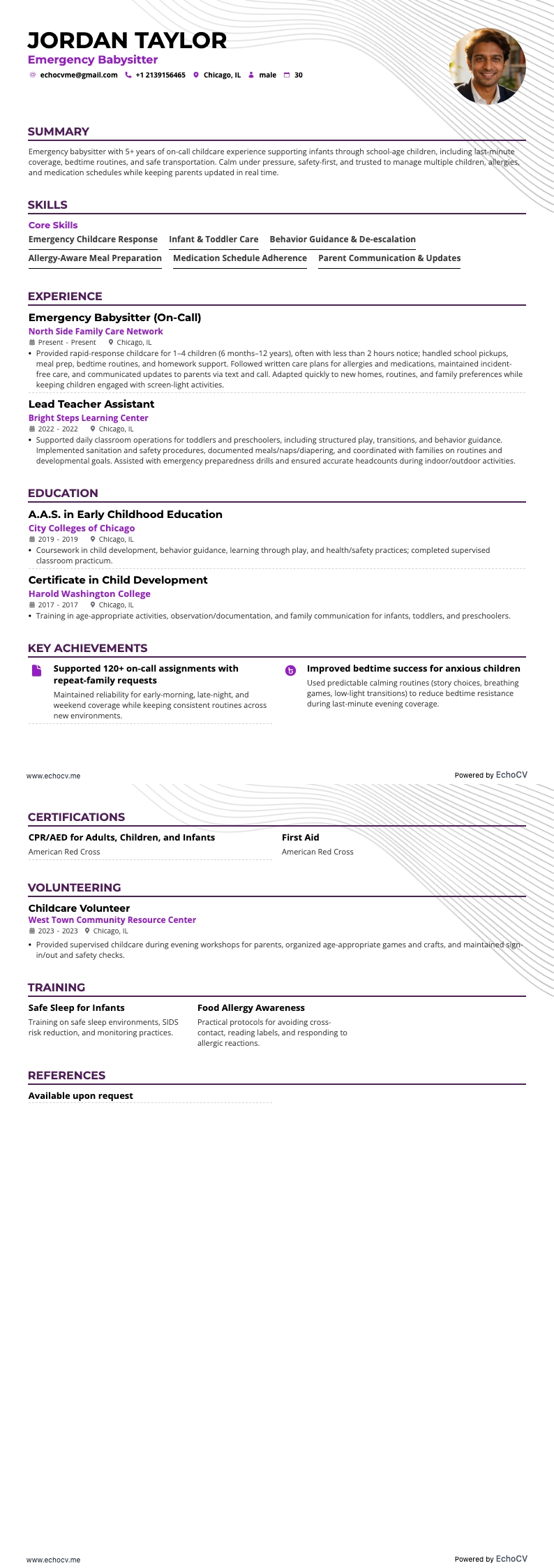
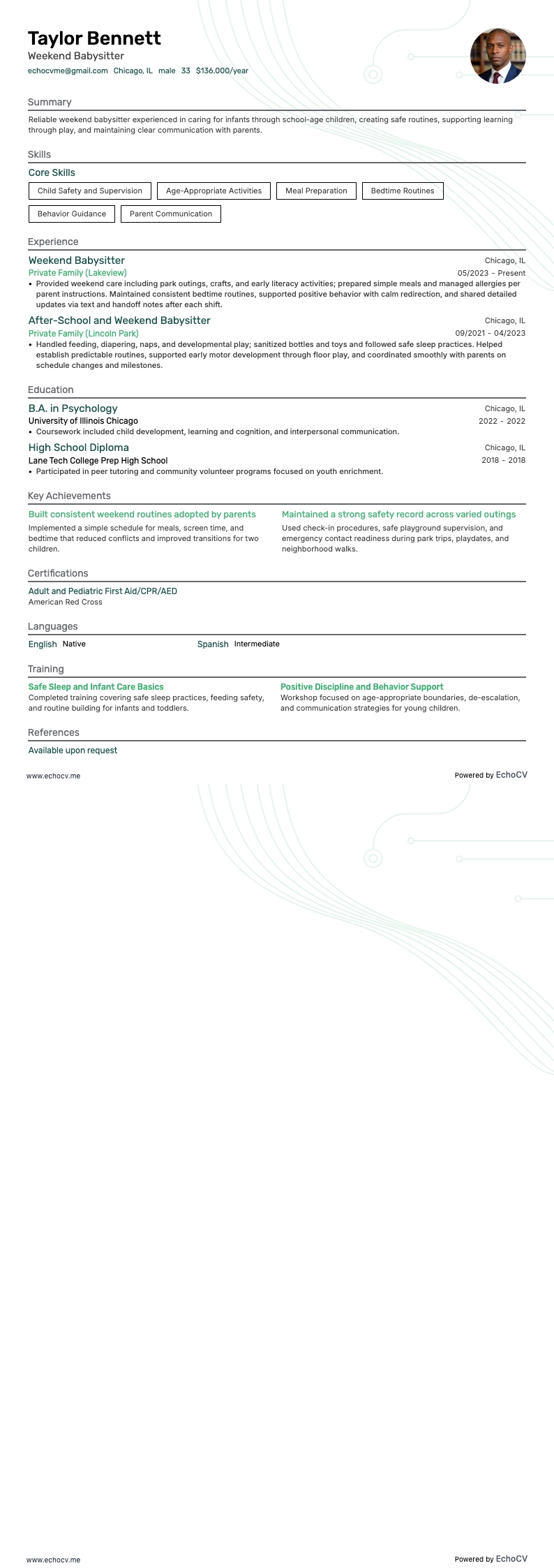
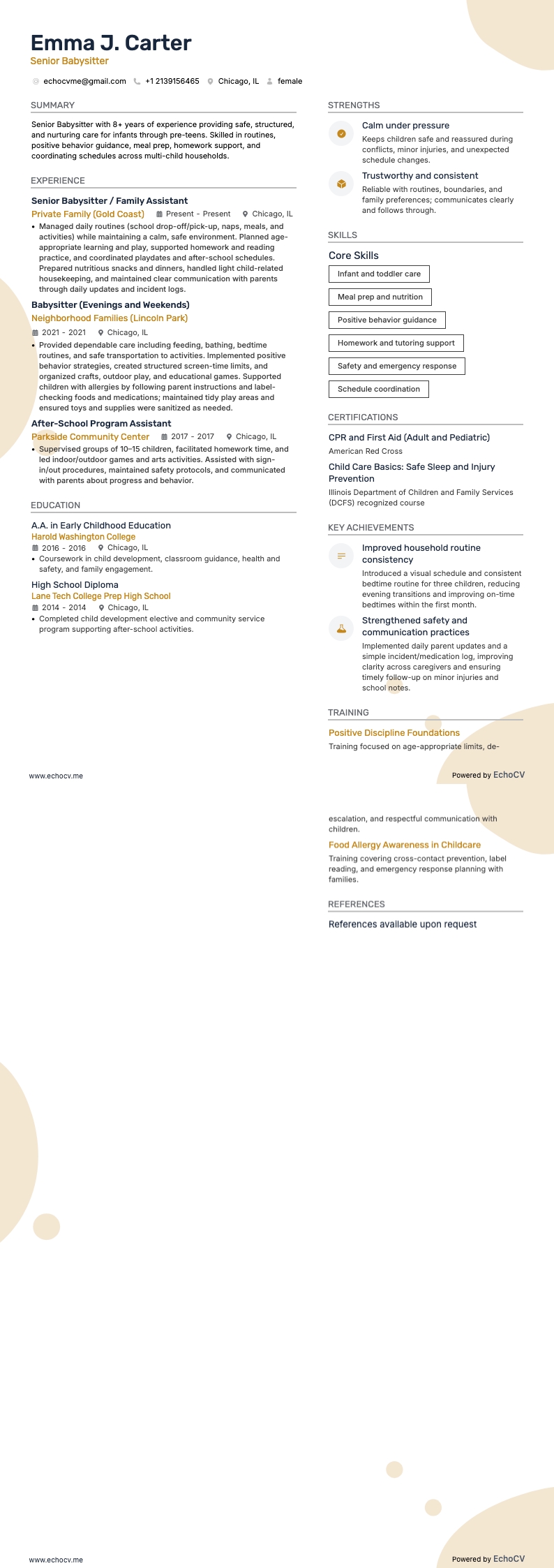
Most parents look for fun, experienced, and professional babysitters. While babysitting may be a casual job, your resume should still convey professionalism and your resume's formatting tells potential employers a lot about who you are.
A clean, organized, and carefully proofread resume is the best way to convey that you take the role seriously. Here are a few of the most effective ways to showcase your professionalism and expertise in the world of childcare:
- Professional tone: Maintain a professional tone throughout the resume, avoiding slang, abbreviations, or overly casual language.
- Personalization: Target your resume to the specific job you're applying for by highlighting your most relevant experiences and skills. If you're applying to work with infants, emphasize your experience with that age group. If you have experience with children with special needs, mention that as well.
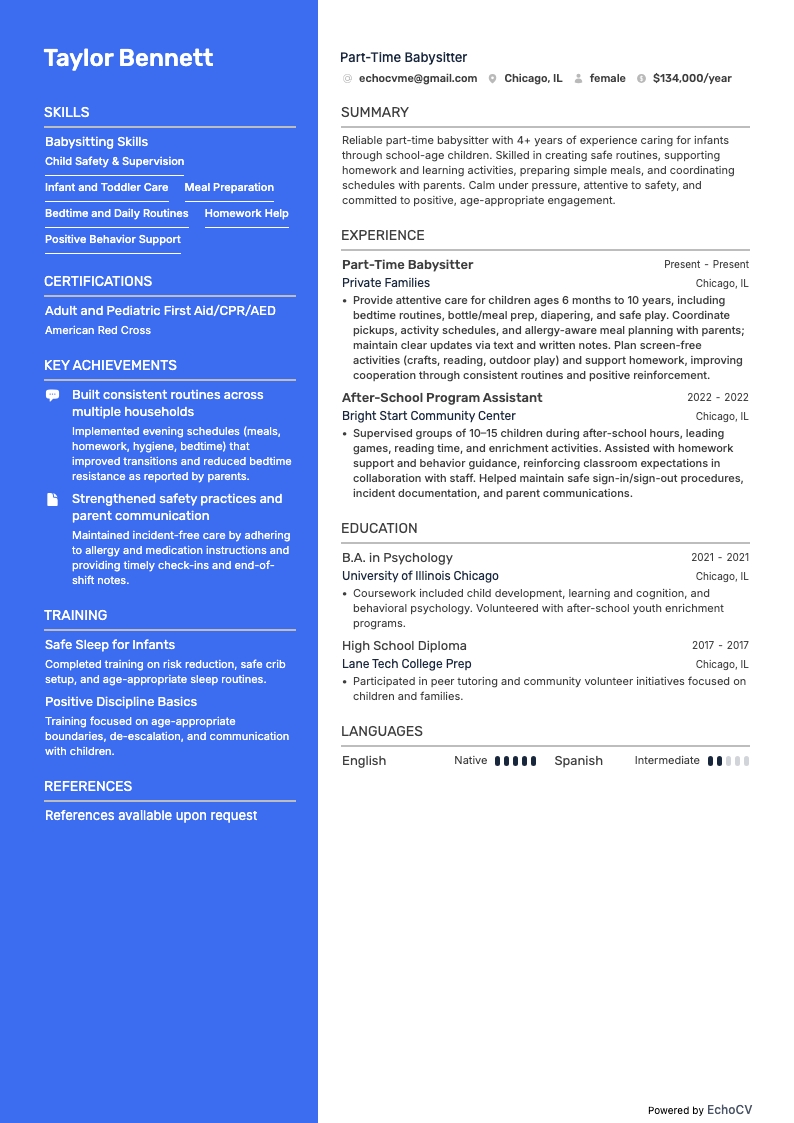
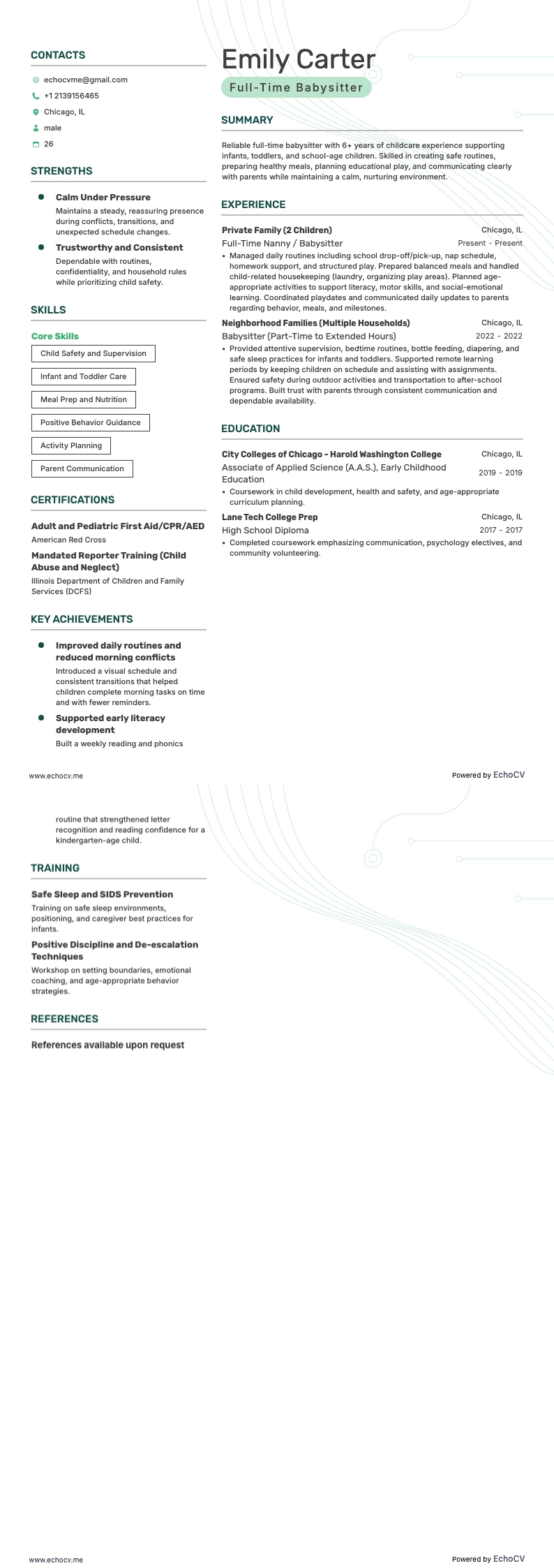
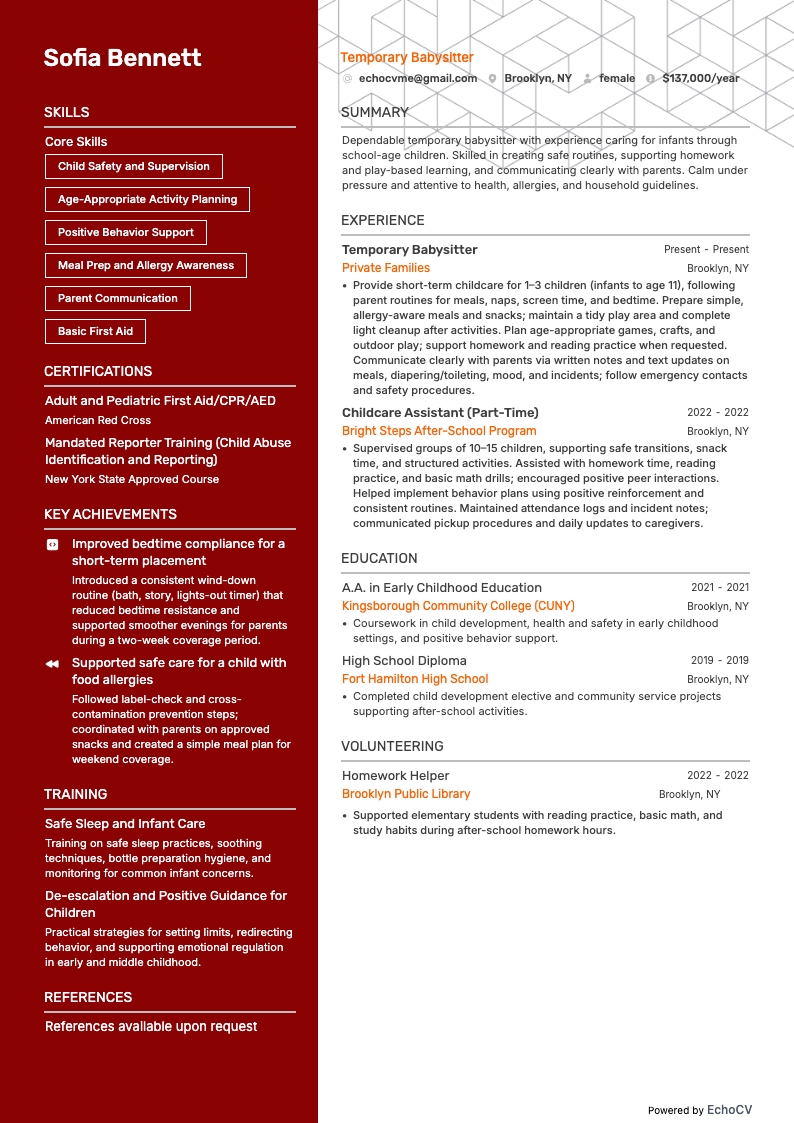
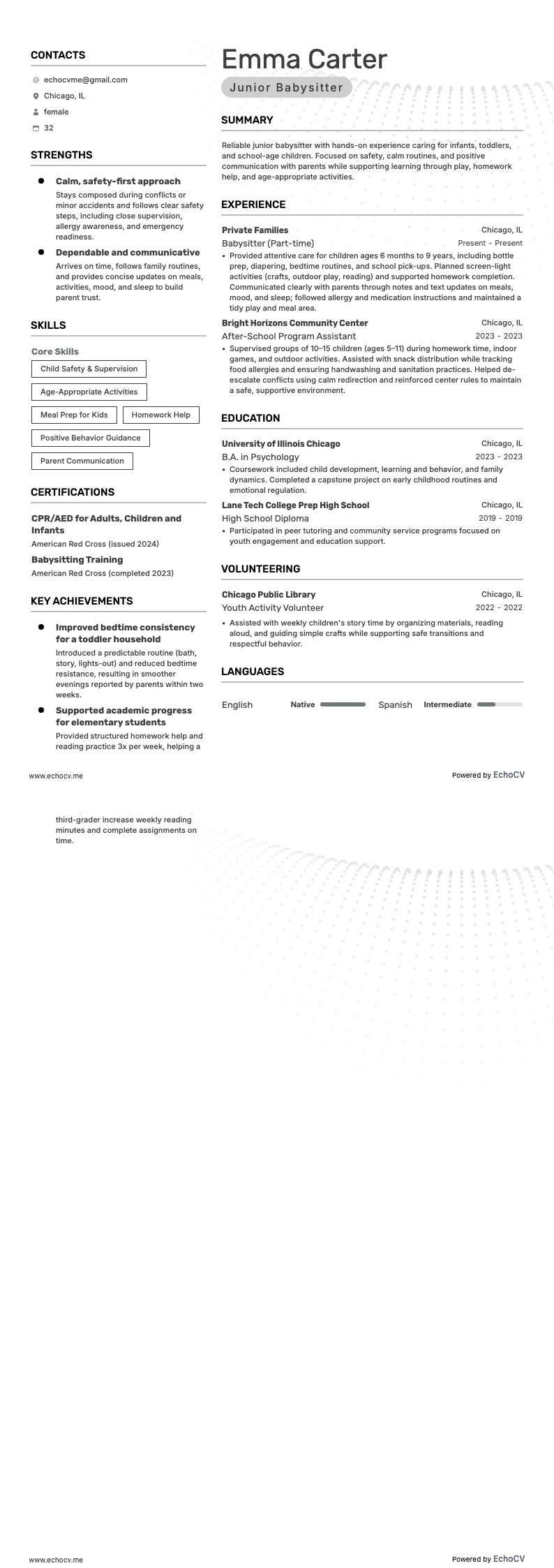
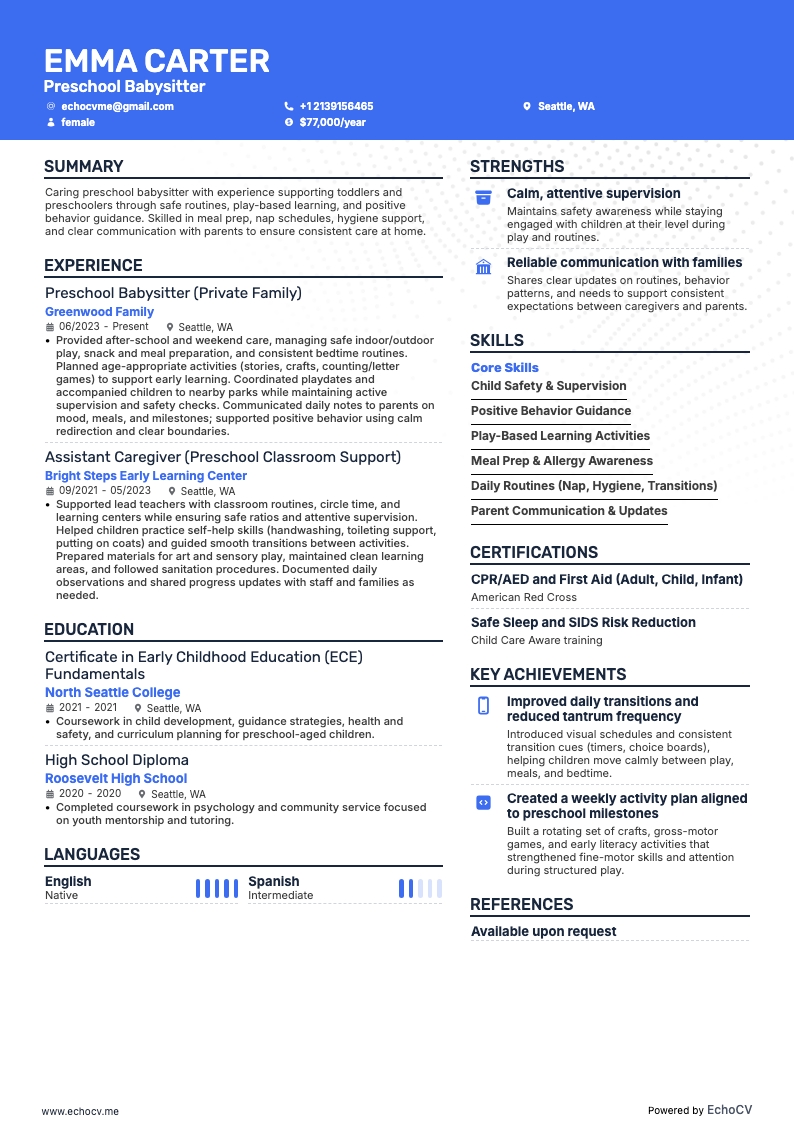
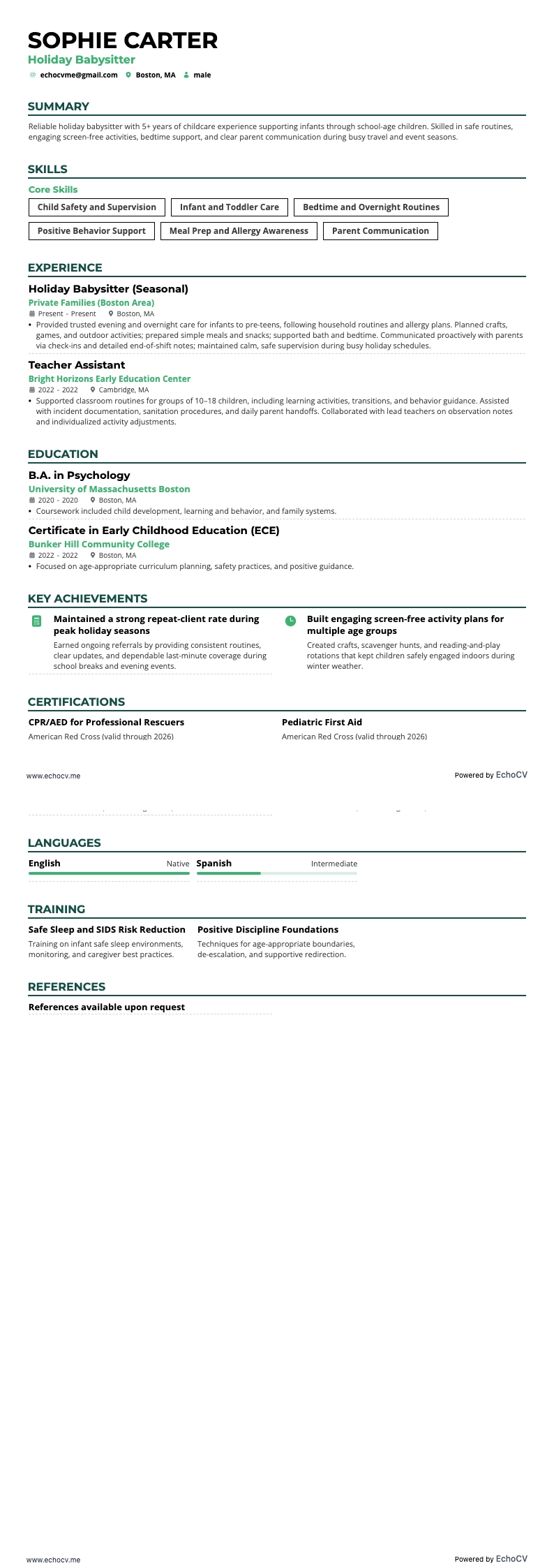
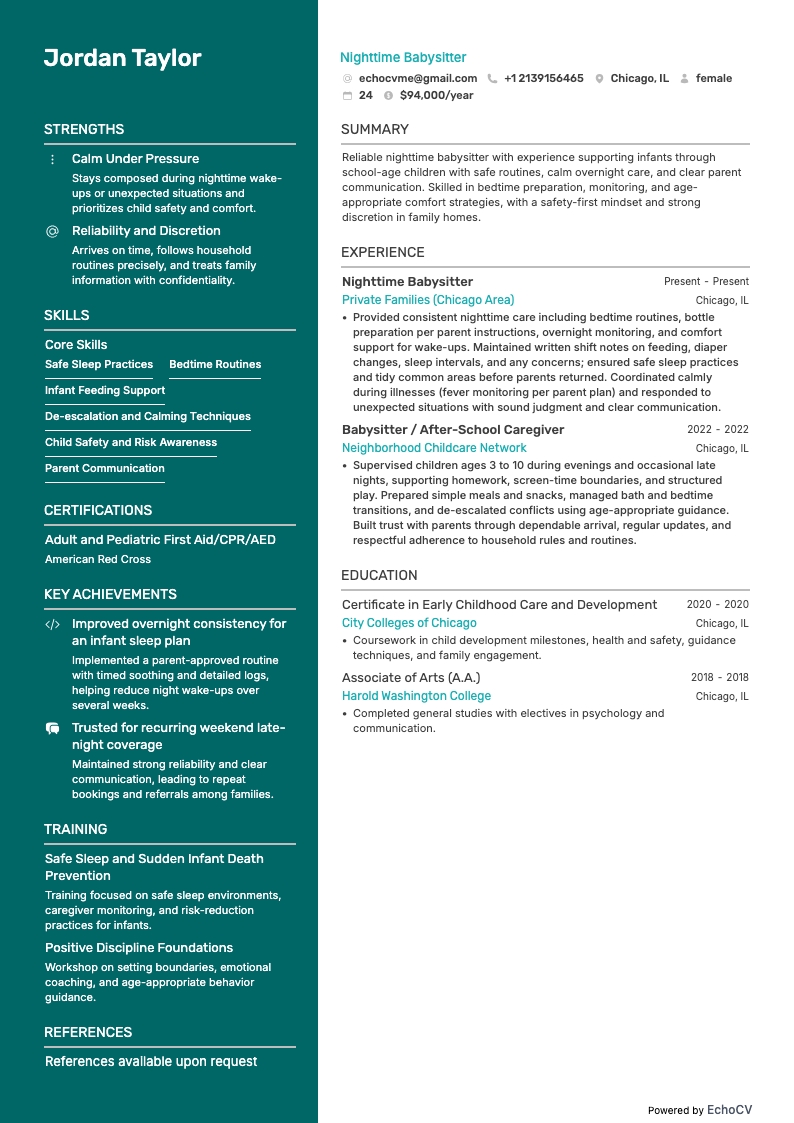
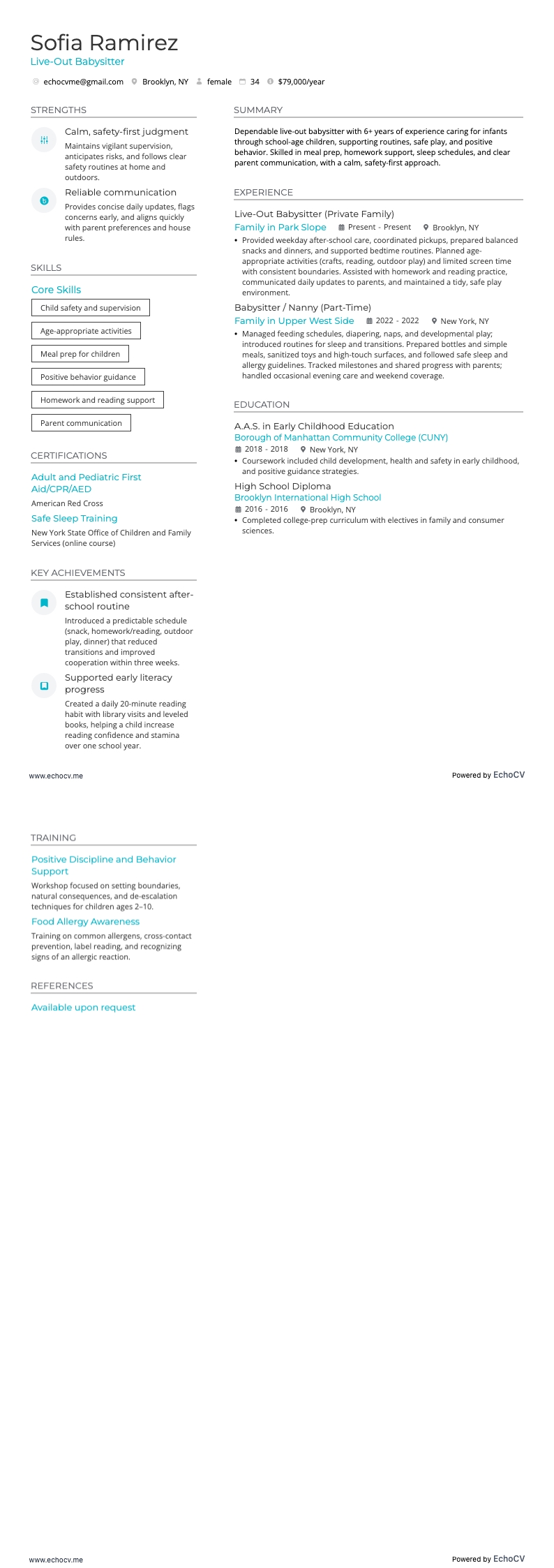
- Include contact information: A prominent header featuring your name, job title, and contact information lets parents easily locate your essentials.
- Keep it simple: To maintain a sleek, professional appearance, avoid using unnecessary creative elements that may distract from your qualifications.
- Be concise: Aim for a one-page resume and use bullet points rather than paragraphs when possible to describe experiences and achievements, making it easier to skim.
- Use clear headings: Ensure your resume sections are organized logically and differentiated using simple, precise headings. Bold headings also help organize information and guide the reader's eye.
- Proofread: Finally, proofread your resume multiple times for spelling, grammar, or formatting errors. Consider having someone else review it as well to catch anything you might have missed.
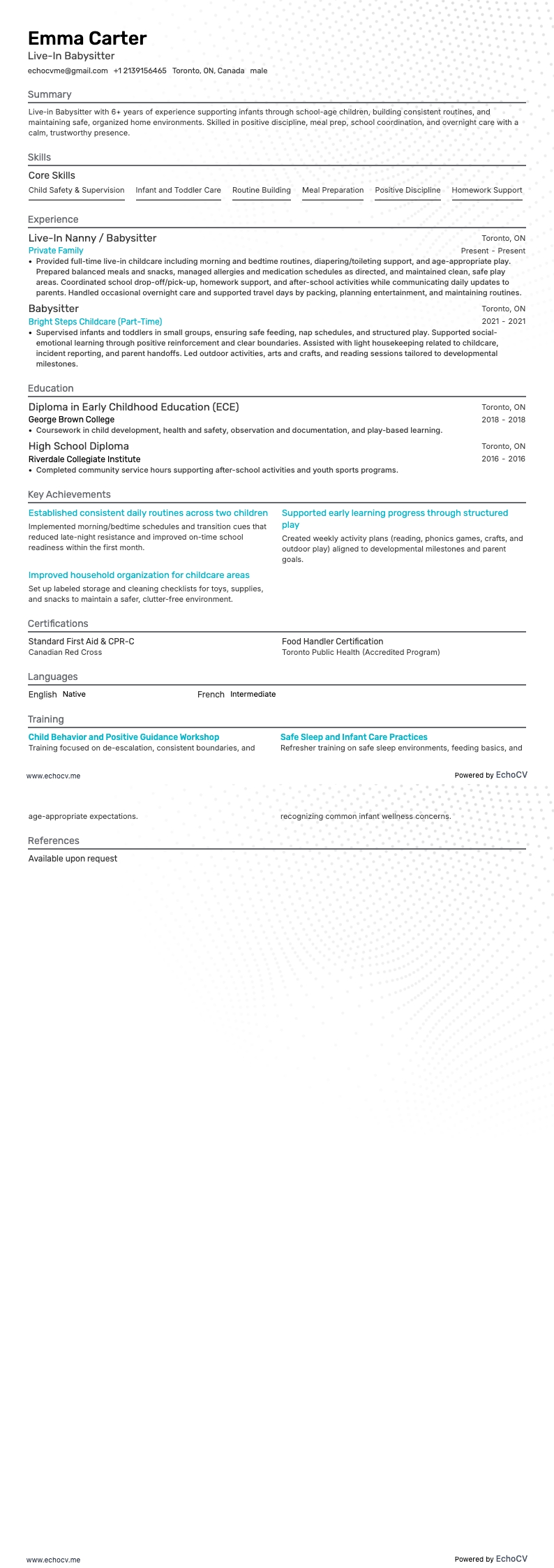
Different markets have specific resume styles – a Canadian resume, for instance, may require a different approach.