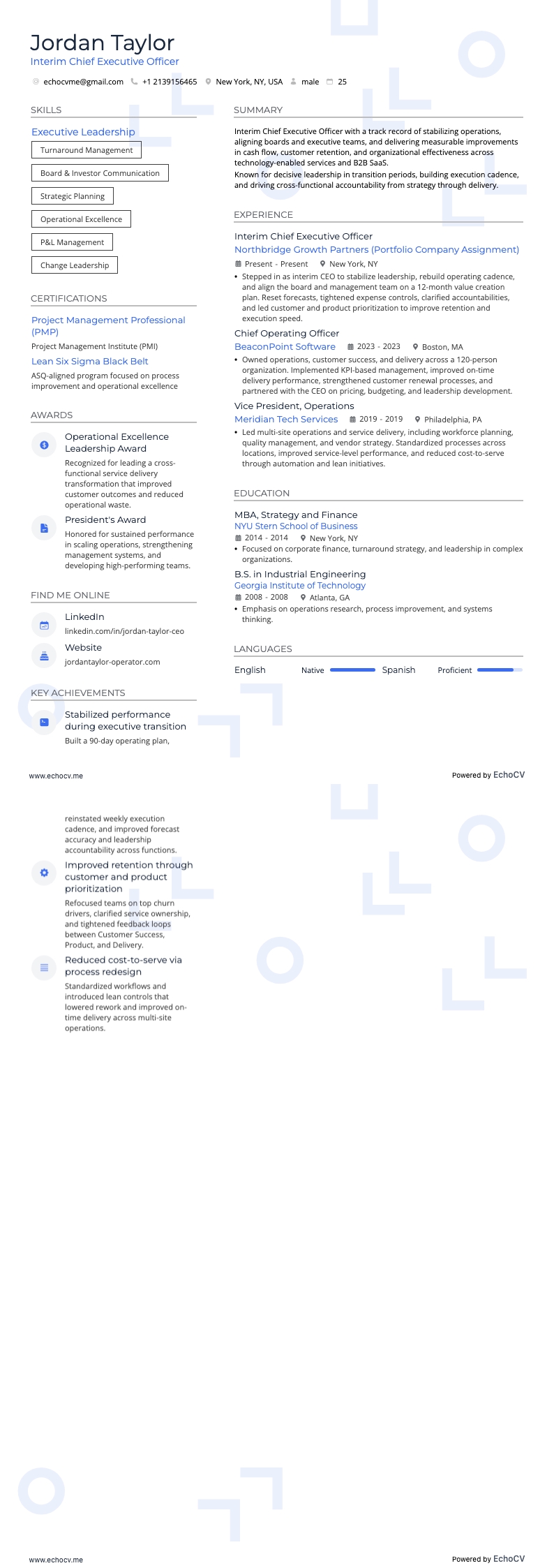
How to build an effective CEO resume experience section
Although your expertise and qualifications should be reflected everywhere on your resume, the experience section is by far the most important one.
That’s because it contains a condensed version of your work history with all the good and relevant bits highlighted.
As such, the big question, bothering all who strive for a C-suite position is how much experience to put on your resume.
The short answer is to add as much as you can. But there are a few caveats, which revolve around how much company research you’ve done beforehand.
If you’re applying for a CEO position at the company you’re already working for, you must already have a good grasp of what its culture is. And the board of directors will know this.
Instead, focus your attention on showing you have a good eagle-eye view of the business sector and the company’s competitors. Don’t forget to mention any connections to big industry players.
On the other hand, if you’re aiming to fill the CEO seat at a different company, make sure to research where it’s headed and what its current goals are.
Target your resume by adding examples of past work experience that resonate with your future employer’s interests. To do this, check the company’s:
- Website
- Annual reports for the last few years
- Media coverage
- Posted job ad
It may seem like too much work. Especially if you plan to offer your CEO skills and services to several companies and as such you would have to do this for each of your targets.
But there is a perfect reason for this thorough research.
Knowledge is power. Your potential employer's financial standing and strategy are indicative. Understanding them can hint at what type of candidate they are searching for.
For instance, imagine your potential employer is already a well-established company. In this case, they probably need someone with deep industry and technical knowledge.
By contrast, if the company is a startup or has had some recent financial troubles, the perfect candidate would have strong business acumen.
Someone with excellent leadership experience who will help the company through its struggles. And allow it to grow further within its particular business space.
So, don’t avoid including side projects that don’t fall into the traditional employment category.
Yet, regardless of which company you’ve targeted, any resume for an executive position must exhibit a clear career progression.
Rather than adding a laundry list of past duties, include tangible examples with measurable outcomes:
- Review the CEO job description and pick out all the core skills and experiences requested for the role.
- Match the requirements with examples from your own work history.
- Use the highlighted resume keywords to describe your experience.
- Include between 5 and 6 bullets for more relevant positions and 2 and 3 bullet points for other related experiences.
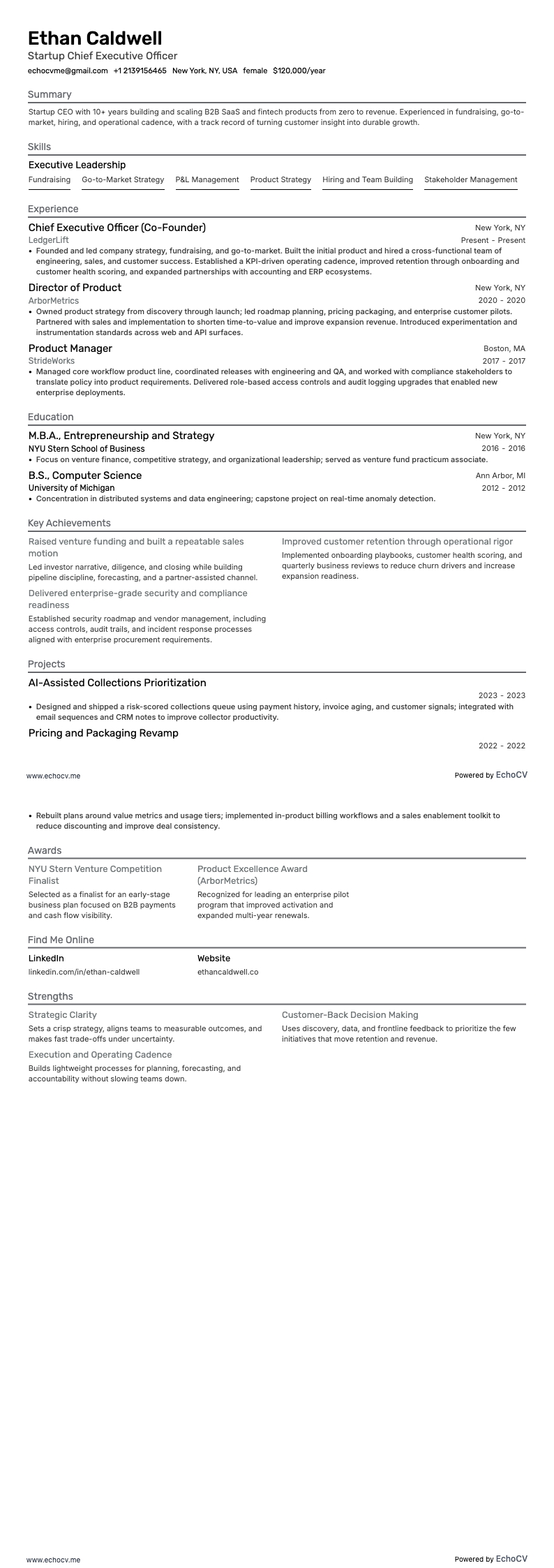
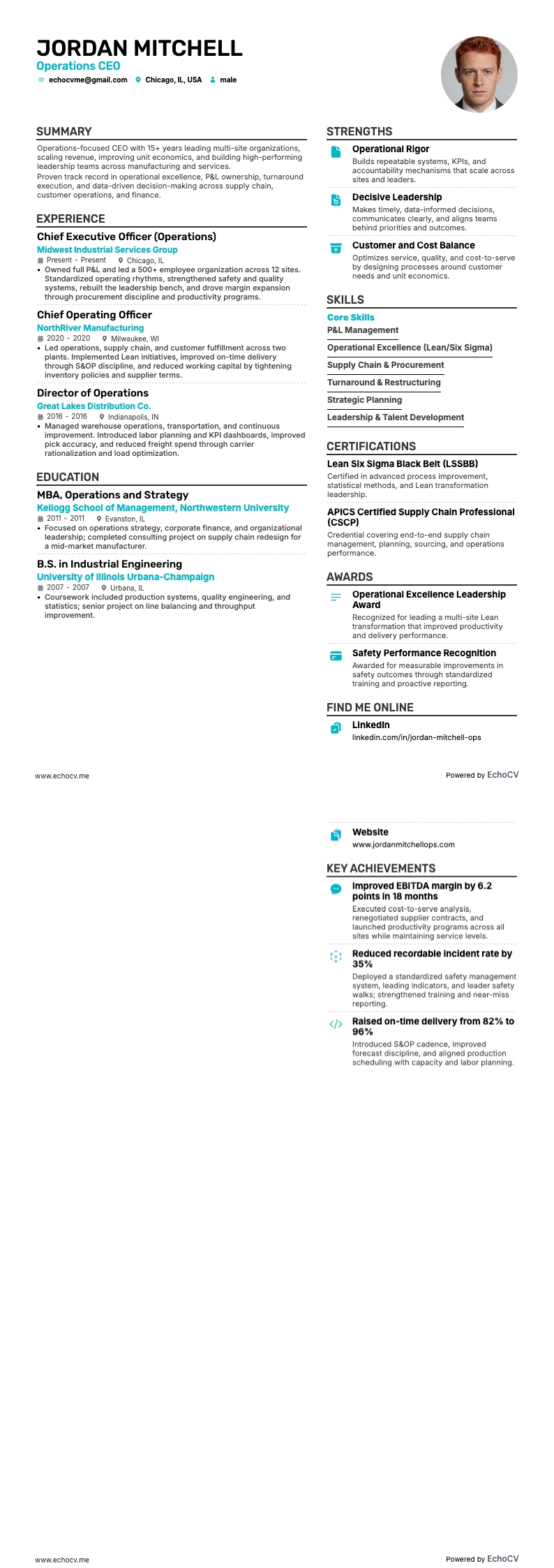
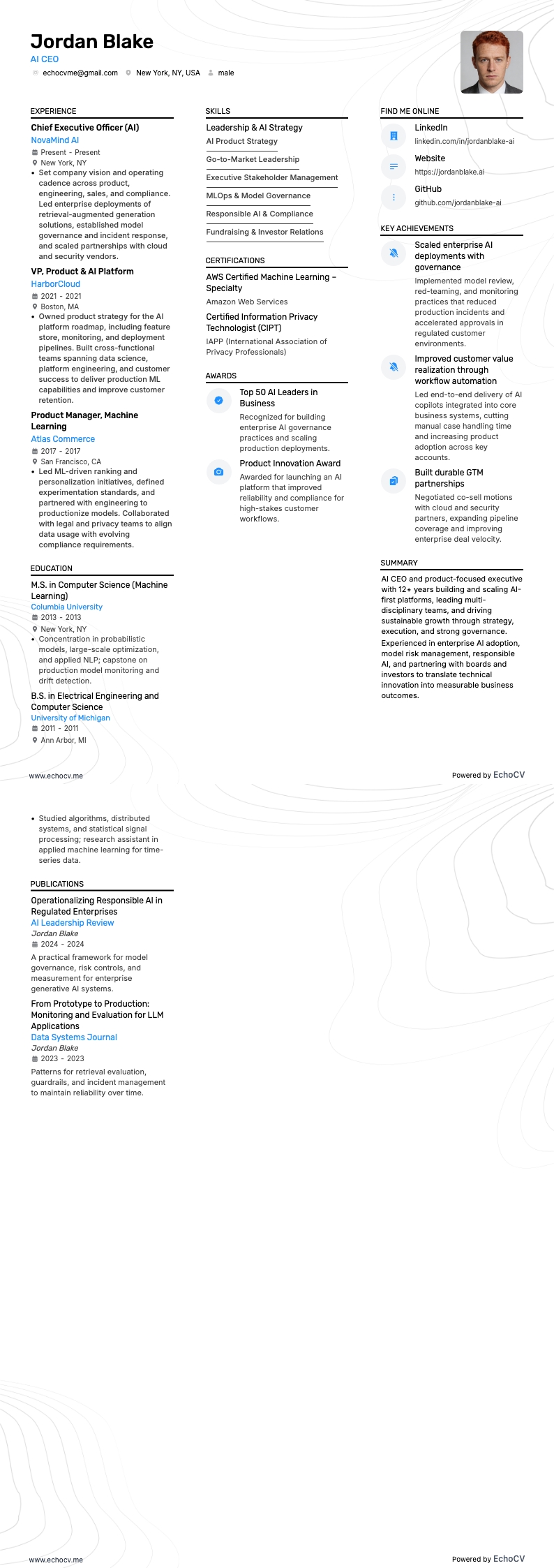
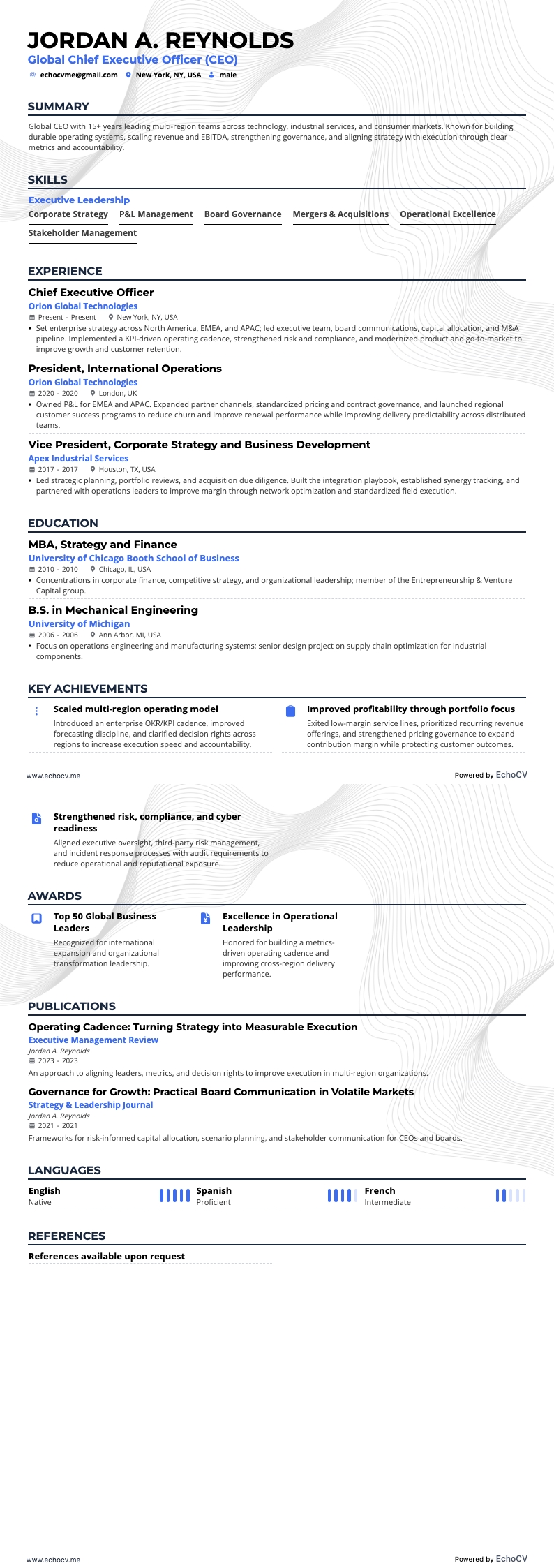
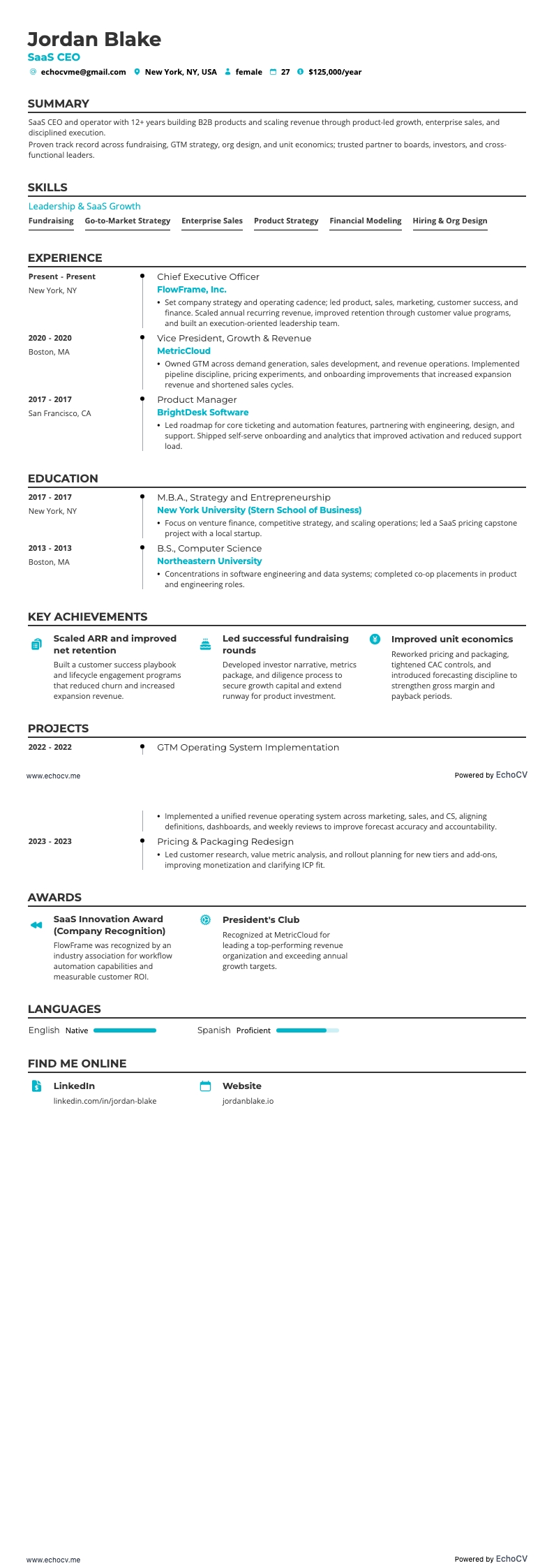
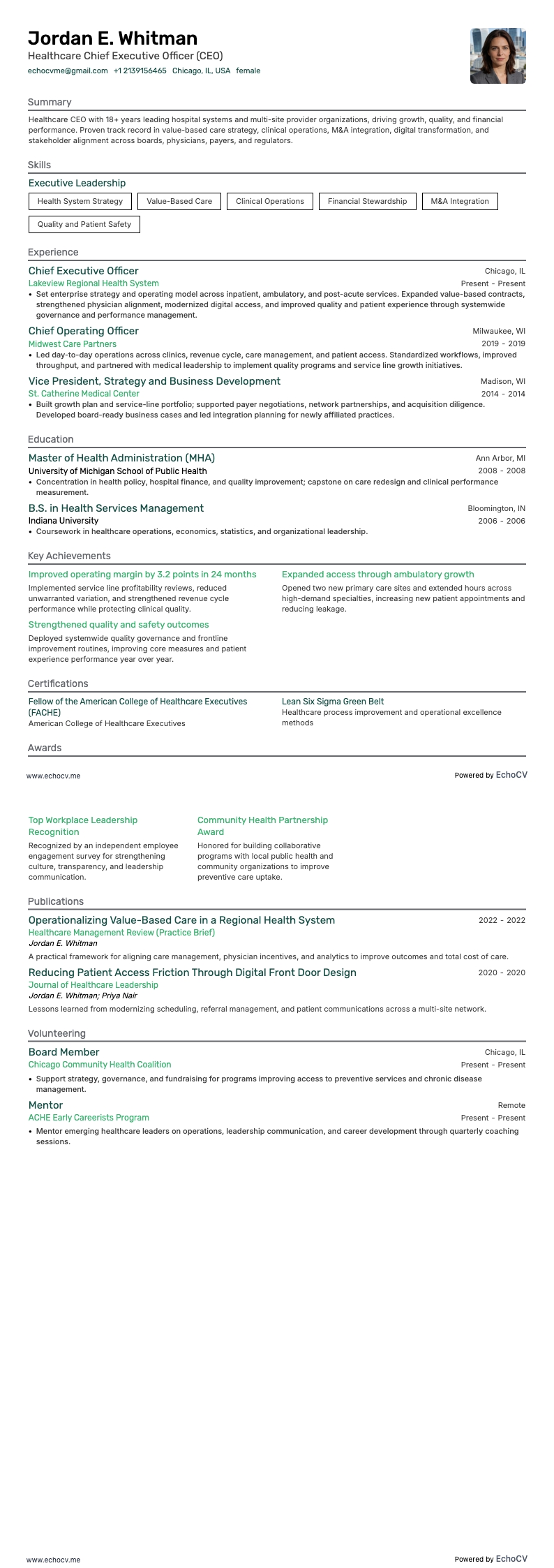
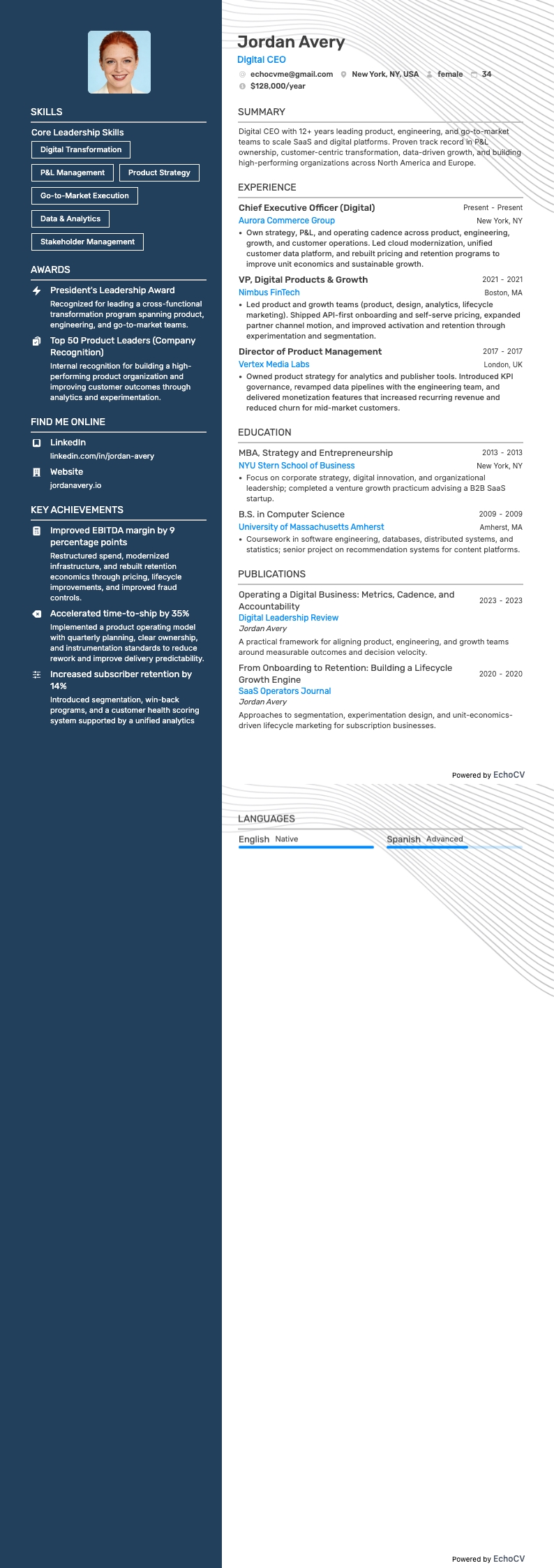
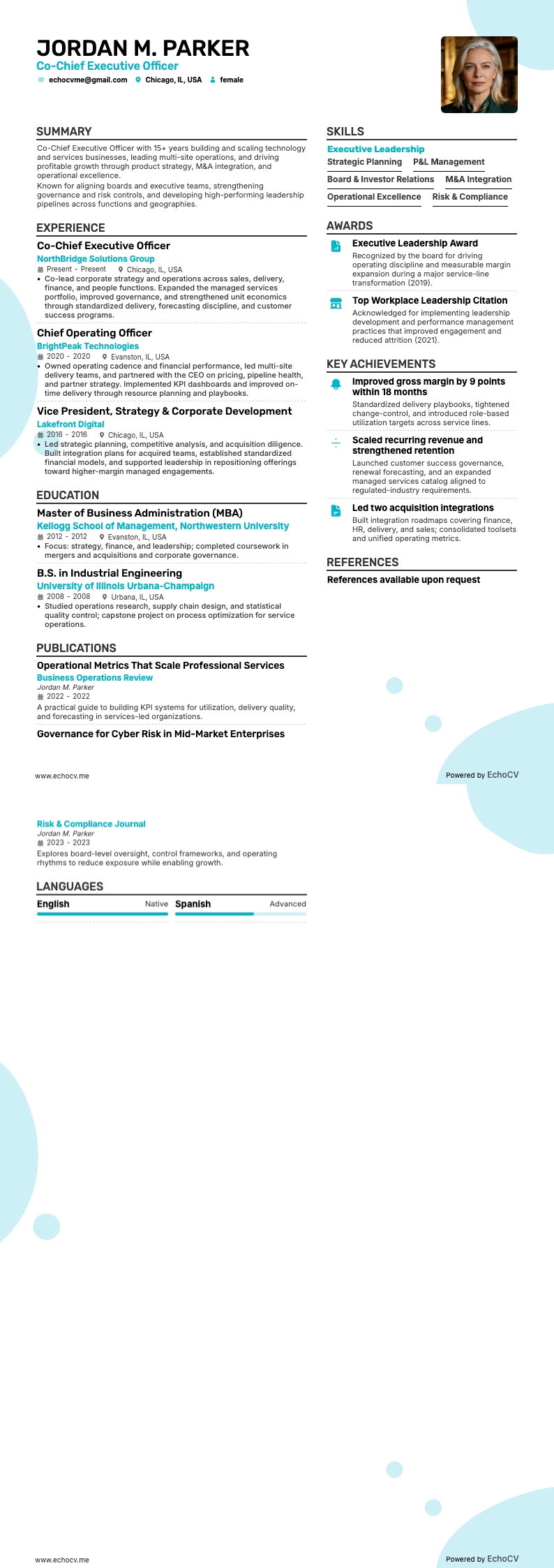
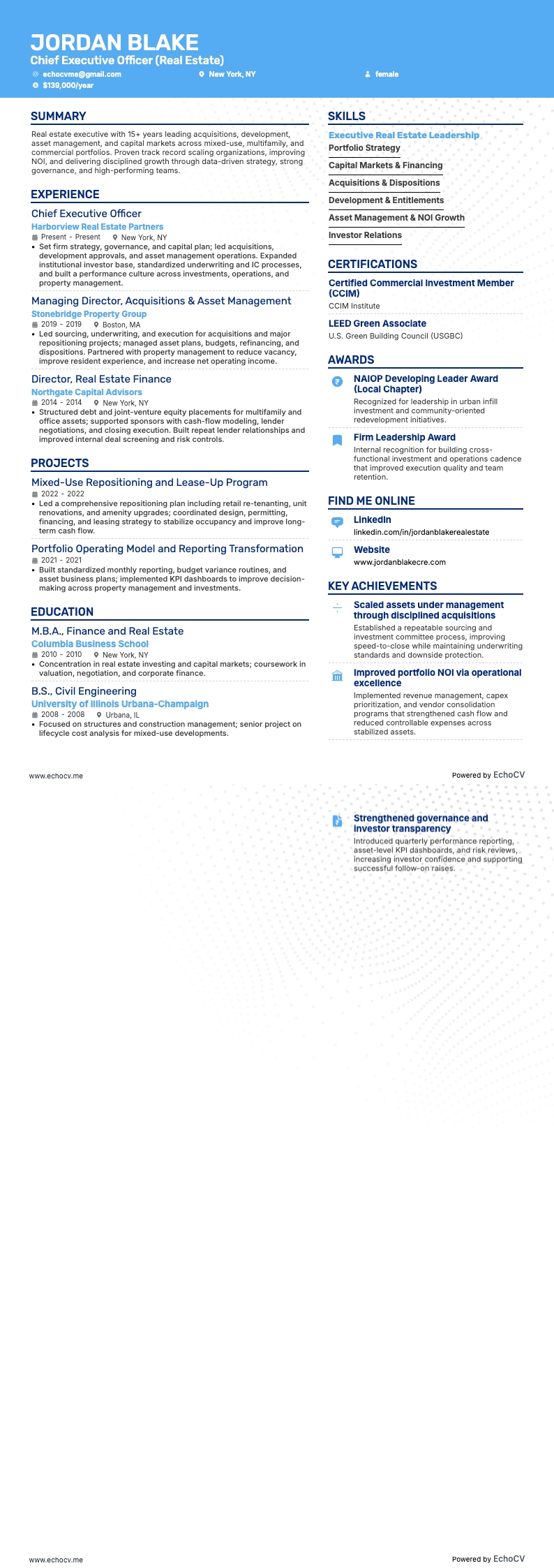
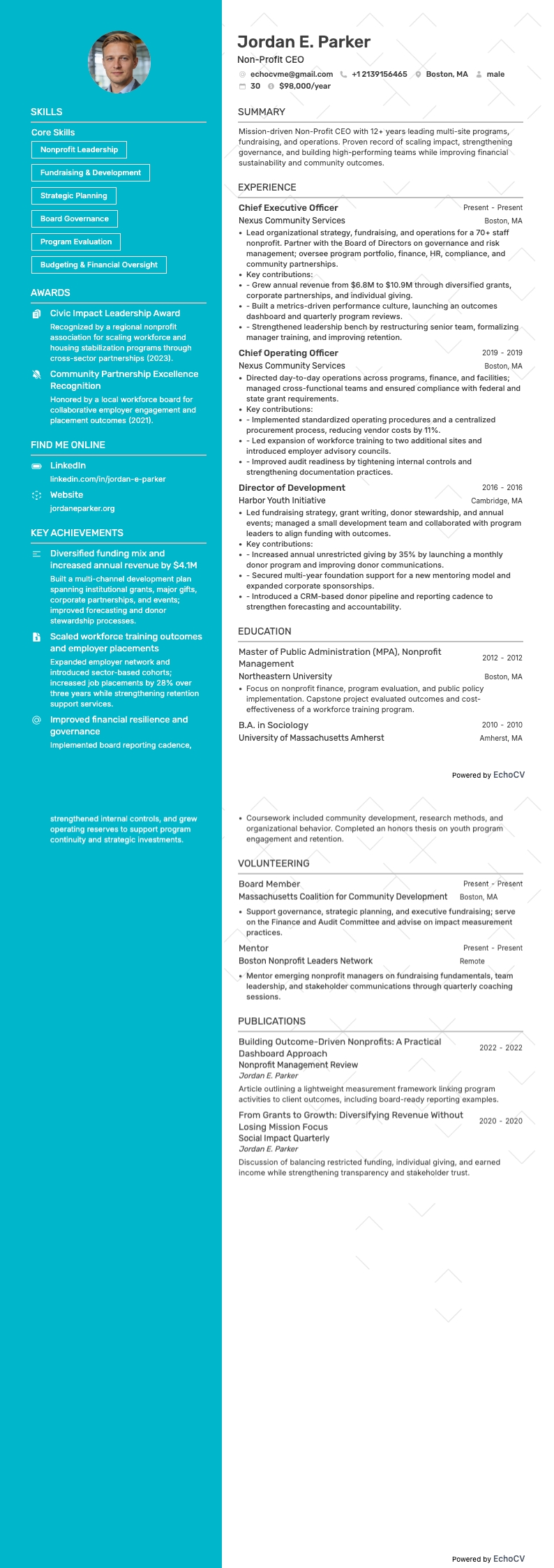
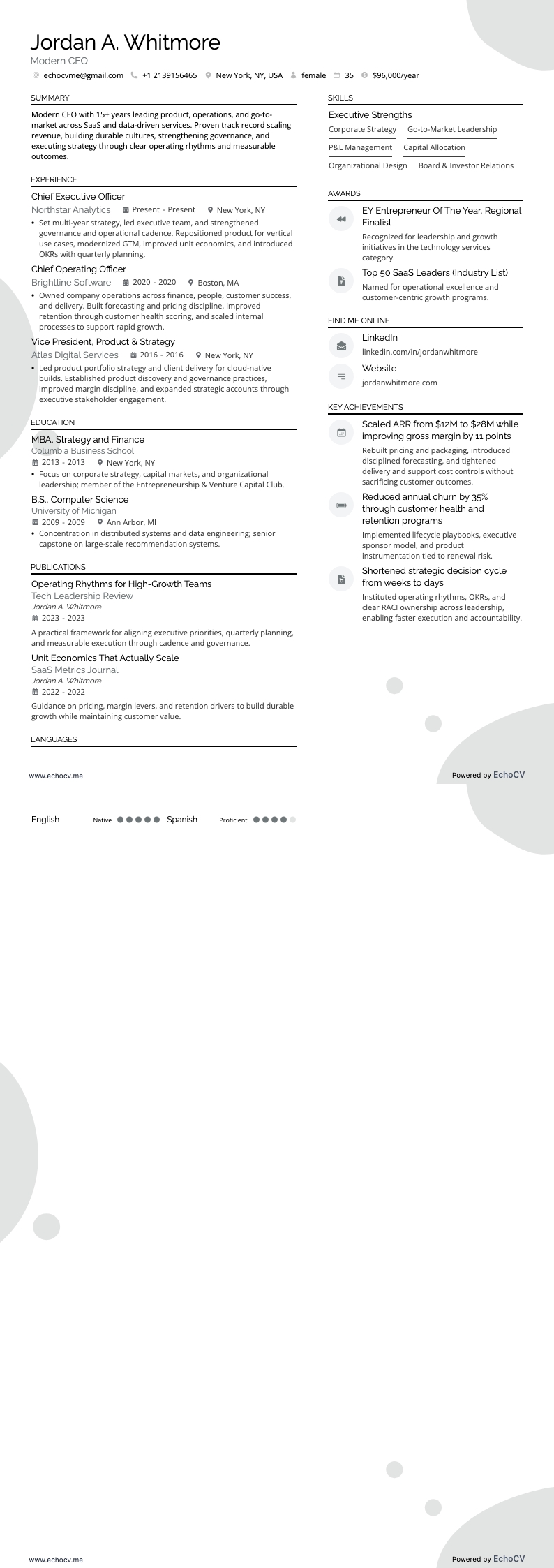
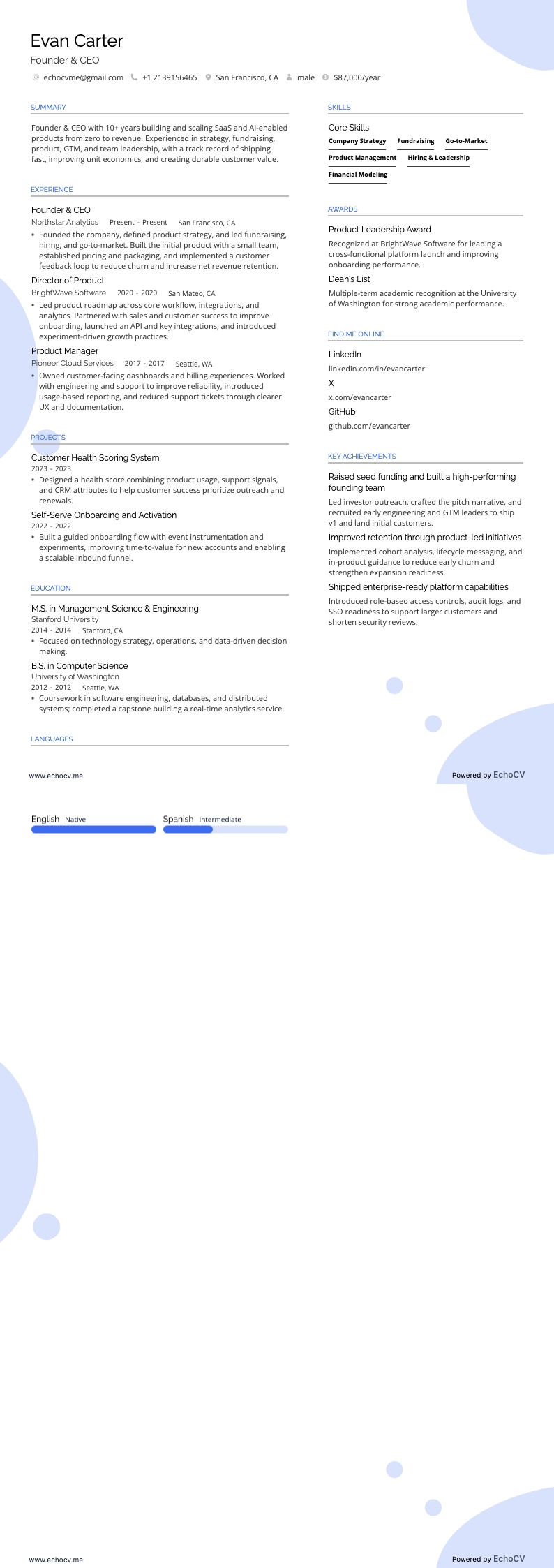
Take a look at the sample CEO experience section below: