Where you should put your portfolio link
Placing your portfolio link in a prominent position on your creative director resume is crucial for ensuring it catches the attention of potential employers. Here are the most effective places to include it:
- Header: Right alongside your contact information. This is one of the first places employers look, making it an ideal spot for your portfolio link. It ensures visibility regardless of how much time someone spends looking at your resume.
- Top of your resume: Just under your name and contact details. Before you dive into your professional experience or skills, having your portfolio link here acts as an invitation to view your work upfront.
- Summary or objective section: If you include a brief summary or objective at the beginning of your resume, consider adding your portfolio link at the end of this section. It naturally invites readers to explore your work after getting an overview of your background.
- End of your resume: As part of your closing remarks or in a separate section labeled "Portfolio" or "Online Portfolio." This placement works well if you want to leave a lasting impression.
Regardless of where you place it, ensure your portfolio link is easy to read and type into a browser, consider using a URL shortener if necessary.
Listing creative director resume experience
In this section, you will be able to demonstrate your value through a well-organized list of your professional experience on your resume. This is your chance to illustrate your career development over the years, so take your time and strive to make the impression you need.
When listing your previous job experience on a creative director resume, follow a format that showcases your career progression, emphasizes your creative achievements, and highlights your leadership and project management skills. Here's a suggested approach:
- Use reverse chronological order: Start with your most recent position and work backward. This layout helps recruiters see your career development and current level of responsibility.
- Include job title, company, location, and dates: Clearly state your job title, the name of the company, its location, and the period you worked there (month and year).
- Highlight key responsibilities and achievements:
- For each role, provide a brief list of your primary responsibilities. Focus on duties that are relevant to a creative director position, such as leading creative teams, developing branding strategies, and overseeing the production of creative materials.
- Emphasize achievements with measurable outcomes, such as successful campaigns you led, awards won, increases in brand engagement, or improvements in the creative workflow.
- Tailor your experience to the job description: Identify keywords and required skills in the job description, and make sure to include experiences that demonstrate them.
- Showcase leadership and collaboration:
- Highlight any leadership roles you've held, even in positions not directly related to creative direction.
- Mention successful collaborations with other departments, clients, or external partners to illustrate your ability to work cross-functionally and drive projects to completion.
- Include relevant tools and technologies: Mention your proficiency with industry-standard software and tools (e.g., Adobe Creative Suite, Sketch, Figma) that are essential for creating and managing creative work.
- Mention professional development:
- If you have transitioned to a creative leadership role from a different background, highlight any courses, certifications, or training that helped you develop relevant skills.
- Include any participation in industry conferences, workshops, or seminars that demonstrate your commitment to staying current with creative trends and leadership practices.
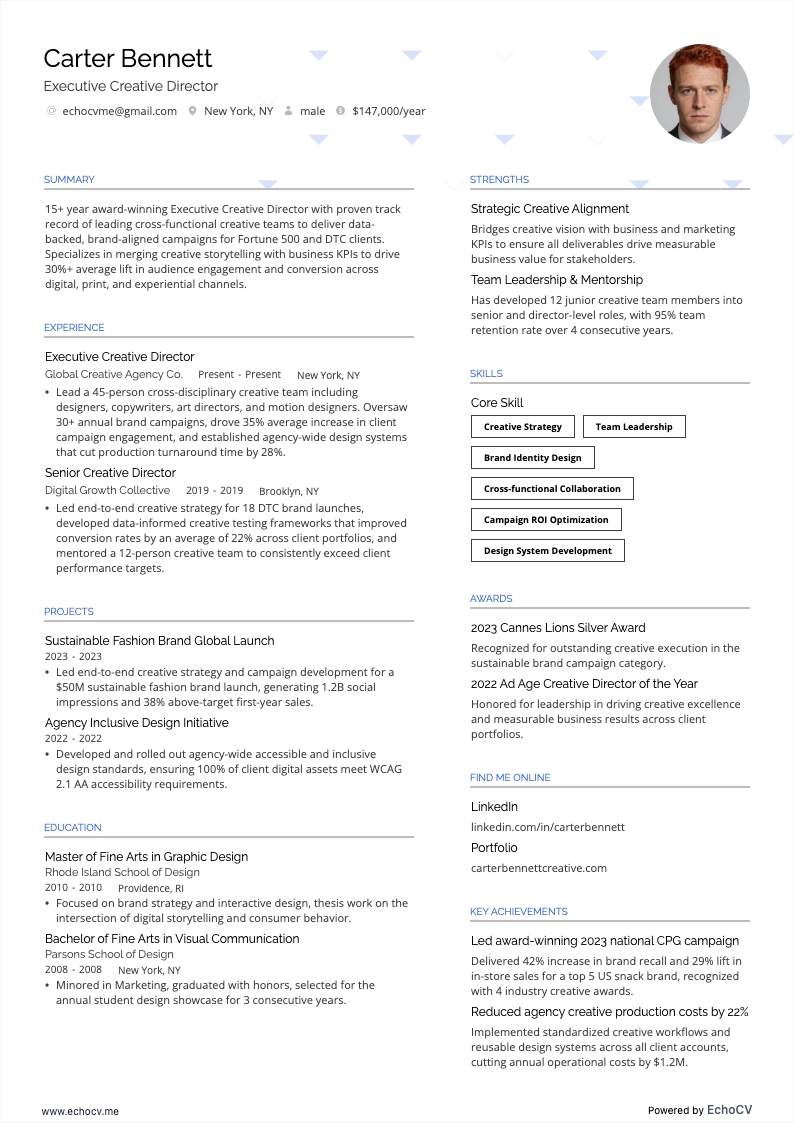
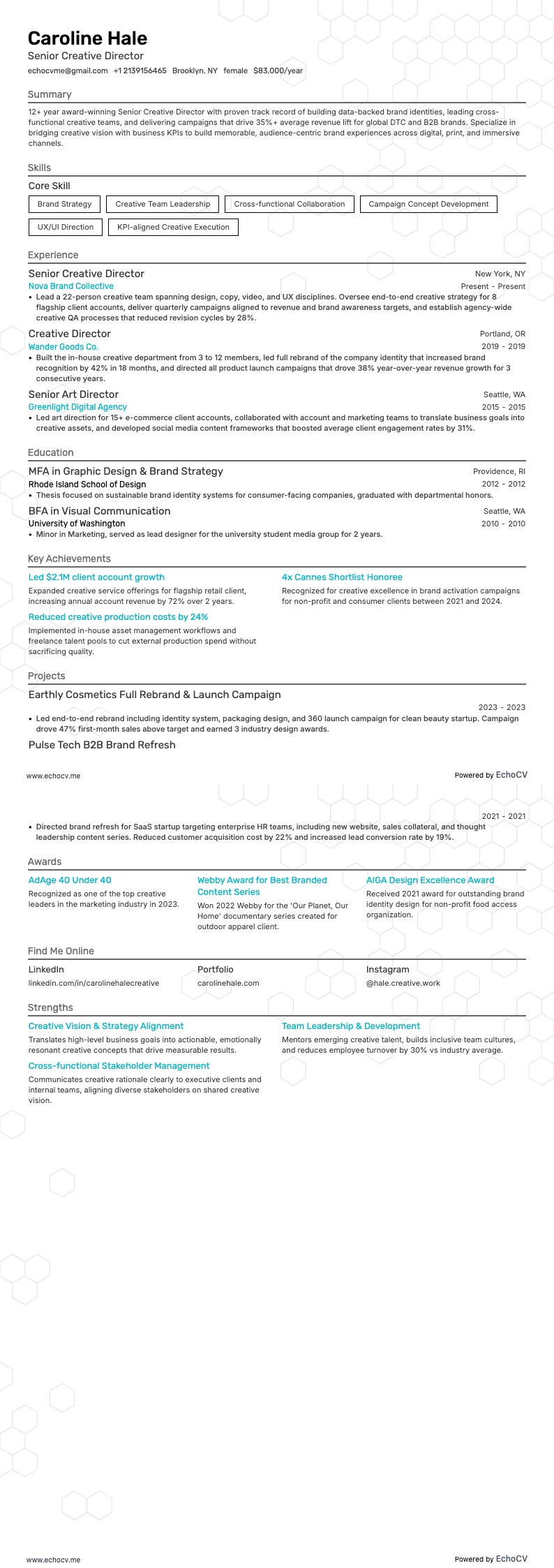
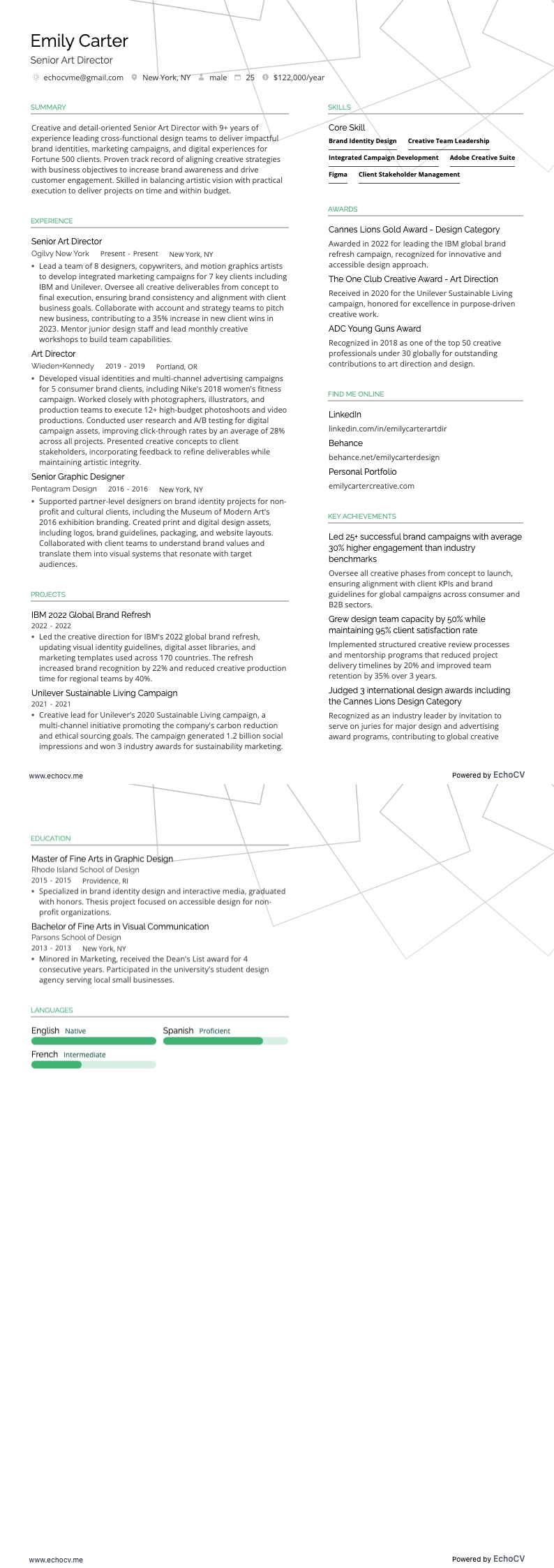
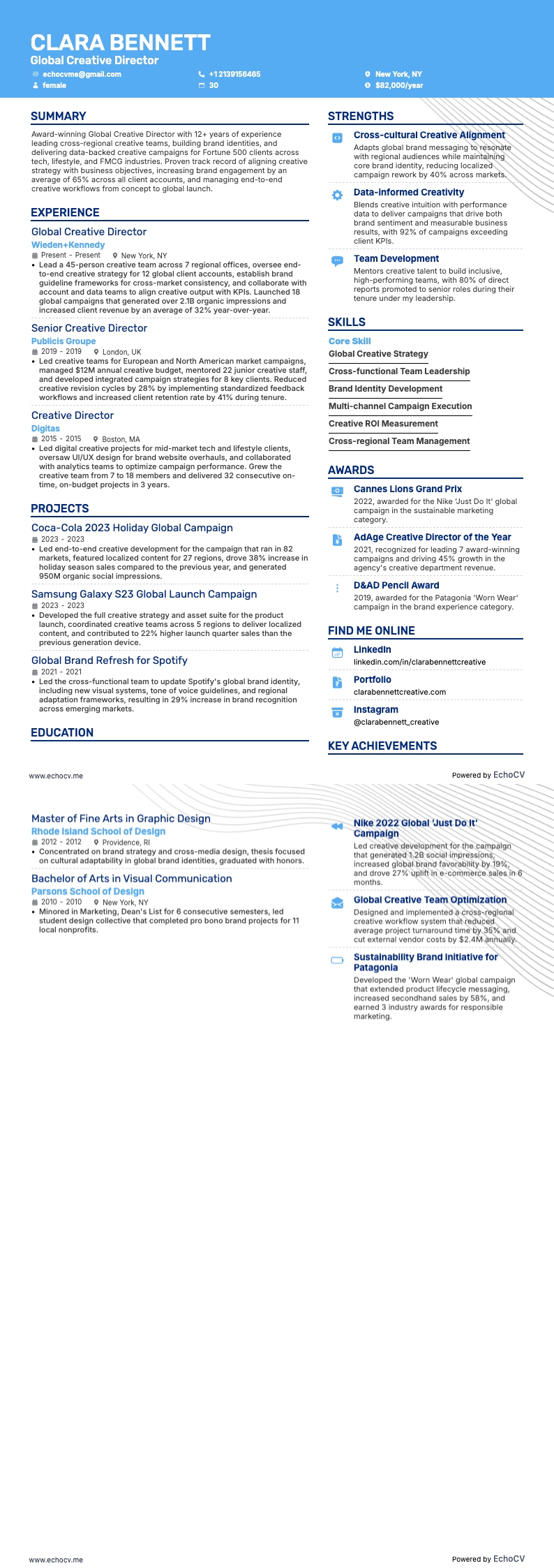
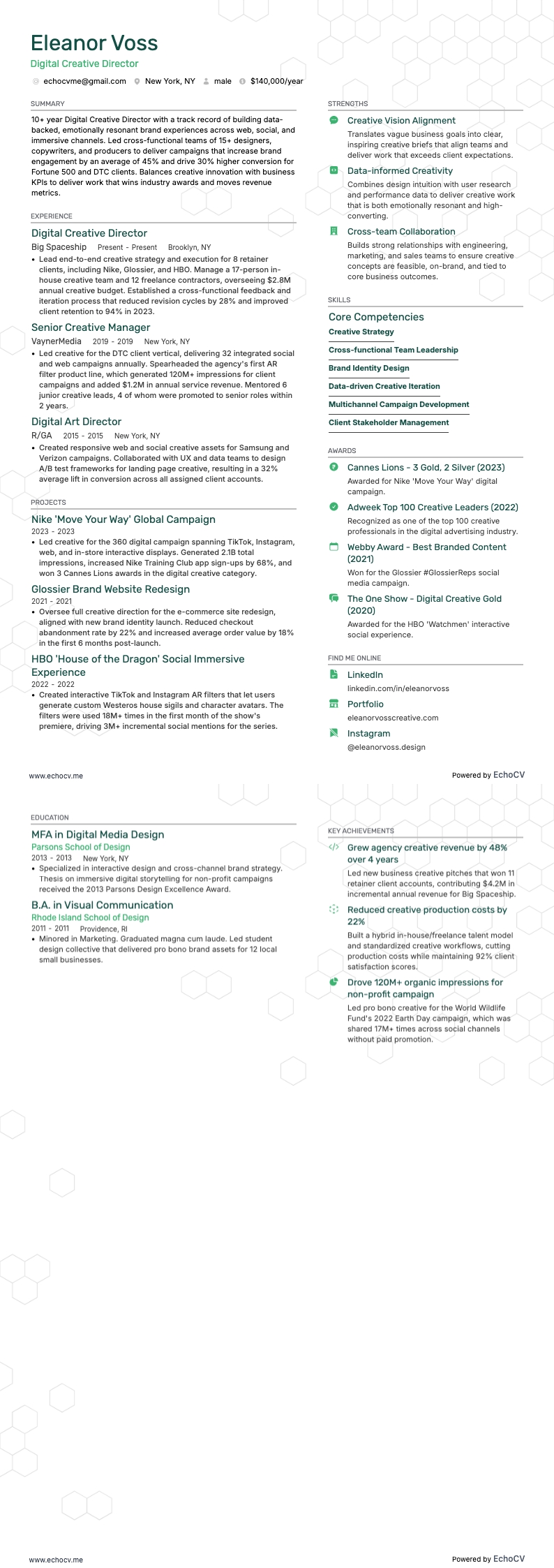
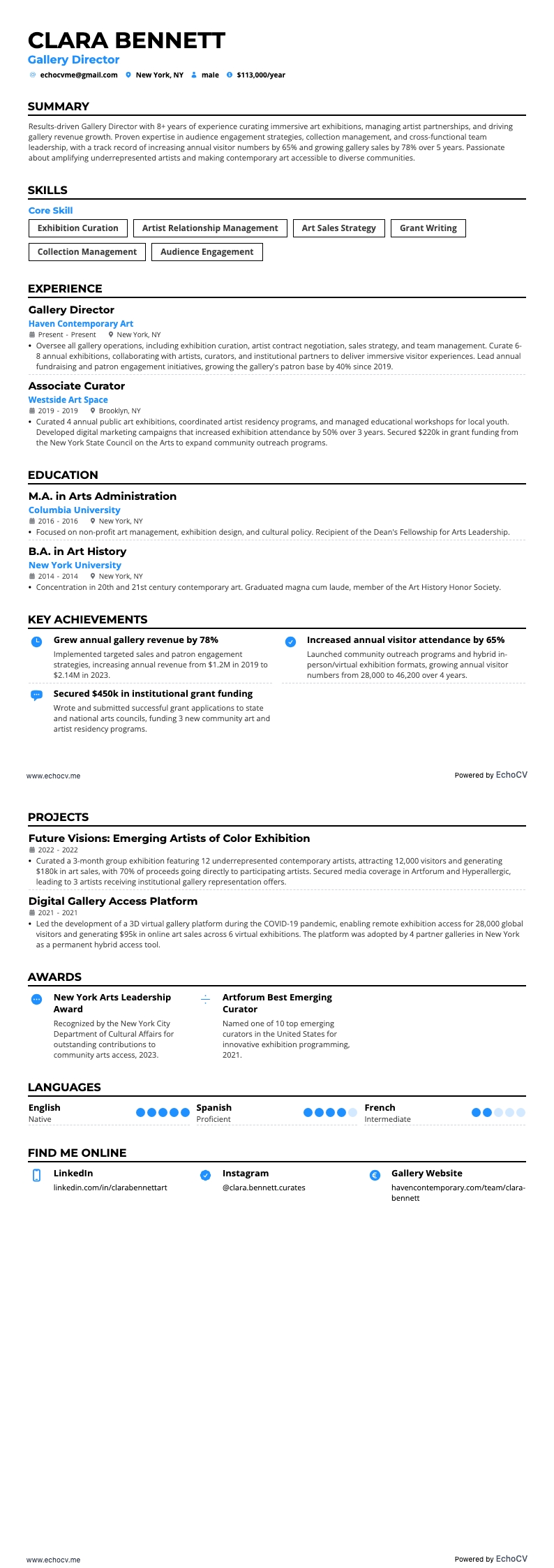
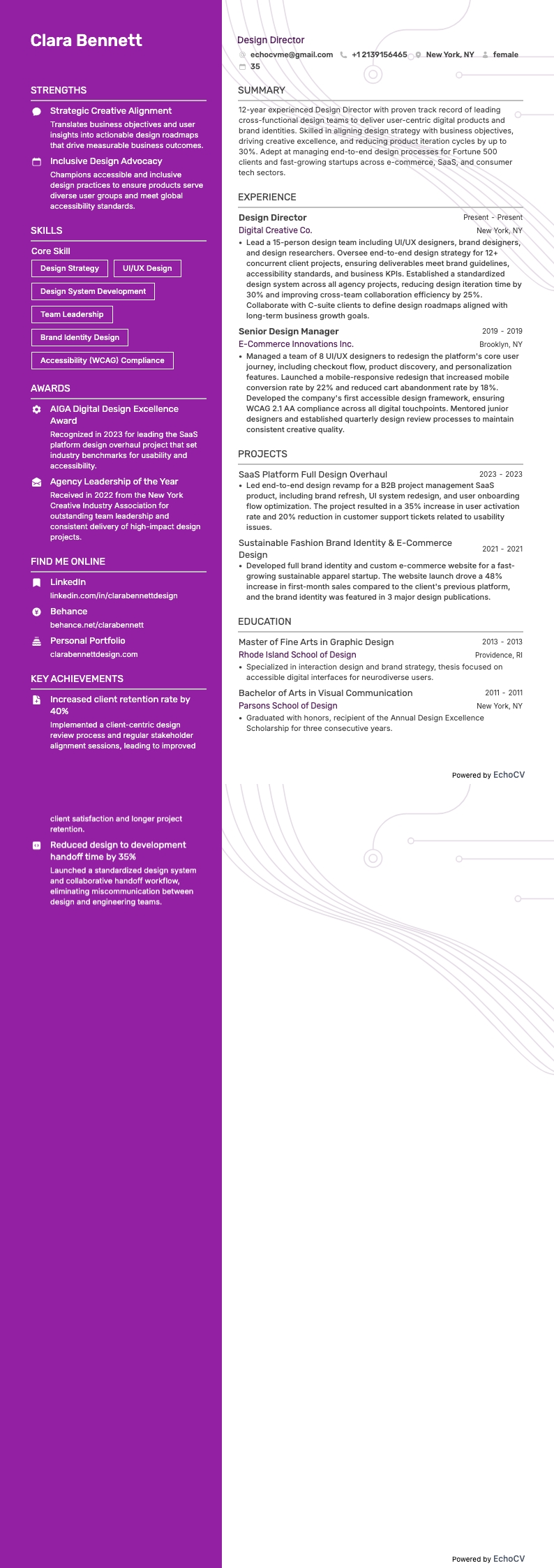
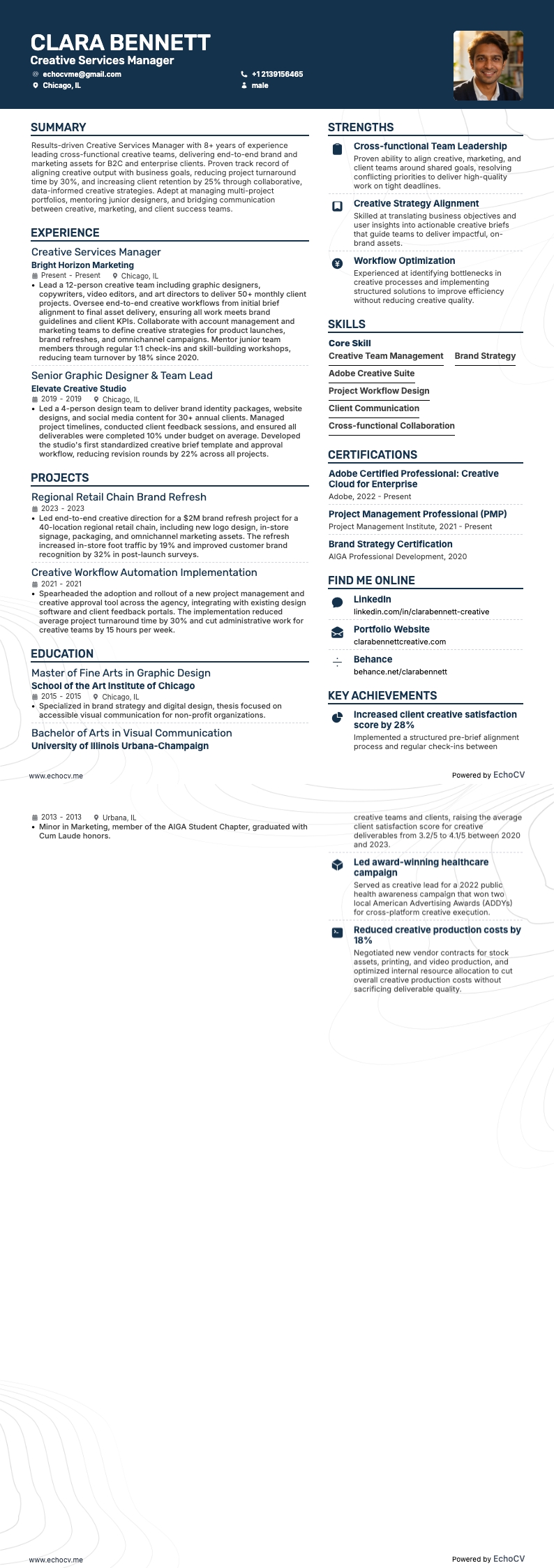
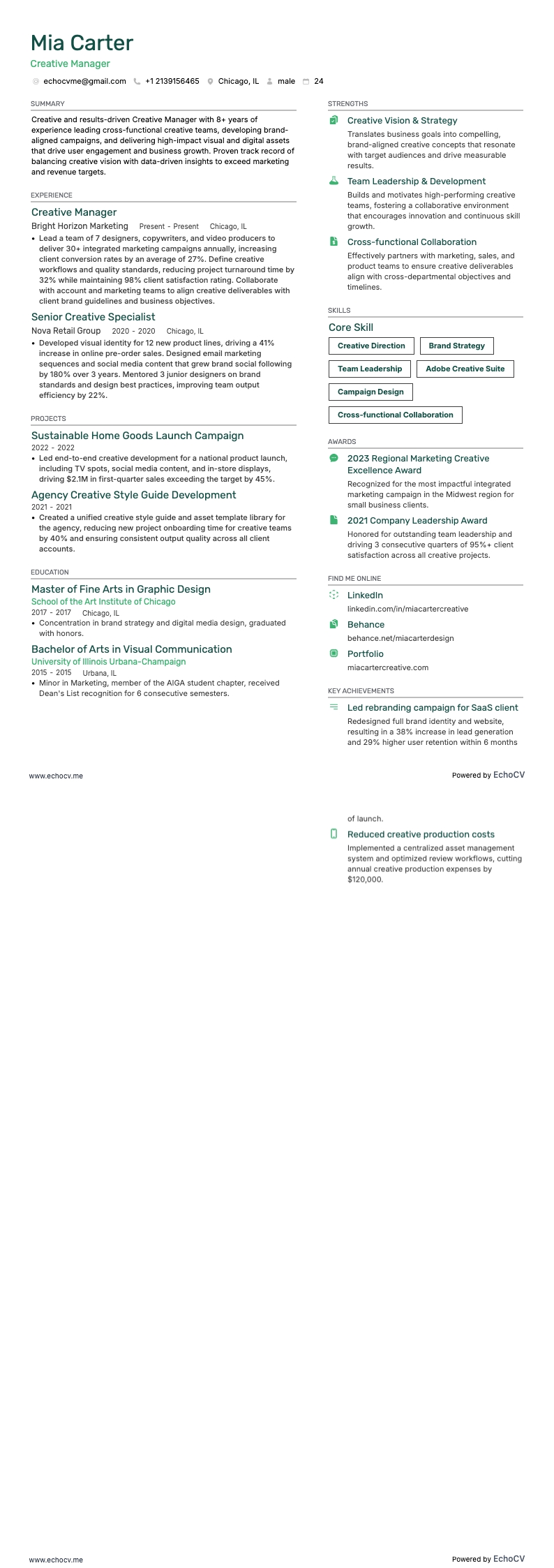
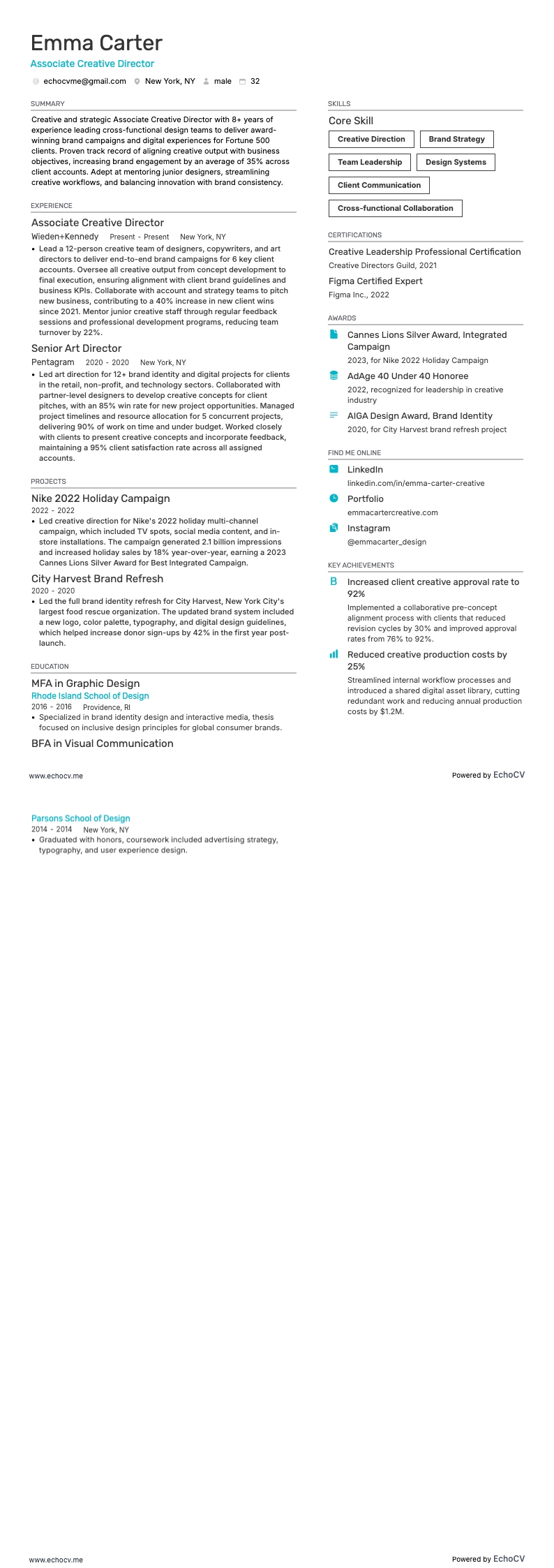
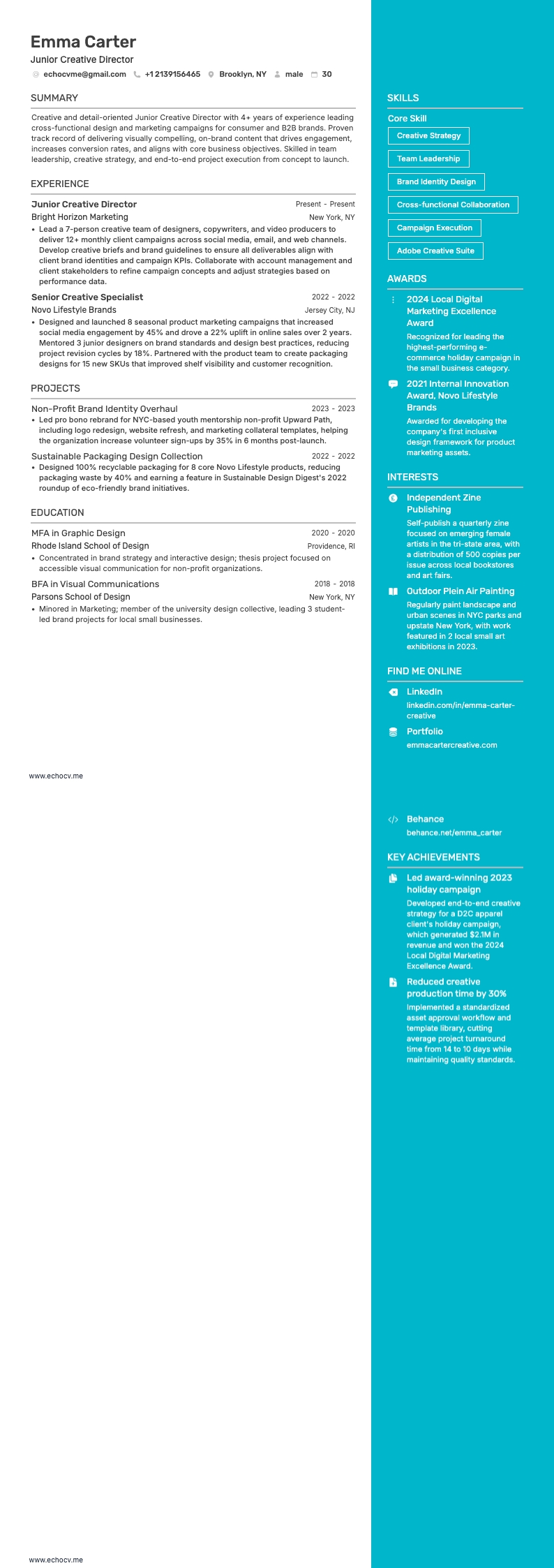
Here are a couple of examples so you can better visualize what should and shouldn’t do.