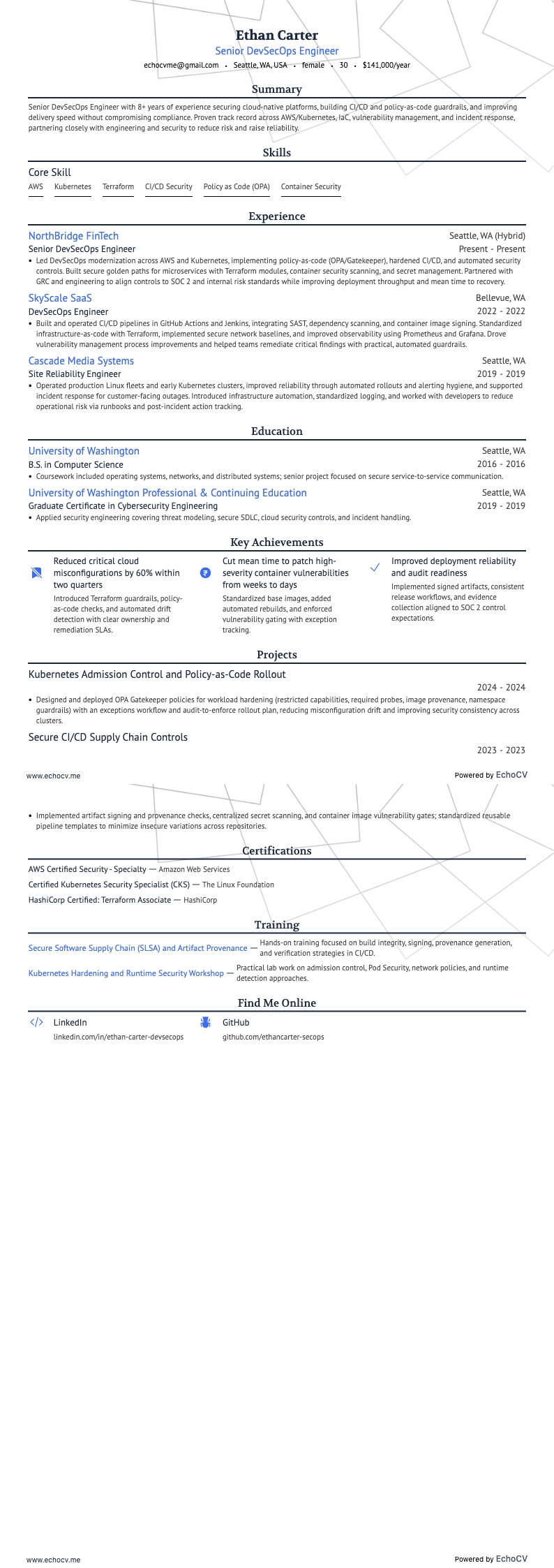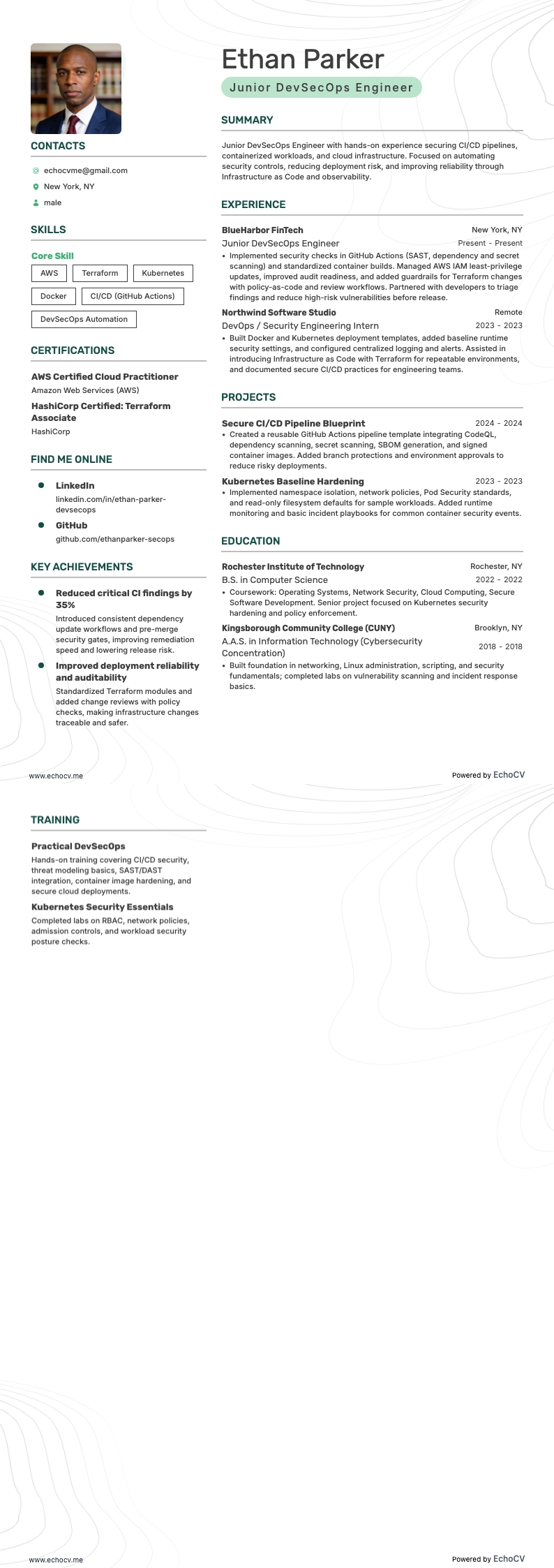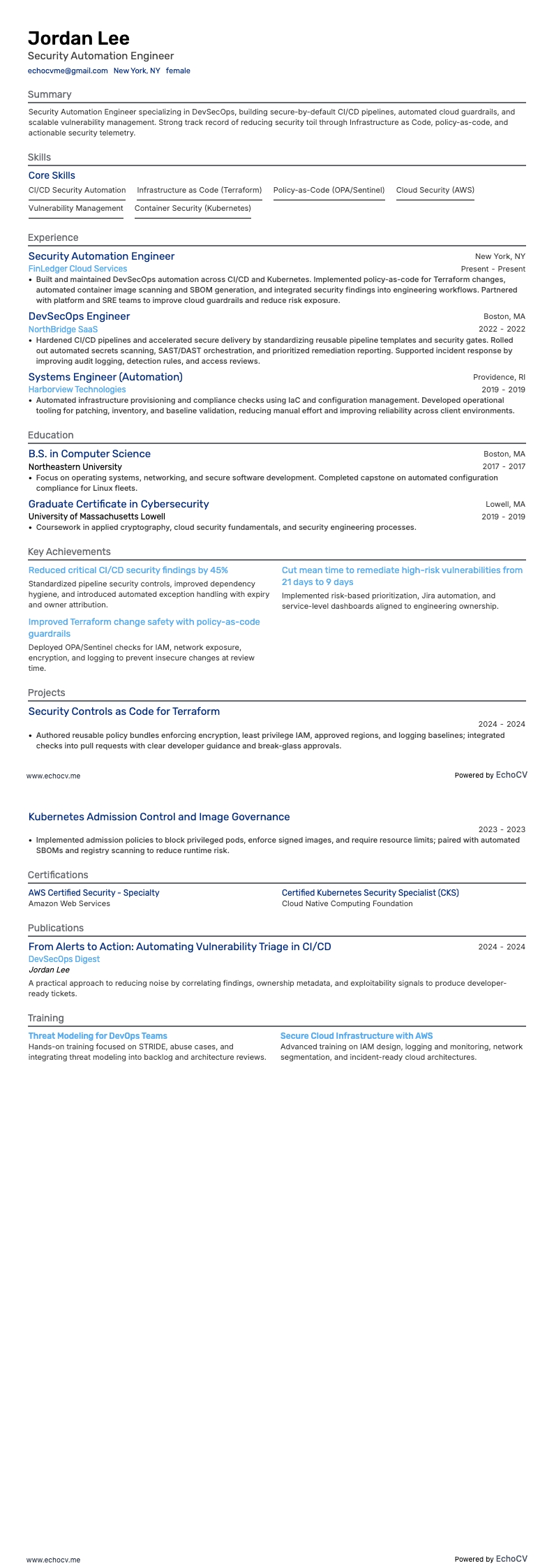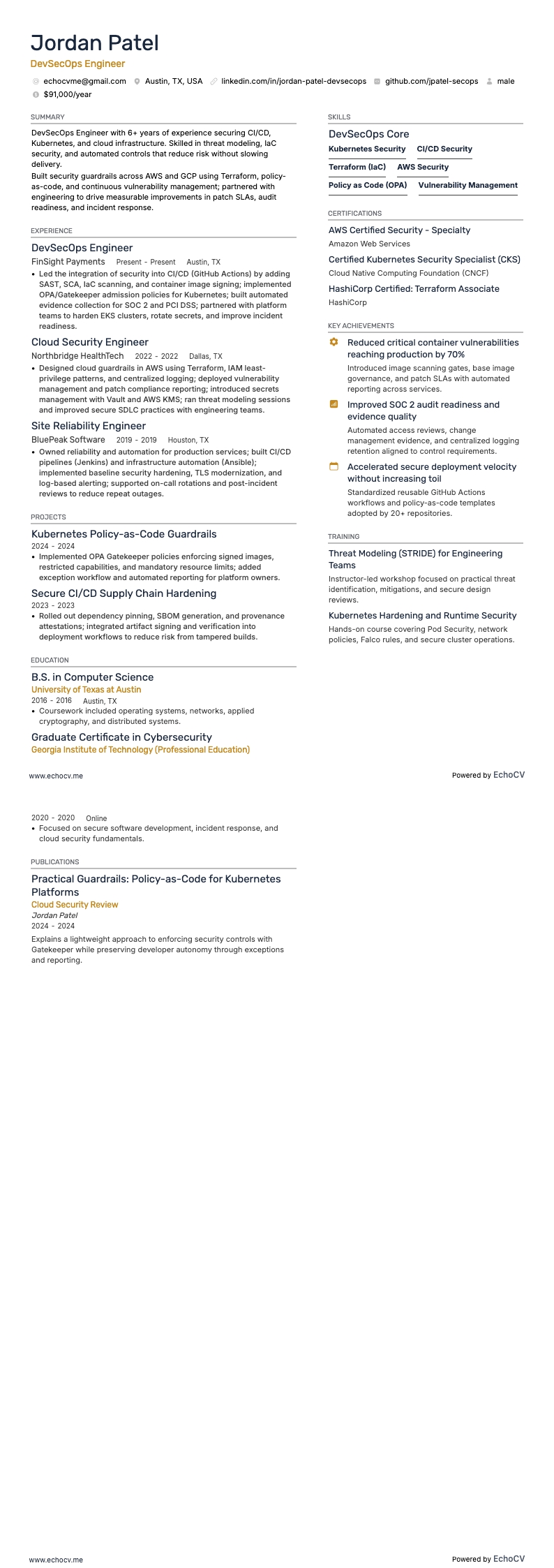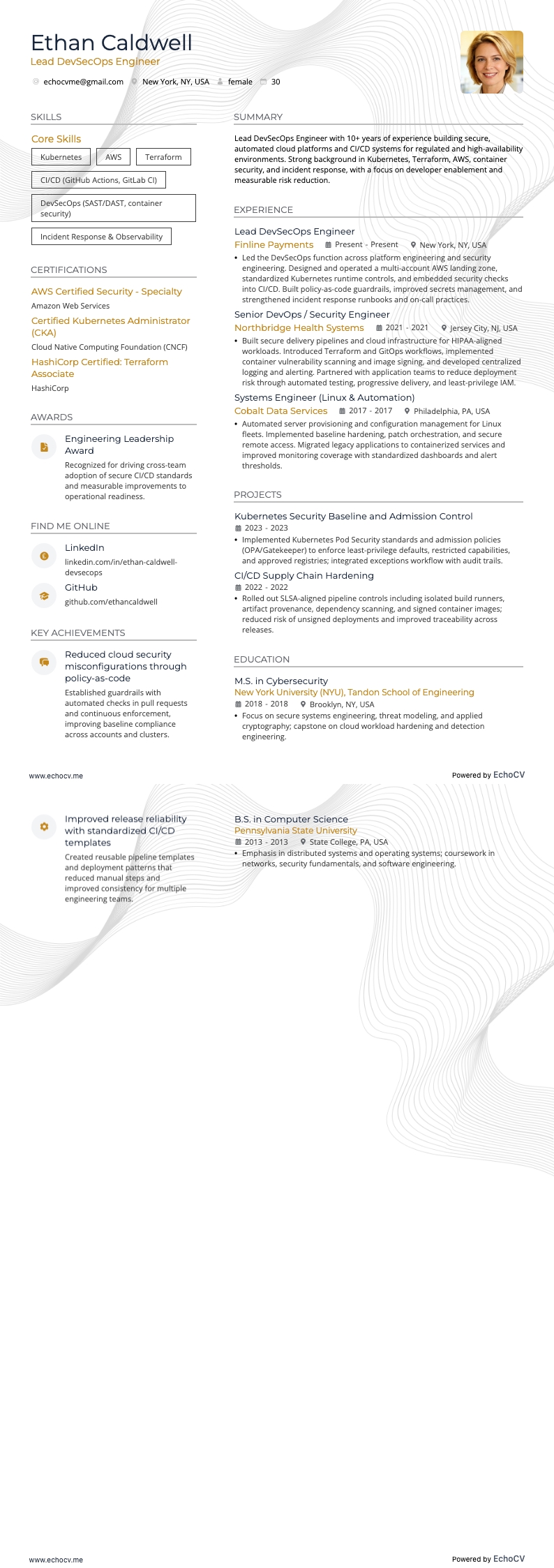
Once you’ve organized your resume with the right components in place, the next step is to write the experience section in a way that fits that structure and shows your impact clearly.
How to write your DevSecOps engineer resume experience
Your work experience section should spotlight shipped security integrations, pipeline automations, and infrastructure hardening you delivered using role-relevant tools like Terraform, Kubernetes, SAST/DAST scanners, or CI/CD platforms—always anchored to measurable outcomes such as reduced vulnerability counts, faster remediation cycles, or improved deployment frequency. Hiring managers prioritize demonstrated impact over descriptive task lists, so every bullet should prove you moved a security or reliability metric forward.
Each entry should include:
- Job title
- Company and location (or remote)
- Dates of employment (month and year)
Three to five concise bullet points showing what you owned, how you executed, and what outcomes you delivered:
- Ownership scope: the pipelines, cloud environments, container orchestration platforms, application portfolios, or security toolchains you were directly accountable for as a DevSecOps engineer.
- Execution approach: the specific tools, frameworks, and methods you used—such as infrastructure-as-code modules, secrets management solutions, vulnerability scanning integrations, or policy-as-code engines—to embed security into every stage of the delivery lifecycle.
- Value improved: the changes you drove in deployment reliability, mean time to remediation, compliance posture, incident response speed, or overall attack surface reduction across the systems you secured.
- Collaboration context: how you partnered with development, platform engineering, SRE, compliance, or product teams to shift security left, resolve findings, and align remediation priorities with business objectives.
- Impact delivered: the concrete results your work produced, expressed through scale of environments protected, reduction in risk exposure, acceleration of secure release cadences, or achievement of audit and compliance milestones rather than routine activity descriptions.