26 exemples de CV de développeur front-end
EchoCV
Rédigé par l'équipe EchoCV
Mise à jour : 7/10/2024•8 min read
Consultez tous les exemples de CV de ce guide, ou générez votre propre exemple de CV avec votre prompt personnalisé
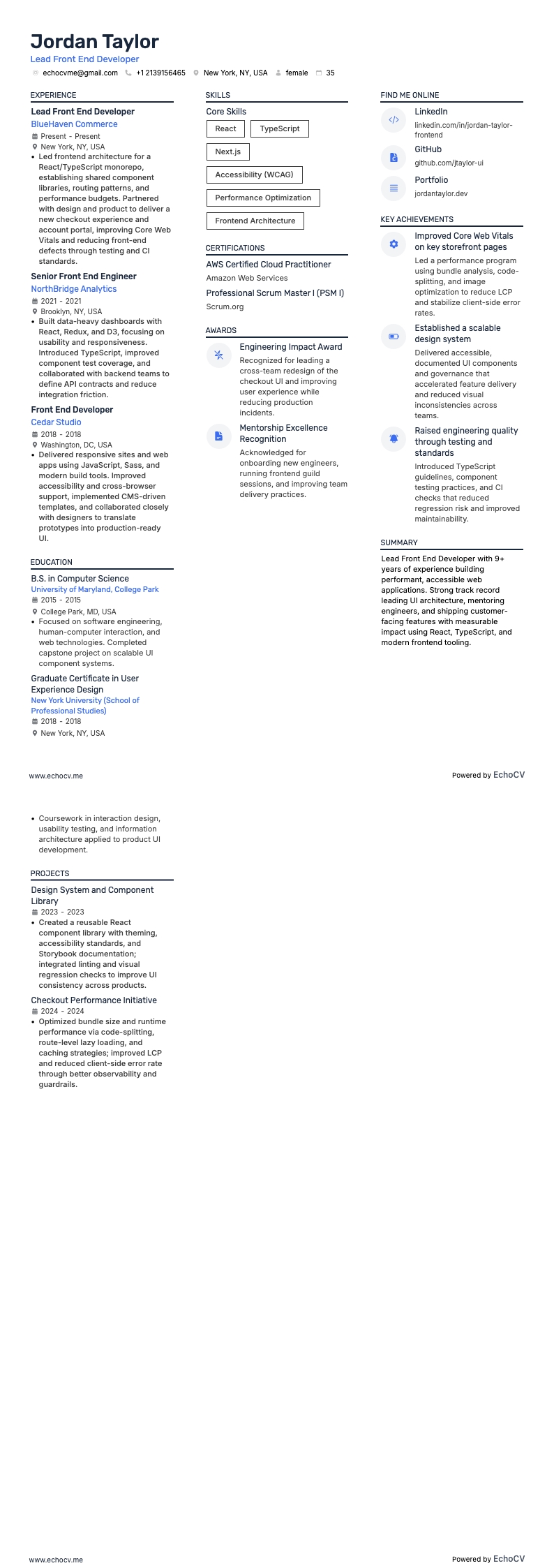
Développeur Front End principal
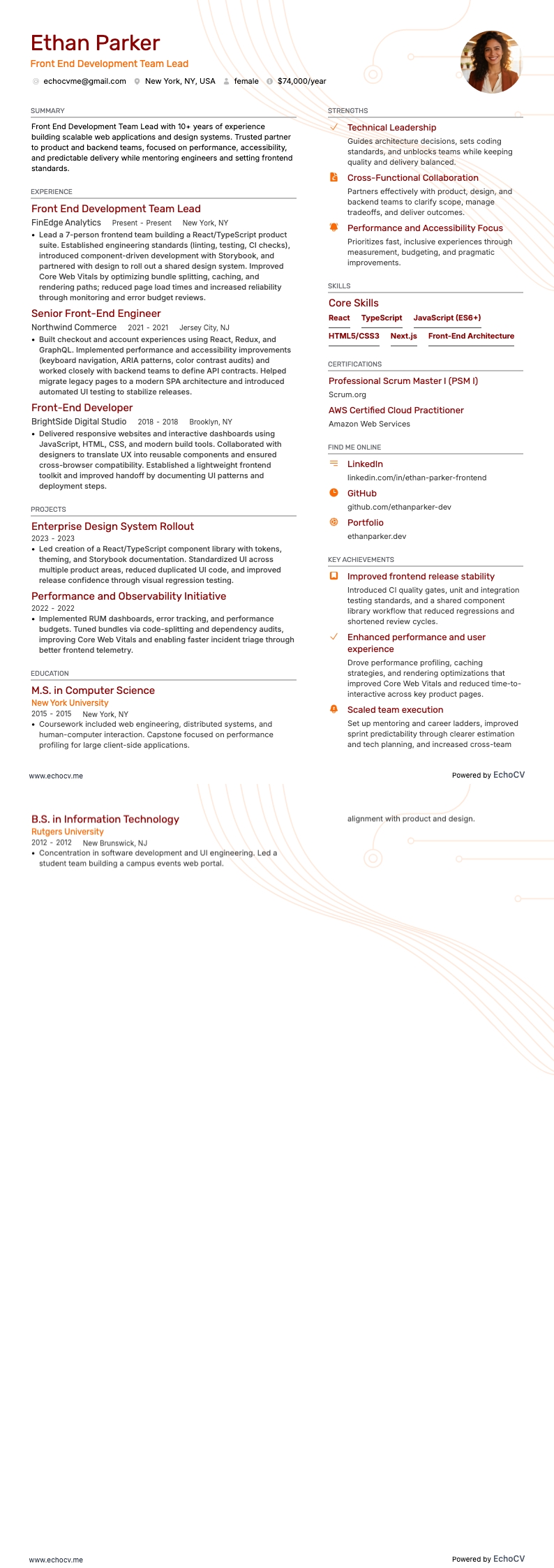
Chef d’équipe développement front-end
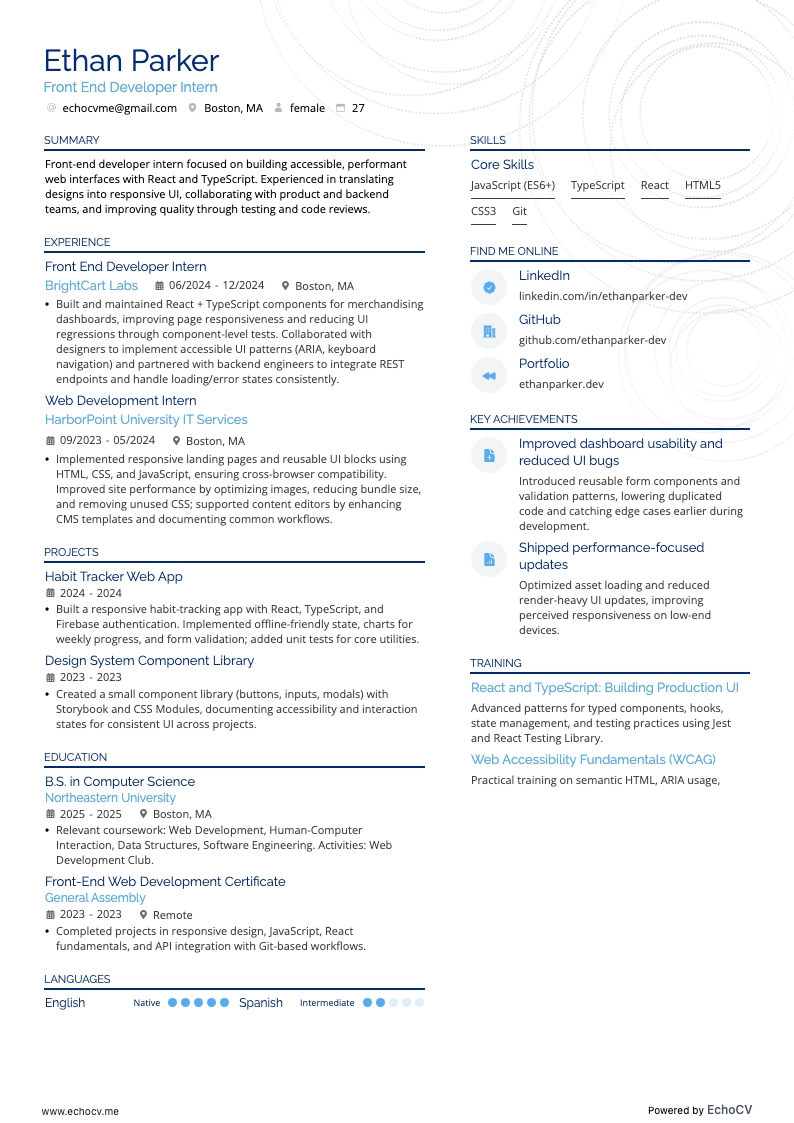
Stagiaire développeur front-end
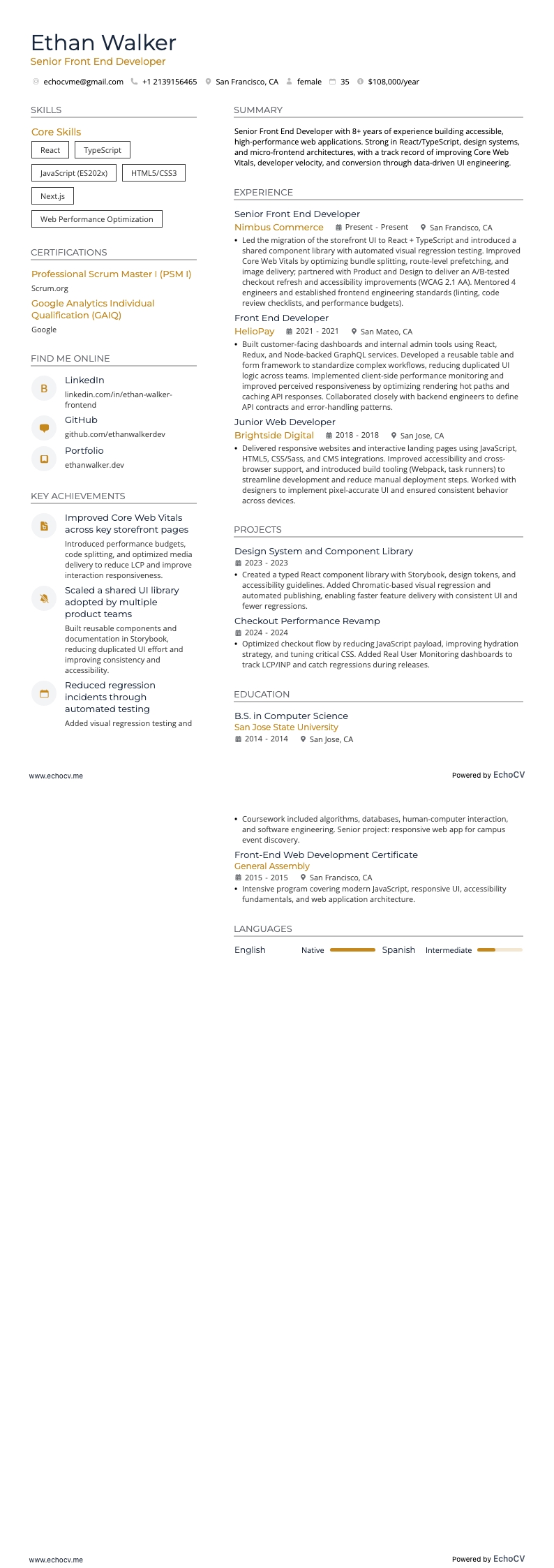
Développeur Front End Senior
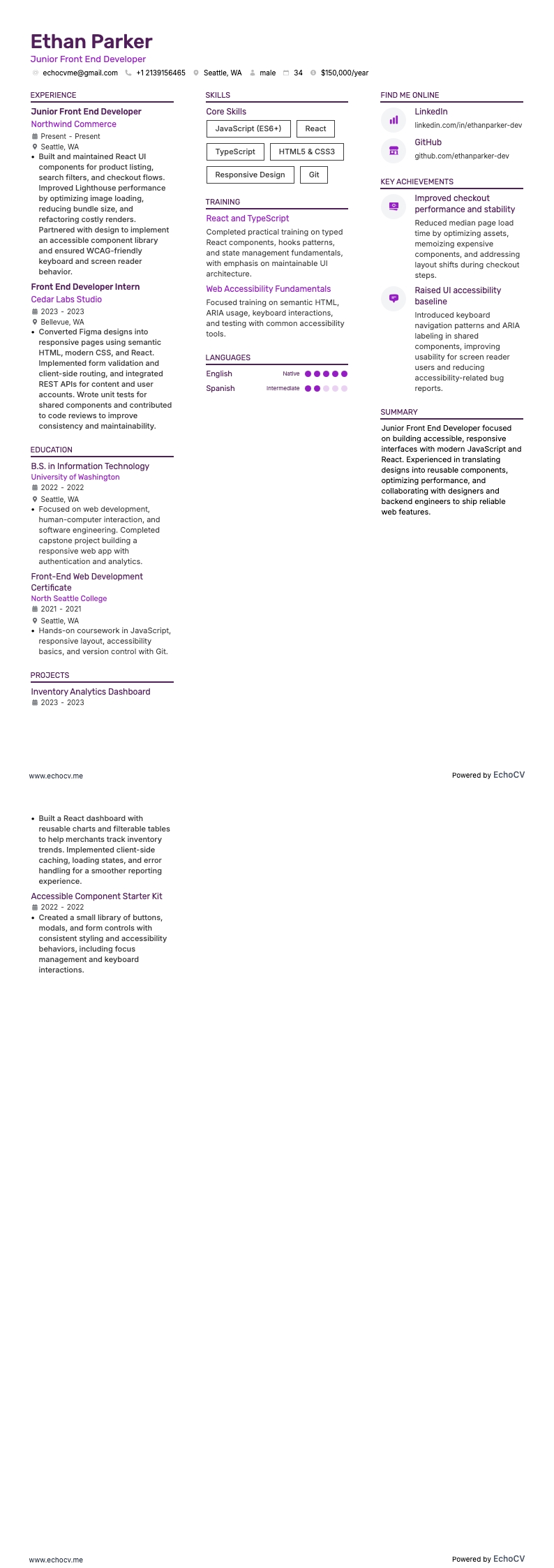
Développeur Front End junior
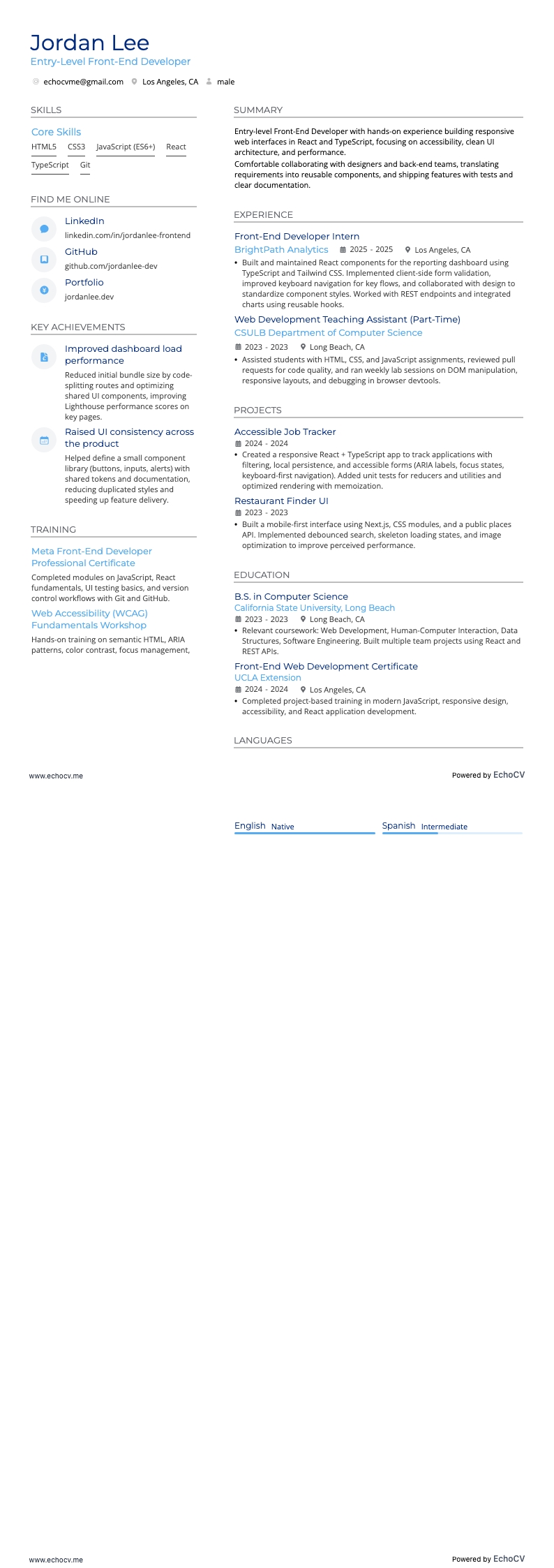
Développeur front-end débutant
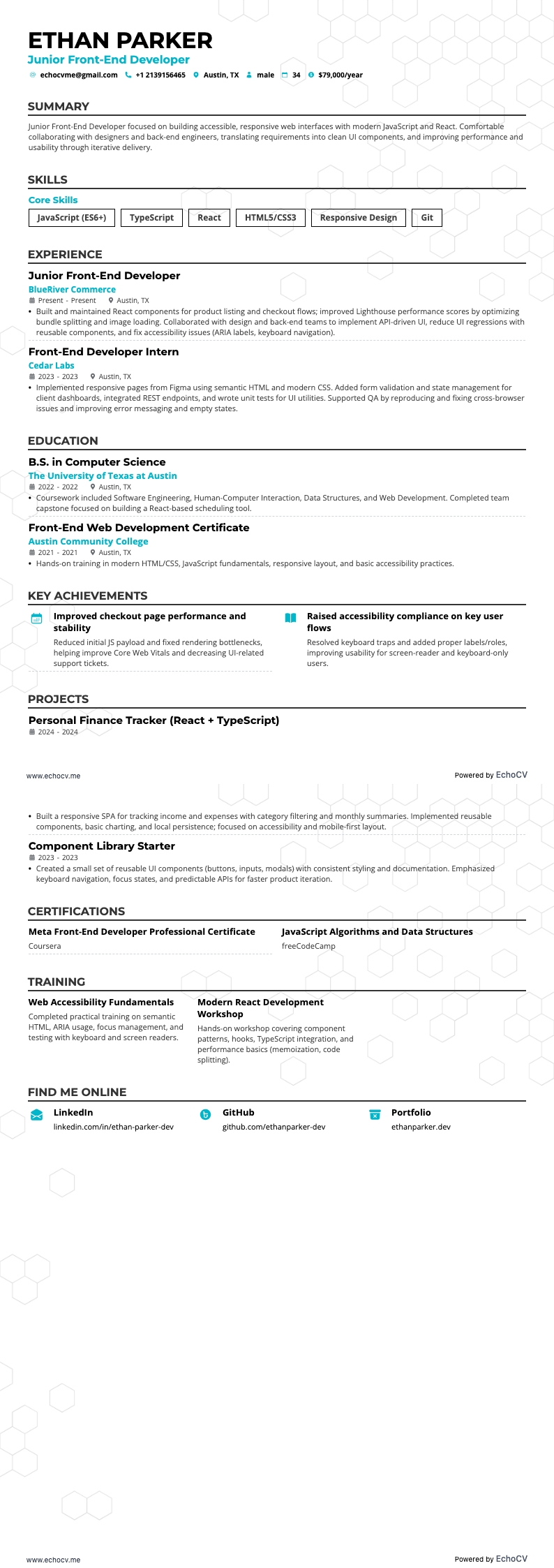
Développeur Front-End Junior
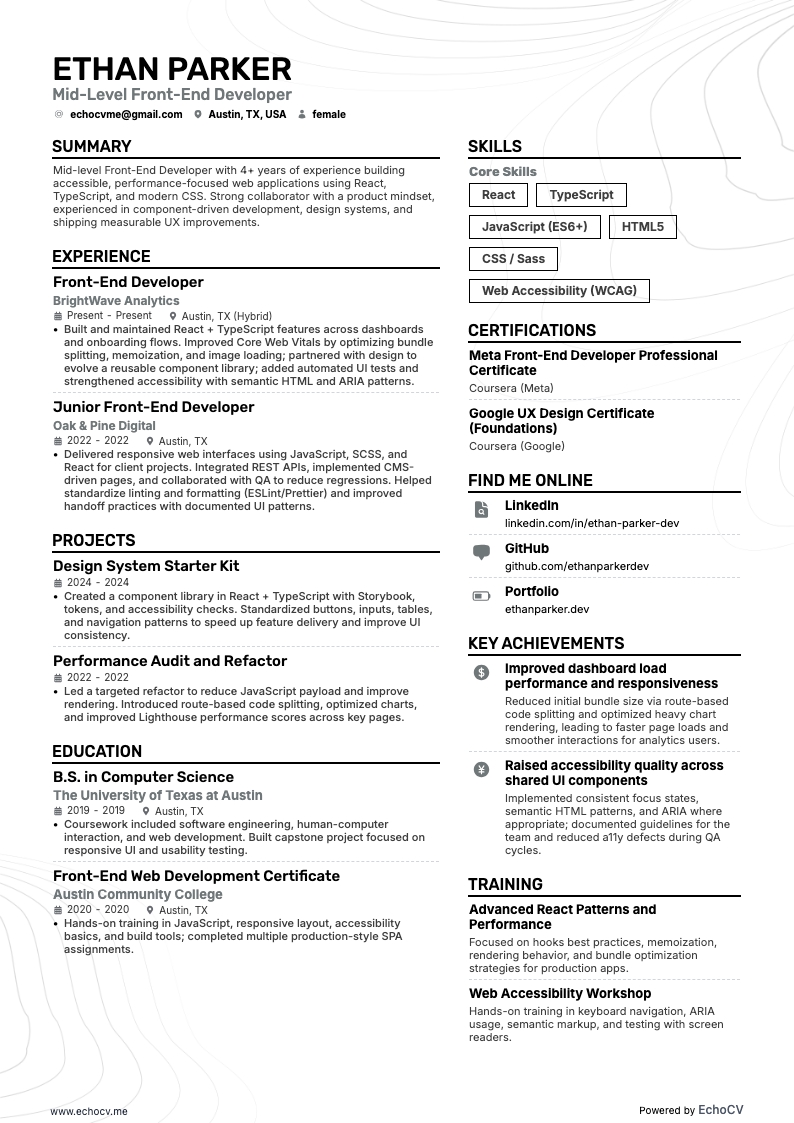
Développeur Front-End confirmé
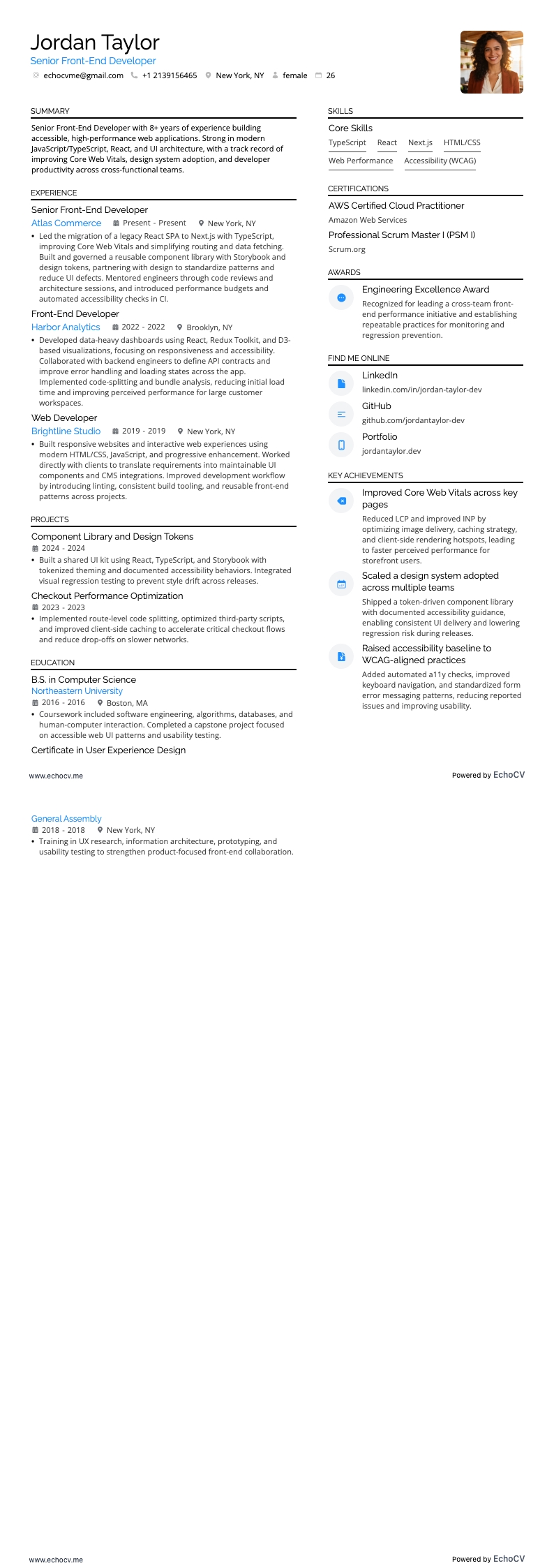
Développeur front-end senior
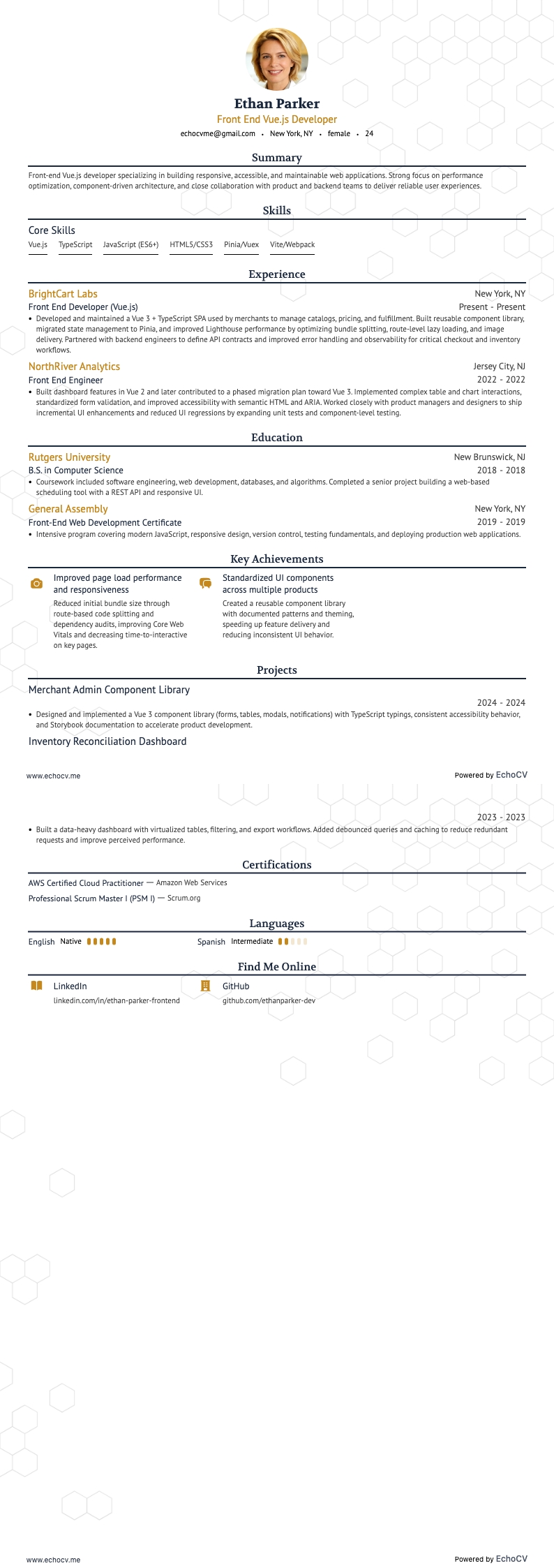
Développeur Front End Vue.js
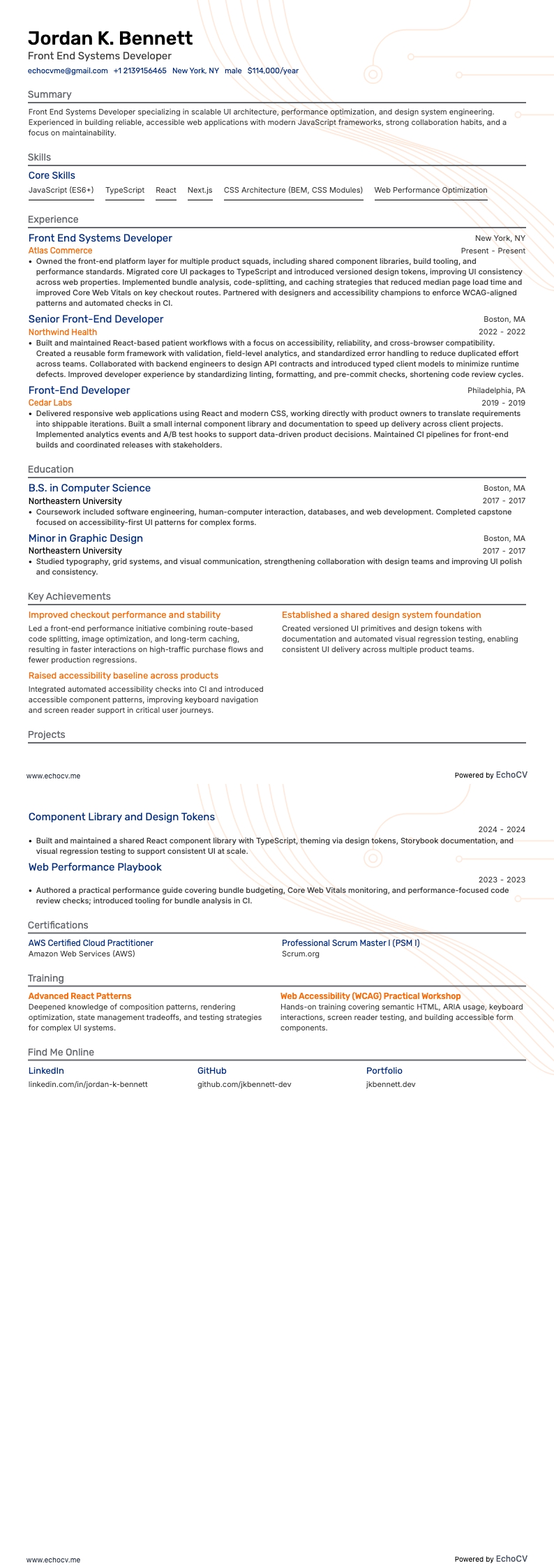
Développeur systèmes front-end
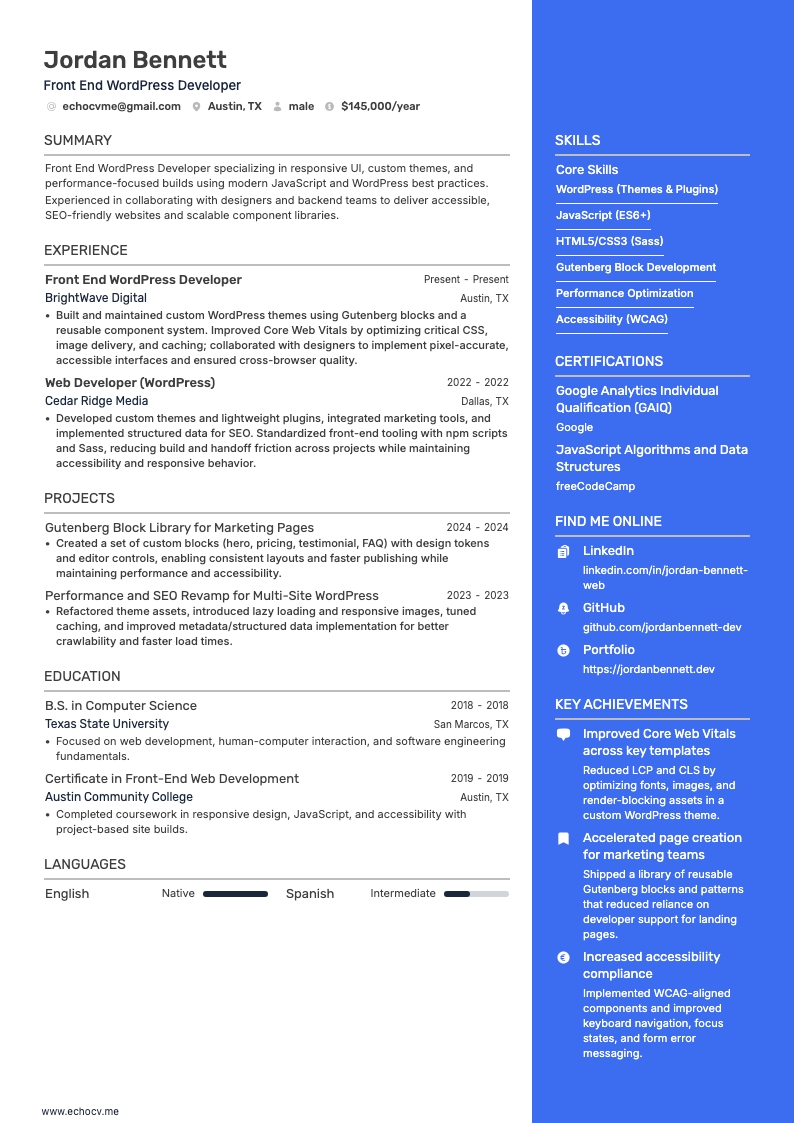
Développeur Front End WordPress
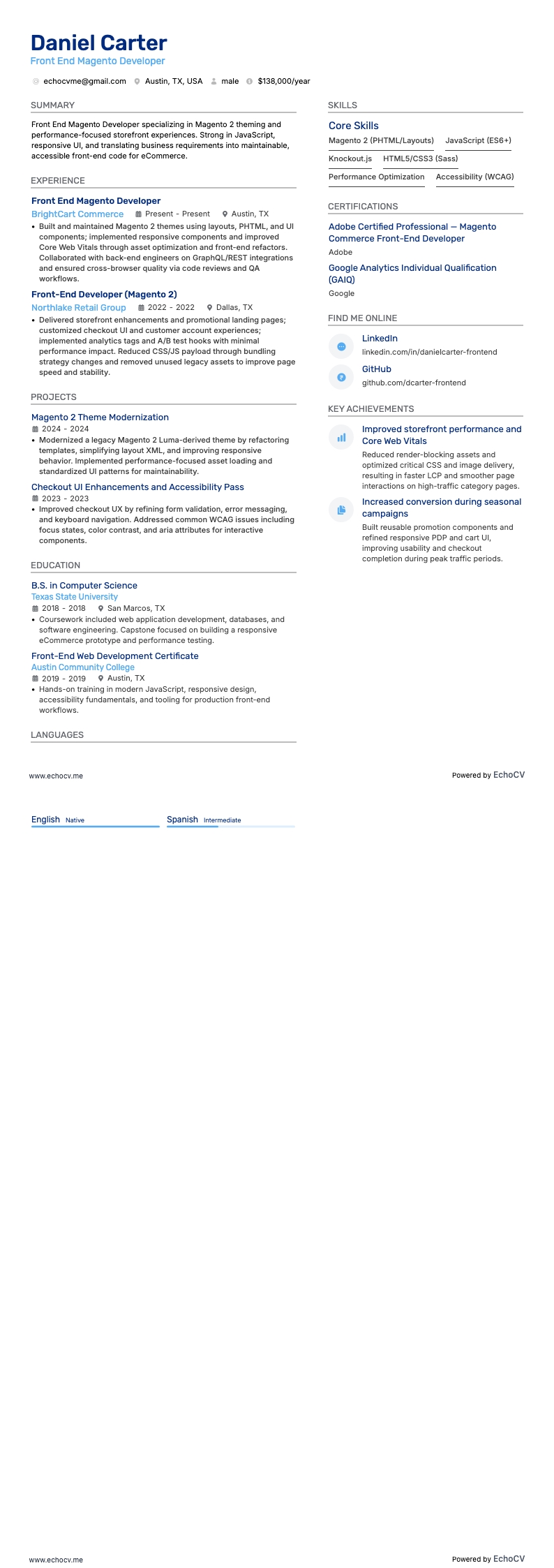
Développeur Front End Magento
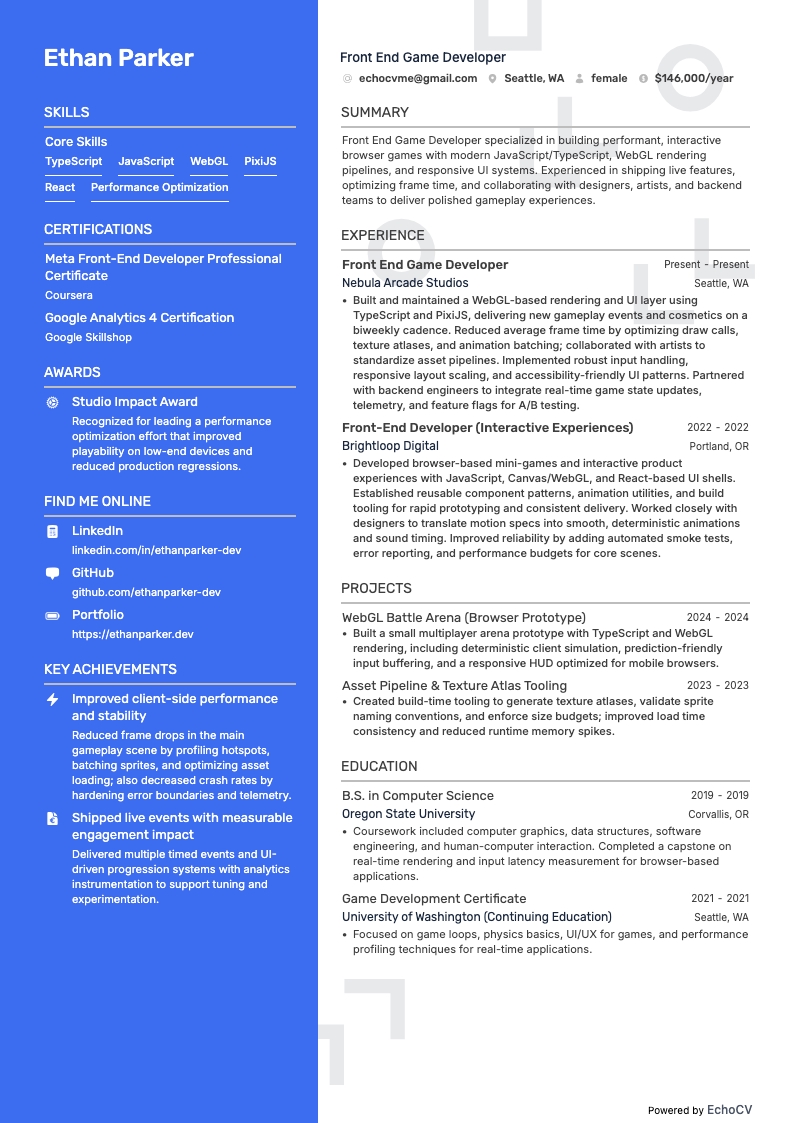
Développeur de jeux front-end
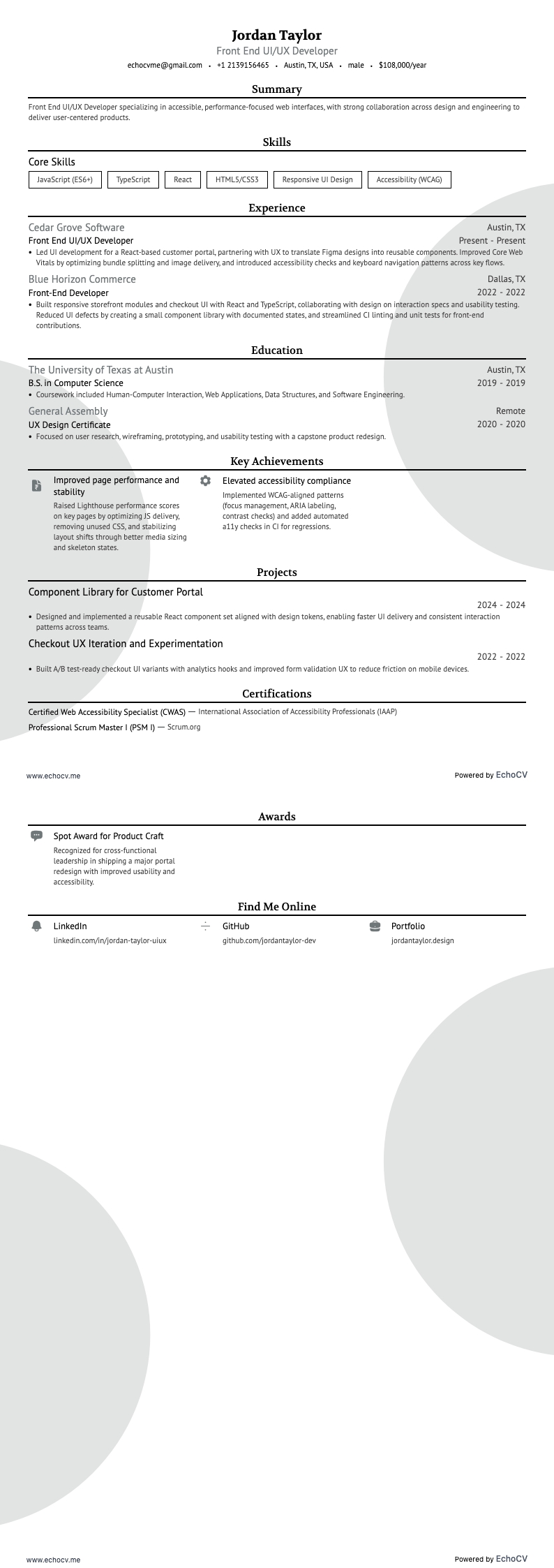
Développeur Front End UI/UX
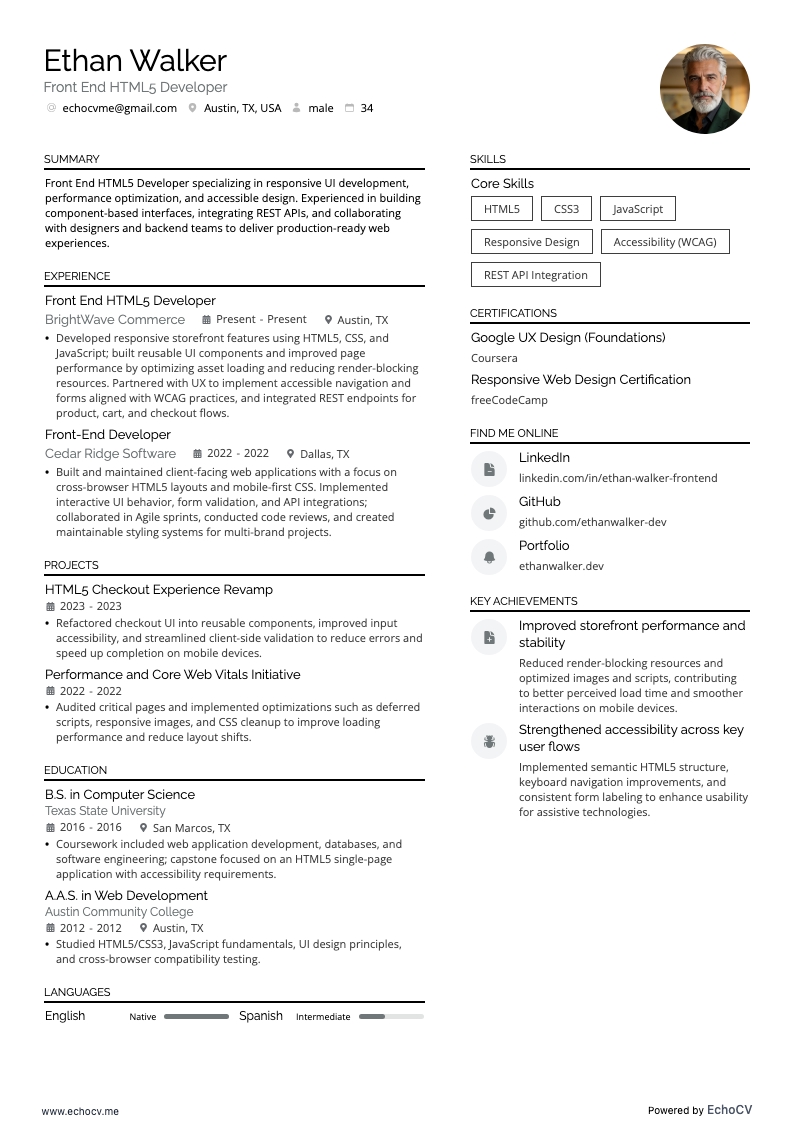
Développeur Front End HTML5
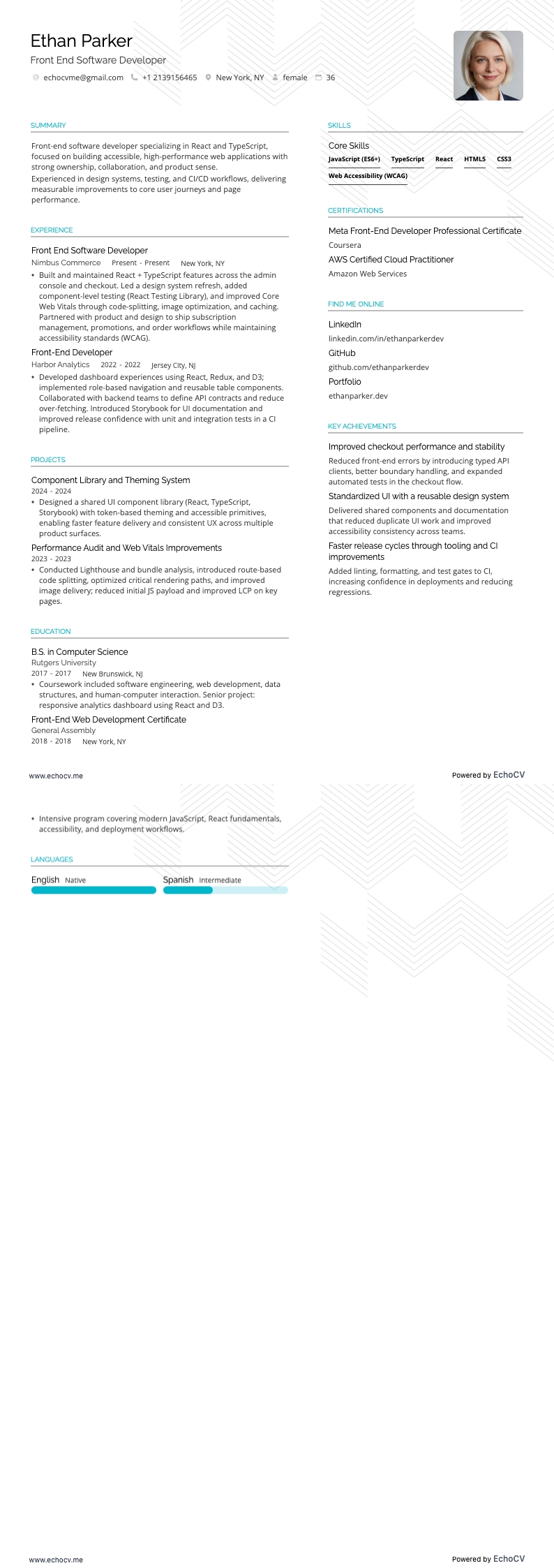
Développeur logiciel front-end
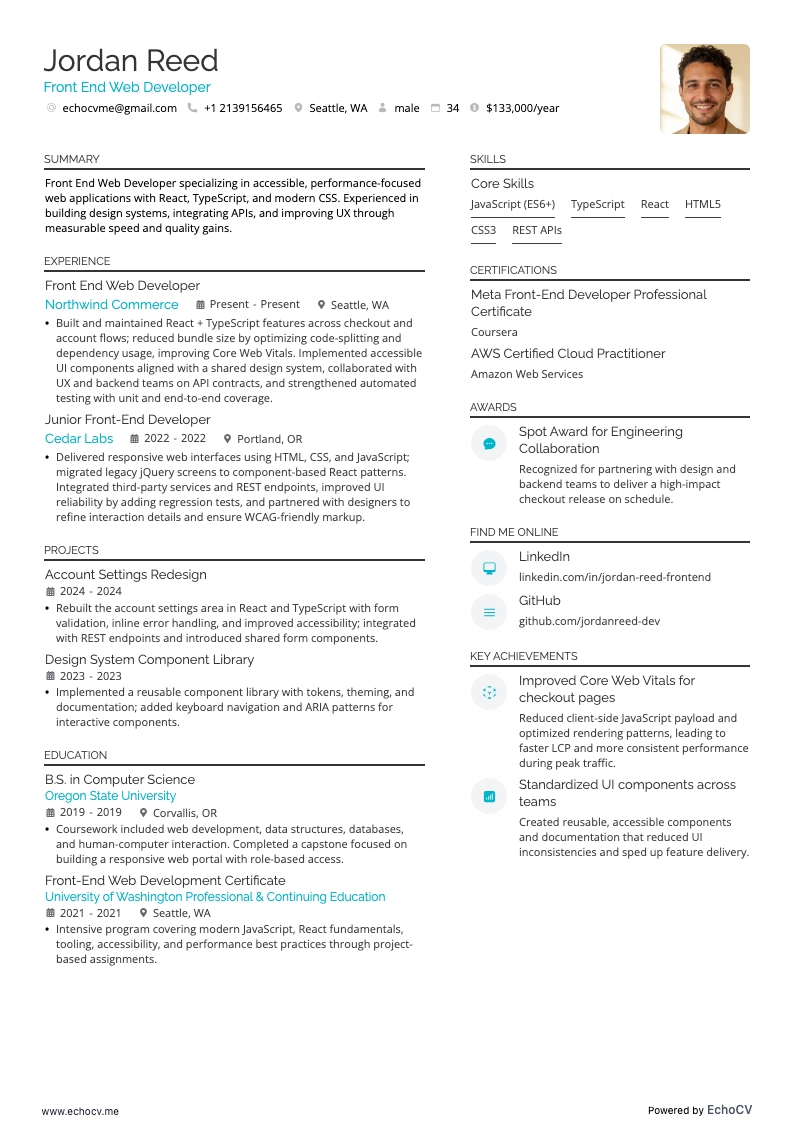
Développeur web front-end
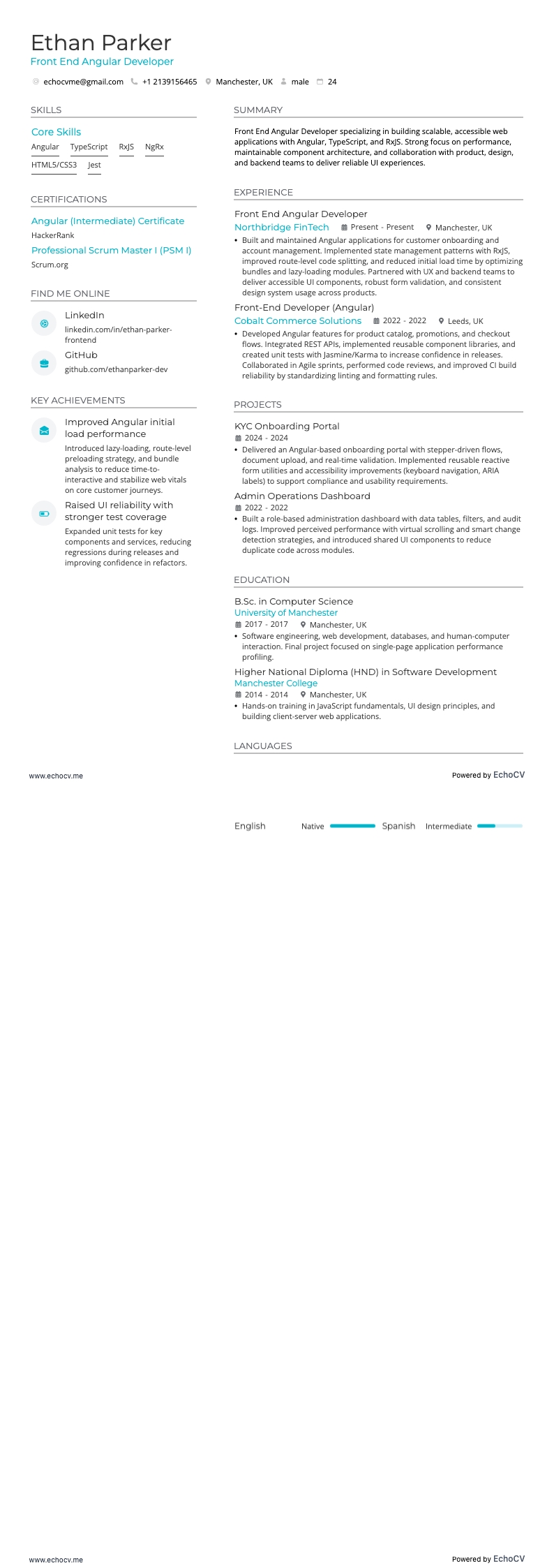
Développeur Front End Angular
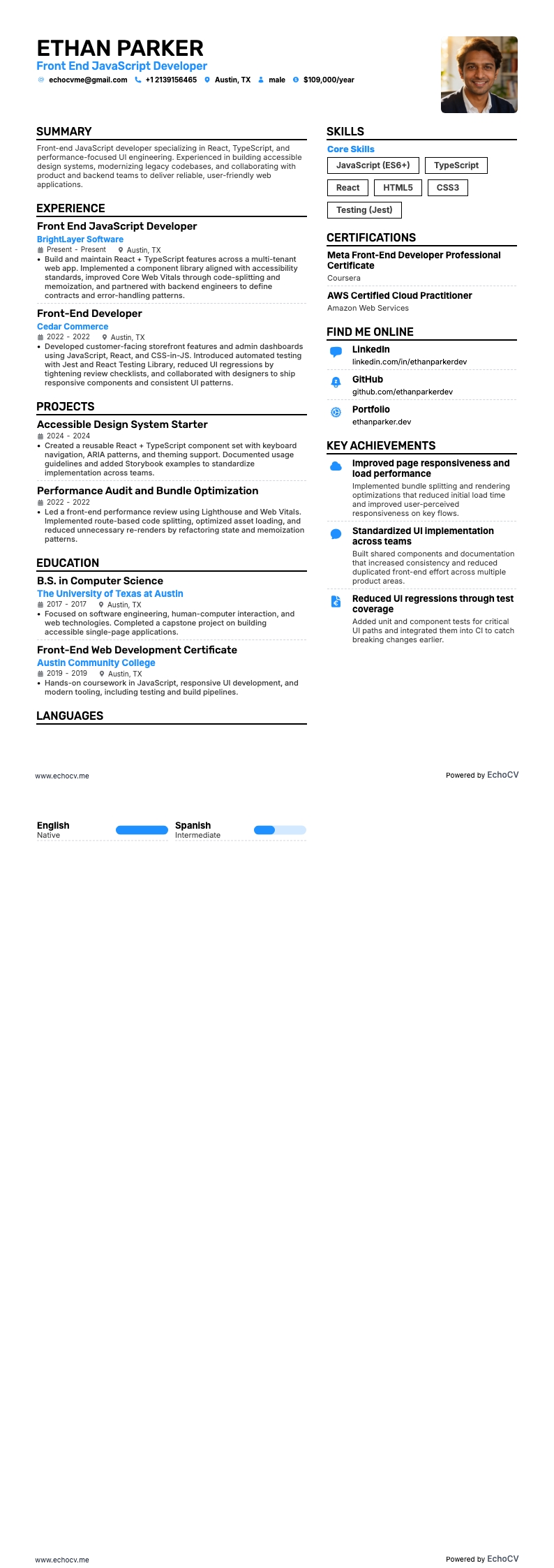
Développeur JavaScript Front End
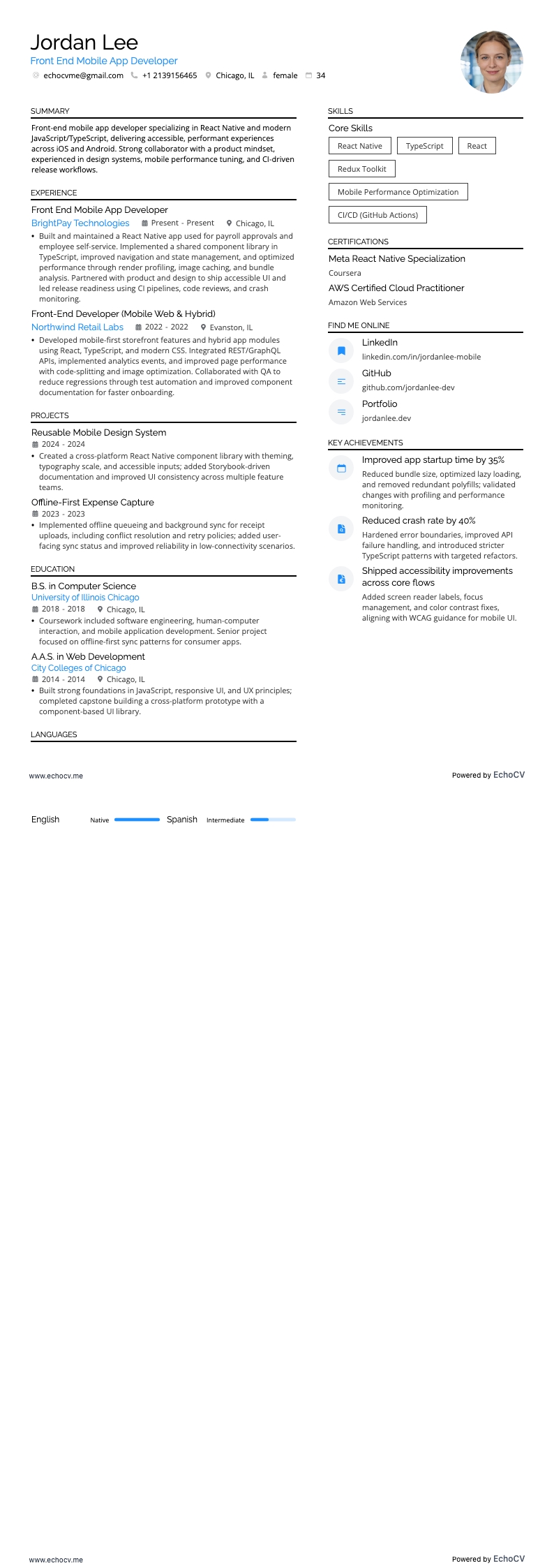
Développeur Front End d’applications mobiles
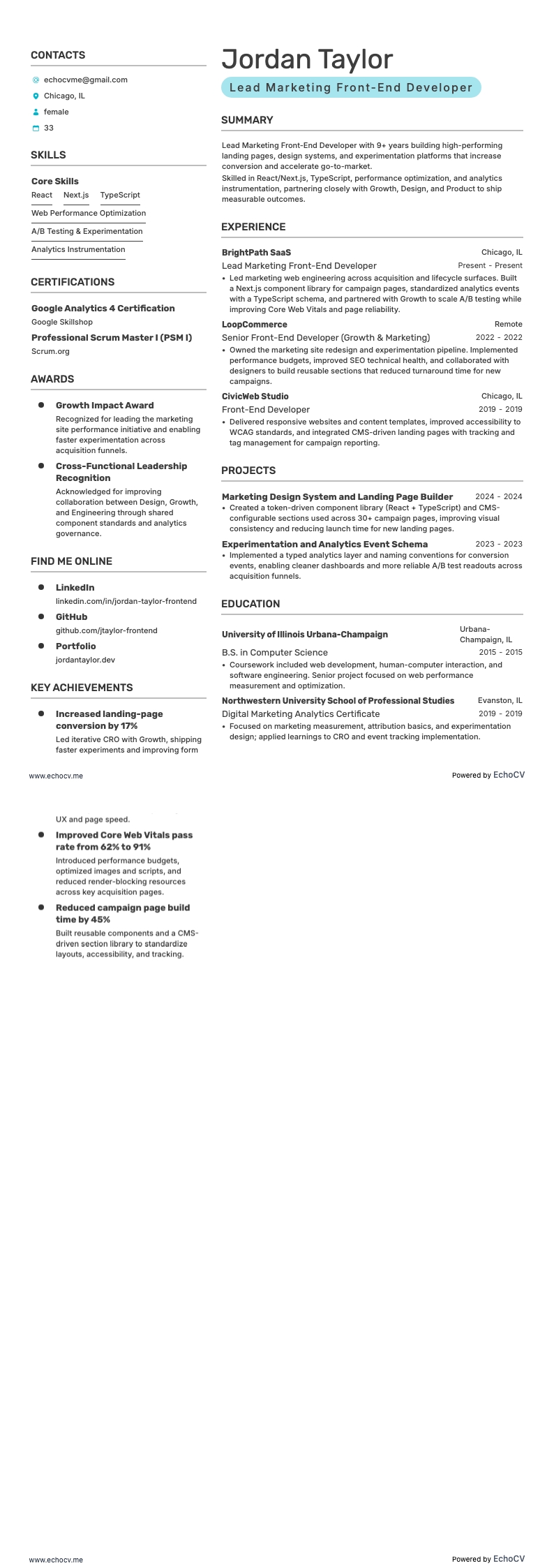
Développeur front-end senior en marketing
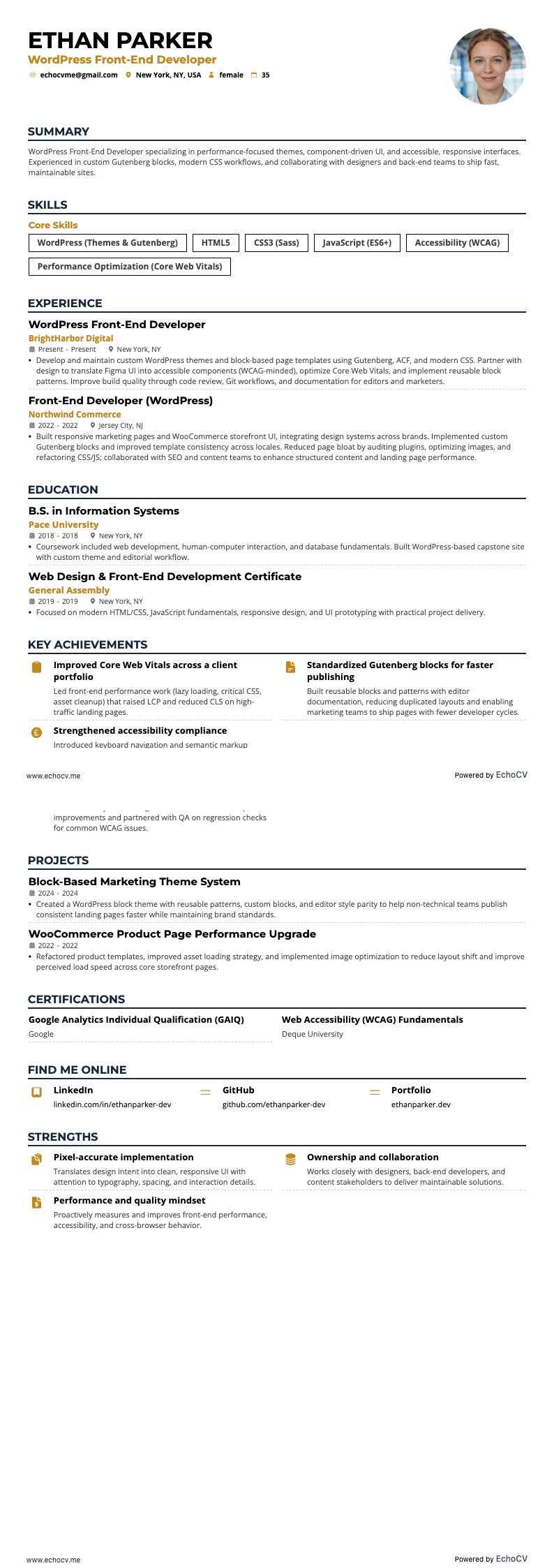
Développeur front-end Wordpress
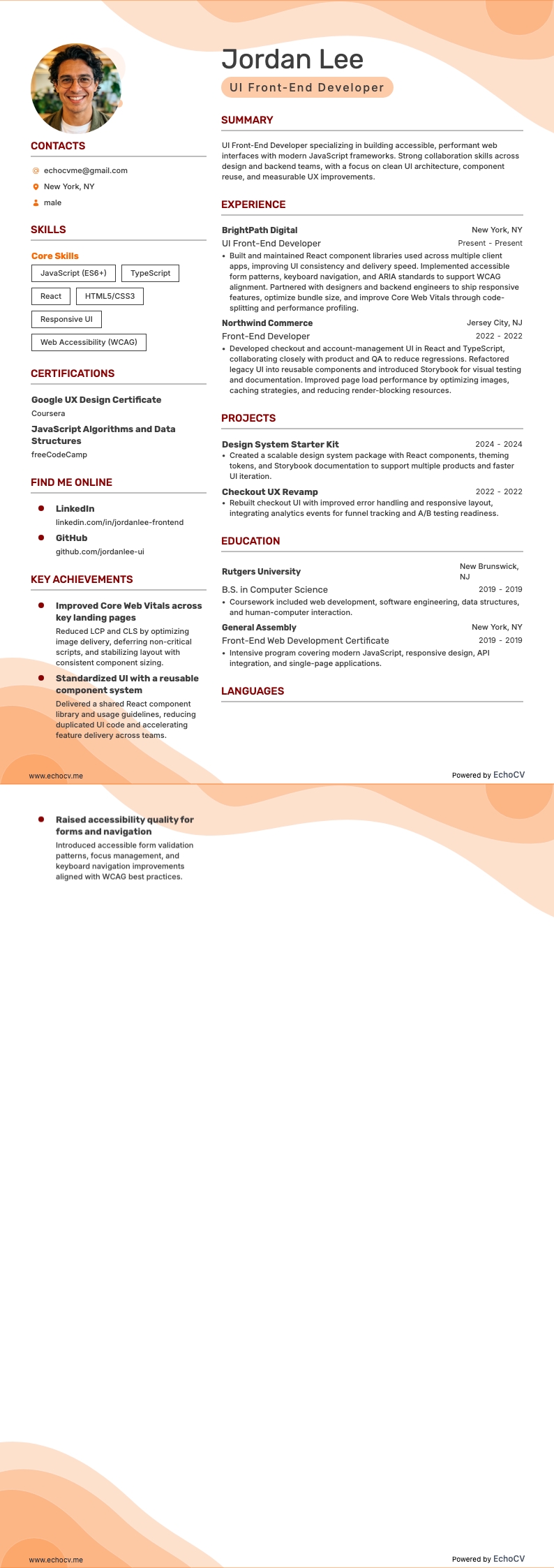
Développeur front-end UI
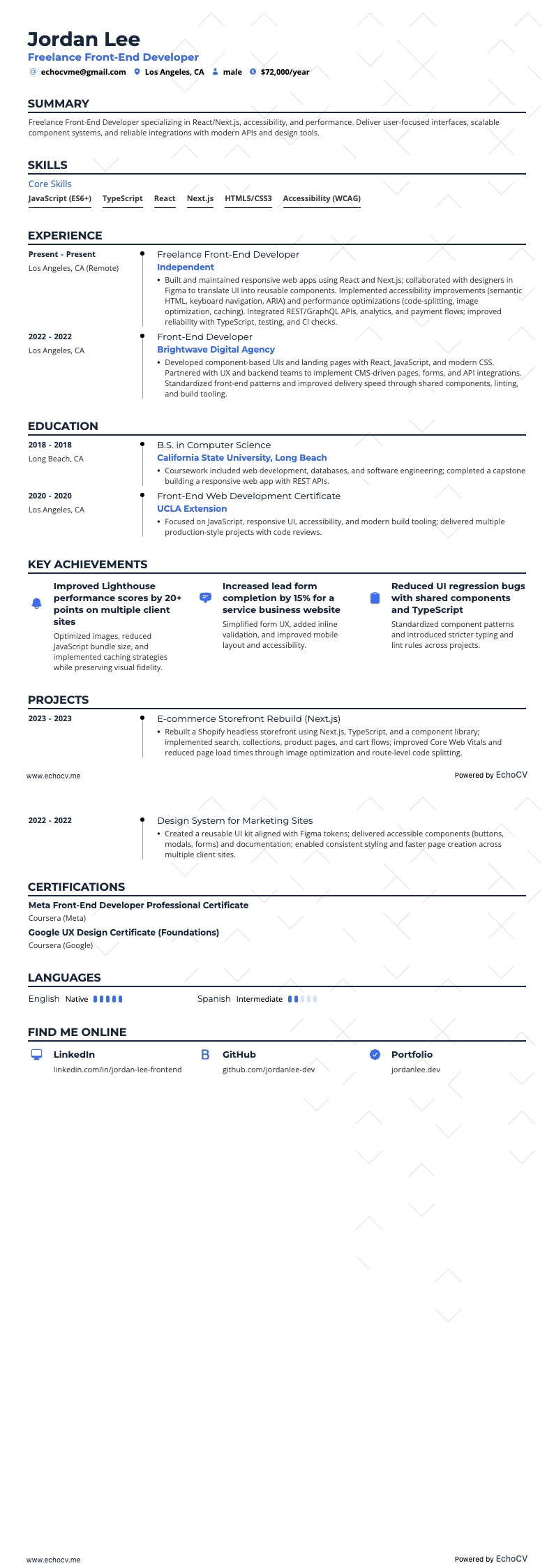
Développeur front-end freelance
Exemples de CV Développeur Front-End
Explorez d'autres exemples et guides de CV Développeur Front-End et découvrez ce qui fonctionne selon votre niveau d'expérience ou votre rôle.
Par expérience
Développeur Front End principal
Chef d’équipe développement front-end
Stagiaire développeur front-end
Développeur Front End Senior
Développeur Front End junior
Développeur front-end débutant
Développeur Front-End Junior
Développeur Front-End confirmé
Développeur front-end senior
Exemples de CV Développeur Front-End
Explorez d'autres exemples et guides de CV Développeur Front-End et découvrez ce qui fonctionne selon votre niveau d'expérience ou votre rôle.
Par rôle
Développeur Front End Vue.js
Développeur systèmes front-end
Développeur Front End WordPress
Développeur Front End Magento
Développeur de jeux front-end
Développeur Front End UI/UX
Développeur Front End HTML5
Développeur logiciel front-end
Développeur web front-end
Développeur Front End Angular
Développeur JavaScript Front End
Développeur Front End d’applications mobiles
Développeur front-end senior en marketing
Développeur front-end Wordpress
Développeur front-end UI
Développeur front-end freelance