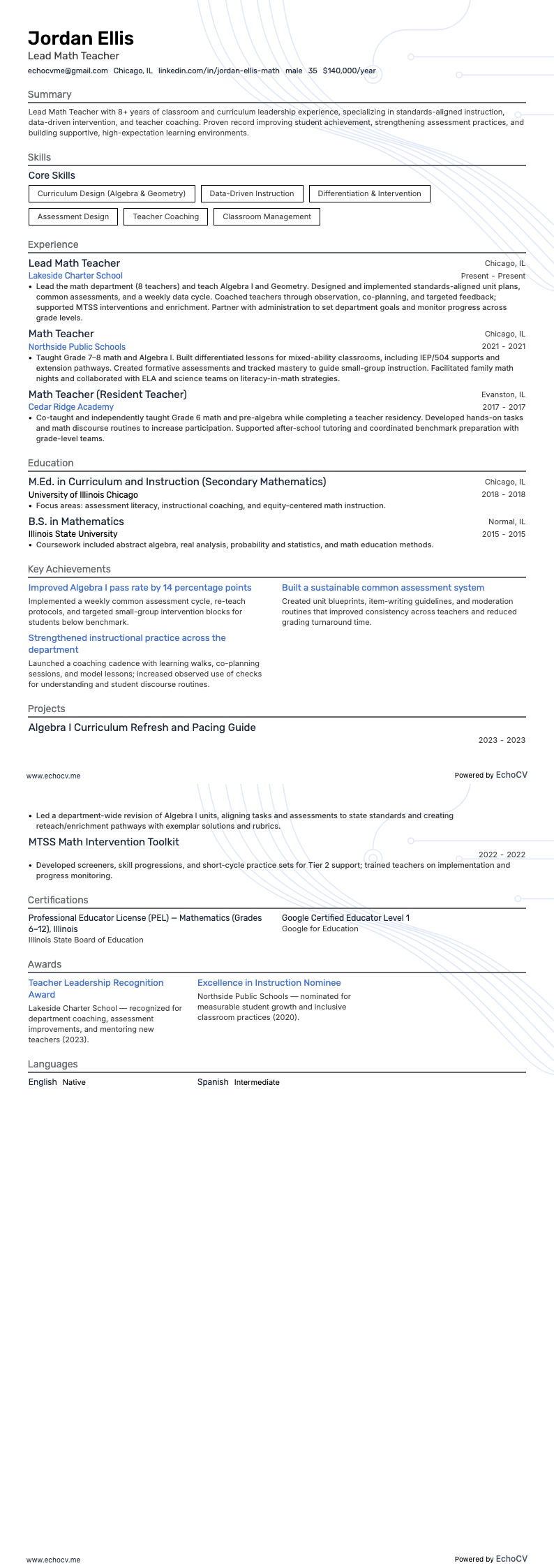
Writing a resume as a math teacher can feel a bit like solving a complex equation. You start with an empty page, equipped only with your set of skills and accomplishments. But instead of finding the value of x, you're illustrating your professional journey, aiming to impress school administrators.
It’s about combining the right elements of teaching expertise, classroom experience, and that touch of individual style that sets you apart. So grab your pens (or keyboards) and let’s dive into resume crafting, ensuring each entry highlights your unique contributions to math education.
This guide will cover:
- The ideal resume format and templates to effectively highlight your mathematical talents.
- How to describe your teaching experience and showcase your expertise in mathematics.
- Key educational and certification details that will make your math resume both complete and competitive.
- The latest skill requirements for math teachers and how to list them on a resume.
- Critical factors to consider when building a math teacher’s resume.
- How to write a compelling resume summary that captures your approach to teaching and student engagement.
Before you start writing your resume, you might want to consider some other education-related guides:
- Middle School Teacher Resume Example
- Elementary Teacher Resume Example
- Science Teacher Resume Example
- English Teacher Resume Example
- Lead Teacher Resume Example
- Biology Teacher Resume Example
- Social Studies Teacher Resume Example
- History Teacher Resume Example
- Technology Teacher Resume Example
- Virtual Teacher Resume Example
- Teacher Resume Example
The best math teacher resume format & layout
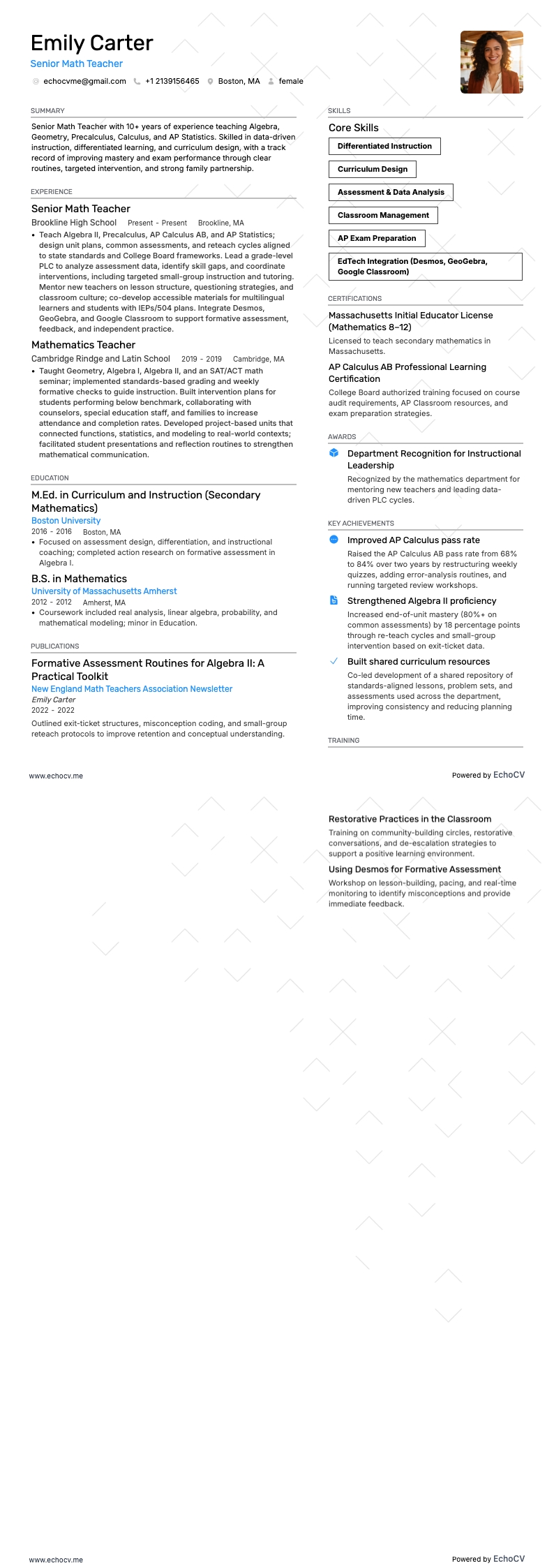
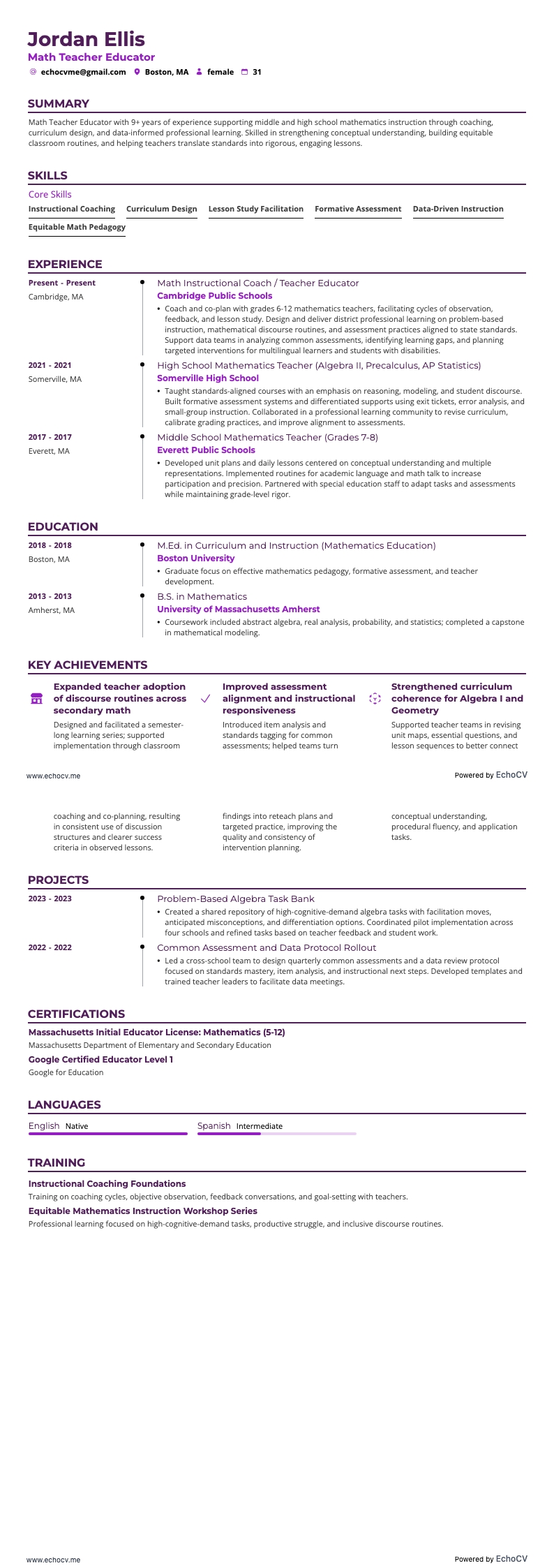
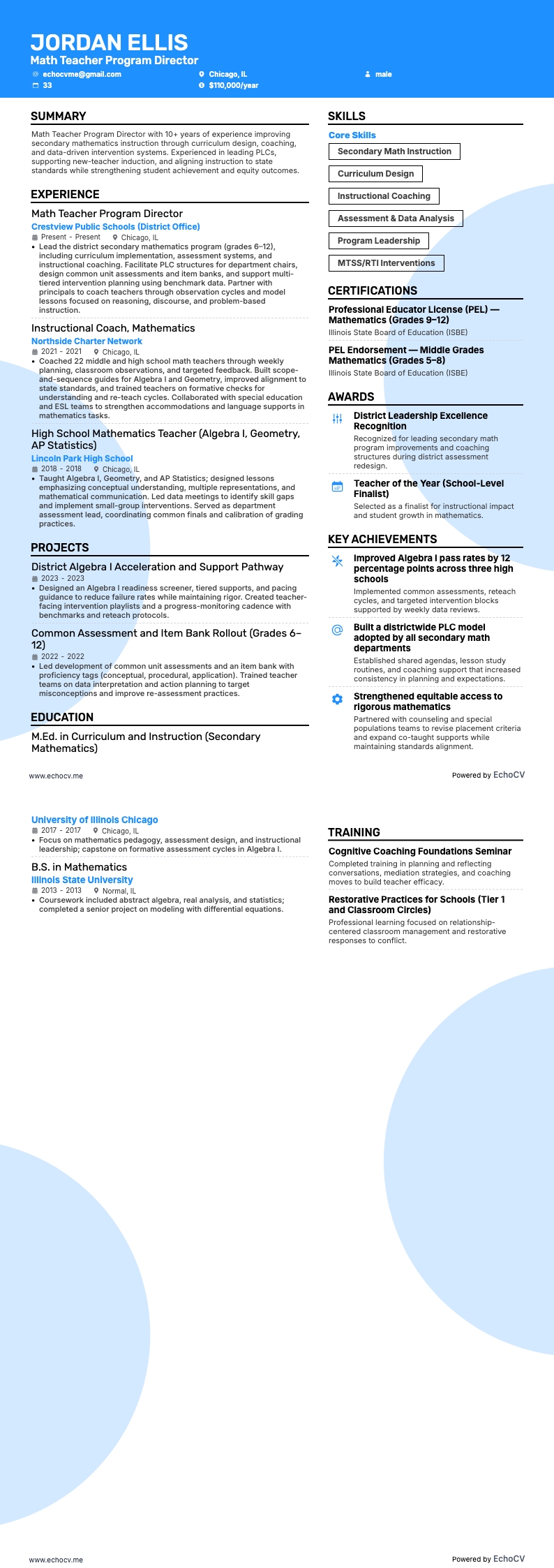
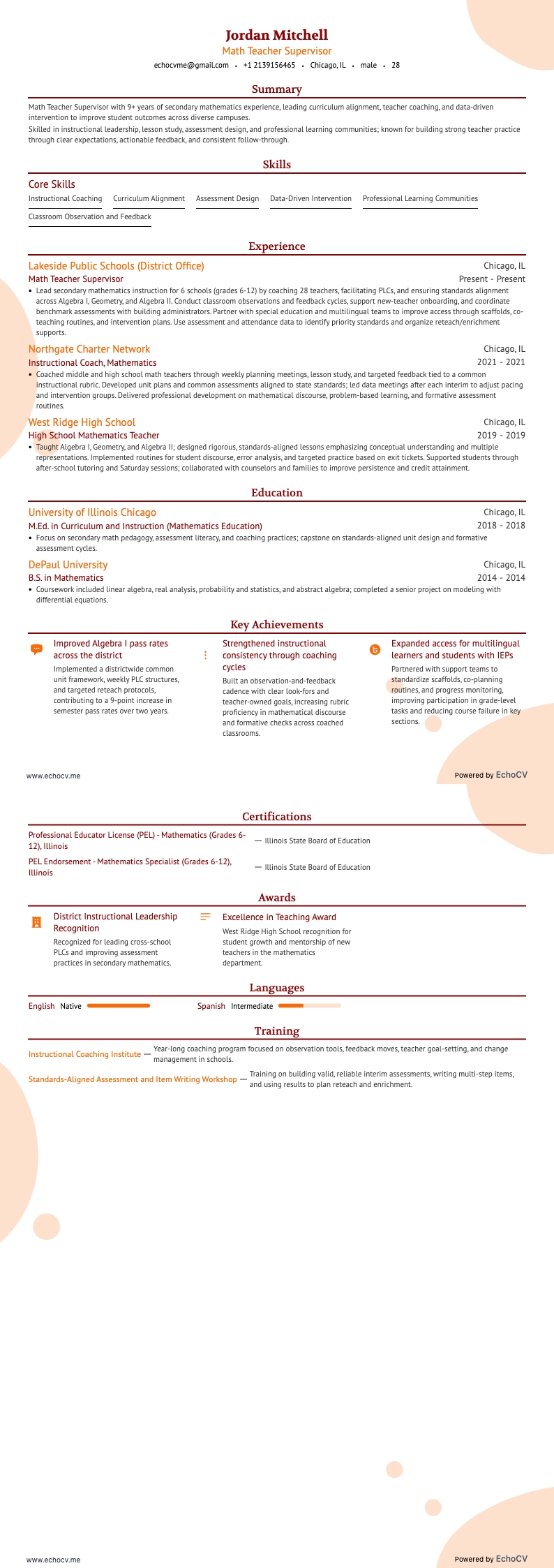
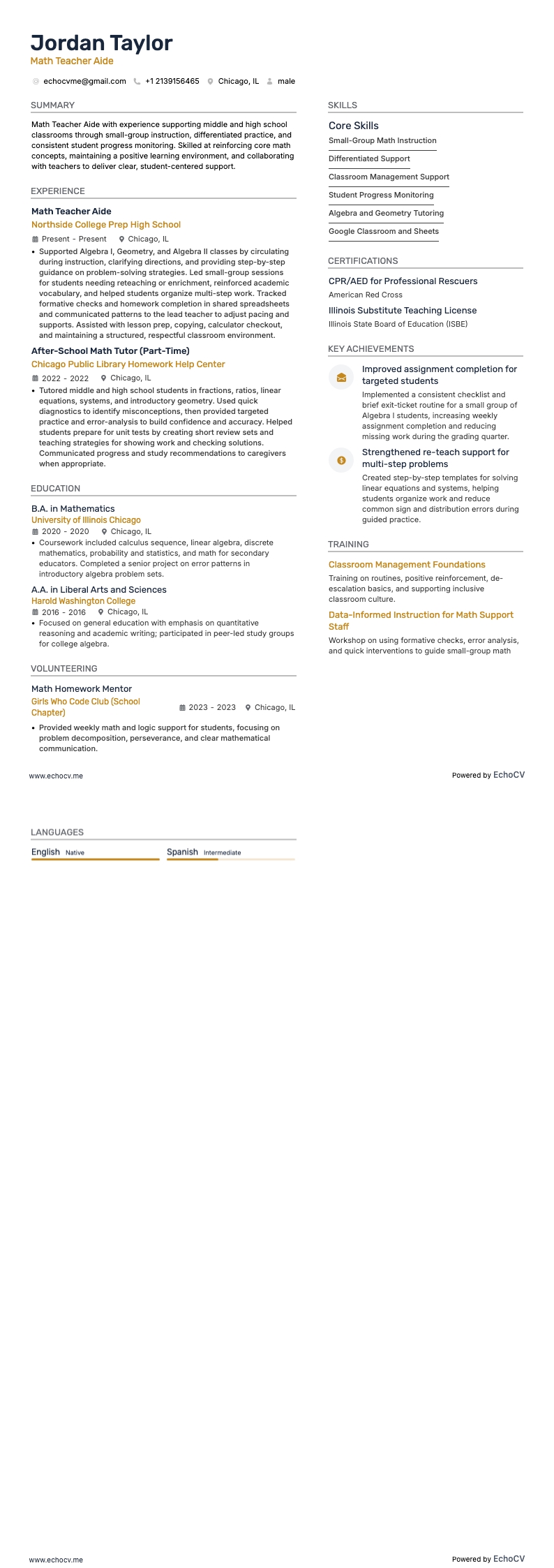
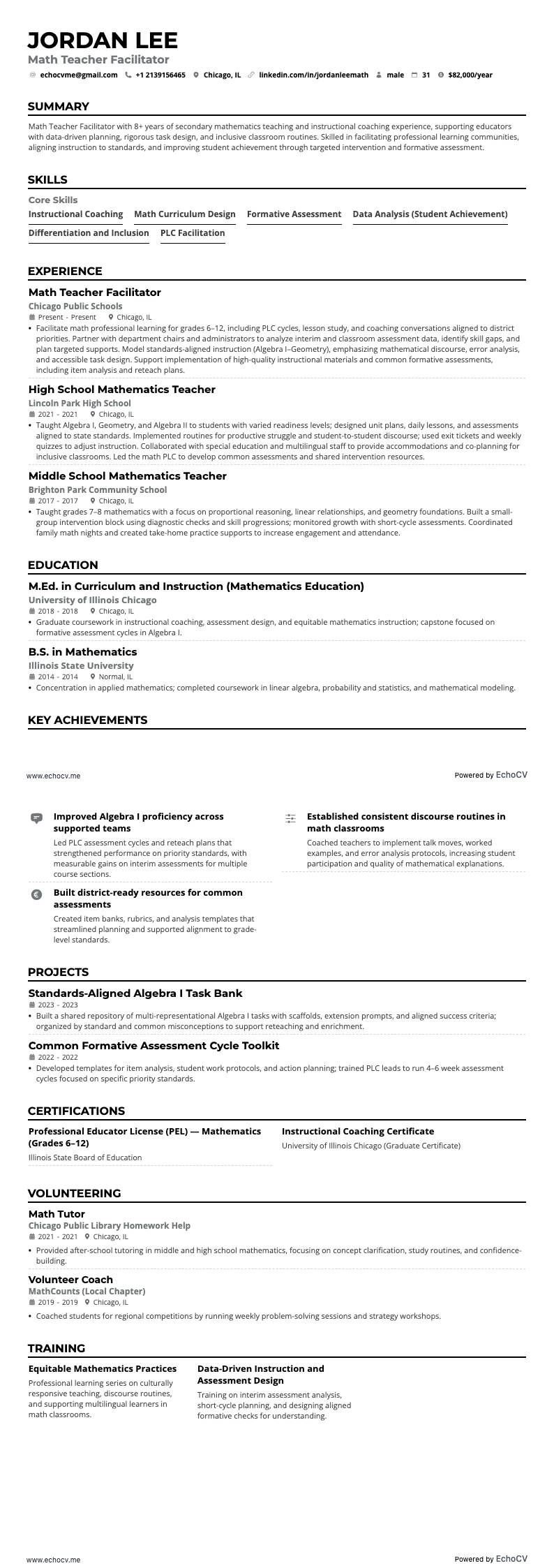
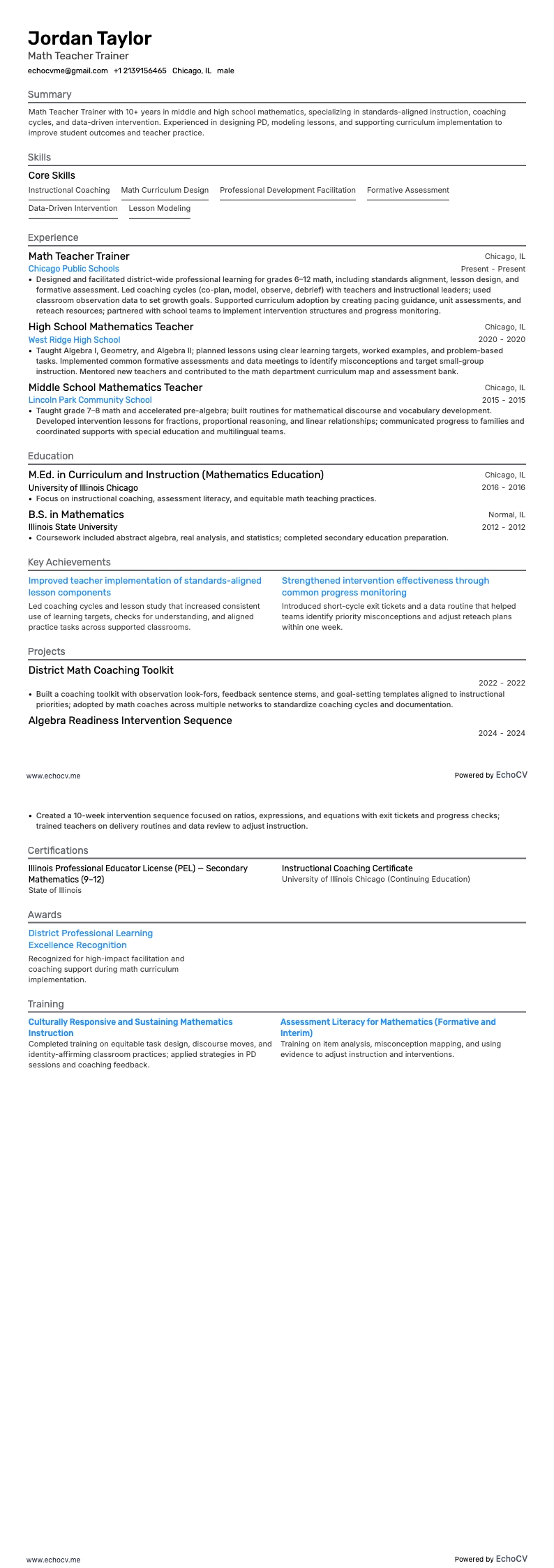
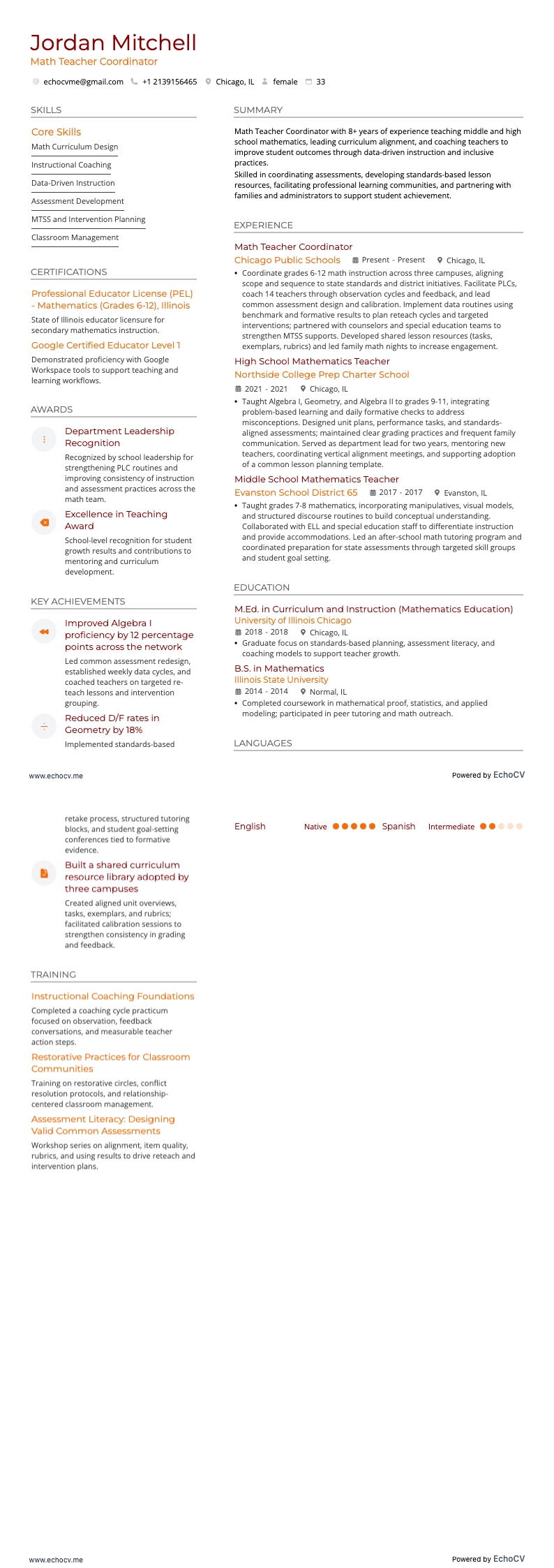
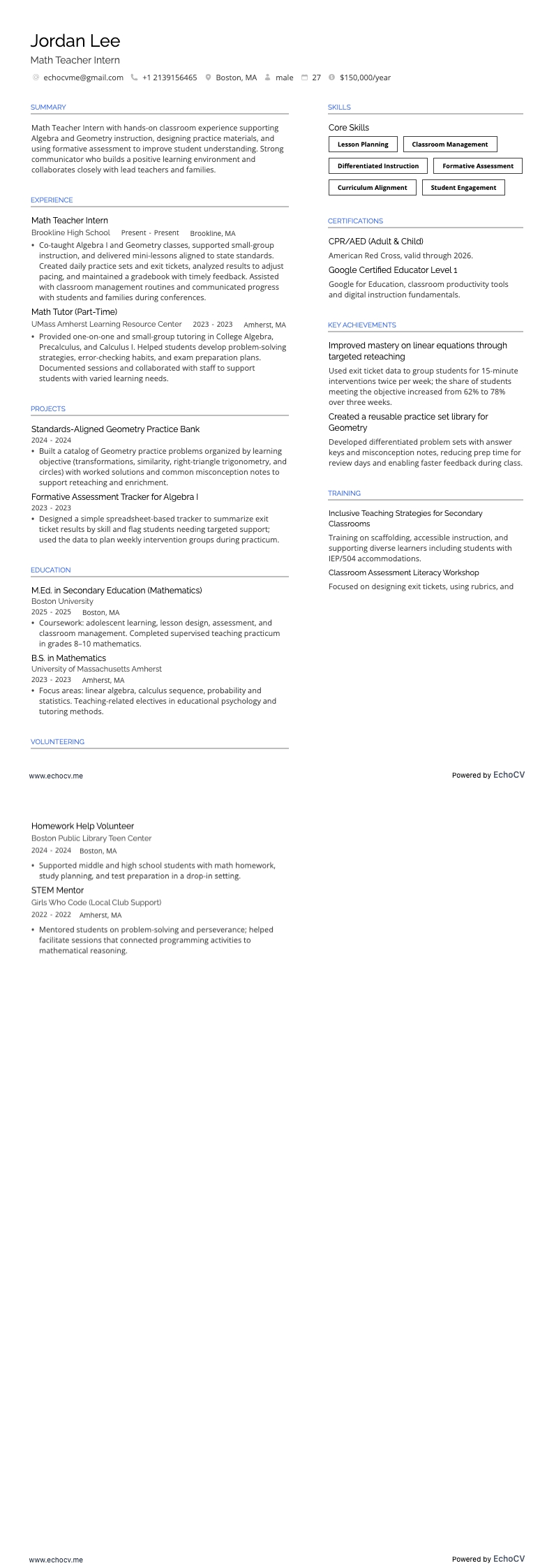
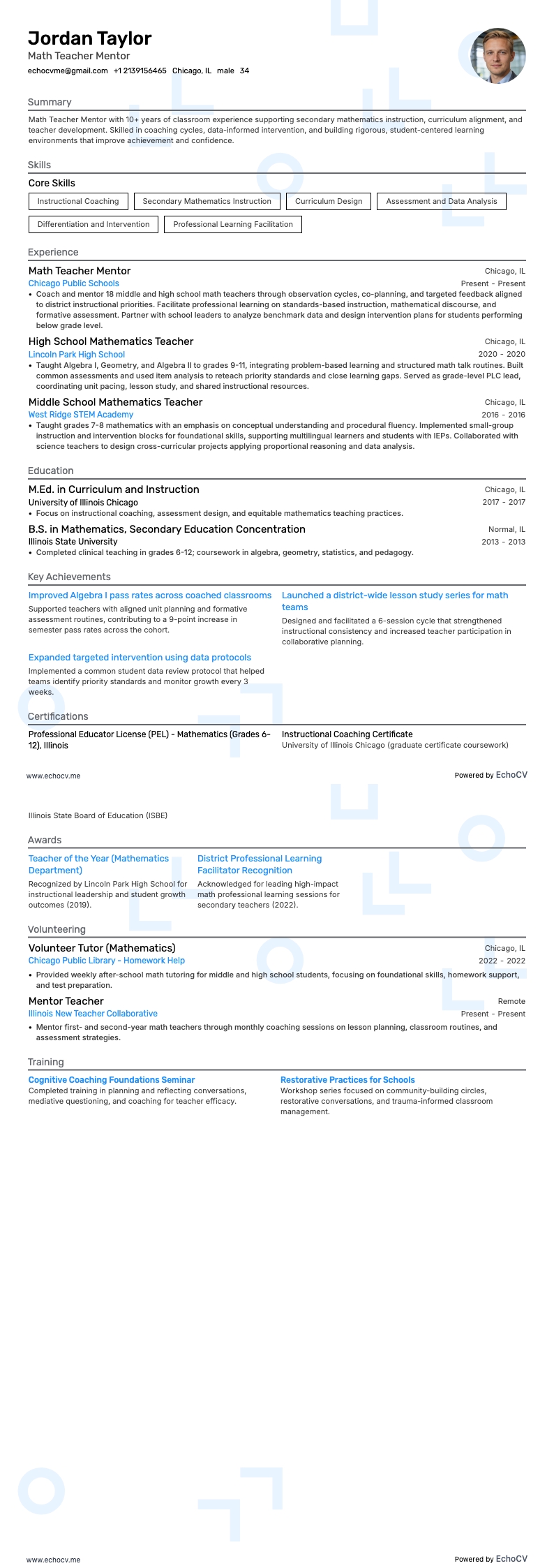
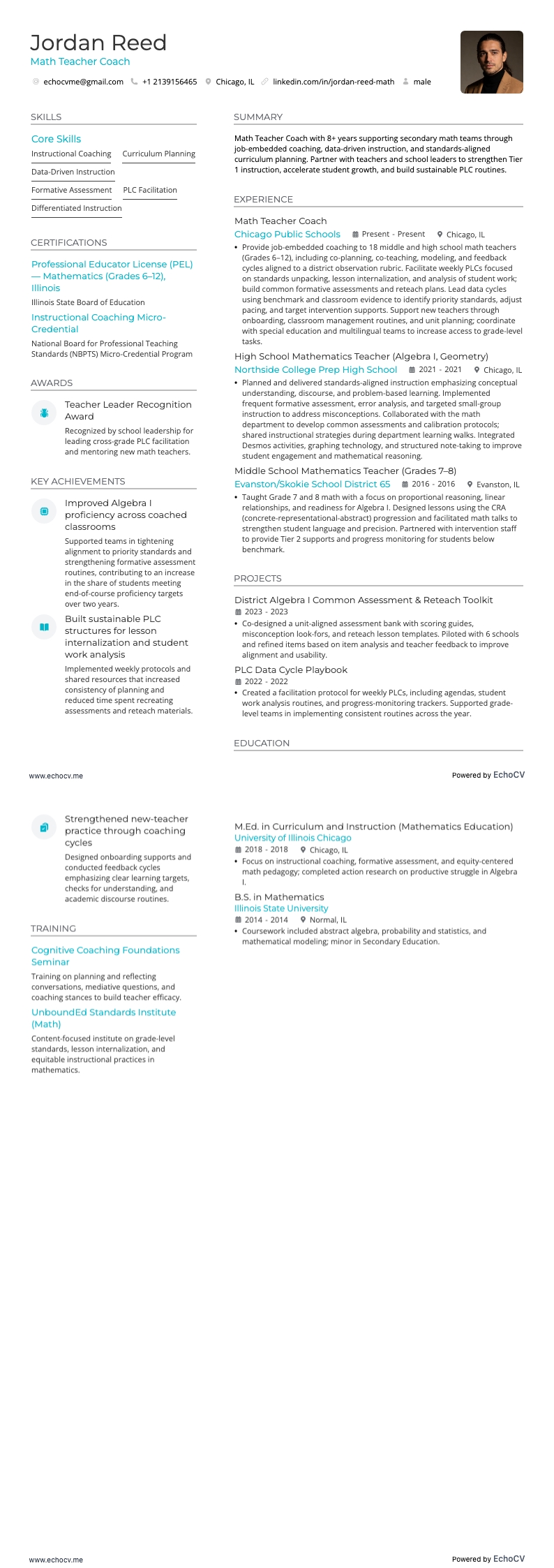
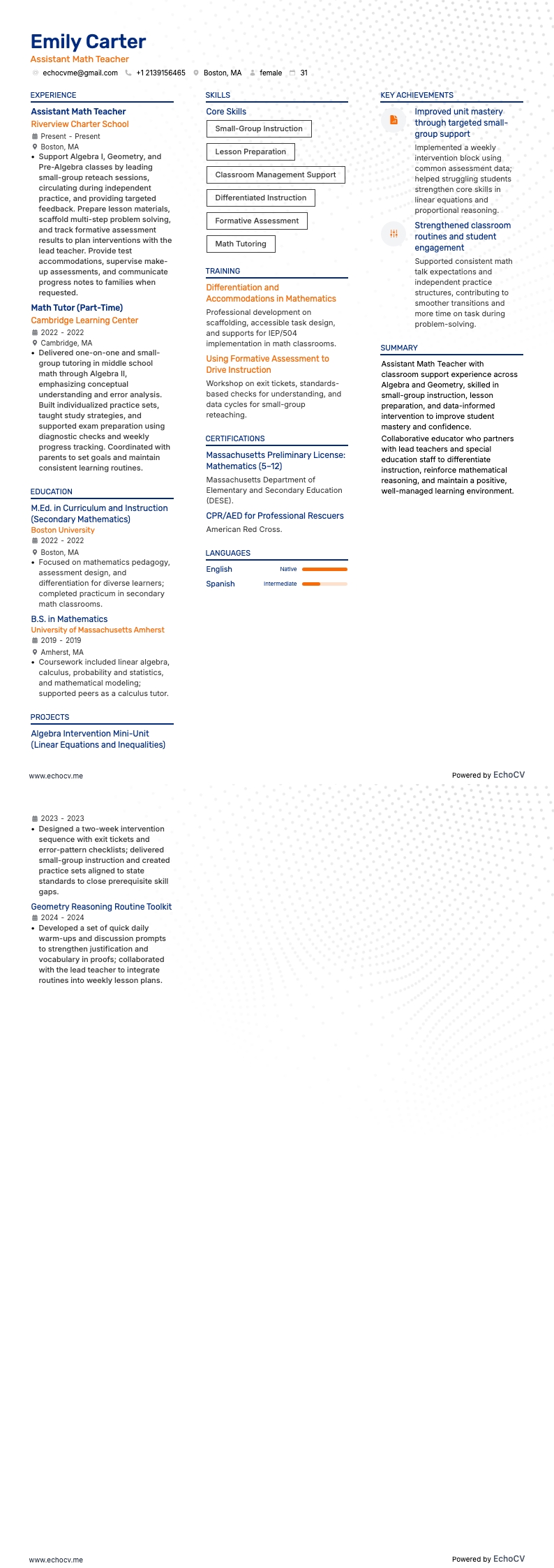
When creating a resume, we usually choose between 3 resume formats — the reverse chronological, the functional, and the hybrid resume. As a math teacher, you need to underline both your skills and teaching experience, so your best bet would be the combination (hybrid) resume format. It combines the strengths of chronological and functional formats, making it suitable for teachers with diverse backgrounds, including those with steady experience or varied career paths. Plus, the hybrid resume is very flexible — you can use it to emphasize specific math teaching skills, innovative methods, and achievements, which are crucial for educational roles.
Here are the other two options and when to use them:
- Reverse chronological resume: It's the most widely recognized format, making it easy for hiring managers to follow. It emphasizes your solid track record in education which is great for math teachers with consistent career progression.
- Functional resume: Also known as the skills-based format, it highlights specific teaching skills and competencies over chronological work history, which is beneficial for teachers who have gaps in employment or are switching careers.
Resume designs
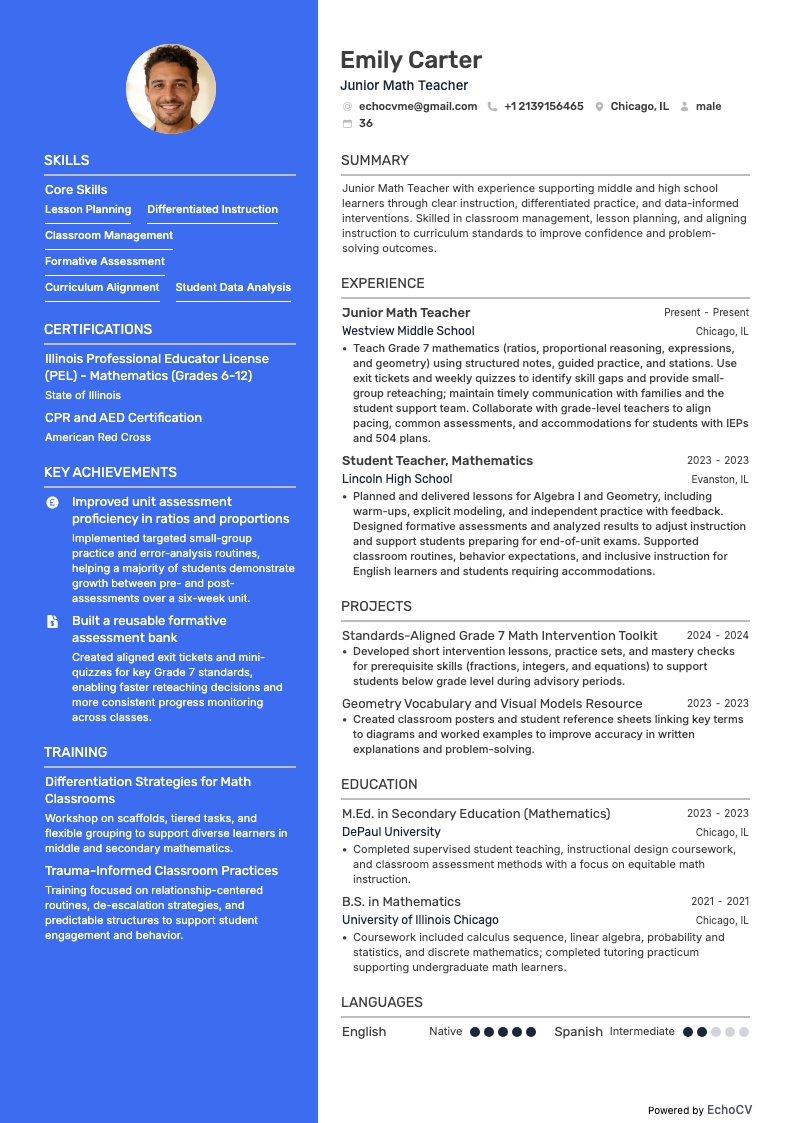
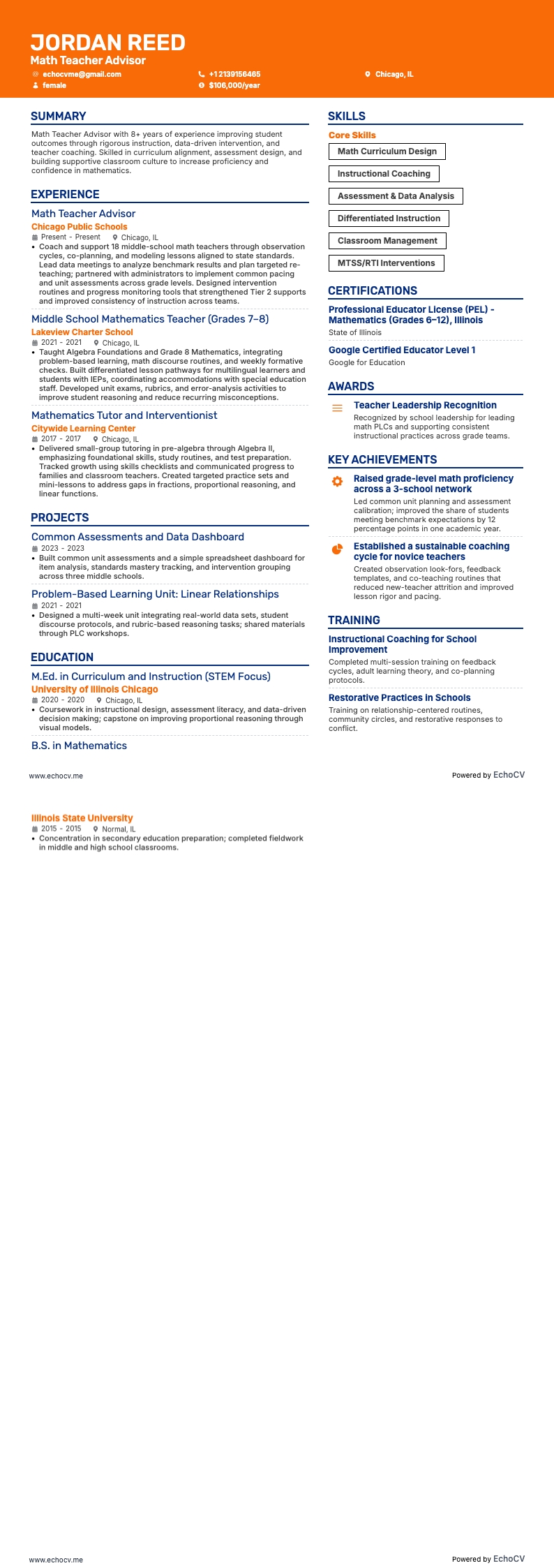
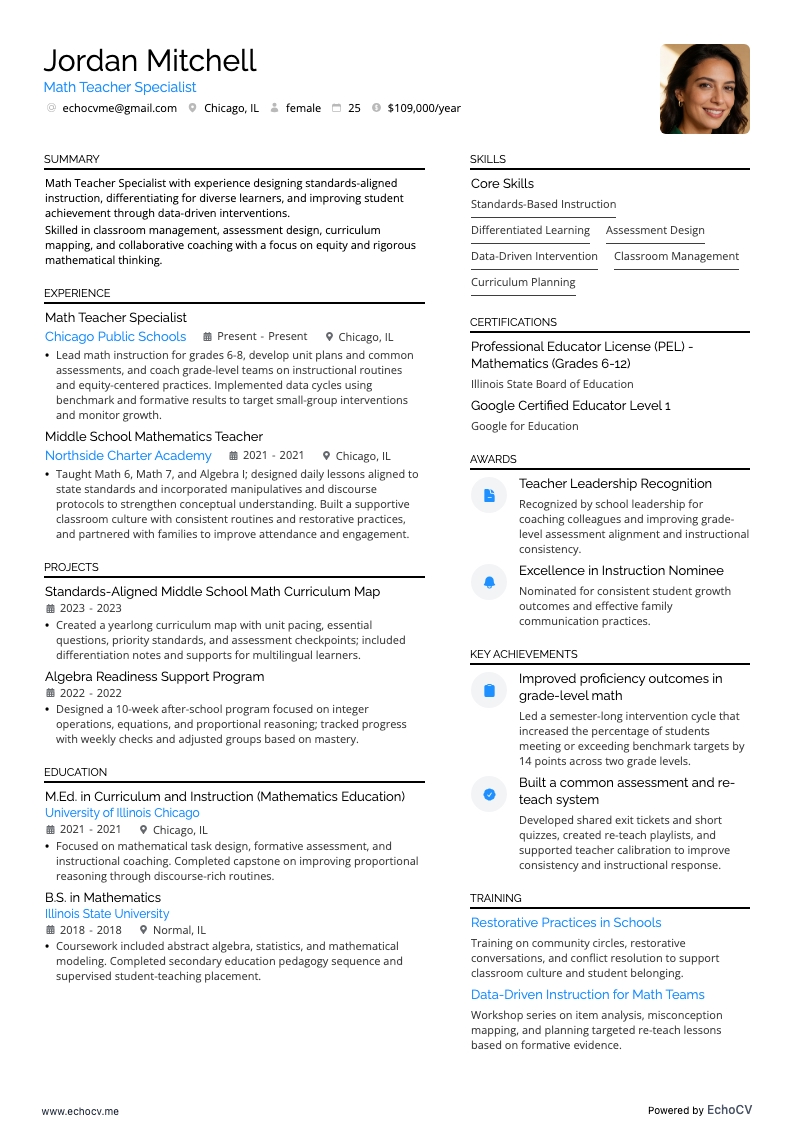
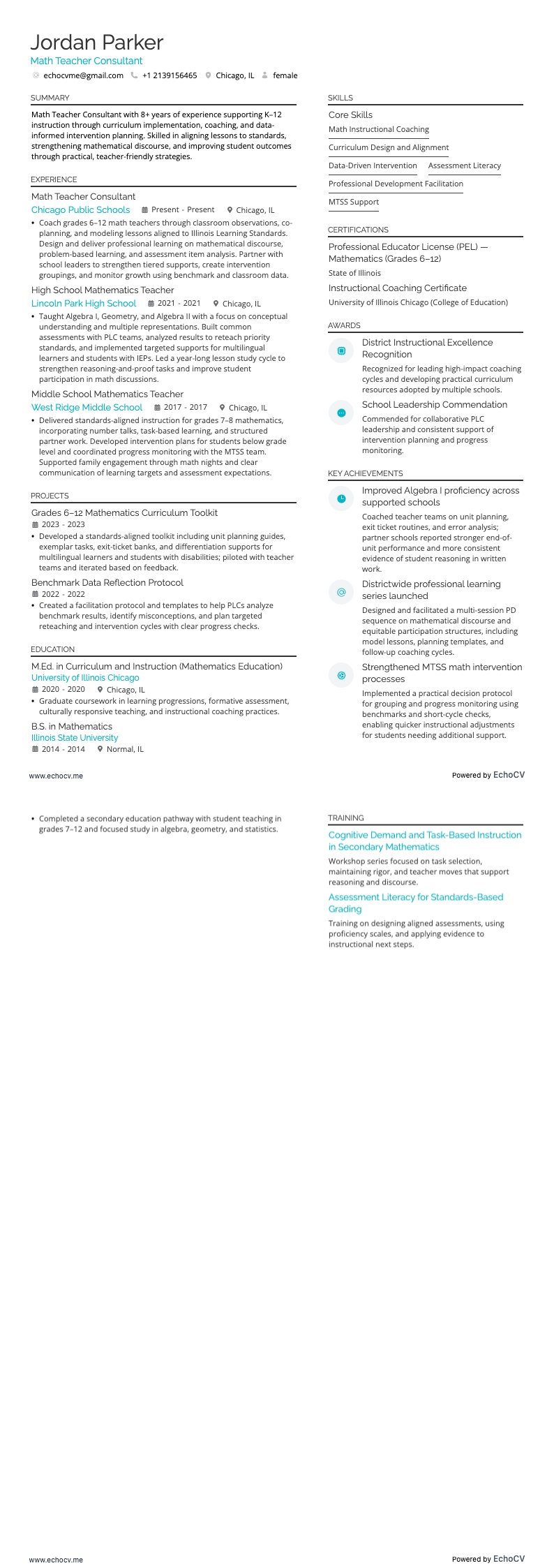
- Template: Opt for a double-column template to balance your teaching experience and mathematical achievements or projects. One column can detail your professional teaching experience and education, while the other underscores any relevant mathematical research, publications, or special projects. This approach ensures a structured yet visually appealing layout.
- Margins: Maintain resume margins between 0.5 and 1 inch to keep the document neat and readable, demonstrating your ability to organize information effectively—a crucial skill for a math educator.
- Colors: Select subtle, professional colors like shades of blue, gray, or green. These colors convey a sense of reliability while adding a touch of sophistication to your resume.
- Fonts: Use clear, ATS-friendly fonts sized between 10 and 12 points. Serif fonts such as Times New Roman or Volkhov are often preferred in educational fields. For headings, consider a clean sans-serif font to add a modern touch while keeping readability.
- Length: Aim for a one-page resume unless you have extensive professional experience that justifies a longer document. Focus on including information that directly supports your application for the math teaching position.
Resume header
- Contact Information: Start with your name, job title, and location. You can also use a distinctive color for your resume header to make it more eye-catching.
- Links: Include a link to your LinkedIn profile or personal website showcasing your teaching materials, projects, or any relevant publications. This is particularly useful for demonstrating your expertise and dedication to the field.
- Resume photo: Generally, it’s best to omit photos to maintain focus on your qualifications and avoid potential biases. However, check the specific requirements for the position you're applying for.
File format and naming
- Creative touches: To ensure ATS compatibility, keep the resume format simple. Avoid complex graphic elements as your resume might get rejected by automated filters.
- File format: Save your resume as a PDF to ensure the layout and formatting remain consistent across different devices. The Word format is also common for matching teacher resumes, so double-check the specific job requirements.
- Naming Convention: Name your file professionally; for example, ‘FirstNameLastNameMathTeacherResume.pdf’.
If you already have a resume, run it through an AI-powered resume checker to see how it scores against a real ATS.