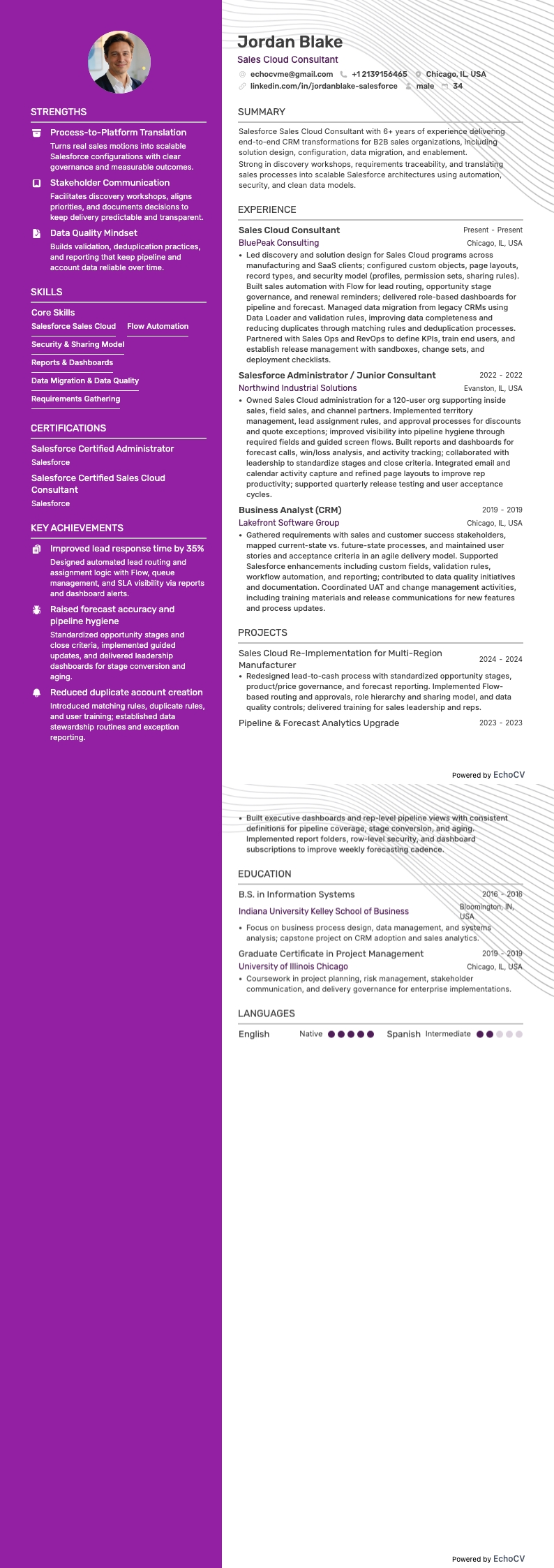
If you’re struggling to find exact numbers, you can focus on the "Cloud" you specialize in.
Write about improvements in:
- Sales Cloud: Increase in lead conversion; Reduction in sales cycle length.
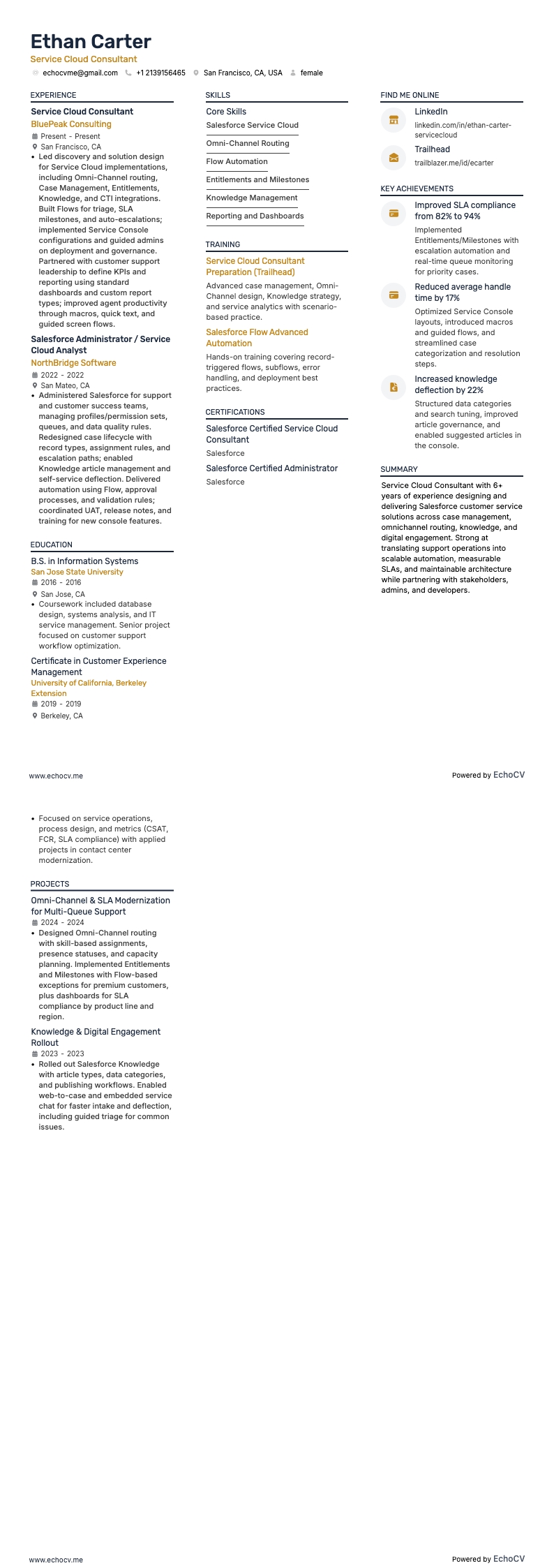
- Service Cloud: Decrease in Average Handle Time (AHT); Increase in CSAT scores.
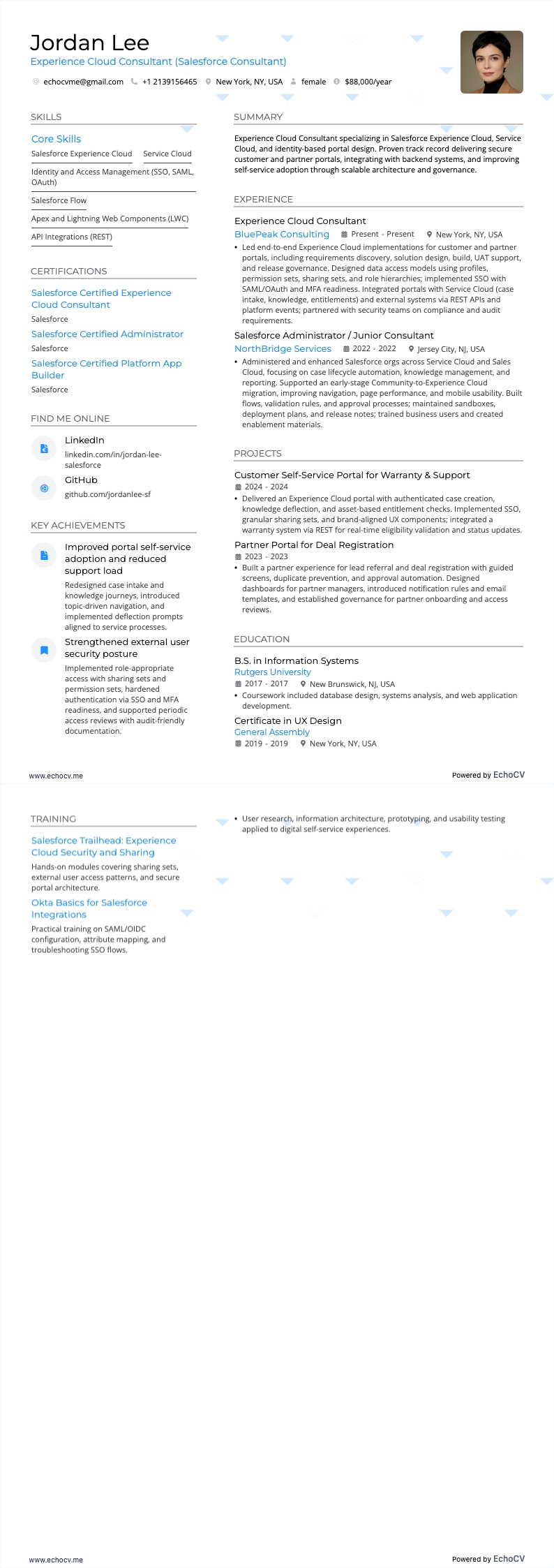
- Experience Cloud: Increase in self-service case deflection; Growth in partner engagement.
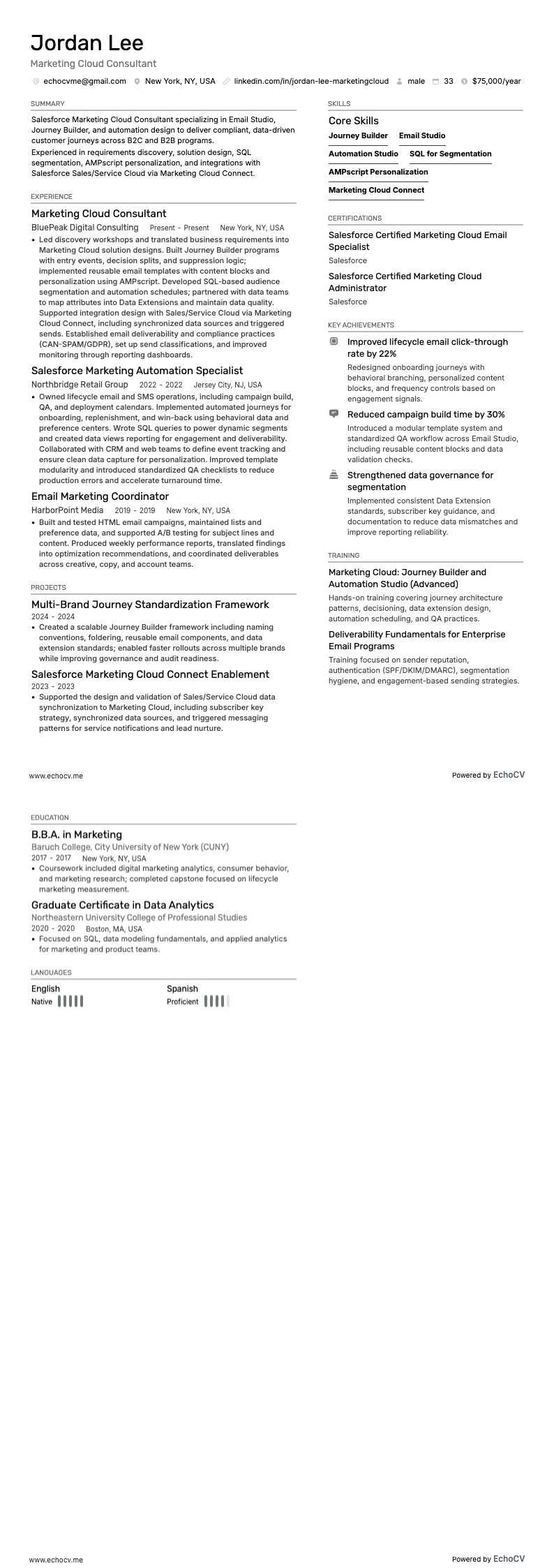
- Marketing Cloud: Improvement in Click-Through Rate (CTR); Reduction in subscriber churn.
- Data Cloud/AI: Increase in predictive forecast accuracy; Reduction in manual data entry via AI.
Writing bullet points takes time. Speed up the process with Echocv’s Bullet Point Generator.
How to tailor your experience
A generic resume is a major red flag in the Salesforce ecosystems. Hiring companies want to see that your "configuration" matches their specific needs.
Here’s how to strategically align your experience to create a targeted resume.
1. Identify the Cloud and Vertical requirements
Most Salesforce roles aren't just for a "consultant"—they are for a Sales Cloud Consultant for Retail or a Health Cloud Architect for Healthcare.
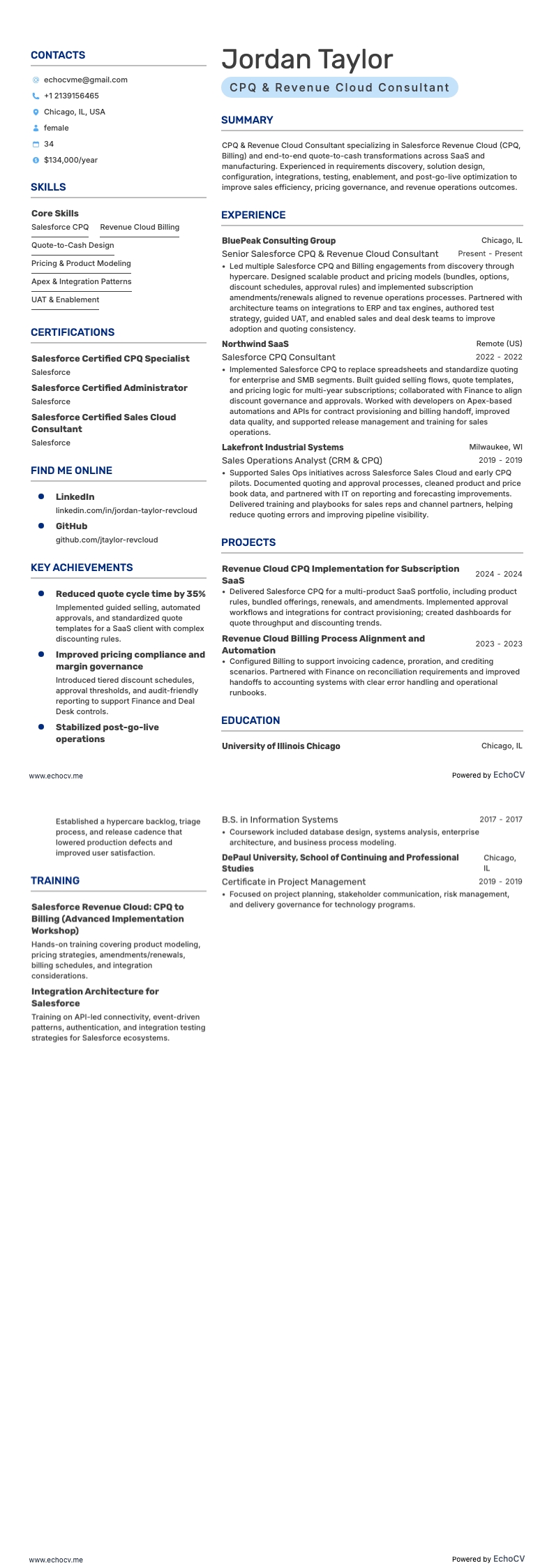
- Strategy: Mirror the industry language. If the job description mentions "Patient Management" and "HIPAA compliance," emphasize your Health Cloud experience. If it mentions "Subscription Billing," focus on your CPQ and Revenue Cloud projects.
- Resume action: Rearrange your bullet points so that the most relevant Cloud projects appear at the top of each job entry.
2. Match your technical "weight" (declarative vs. programmatic)
Firms generally look for one of two profiles: the "Click-not-Code" specialist or the "developer-consultant."
- If the job asks for Flow expertise: Highlight complex Flow Orchestration and the migration of legacy Process Builders.
- If the job asks for Apex/LWC: Focus on custom integrations, Lightning Web Components, and your ability to write scalable code that stays within governor limits.
3. Mirror the project methodology
Consulting firms differ in how they approach projects. You must show you can work within their framework.
- Agile/Scrum: If the JD mentions sprints, stand-ups, and Jira, then focus on your experience working in an Agile environment and managing backlogs.
- Waterfall: If they mention milestone-based delivery and long-term scoping, then detail your discovery and requirements gathering phases.
Let’s go over a few examples.