21 exemples de CV de rédacteur technique
EchoCV
Rédigé par l'équipe EchoCV
Mise à jour : 3/29/2023•8 min read
Consultez tous les exemples de CV de ce guide, ou générez votre propre exemple de CV avec votre prompt personnalisé
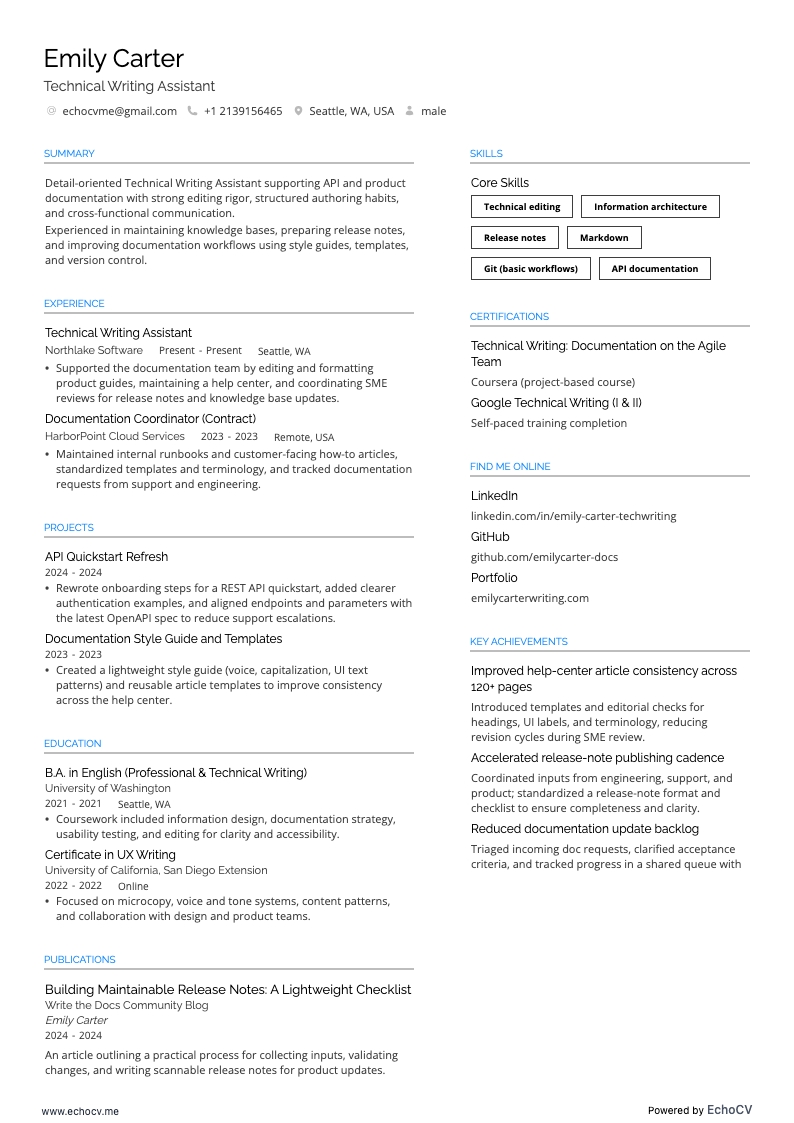
Assistant en rédaction technique
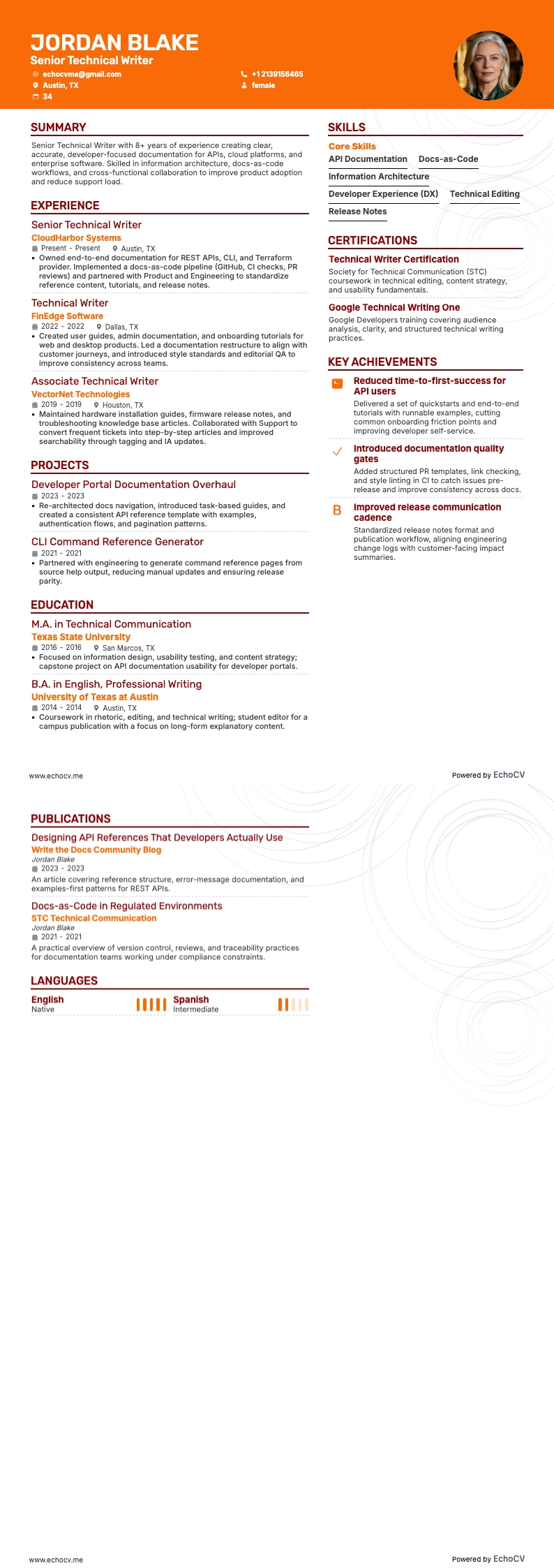
Rédacteur technique senior
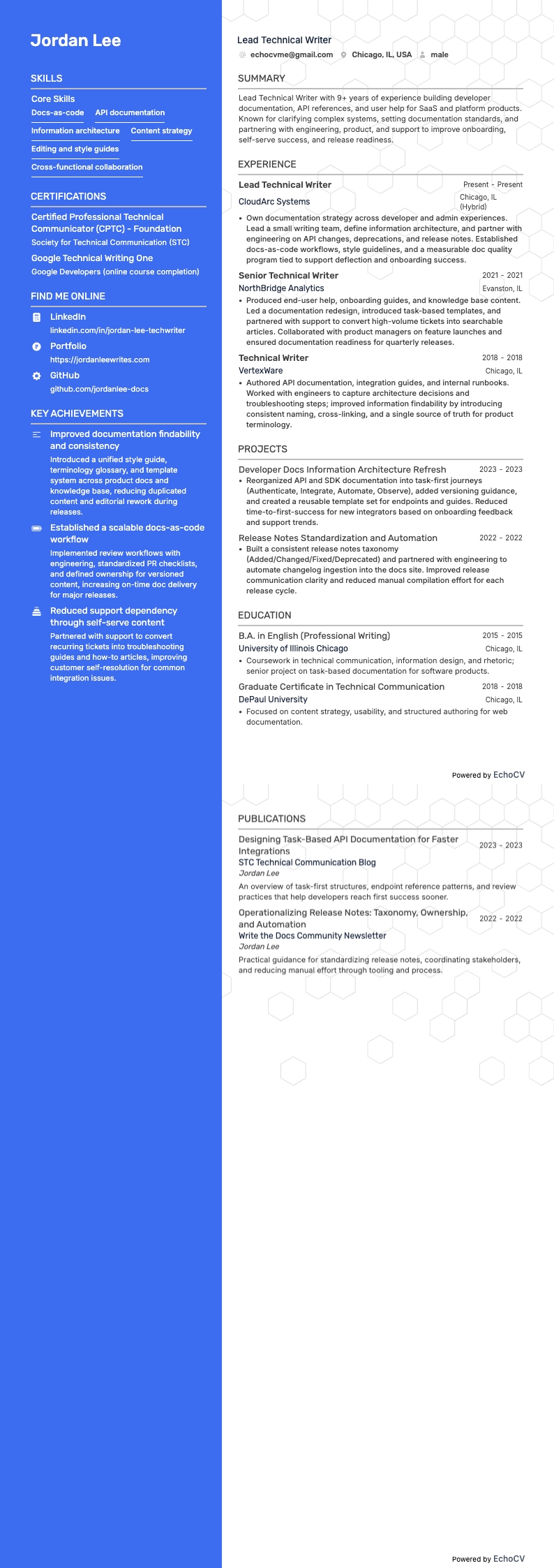
Rédacteur technique principal
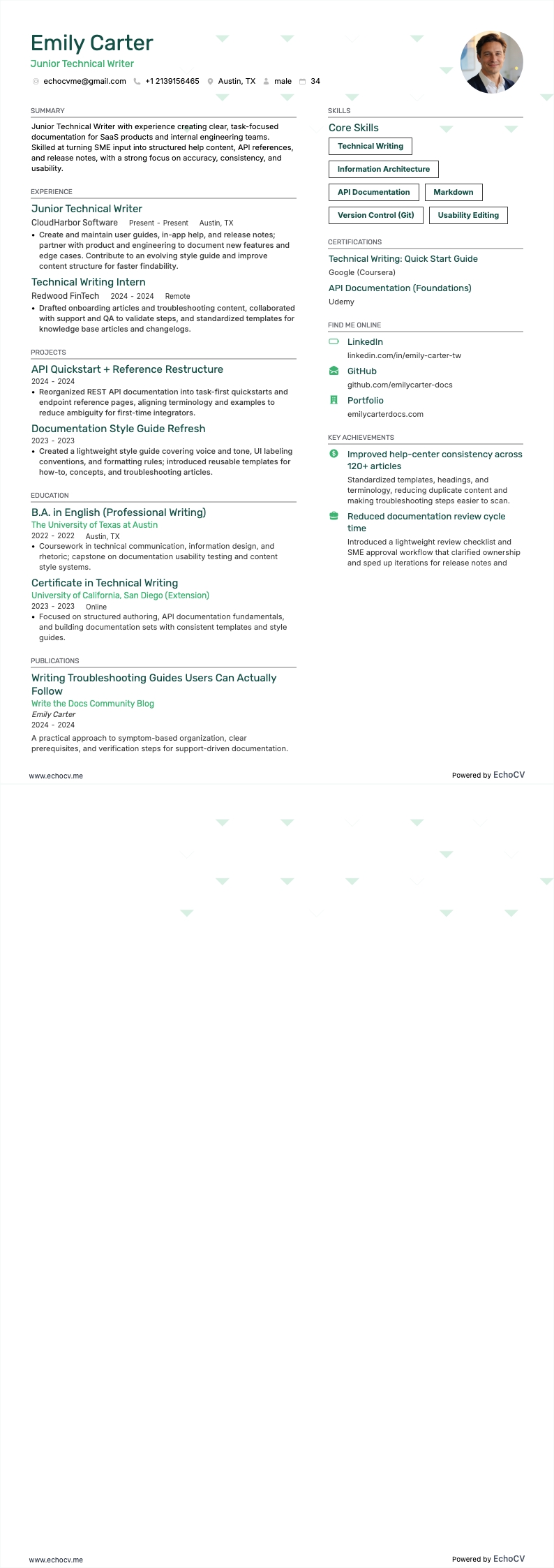
Rédacteur technique junior
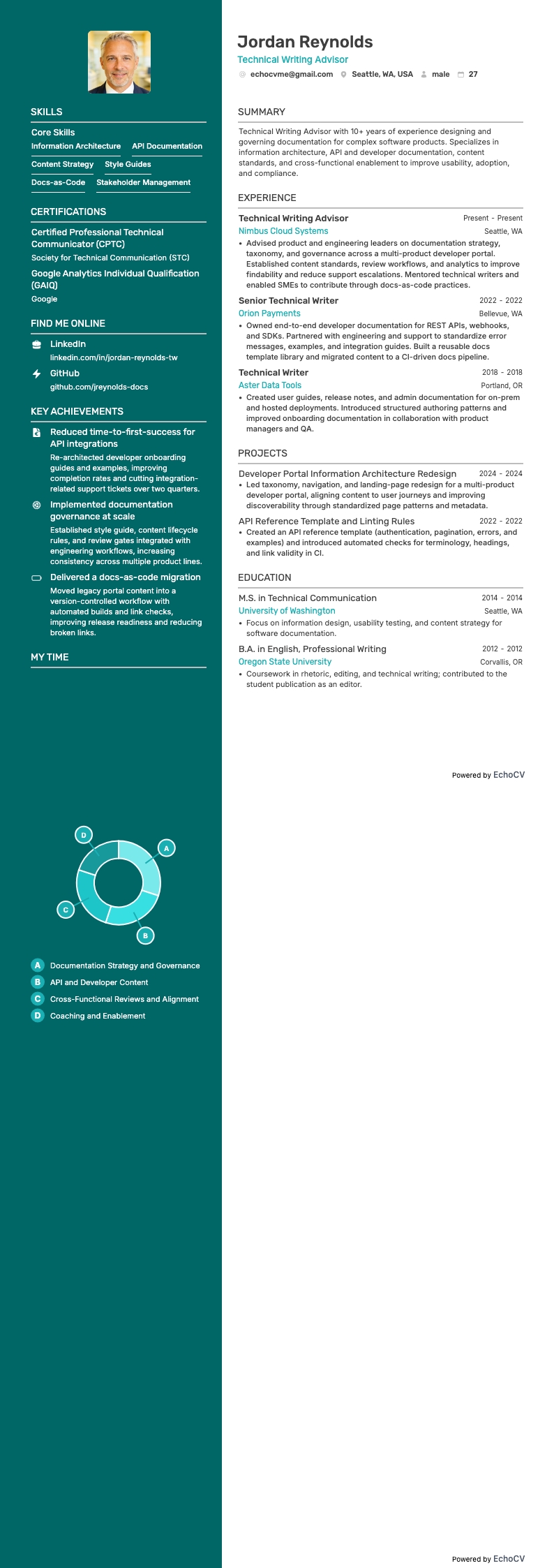
Conseiller en rédaction technique
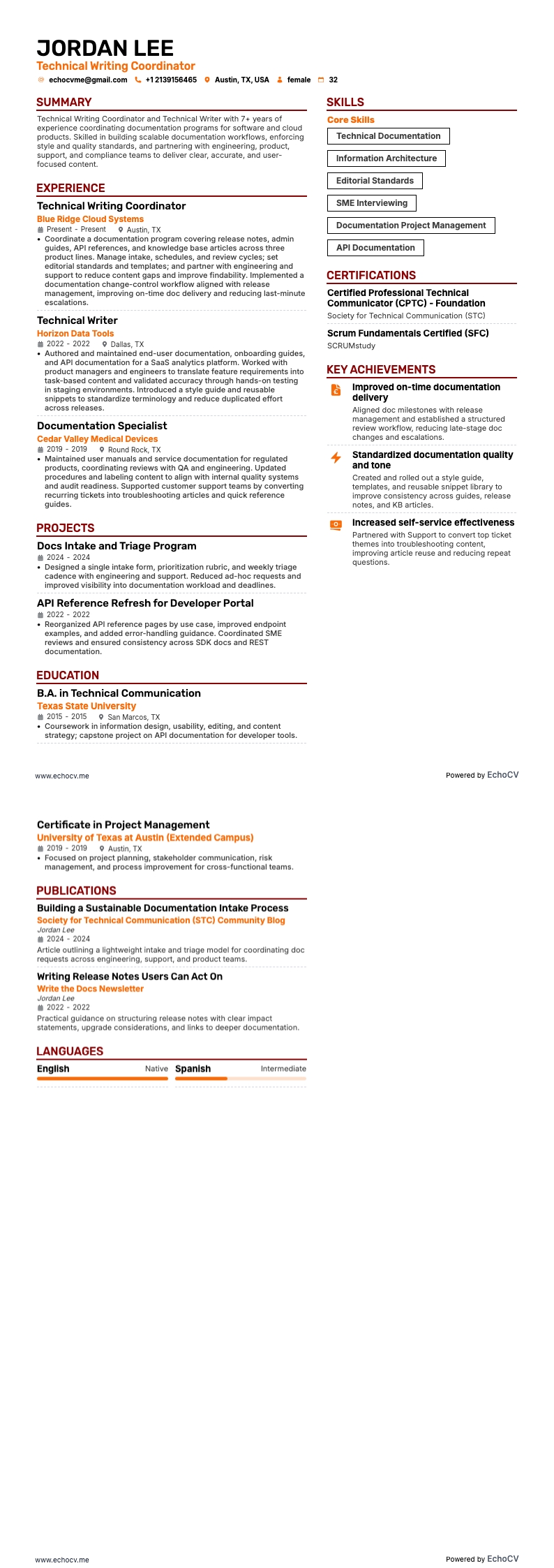
Coordinateur de rédaction technique
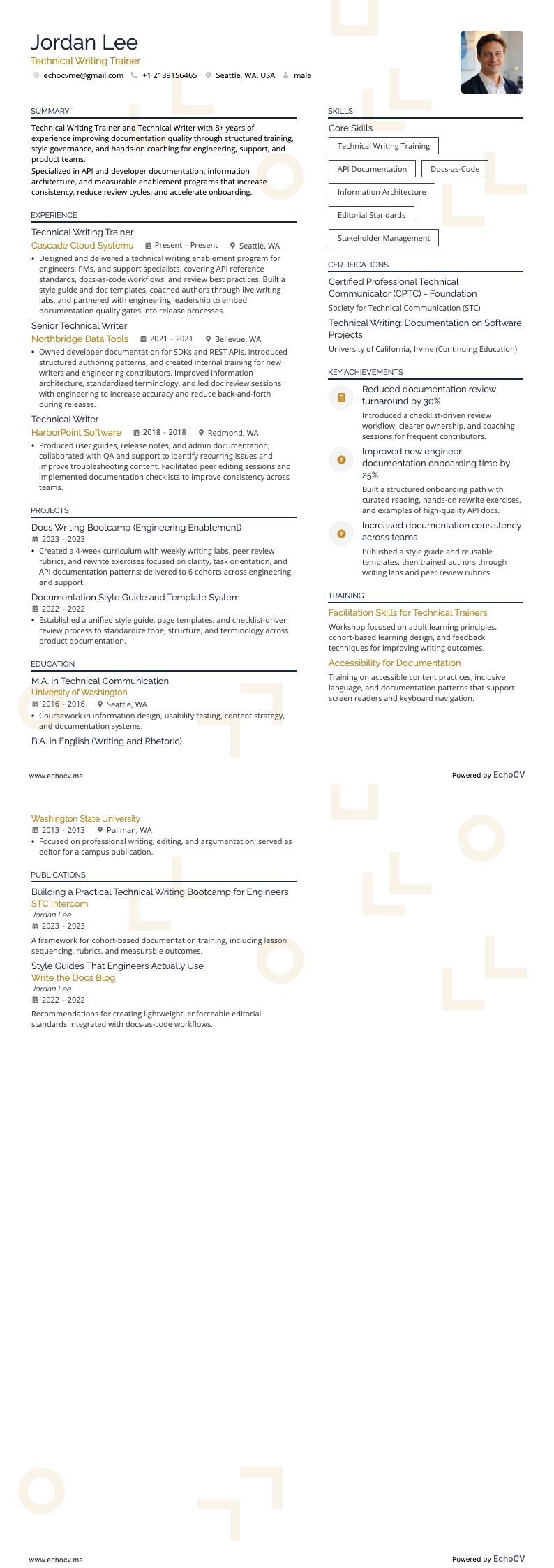
Formateur en rédaction technique
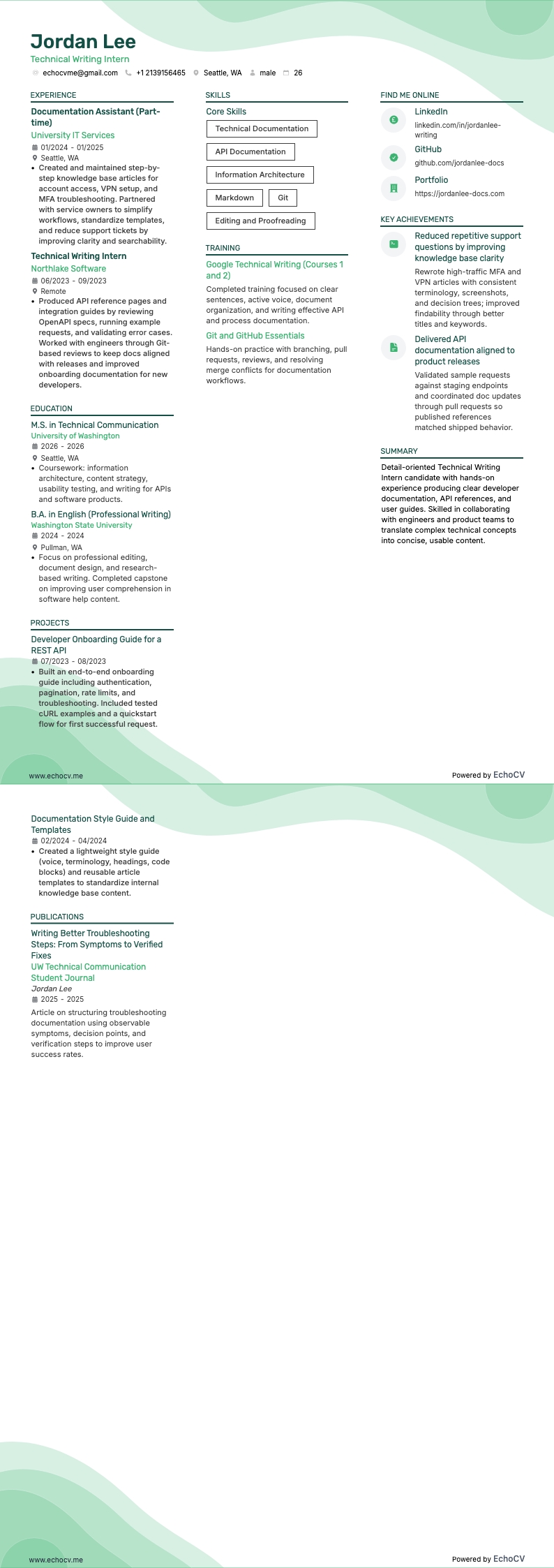
Stagiaire en rédaction technique
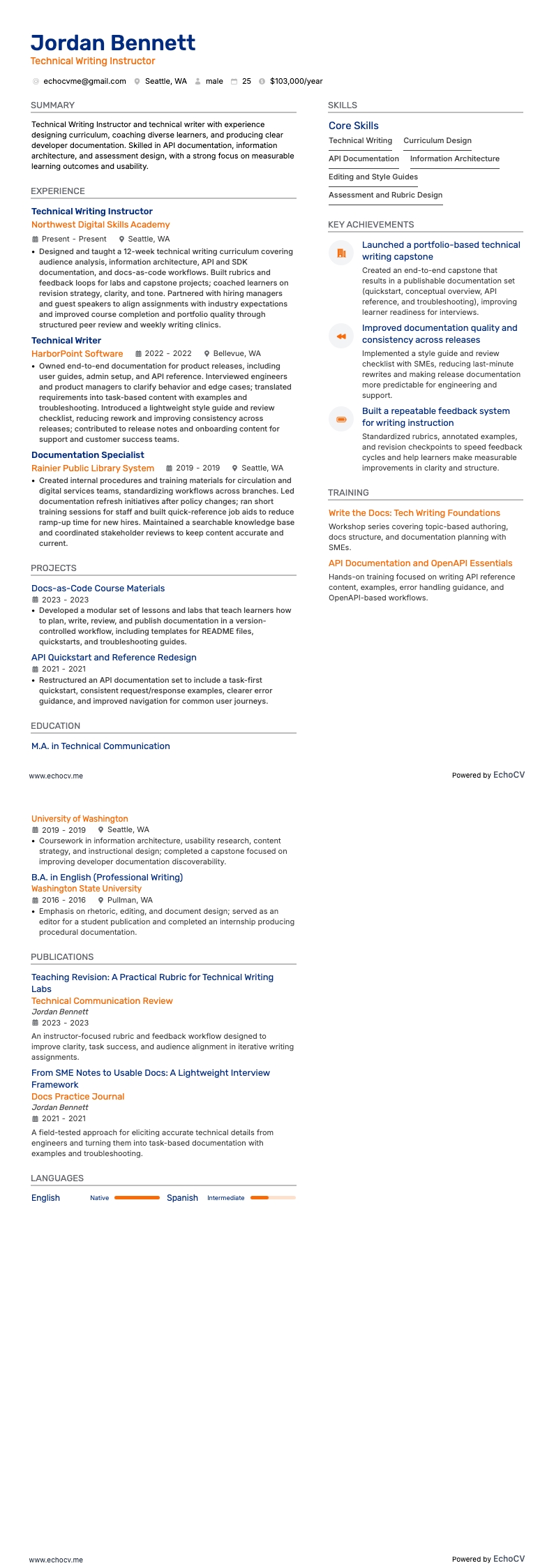
Formateur en rédaction technique
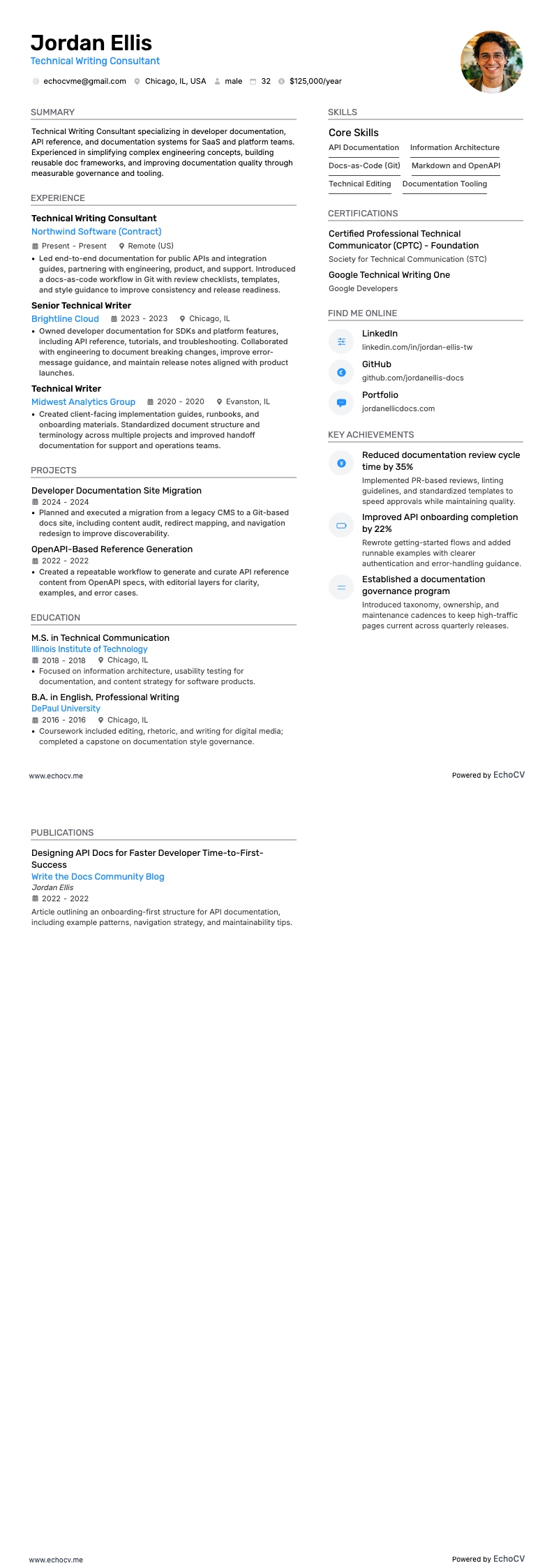
Consultant en rédaction technique
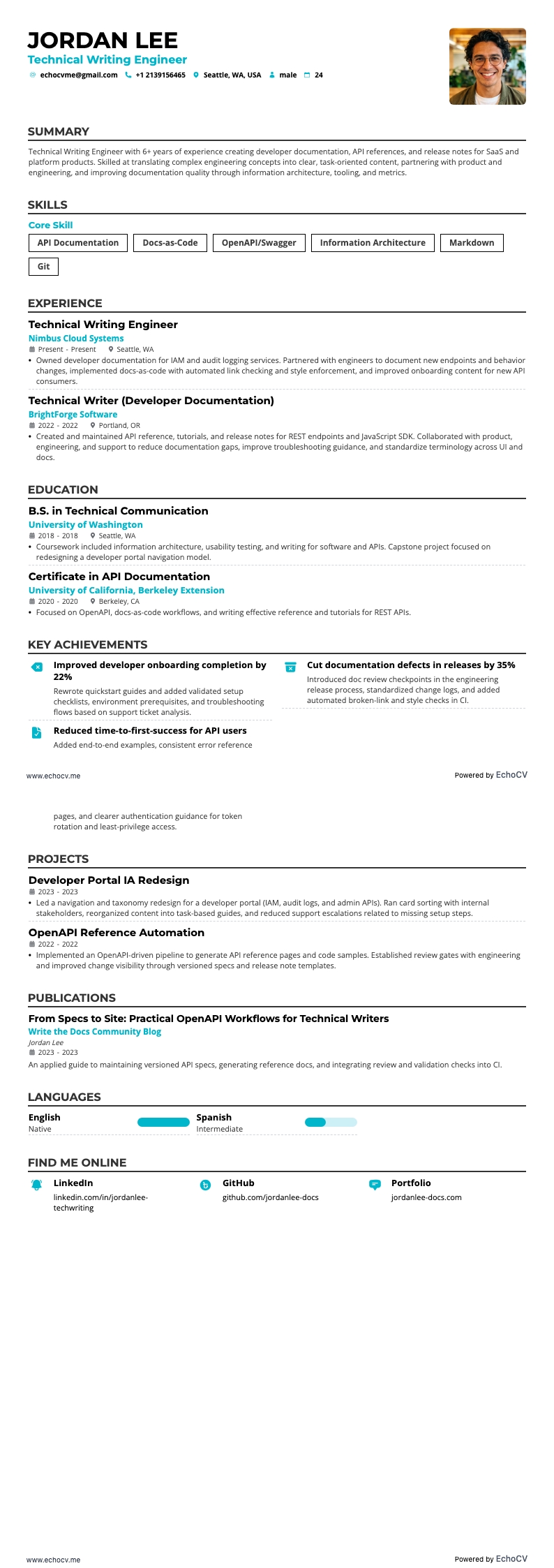
Ingénieur en rédaction technique
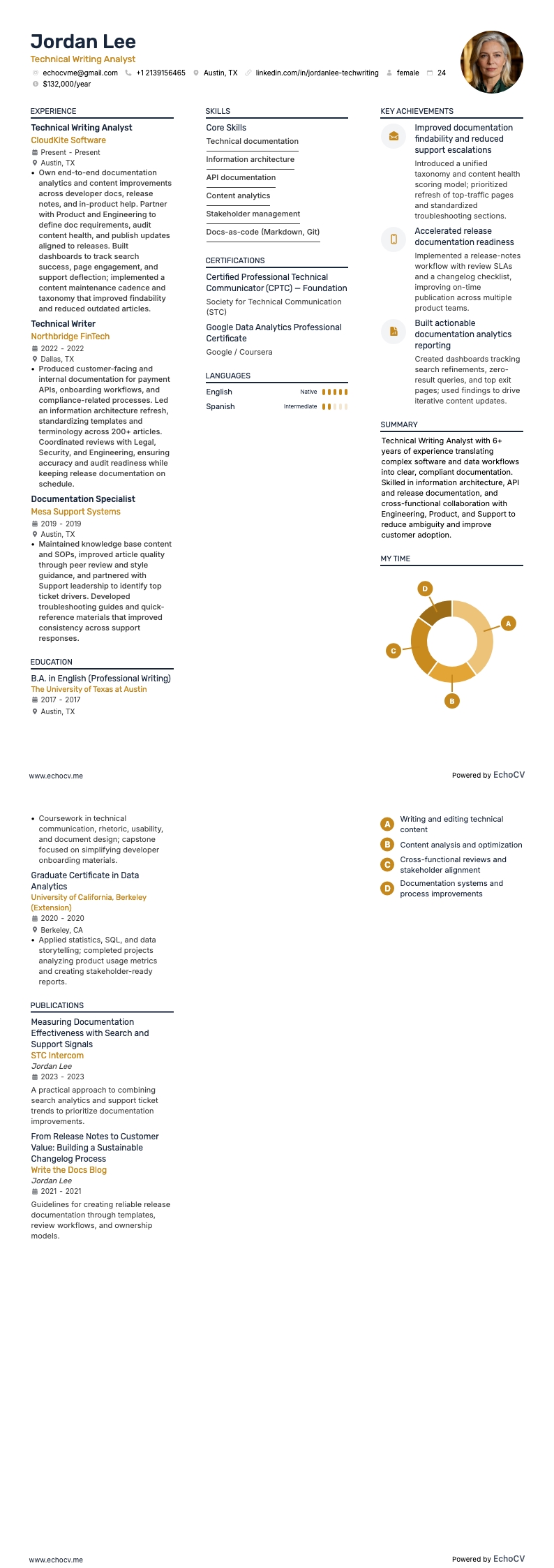
Analyste en rédaction technique
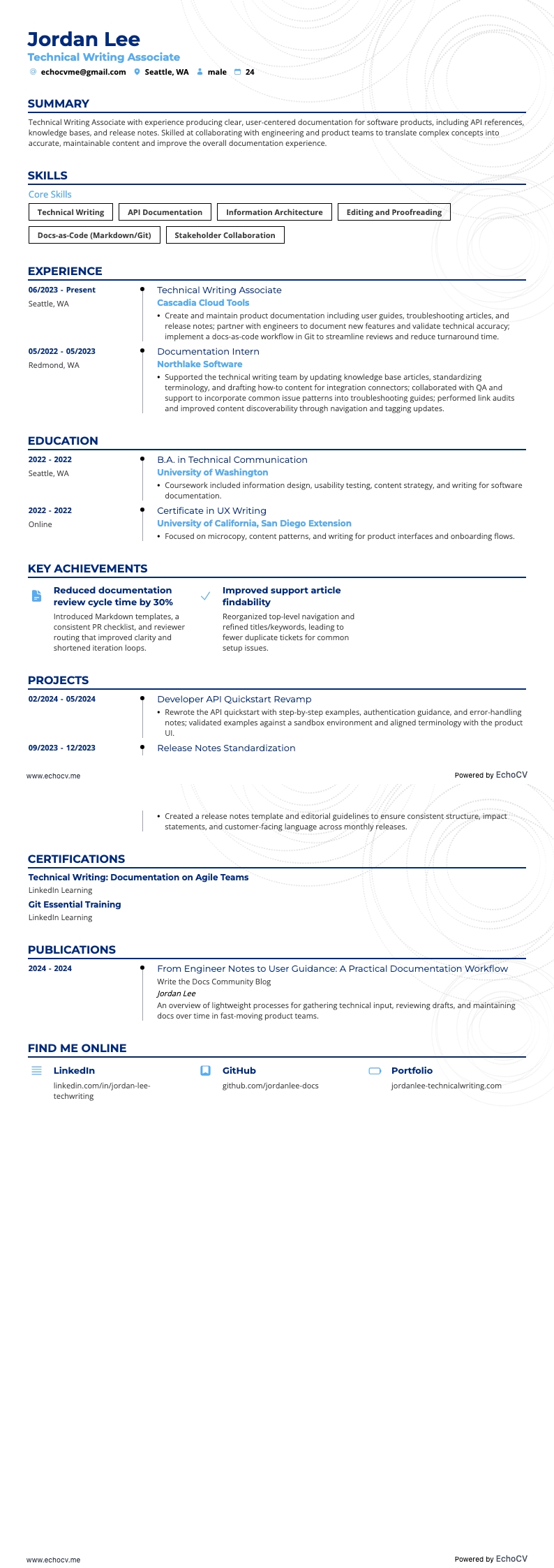
Collaborateur en rédaction technique
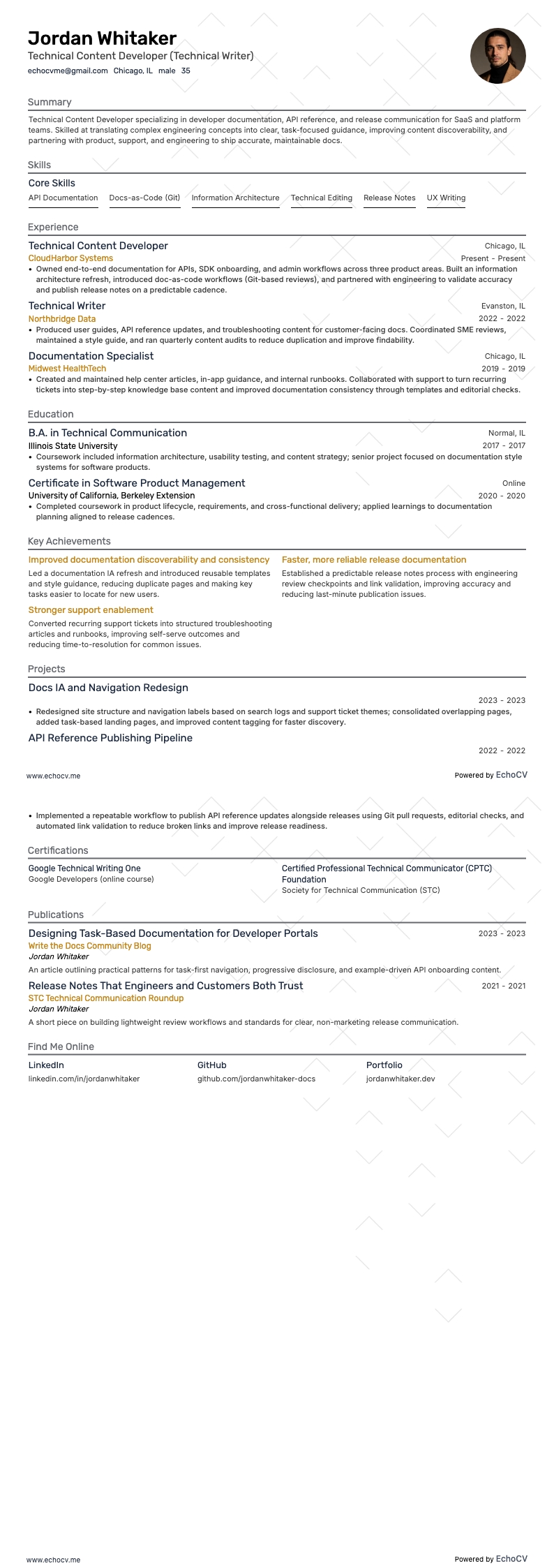
Développeur de contenu technique
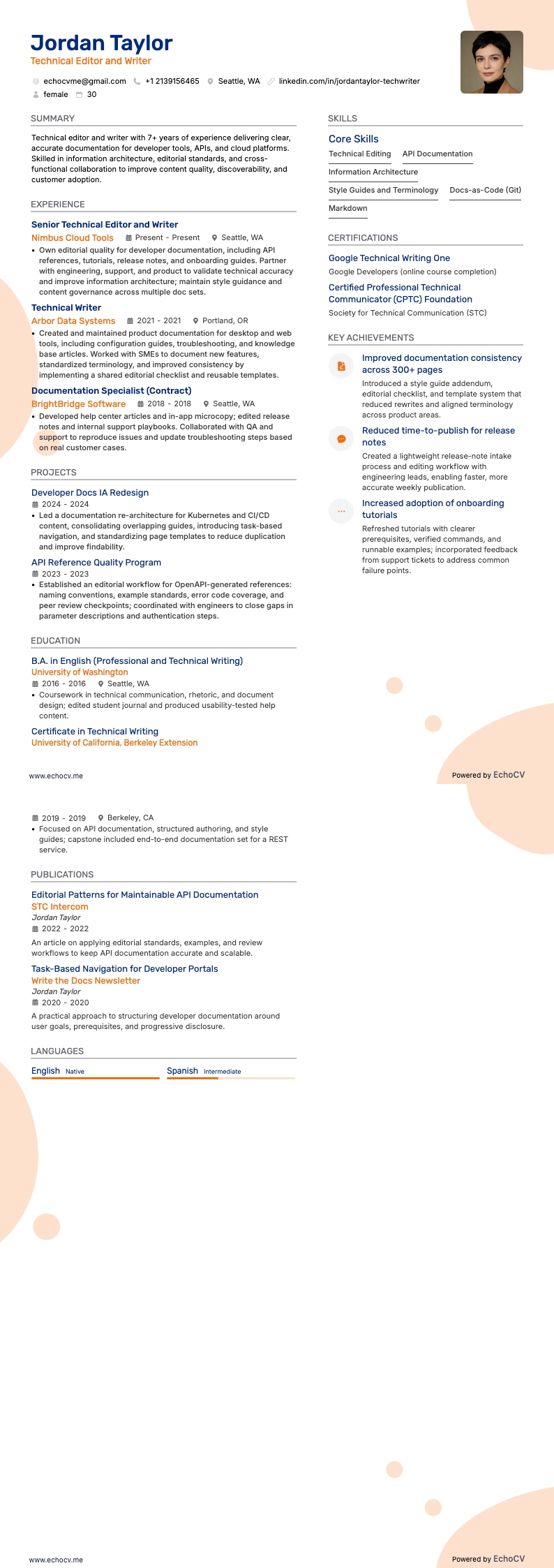
Éditeur et rédacteur technique
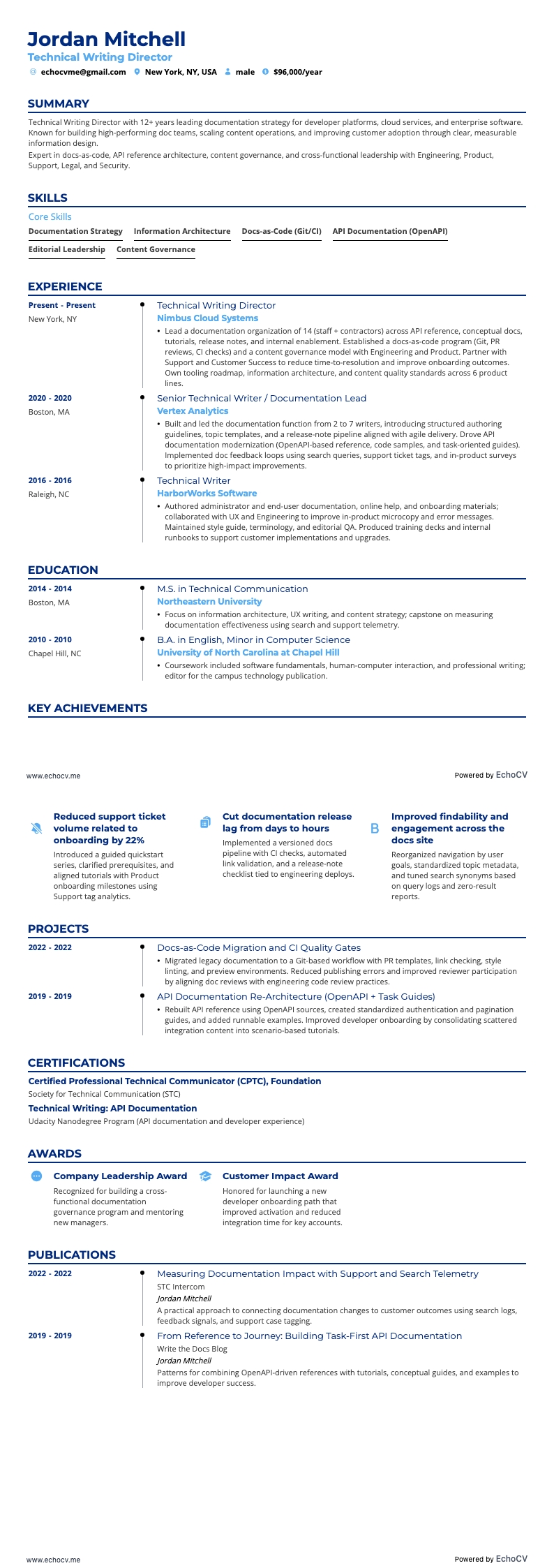
Directeur de la rédaction technique
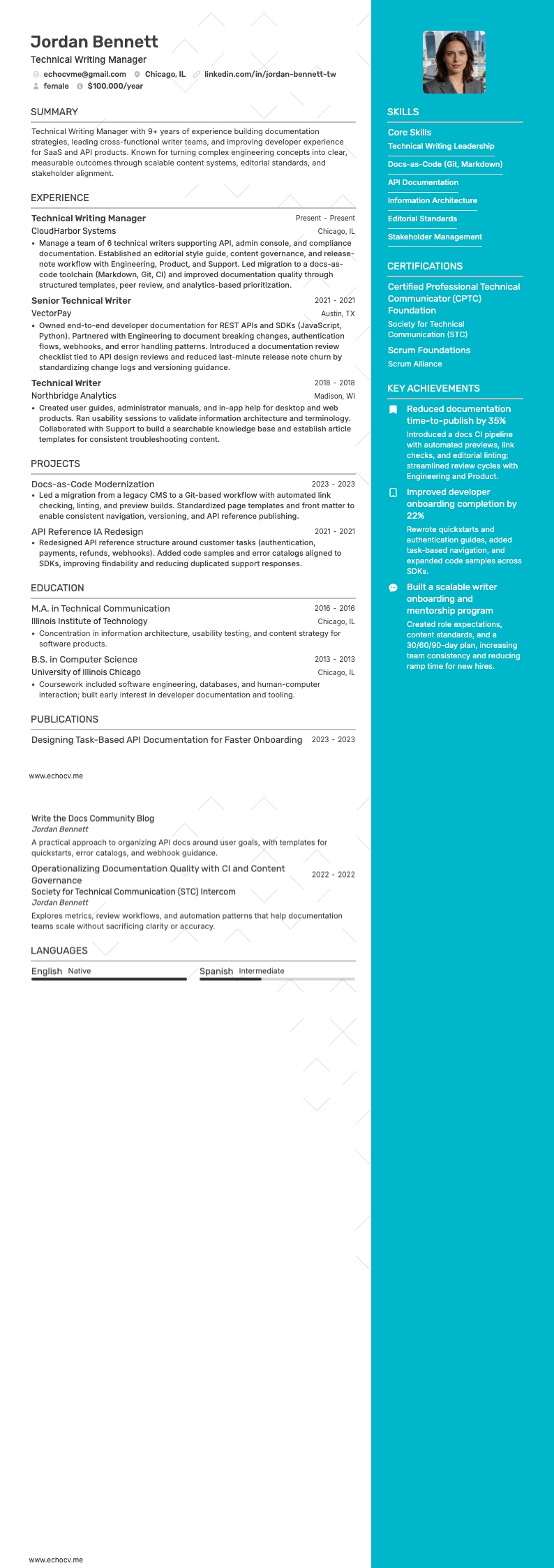
Responsable de rédaction technique
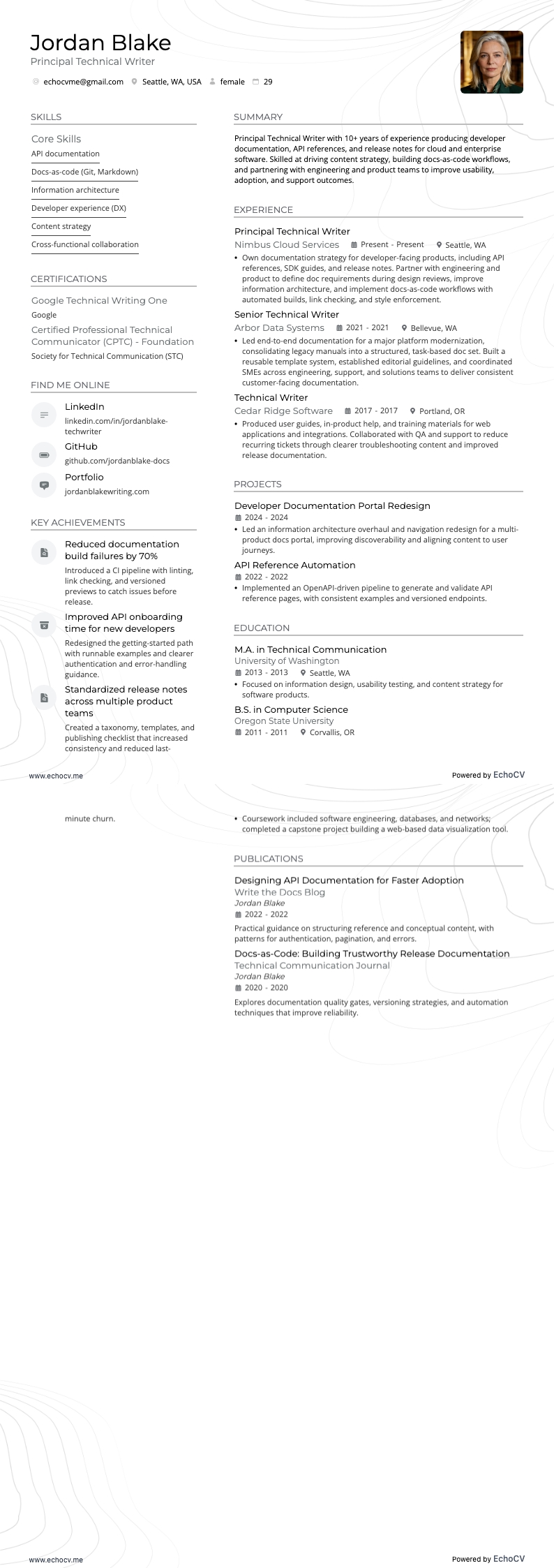
Rédacteur technique principal
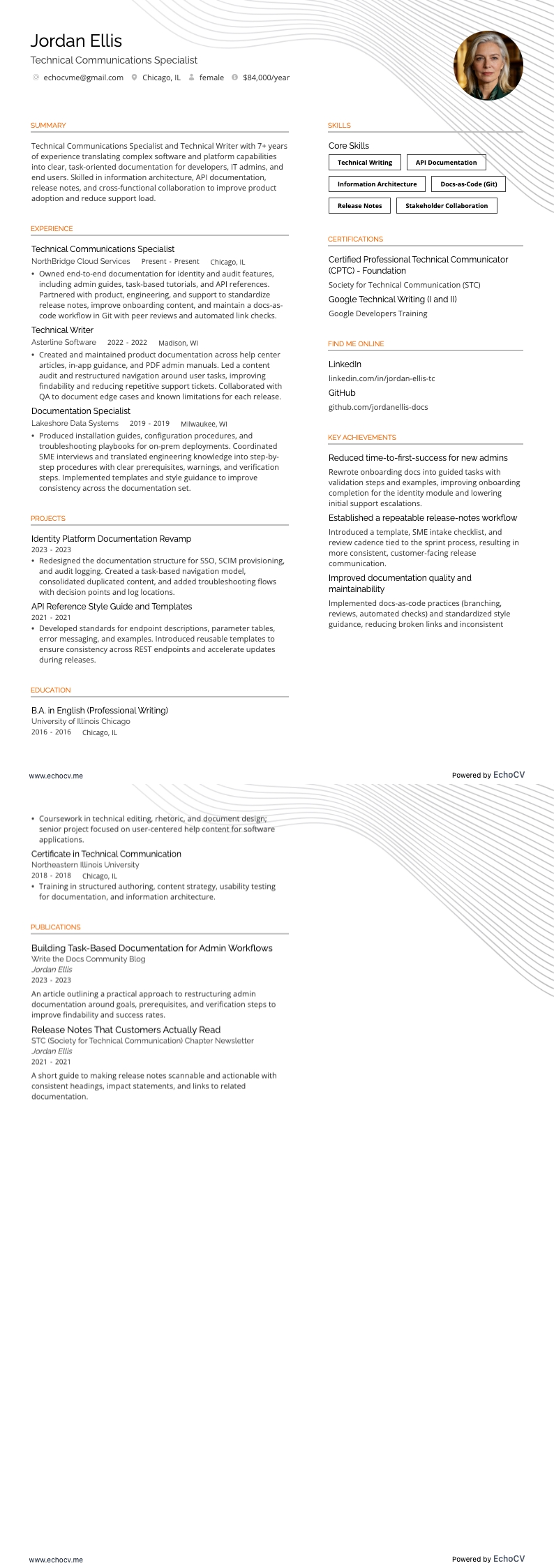
Spécialiste en communication technique
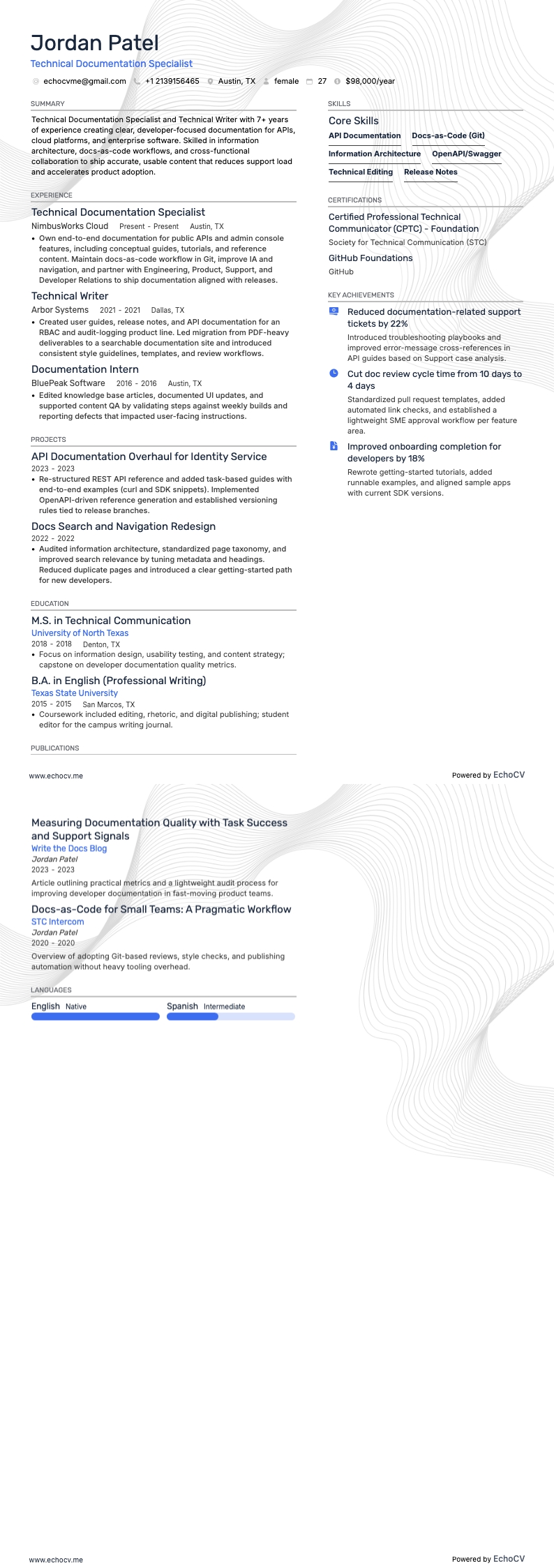
Spécialiste de la documentation technique
Exemples de CV Rédacteur technique
Explorez d'autres exemples et guides de CV Rédacteur technique et découvrez ce qui fonctionne selon votre niveau d'expérience ou votre rôle.
Par expérience
Assistant en rédaction technique
Rédacteur technique senior
Rédacteur technique principal
Rédacteur technique junior
Exemples de CV Rédacteur technique
Explorez d'autres exemples et guides de CV Rédacteur technique et découvrez ce qui fonctionne selon votre niveau d'expérience ou votre rôle.
Par rôle
Conseiller en rédaction technique
Coordinateur de rédaction technique
Formateur en rédaction technique
Stagiaire en rédaction technique
Formateur en rédaction technique
Consultant en rédaction technique
Ingénieur en rédaction technique
Analyste en rédaction technique
Collaborateur en rédaction technique
Développeur de contenu technique
Éditeur et rédacteur technique
Directeur de la rédaction technique
Responsable de rédaction technique
Rédacteur technique principal
Spécialiste en communication technique
Spécialiste de la documentation technique