19 exemplos de currículo de analista de segurança
EchoCV
Escrito pela equipe EchoCV
Atualizado: 4/13/2023•8 min read
Veja todos os exemplos de currículo neste guia ou gere seu próprio exemplo com seu prompt personalizado
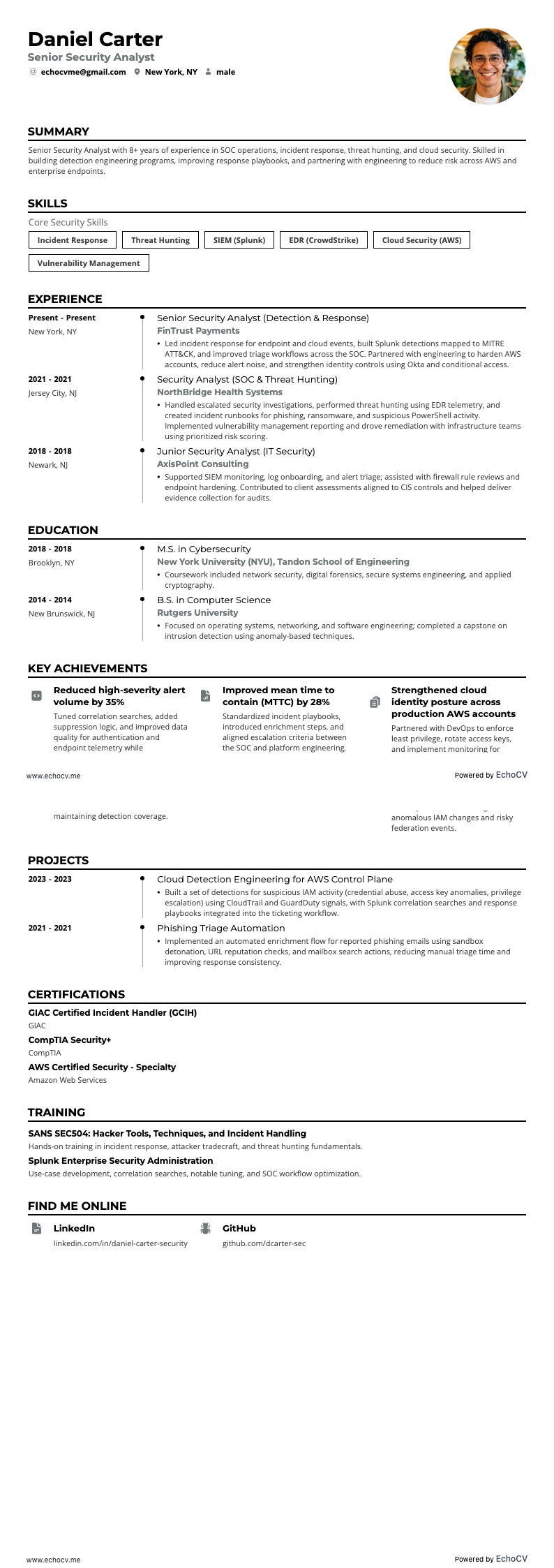
Analista de Segurança Sênior
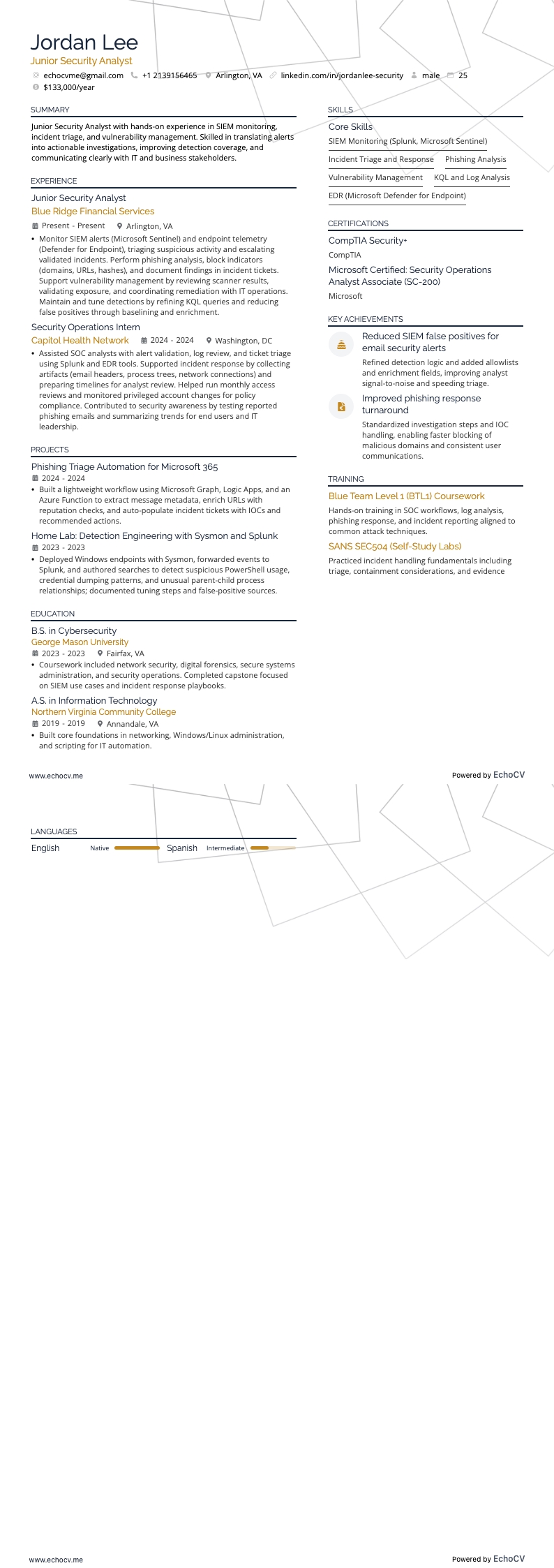
Analista de Segurança Júnior
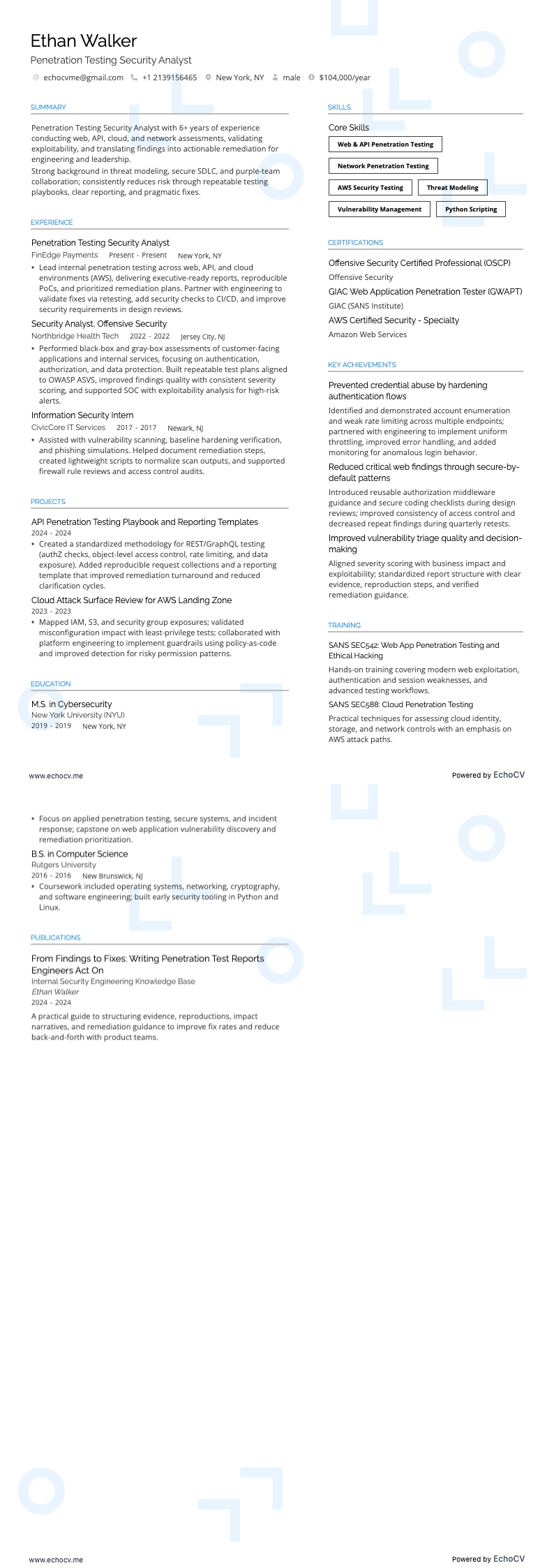
Analista de segurança em testes de penetração
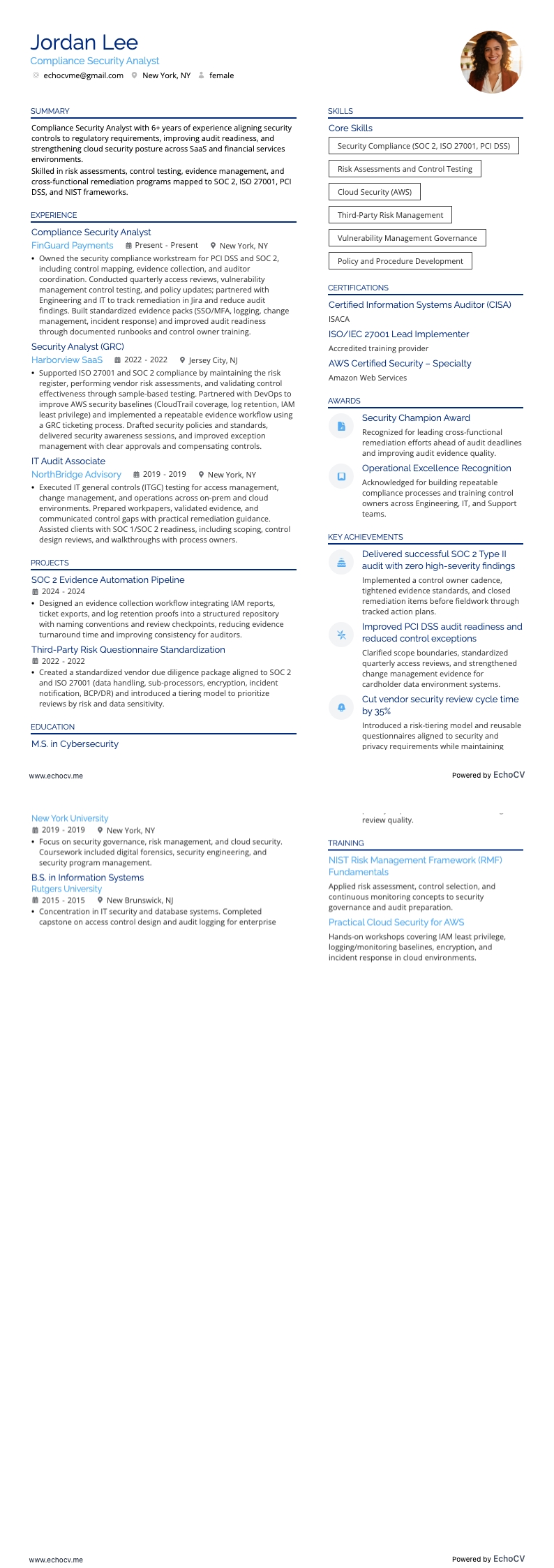
Analista de Segurança e Conformidade
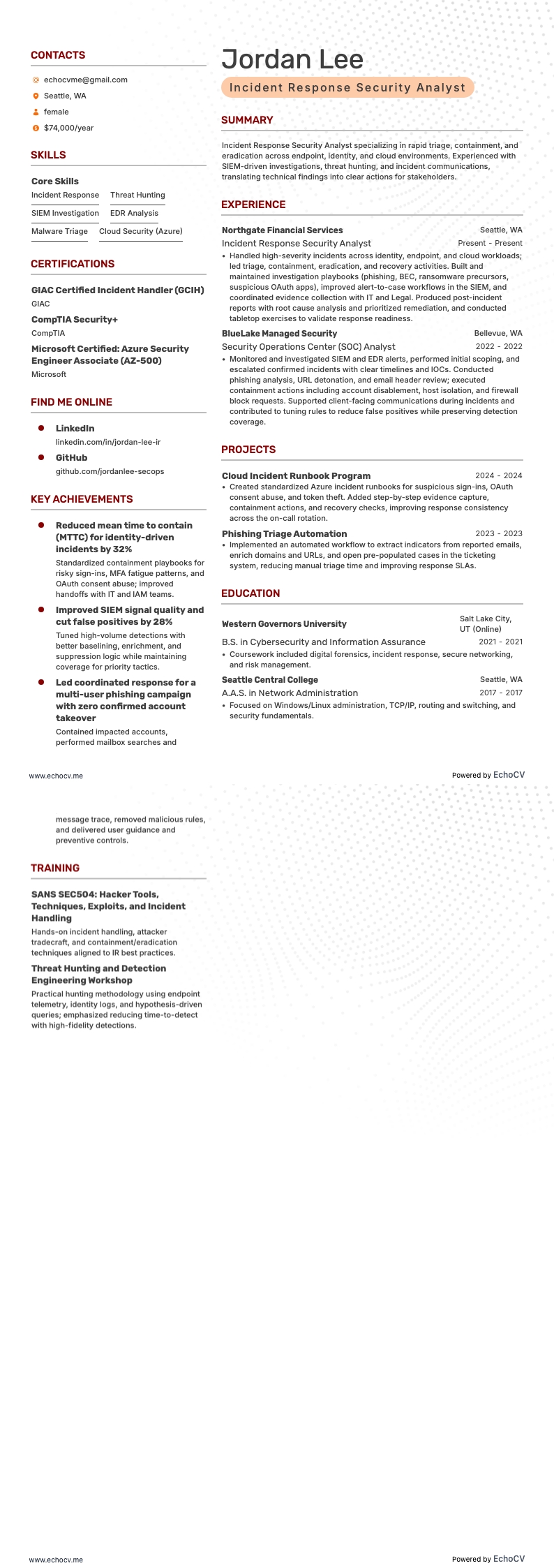
Analista de segurança de resposta a incidentes
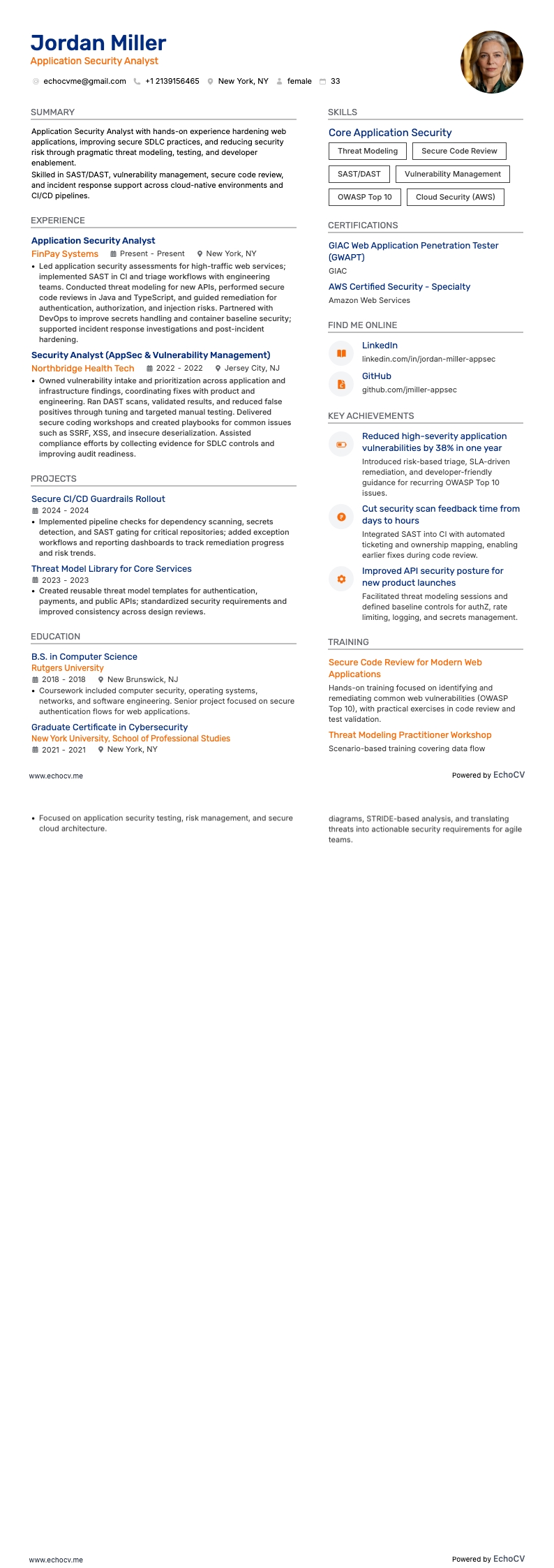
Analista de Segurança de Aplicações
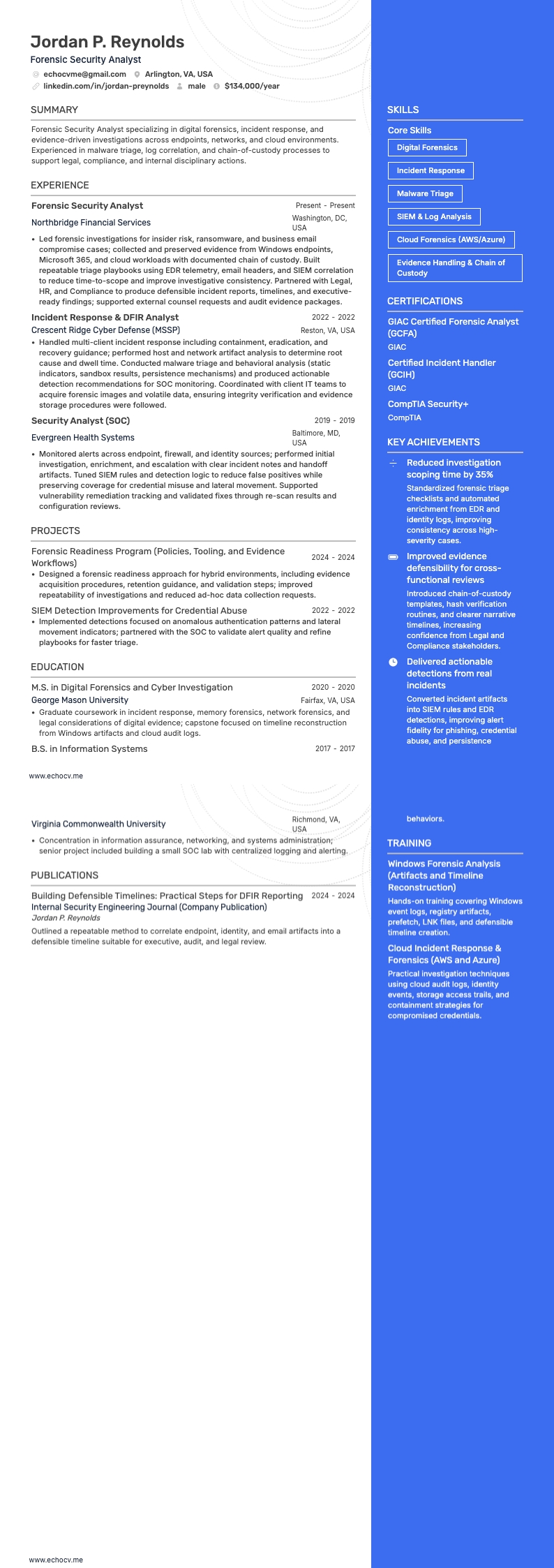
Analista forense de segurança
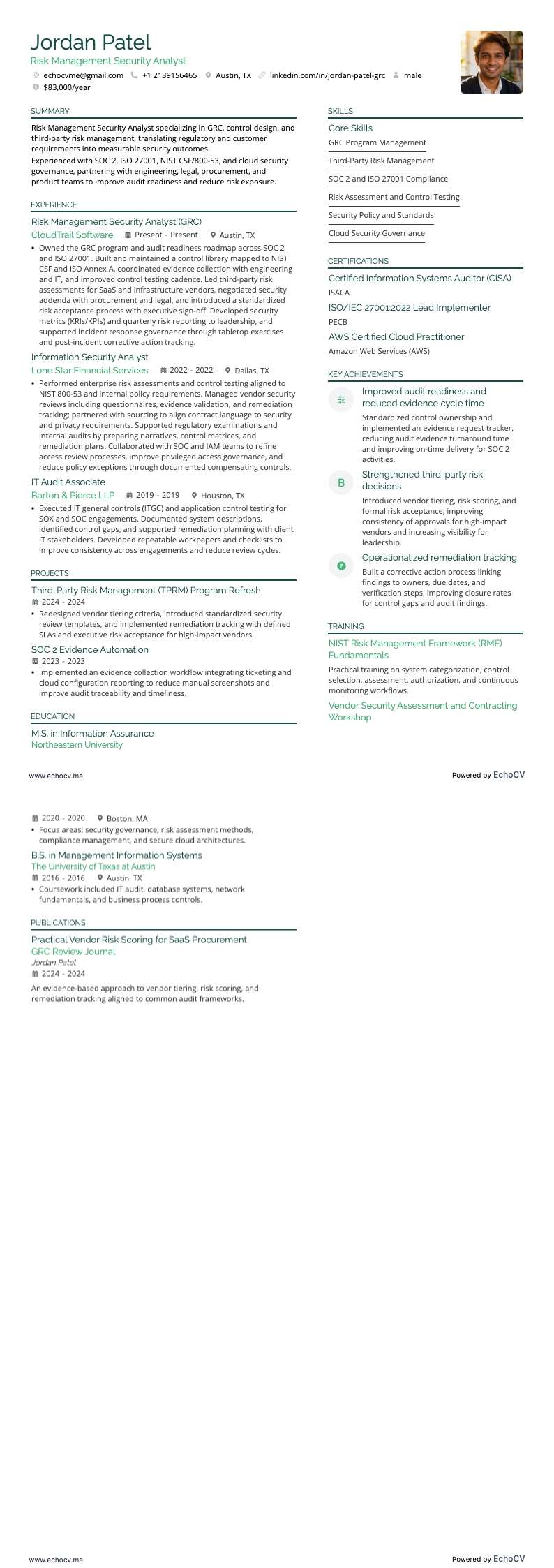
Analista de segurança e gestão de riscos
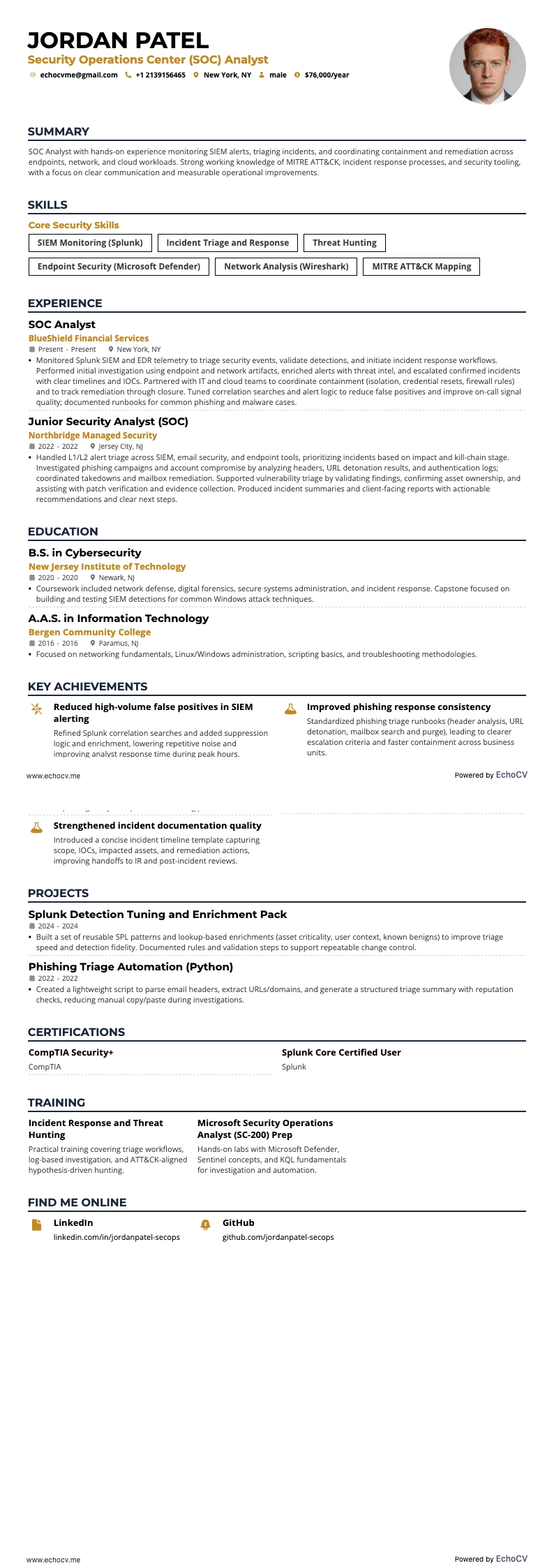
Analista de Centro de Operações de Segurança (SOC)
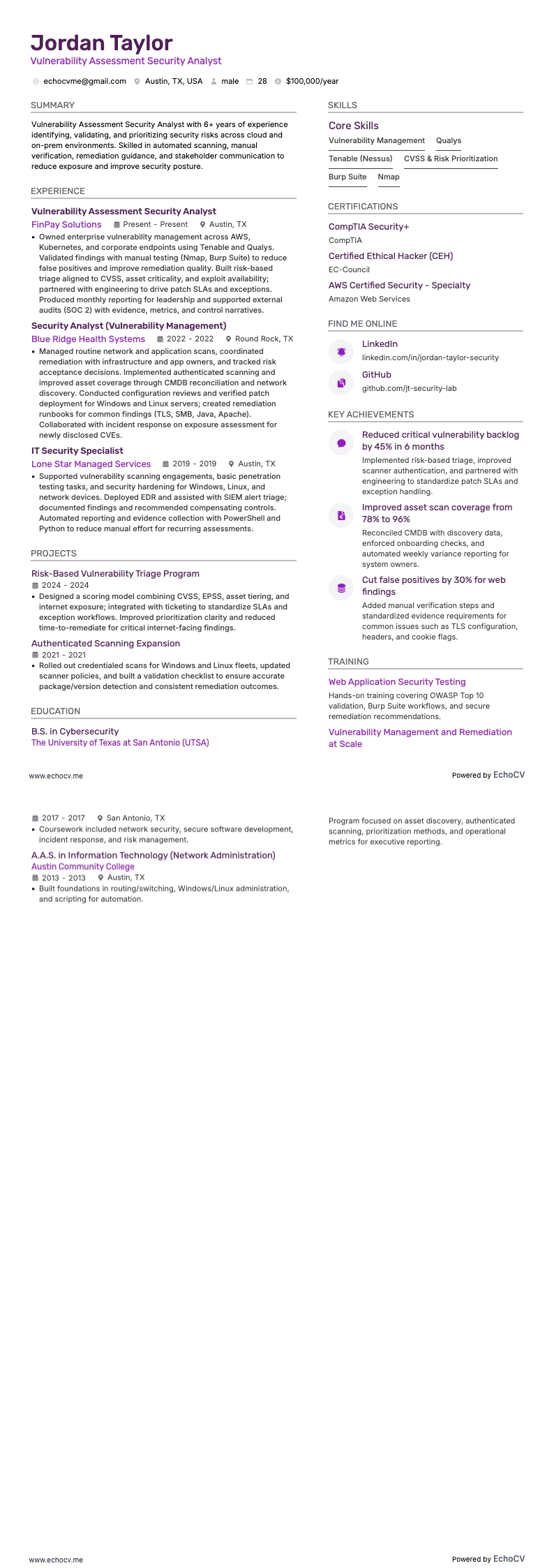
Analista de segurança de avaliação de vulnerabilidades
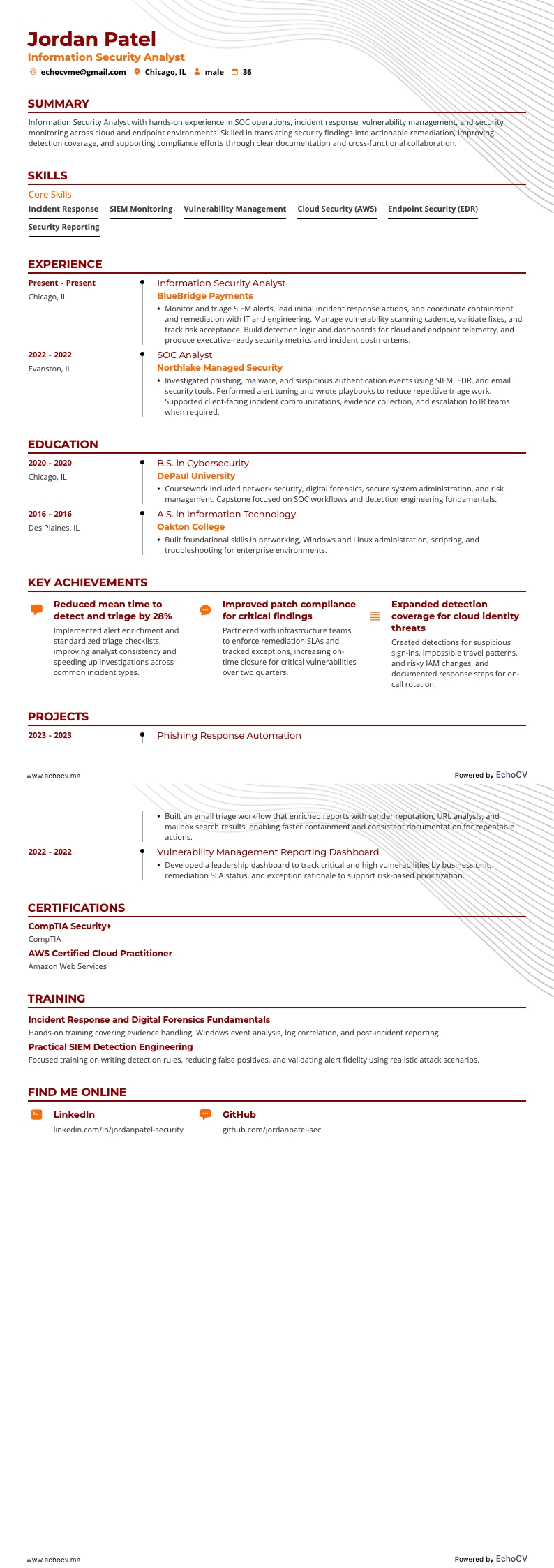
Analista de segurança da informação
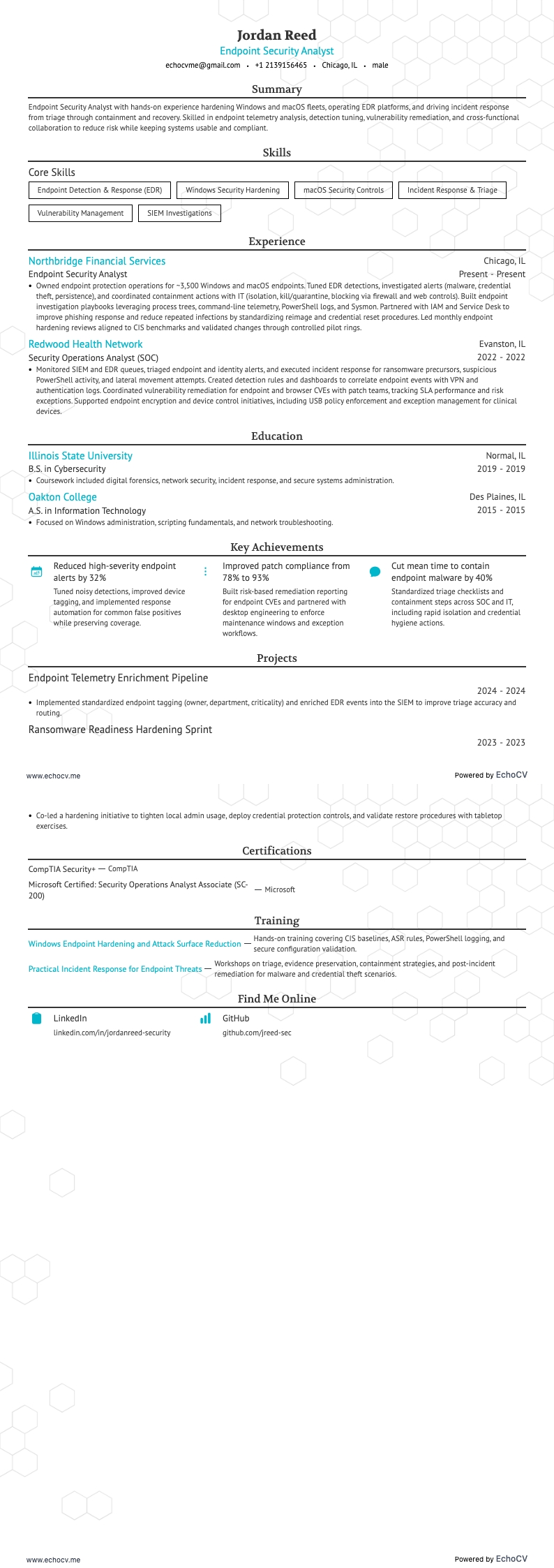
Analista de segurança de endpoints
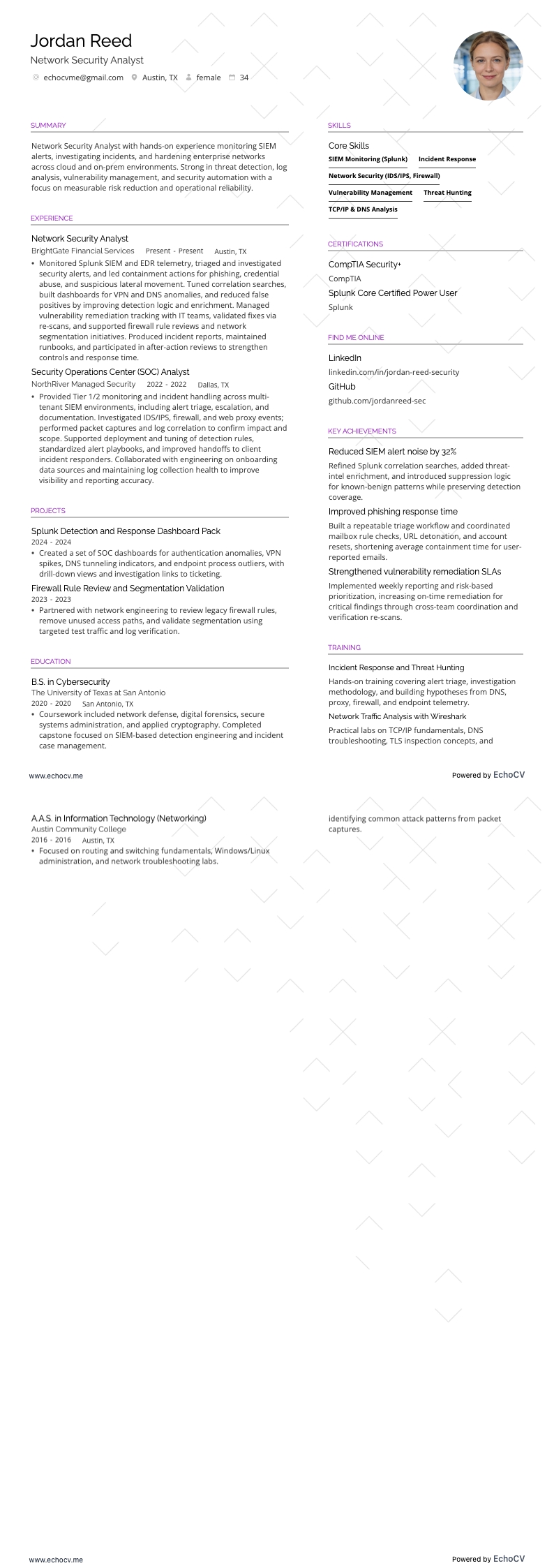
Analista de Segurança de Redes

Analista de segurança e inteligência de ameaças
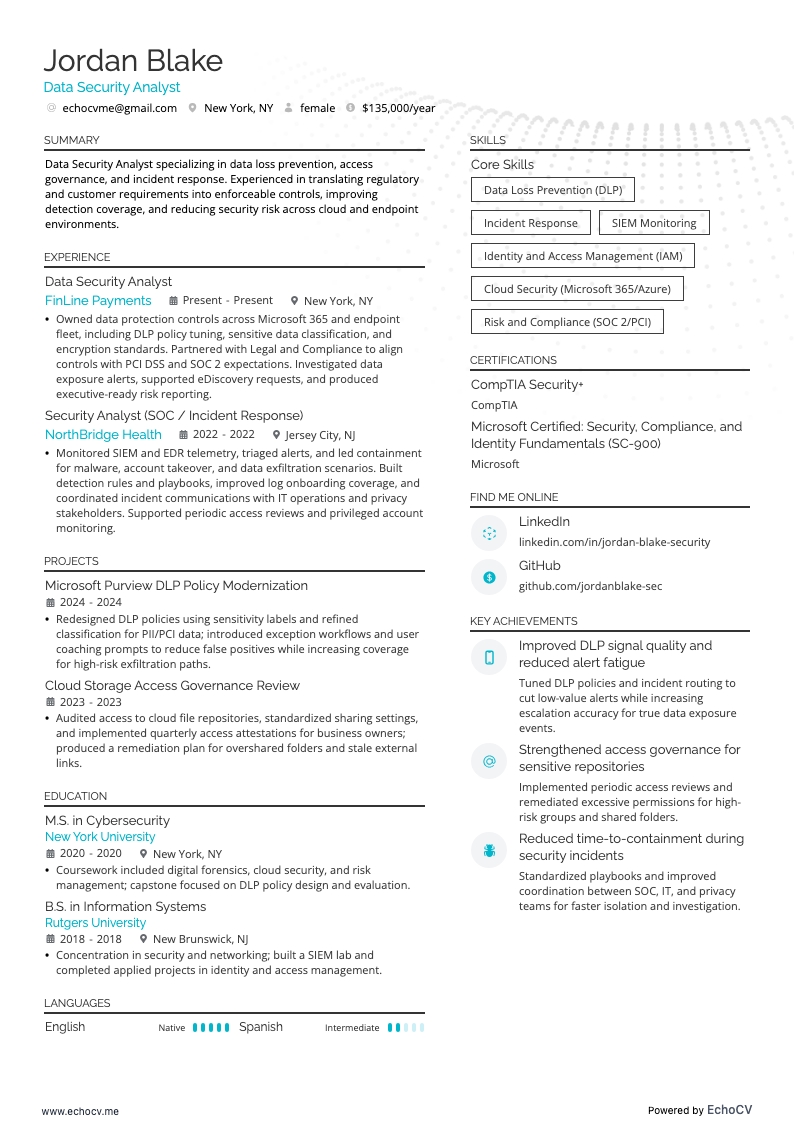
Analista de Segurança de Dados
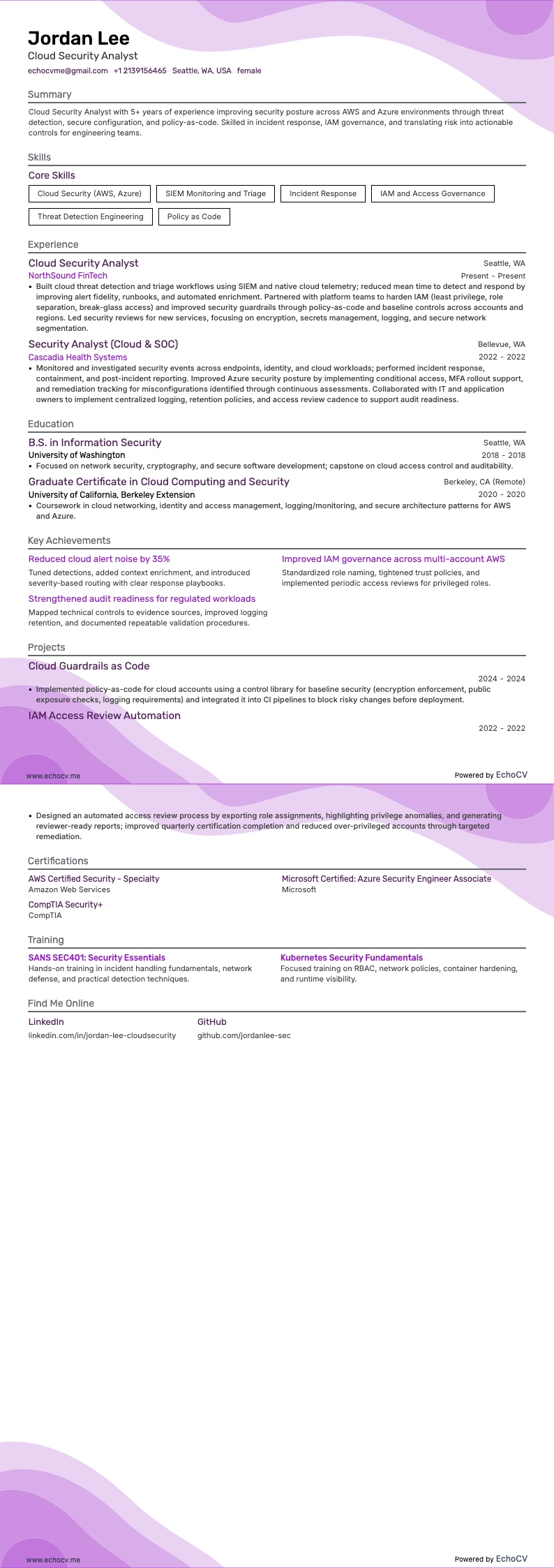
Analista de segurança em nuvem
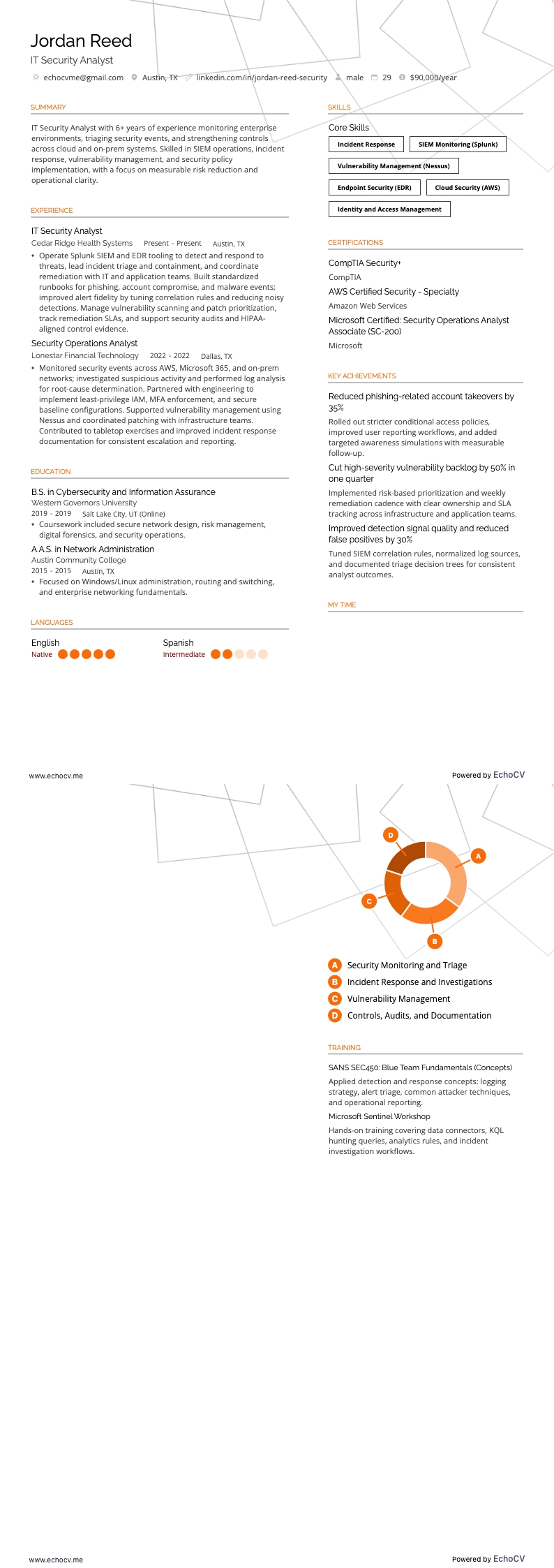
Analista de segurança de TI
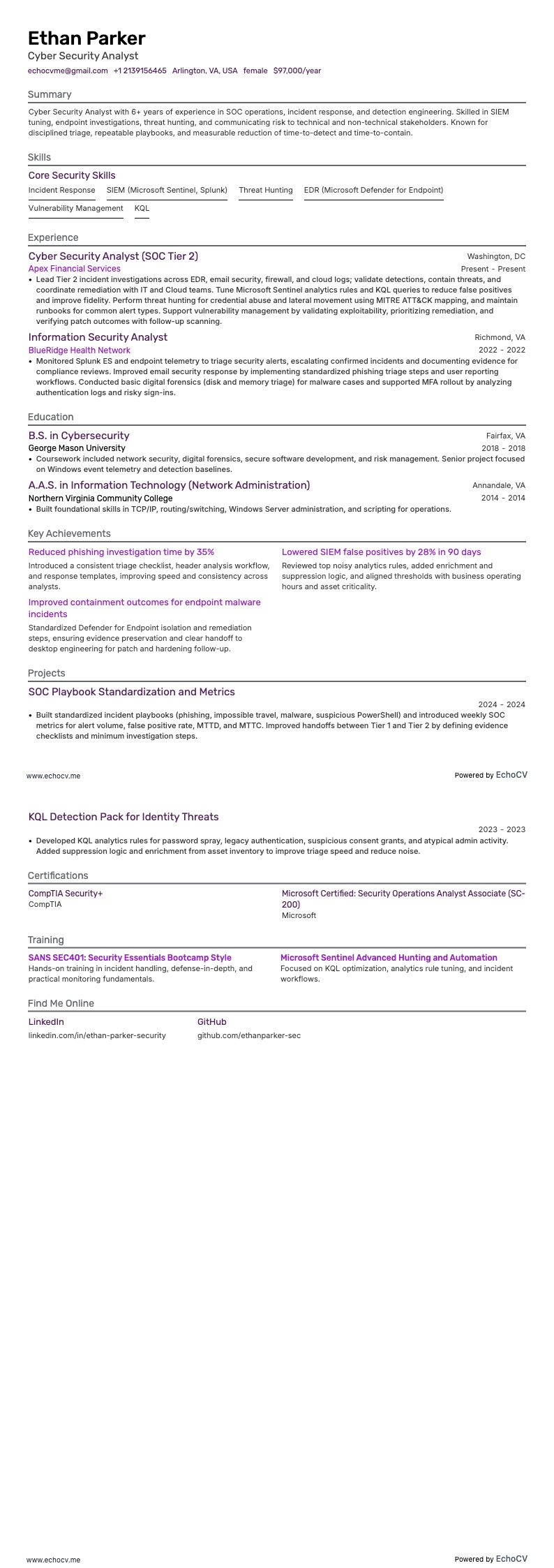
Analista de cibersegurança
Exemplos de currículo de Analista de Segurança
Explore mais exemplos e guias de currículo de Analista de Segurança e veja o que funciona para seu nível de experiência ou função.
Por experiência
Analista de Segurança Sênior
Analista de Segurança Júnior
Exemplos de currículo de Analista de Segurança
Explore mais exemplos e guias de currículo de Analista de Segurança e veja o que funciona para seu nível de experiência ou função.
Por função
Analista de segurança em testes de penetração
Analista de Segurança e Conformidade
Analista de segurança de resposta a incidentes
Analista de Segurança de Aplicações
Analista forense de segurança
Analista de segurança e gestão de riscos
Analista de Centro de Operações de Segurança (SOC)
Analista de segurança de avaliação de vulnerabilidades
Analista de segurança da informação
Analista de segurança de endpoints
Analista de Segurança de Redes
Analista de segurança e inteligência de ameaças
Analista de Segurança de Dados
Analista de segurança em nuvem
Analista de segurança de TI
Analista de cibersegurança