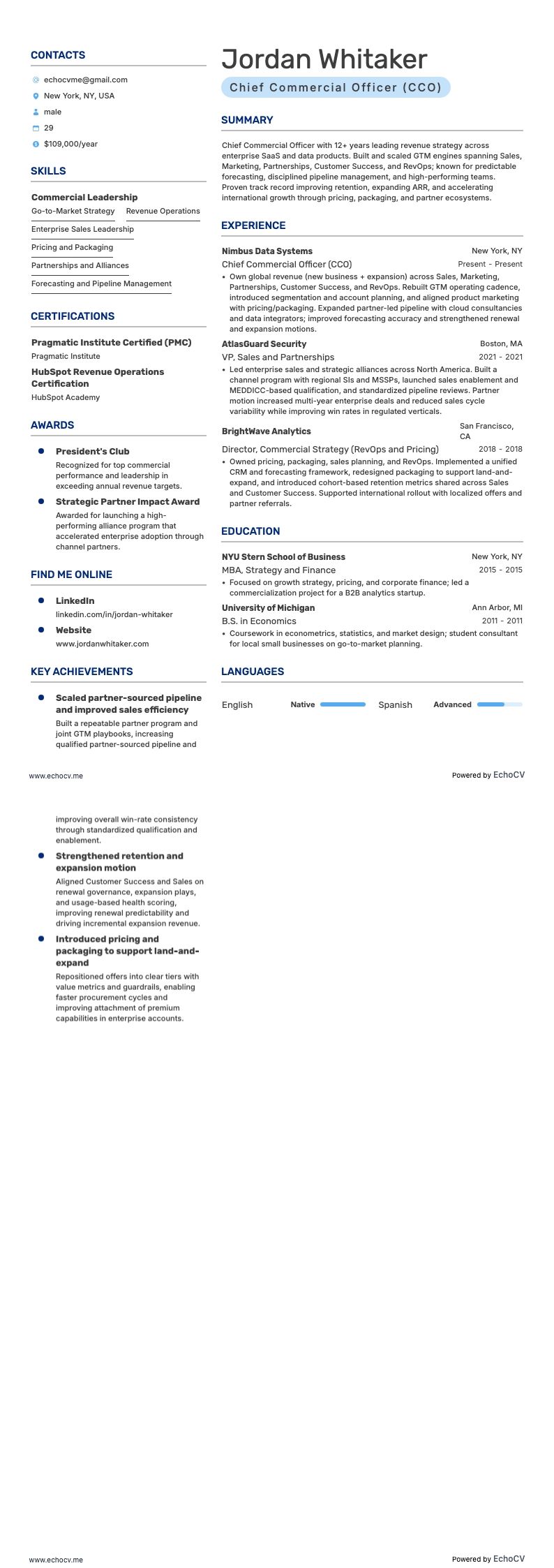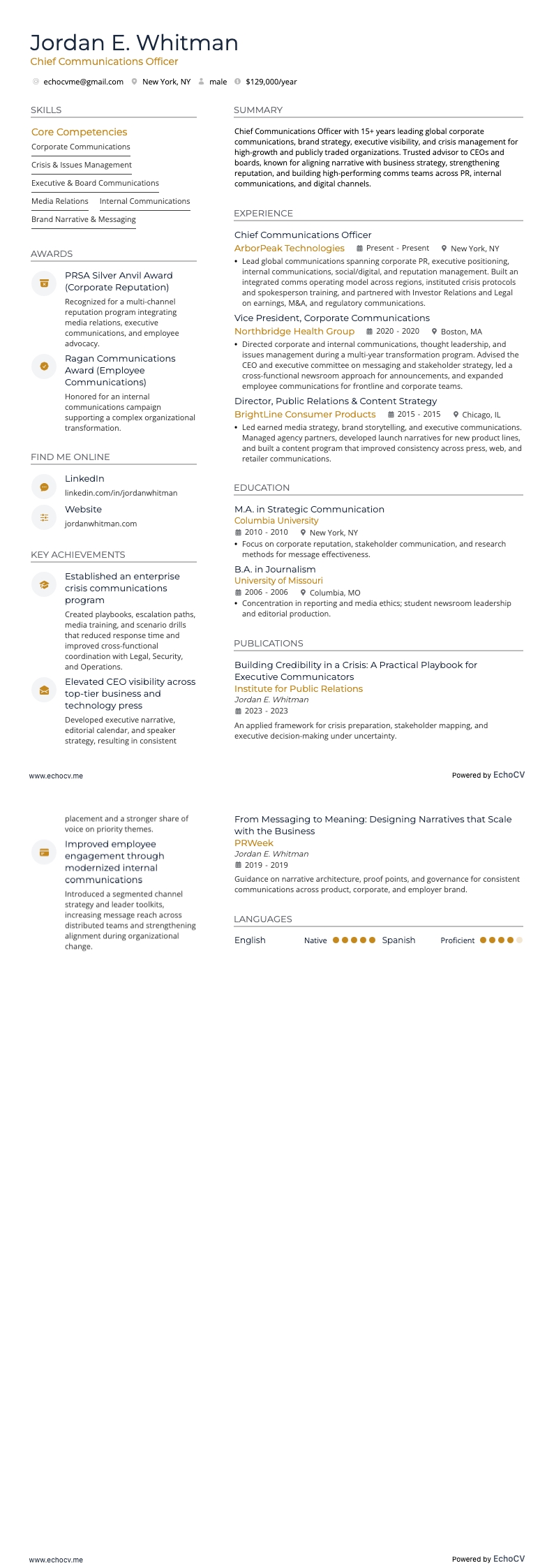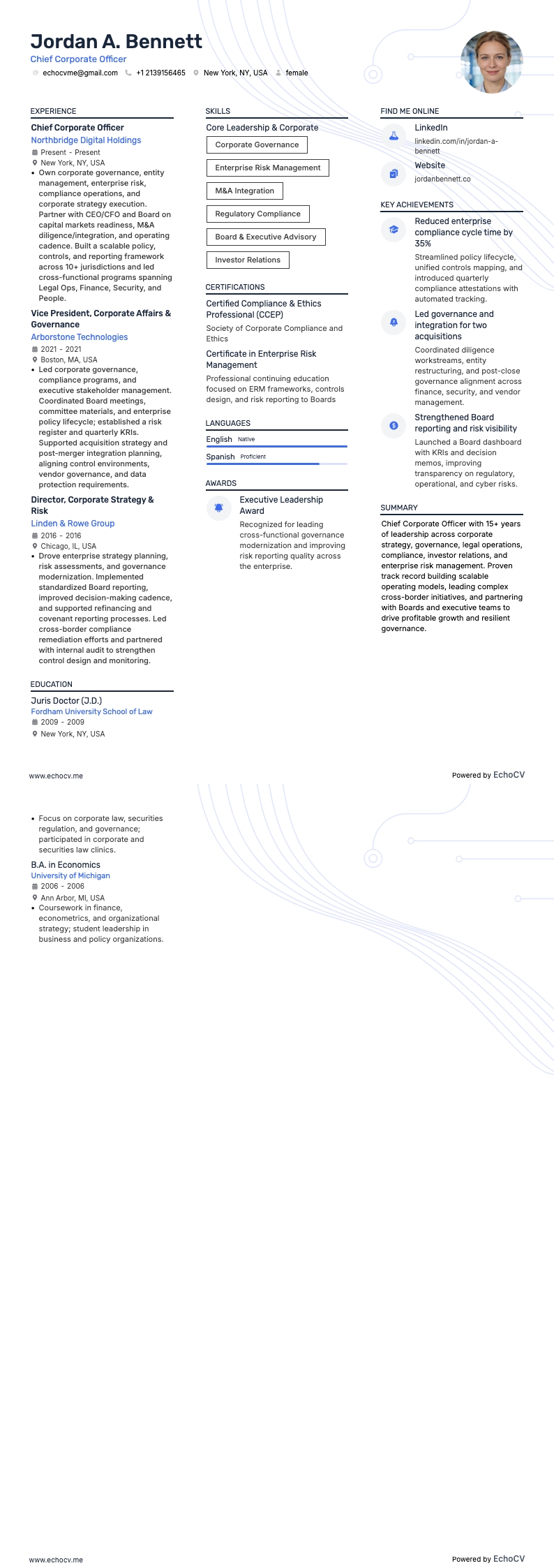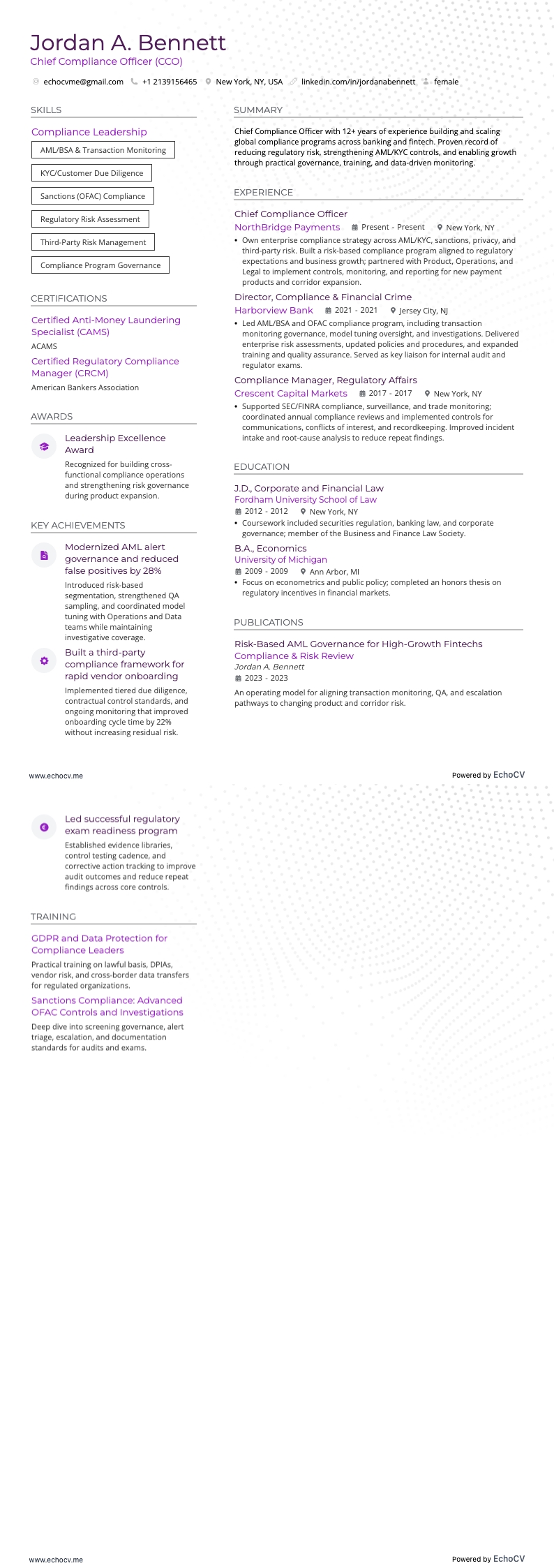
- This resume highlights achievements with quantifiable metrics, such as reduced risks, and maintaining 100% audit compliance. This offers concrete evidence of the candidate's proficiency and impact.
- Listing specialized skills such as "Regulatory Compliance," "Risk Management," "Audit Management," and familiarity with "SQL" and "Data Analysis" showcases the candidate's technical proficiency and ability to navigate the complexities of compliance.
- Phrases such as "Managed a team of 5 compliance officers" and "Led a team of 10 compliance officers" highlight the candidate's leadership capabilities, which are crucial for a Chief Compliance Officer role.
- Mentioning degrees from notable institutions like "Harvard Business School" and "University of Pennsylvania" can stand out to employers as these schools have a reputation for rigorous academic and professional preparation, as well as powerful networking opportunities and lifelong learning.
Headhunters are often quite picky when hiring a new Chief Compliance Officer due to the importance of the role.
Therefore, landing a job as a Chief Compliance Officer (CCO) is going to take a lot of focus when it comes to building your resume. You must take all the right steps to capture the recruiter’s interest and shed a positive light on your expertise and talents.
To do that, there are a few resume writing guidelines to stick to and a lot of mistakes to avoid.
The most important thing is this:
Always tailor your resume to the specific job you’re applying for to meet the hiring company’s needs and expectations. Go through the job description to identify duties, top requirements, and keywords.
Once you know what you’re aiming for, you’ll start building your resume.
What are the best practices for writing a job-winning Chief Compliance Officer resume?
- Keep your resume to two pages by prioritizing tailored skills and experience.
- Use a reverse-chronological resume format to showcase your work history and achievements.
- Choose one or two resume fonts consistently to maintain a clear hierarchy, ideally Lato, Rubik, or another readible sans-serif font.
- Use a modern color combination to make your resume more attractive.
- Include contact information data in the header of your resume, such as a personal but professional email address, a phone number, a link to your LinkedIn profile, and a short address (City and State).
- Save your file in PDF format to maintain your format and design.
Keep in mind market-specific formats – for example, a Canadian resume might follow a different structure.
Ensure your resume looks professional and ATS-friendly by running it through our resume checker software: