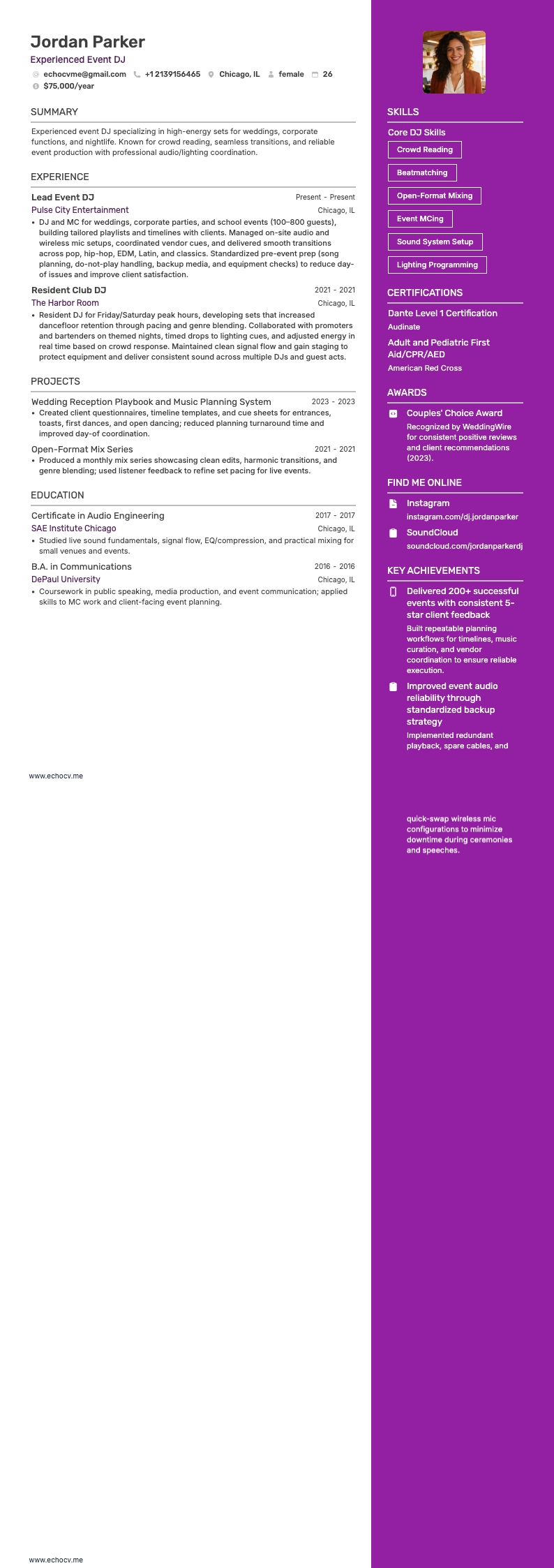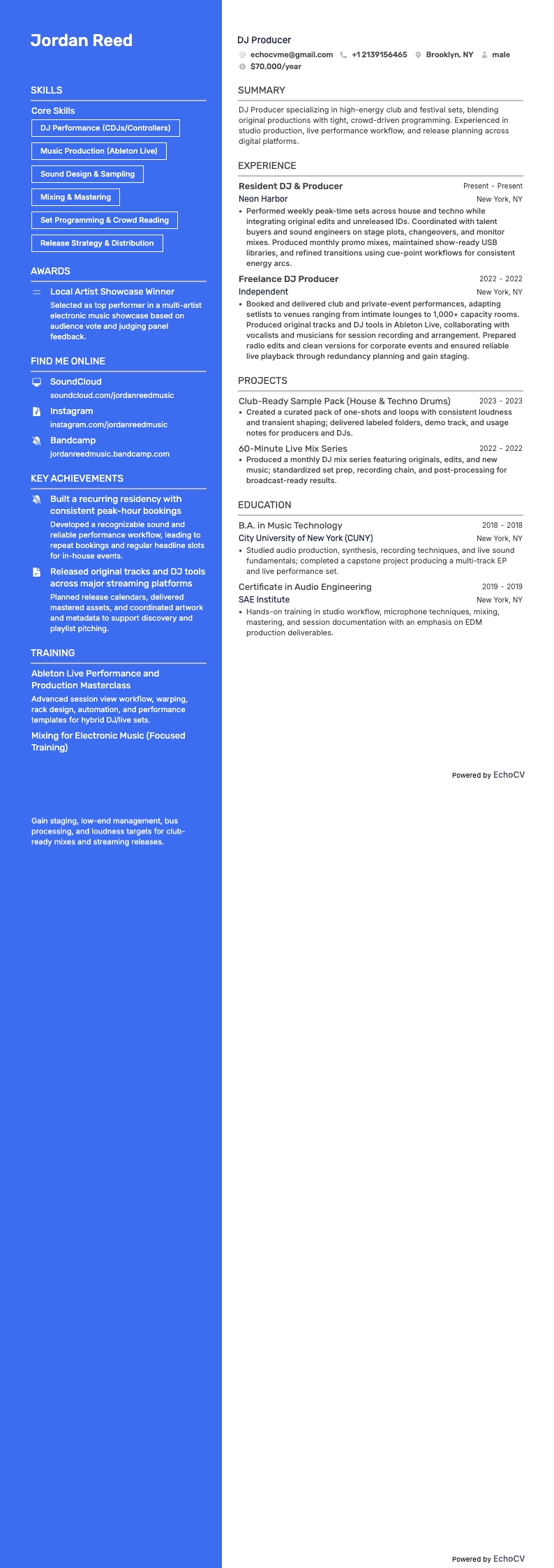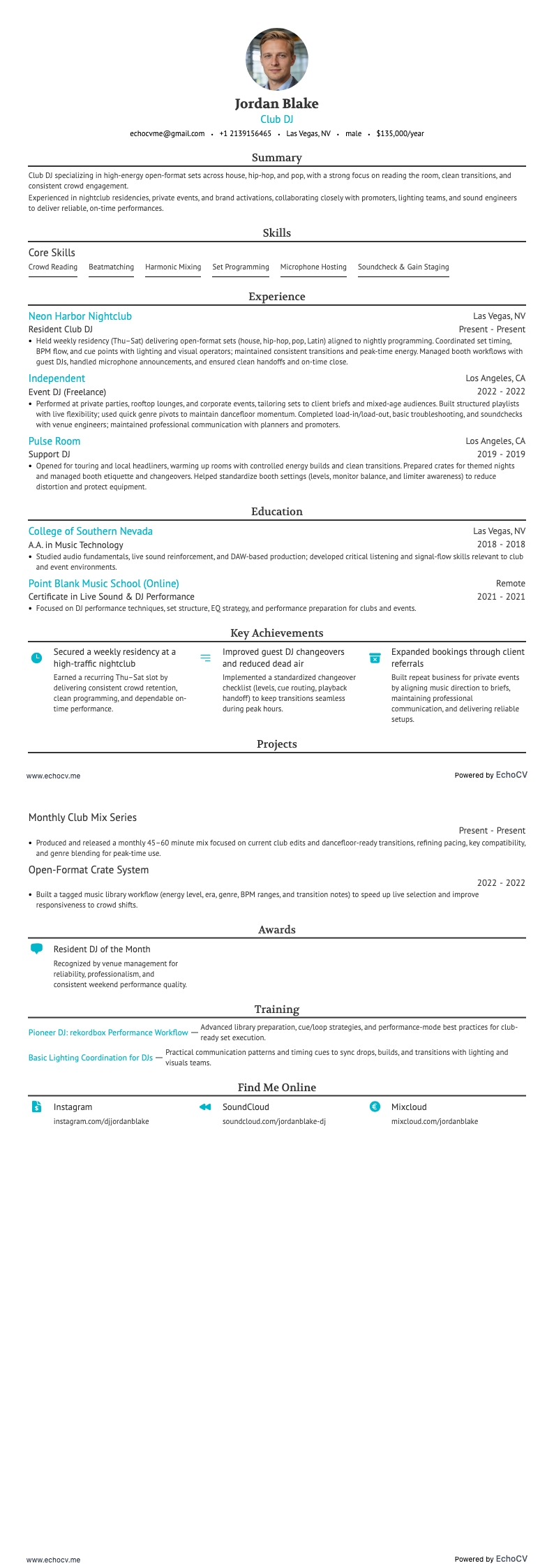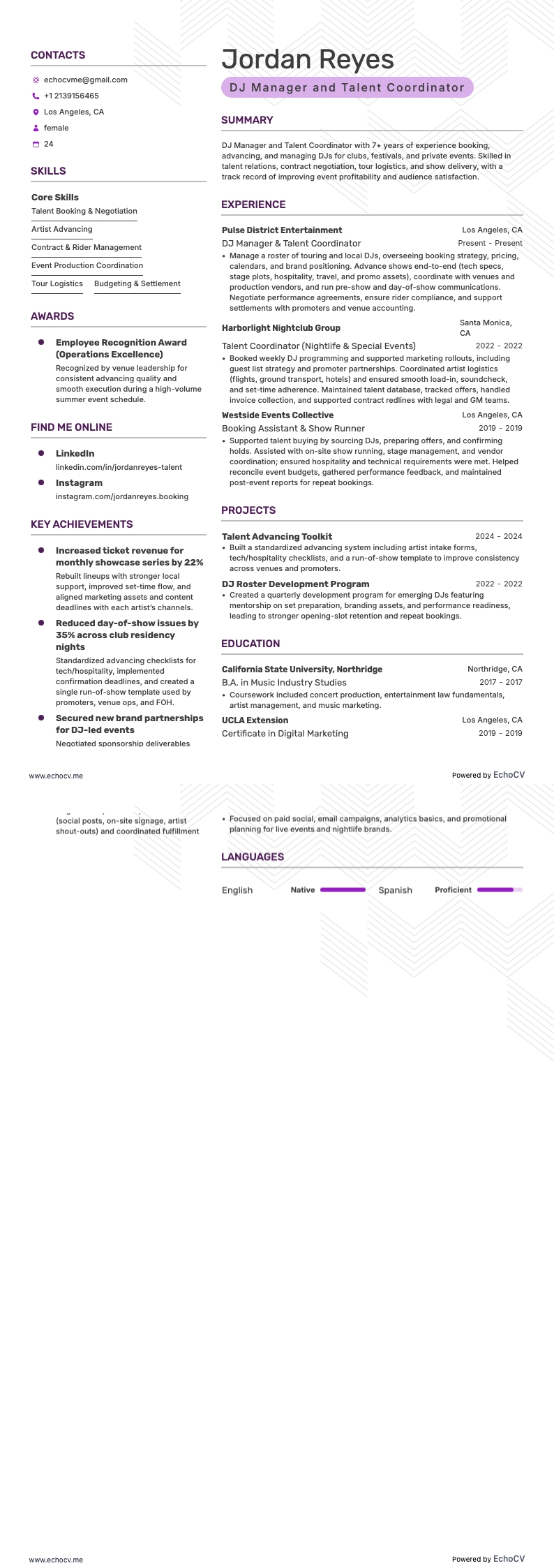
Once you’ve organized your resume with the right core components, the next step is to write your DJ experience section in a way that fits that structure and shows your impact.
How to write your DJ resume experience
The experience section is where you prove you've delivered real work—whether that's headlining events, mixing live sets, producing tracks, or managing sound systems and playlists for specific audiences. Hiring managers, venue bookers, and event coordinators prioritize demonstrated impact over generic task lists, so focus on what you owned, the tools and methods you used, and the measurable outcomes you created. Building a targeted resume for each application ensures your experience speaks directly to what the role demands.
Each entry should include:
- Job title
- Company and location (or remote)
- Dates of employment (month and year)
Three to five concise bullet points showing what you owned, how you executed, and what outcomes you delivered:
- Ownership scope: the events, residencies, music programming, playlists, live productions, or audience segments you were directly accountable for as a DJ.
- Execution approach: the DJ software, hardware, mixing techniques, music curation methods, or production tools you used to prepare sets, manage sound, and deliver performances.
- Value improved: changes to audience engagement, event attendance, sound quality, set versatility, brand consistency, or client satisfaction that resulted from your work as a DJ.
- Collaboration context: how you coordinated with event promoters, venue managers, sound engineers, lighting technicians, artists, or clients to align your DJ sets with broader event goals.
- Impact delivered: outcomes tied to audience growth, repeat bookings, revenue influence, brand partnerships, or event success rather than a simple list of gigs played or hours logged.