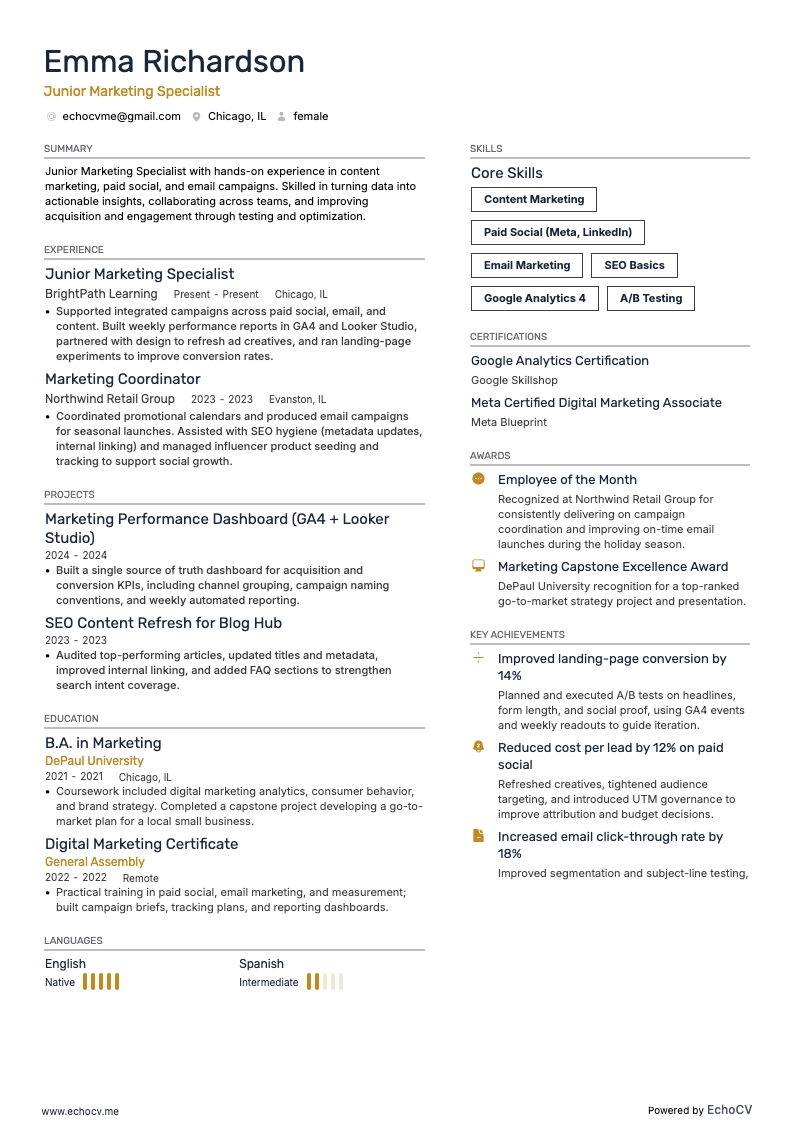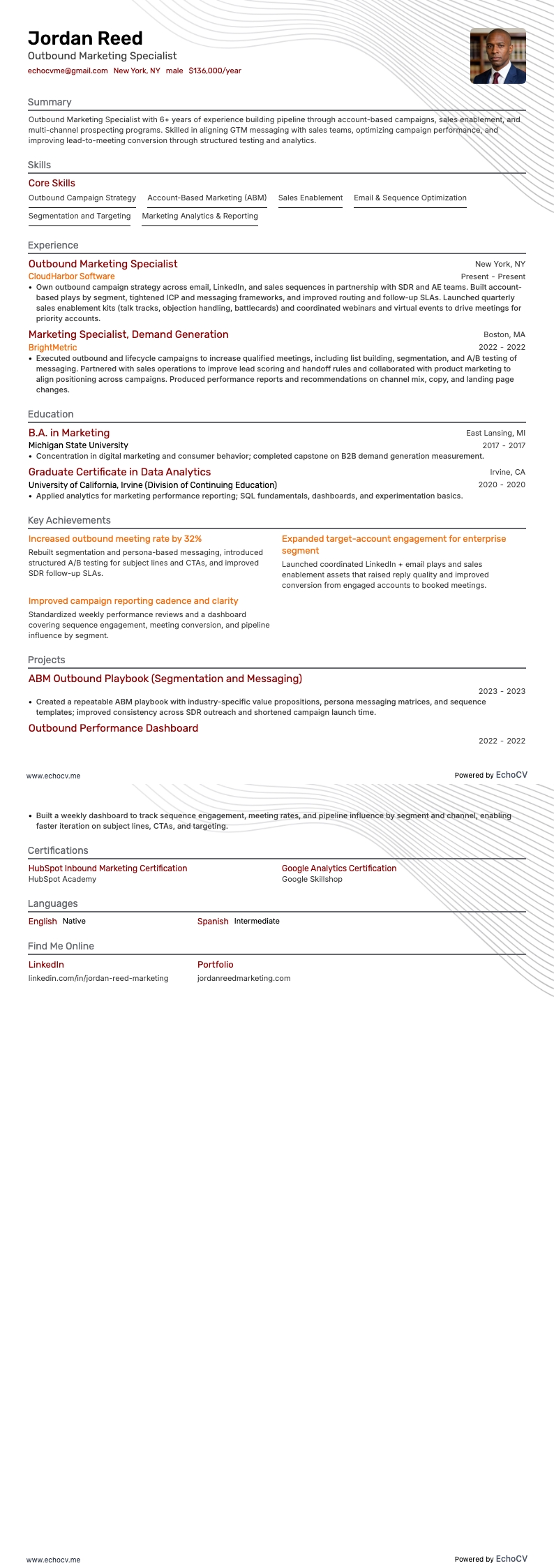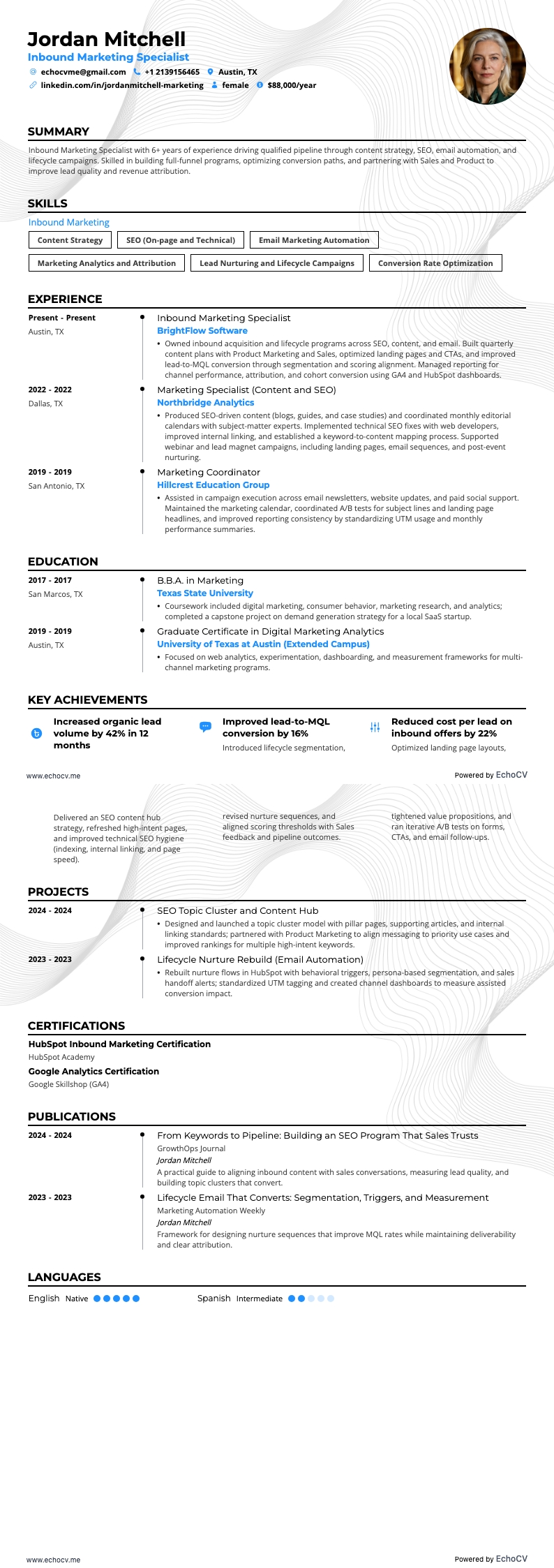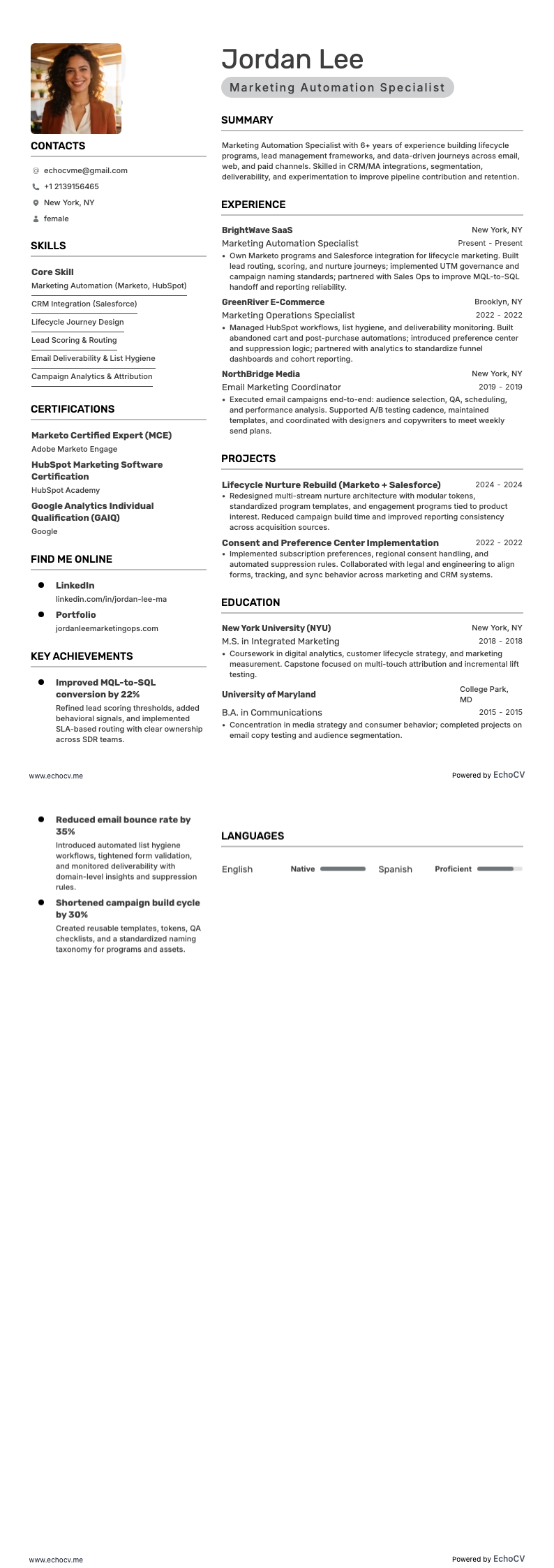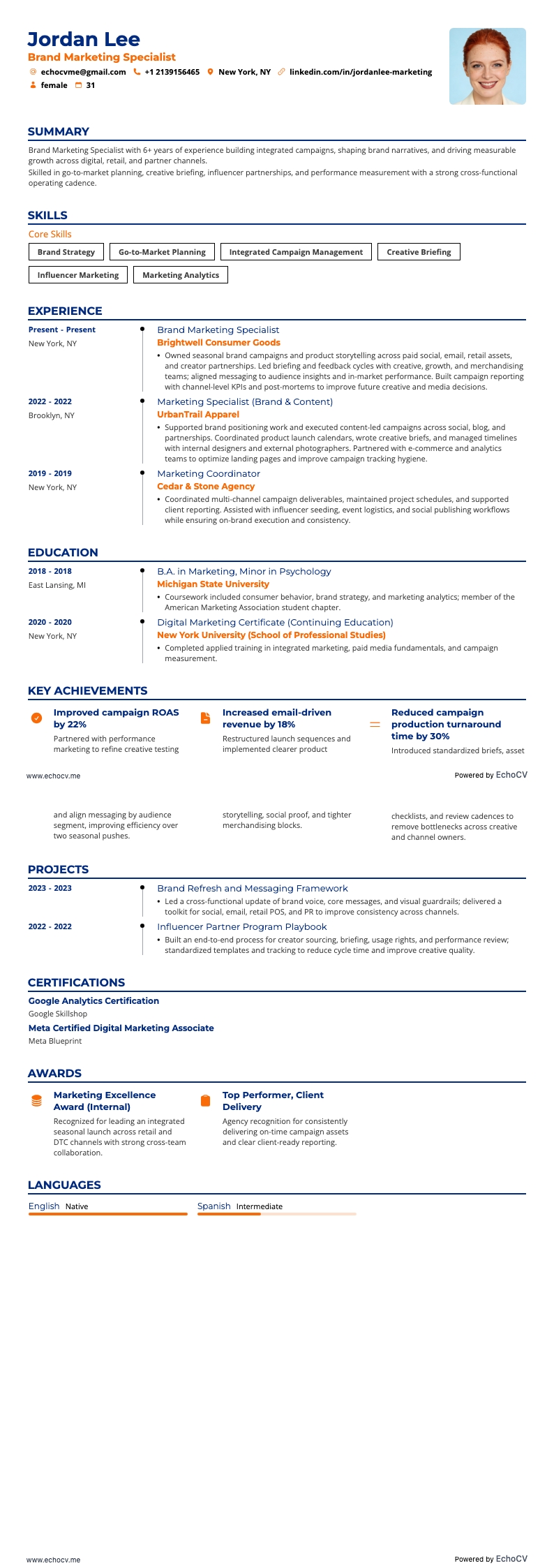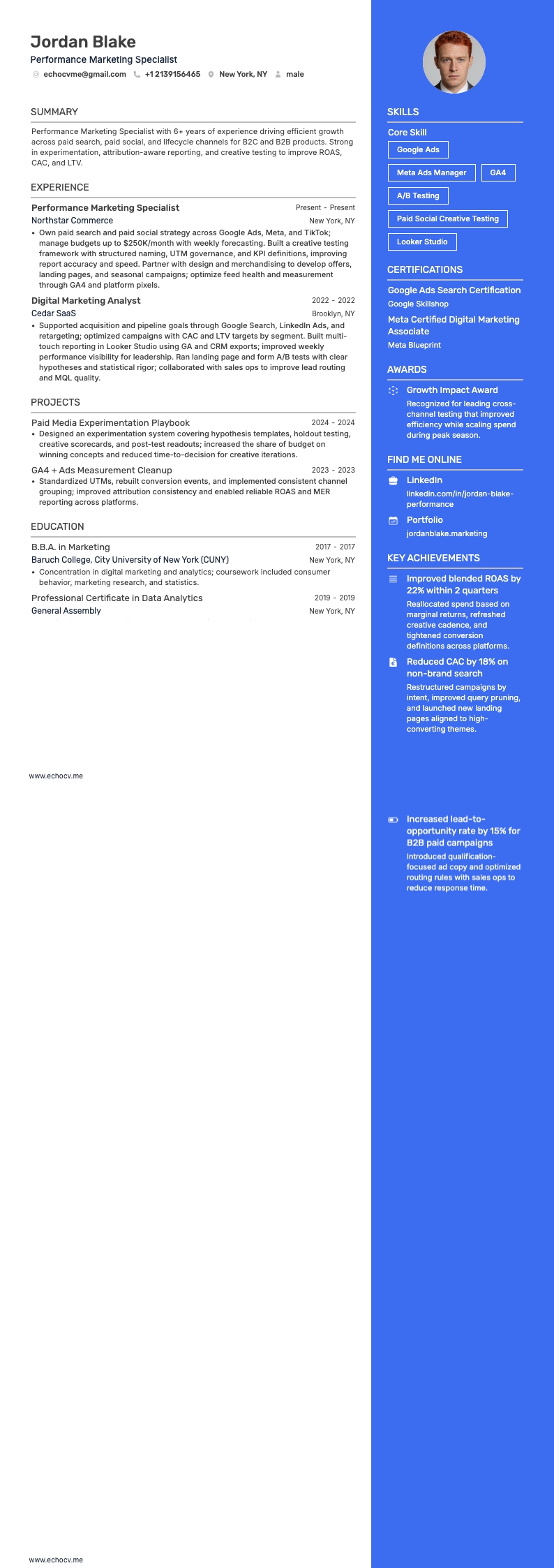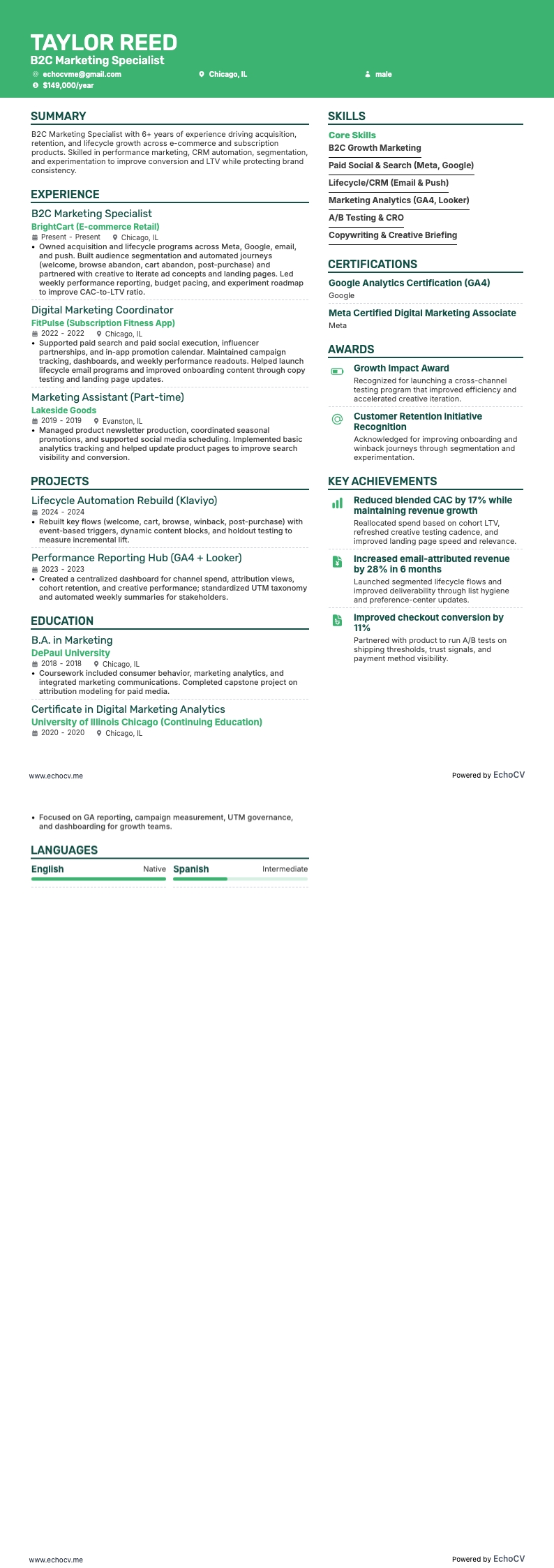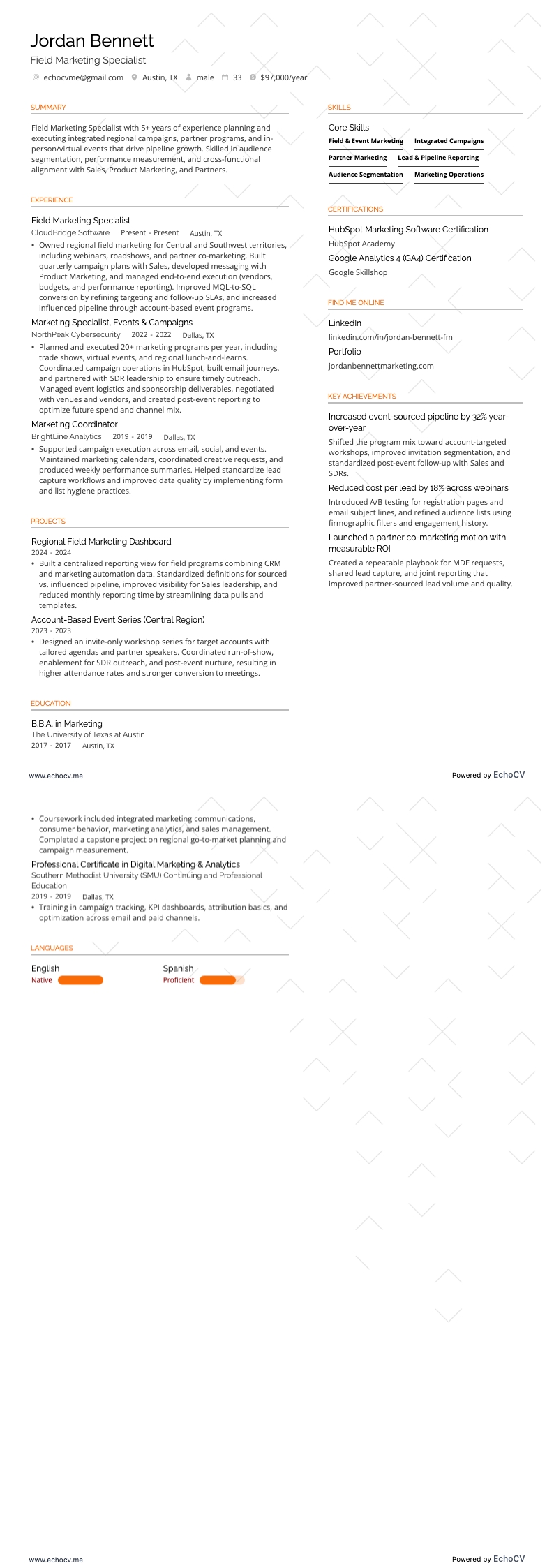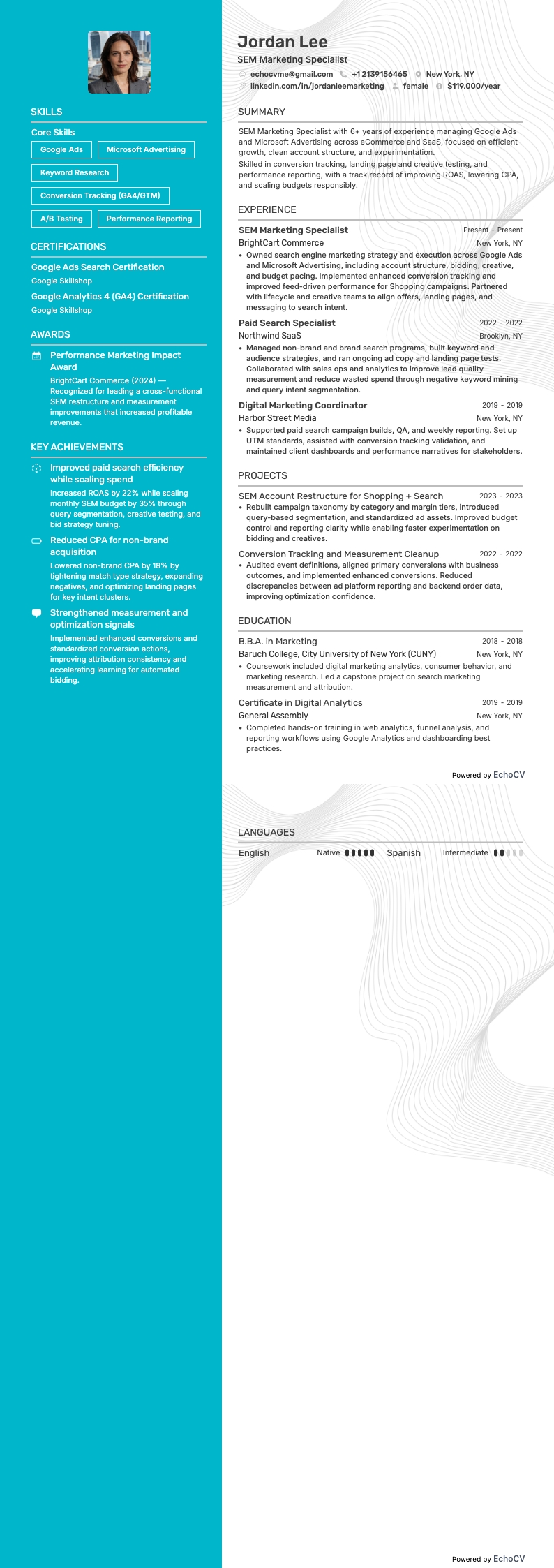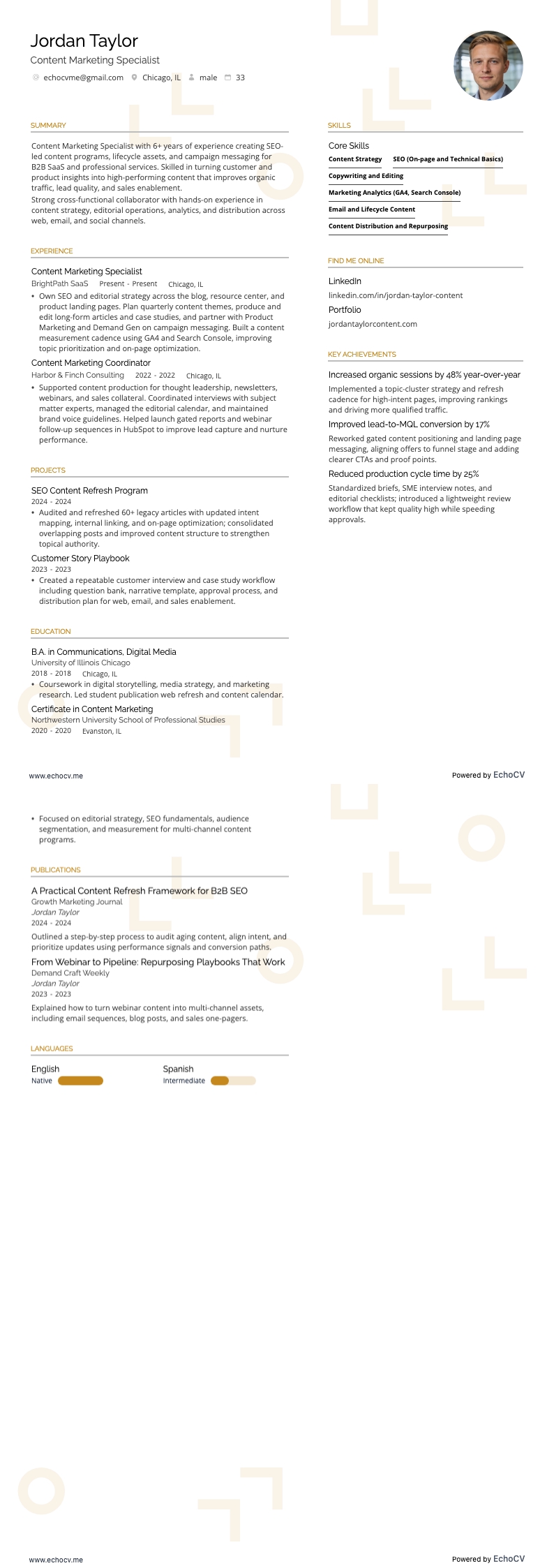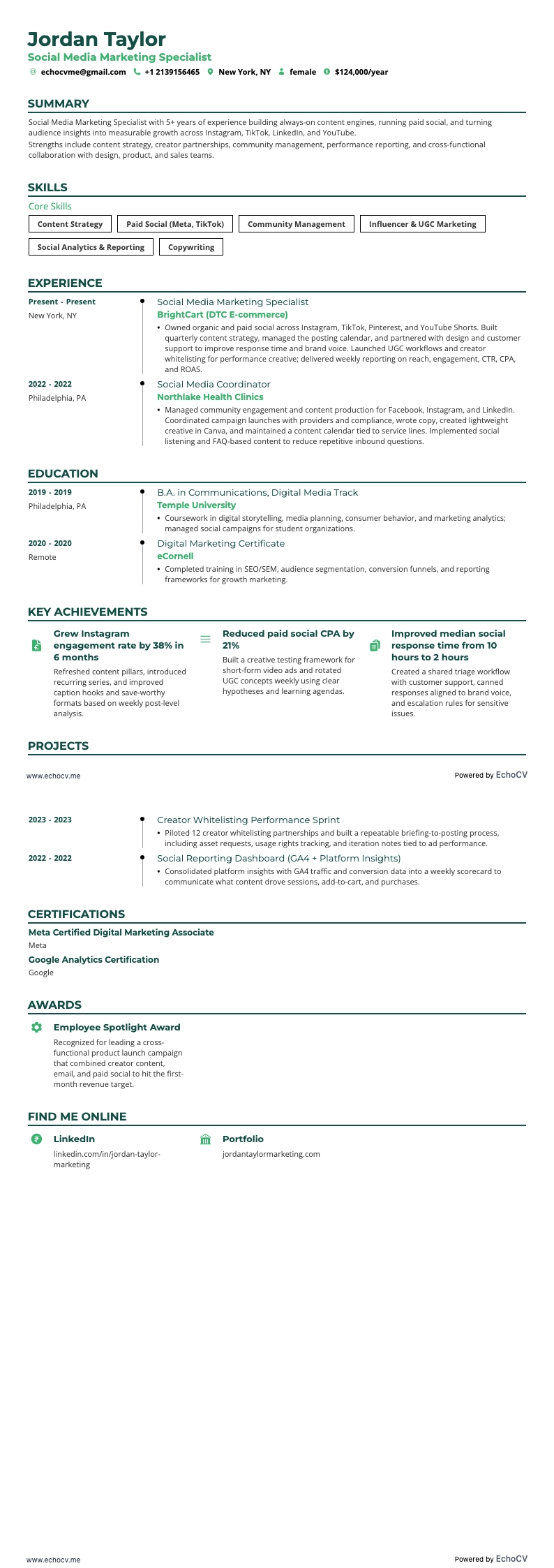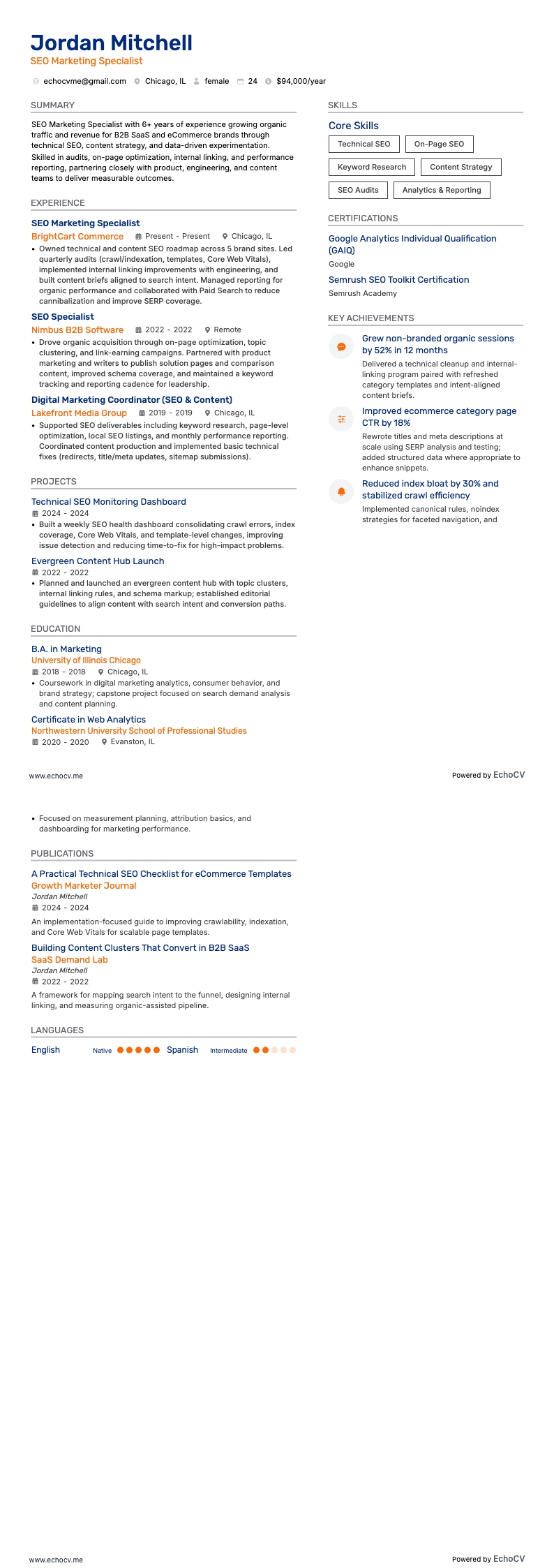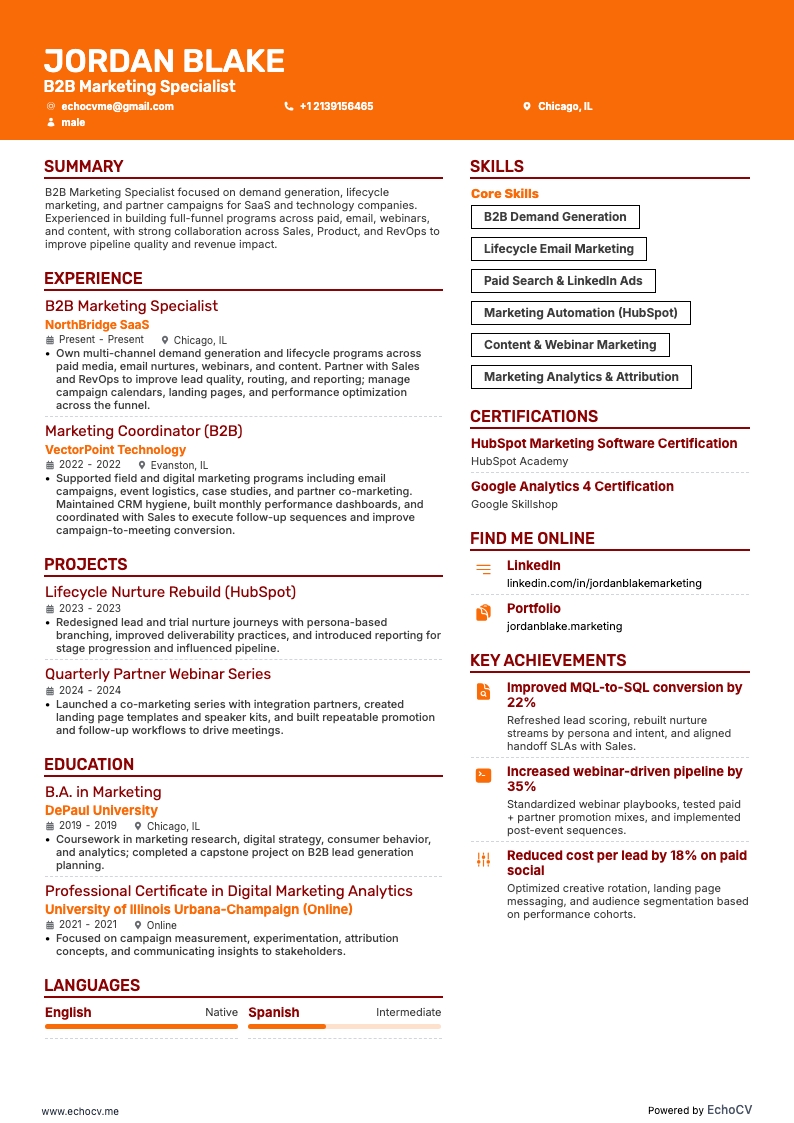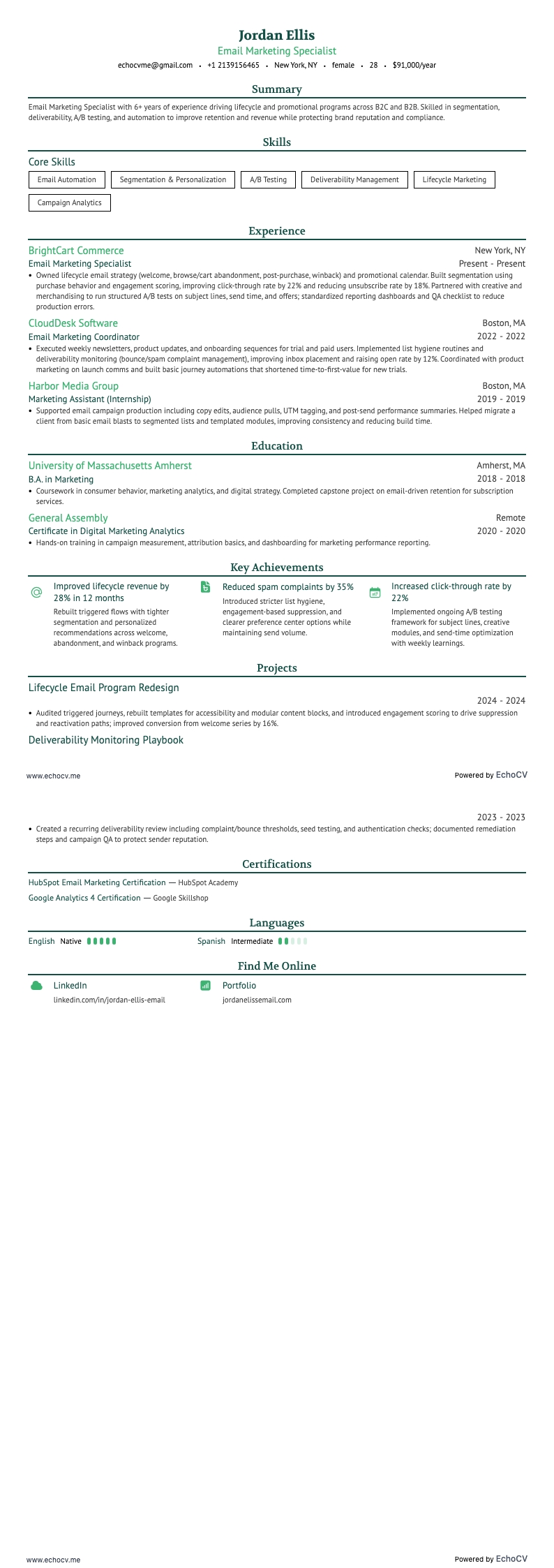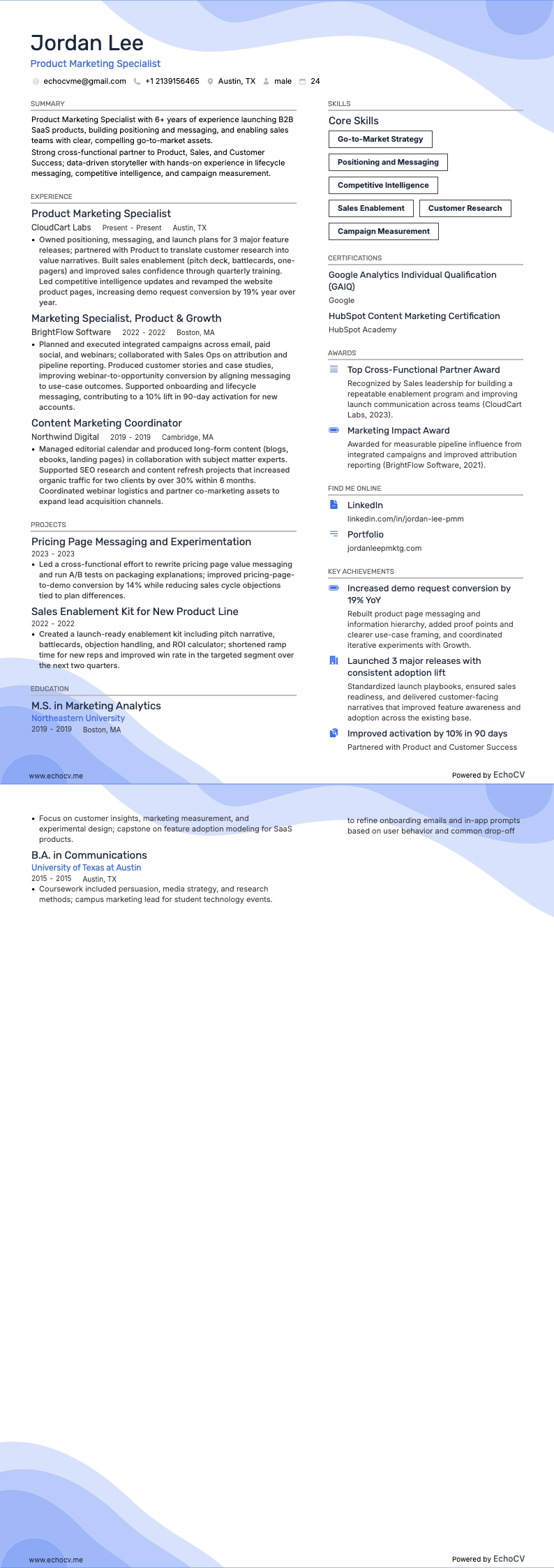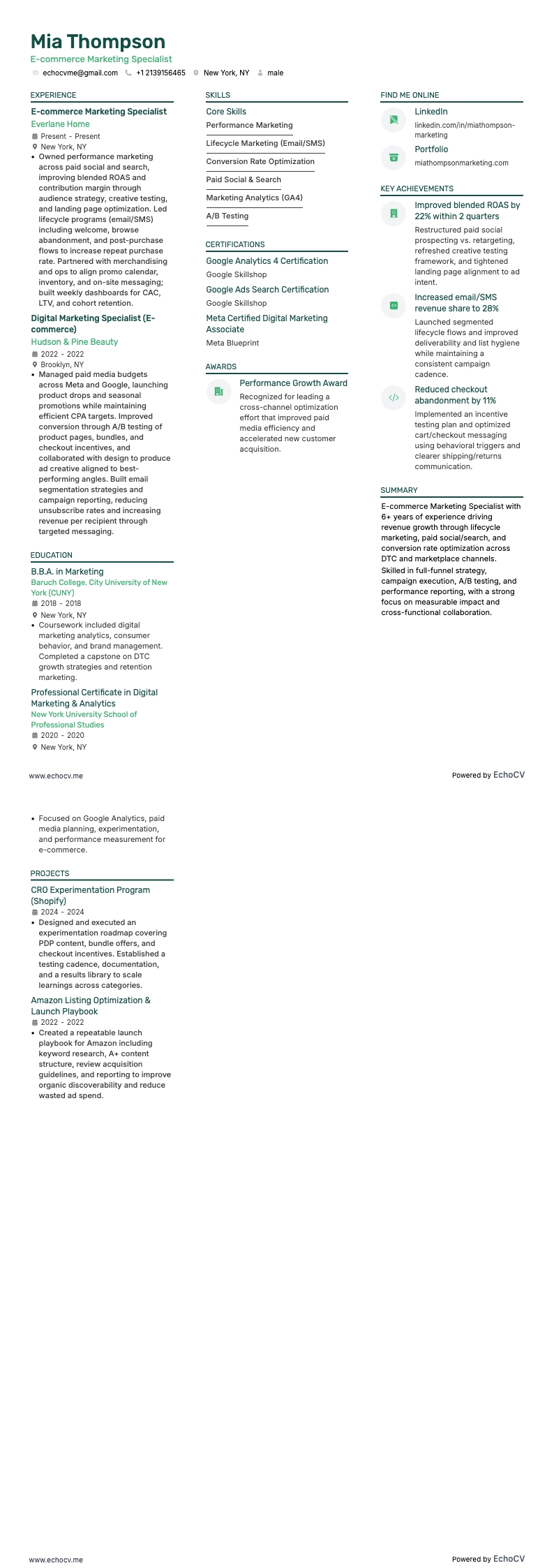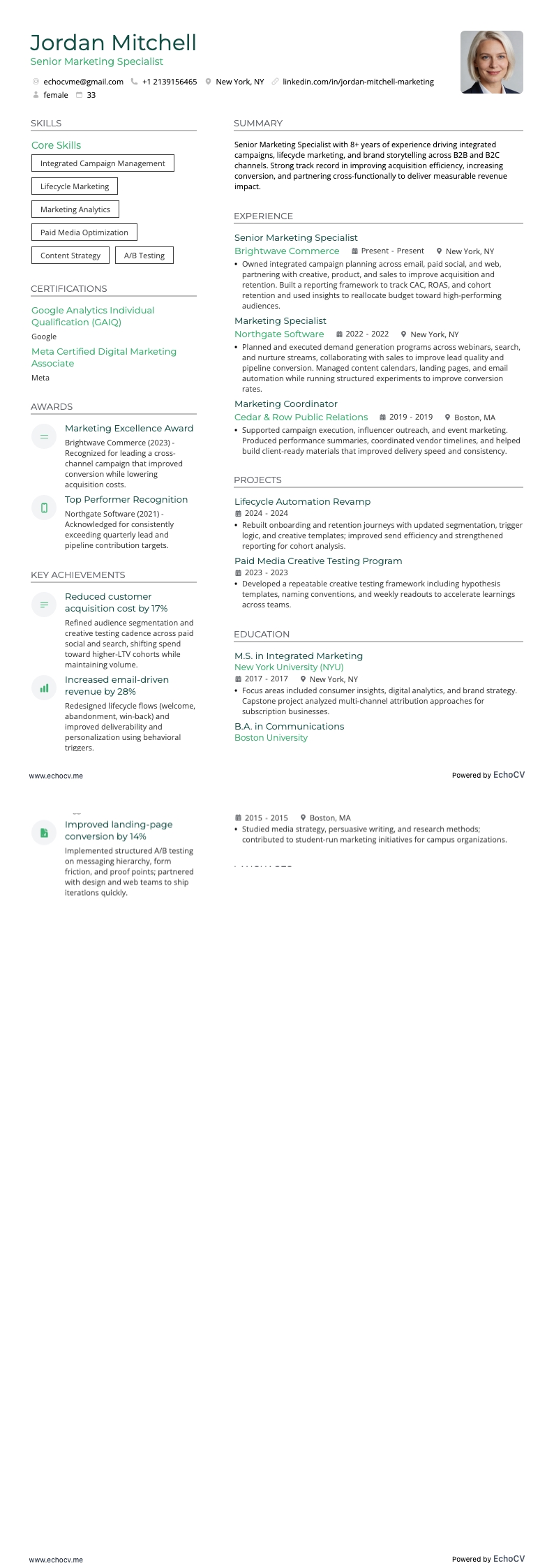
This experience section stands out for a few key reasons:
- Focus area. This emphasizes the marketer's specialization in digital marketing. While their knowledge in other marketing areas may vary, it's the concentration on this specific expertise that truly matters.
- Clear results. It shows clear success stories, like boosting click rates and growing social media followers, with actual numbers to back up the claims. This makes it easy to see the candidate's impact.
- Specific actions taken: The candidate explains exactly what they did, such as changing email designs and optimizing web pages. This shows they know how to tackle problems and improve marketing efforts.
- Keywords used. The section includes important terms like "optimized" and "revised strategy," making it more likely to catch the attention of recruiters and ATS..
- Shows proactivity. It's clear the candidate is always looking to make things better, whether that's through updating strategies or cleaning up contact lists. This shows they’re committed to getting better results.
- Technical and analytical skills: By detailing the steps they took and the improvements made, the candidate shows they're good with both technology and data analysis, which are crucial in marketing jobs.
We’ll explore each of those in more detail later in the article. First, let’s see how a marketing specialist can successfully quantify results on their resume.
How to quantify impact on your resume
Unlike roles with easily quantifiable outcomes, marketing achievements can be harder to measure. Marketing specialists must find ways to quantify their results, such as percentage increases in engagement or conversion rates.
Thankfully, tools like SEMrush, Google Analytics, and Ahrefs can provide metrics that specialists can use to highlight their successes in tangible terms.
As a marketing pro you probably already know how to use those, so be sure to include the following:
- Include the percentage increase in website traffic after SEO optimizations to demonstrate your ability to improve online visibility.
- Detail the conversion rate improvement from specific marketing campaigns to show your direct impact on sales or leads.
- Mention the growth in social media followers and engagement rates to highlight your skills in building online communities.
- Specify the cost reduction achieved through more efficient ad spend, showcasing your ability to optimize budgets.
- Report the increase in email open rates and click-through rates after revamping email marketing strategies, indicating your success in enhancing audience engagement.
- Quantify the number of leads generated through digital marketing efforts to underline your contribution to business growth.
- Indicate the ROI (Return on Investment) from marketing campaigns to demonstrate your strategic approach to achieving financial efficiency.
- Document the reduction in bounce rates on key landing pages as a result of your content and design optimizations, proving your skill in improving user experience.
Try to integrate as many of these as possible into your resume's experience section to boost your chances of landing the job.
How to write a marketing specialist resume with no experience
If you've recently graduated and have a keen interest in marketing, you might be considering an internship or a junior position. Figuring out how to differentiate your resume can initially seem challenging, yet there are numerous strategies to capture attention.
As a marketing specialist lacking practical experience, it's crucial to build a resume that emphasizes your transferable skills, relevant academic work, and any activities demonstrating your marketing capabilities. Below are some carefully selected strategies designed for you:
- Emphasize your educational achievements. Highlight any relevant marketing or business courses you've completed. Include specific projects or case studies you’ve worked on.
- Showcase your transferable skills. Creativity, analytical thinking, communication skills, and proficiency in digital tools (e.g., social media platforms, basic SEO knowledge, and content management systems) are highly desirable in marketing roles. Read further about effectively including hard and soft skills in your resume.
- Include your internships and volunteer work. Any internships or volunteer positions that involve marketing tasks (even if not exclusively marketing roles) can be valuable. Detail the responsibilities you had and any positive outcomes or contributions you made.
- List certifications and online courses. If you've taken online courses or earned certifications in digital marketing, content creation, Google Analytics, SEO, or social media management, include these to show your initiative and commitment to learning.
- Detail your projects and personal initiatives. If you've managed a blog, run a social media campaign, or created social media content for platforms like YouTube or Instagram, highlight these experiences. Mention the goals, strategies you implemented, and any success metrics.
- Tailor your resume for each application. Align your resume with the job description of each application. We can’t stress this enough. Use keywords and phrases from the job listing and focus on the relevant skills and experiences that match the role you're applying for.
Remember, your resume is your opportunity to market yourself. Even without direct experience, showcasing your potential, skills, and passion for marketing can make a strong impression on potential employers.
How to list your hard skills and soft skills on your resume
Here’s the deal. Marketing specialists are most valuable when they are capable of driving revenue for their employers.
Given that CEOs often view marketing as a "cost center" instead of a revenue generator, it's crucial to demonstrate your ability to align your efforts with the broader business goals of the company.
Resist the urge to flaunt every single marketing skill you possess in the skills section of your resume. Simply listing everything won't cut it. The real essence of being a marketing specialist lies in carefully selecting which technical and interpersonal skills to highlight, showcasing your proficiency and impact.
Remember, at the end of the day, it's all about showcasing tangible results.
Listing hard skills is pretty straightforward. If you have enough space, you can dedicate a section to them on your resume.
We've made an essential list of technical skills you need to master to ensure your resume makes it through the recruitment process.