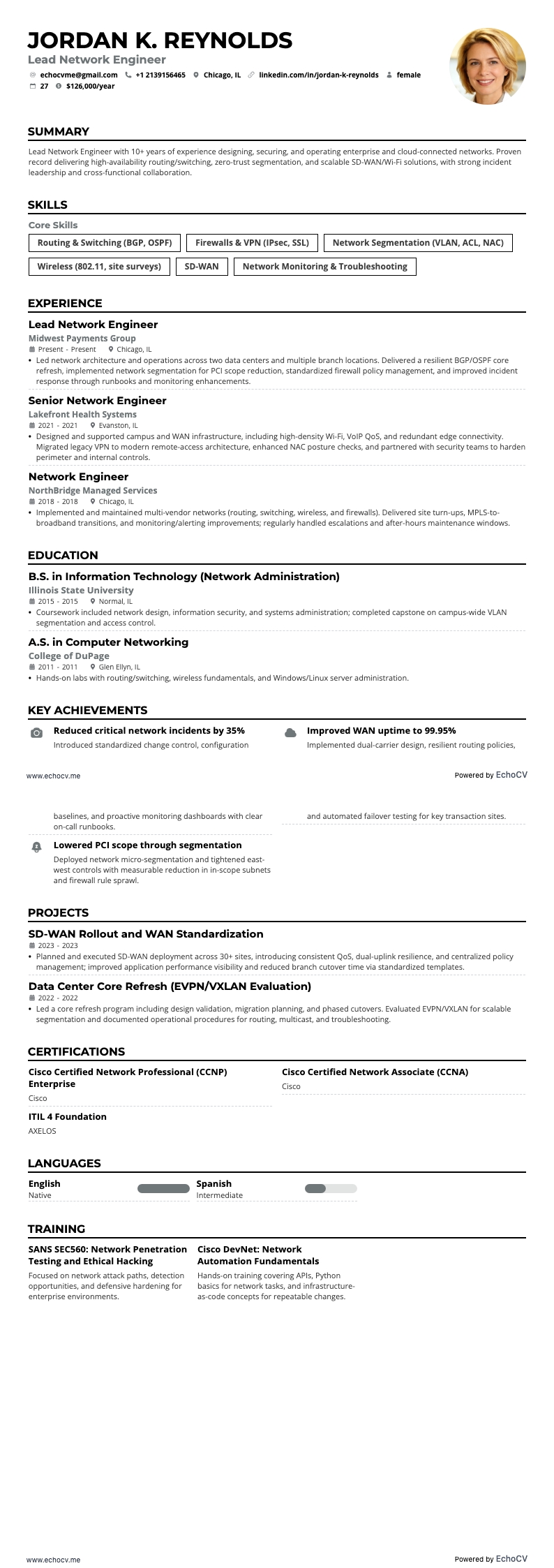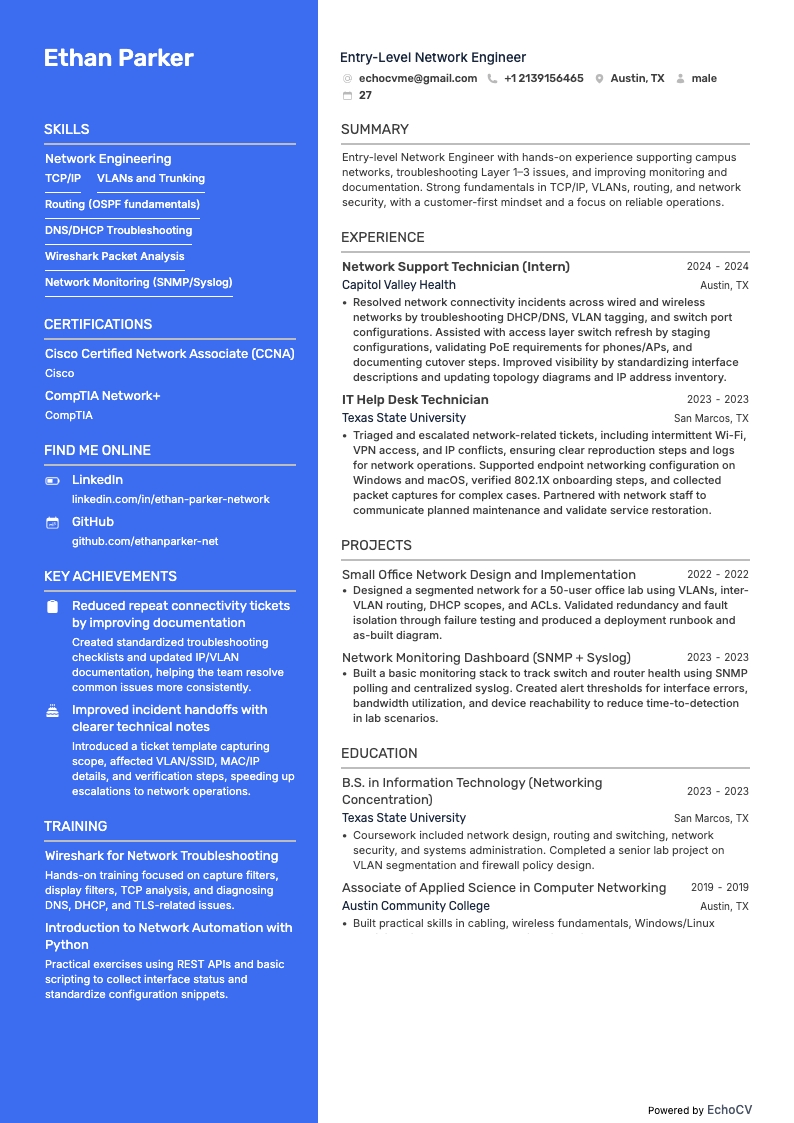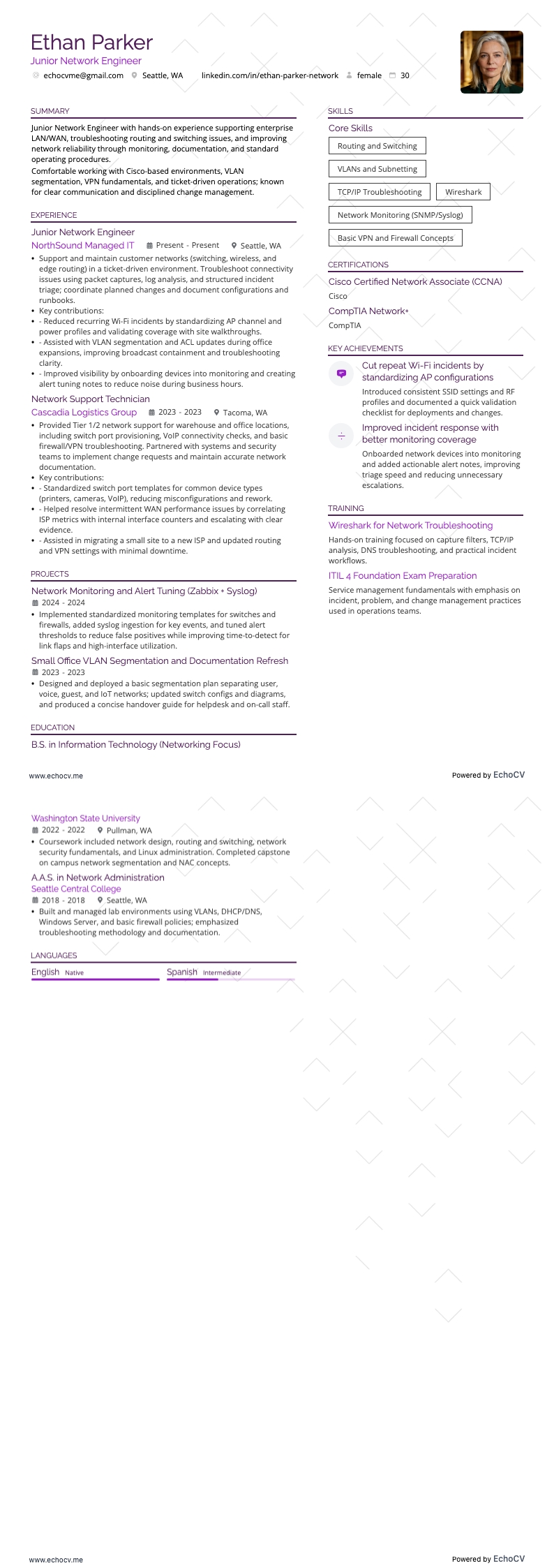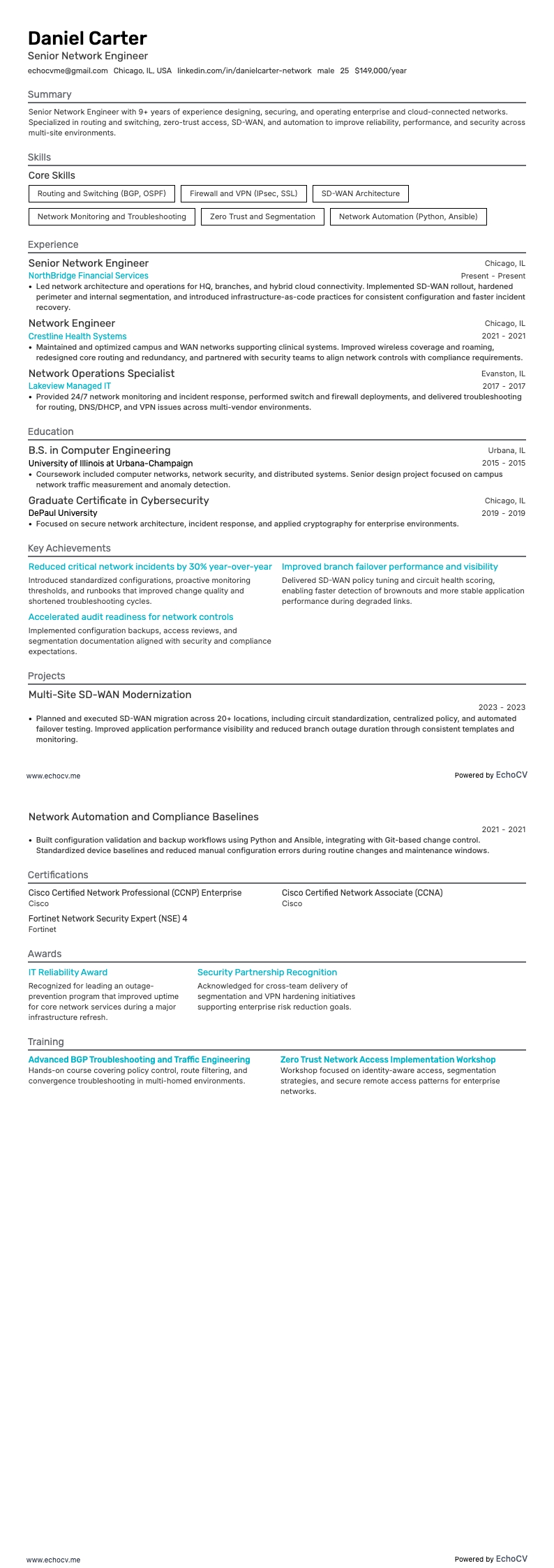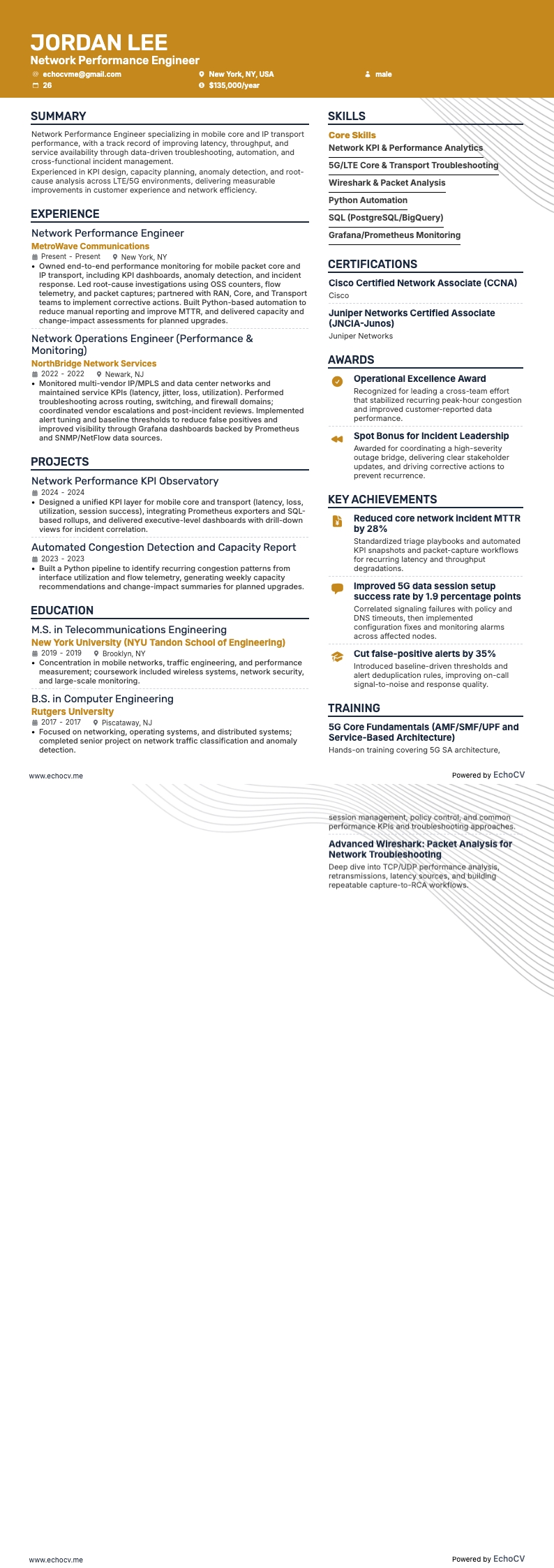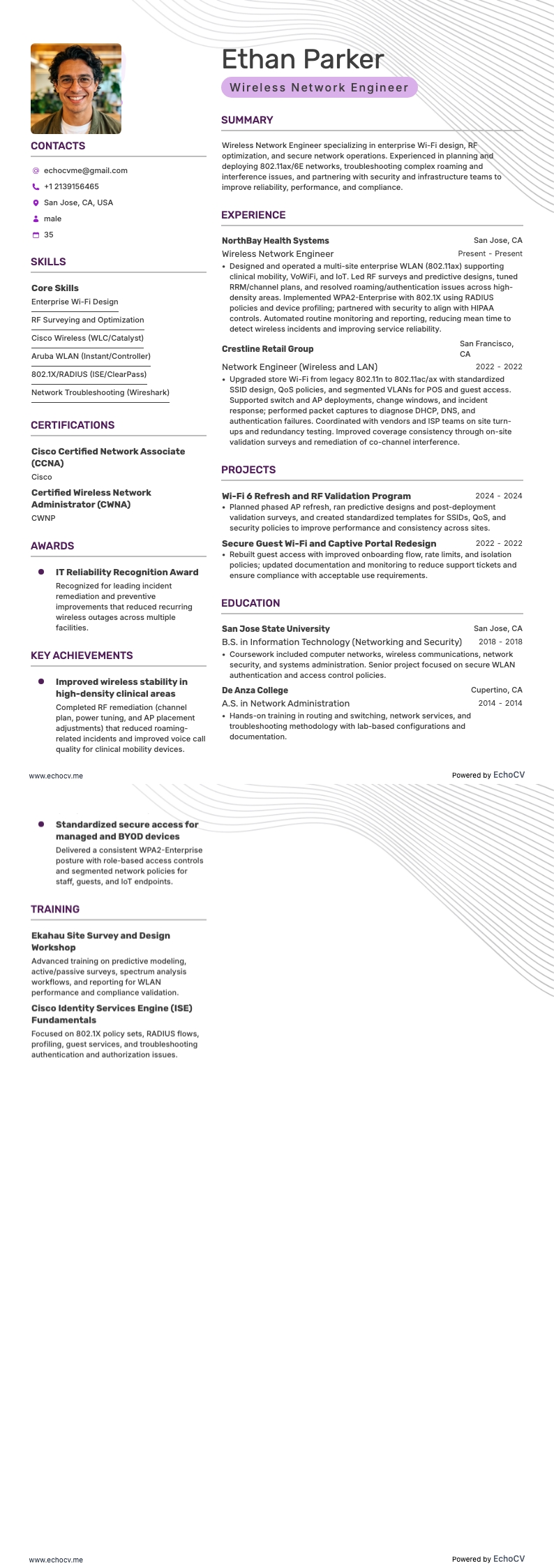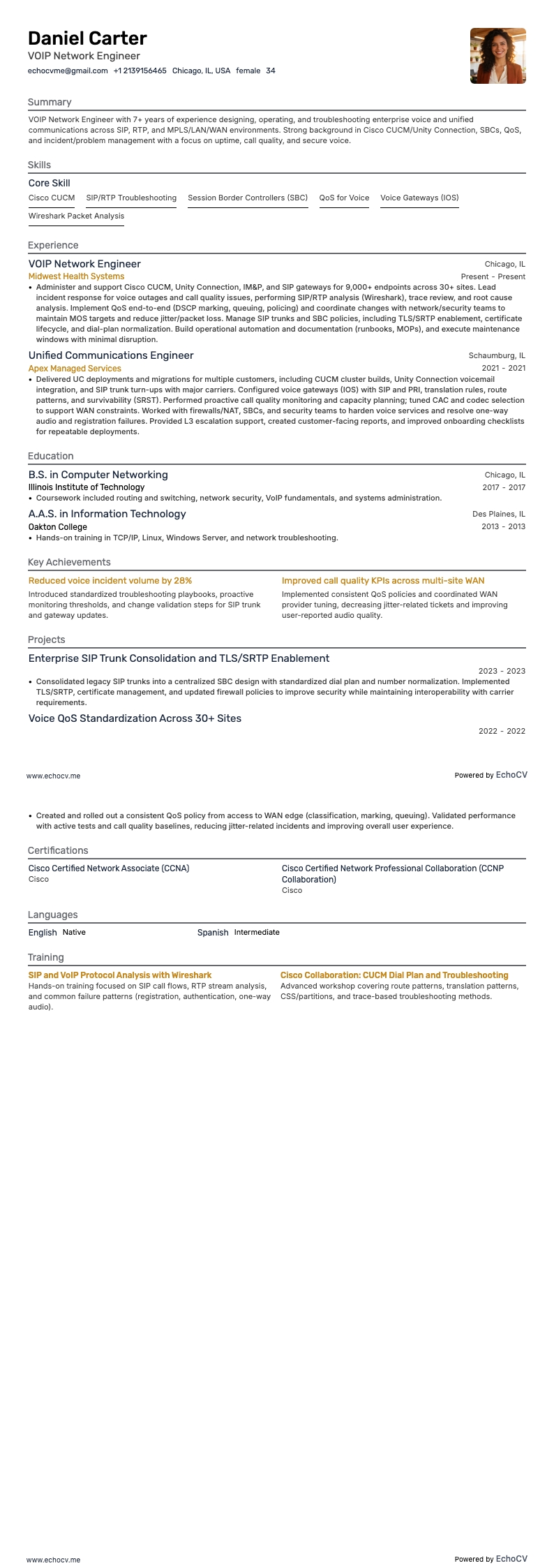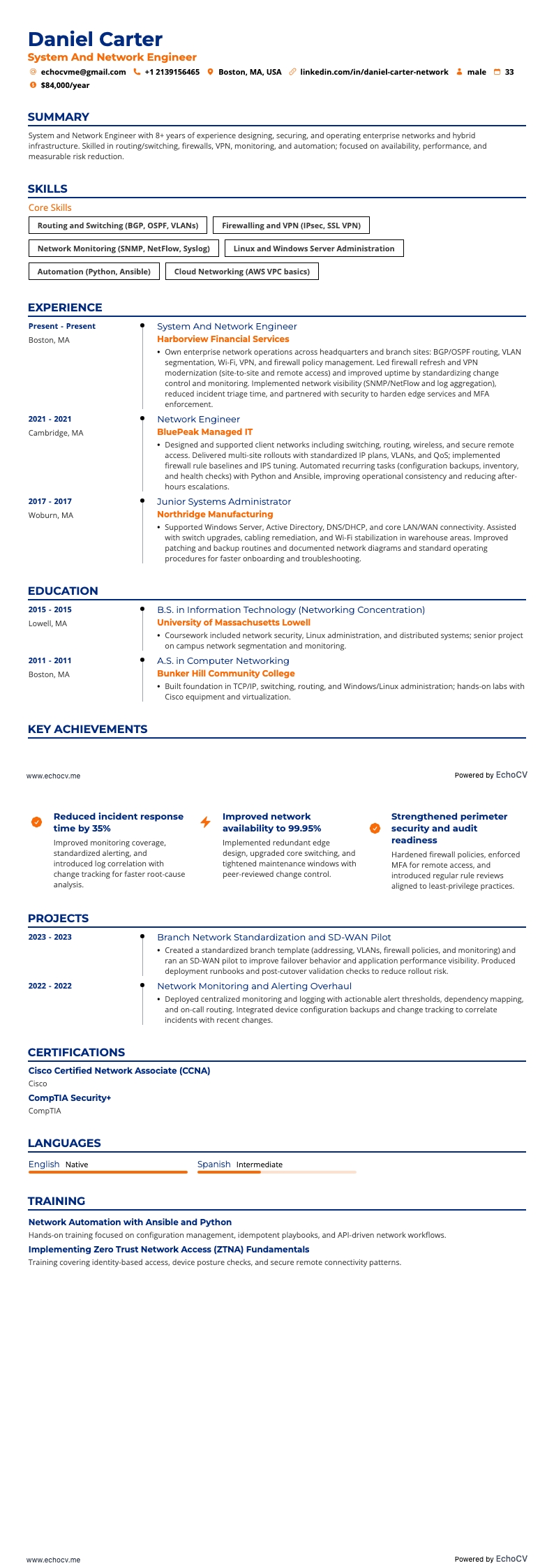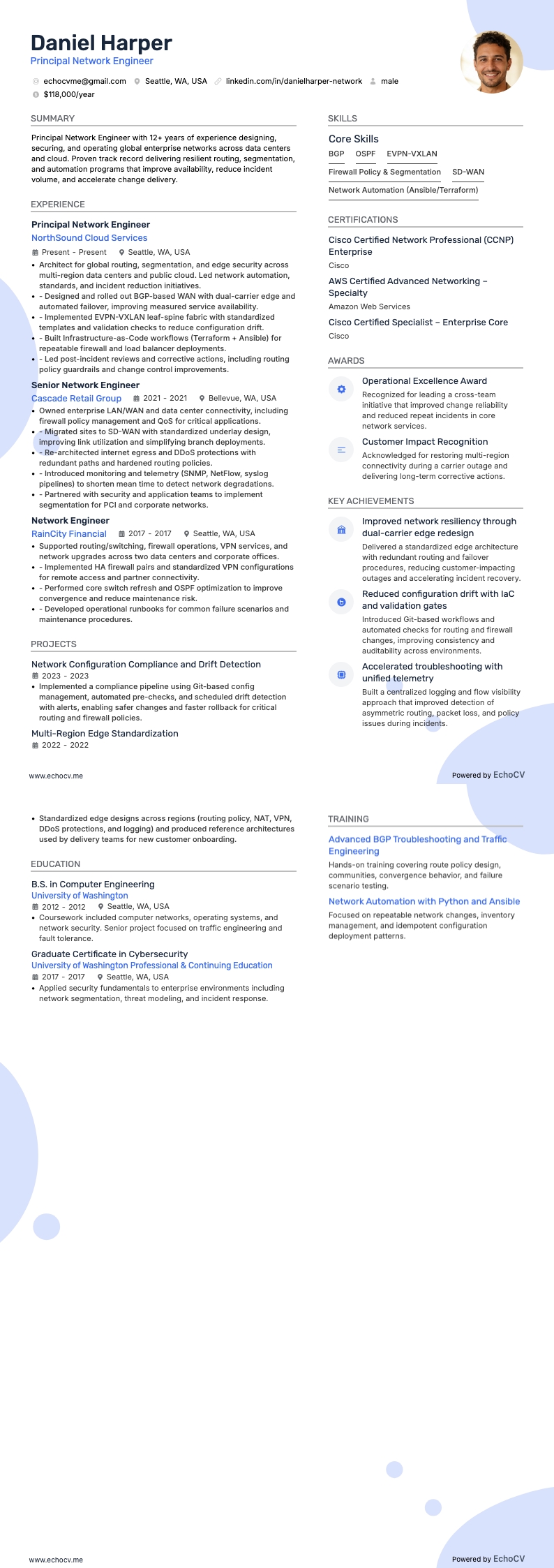
You're all set for a new role as a network engineer, but there’s just one problem - no interview invitations so far. With all the experience, a real passion for networking, and every skill necessary, your qualifications are solid. Yet, your inbox remains surprisingly quiet.
If you're ticking all the right boxes in the job descriptions but aren't getting calls for interviews, your resume might be the issue. Even experienced network engineers with more than 5 years under their belt can struggle if their resumes don't catch the eye.
Unfortunately, it's not CTOs but recruiters who often see your resume first, and they might not understand the difference between firewalls and VPNs or recognize other technical details that demonstrate your expertise.
Not all recruiters are tech experts, so this guide is here to help you create a resume that any HR can easily understand.
Want to get that precious call? Here’s what to do:
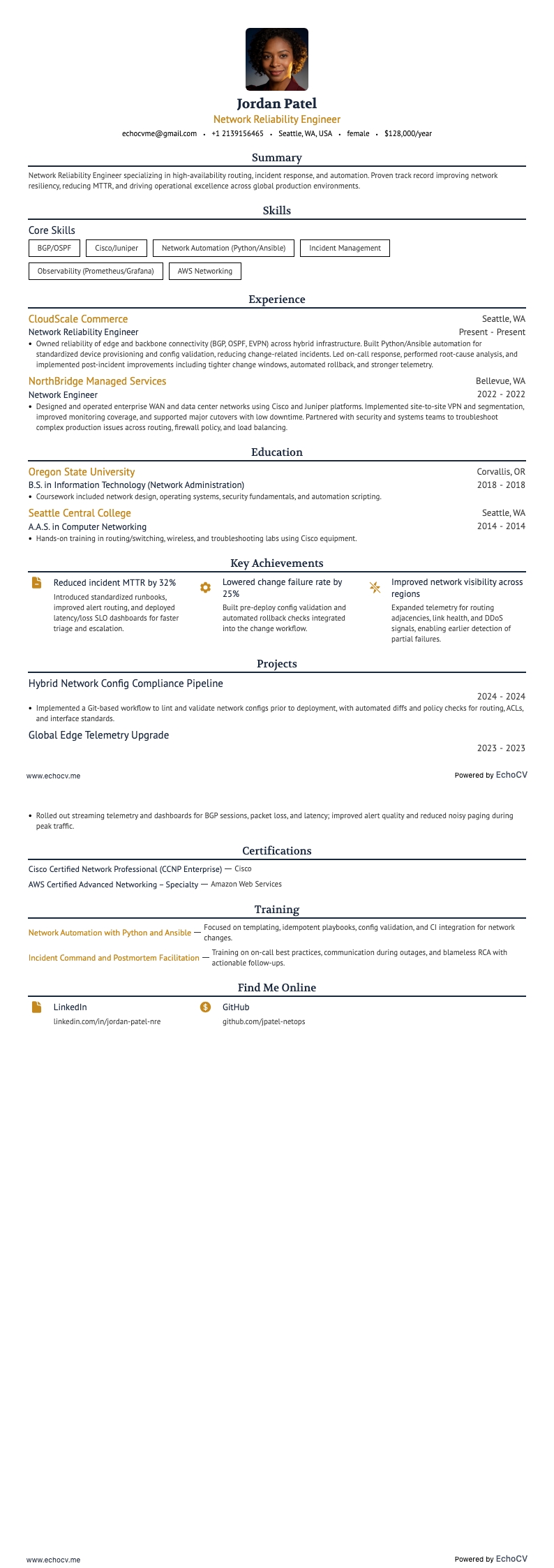
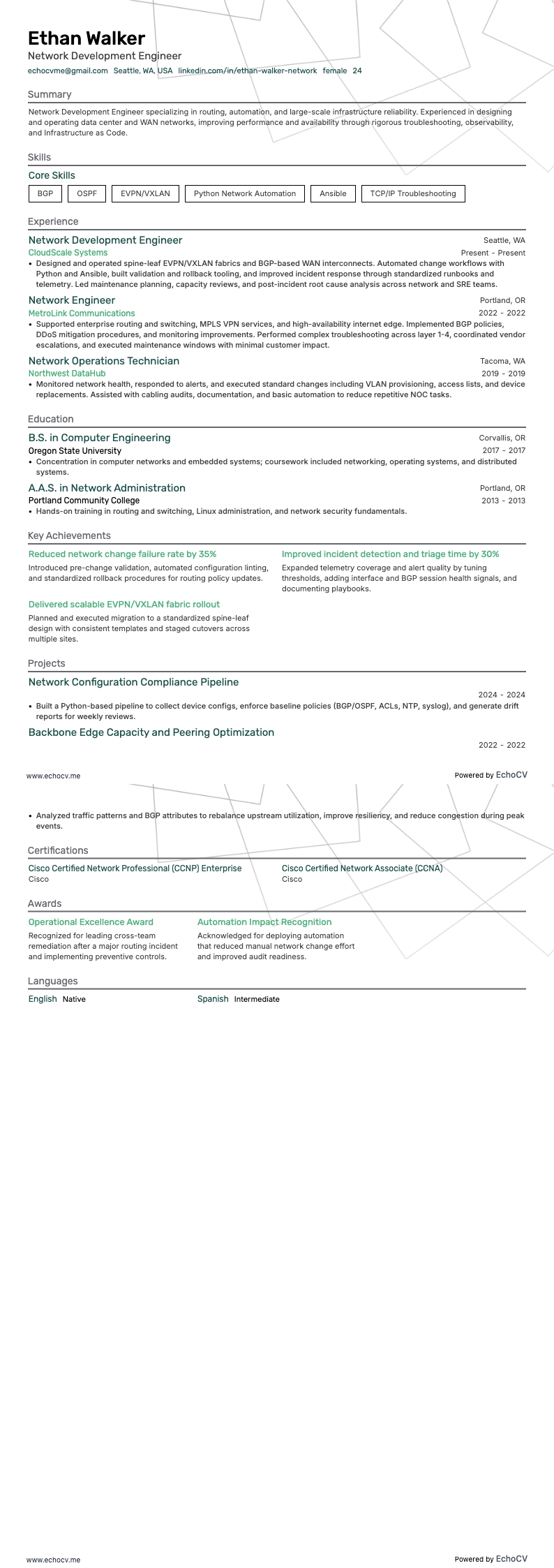
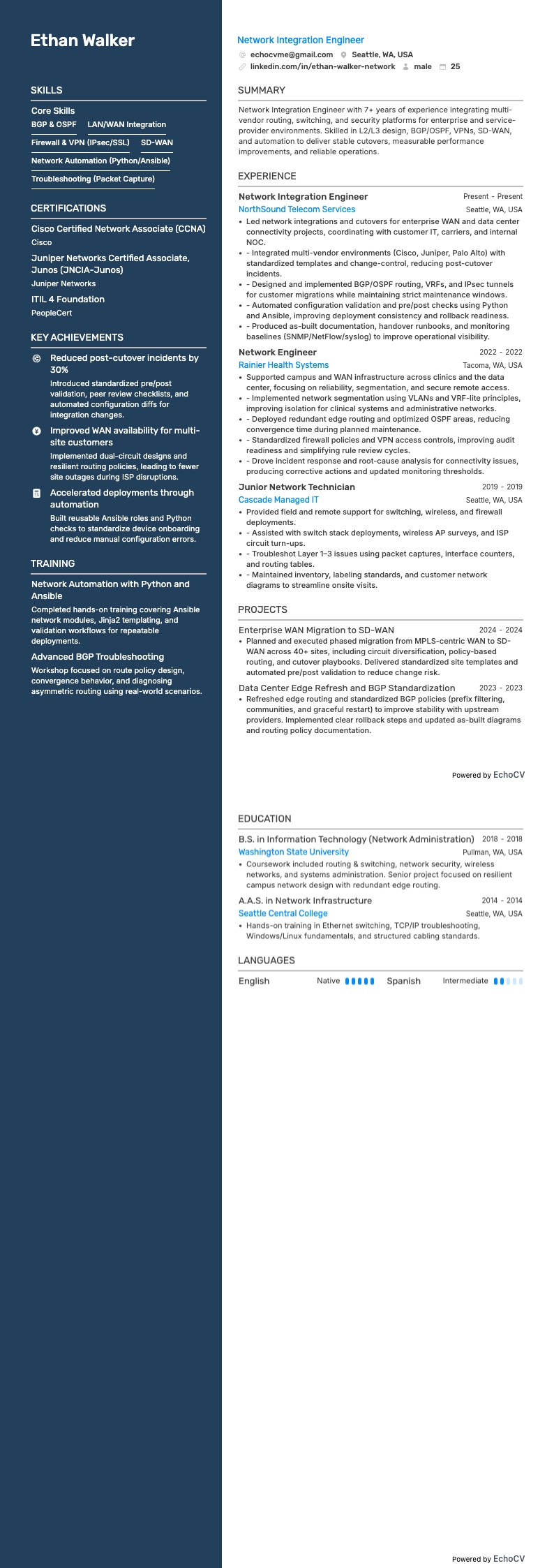
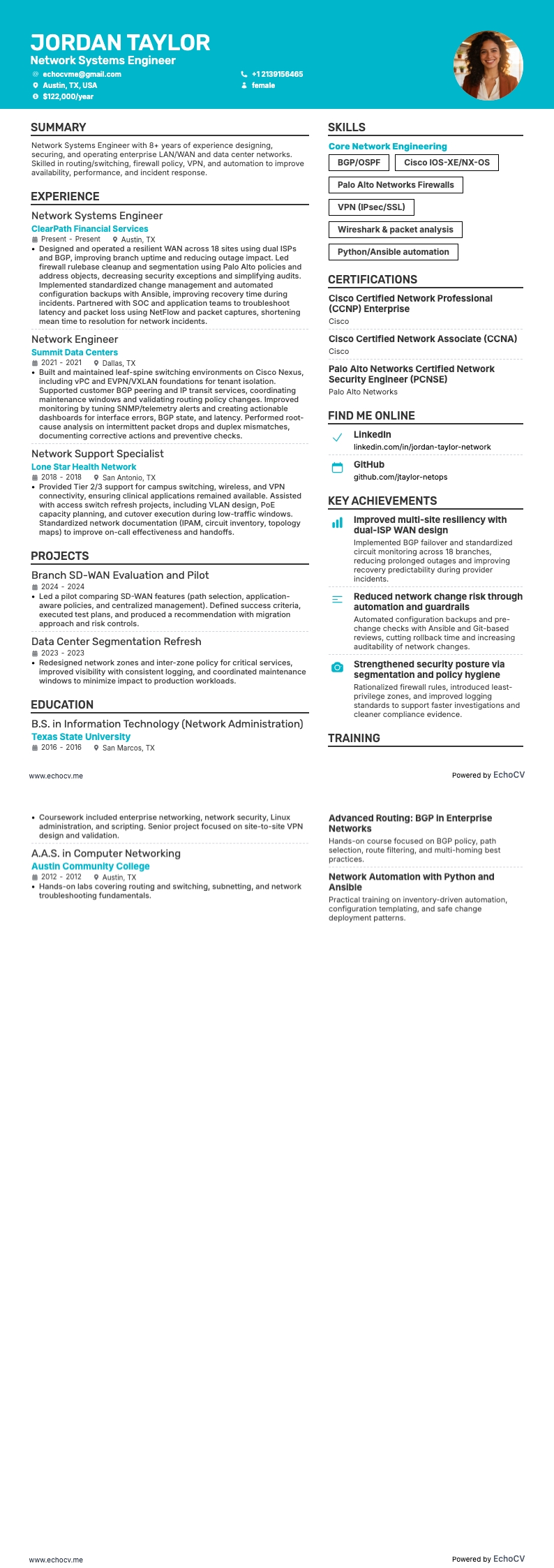
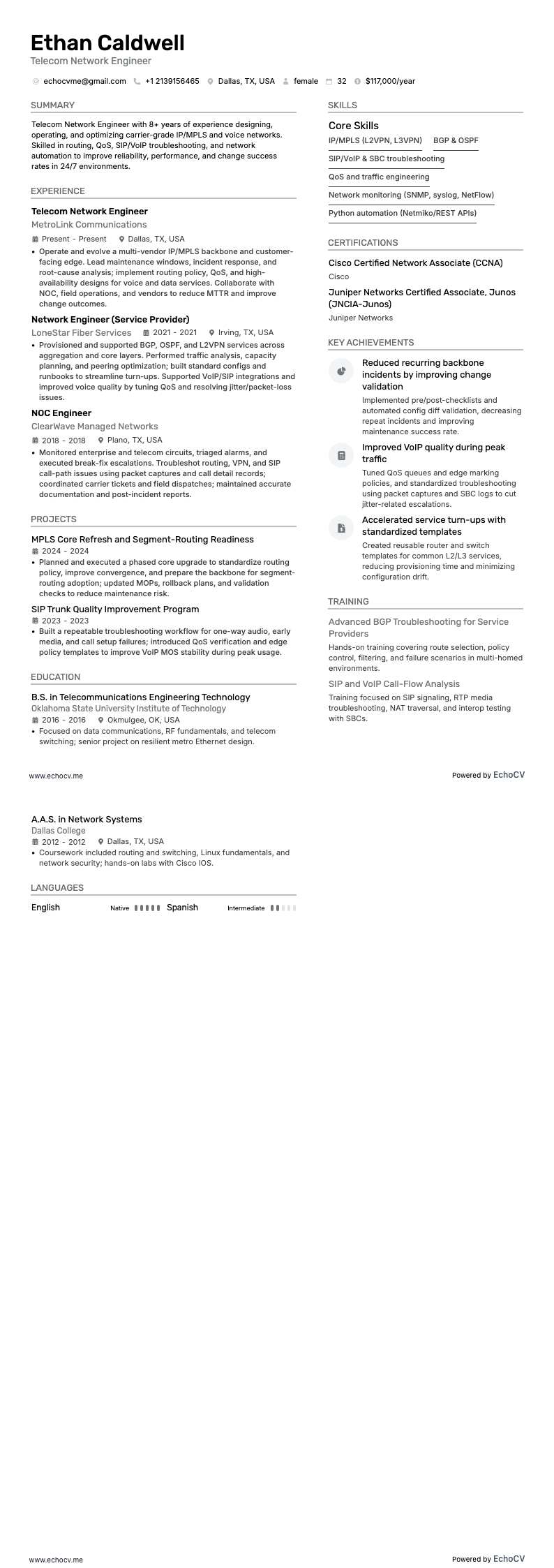
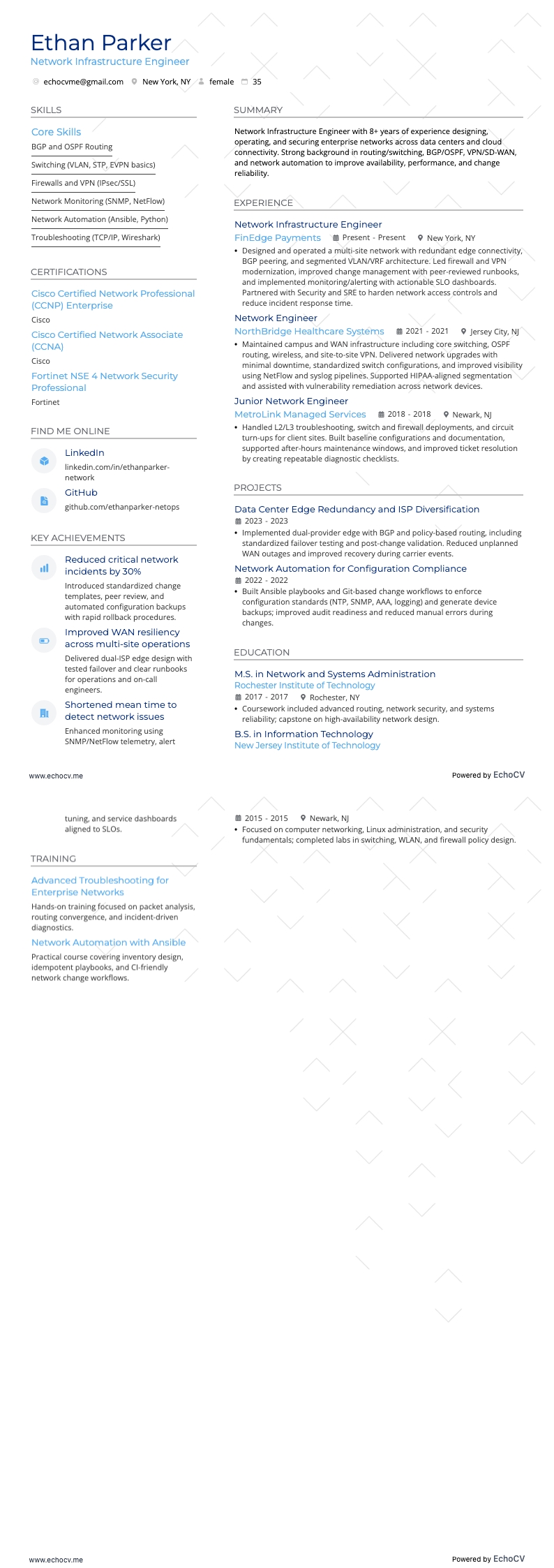
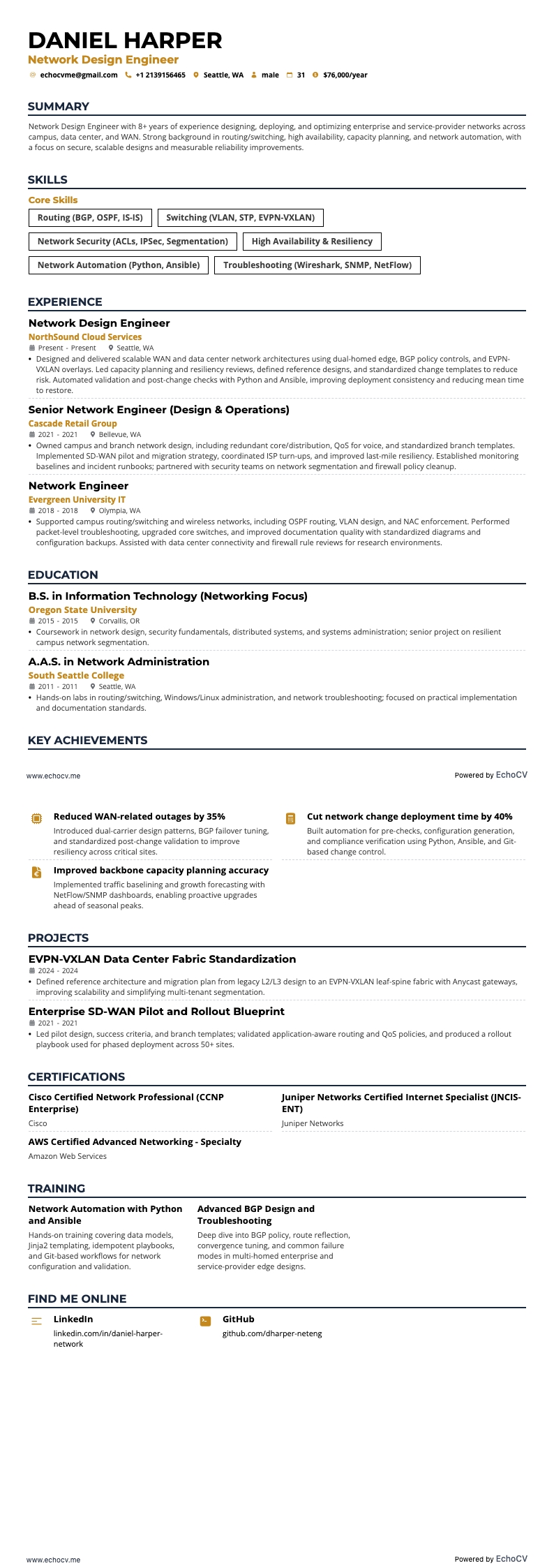
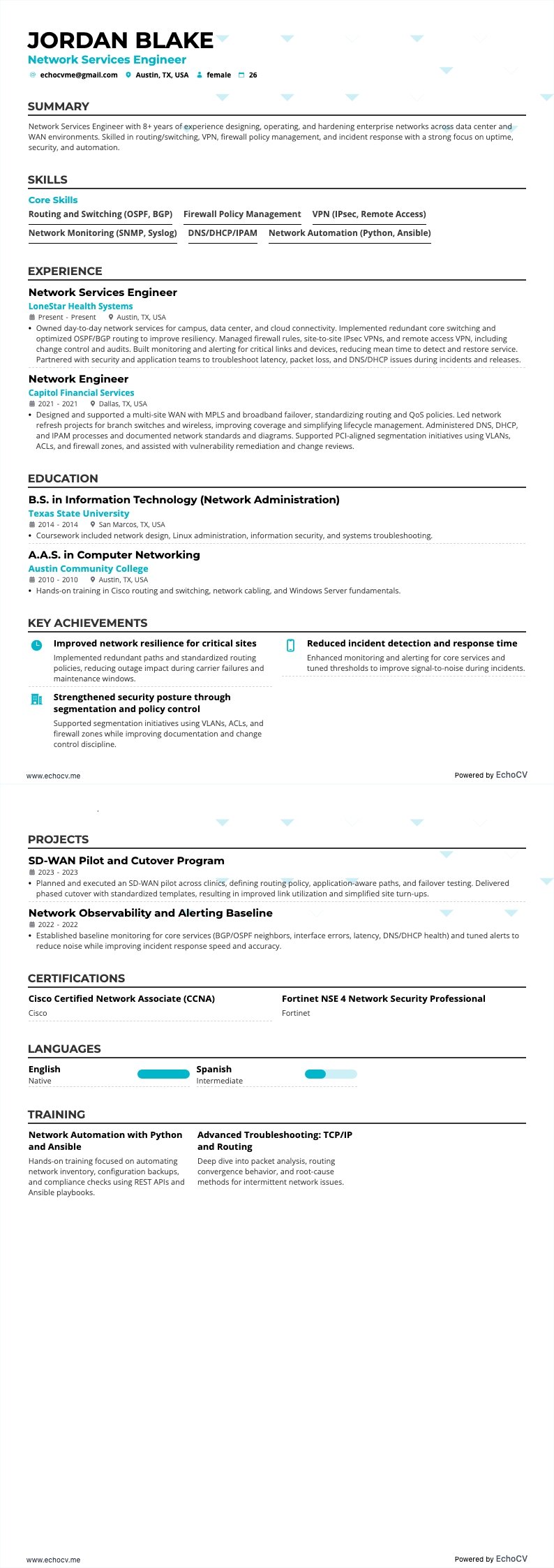
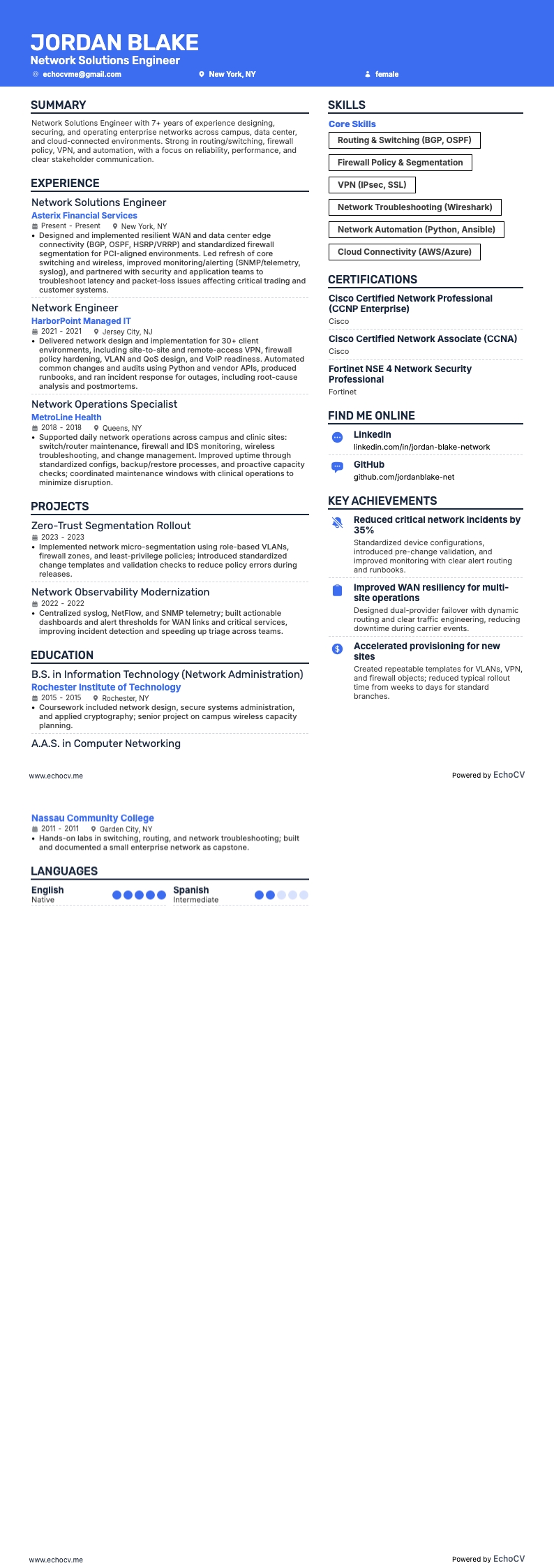
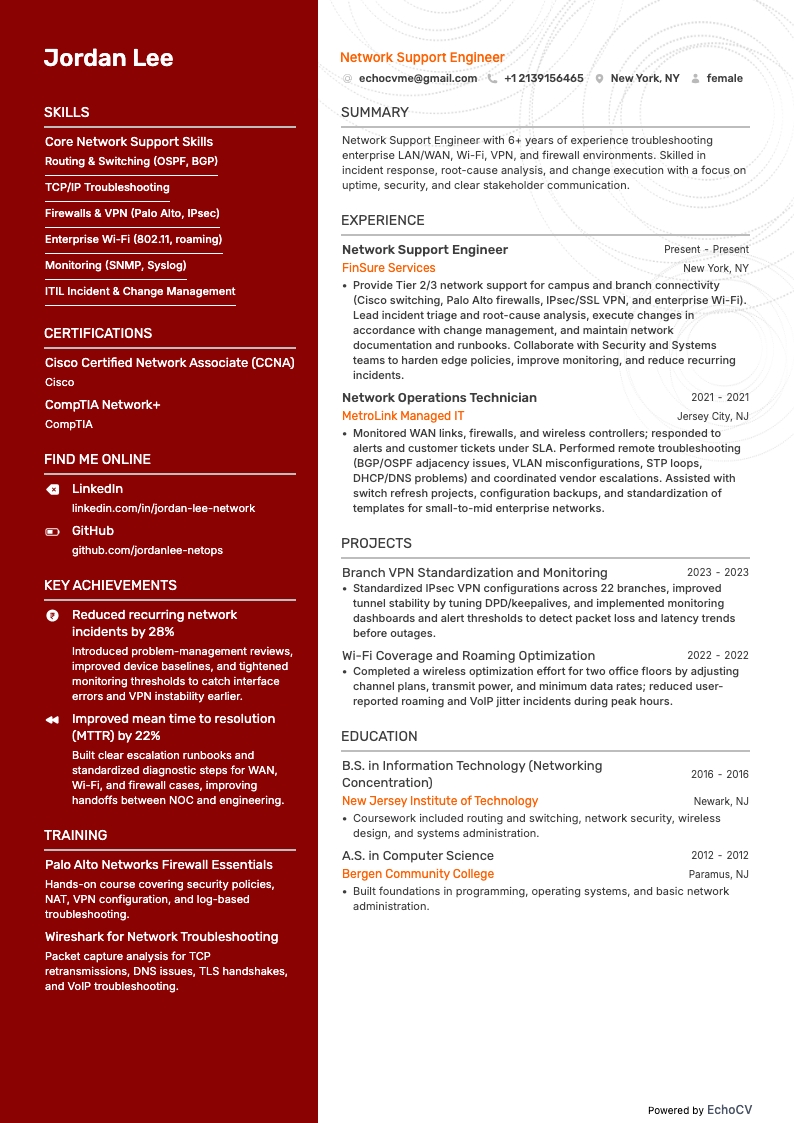
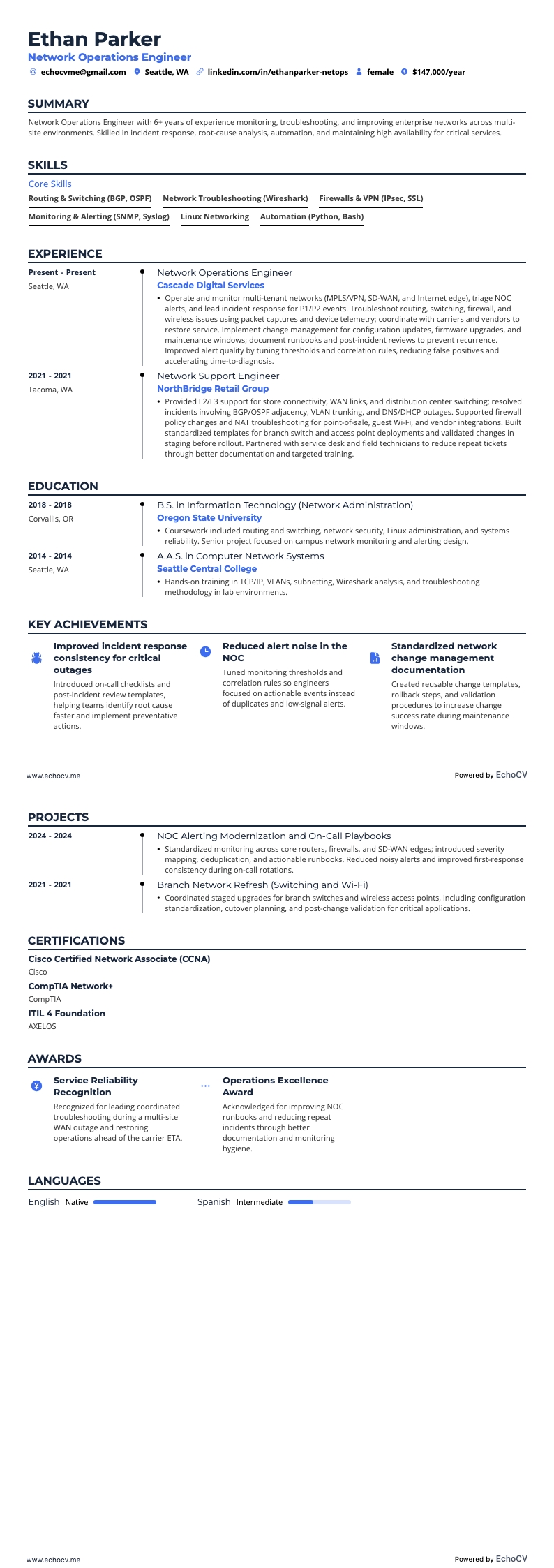
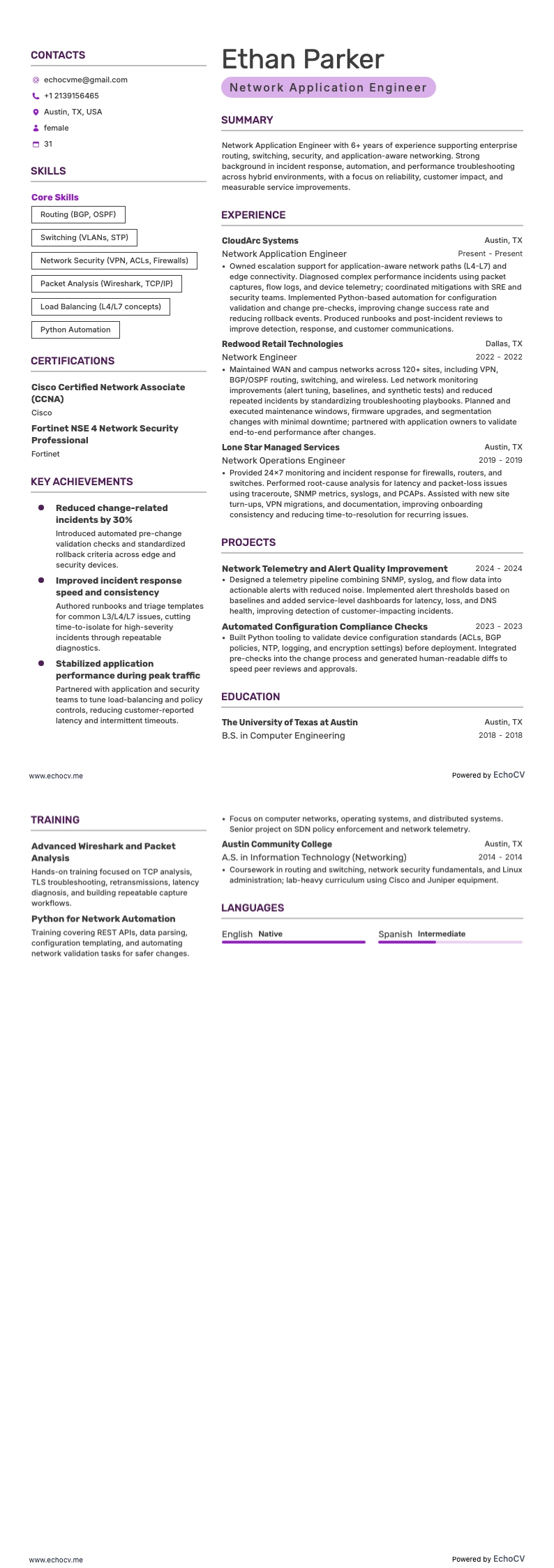
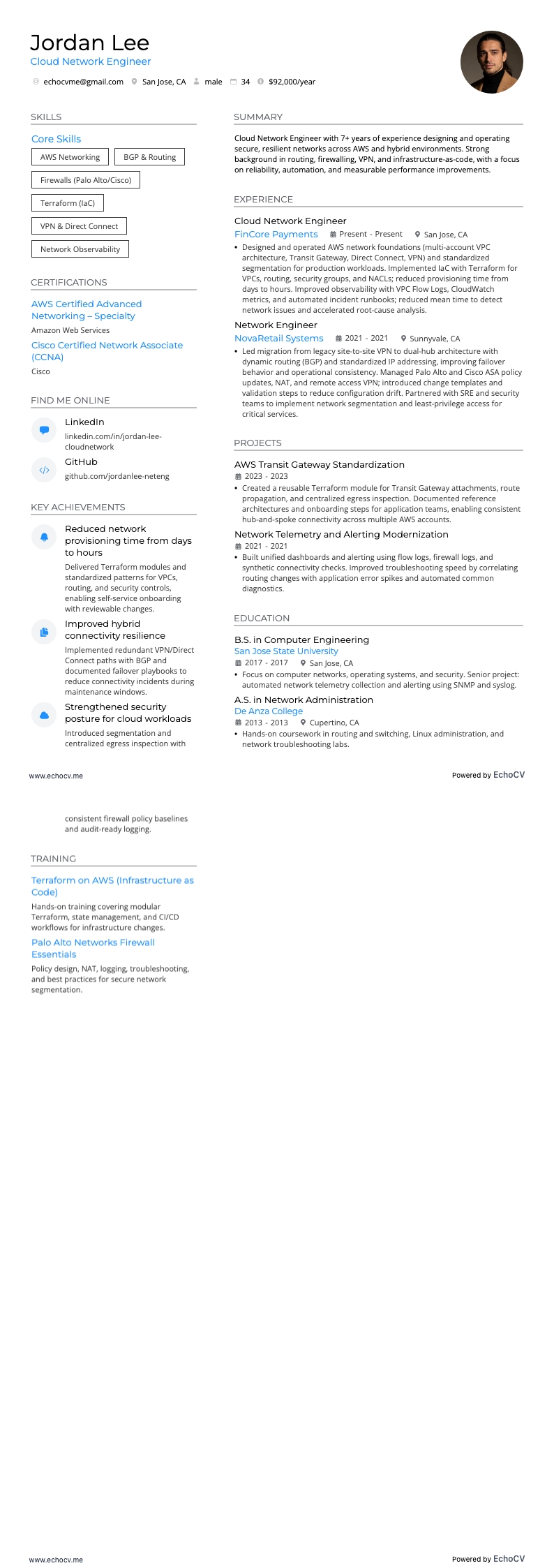
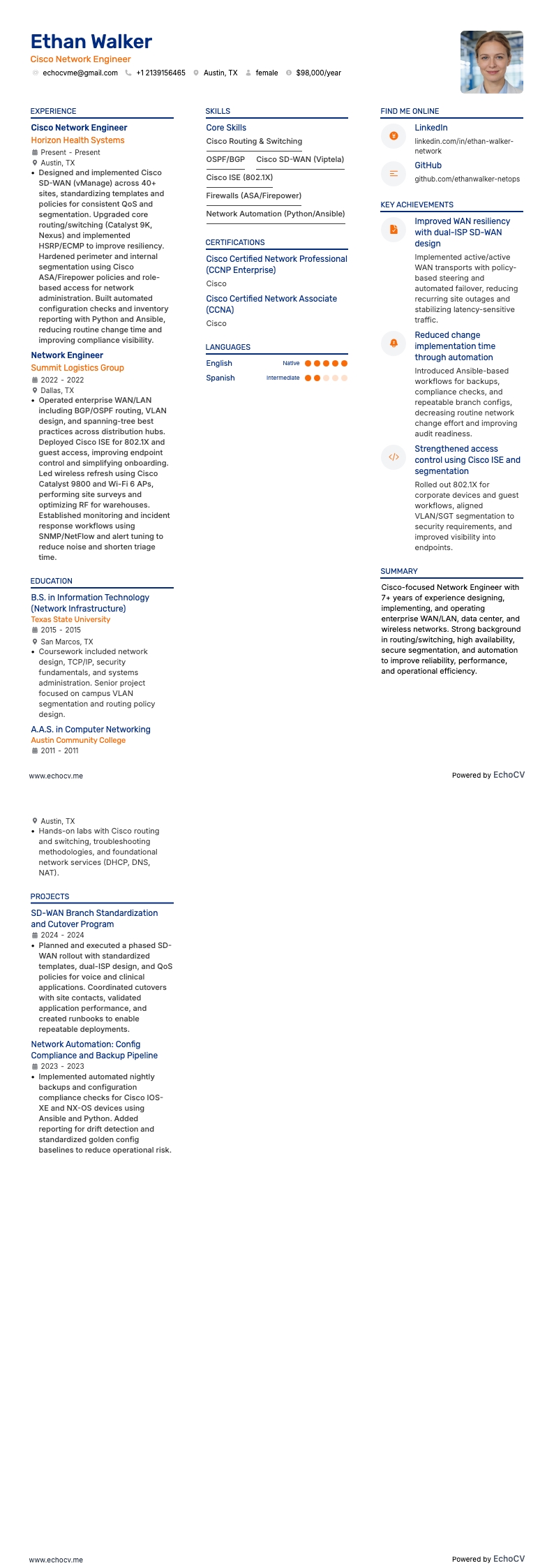
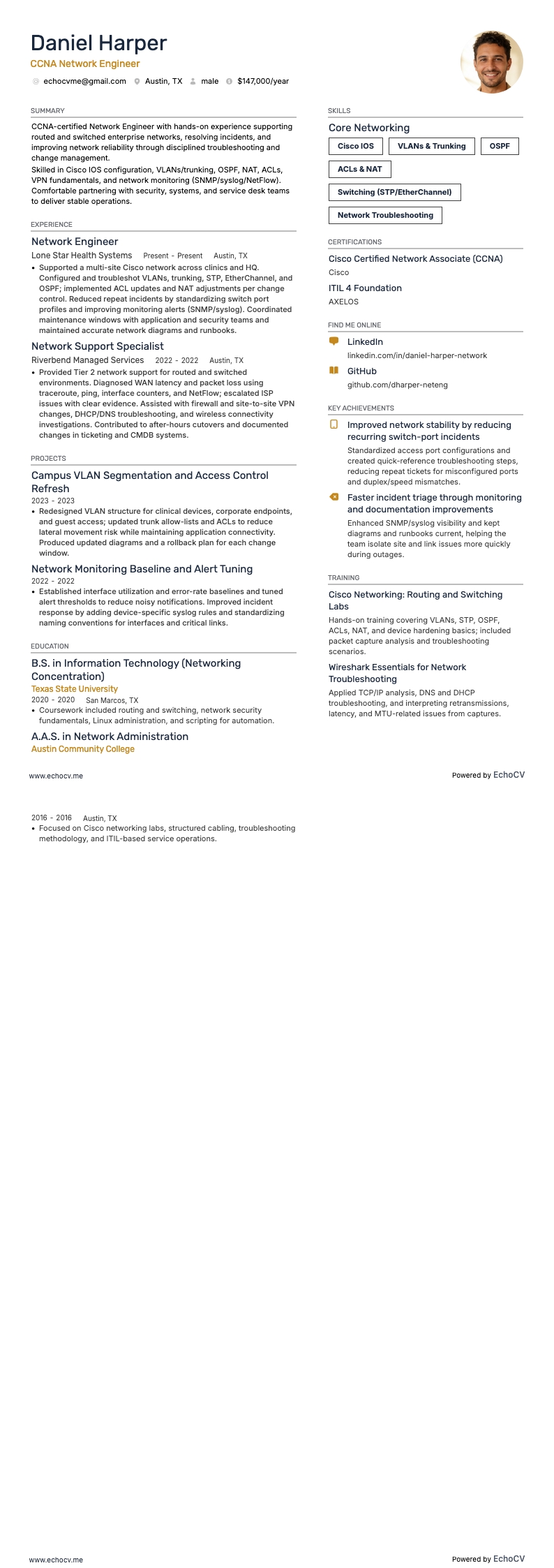
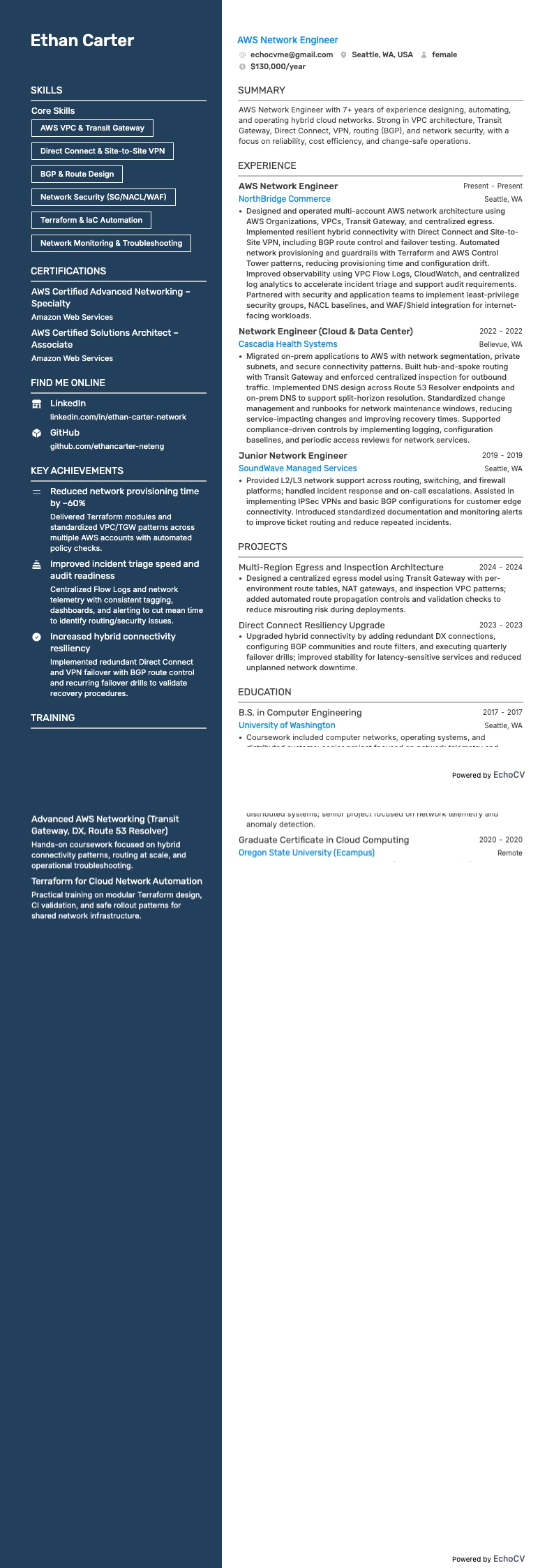
- Choose a resume template that puts your expertise as a network engineer front and center.
- Identify the crucial sections of your resume and organize them for maximum impact.
- Demonstrate your experience with network engineering technologies.
- Detail your achievements and illustrate your impact on projects and the industry.
- Highlight key skills from the job description to meet the expectations of potential employers.
- Include your educational background, focusing on degrees or certifications relevant to network engineering.
Are you looking for more job openings in the network and security field? We’ve got just what you need. Browse through these resume examples.
How to format a network engineer resume
Choosing the right resume format is crucial for standing out with your application as a network engineer. Here are three main formats you can consider:
- Reverse chronological resume: Ideal for those with extensive experience in network engineering, this format lists your previous jobs starting from the most recent and going backward.
- Functional resume: This format is best if you’re new to network engineering, changing careers, just starting out, or have gaps in your employment history. It emphasizes your skills rather than your past jobs.
- Hybrid resume: Merging the benefits of both chronological and functional formats, the hybrid resume allows you to highlight your most relevant skills and achievements at the top, followed by a concise work history. This is useful for showing experiences that align well with the network engineering position you're targeting.
To make your resume impressive to recruiters, follow these tips:
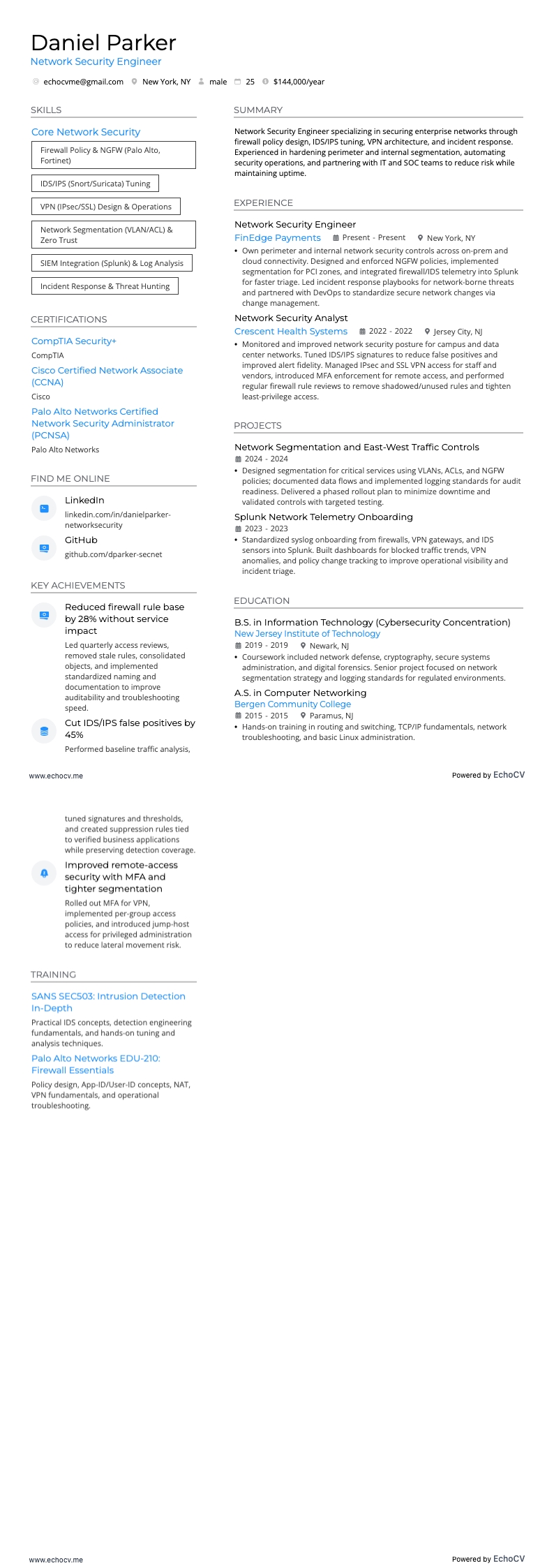
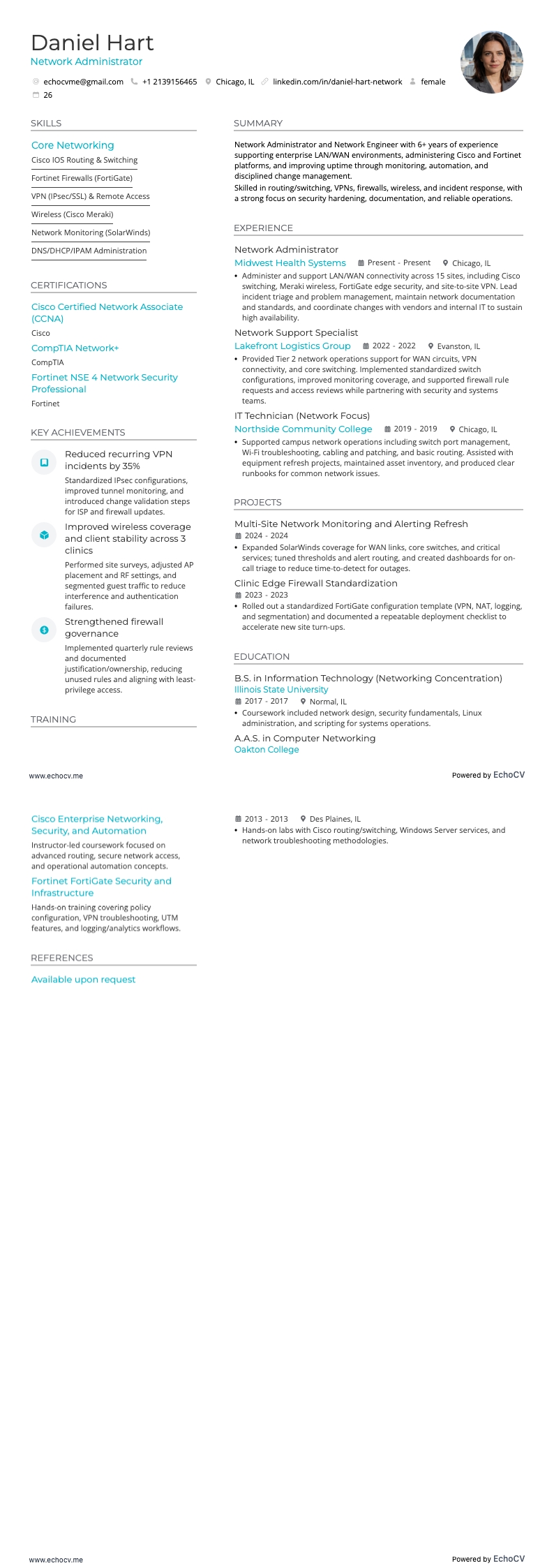
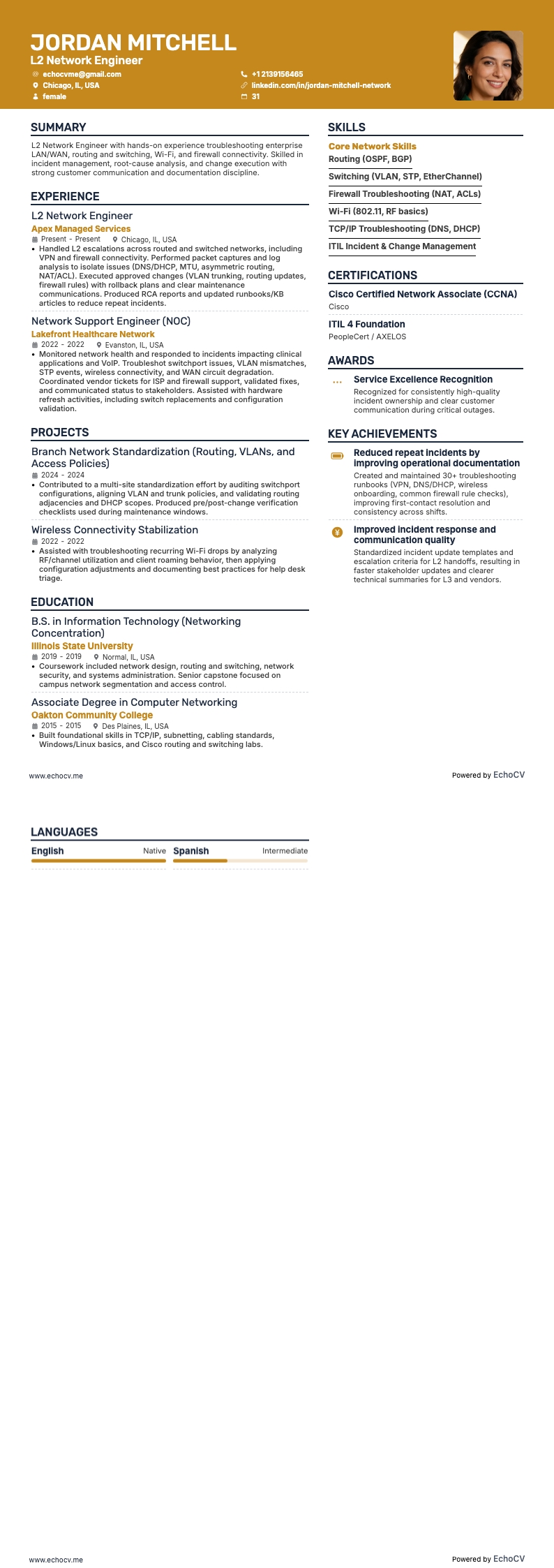
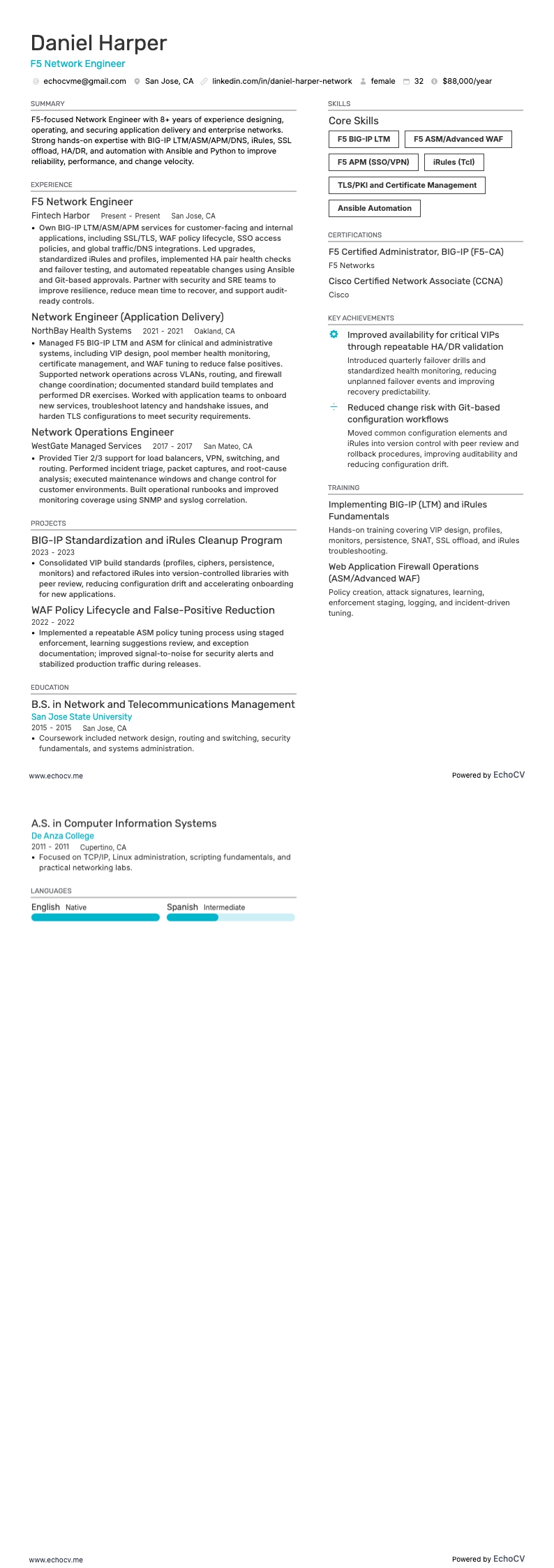
- Pick a modern resume template and avoid cluttered designs because they can look busy and distracting. Simple templates let your achievements shine without distractions.
- Choose readable fonts like Rubik, Lato, or Times New Roman, and keep the size between 10 and 12 points for readability.
- Keep your network engineer resume to one page if you're entry-level or mid-level, and extend it to two pages if you have lots of experience.
- Use consistent margins around 1 inch to ensure your resume looks neat and organized.
- Begin with a header that includes your name, job title, contact information, and links to your GitHub and LinkedIn profiles.
- Always save your network engineer resume as a PDF file to preserve the formatting across different devices.
As a network engineer, you should emphasize your strategic leadership and the impact of your projects on your resume. Tailoring it with appropriate keywords listed in the job ad will help it to pass through Applicant Tracking Systems, which many companies use to screen applicants.
Consider your target market – resumes in Canada, for example, follow different layout conventions.
Want to make sure your resume clears those ATS hurdles? Check out our AI resume checker. It evaluates your resume on 16 key points for free, helping you make it attractive to recruiters.