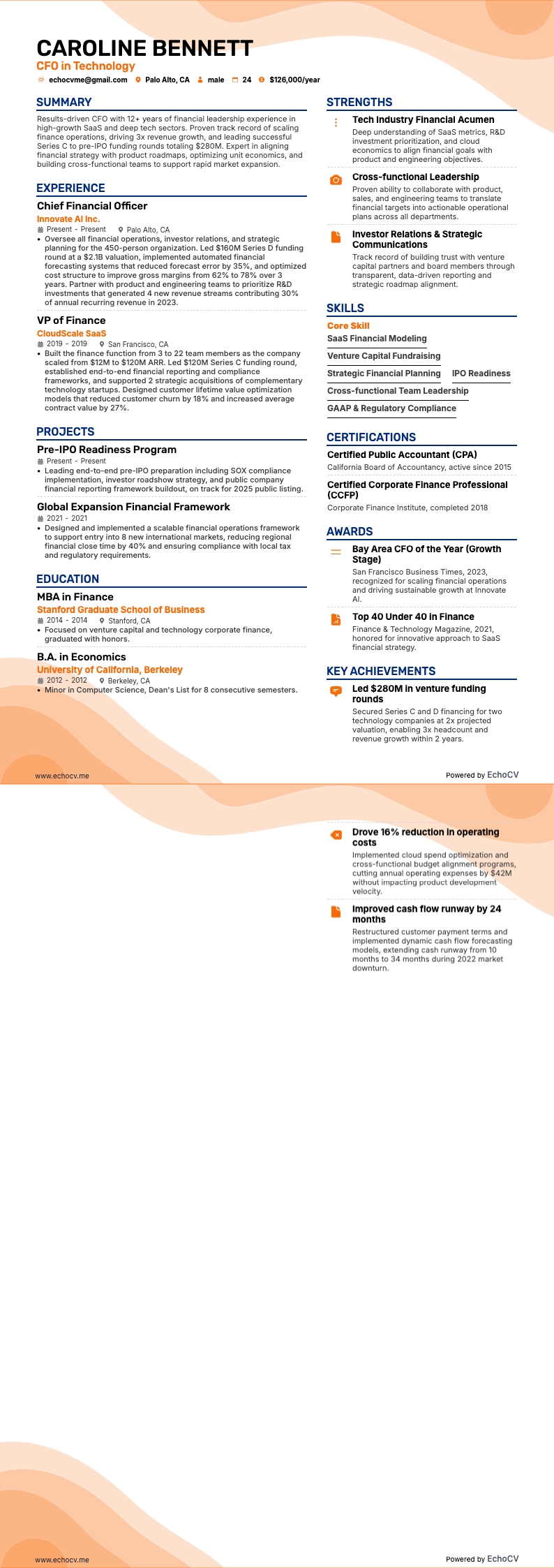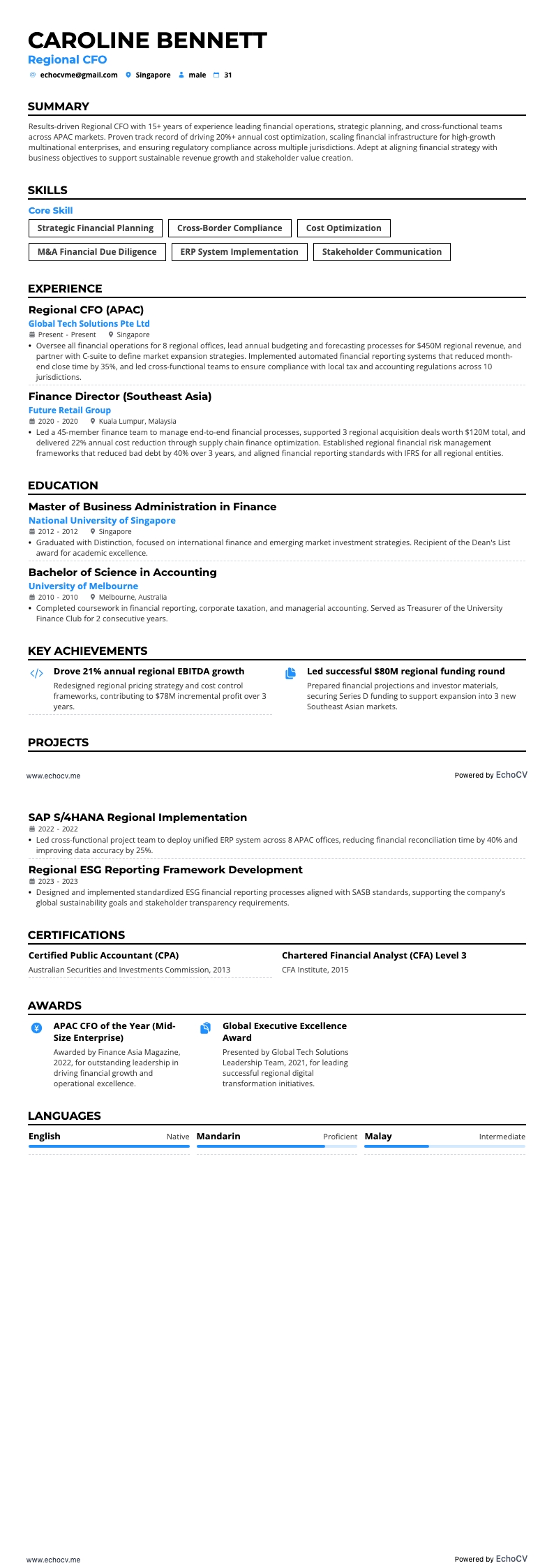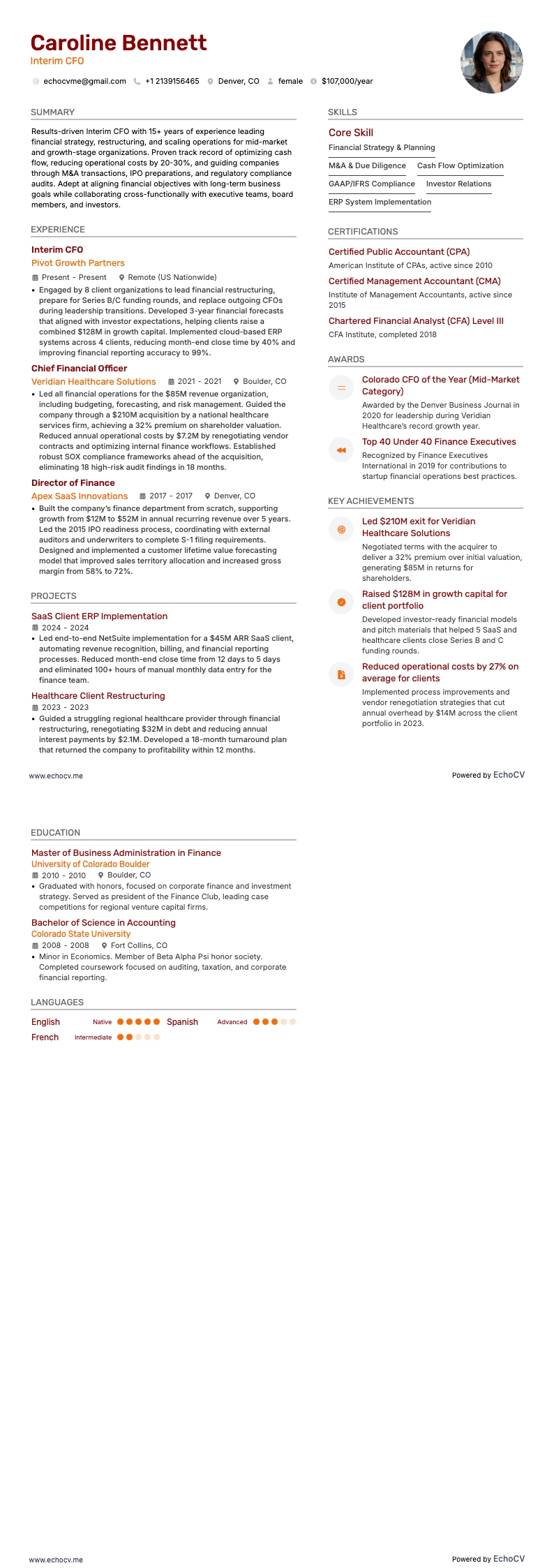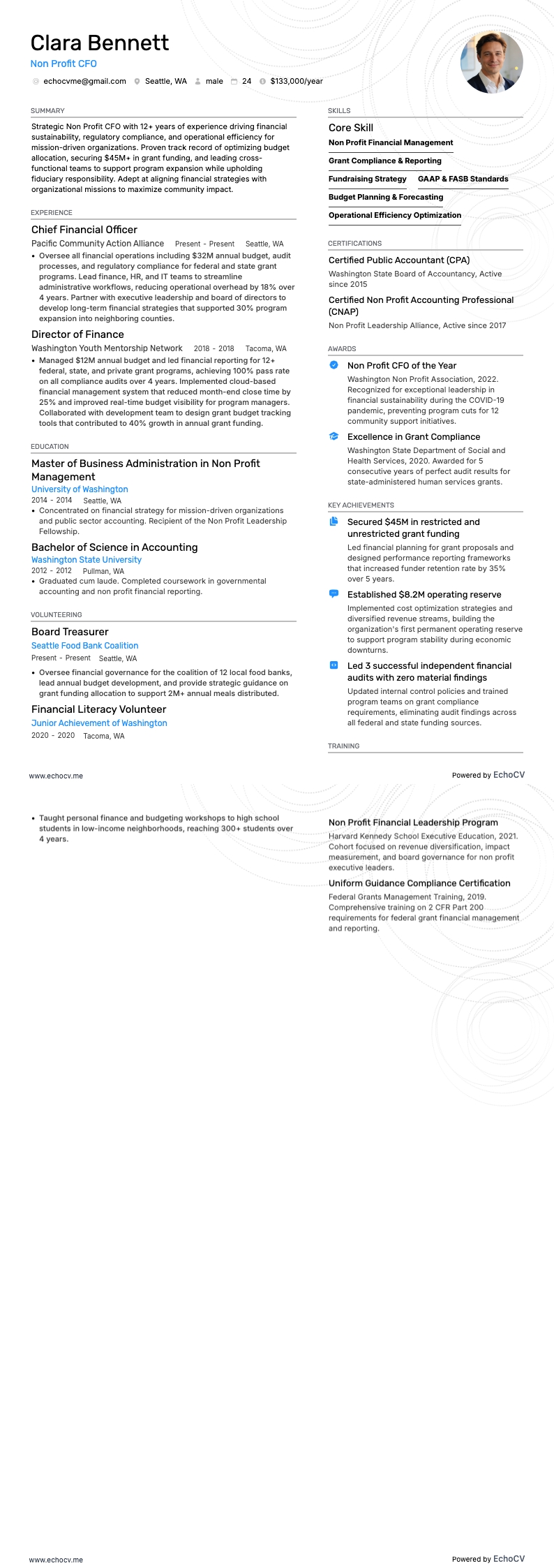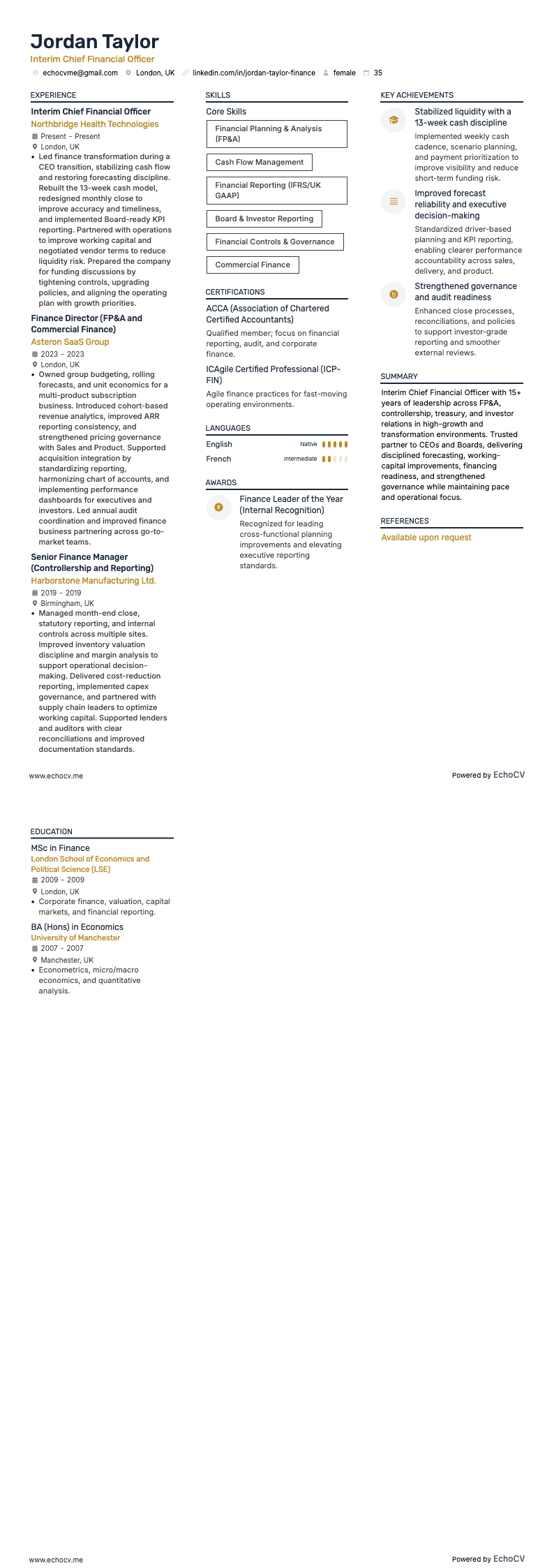
Good additional sections for a CFO resume
Once you’ve covered your core experience and credentials, additional sections can reinforce your executive brand and highlight what sets you apart from other finance leaders. Think of these as strategic proof points rather than filler.
Consider adding:
- Board Memberships & Advisory Roles: Underscores governance experience and strategic influence beyond your company.
- Professional Affiliations: Include memberships like AICPA, FEI, or NACD to show commitment to executive standards.
- Awards & Recognitions: Spotlight honors that validate performance (CFO of the Year, Financial Leadership Award).
- Speaking Engagements & Publications: Demonstrates thought leadership and visibility in your field.
- Languages & International Experience: Adds weight if you’ve managed global operations or investor relations.
- Volunteer or Nonprofit Involvement: Shows values-driven collaboration and community impact.
Each section should serve a purpose: strengthening your credibility or differentiating you in competitive executive searches.
Frequently asked questions about CFO resumes and job applications
Even seasoned CFOs wonder how to balance detail with strategy on their resumes.
Here are the answers to their most common questions:
What’s the best resume template for a CFO?
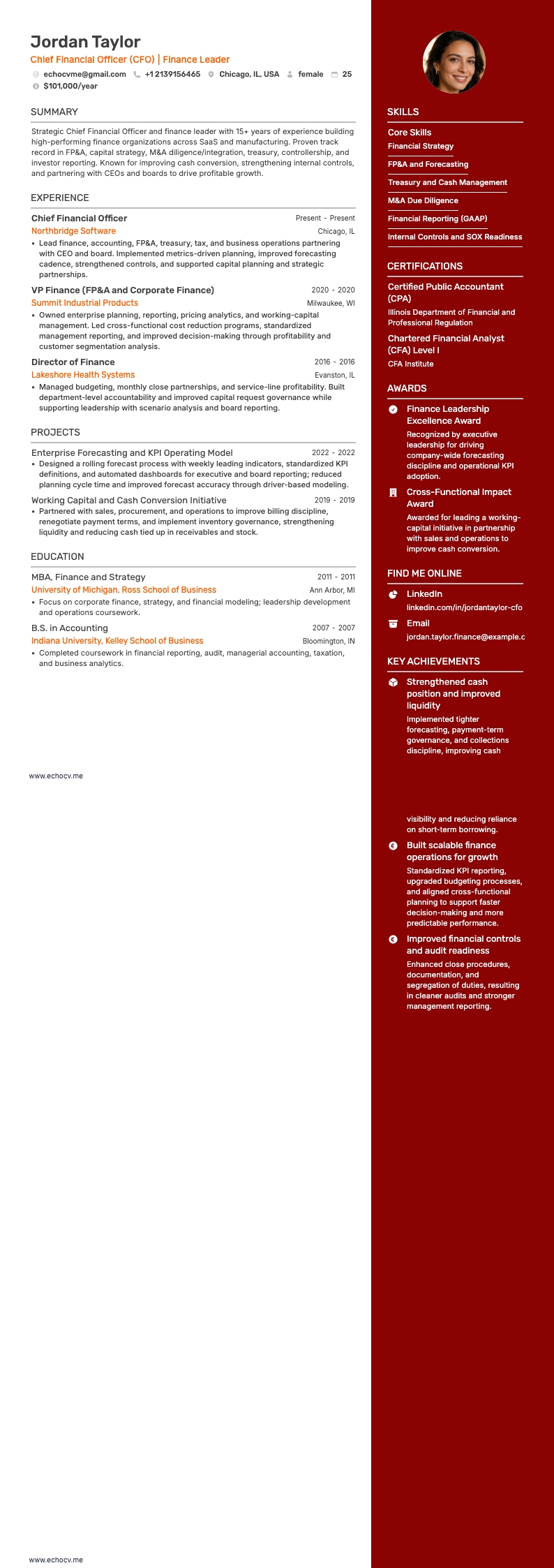
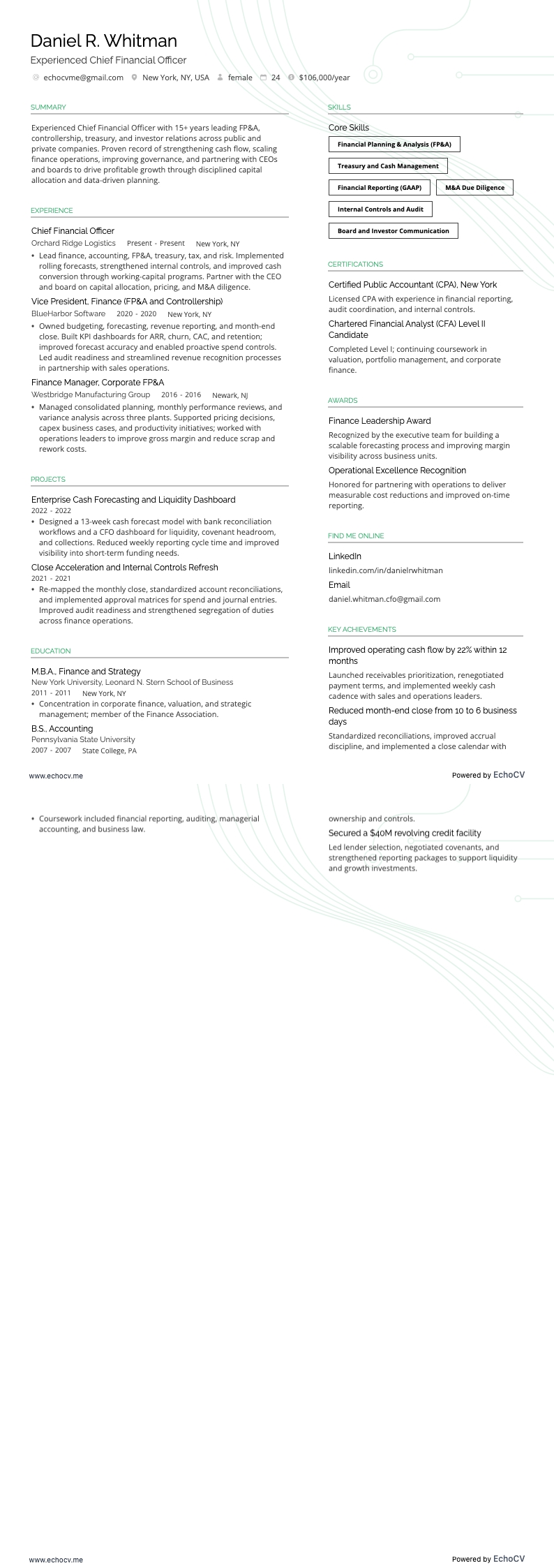
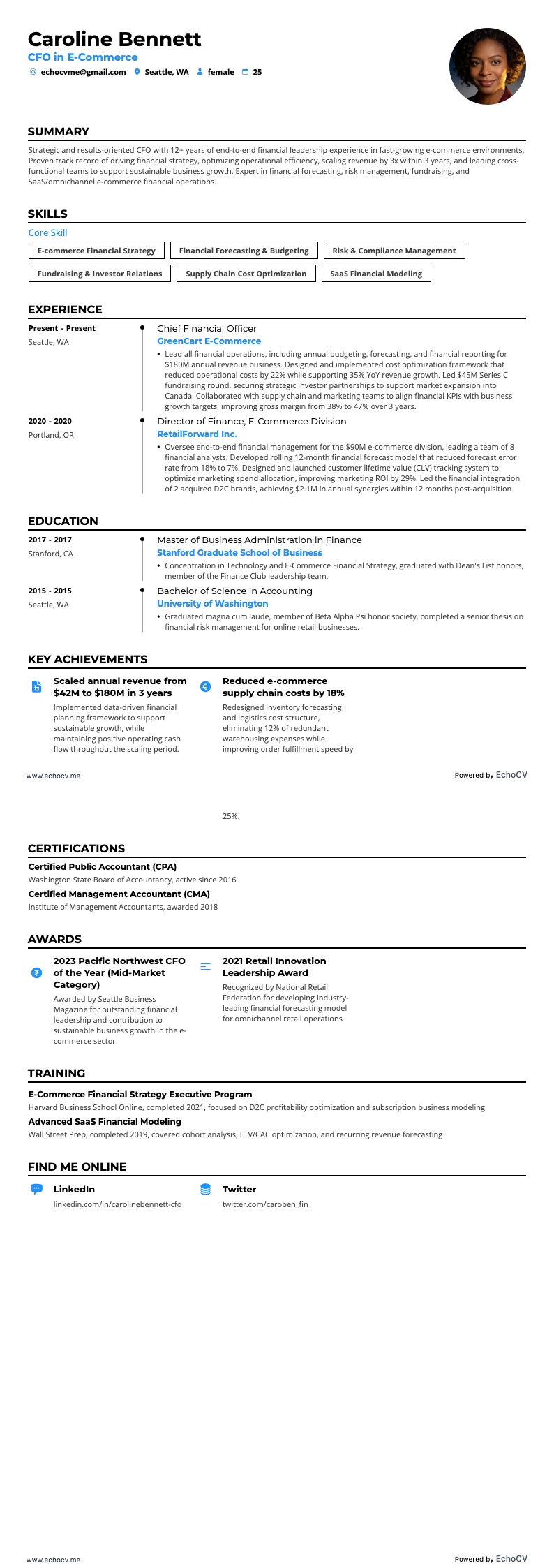
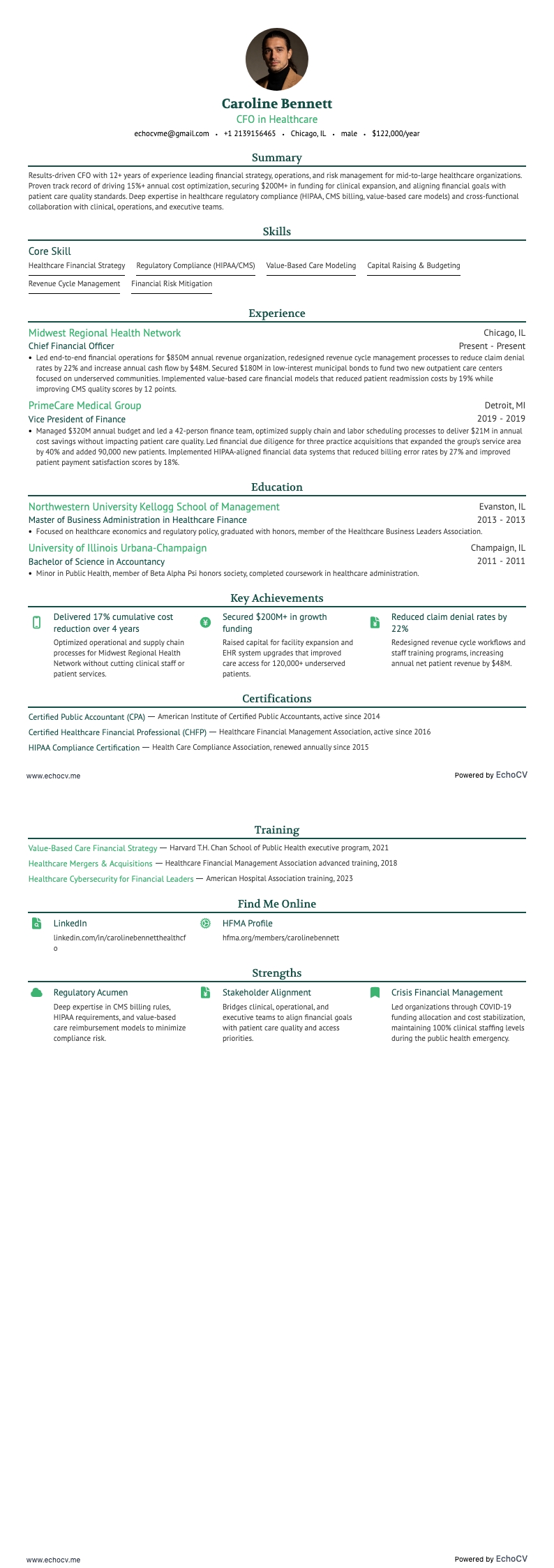
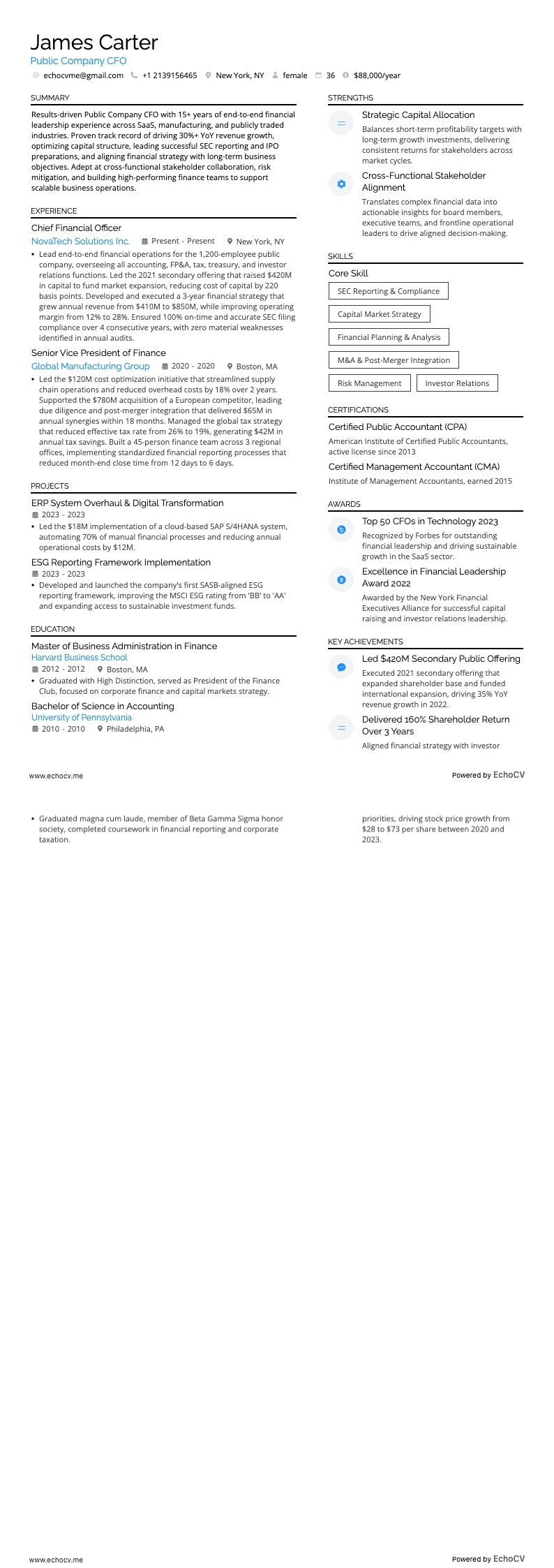
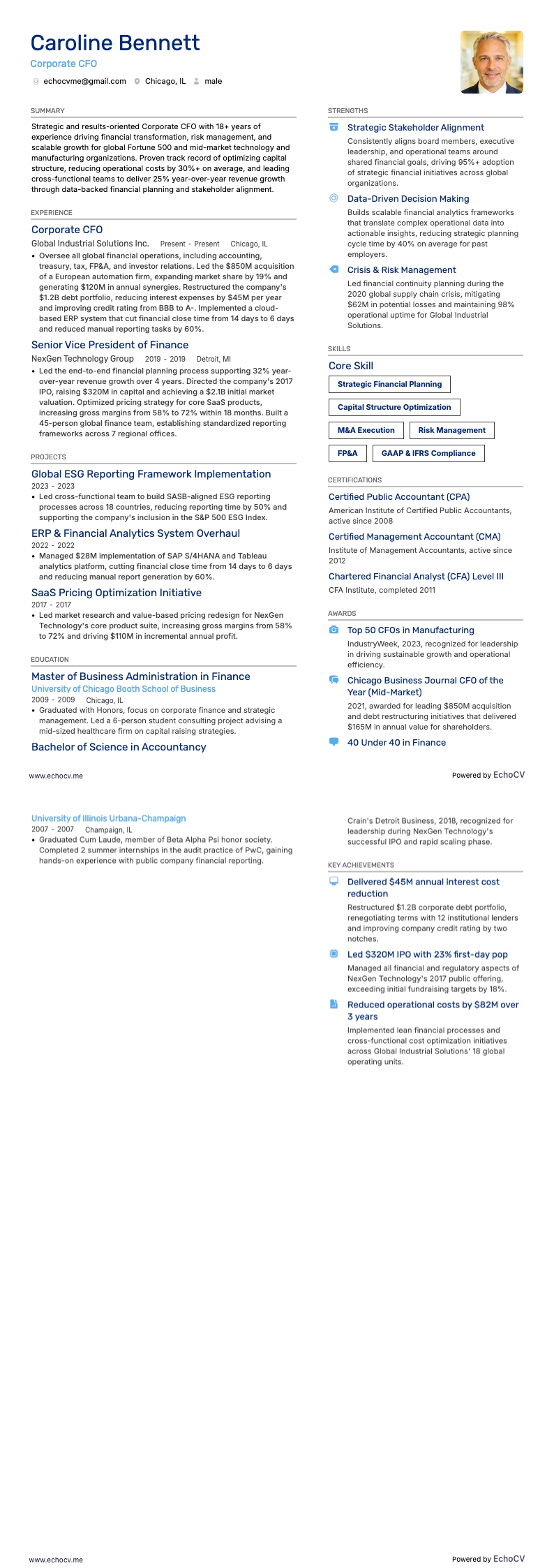
Choose a professional, minimalist layout that mirrors the clarity you bring to financial reporting. A clean, two-column design works best—it lets you balance concise data (KPIs, metrics, results) on one side with a well-structured career narrative on the other.
Avoid overly stylized templates—your value lies in precision and strategic substance, not decoration. Echocv’s Modern or Compact templates are ideal for senior roles like CFO.
Should my CFO resume include every executive role I’ve held?
Not necessarily. Focus on the past 10–15 years, or the roles that best illustrate your professional evolution. Earlier positions can be summarized briefly under a section like Previous Experience if they still add context.
How can I tailor my resume for private equity or startup CFO roles?
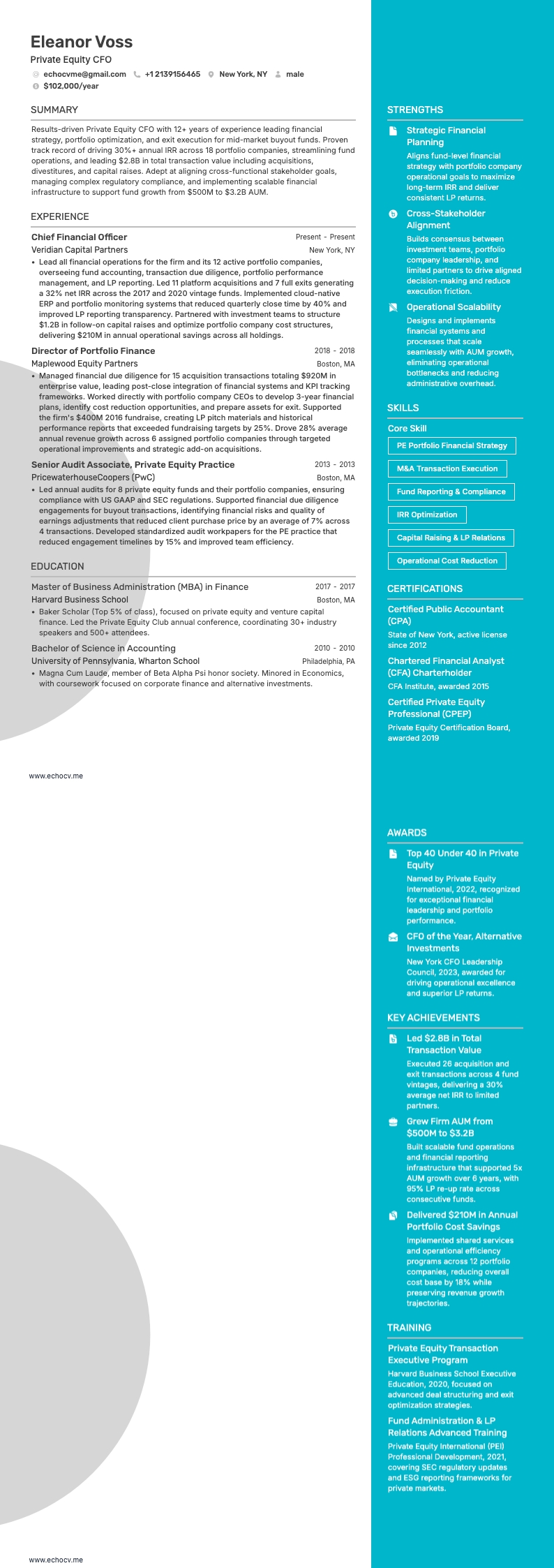
PE-backed companies value transformation and exit readiness, so highlight debt restructuring, EBITDA improvement, and cash flow optimization.
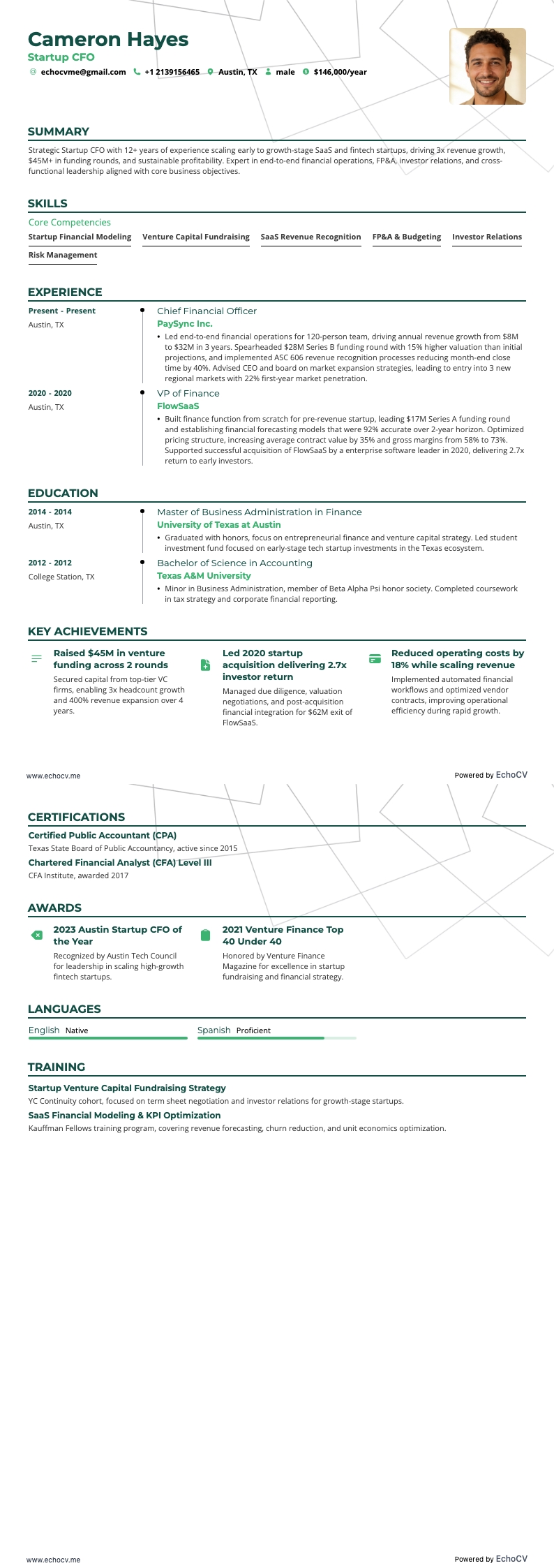
Startups want growth mindset—emphasize capital raising, scaling finance functions, and strategic partnerships. Adjust the tone to match the company’s pace and structure.
Should I include salary or compensation history?
No. Keep that for later-stage conversations. However, you can imply value by quantifying impact—showing, for example, revenue growth or ROI driven under your guidance.
What’s the best format to save and submit a CFO resume?
Use a PDF to preserve design and formatting consistency. Name your file professionally: FirstnameLastnameCFO_Resume.pdf. Avoid editable formats like Word unless the recruiter specifically requests it.
Do CFOs still need cover letters?
Yes. A strong CFO cover letter doesn’t rehash your resume—it connects your financial stewardship to the company’s next phase (expansion, turnaround, or IPO). Think of it as your “executive brief” rather than a formality.