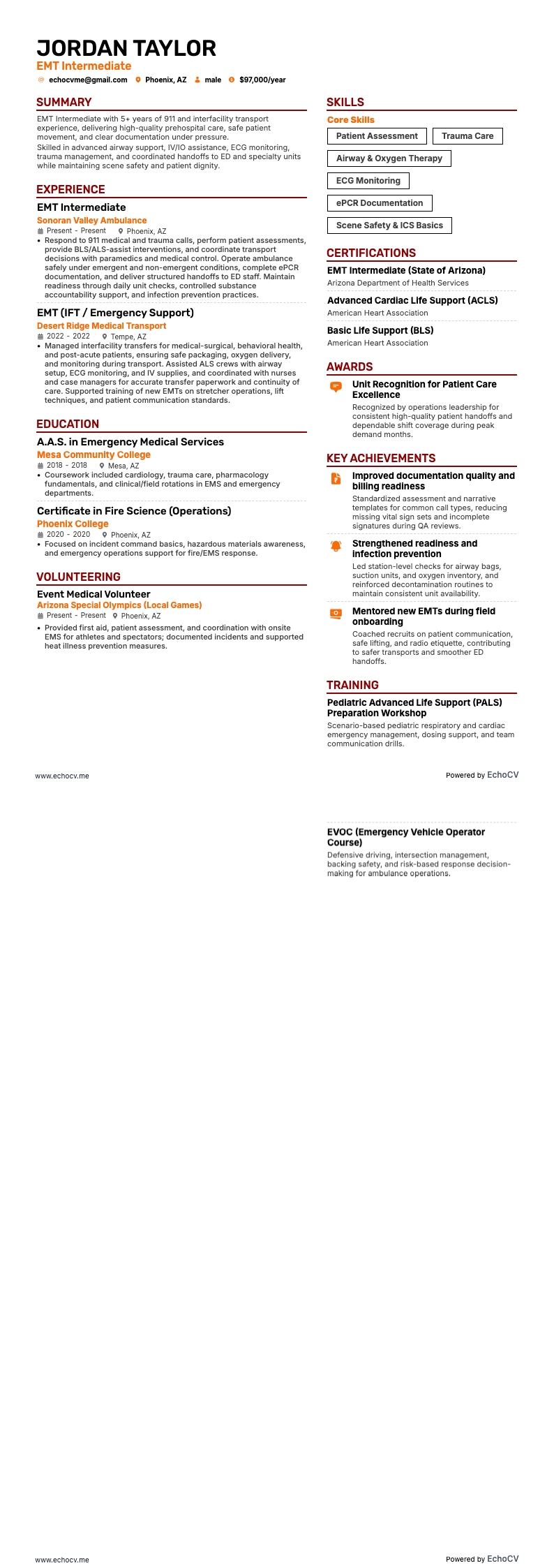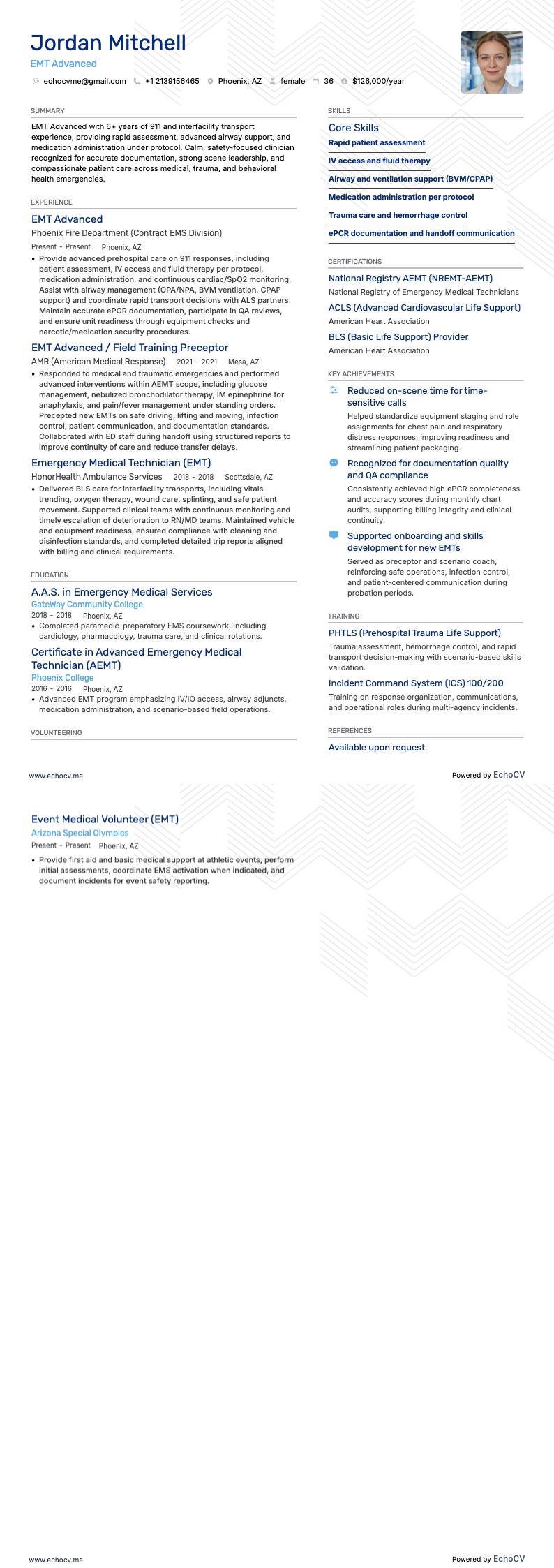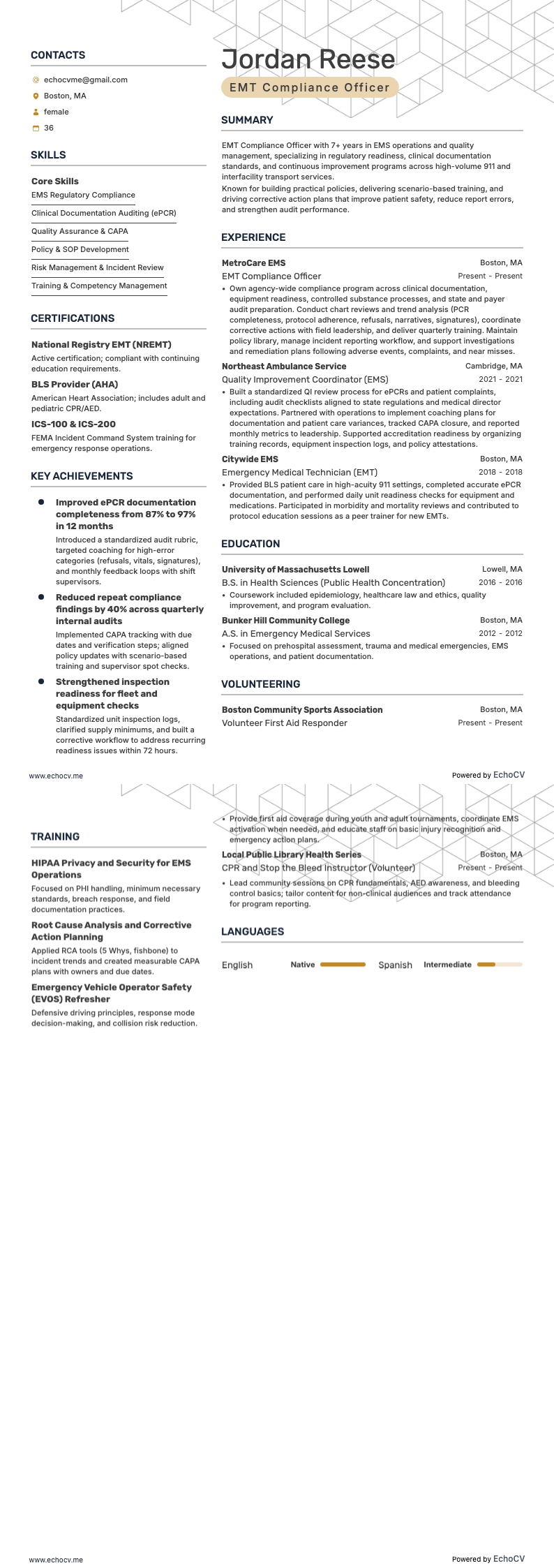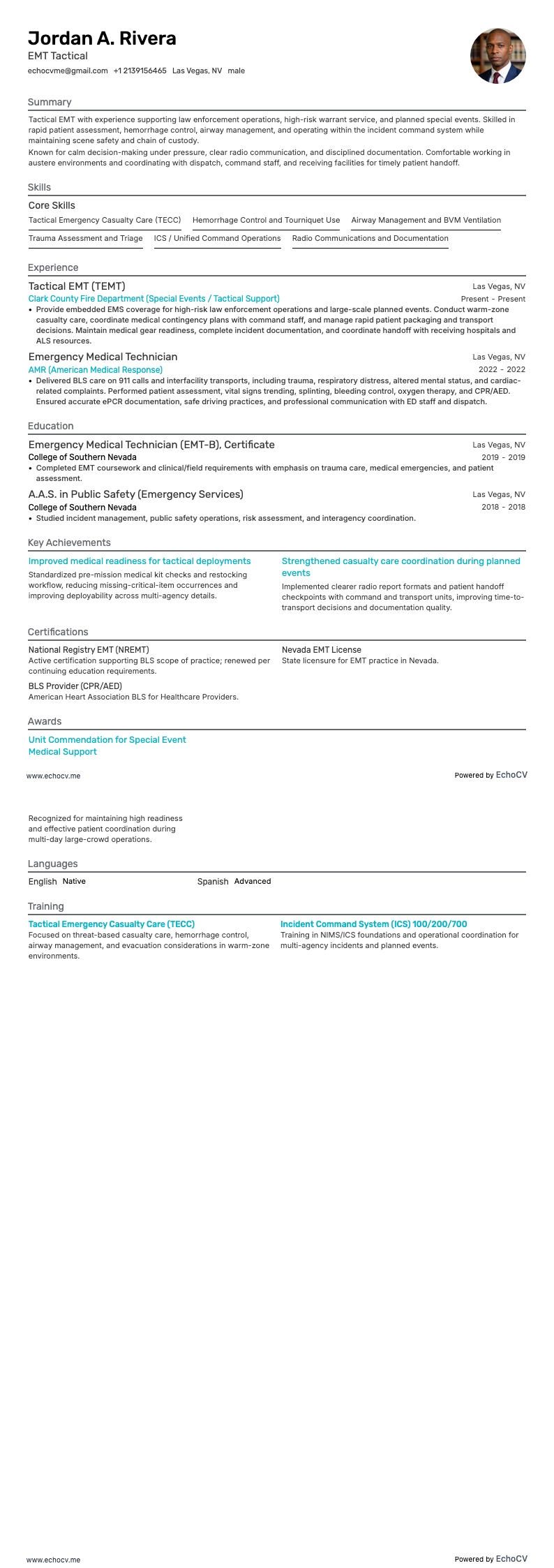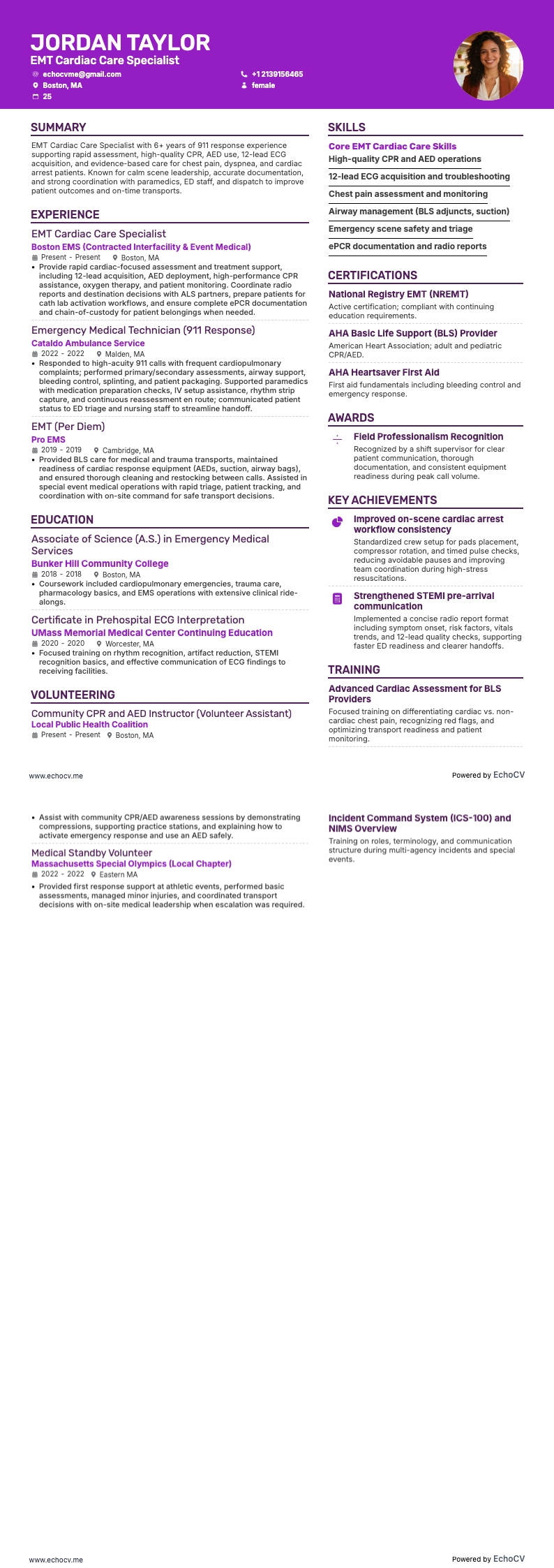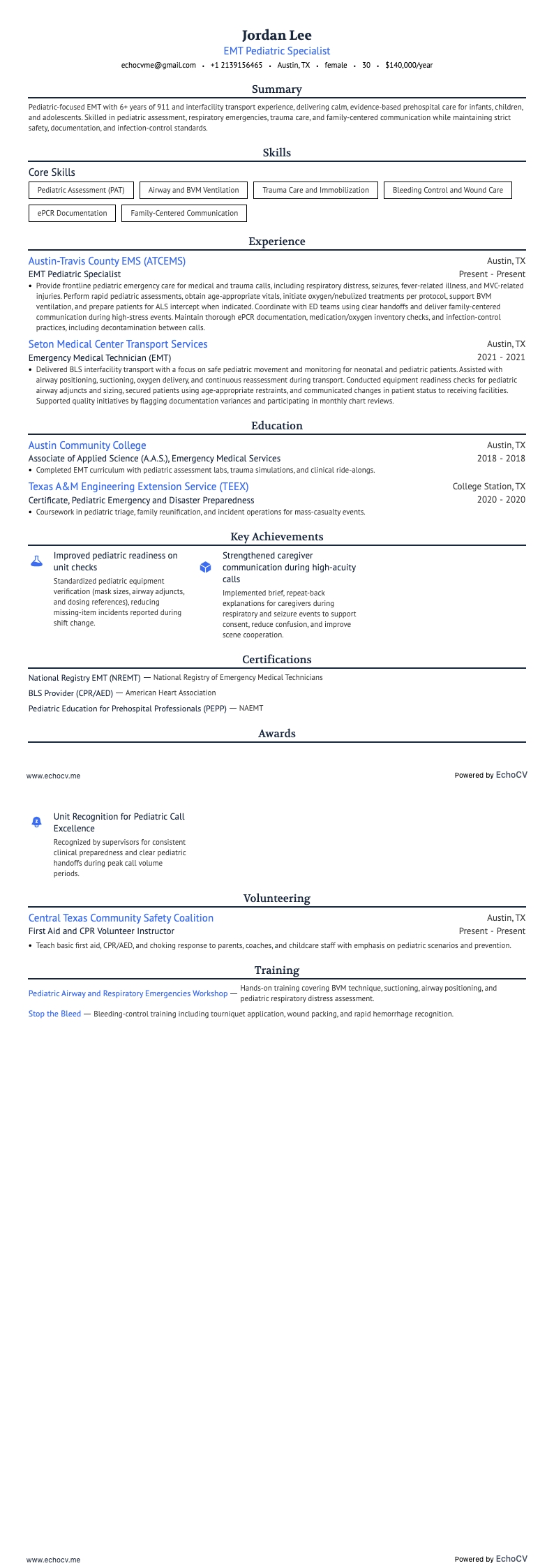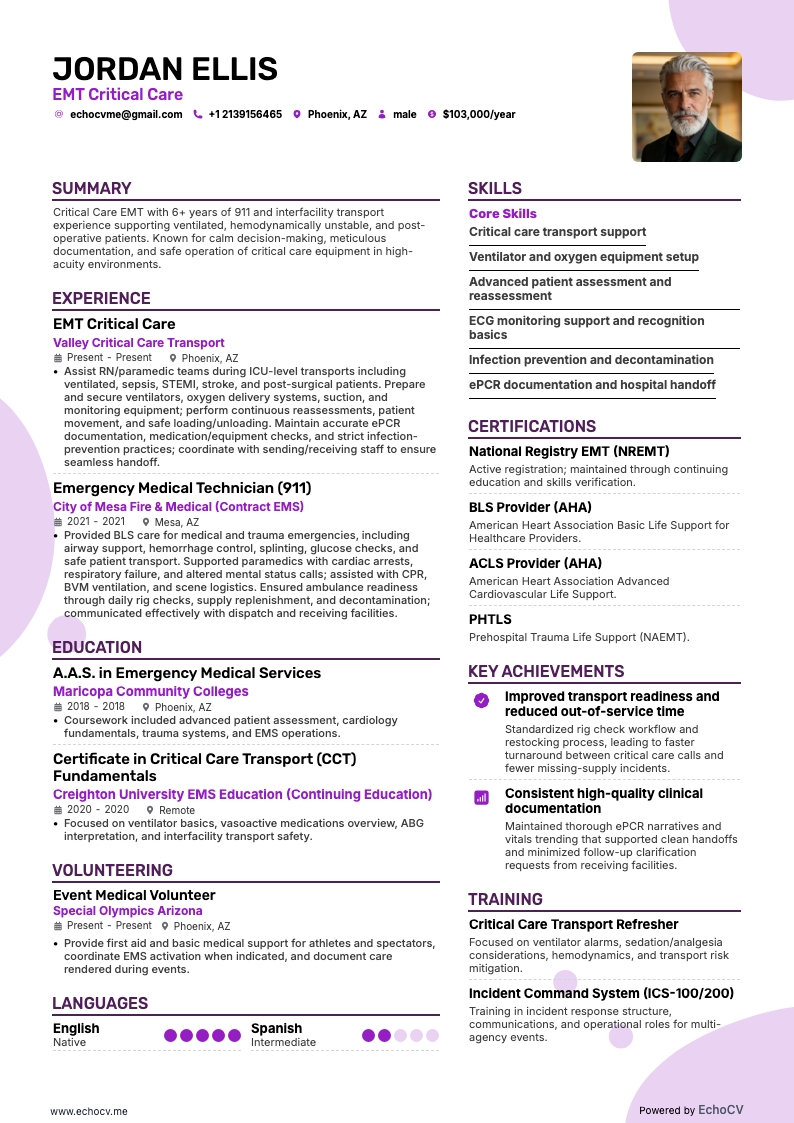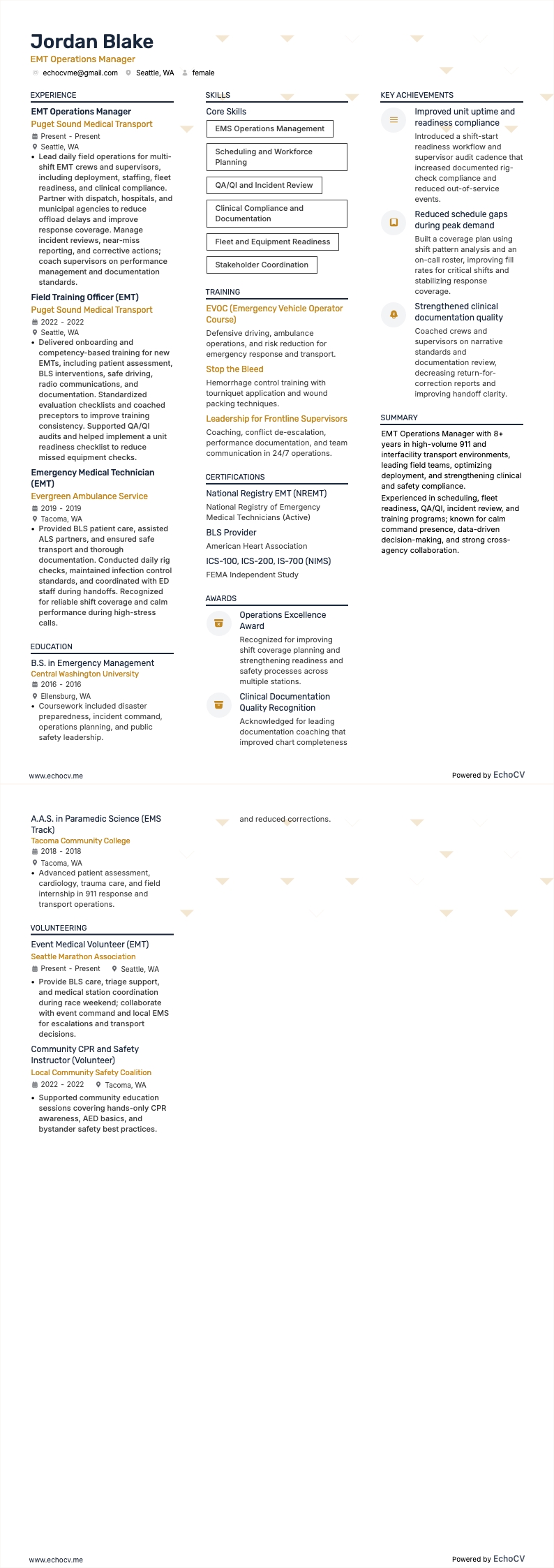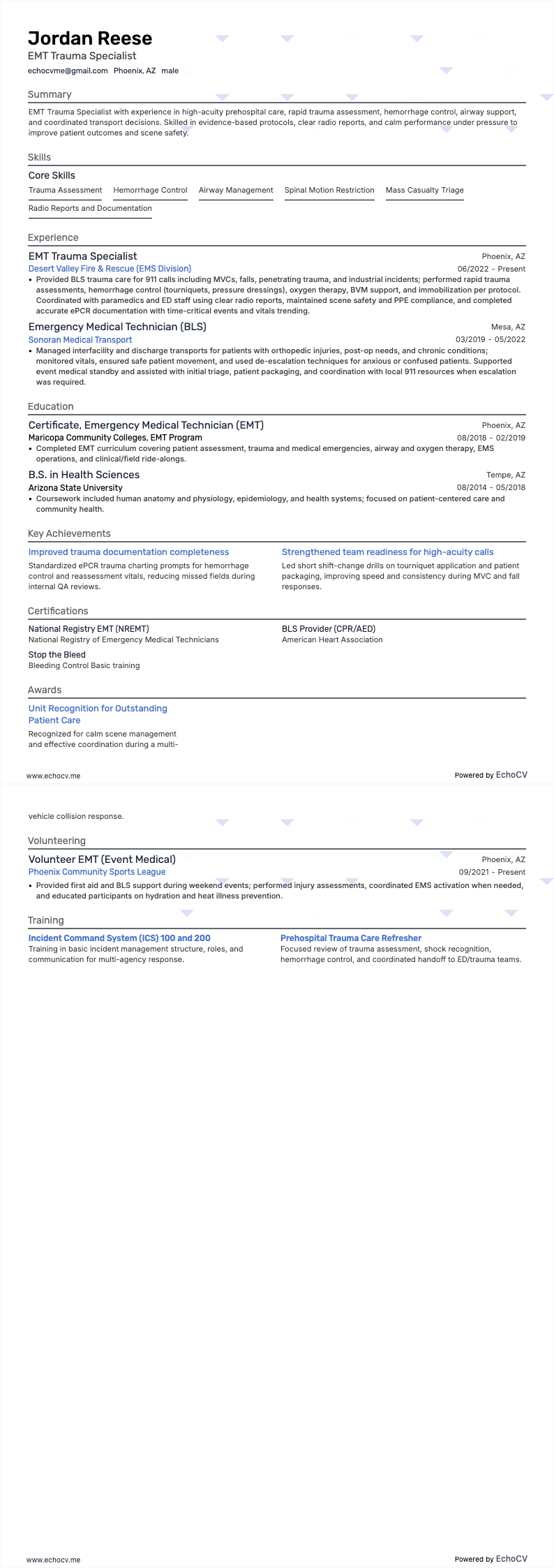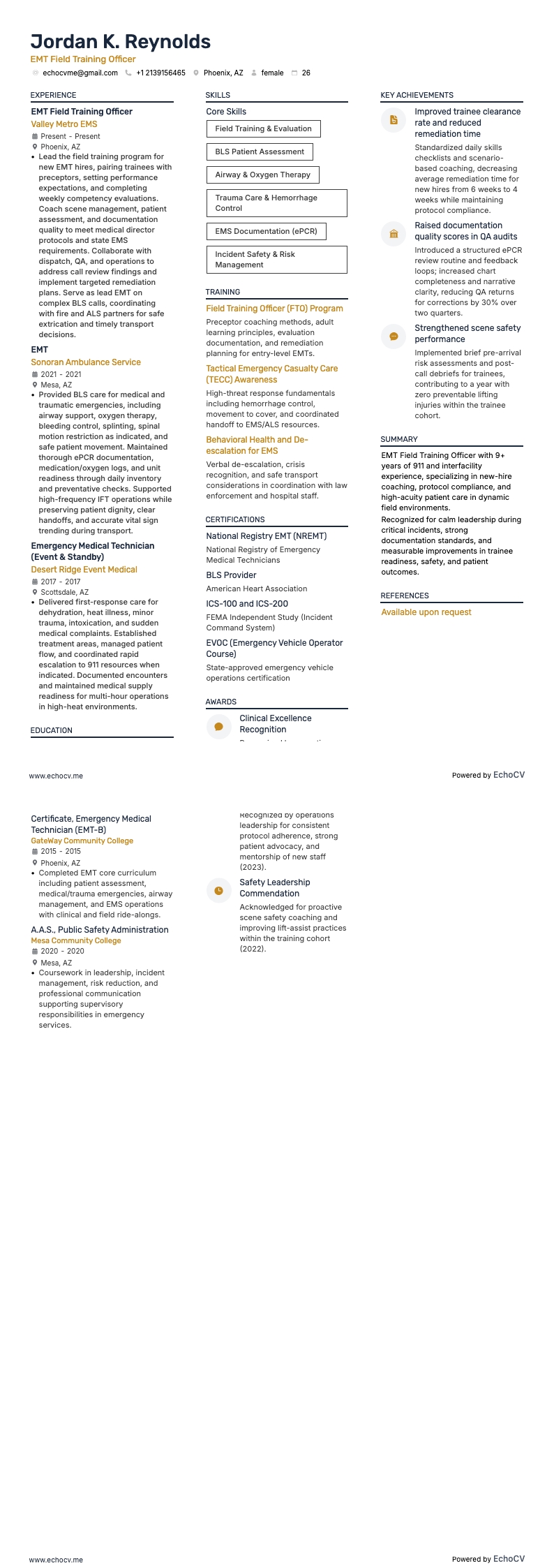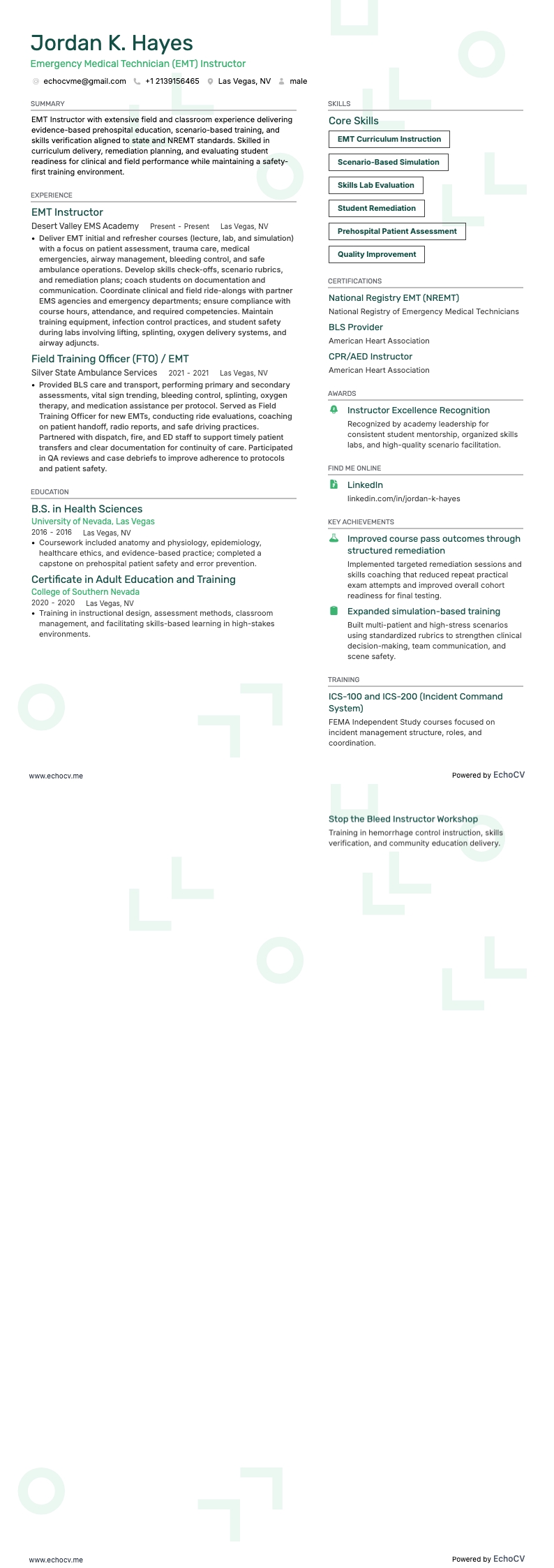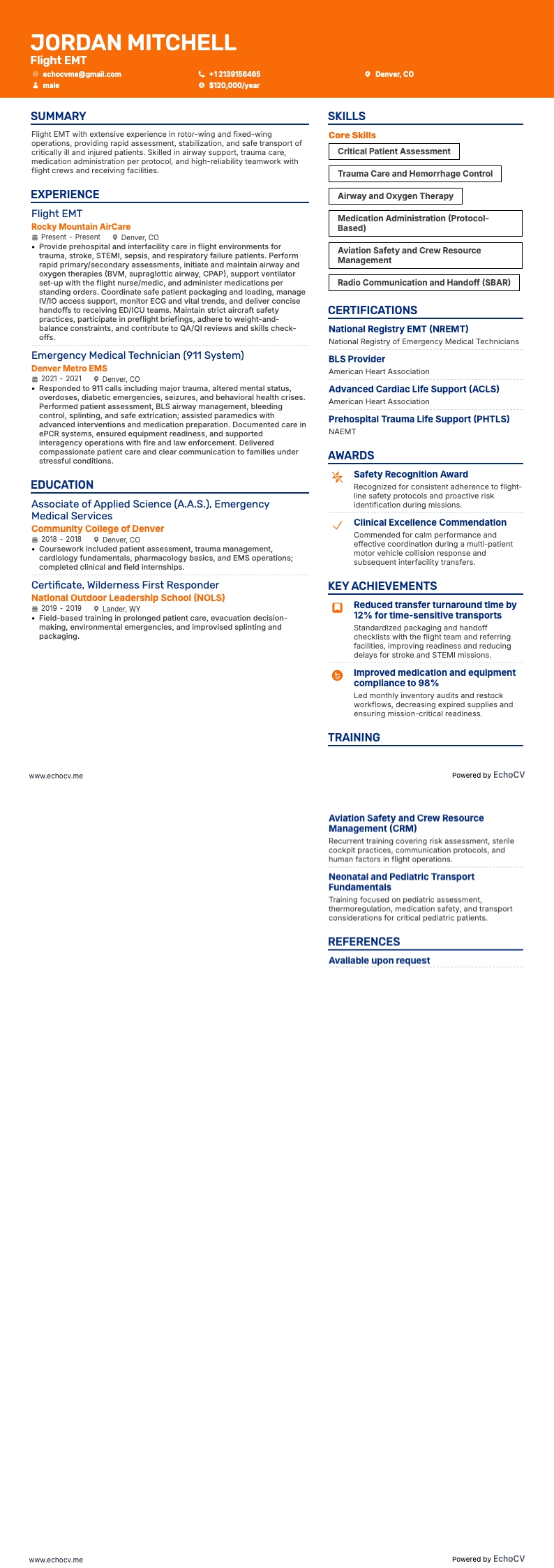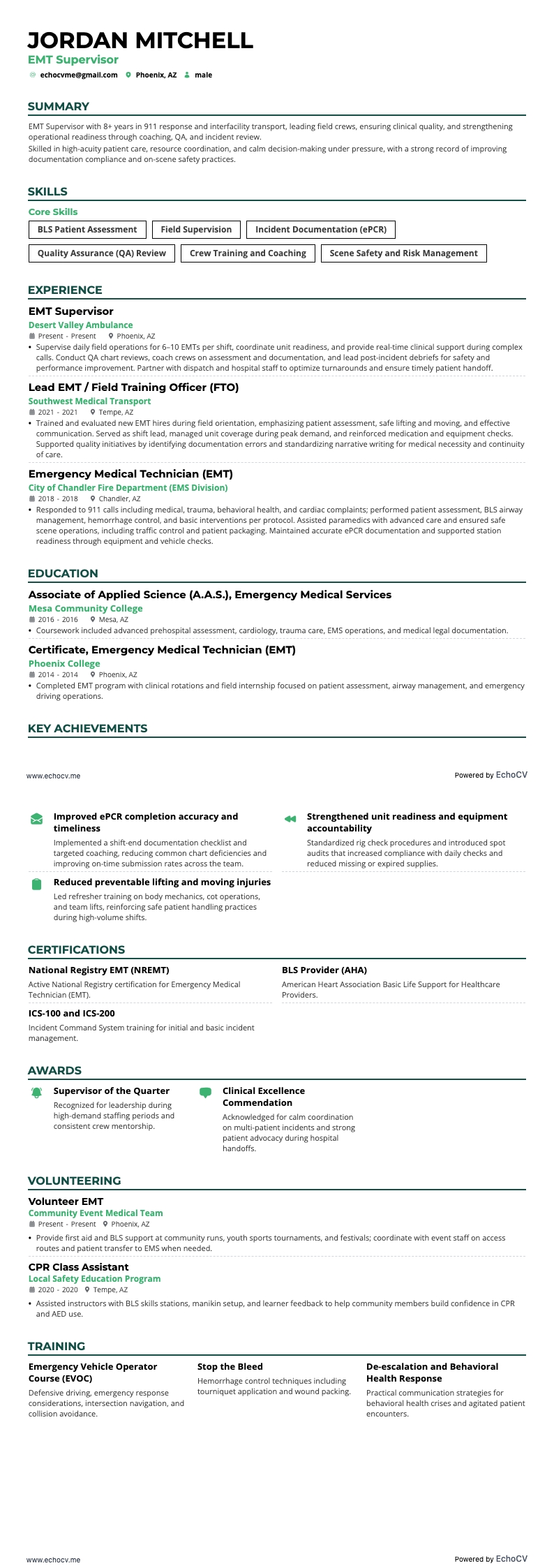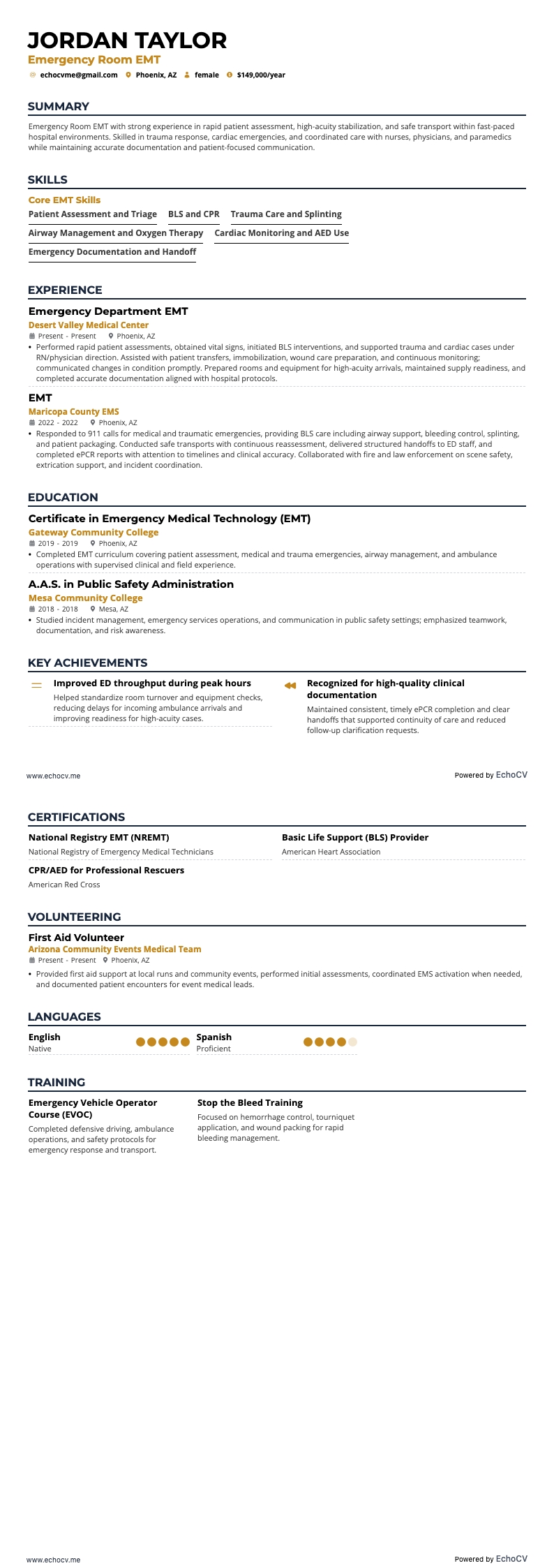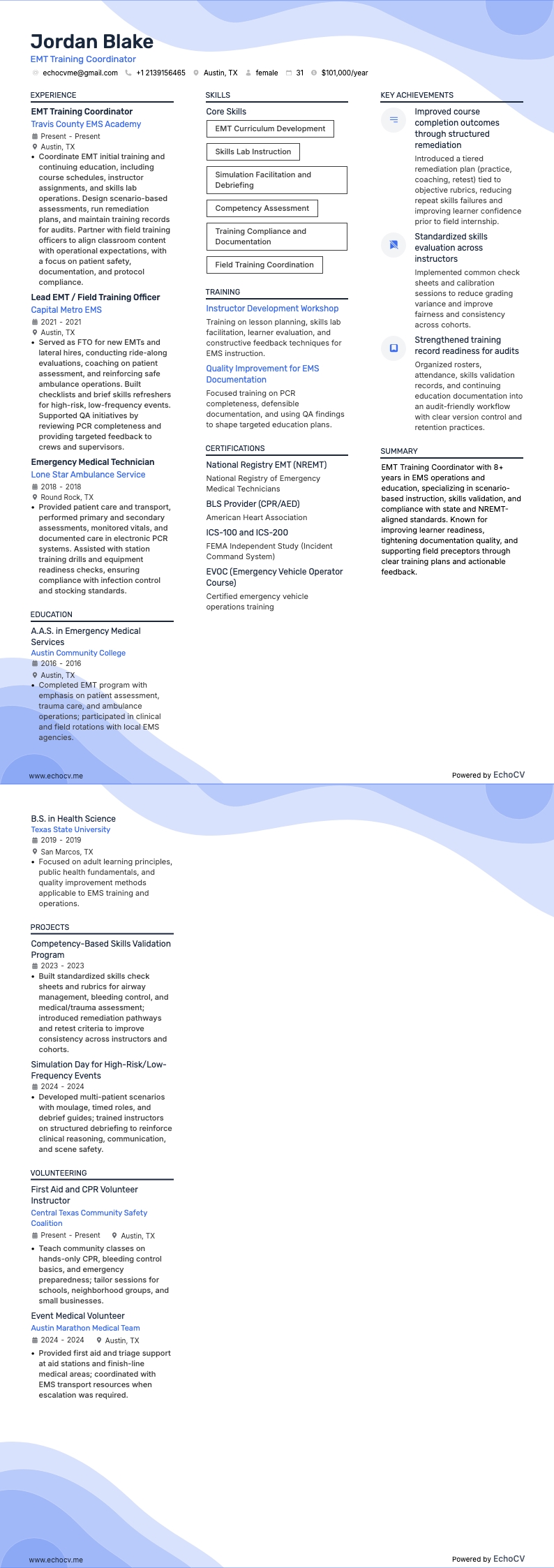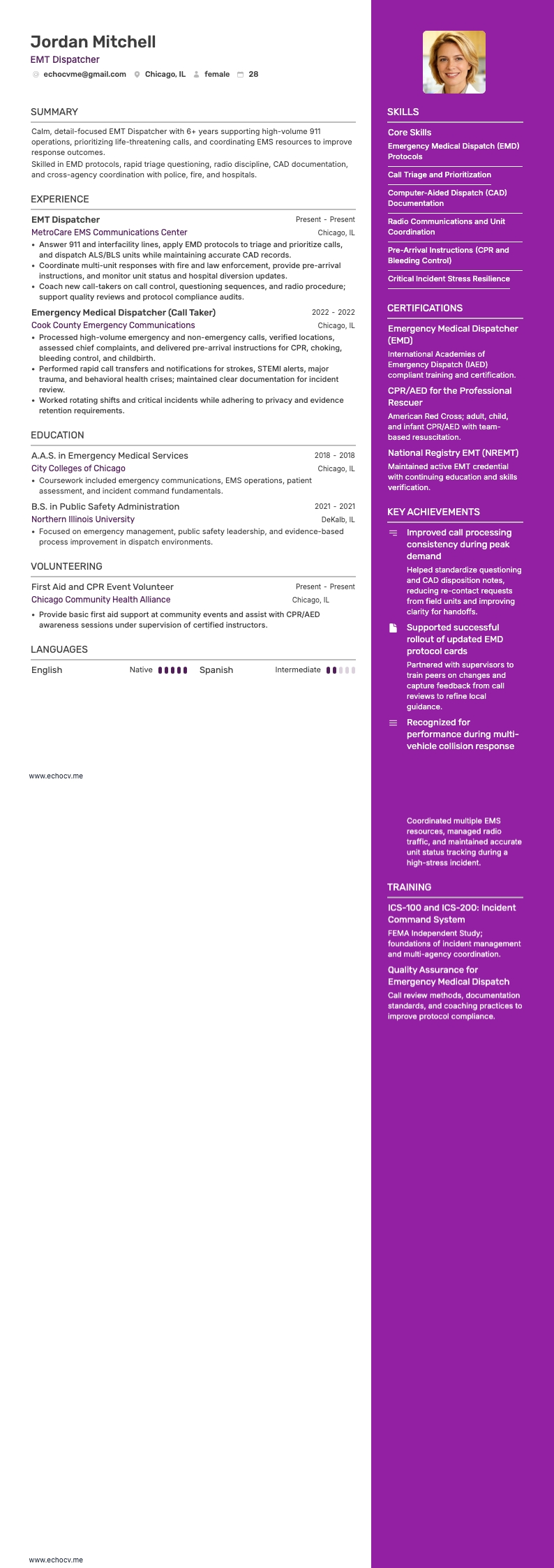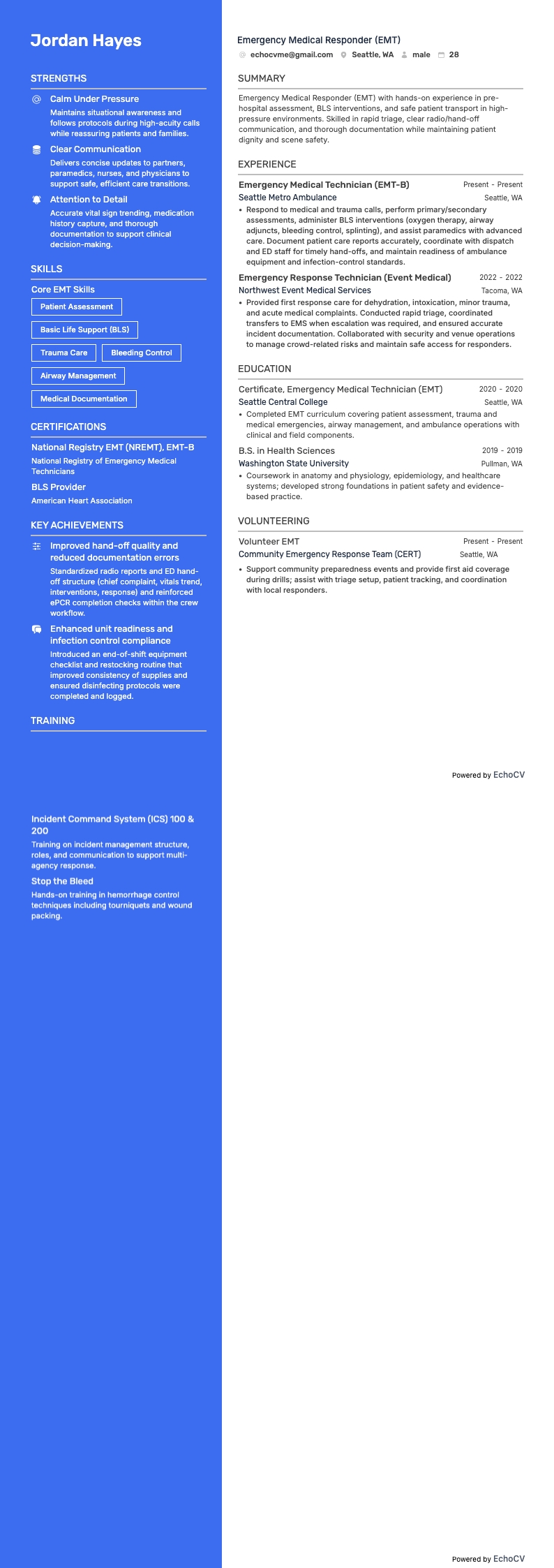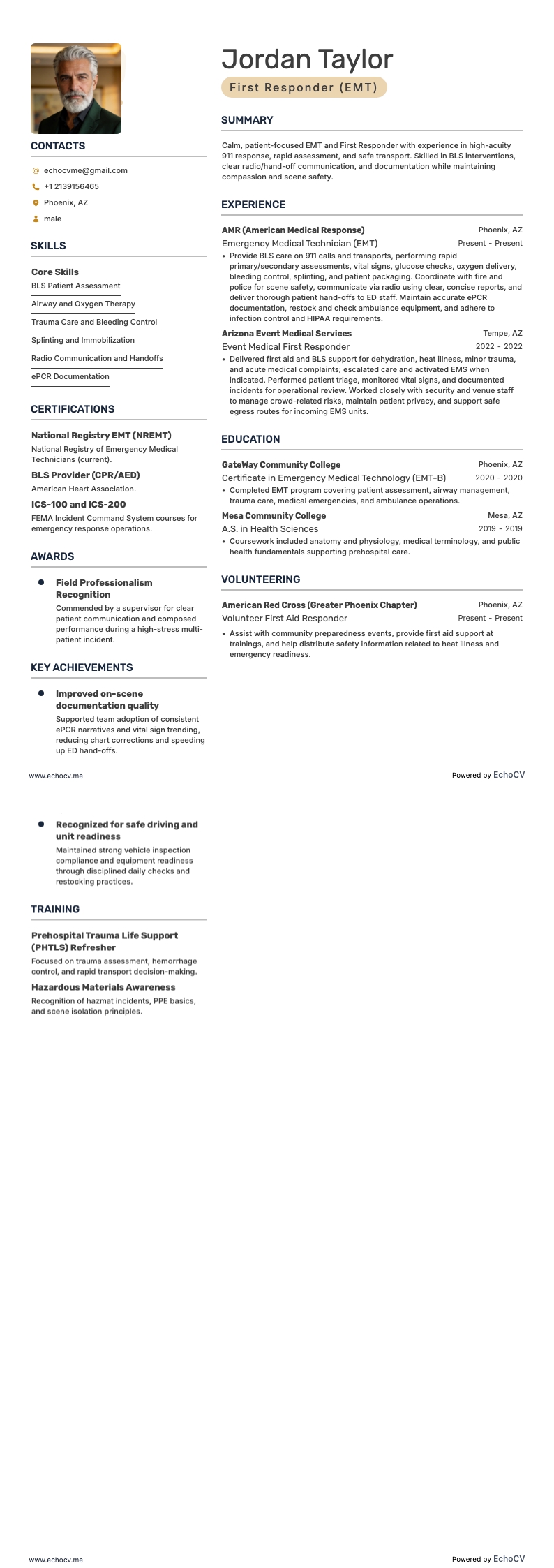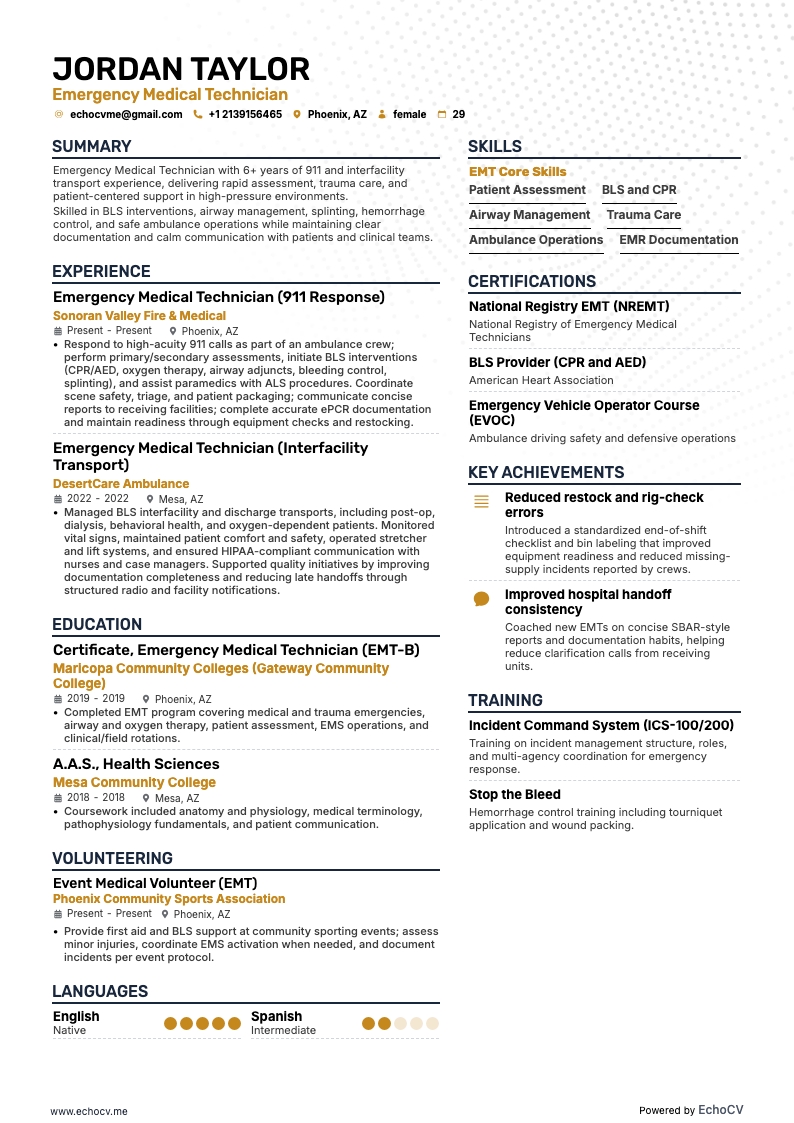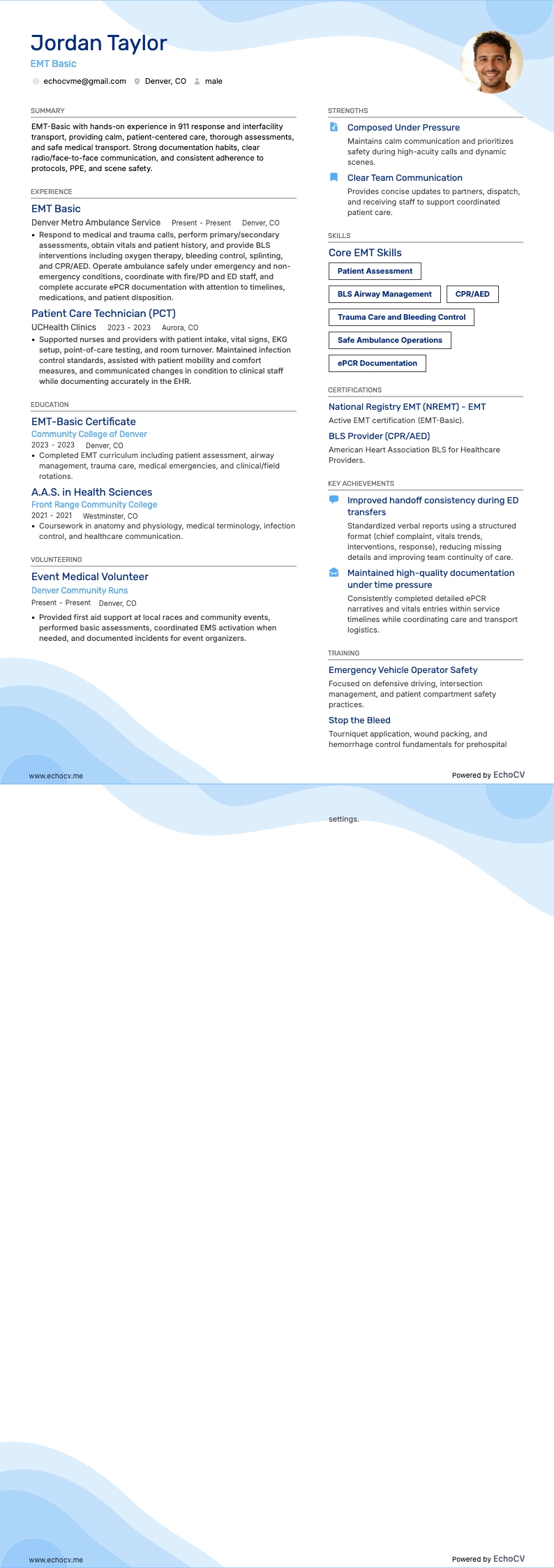
What works in this example:
- Quantifies impact - “Responded to 300 calls” and “trained 20 EMTs” gives hiring managers a clear idea of the candidate’s experience and scope of work.
- Industry skills - "Managed inventory and care of medical equipment, trained 20 EMTs on new automated external defibrillators (AEDs)" shows knowledge of industry-specific tools and skills.
- Measurable success - "Provided critical care in high-pressure environments, improved patient survival rate by 15%" provides evidence of measurable results so potential employers can see exactly what the candidate is capable of.
How to quantify impact on your resume
It’s important to quantify impact on your EMT resume so potential employers can see exactly what you have achieved in previous roles.
Don’t generalize with basic job duties. Provide real metrics that show measured success or the scope of your work.
Here are a few areas to consider when quantifying impact on your EMT resume:
- Include the number of emergency calls you've handled: This shows your experience and capability in handling high-pressure situations.
- List the number of specific emergency cases managed (like heart attacks, trauma, etc.): It indicates your specialized experience.
- Mention the amount of equipment or types of technology you're proficient in: This indicates your versatility in managing various emergency tools.
- Indicate the size of teams you've worked within prior jobs: This showcases your teamwork skills and adaptability.
- Specify your years of experience in the field: This shows your commitment to the profession and comprehensive understanding of the job.
- Mention the number of training or certifications you've completed: This validates your commitment to keeping up to date with industry standards.
- Reference your average response times: Your response time reveals your ability to think quickly and handle stressful situations efficiently.
- Highlight how many 24-hour shifts you've worked: This indicates your resilience and ability to work long hours, an important aspect of EMT work.
How do I write an emergency medical technician (EMT) resume with no experience
If you’re just breaking into the emergency medical services industry or are making a career change, you face the challenge of writing an EMT resume with no experience.
The best approach is to write a functional resume that focuses on transferable skills rather than experience.
Highlighting transferable skills shows potential employers how you’ve developed the skills necessary for the role outside of work experience.
Follow these steps to write an effective entry-level emergency medical technician (EMT) resume:
- Choose a functional resume layout
- Focus on transferable skills
- Present credentials and licenses clearly
- Tailor every section to fit your target job
Don’t pad your experience section with irrelevant jobs just to fill space. Only include roles that are relevant to your target position and focus on transferable skills.
Other jobs in healthcare or emergency medical services can be a great way to show relevant skills. Even service and administrative roles can be an opportunity to highlight experience in high-stress situations and patient confidentiality.
How to list your hard skills and soft skills on your resume
EMTs use a range of med-tech equipment and record-keeping software. While technical proficiencies are crucial, soft skills like crisis management, decision making under pressure, and emotional stability are equally important.
Your emergency medical technician (EMT) resume will present your skills in two major categories.
Hard skills are the technical knowledge and abilities needed to perform job duties, whereas soft skills are the interpersonal and communication skills needed to interact with others.
Hard skills tend to be straightforward and can appear in a simple list form. Here is an example of hard skills on an EMT’s resume.