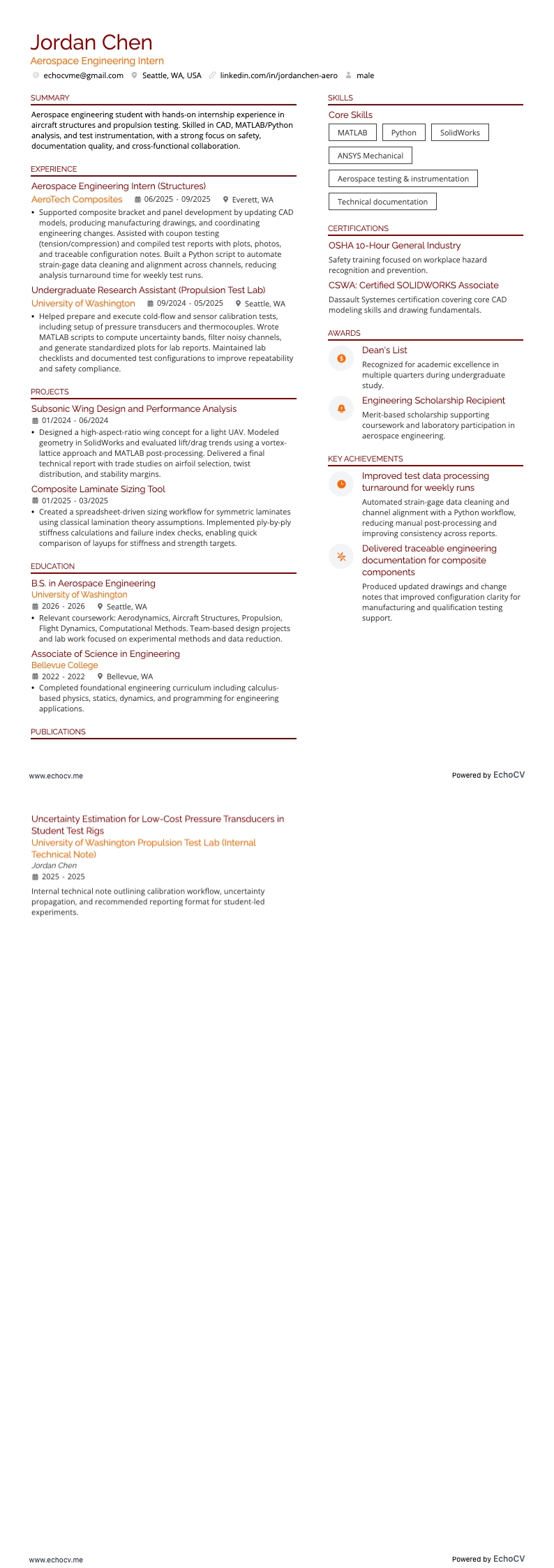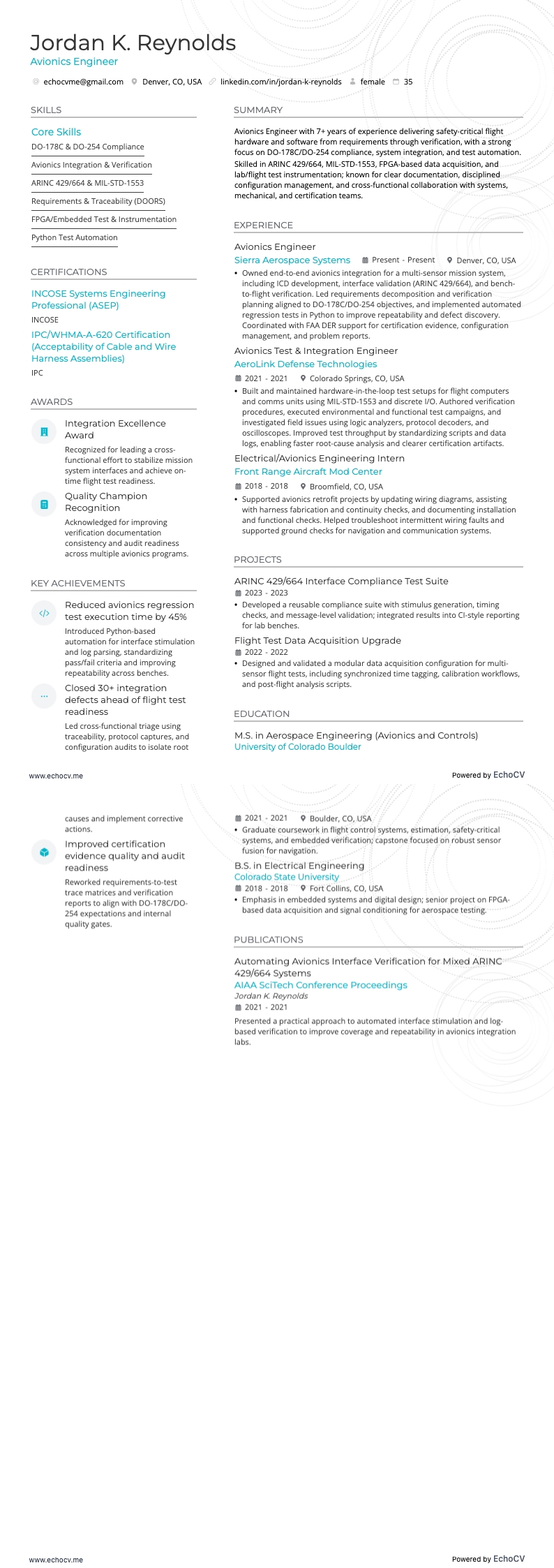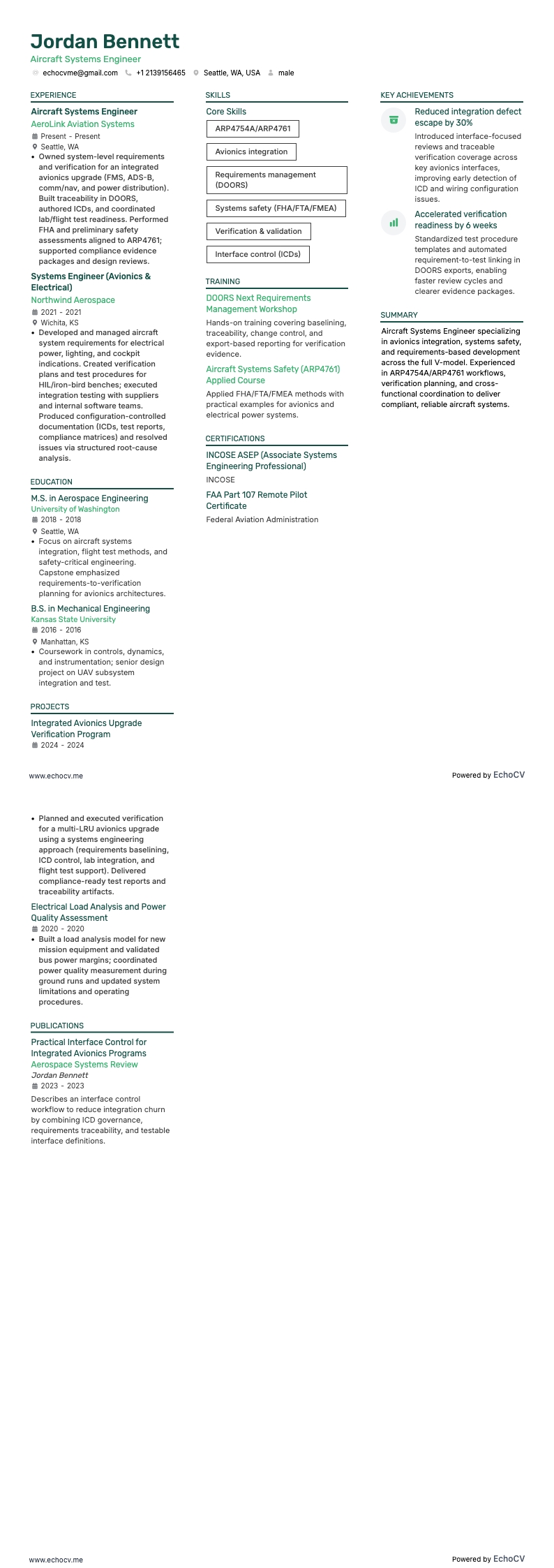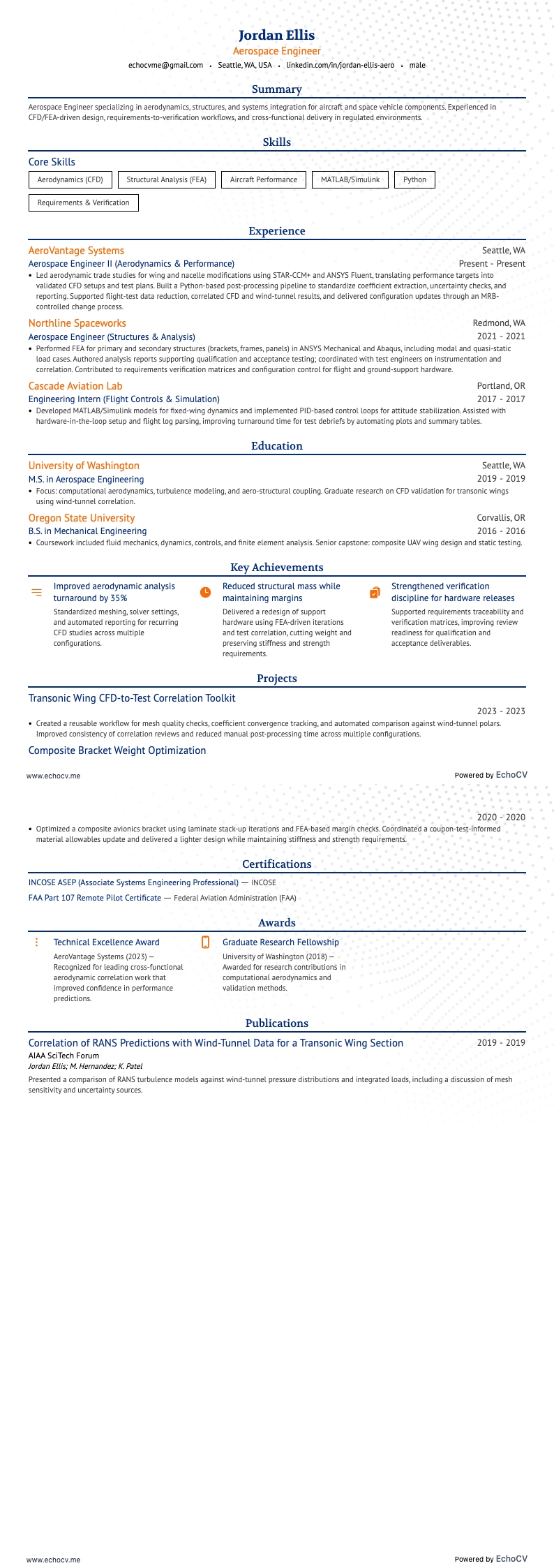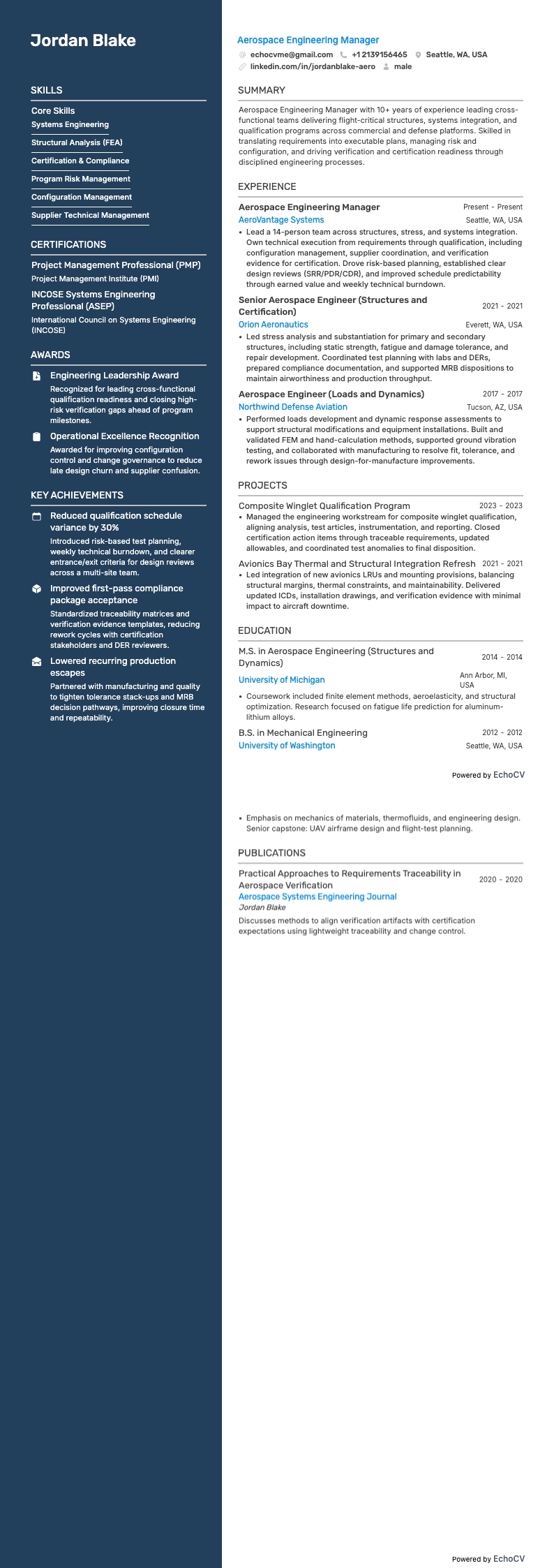
Once you’ve organized your resume with the right components, the next step is writing your aerospace engineering experience section so it fits that structure and supports your application.
How to write your aerospace engineering resume experience
Your work experience section should demonstrate the aerospace systems, structures, or propulsion work you've shipped or delivered—highlighting the engineering tools, analysis methods, and design processes you applied to achieve measurable outcomes. Hiring managers in aerospace prioritize demonstrated impact on flight-ready hardware, validated simulations, or certified systems over descriptive task lists.
Each entry should include:
- Job title
- Company and location (or remote)
- Dates of employment (month and year)
Three to five concise bullet points showing what you owned, how you executed, and what outcomes you delivered:
- Ownership scope: the aircraft systems, spacecraft subsystems, propulsion components, avionics platforms, or structural assemblies you were directly accountable for across design, test, or production phases.
- Execution approach: the engineering tools, analysis frameworks, simulation software, or verification methods—such as finite element analysis, computational fluid dynamics, GD&T, or requirements management platforms—you used to drive technical decisions and deliver flight-qualified work.
- Value improved: the changes you made to structural integrity, aerodynamic performance, weight reduction, thermal efficiency, system reliability, or regulatory compliance that advanced the program's technical objectives.
- Collaboration context: how you coordinated with cross-functional teams—including stress analysts, systems engineers, manufacturing, quality assurance, certification authorities, or defense program offices—to resolve technical challenges and meet milestone deliverables.
- Impact delivered: the program-level or organizational outcomes your work produced, expressed through certification achievements, schedule acceleration, mass or cost savings, failure-rate reductions, or successful flight-test results rather than routine activity descriptions.