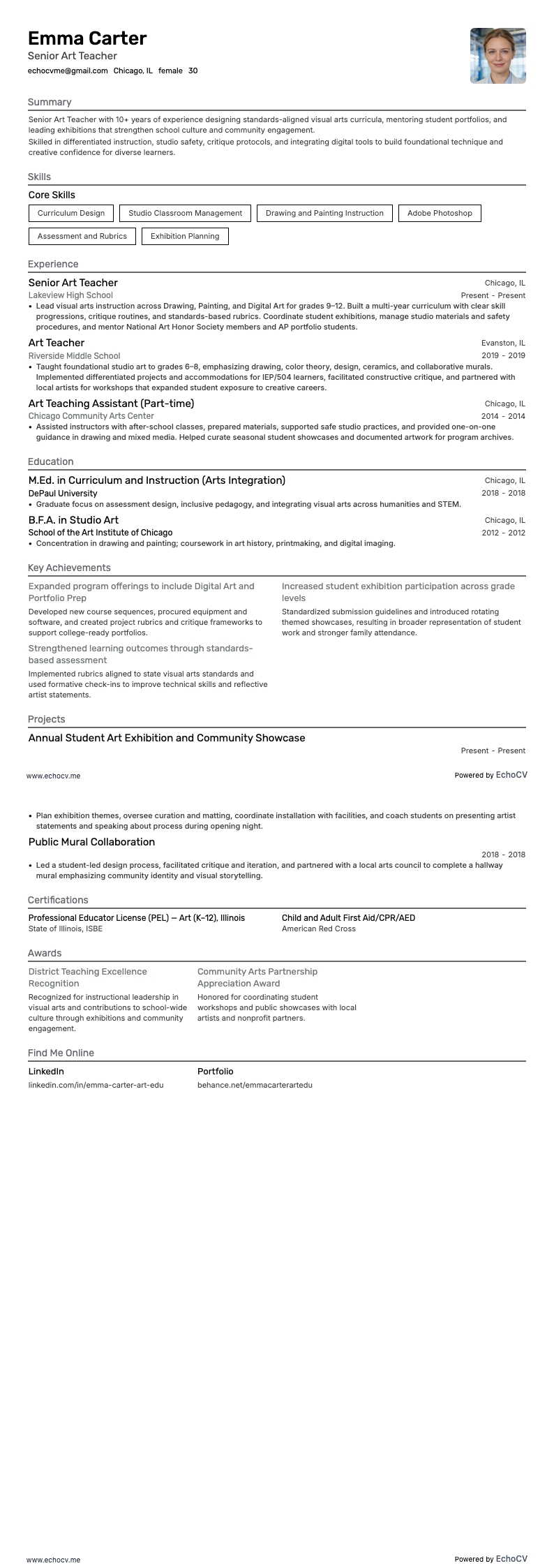
Writing a resume as an art teacher can feel a bit like channeling your inner Bob Ross. You start with a blank canvas, armed only with your palette of experiences and achievements. But instead of happy little trees, you're painting a picture of your professional journey, hoping to capture the eye of school administrators.
It’s about mixing the right blend of skills, experiences, and that dash of personal flair that make all the difference. So grab your brushes (or keyboards) and let’s get into resume crafting, ensuring each stroke highlights your unique contributions to art education.
This guide will cover:
- The ideal resume format and templates to highlight your artistic talents effectively.
- How to describe your experience in arts and crafts and showcase your expertise.
- Key educational and licensing details that differentiate you from other candidates.
- The latest skill requirements for art teachers and how they can be listed on a resume.
- Critical elements to consider when crafting a teacher’s resume.
- How to write a compelling resume summary that captures your way with students and your work approach.
Before you turn the white canvas into a great resume, you might want to consider some other education-related guides:
- Dance Teacher Resume
- Elementary Teacher Resume
- Music Teacher Resume
- English Teacher Resume
- Math Teacher Resume
- Middle School Teacher Resume
- Lead Teacher Resume
- Transitioning Teacher Resume
- Social Studies Teacher Resume
- History Teacher Resume
- After-School Teacher Resume
- Virtual Teacher Resume
- Teacher Resume
- Artist Resume
- Art teacher Cover Letter
The best art teacher resume format
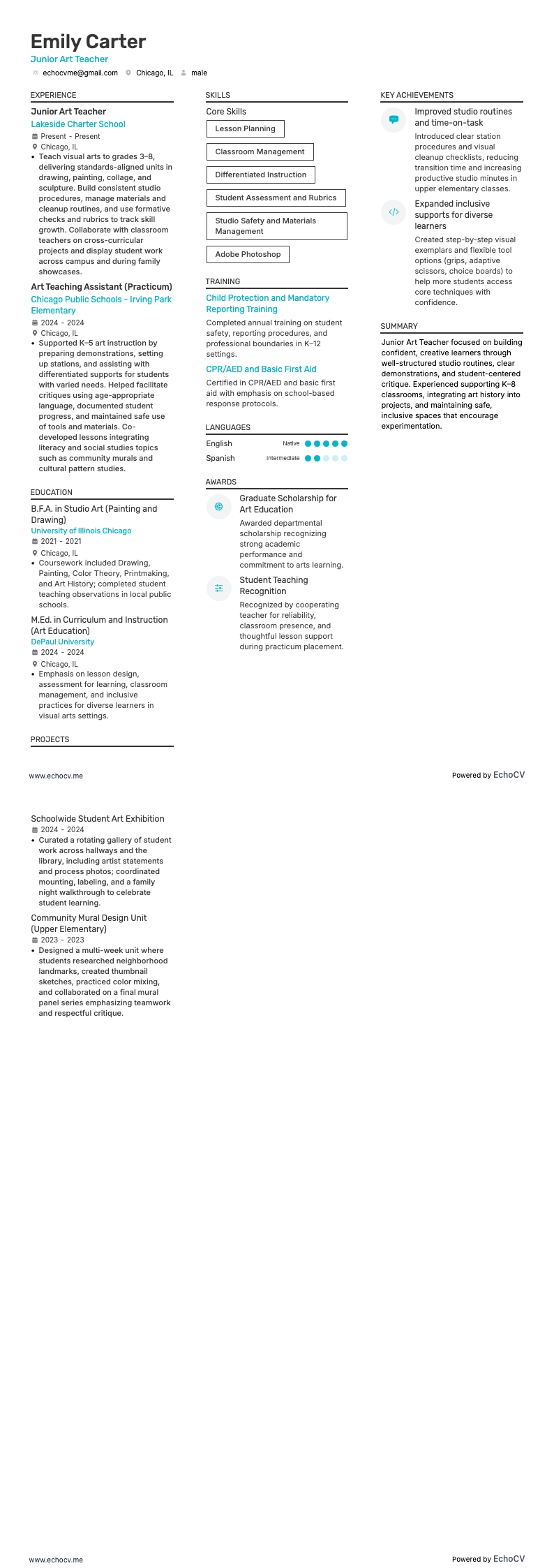
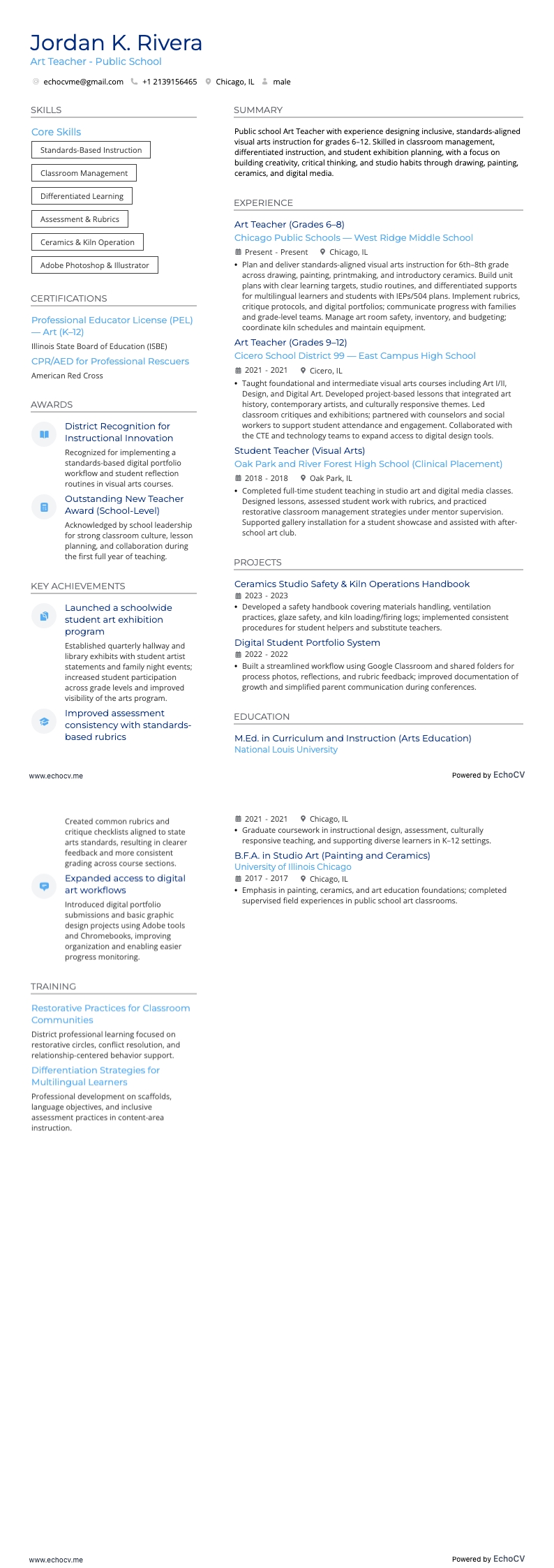
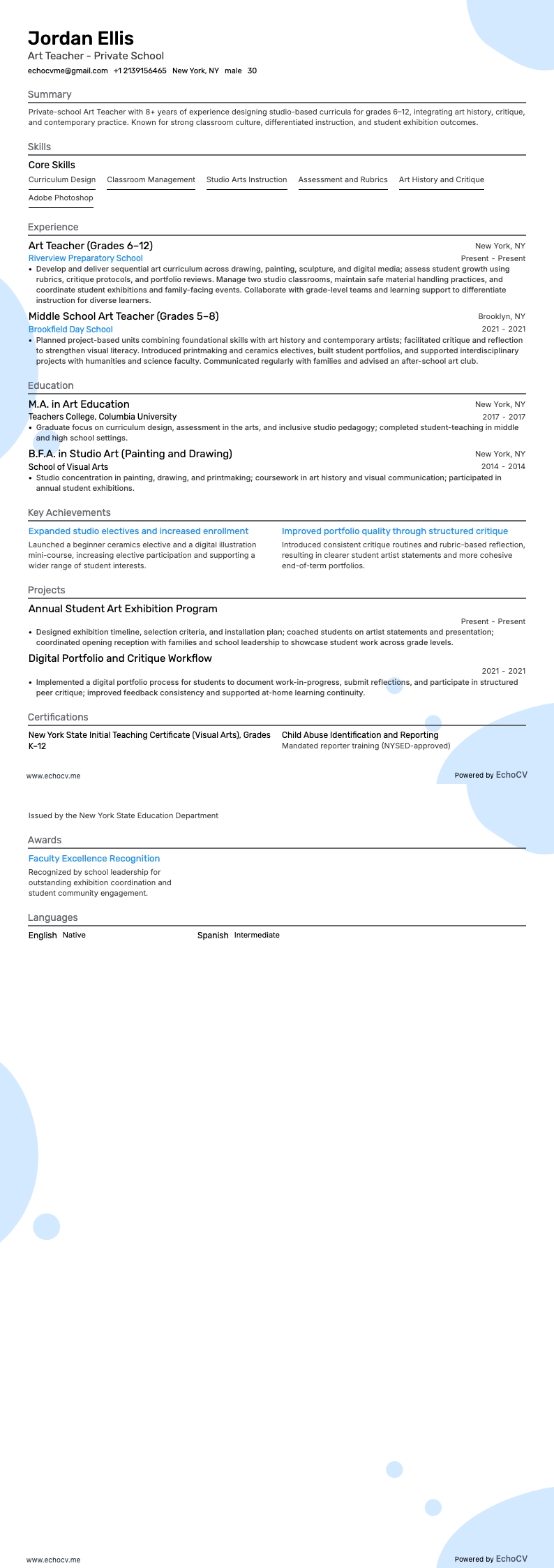
When crafting a resume, art teachers can choose from three main formats, depending on your career needs and highlights. Each of these formats offers a unique way to present your artistic and teaching credentials, helping you paint the perfect picture of your professional life to potential employers.
Here’s a guide to selecting the right format for your artistic and teaching journey:
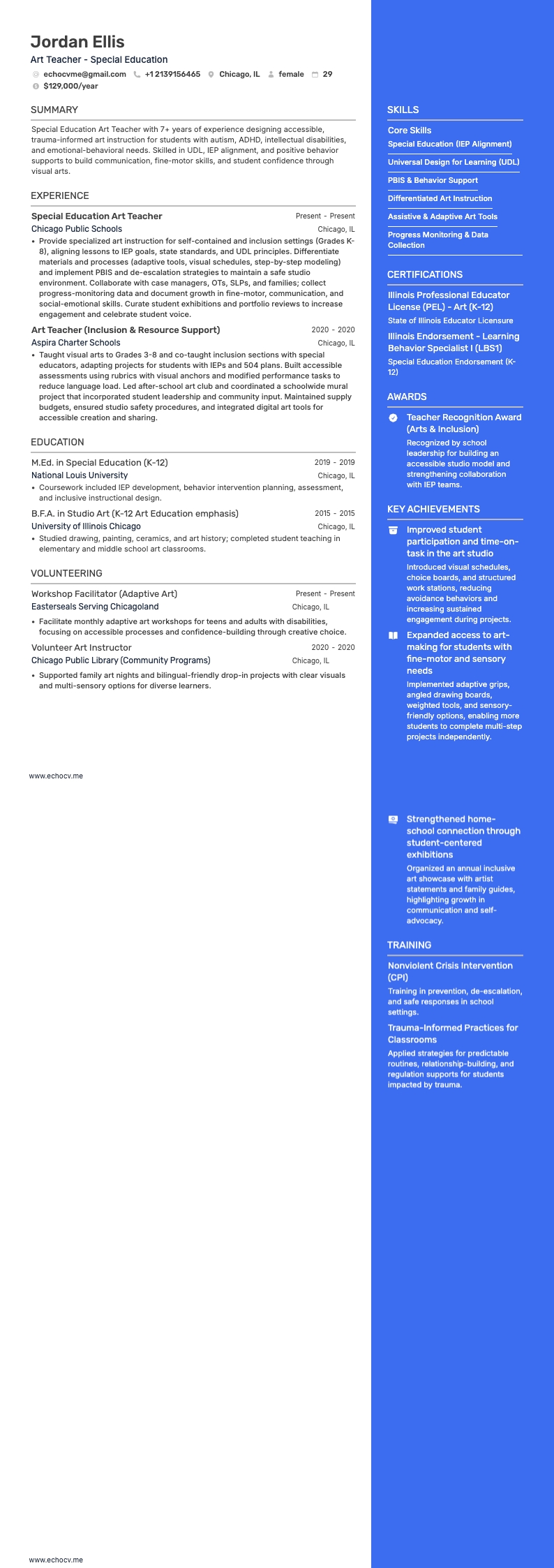
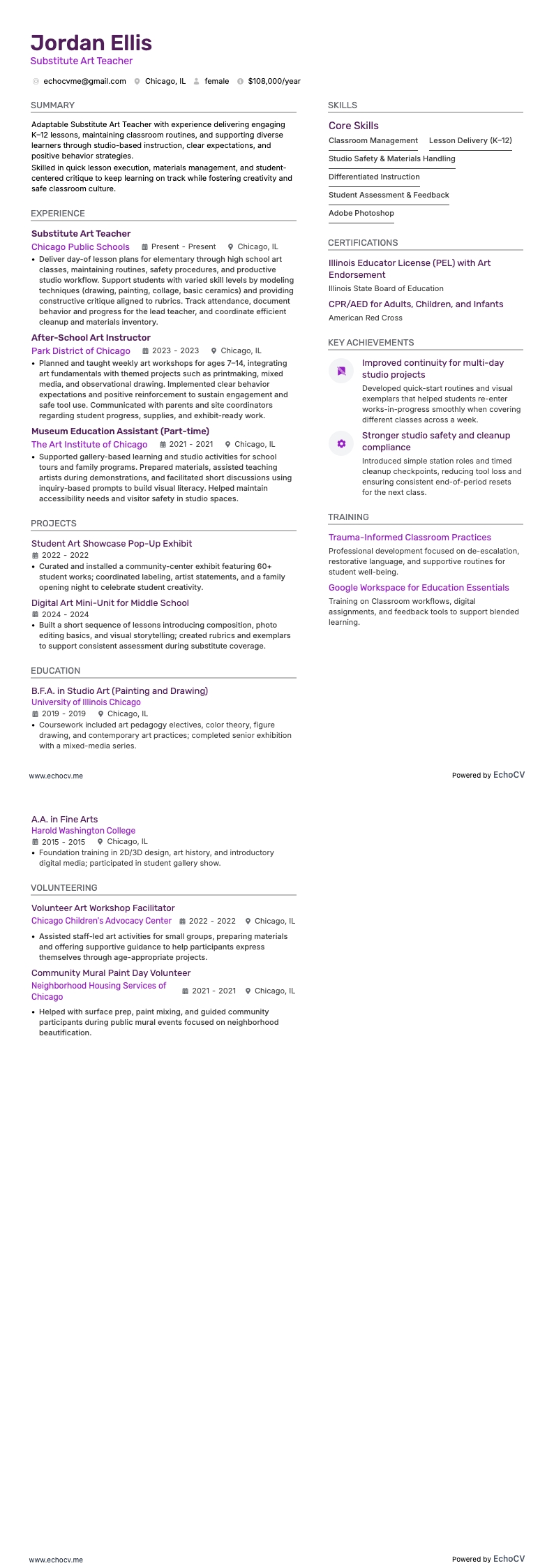
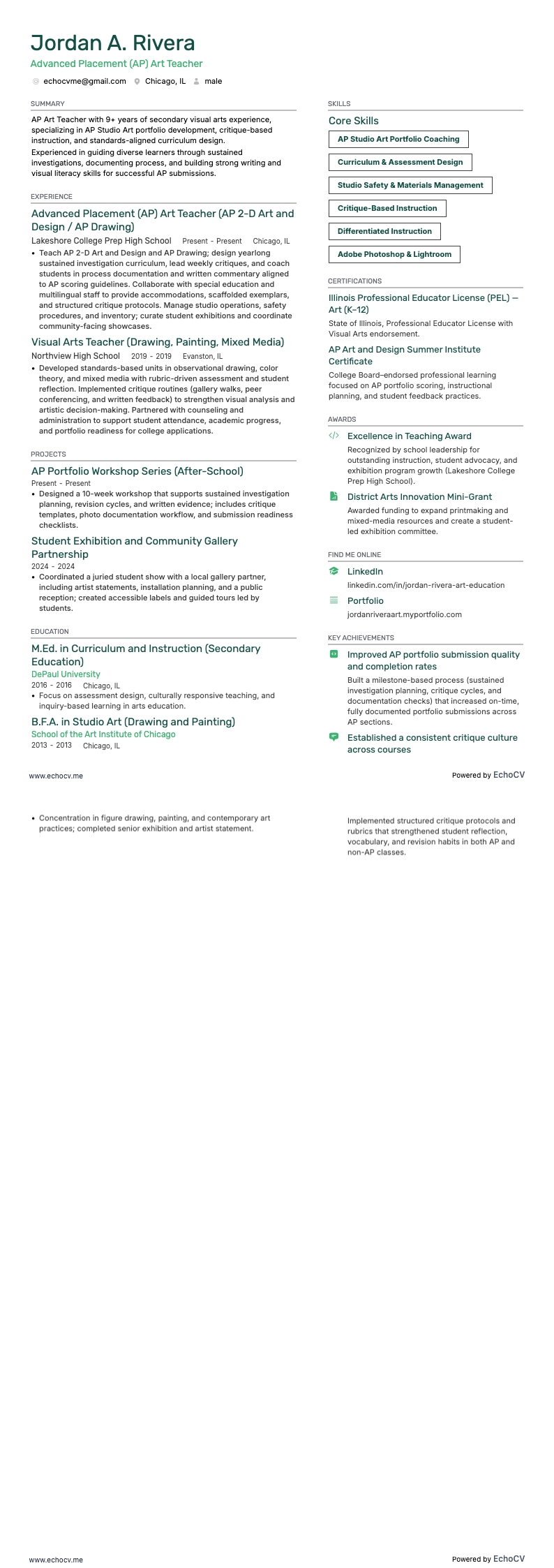
- Reverse-chronological resume: It’s the most traditional resume format and lists your work history in reverse chronological order, starting with your most recent position at the top. It’s best suited for art teachers with a solid and progressive teaching career. If you’ve consistently grown in your field, moving from one teaching position to another with increasing responsibility or specialization, this format showcases your development and depth of experience in the education sector.
- Functional resume: Also called the skill-based format, it focuses on your skills and experiences rather than your chronological work history. It’s best for those who are changing careers, have gaps in their employment, or are new to the teaching world. For example, you may be an artist transitioning into teaching or have taken significant breaks for other artistic pursuits. Then, use a functional resume to emphasize your artistic skills and teaching capabilities without focusing on the timeline.
- Combination (hybrid) resume: As the name suggests, this format combines elements of both chronological and functional resumes. It starts with a detailed listing of skills and qualifications followed by a chronological professional history. If you’ve worked in various educational settings, led workshops, and also had formal teaching roles, the combination resume lets you showcase a balanced view of your diverse capabilities.
Resume designs
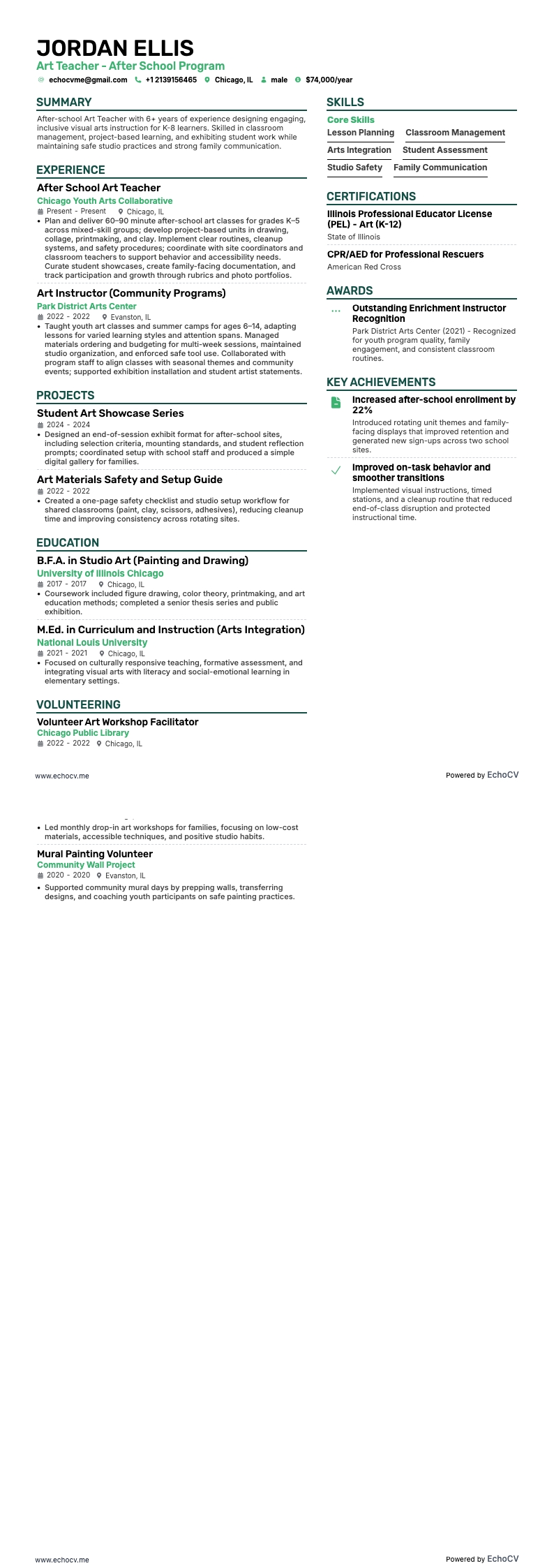
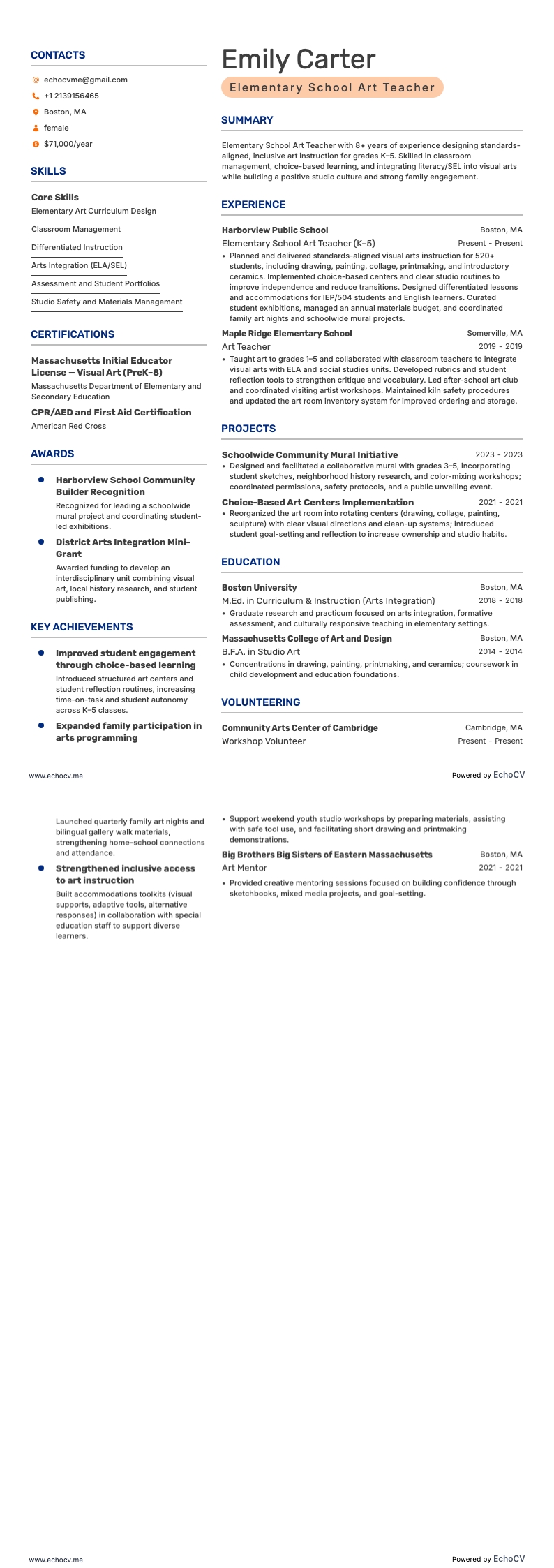
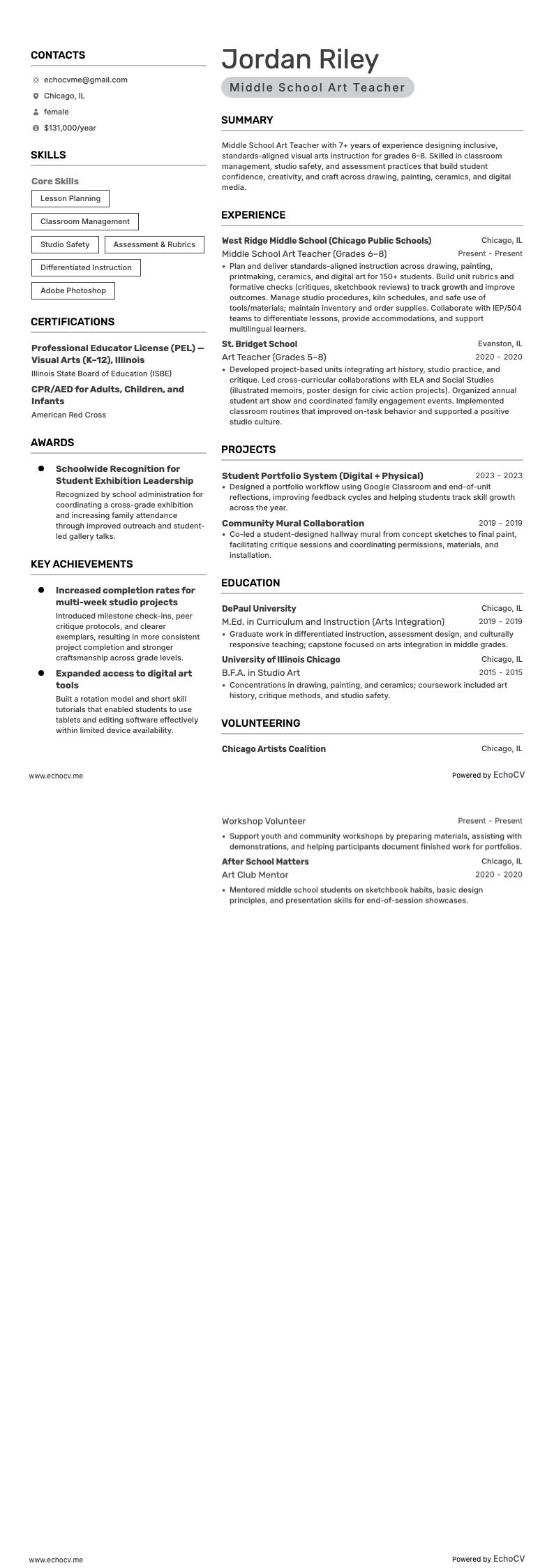
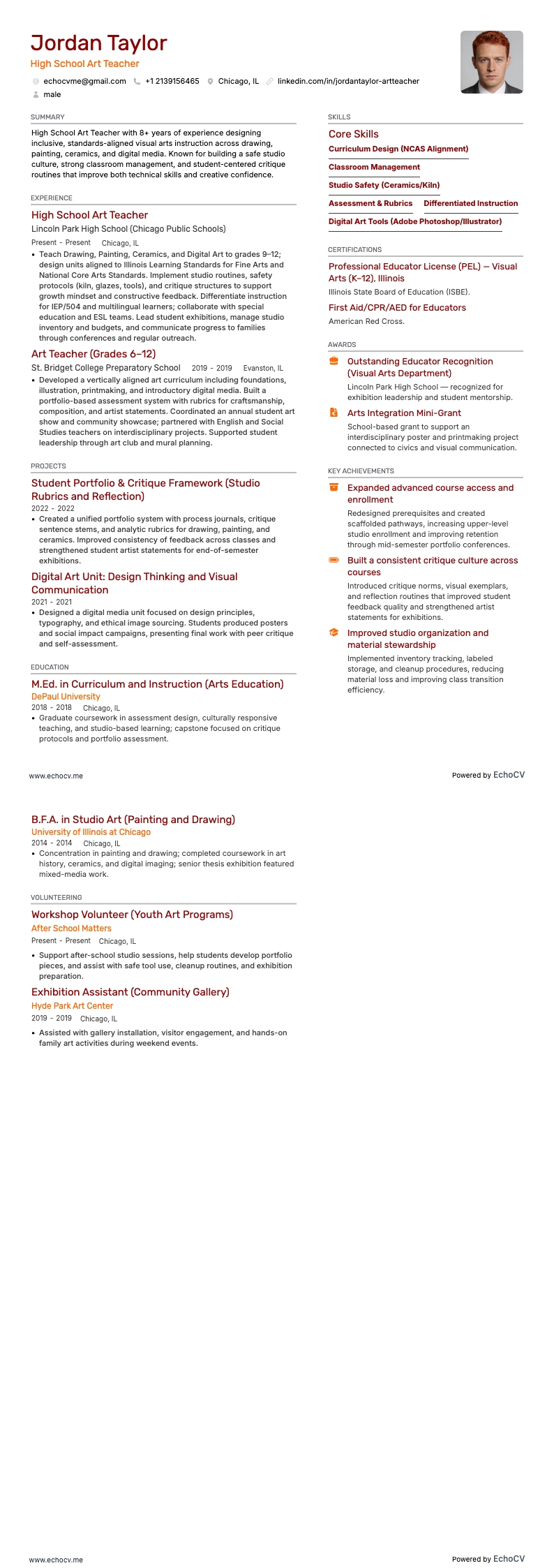
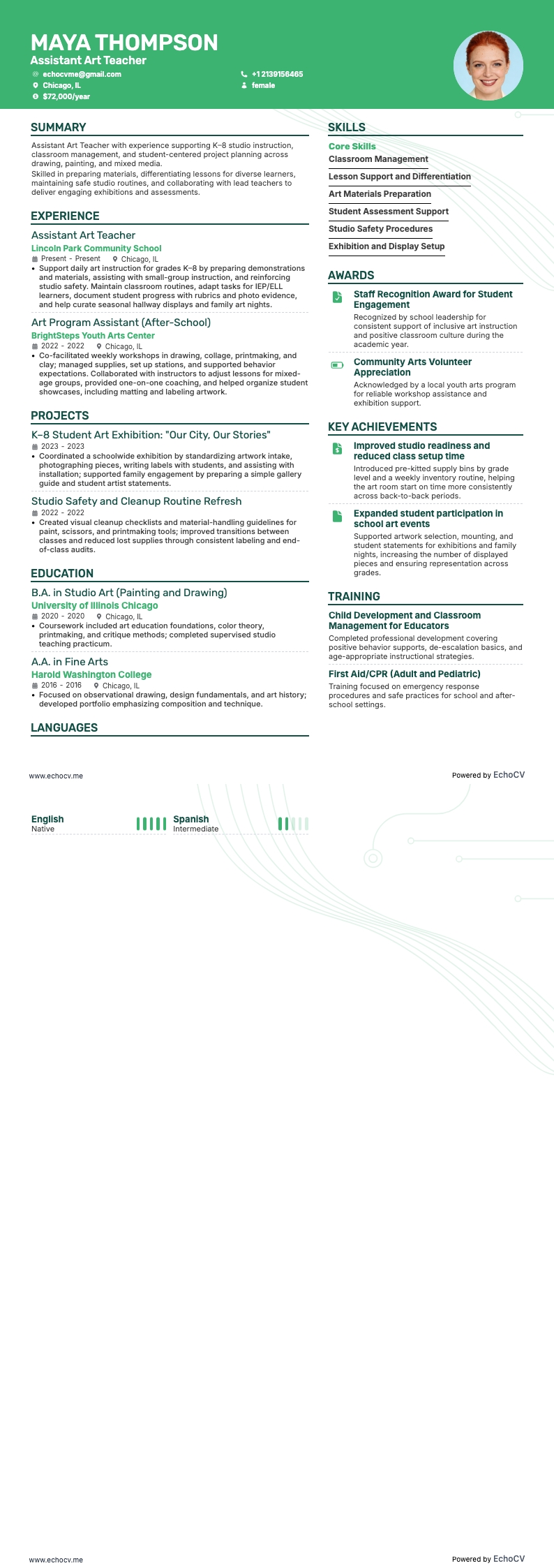
- Template: If you want your resume to highlight your artistic skills alongside your teaching experience, go for a double-column template. It allows you to present your creative projects or art exhibition history in one column and your teaching experience and education in the other, creating a visually engaging layout.
- Margins: Keep your resume margins between 0.5 and 1 inch. This ensures that the document is clean and uncluttered, which implies an ability to organize information—a key skill for any educator.
- Colors: Choose subtle colors that reflect your artistic style without overwhelming the professional tone of the resume. Soft pastels or earth tones can be a good choice for art teachers, offering a touch of creativity while keeping the look sophisticated.
- Fonts: Select clear, ATS-friendly fonts, sized between 10 and 12 points. Serif fonts like Times New Roman and Volkhov are very common in your field. You can use a different secondary font for headings to add a personal artistic touch, just make sure it’s not too fancy as it may not pass ATS filters.
- Length: Aim for a one-page resume, unless you have extensive professional art and teaching experiences that require more space. Prioritize relevant information that directly supports your candidacy for the teaching position.
Resume header
- Contact information: Start with your name, job title, and location. Ensure your contact information is professional, including an email address.
- Links: Include a link to your professional portfolio or personal website displaying your artwork or teaching materials. This is crucial for art teachers to showcase their practical skills and artistic expression.
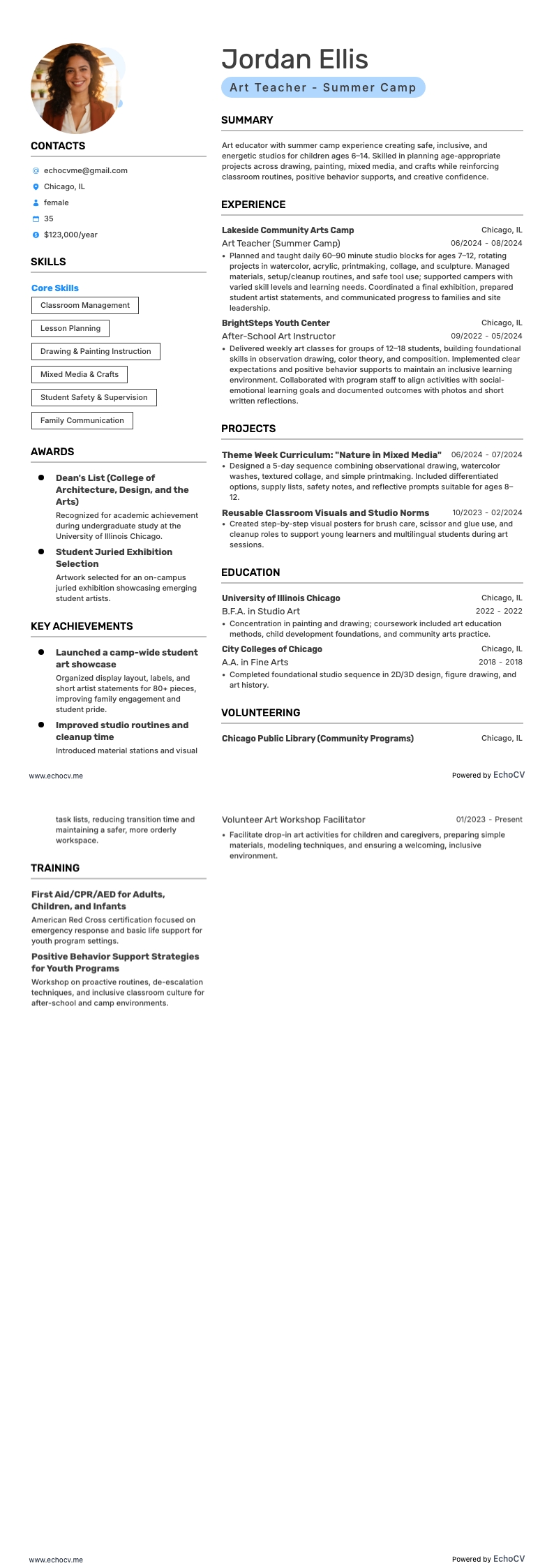
- Resume photo: Generally, it’s best to omit photos to maintain focus on your qualifications and avoid potential biases. However, for a people-facing position like this, check the specific requirements.
File format and naming
- Creative touches: To ensure ATS compatibility, maintain a simple resume format. You can still infuse your resume with creativity. For instance, the graphic elements available in Echocv’s resume builder are designed to be ATS-friendly, allowing you to enhance your resume’s visual appeal without risking getting rejected by automated filters.
- File format: Always save your resume as a PDF to preserve the layout and formatting across different devices.
- Naming convention: Name your file professionally; for example, ‘FirstNameLastNameArtTeacher_Resume.pdf’.
Consider your target market – resumes in Canada, for example, follow different layout conventions.
If you already have a resume, run it through our AI-powered resume checker to see how it scores against a real ATS.