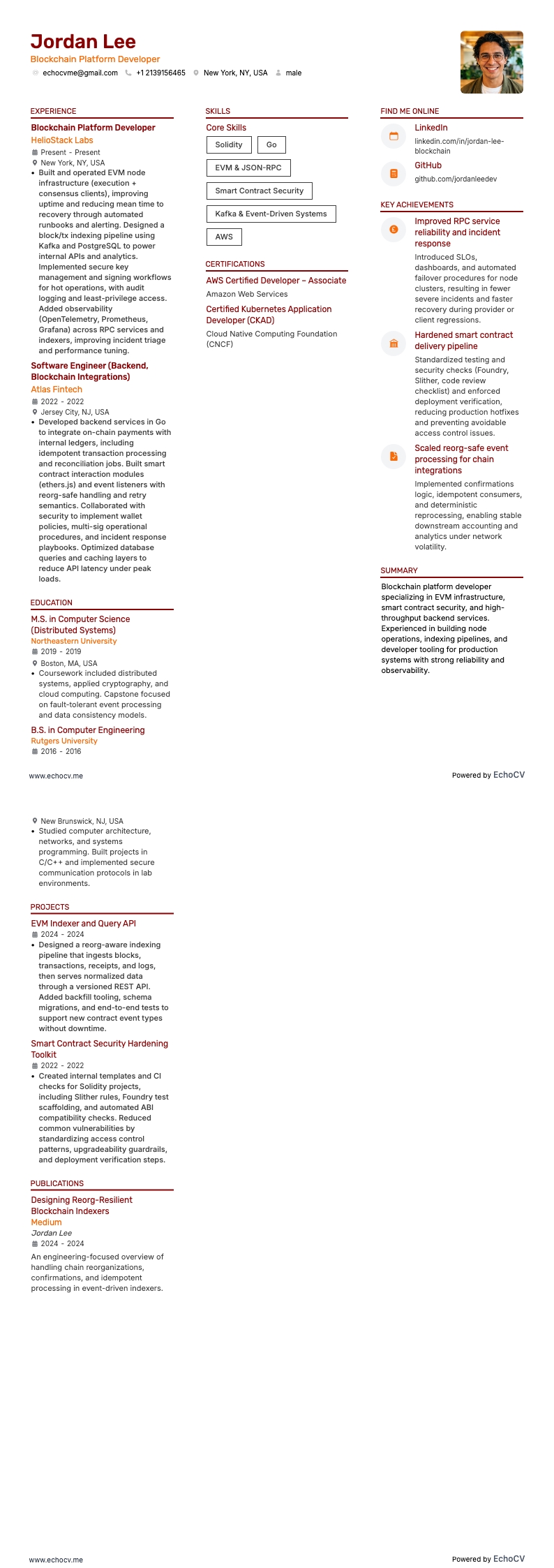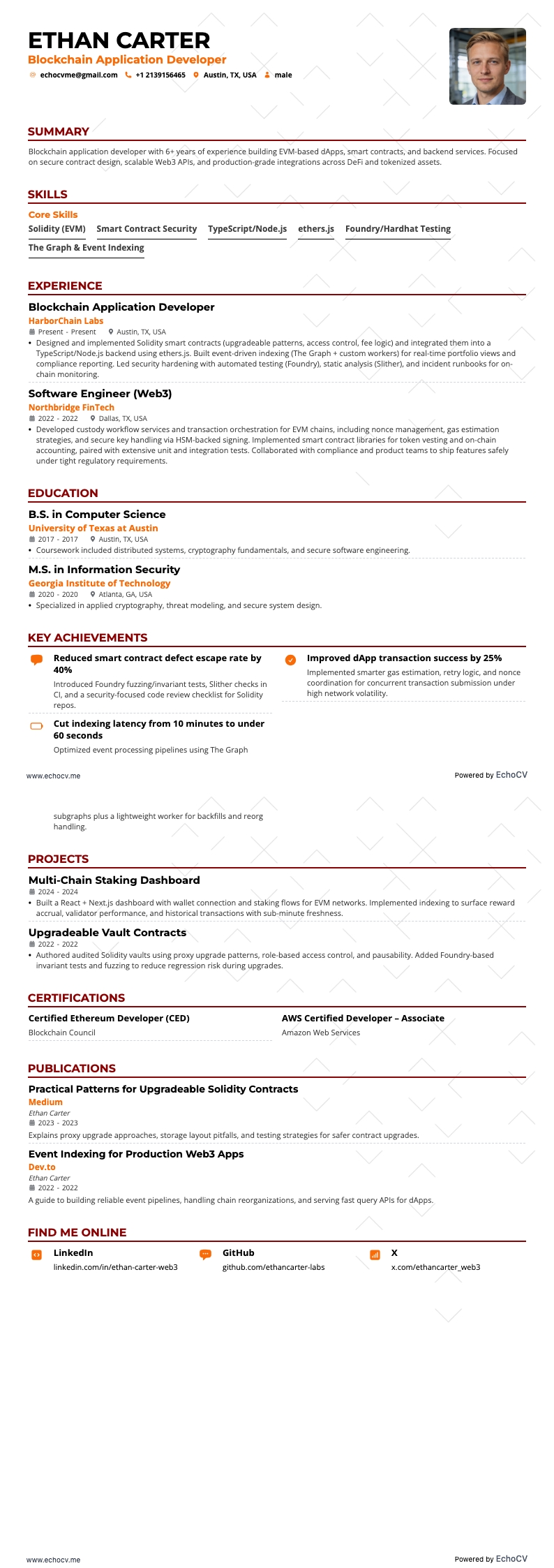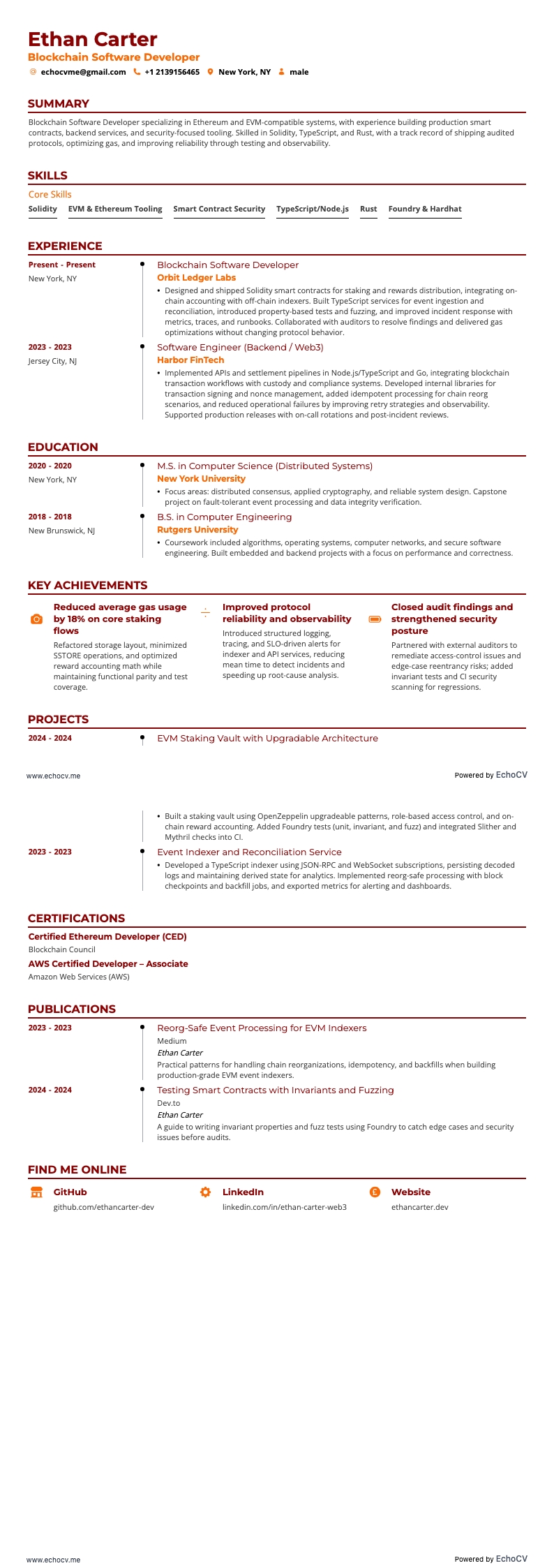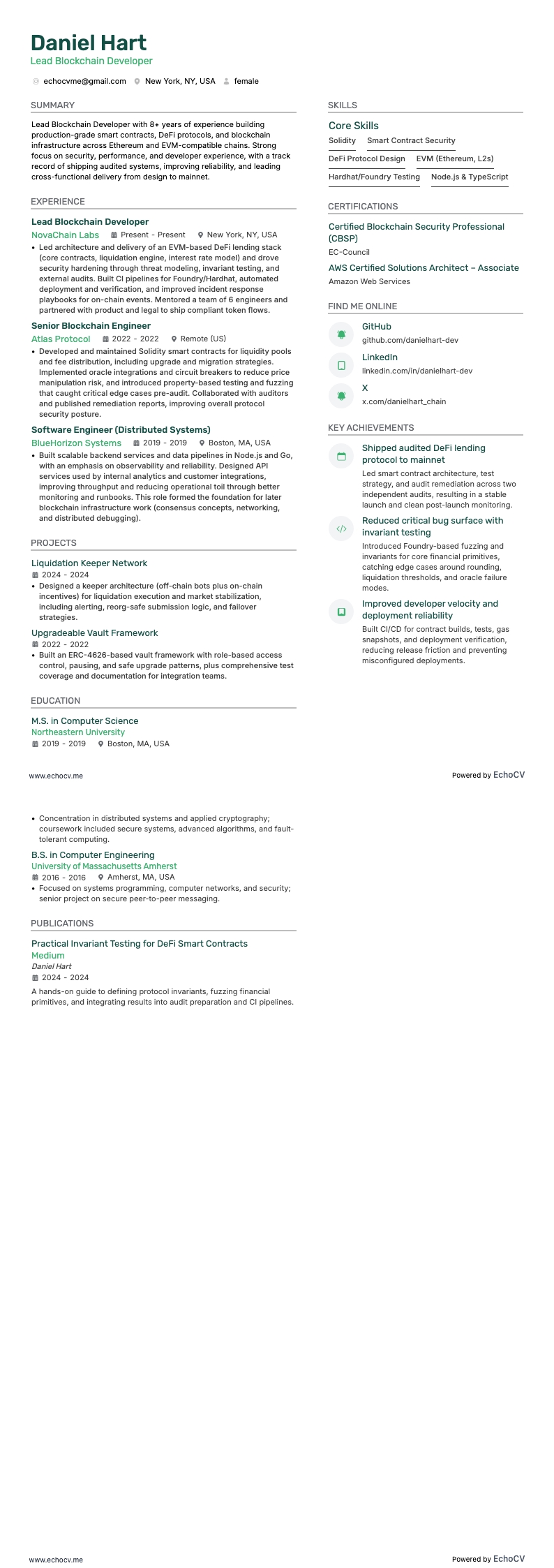
Blockchain technology is a relatively new field that began with Satoshi Nakamoto’s conceptualization of distributed blockchains in his 2008 white paper, A Peer to Peer Electronic Cash System.
The newness of this technology presents some unique challenges for developers who are looking for a new blockchain developer role. The trick is to show recruiters and hiring teams that you have the skills necessary by demonstrating your technical skills and financial knowledge through related paid work and personal projects.
In this guide, we will cover the common issues developers face when building their resumes and use real-world examples to show you how to:
- Highlight advanced blockchain development education
- Showcase a deep understanding of financial concepts and specific programming languages
- Detail knowledge and experience with decentralized applications (DApps) and open source like Ethereum, Hyperledger, and Smart Contracts
- Demonstrate various blockchain development projects through a digital portfolio
We will take a deep dive into each section to show how you can maximize the effectiveness of your resume in a concise manner.
If this guide is not quite right for your career goals, we have other guides for similar roles that may be better suited for you:
- Node.js Developer resume
- .Net Full Stack Developer resume
- Senior Developer resume
- Ruby On Rails Developer resume
- Python Developer resume
One of the first things we need to discuss is the proper format for your resume.
How to format a blockchain developer resume
When it comes to resumes, formatting is relatively easy but very important. A poorly formatted resume will likely give you zero callbacks.
Recruiters and HR teams expect resumes to follow a specific format:
- 1-inch margins on all sides
- Single line spacing
- Using a serif or sans serif font
Most of these settings are automatically set when you create a new document, so there is nothing to change. What you do want to double-check is your font settings. The font size should be between 10-12 points using standard black as the color.
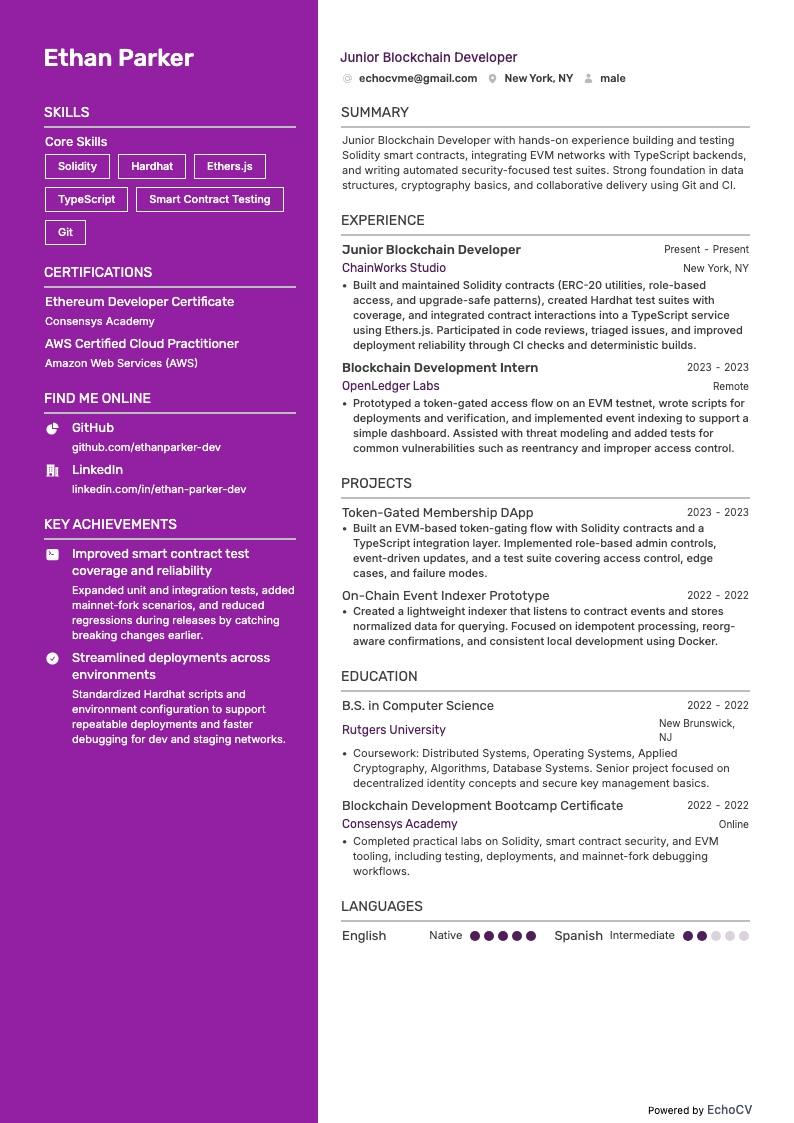
The only time you want to use a different font color is when you use a colored background for a side section in a two-column resume template. We’ll talk a little more about that later on.
For many years, the go-to fonts for resumes were Arial, Courier, and Times New Roman. While these are fine to use and give your resume a more classical look, for technical resumes like a blockchain developer, you want to go with a cleaner, more modern resume.
When listing your work and education, you want to list each entry in a reverse chronological format. This is the standard way to list all dated entries in a resume and puts your most recent accomplishments at the top of the list.
While you are working on your resume, you can save it in whatever format you choose, but when submitting it to a job post, send it using the PDF format (.pdf). This type will preserve the format of your resume no matter what operating system the company is using.
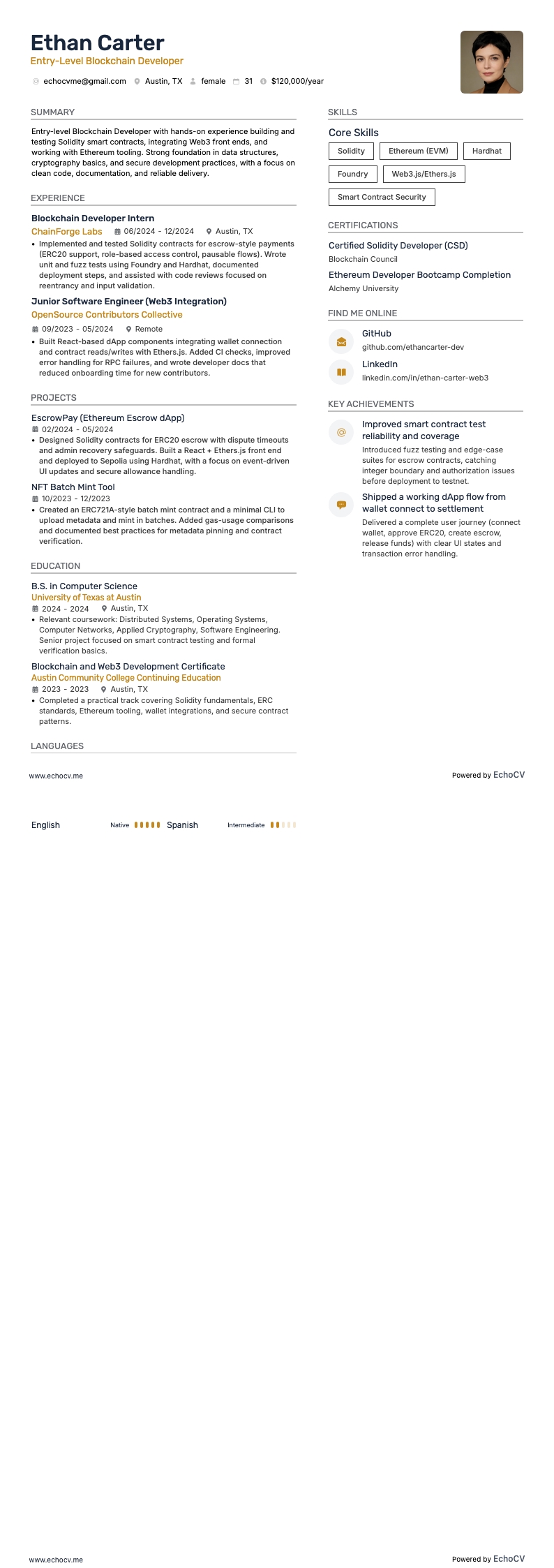
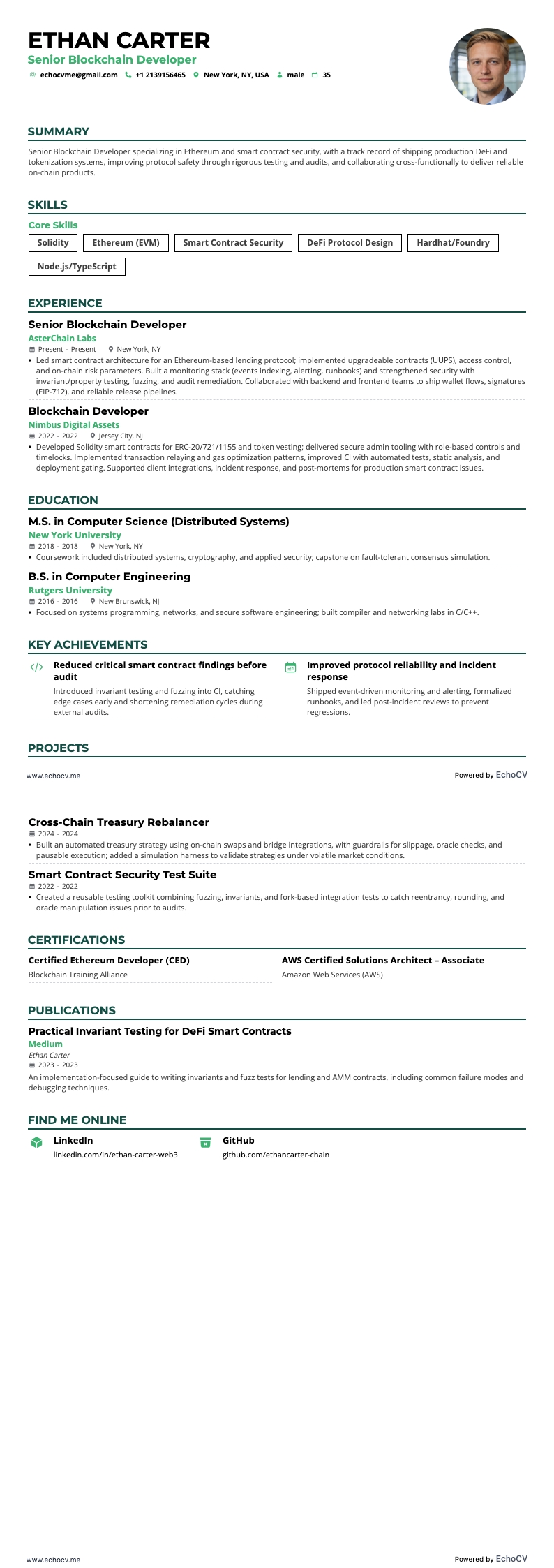
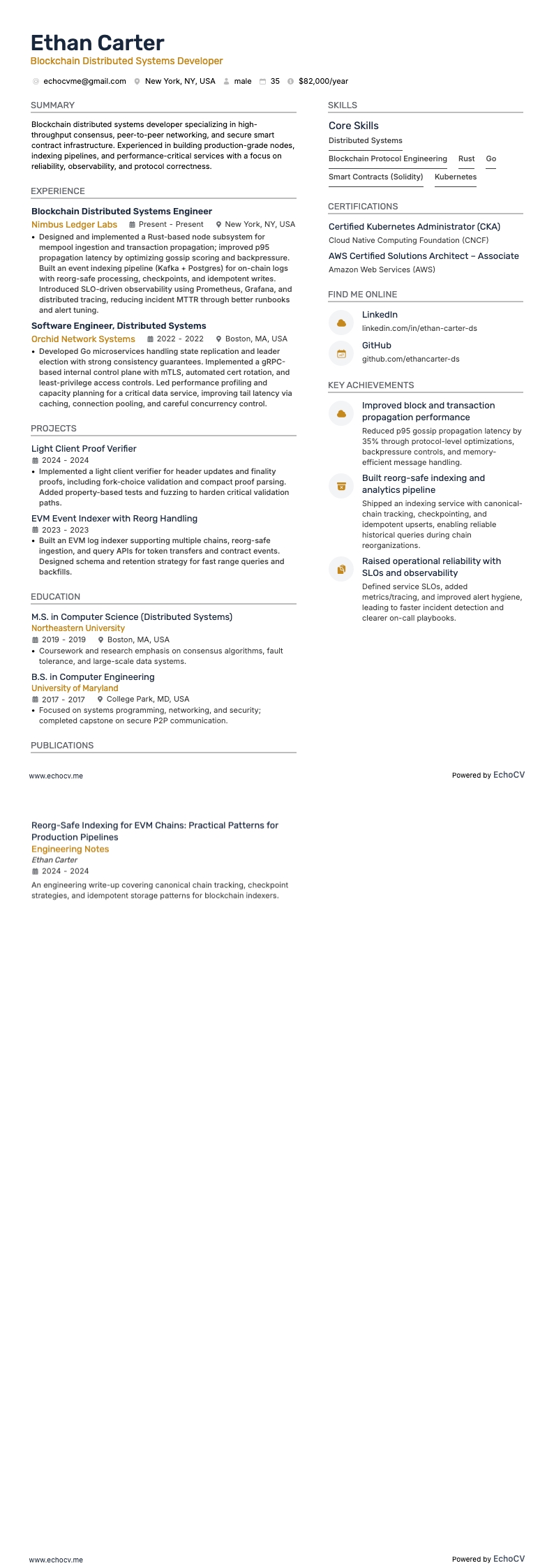
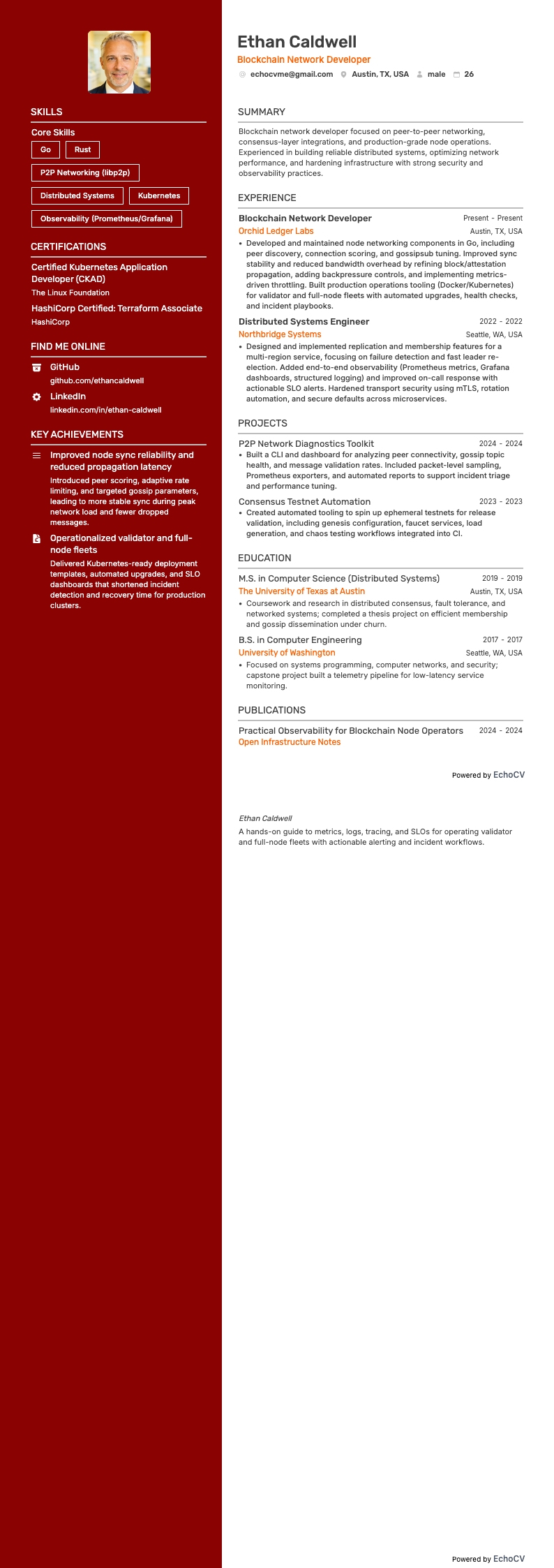
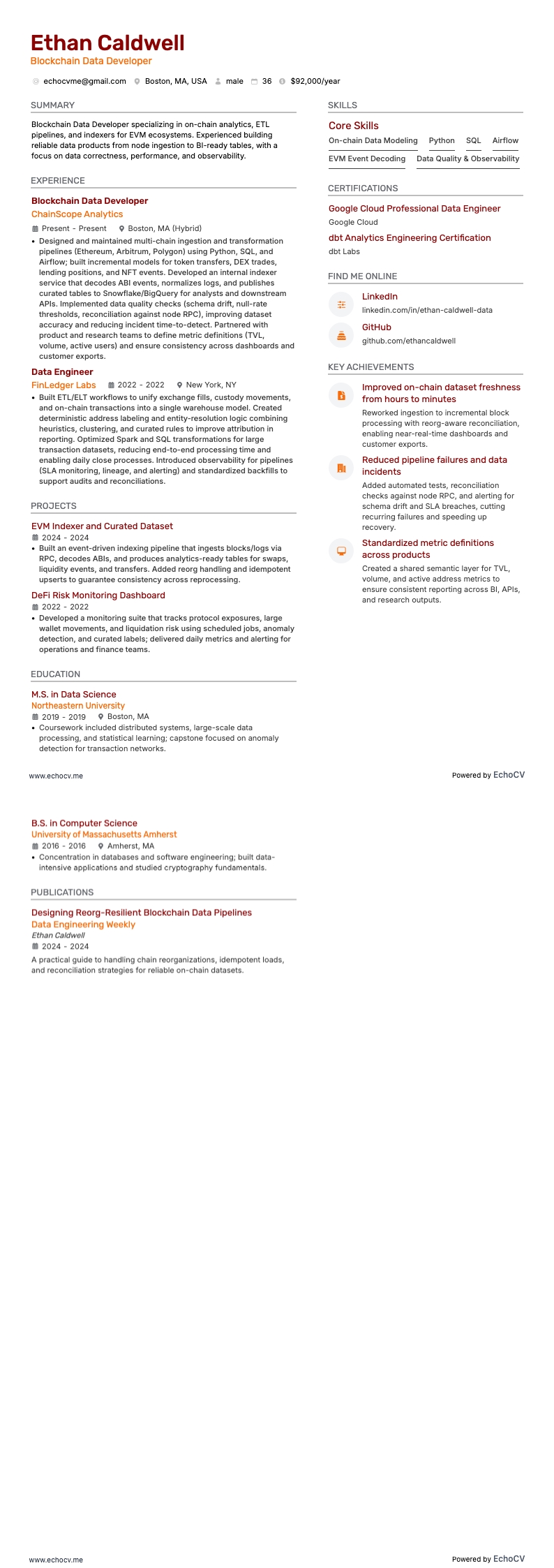
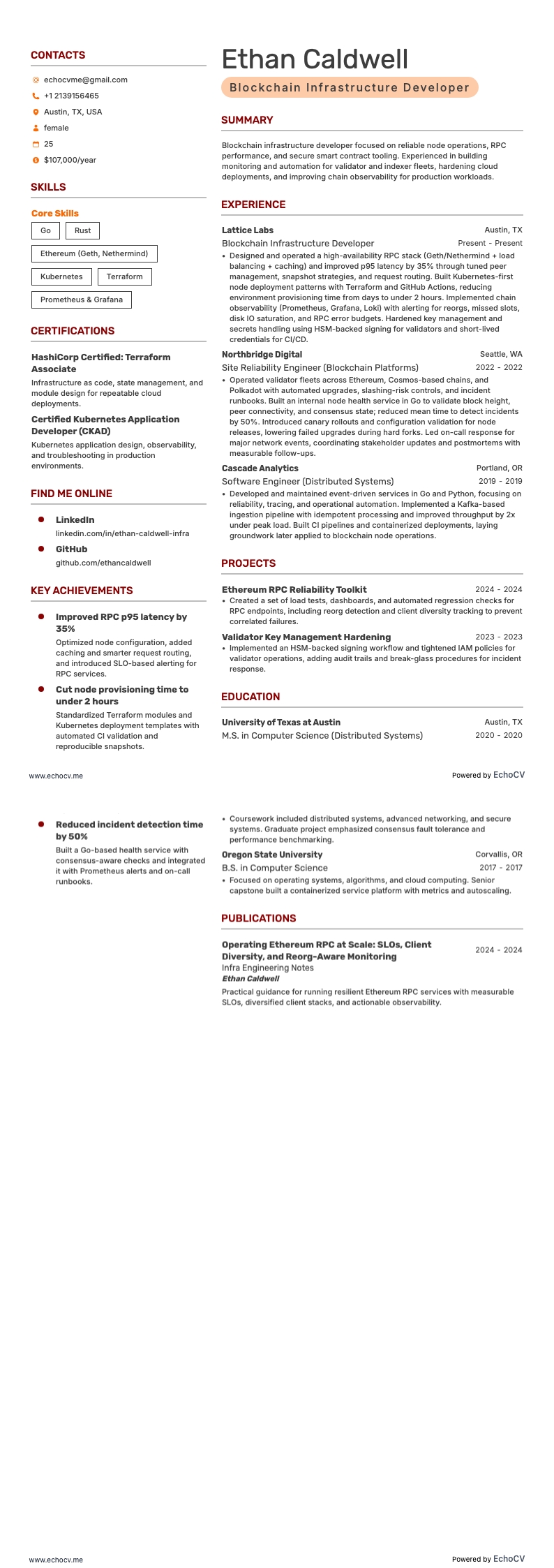
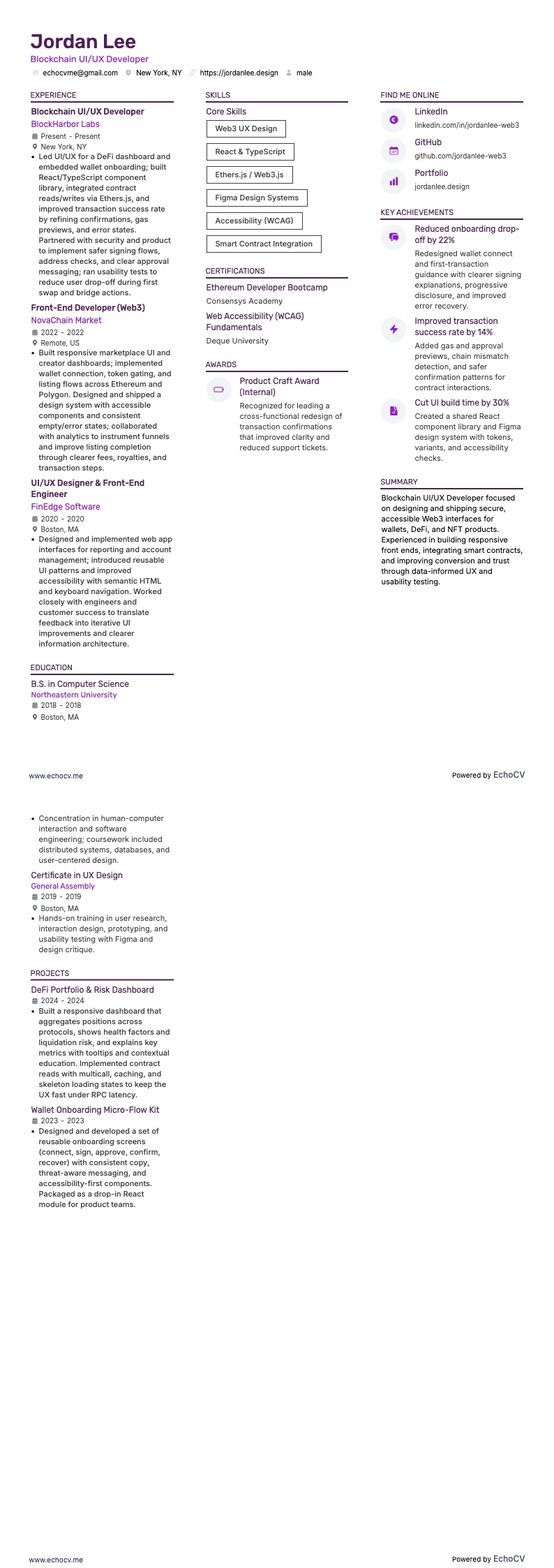
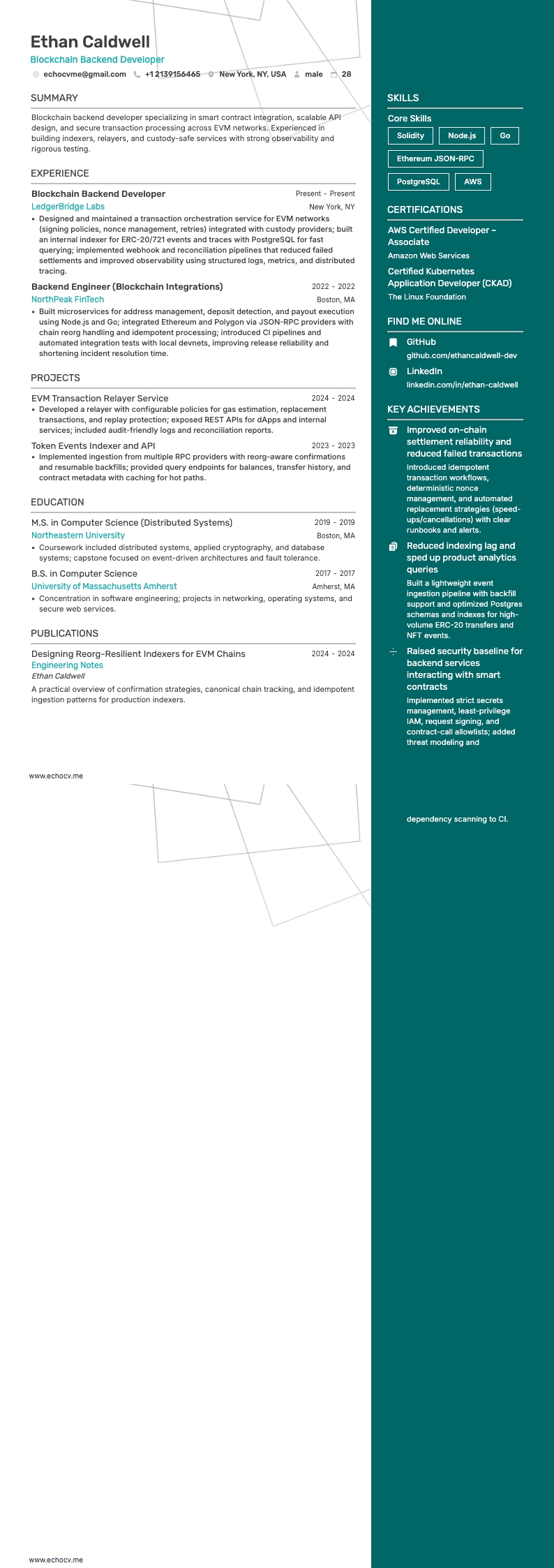
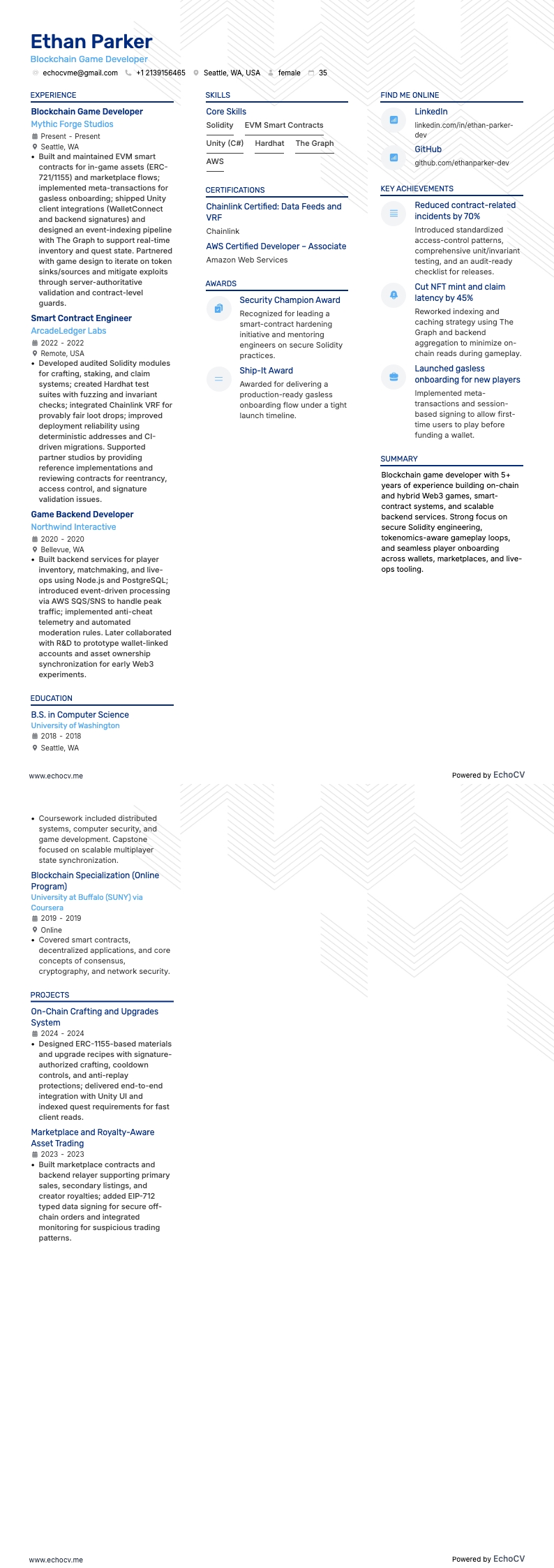
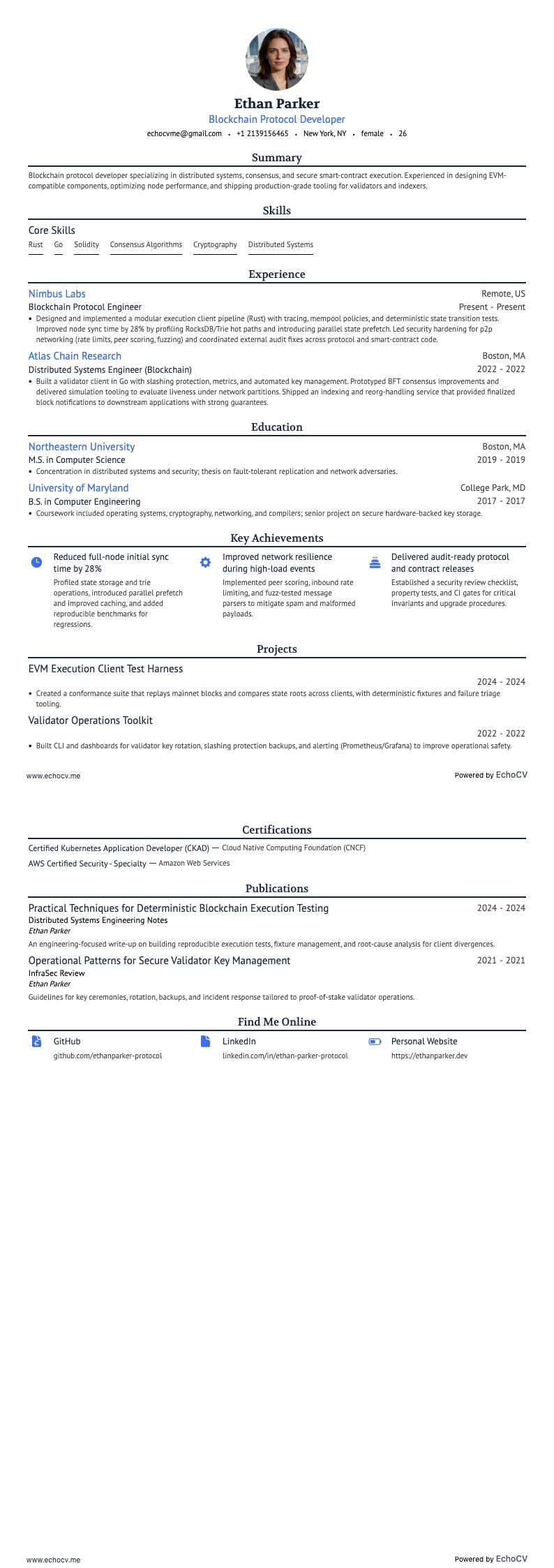
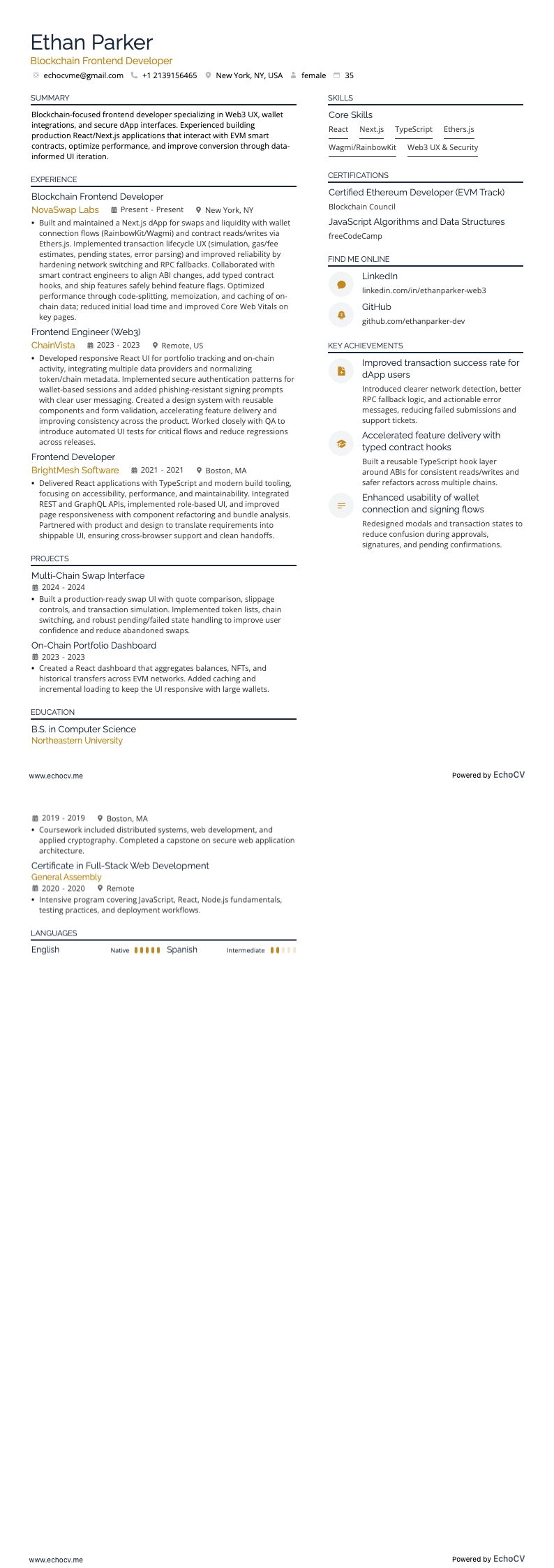
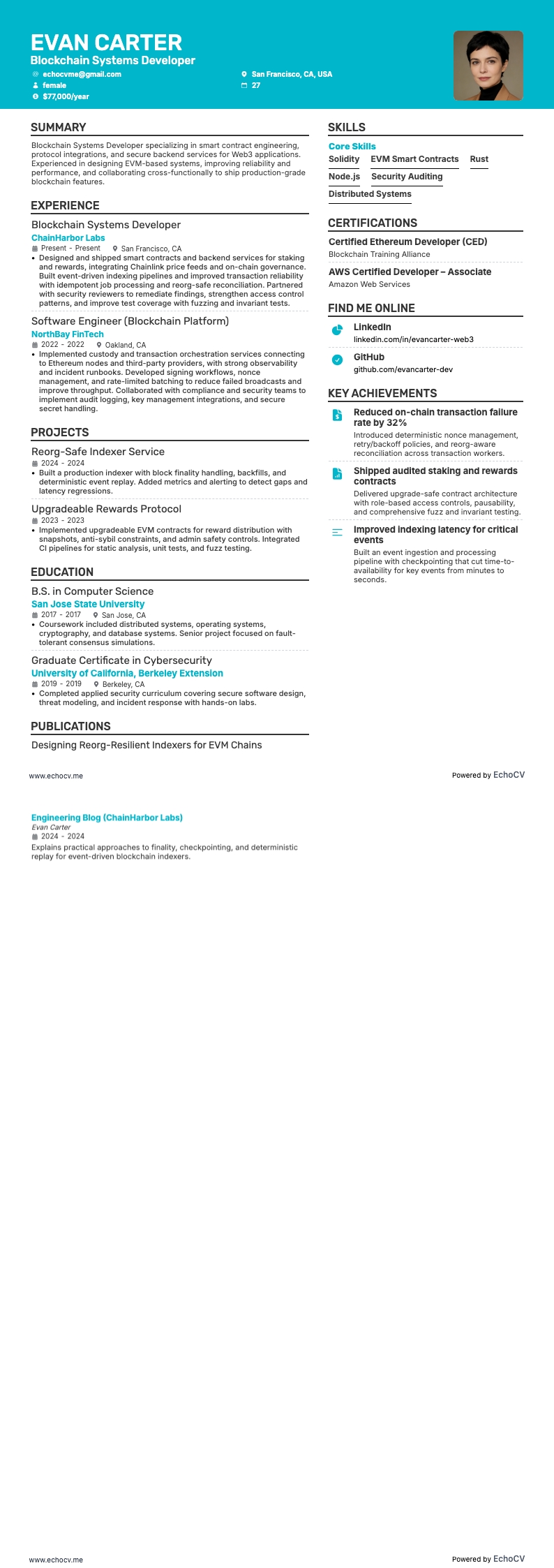
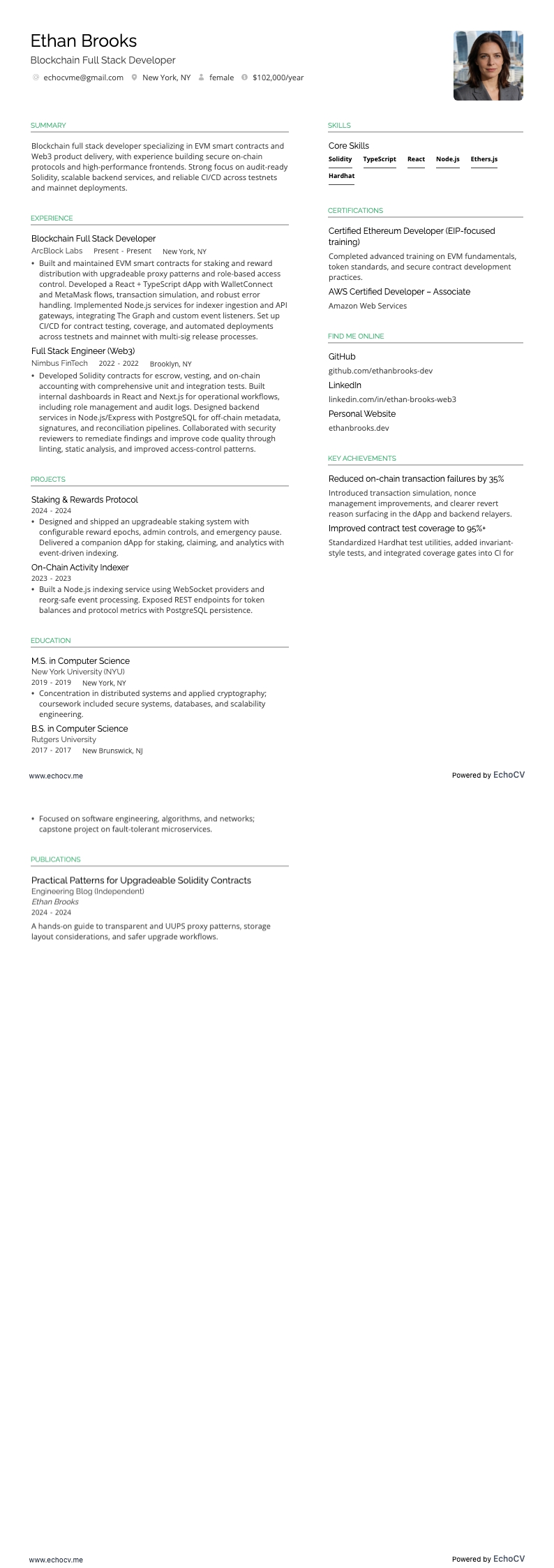
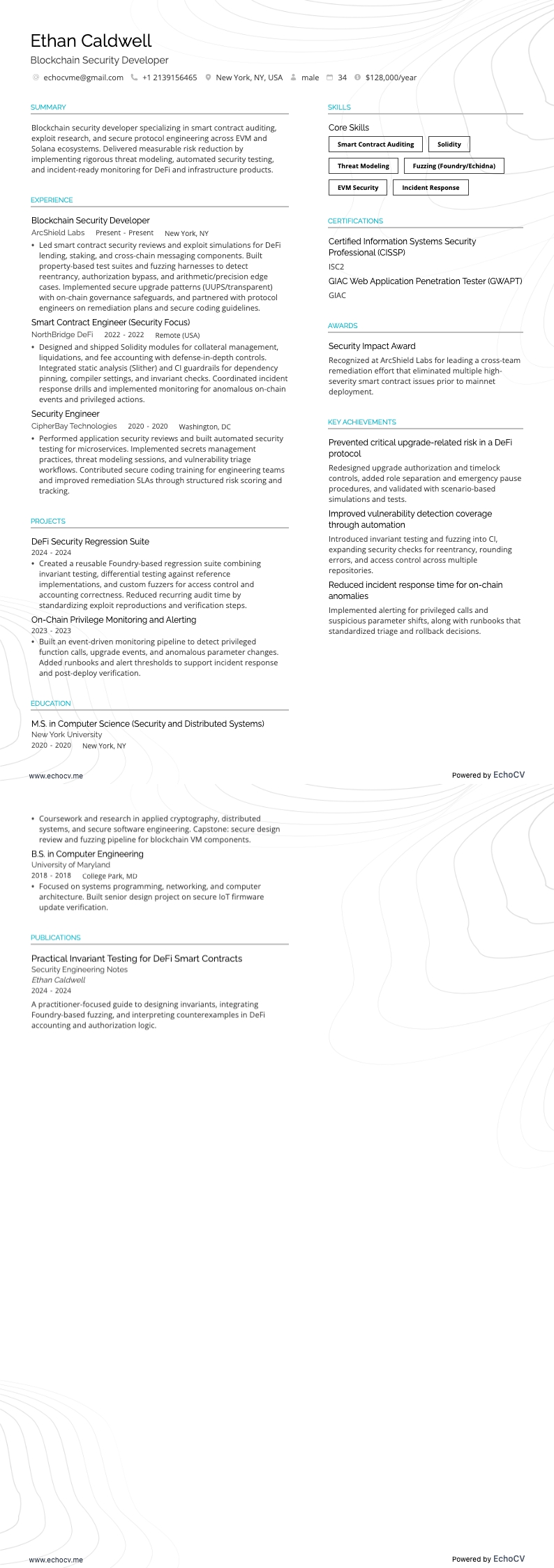
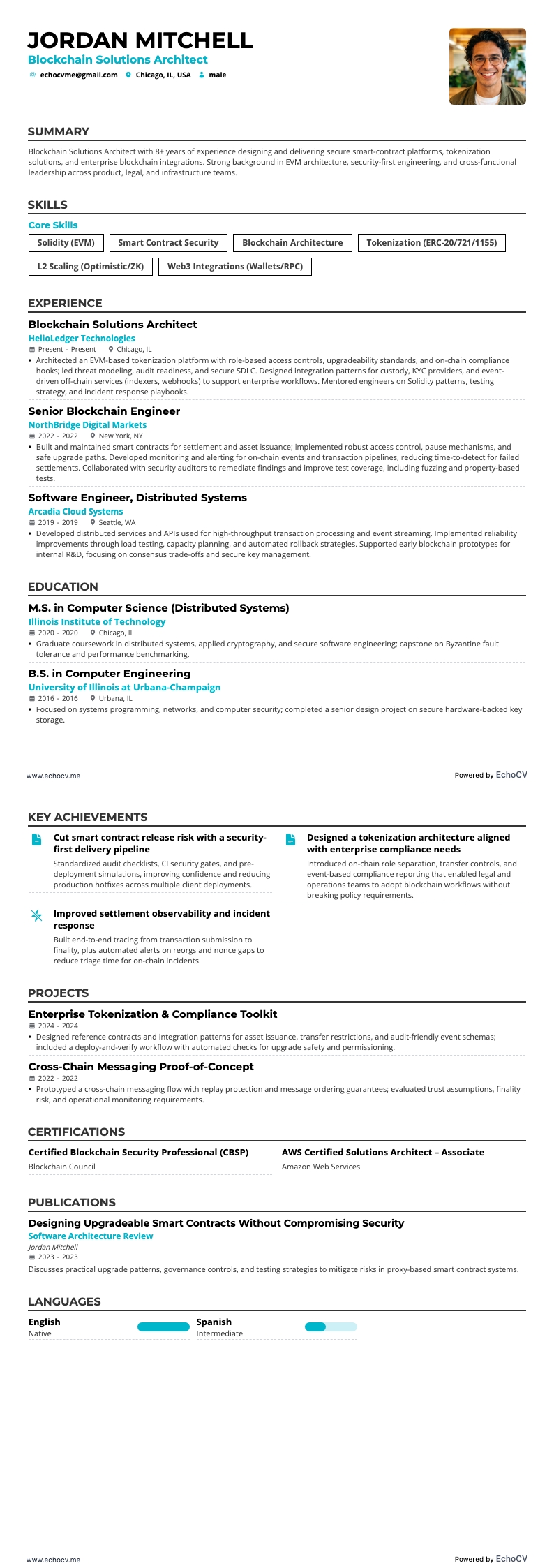
Echocv resume templates come preset with all of the above settings and use more modern fonts, like Exo 2, Volkhov, Lato, Rubik, and Monserrat. They come in a range of styles, from modern to traditional, including single and two-column formats.
Be aware of location-based layout differences – Canadian resumes, for instance, might differ in format.
If you want to see how your current resume compares to other blockchain developer resumes, our resume checker will evaluate your resume and give you tips on how to improve it.