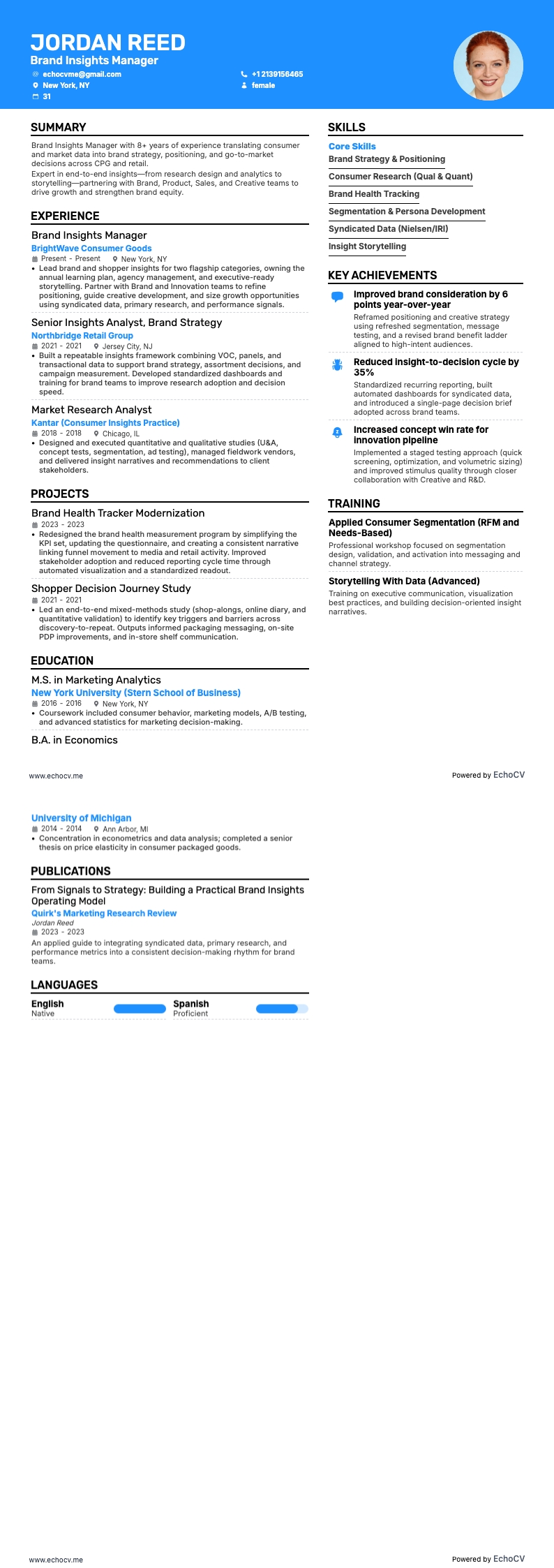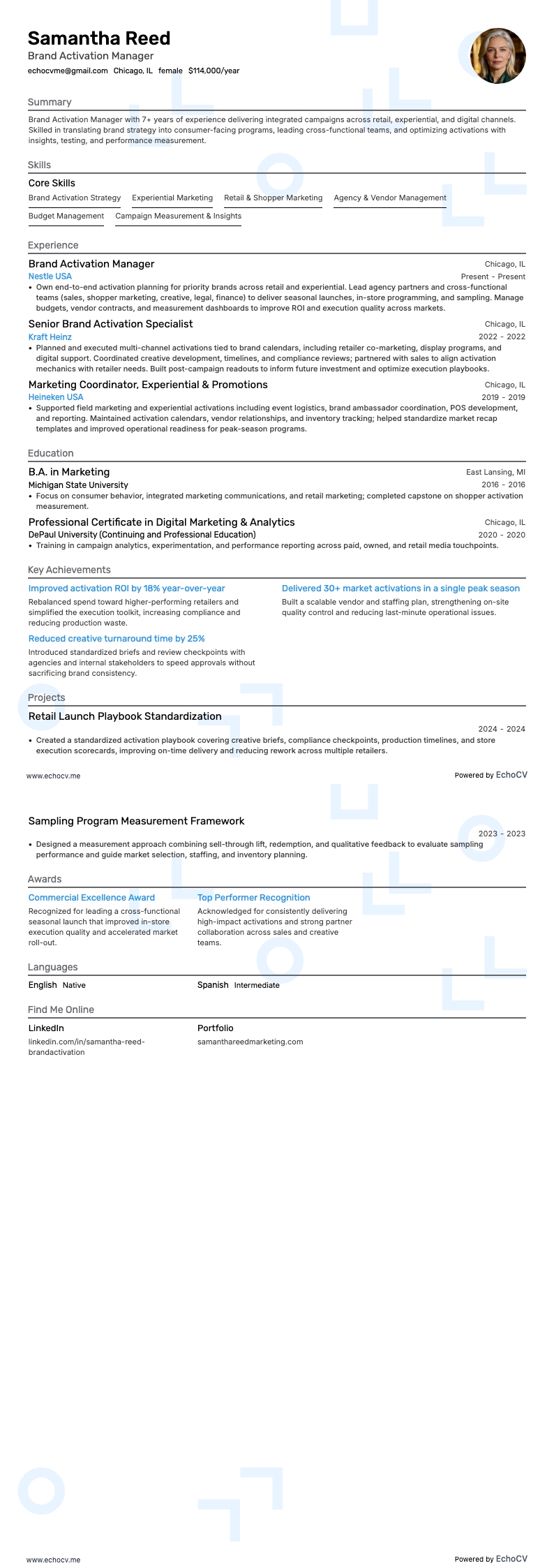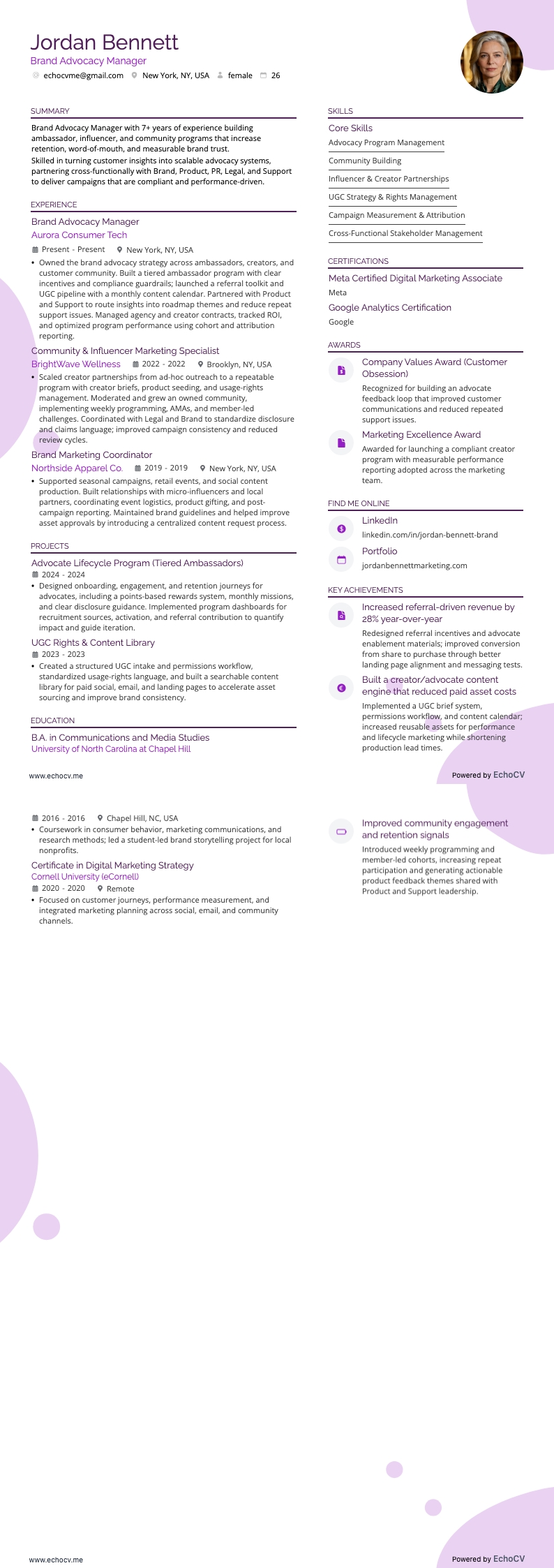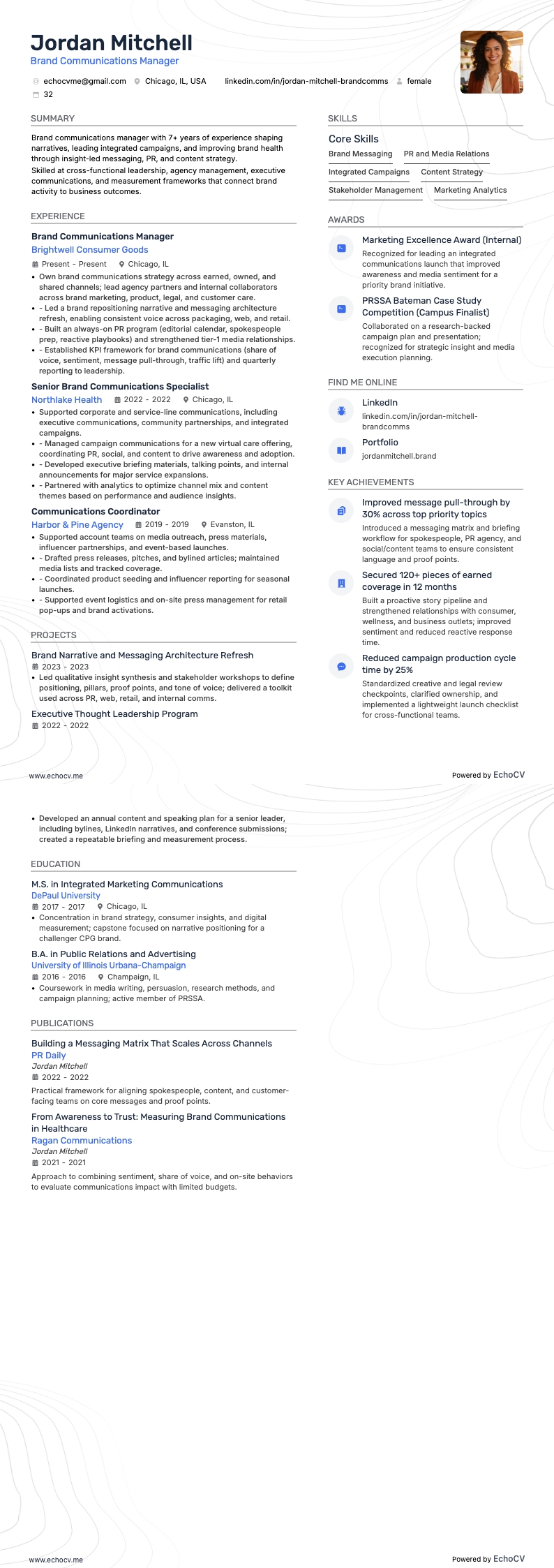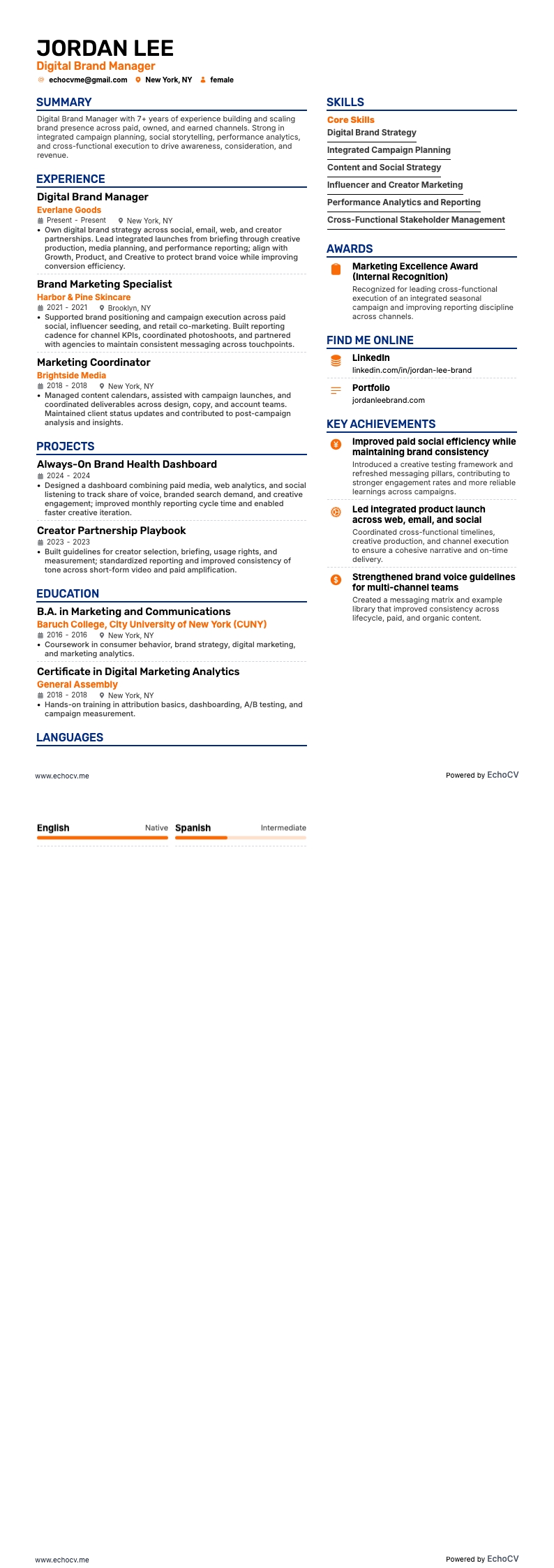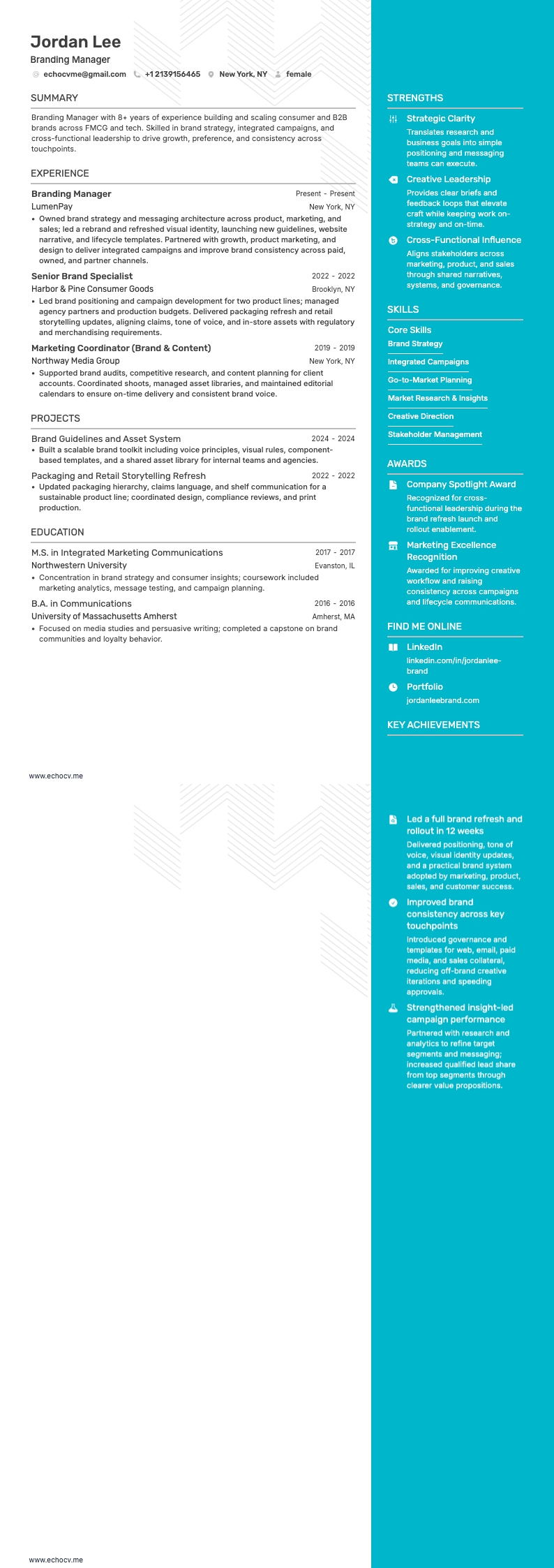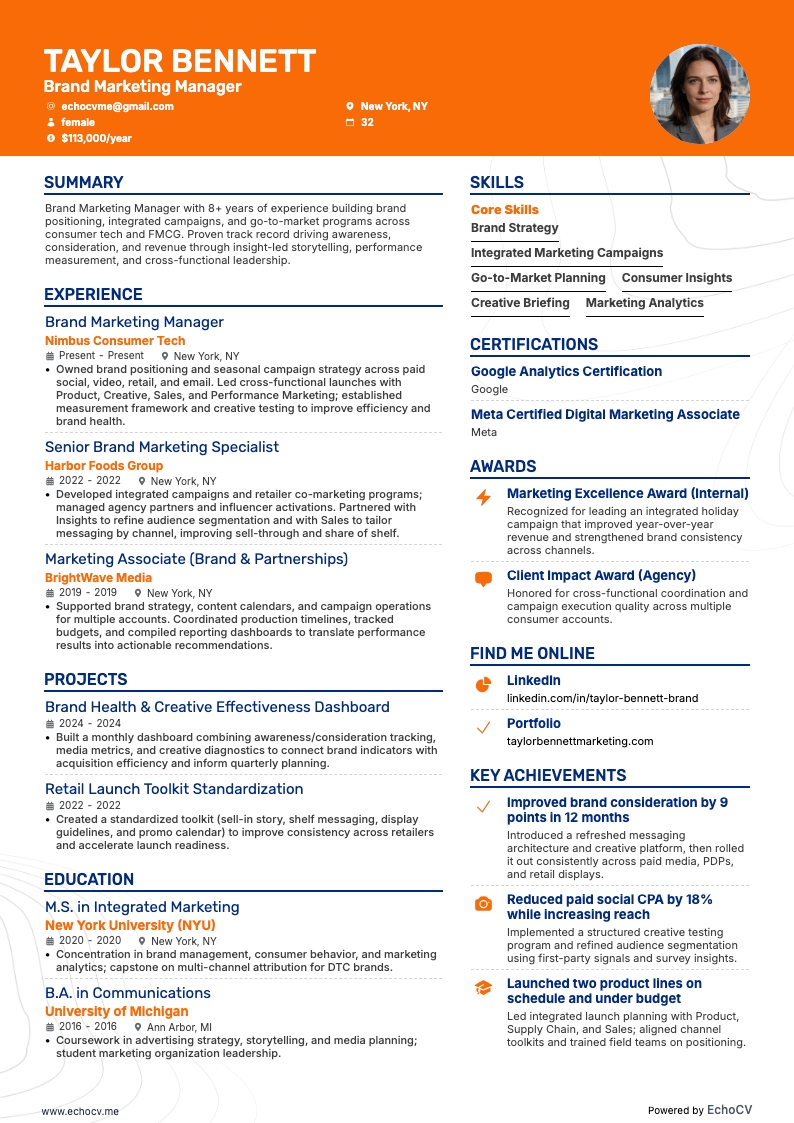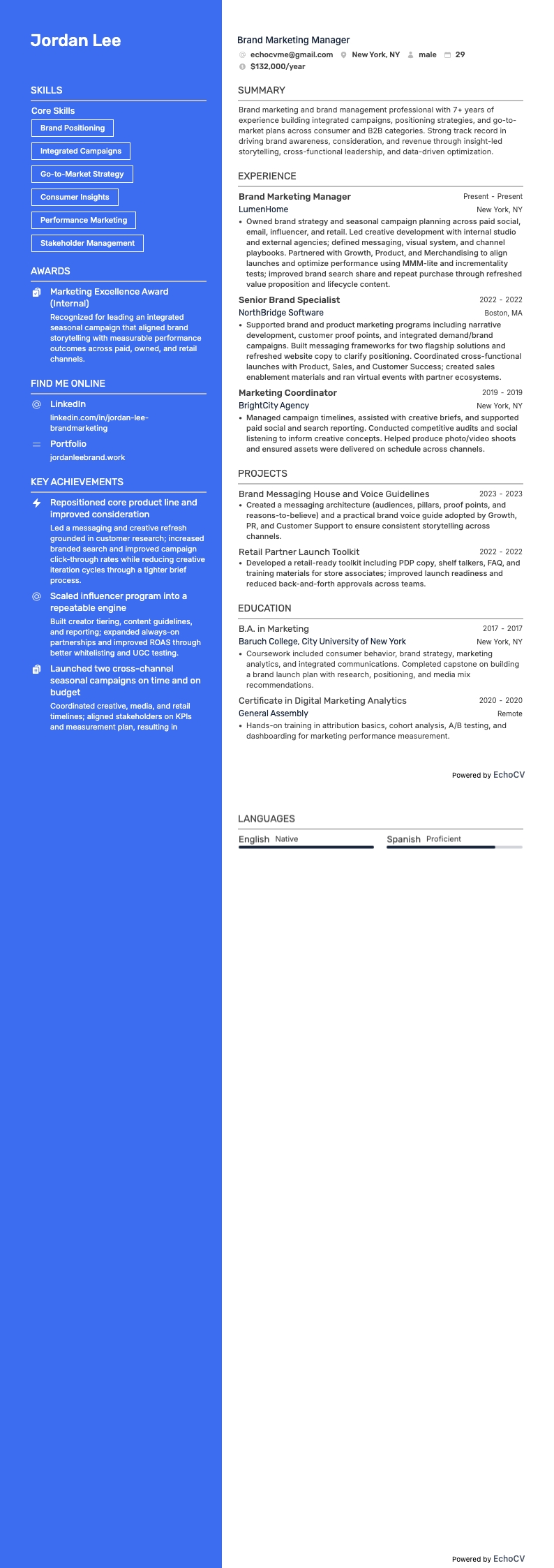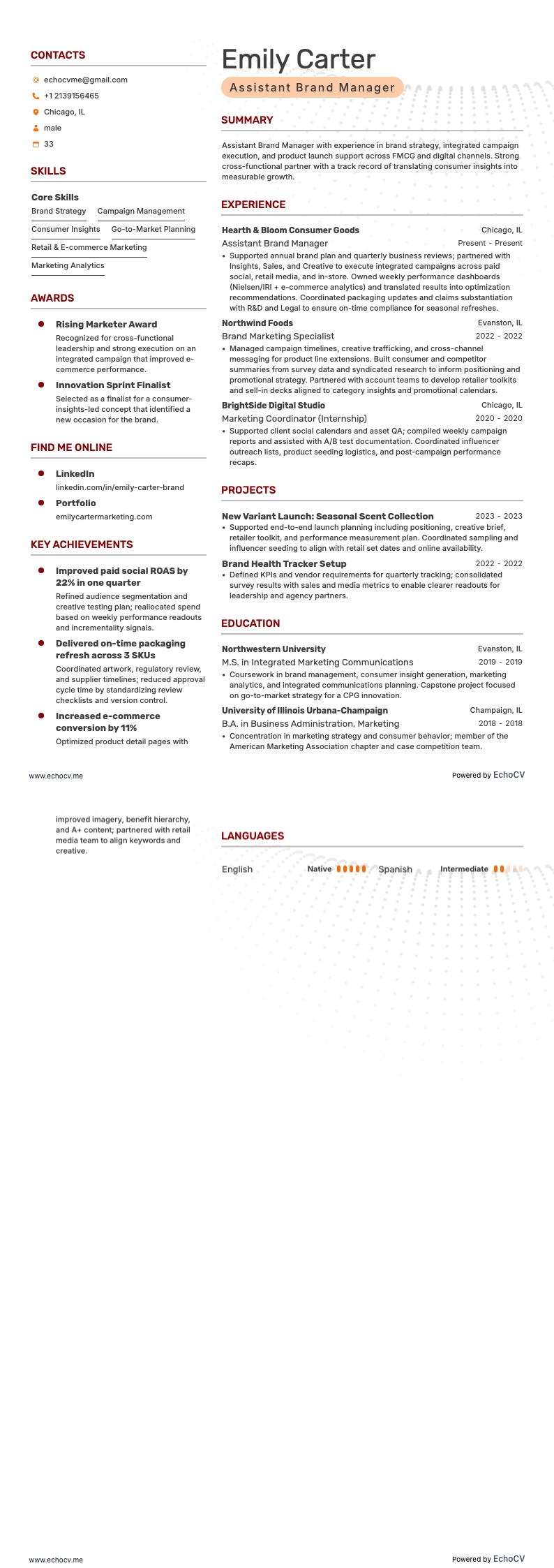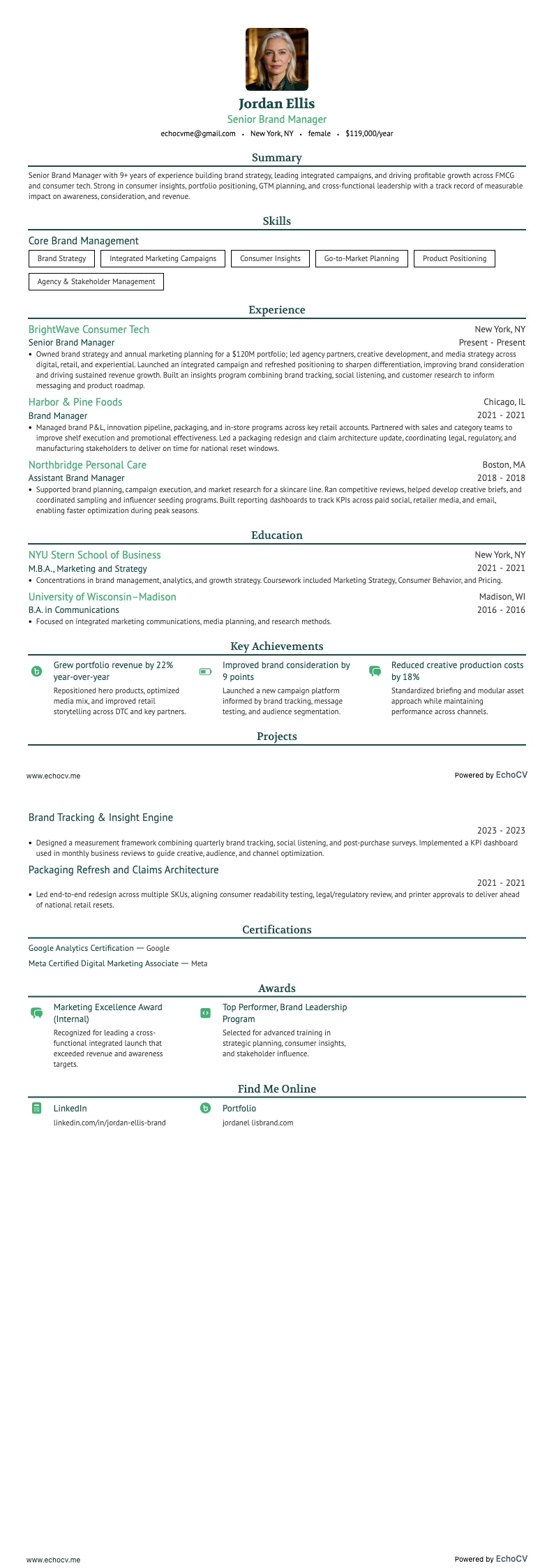
Taylor uses each section to its full potential by including industry-related keywords that reflect the skills and knowledge for the job. He takes full advantage of the header and summary sections and includes several keywords that recruiters and applicant tracking systems search for.
Notice how he lists “Home fragrance enthusiast” under the Passions section, which backs up his work experience in the fragrance industry. This is a great example of how you can tailor each section to the specific industry you are in.
Here are some more ways of how Taylor created an impressive resume:
- Tailored experience and achievements: The resume effectively highlights specific accomplishments relevant to the e-commerce and product development fields, such as leading a D2C platform launch that resulted in a 40% revenue increase and managing the development and launch of 10 innovative products. This focus demonstrates the candidate’s direct impact on business growth and product innovation.
- Quantifiable results: Many bullet points provide quantifiable results, such as a "40% year-over-year increase in revenue" and "SEO strategies that improved organic search rankings by 50%." These metrics offer concrete evidence of the candidate’s contributions and skills, making the resume more compelling and credible.
- Relevant skills and certifications: The resume lists skills and certifications directly relevant to the role of an e-commerce specialist, such as "E-Commerce Management," "SEO," "Digital Marketing," and "Advanced Shopify Techniques." Highlighting these areas shows the applicant’s commitment to professional development and expertise in key aspects of the role.
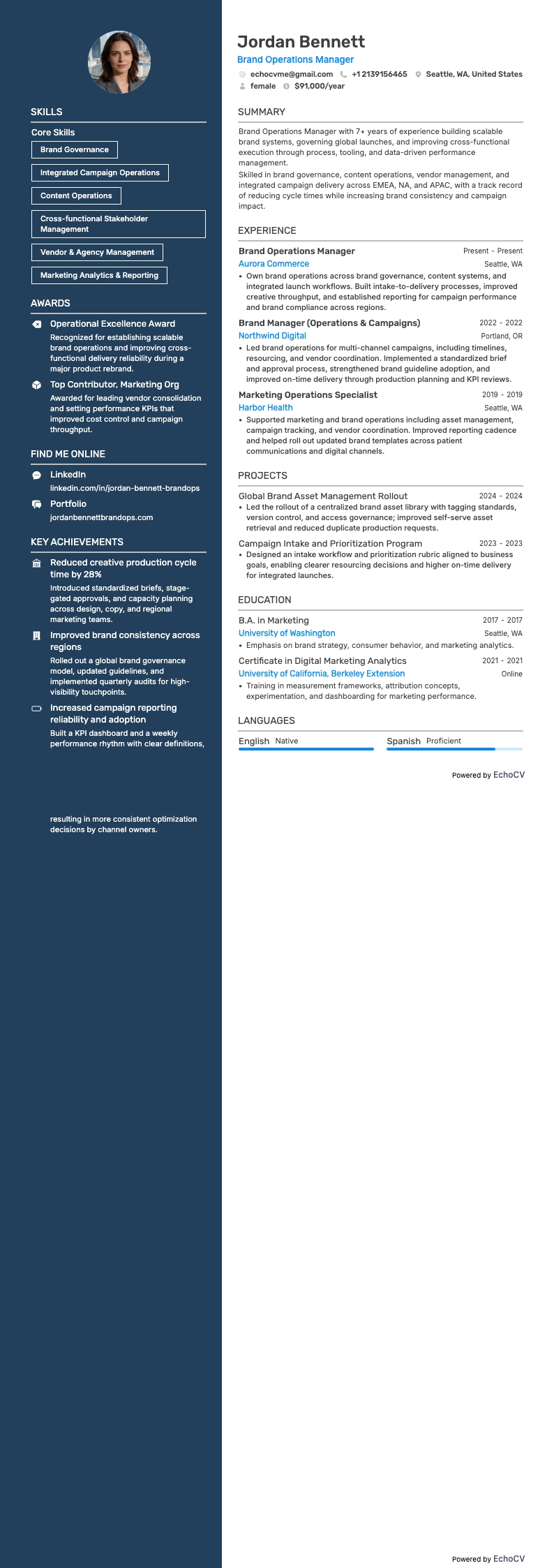
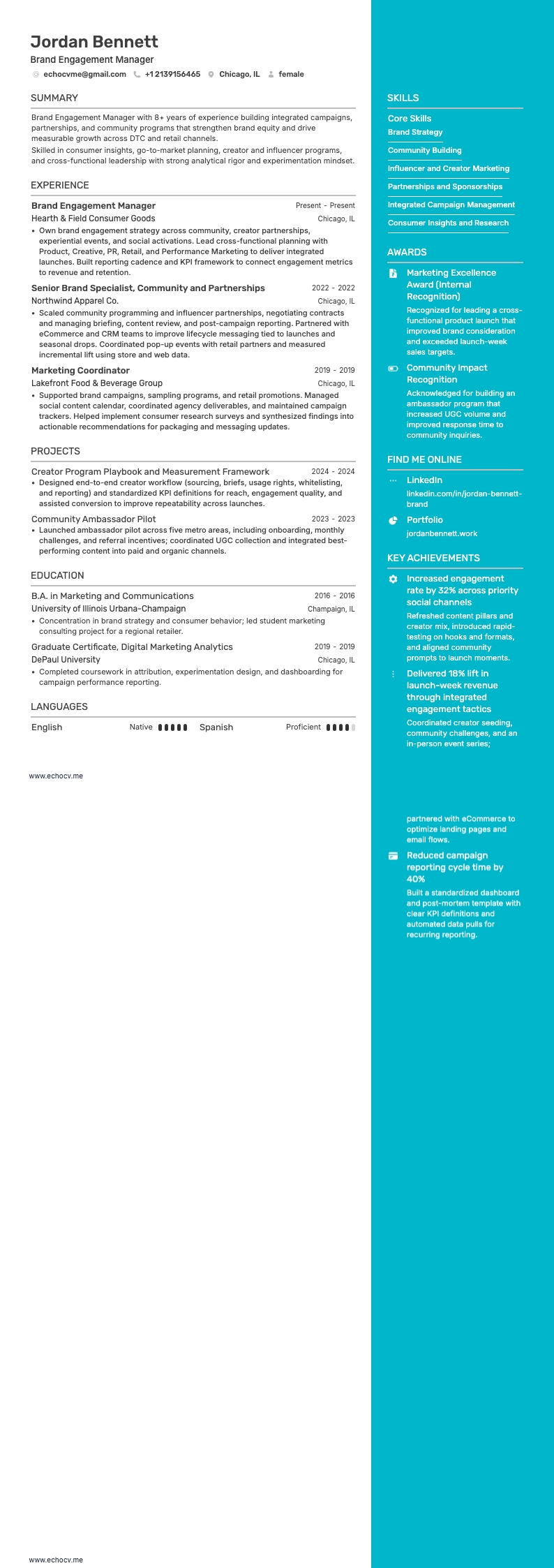
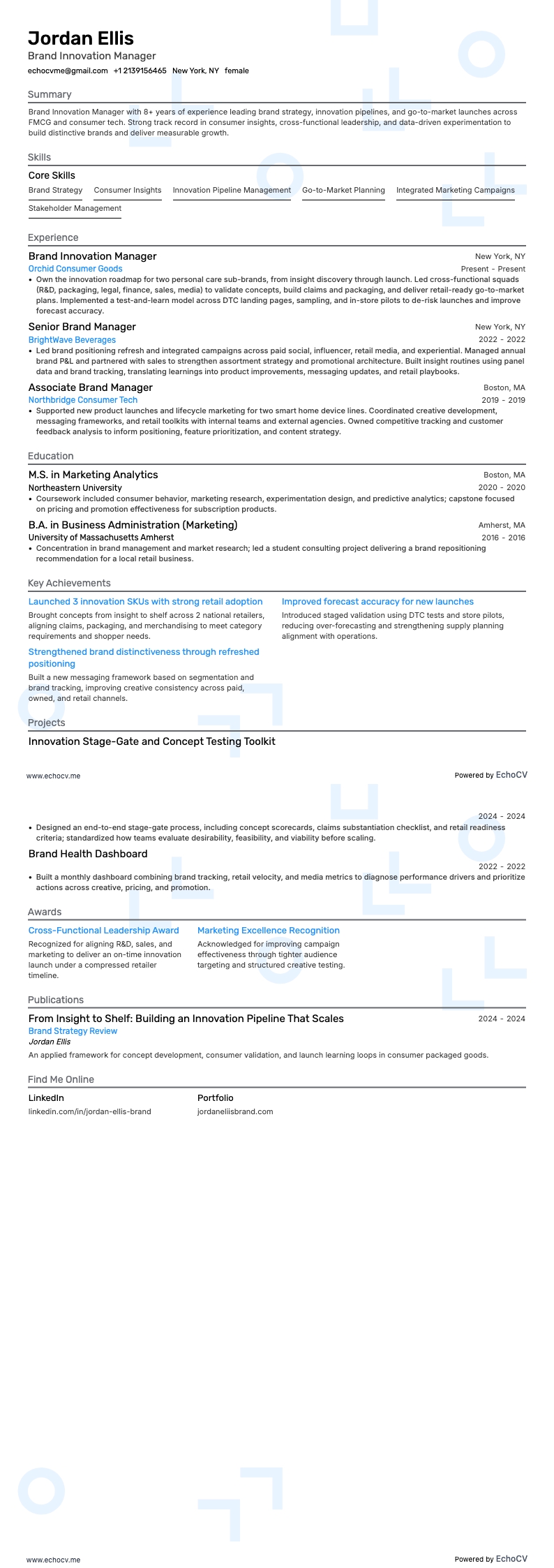
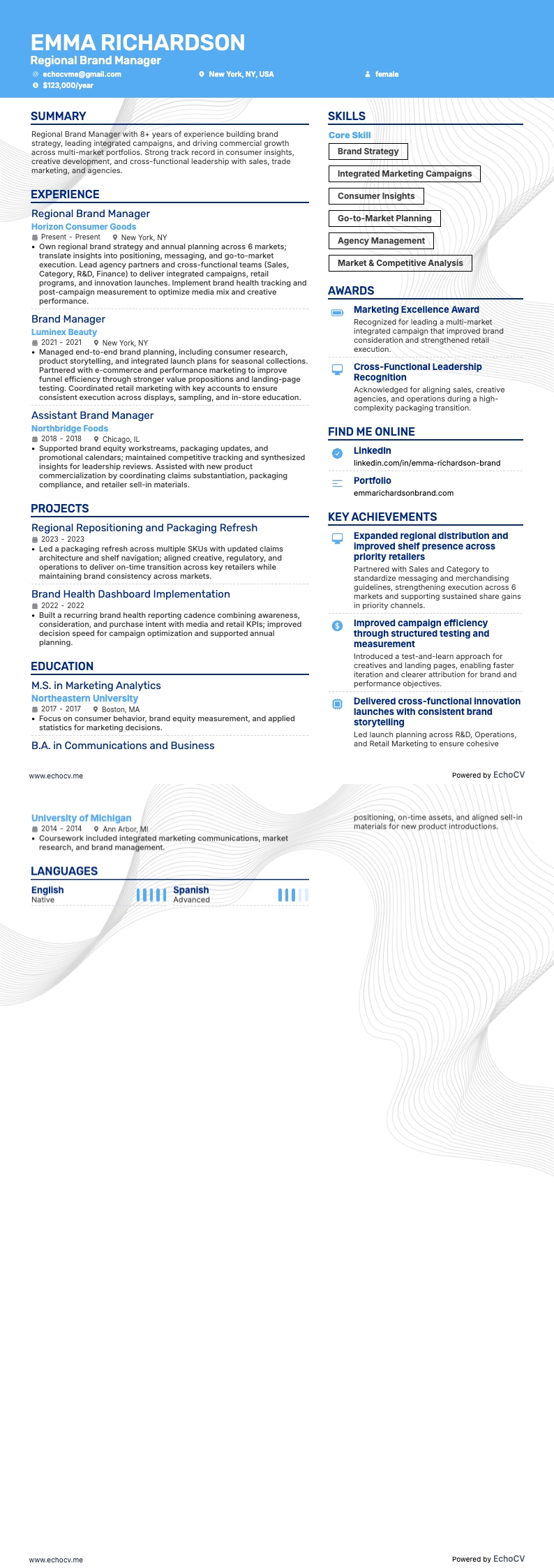
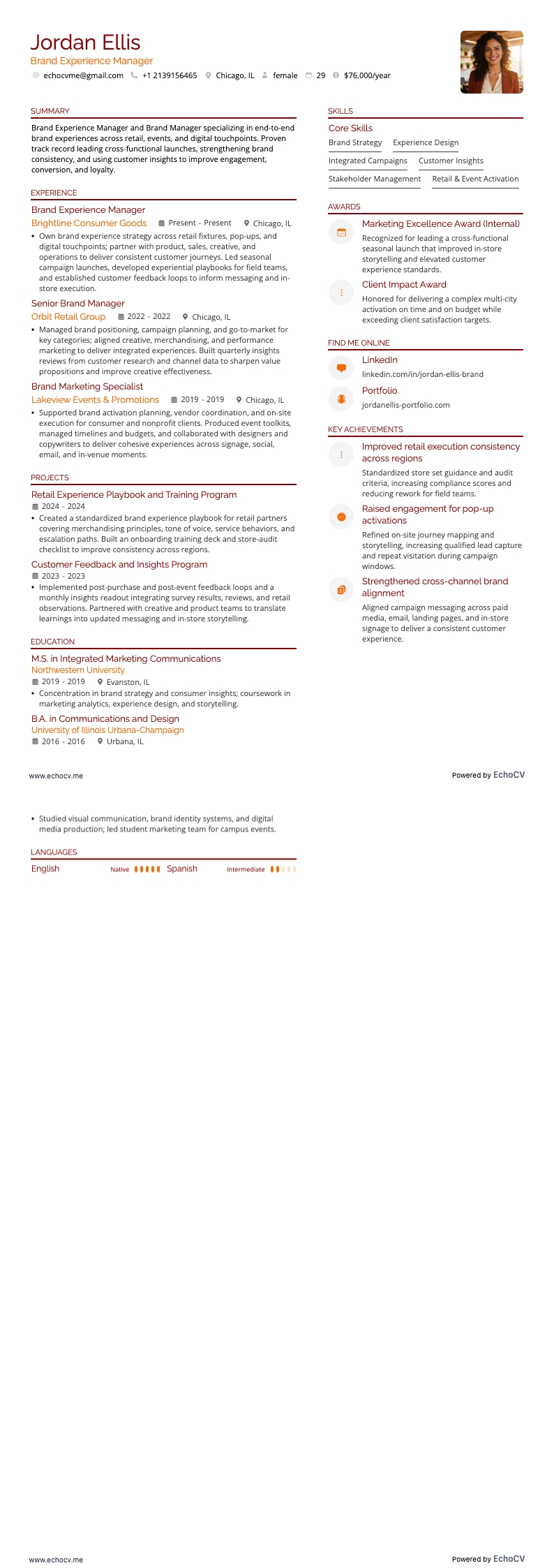
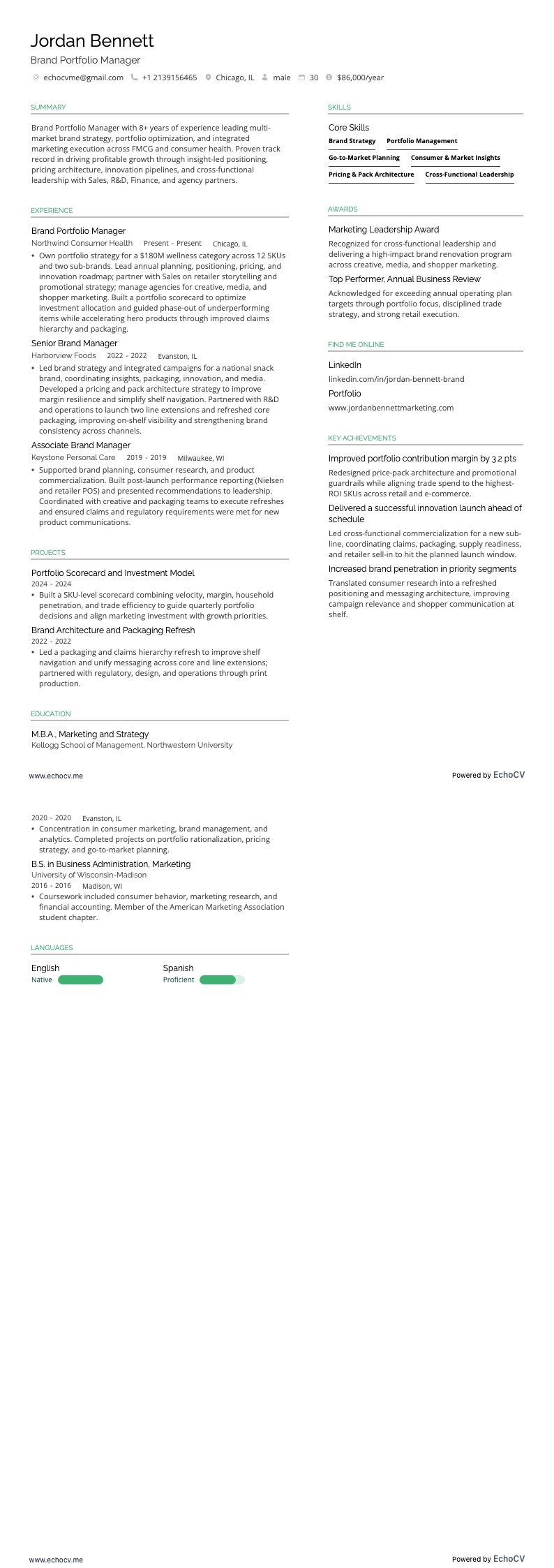
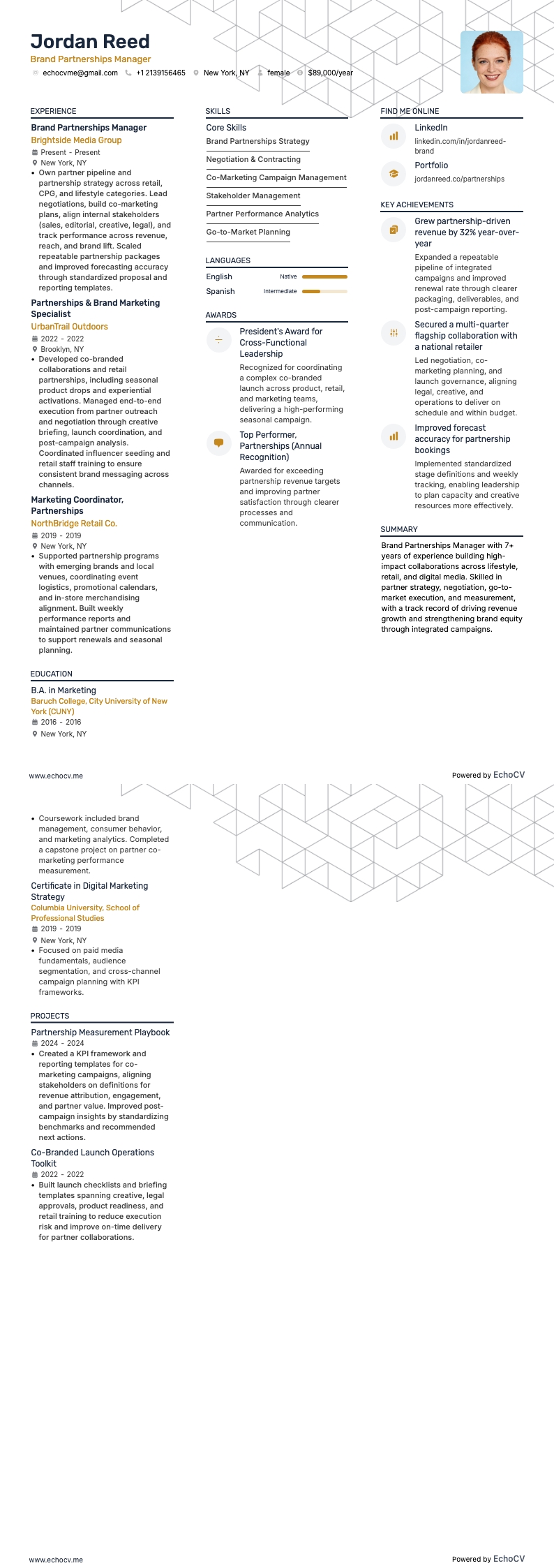
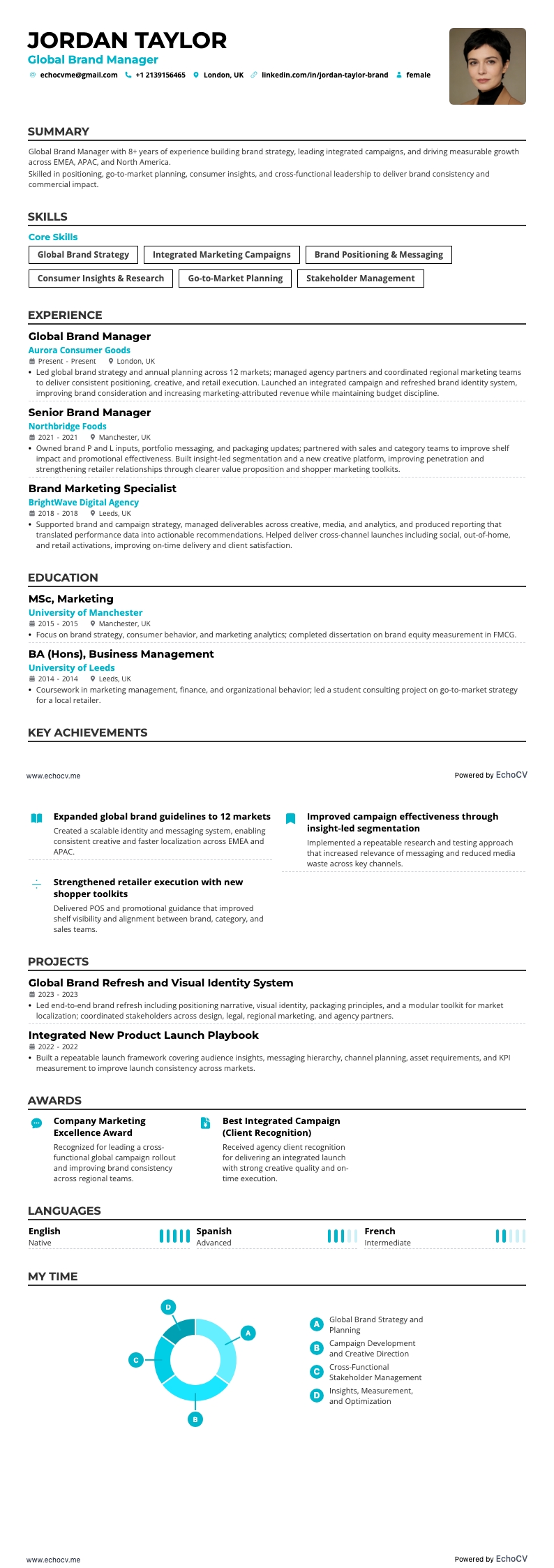
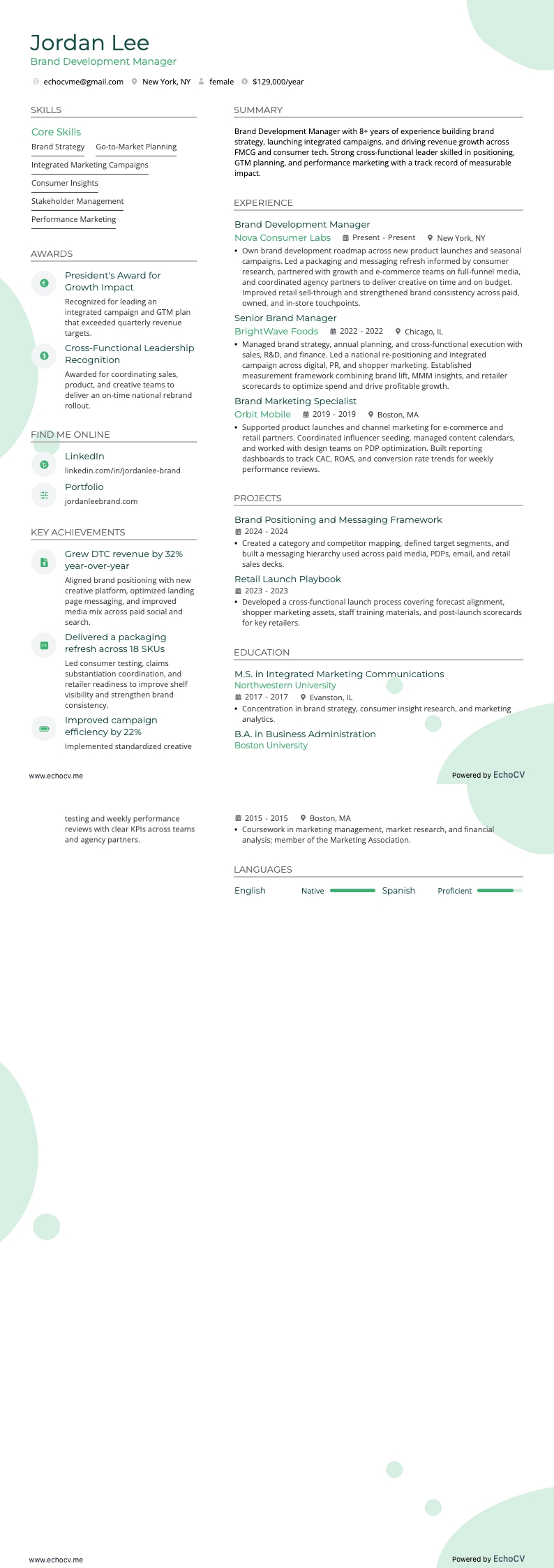
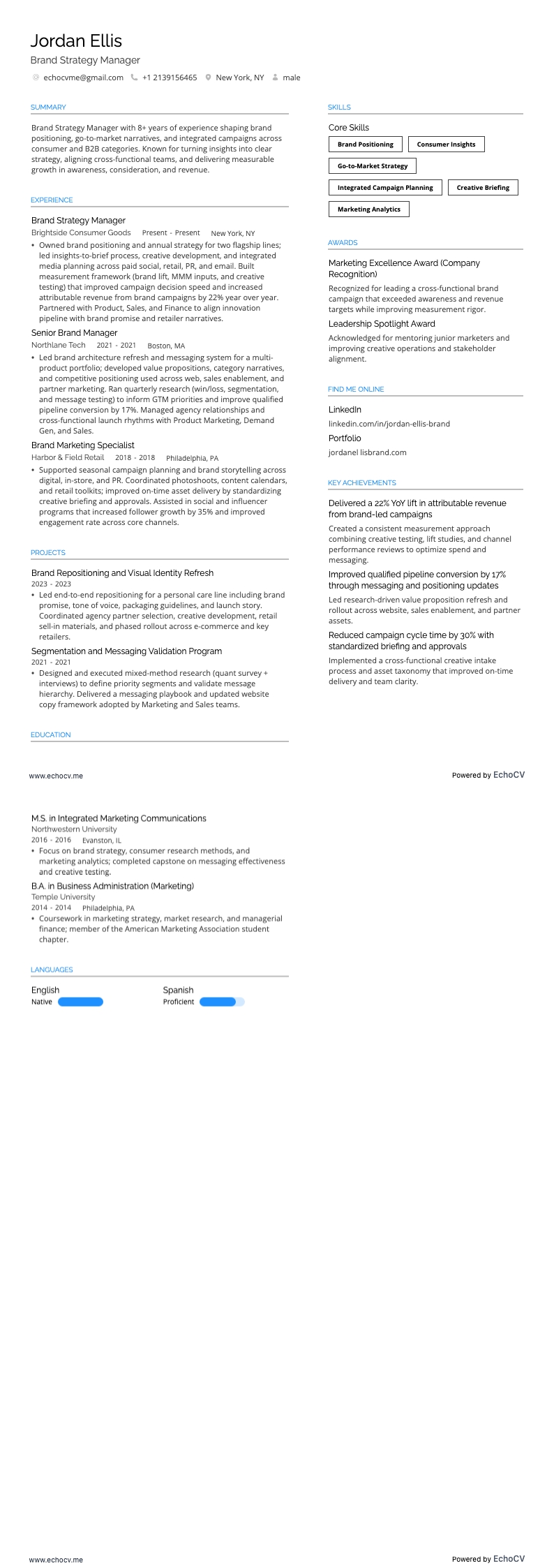
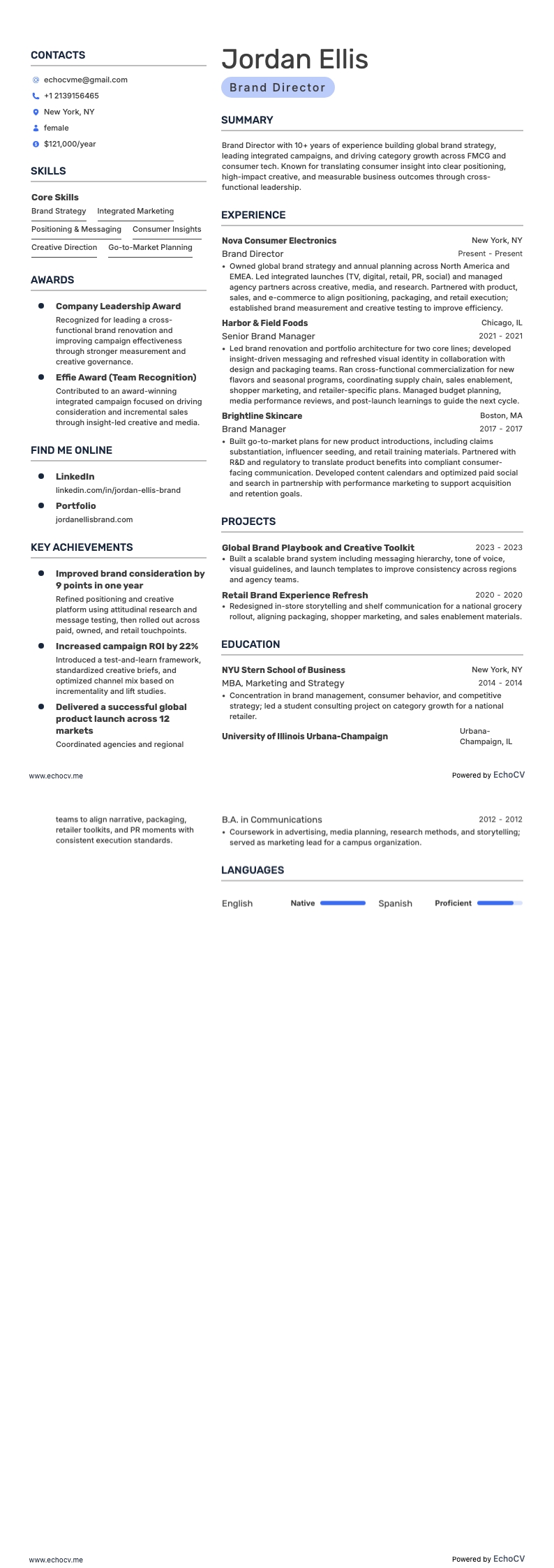
You can see how using a two-column format works well for someone with many years of experience and an abundance of technical, business, and creative skills.
To get your resume looking like this example, you first need to format it to meet industry standards.
Formatting your resume today is more about having the right sections and an eye-pleasing design than having to set the correct margins, line spacing, and font size. All of these settings are a standard document format for most word-processing programs.
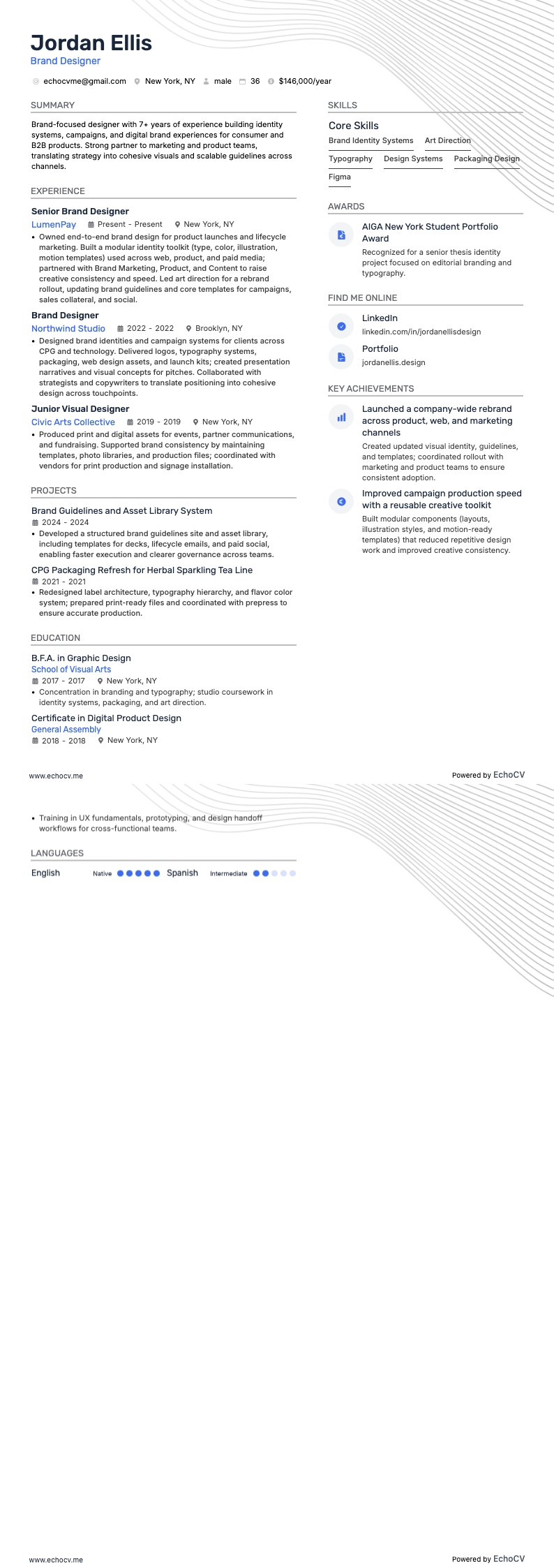
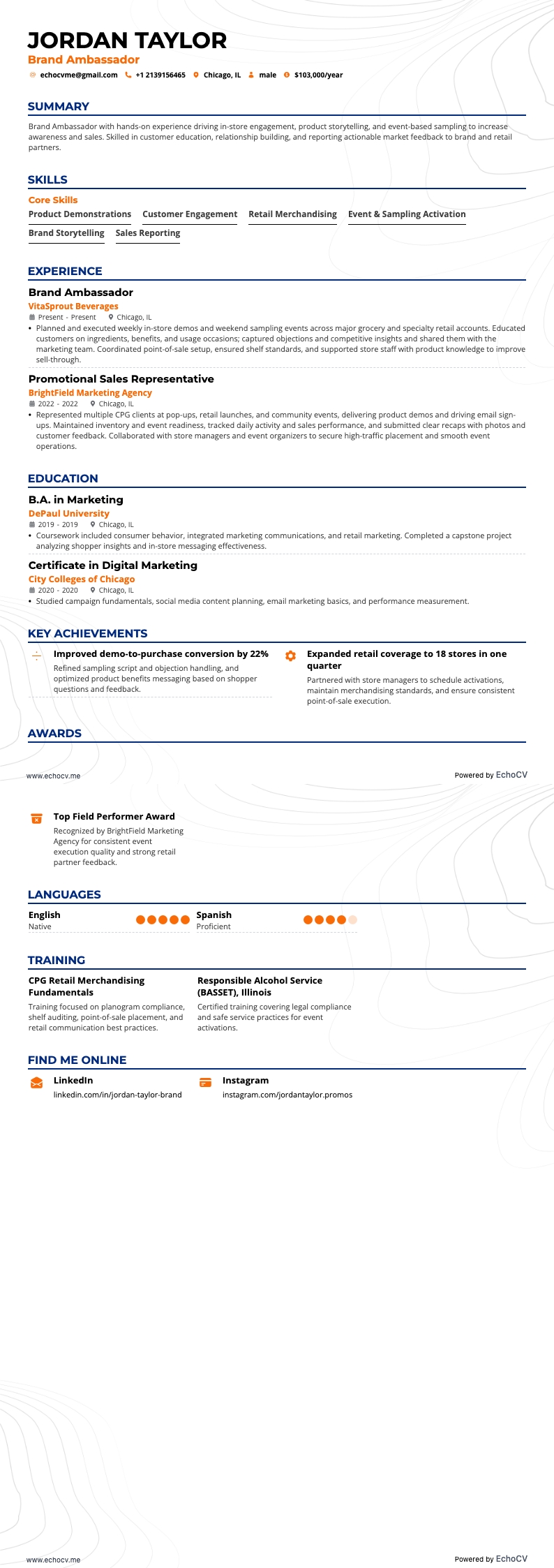
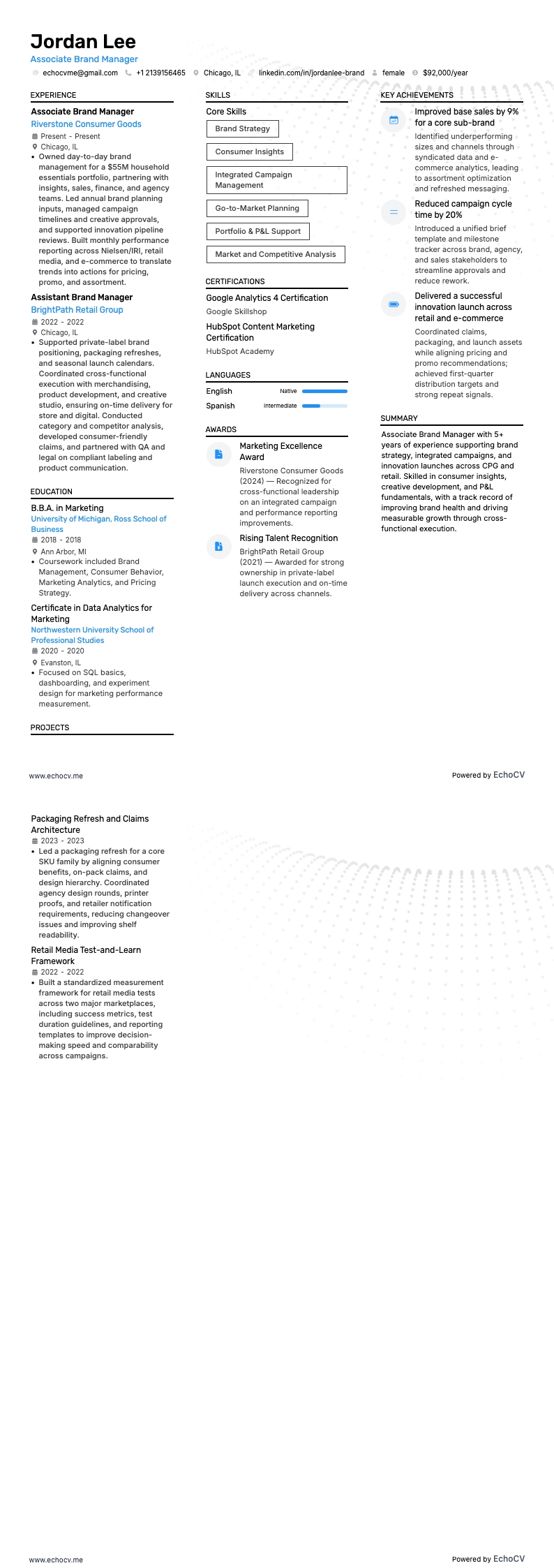
Today, most resumes you see use a single or two-column format. Which one should you choose? When thinking about the design of your resume, consider the following:
- The maximum page length for all resumes is two pages
- A two-column layout allows for more information on a single page
- Applicant tracking systems (ATS) accept two-column formats
brand managers will have 5-10 years of relevant work experience that they can put on their resume. A two-column format is more suited for candidates with a long work history and a plethora of technical, business, and creative skills.
Of course, the layout of your resume is your choice. Play around with both single and double-column resumes to see which one you like the most.
Whichever layout you decide to go with, be sure to save your resume as a PDF document (.pdf) unless they ask for a specific document type. A PDF document preserves the look of your resume no matter what operation system or screen size they use.
Choosing the right brand manager resume font
Did you know that there are over 200,000 different fonts that you can use? Before you begin to panic, most of those fonts are unusable for resumes. The best type of font you want to use for your resume or other professional document is a serif or sans serif font. These fonts include the classics Arial, Courier, and Times New Roman. The total number of these fonts is a more reasonable 450.
Serif and sans serif fonts have a more modern, contemporary look and are more widely used today. Echocv resume templates come with a number of modern, sans serif fonts, like Volkhov, Rubix, Exo 2, Lato, Raleway, and Montserrat.
Different markets have specific resume formats – a Canadian resume could vary in layout.
Is your brand manager resume ready to go? Before sending it out to recruiters and hiring managers, run it through our resume checker for an in-depth analysis and tips on improving it.
Here are the five main resume sections that you want to include: