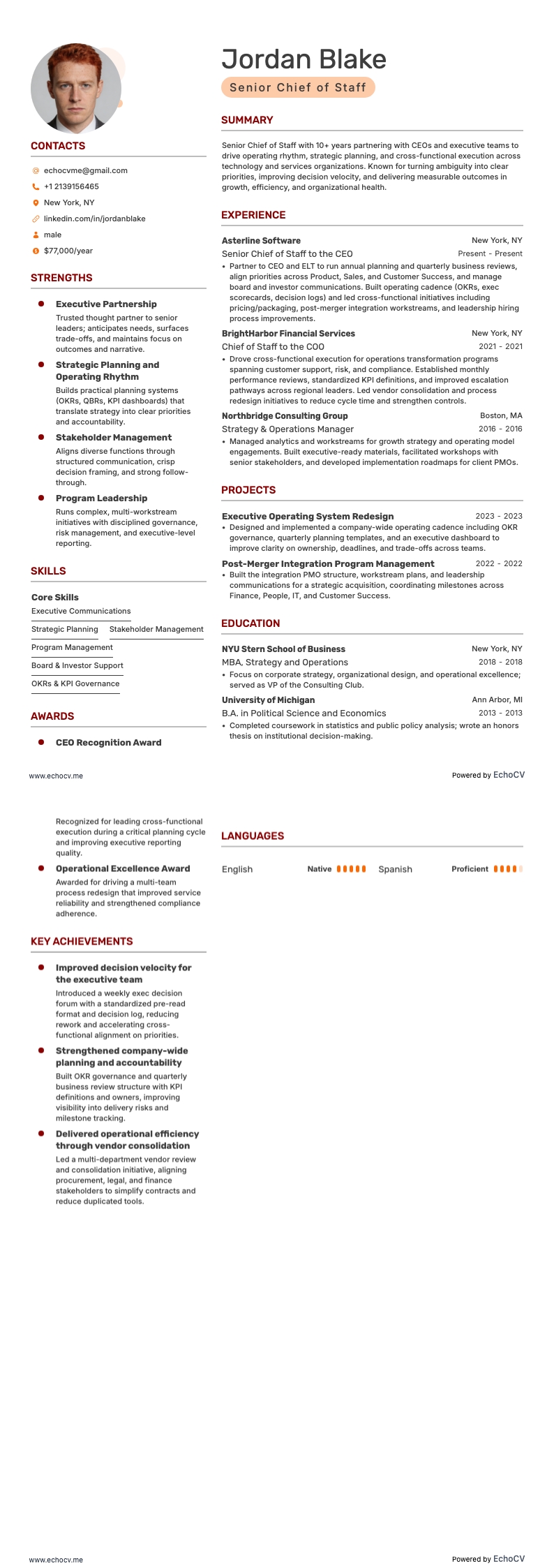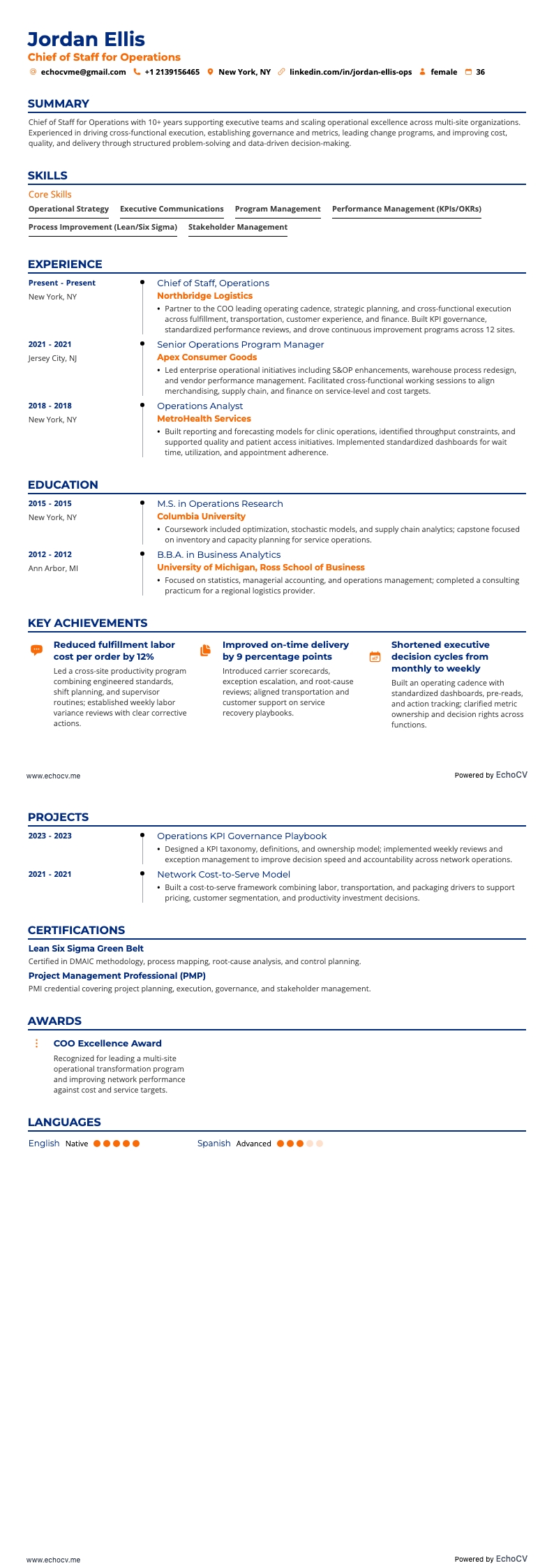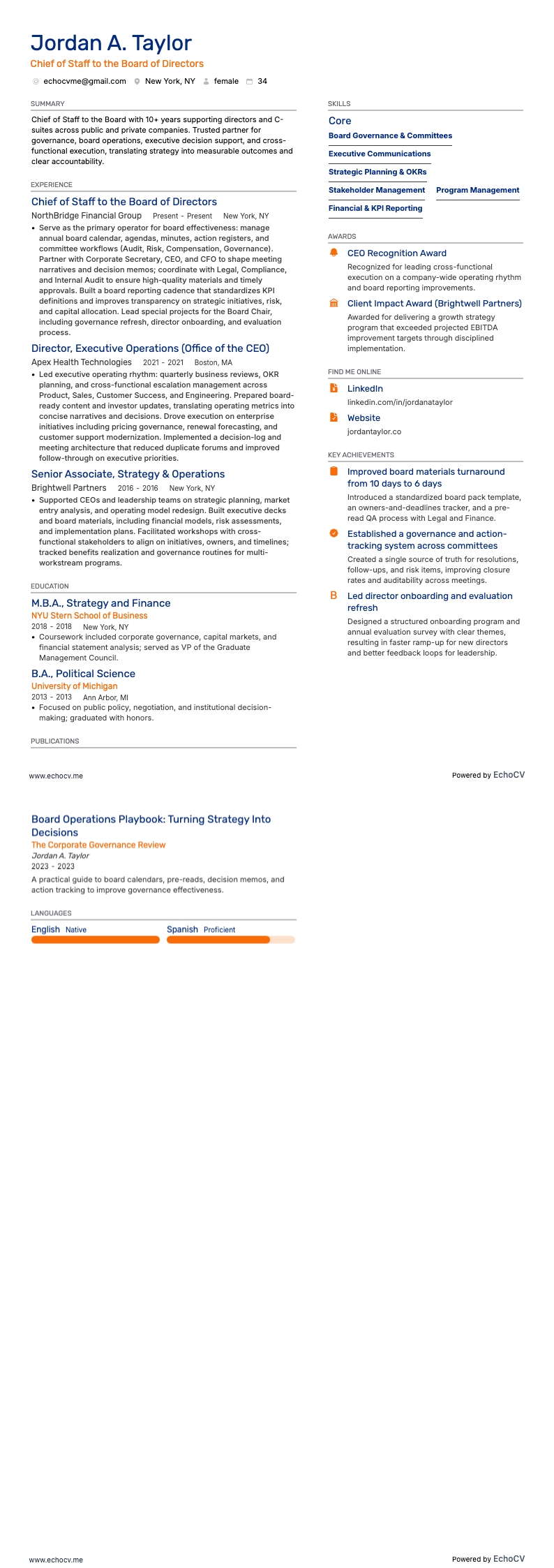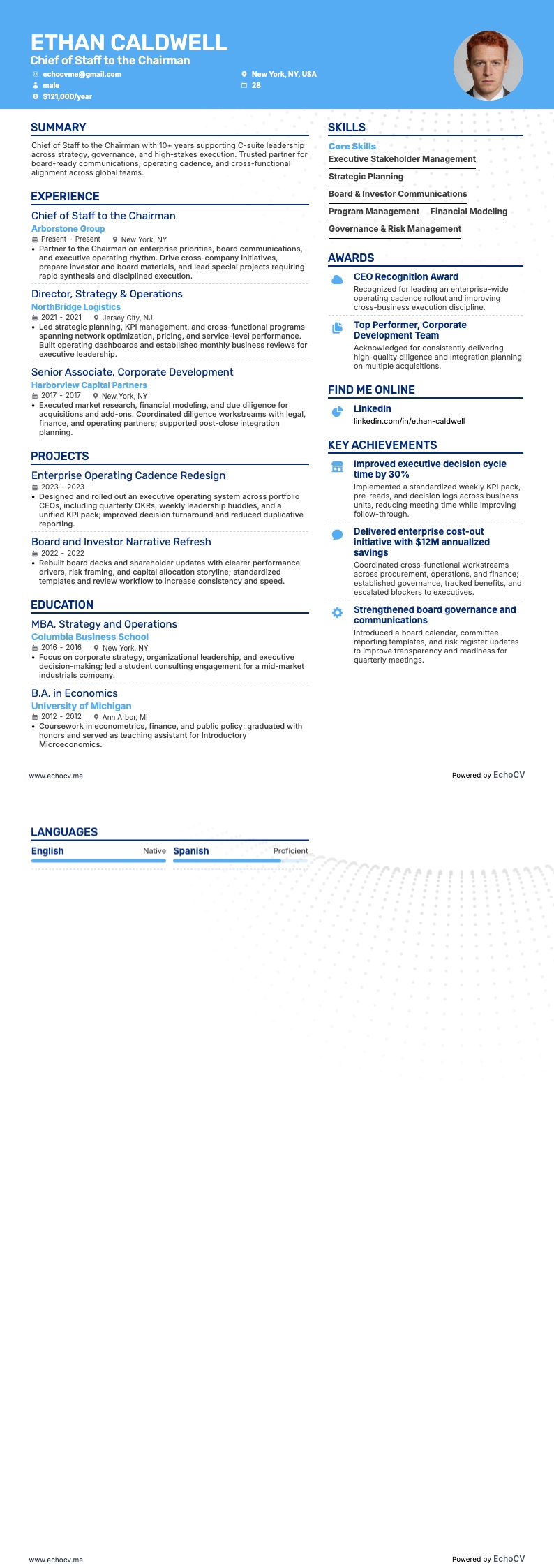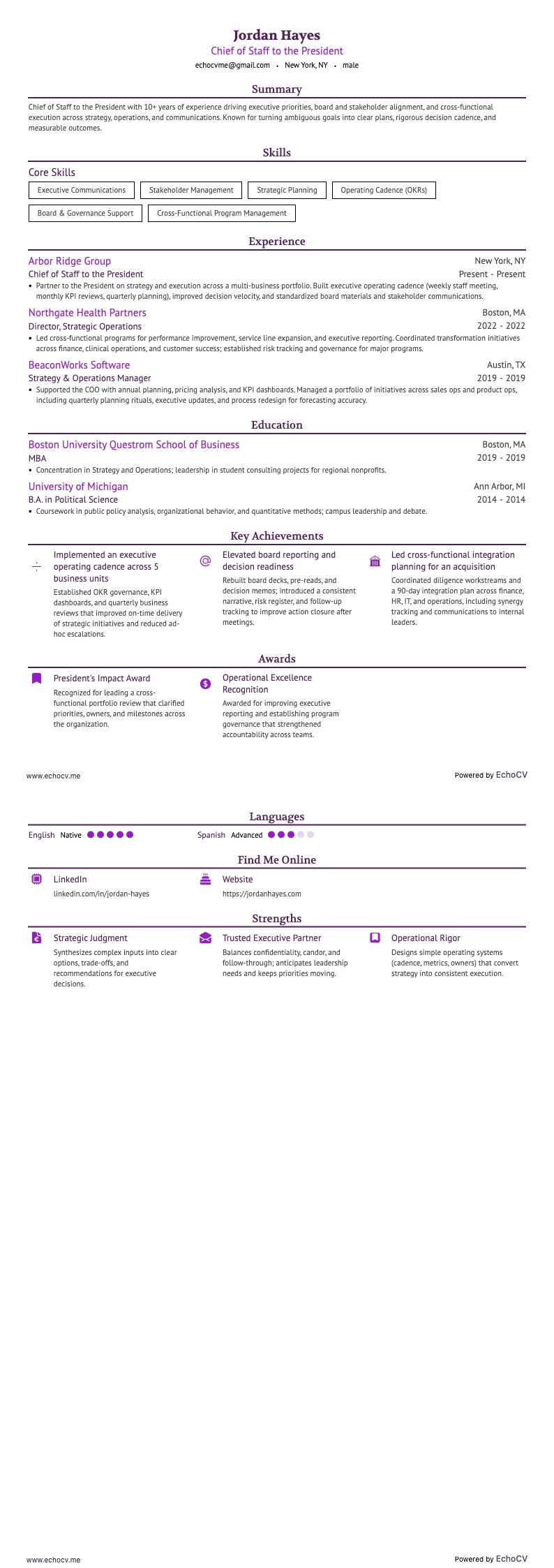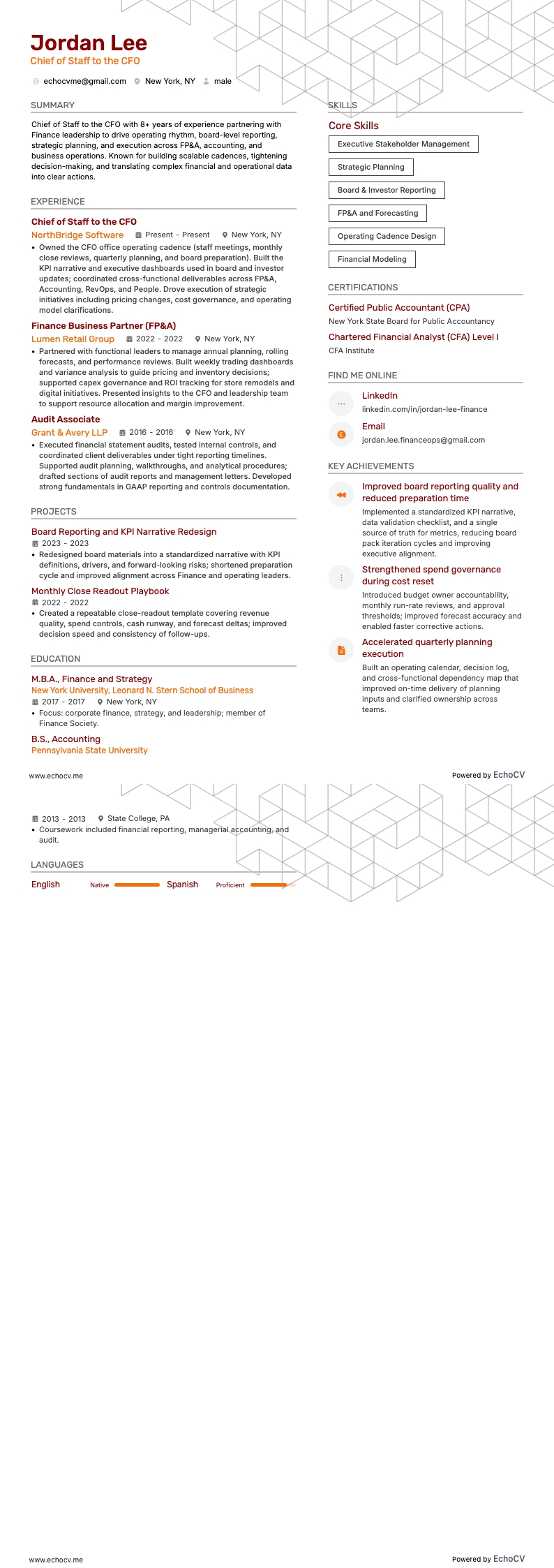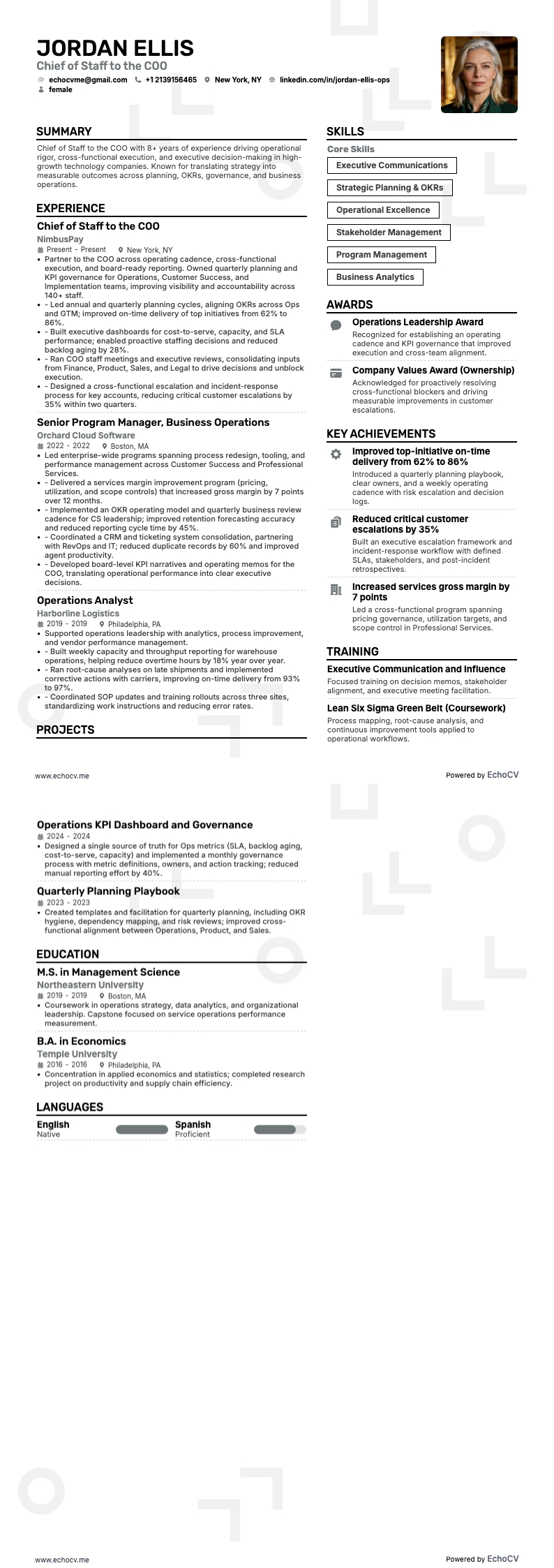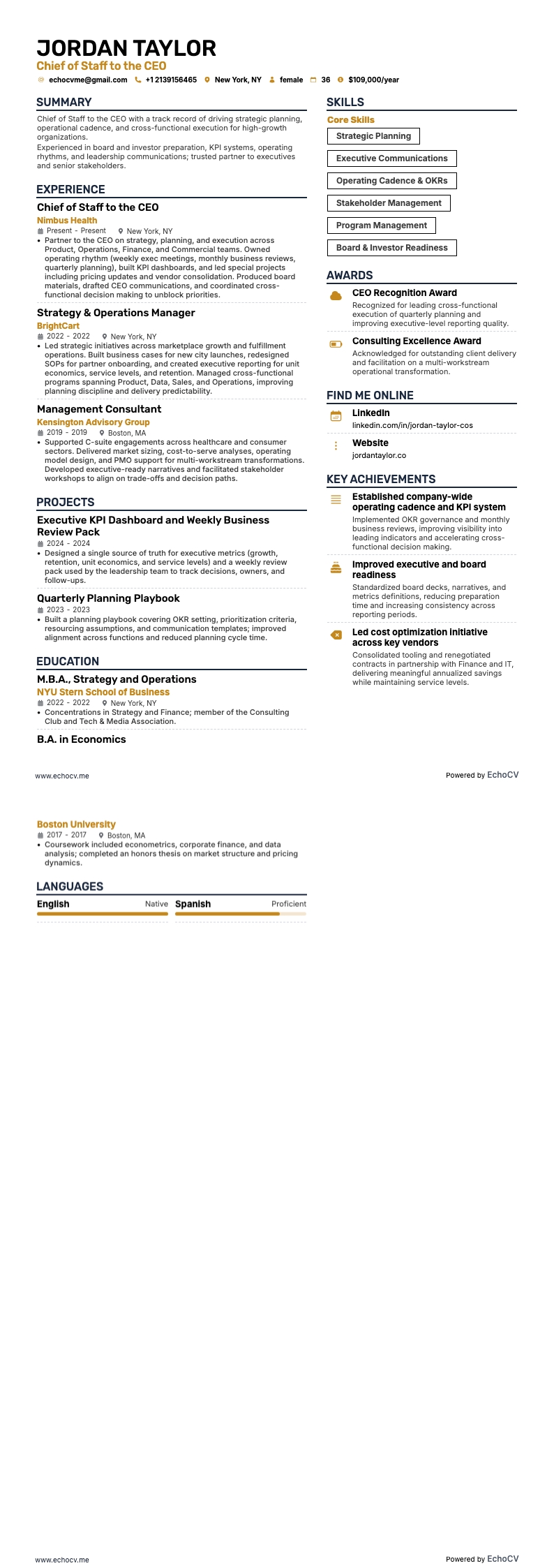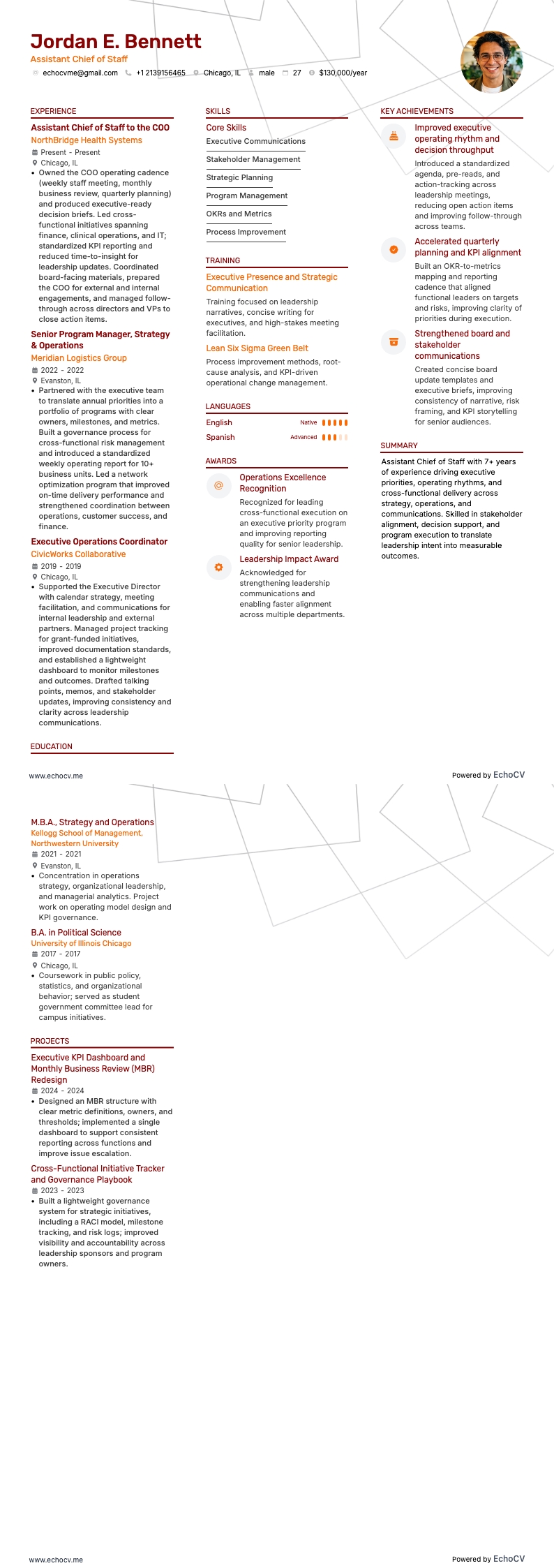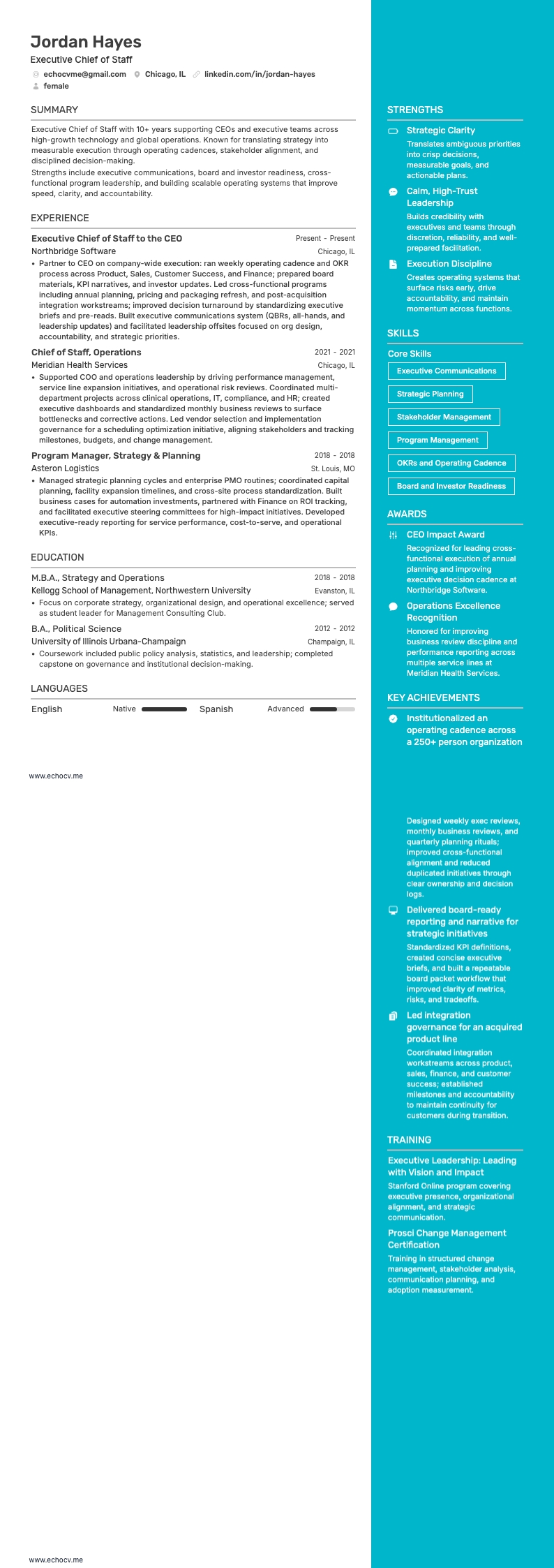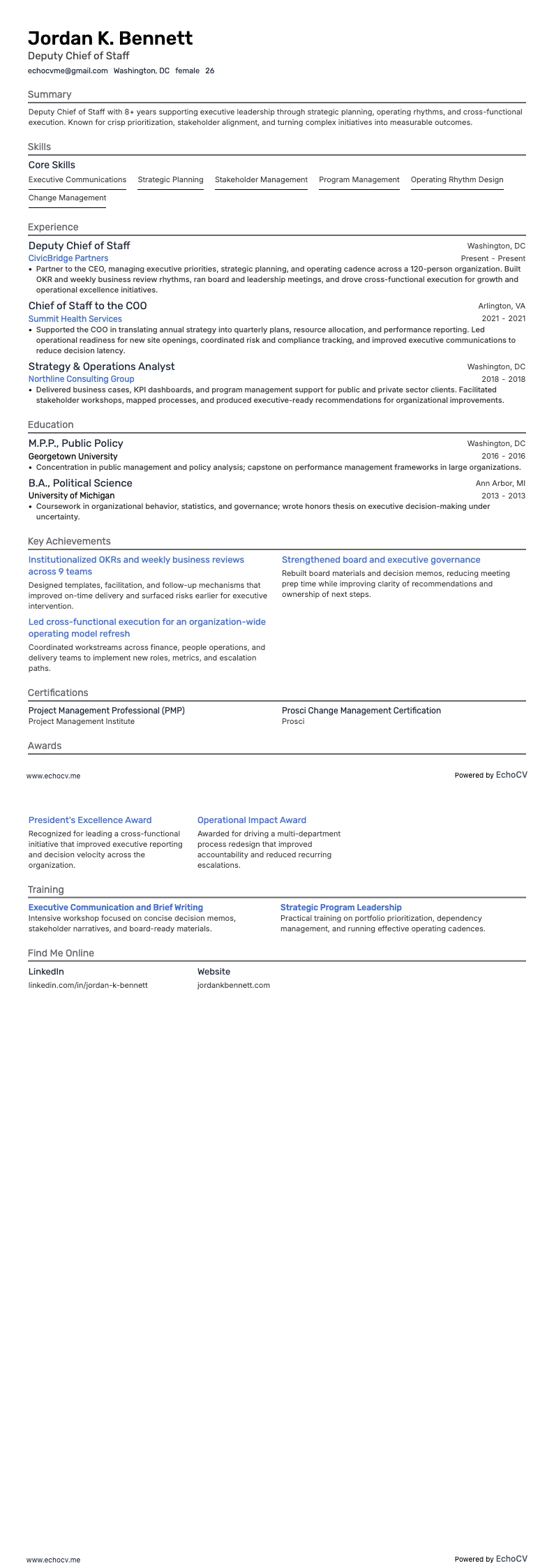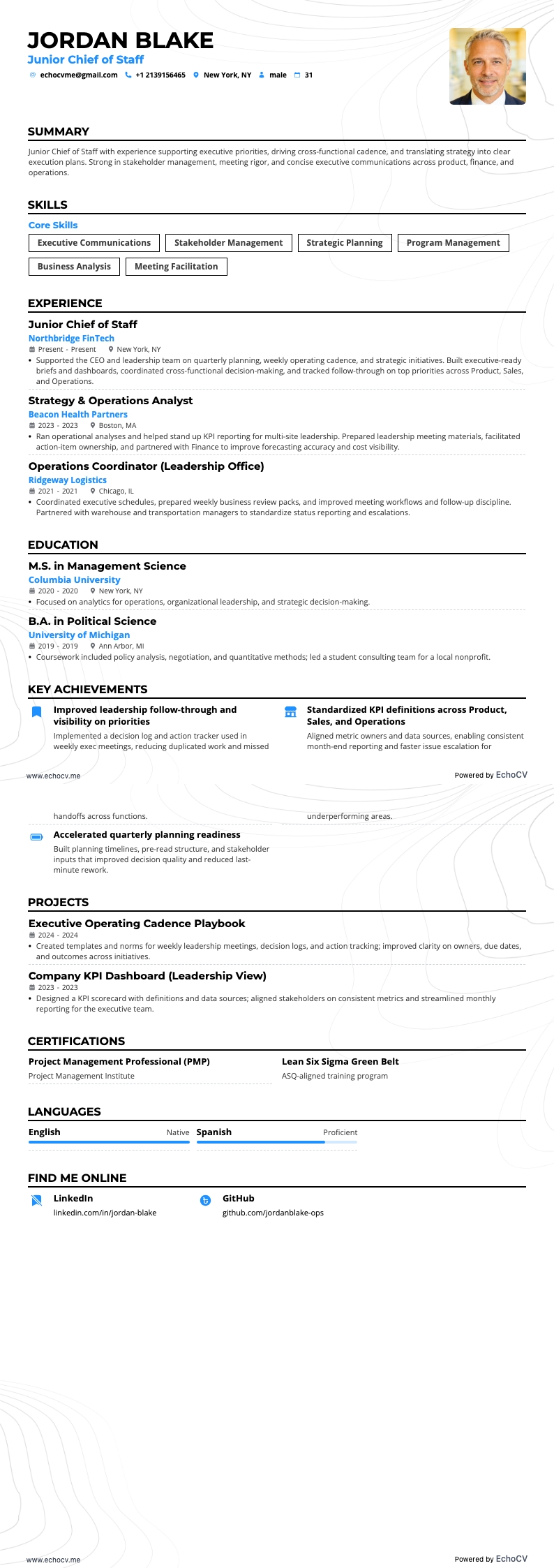
What went well in this example?
Other than the points mentioned above, what this resume example does well is that it is expanded and developed, while also being easy to read. Every single point that they make is backed up by a quantifiable example. For example, the author “orchestrated a comprehensive strategic planning process resulting in a 15% year-over-year revenue growth and a 20% increase in market share within two years.” A recruiter or a hiring manager could even be able to skim through your resume section looking for these percentages or data points that show how you’ve succeeded. Once you’ve grabbed the attention of a hiring manager, they’ll read more and see all the steps that you took to become successful.
How to quantify the impact on your resume
It’s important to quantify the impact you’ve made in previous roles because you can add credibility to the claims that you make. It’s the adage “You can talk the talk, but can you walk the walk?”. Many people can claim to have made a difference at their previous workplace, but how did you make a difference?
In addition, do not make any false claims or exaggerate what you’ve done in previous roles. Keep in mind that everything that you write on your resume may be fact-checked, and they might speak to your previous employer or other team members to help shed some light on some claims that you’ve made. If you pump up a percentage to make yourself seem more successful, the numbers don’t lie. And eventually, you’ll be found out.
Stick to what you’ve accomplished, and don’t take credit for what other people have done. As a chief of staff, everything that other people have accomplished falls under your guidance. However, an employer can spot when you’re trying to puff yourself up.
Examples of ways to quantify impact:
- Include percentage improvements in organizational efficiency or process optimization, showing your capability to drive measurable advancements.
- Mention dollar amounts saved or generated through strategic initiatives, demonstrating your direct impact on the company's bottom line.
- Highlight the number of cross-functional projects led, showcasing your ability to manage diverse teams and tasks.
- List specific metrics related to change management successes, revealing your proficiency in guiding businesses through transitions.
- Detail any growth in team size or resources you've managed, indicating your leadership capacity and scalability.
- Specify the number of C-suite executives or board members you've worked directly with, underlining your experience in high-level collaborations.
- Incorporate any quantifiable improvements in stakeholder or employee satisfaction, portraying your emphasis on people and culture.
How to list your hard skills and soft skills on your resume
As a chief of staff, you’ll likely have a long list of hard skills that you’ve picked up through many years of work experience. Hard skills, often called ‘technical skills’, are often gleaned through hands-on work, and involve skills applicable to a specific workplace. Whether it’s your unique experience in handling crises or distinct familiarity with customer relationship management software, you’ve made a vast difference through your technical, job-specific skills.
Yet, it’s easy to forget about all the soft skills that you’ve cultivated. Soft skills, commonly referred to as ‘people skills’, are often gained through experience working with people. Your leadership skills have allowed you to streamline operations and optimize workflows.
It’s beneficial to include both your hard skills and soft skills on your resume because it can help to show you in a well-rounded light. You can learn the mission and vision of the organizations and apply your knowledge to create KPIs and unique expectations for each department you oversee. This can in turn allow you to develop a fleshed-out organizational awareness of the company you work for.
4-step process for listing skills on your resume
- List all the skills that you possess: Include both the hard and soft skills that you’ve cultivated in your previous experience.
- Separate your skills between hard and soft skills
- Review the job description: Look at the job description and you’ll see specific skills which are required to fulfill the role. These are the skills that future employers are looking for on your resume.
- Edit the list for the skills that are most applicable to the job: Tailor the list so that it fits with the job that you’re applying for. You may need to get rid of some skills that don’t fit. For example, if your previous role involved a lot of technical IT support because you oversaw many operations of programmers and IT professionals, you may not need to list them if you’re applying for a role as chief of staff at a hardware company.