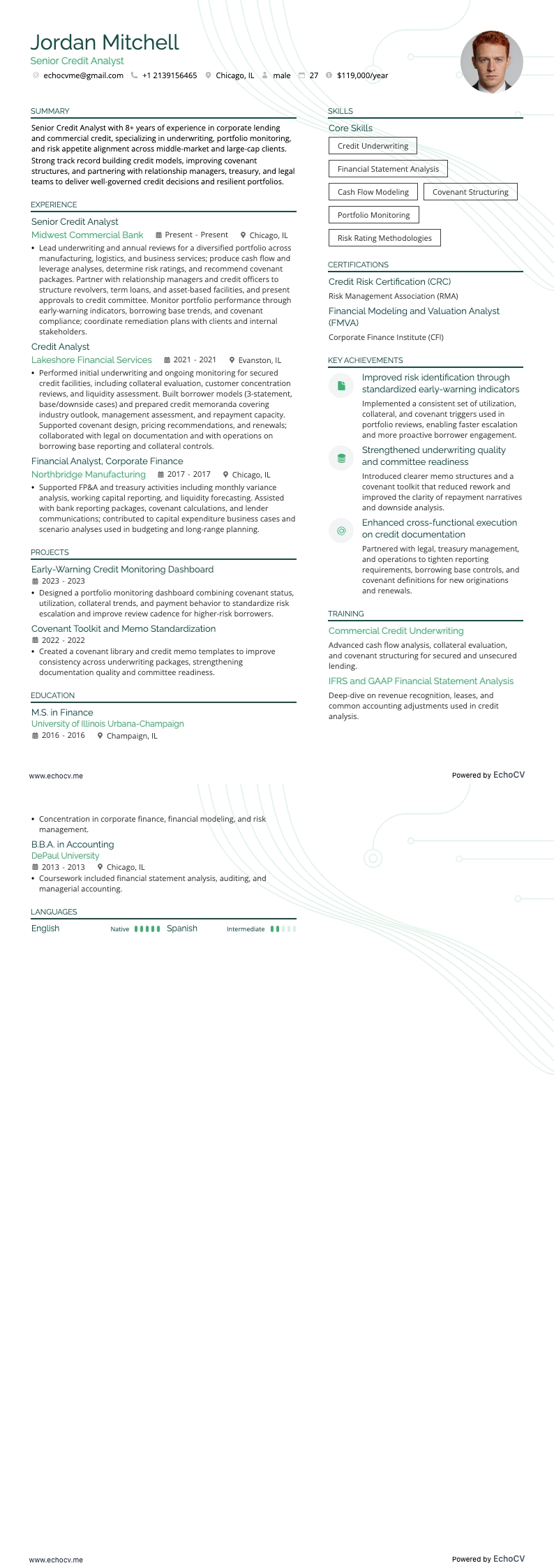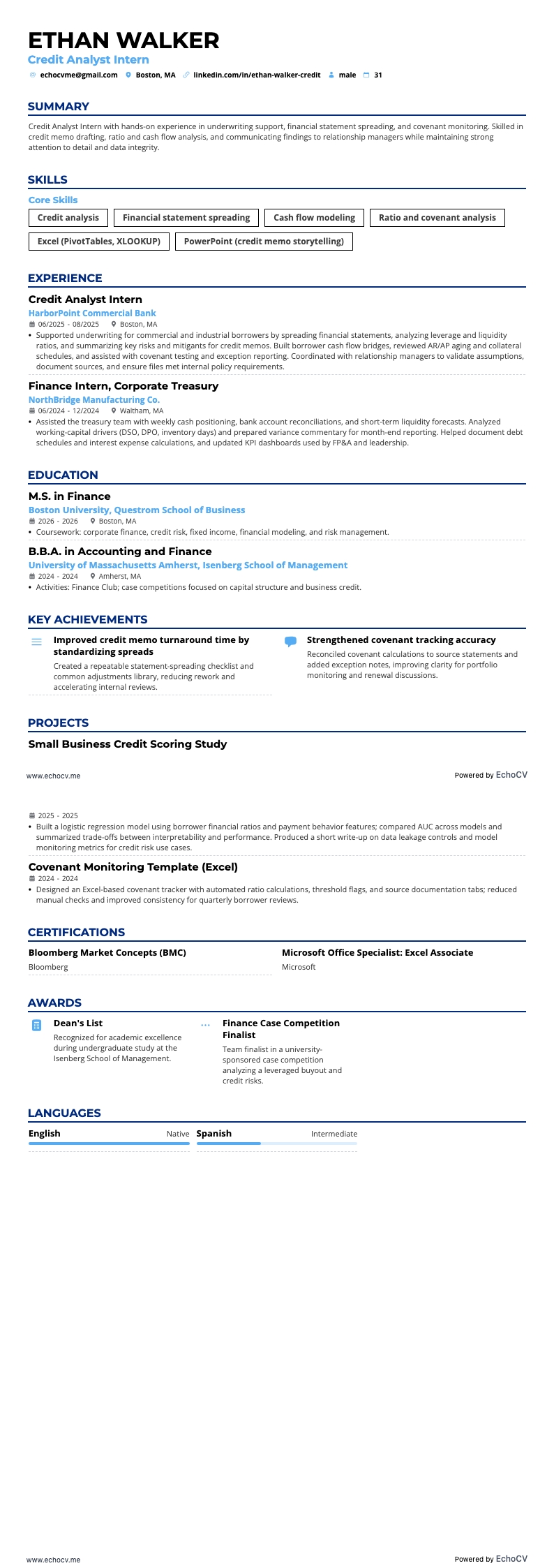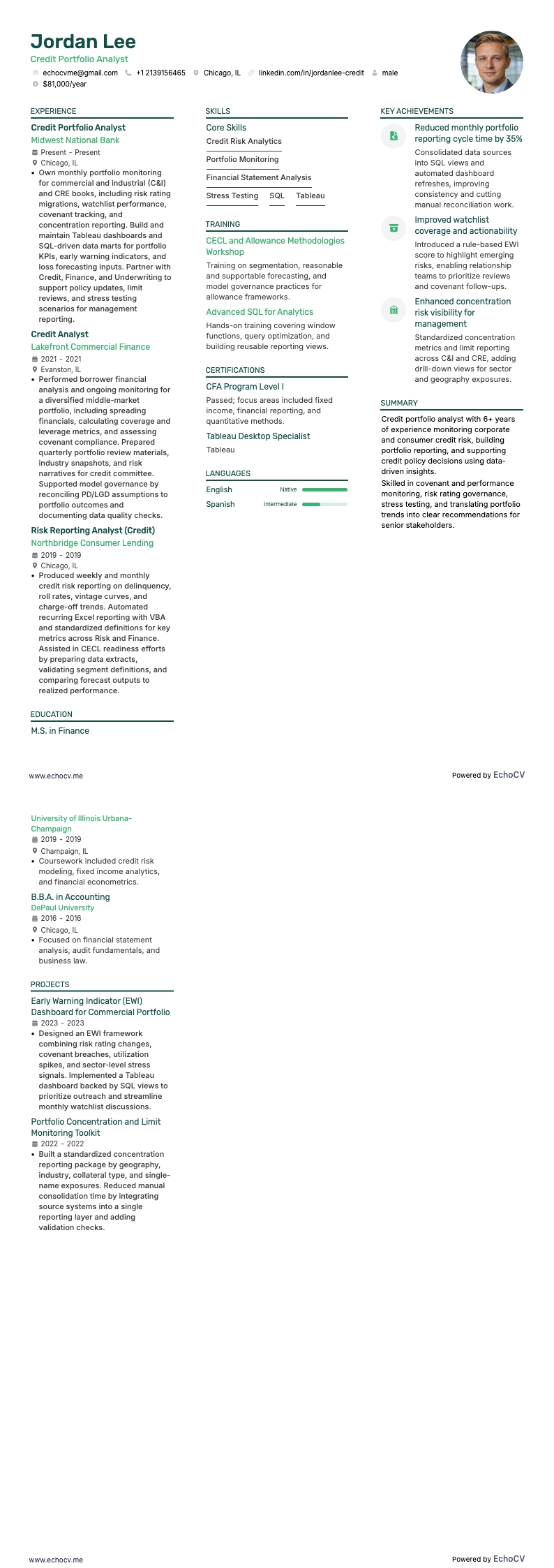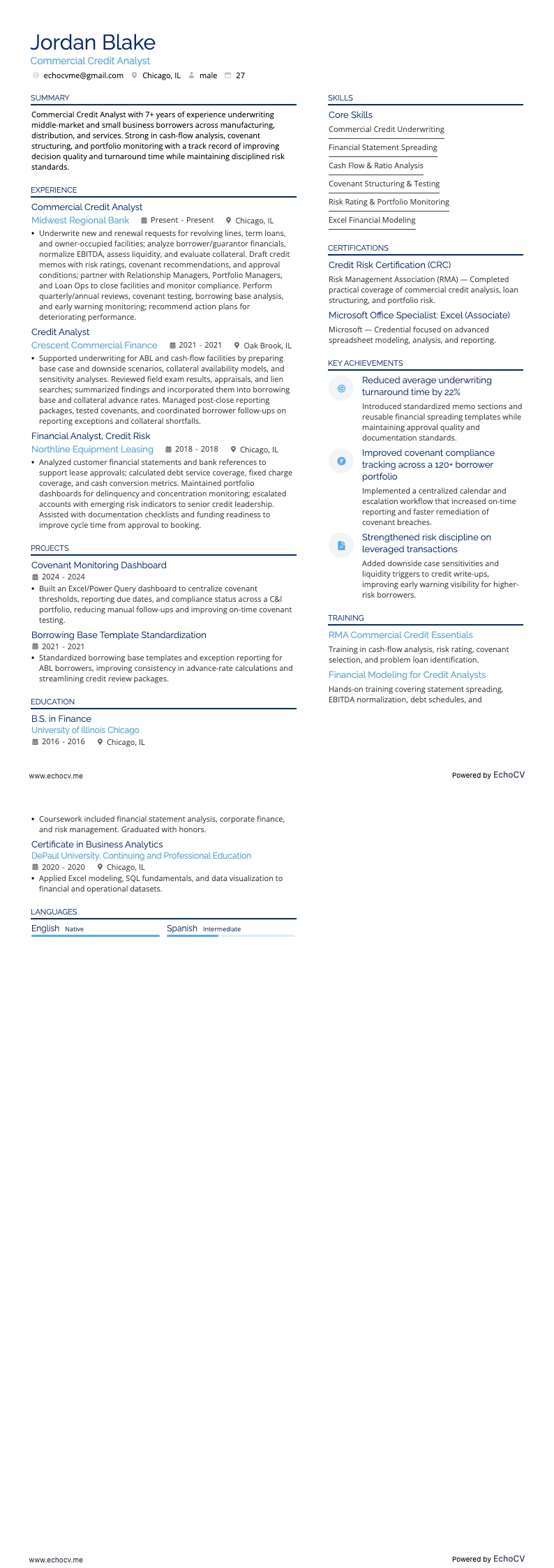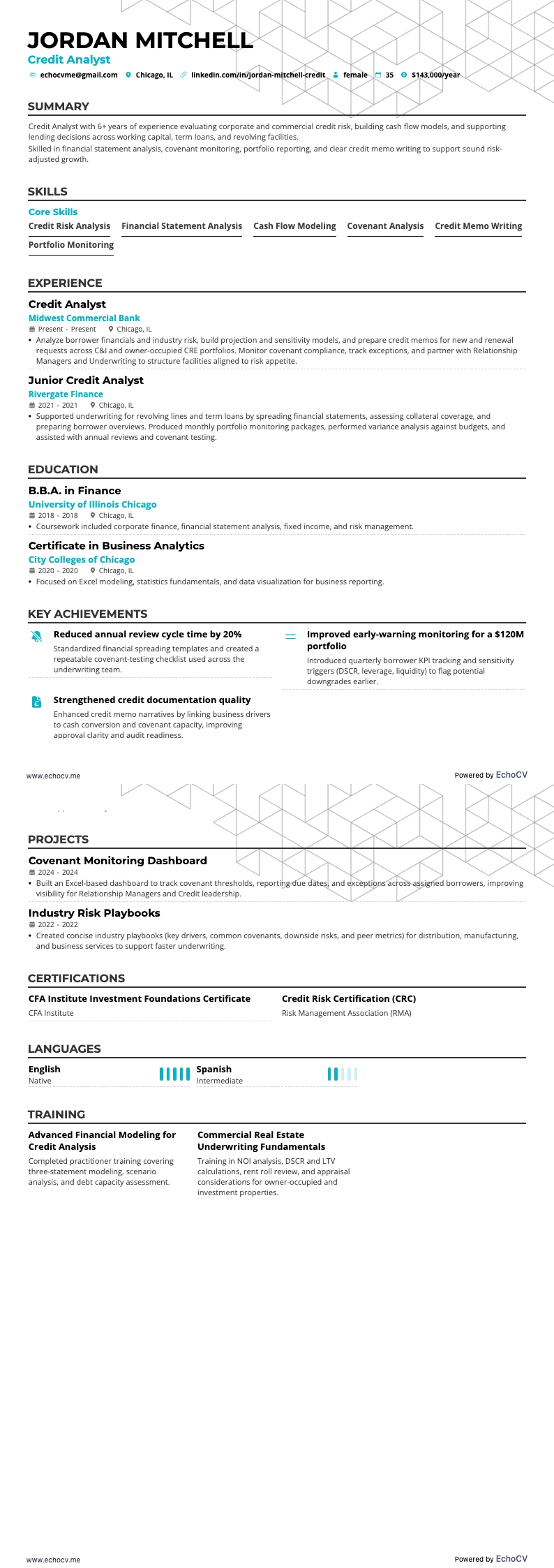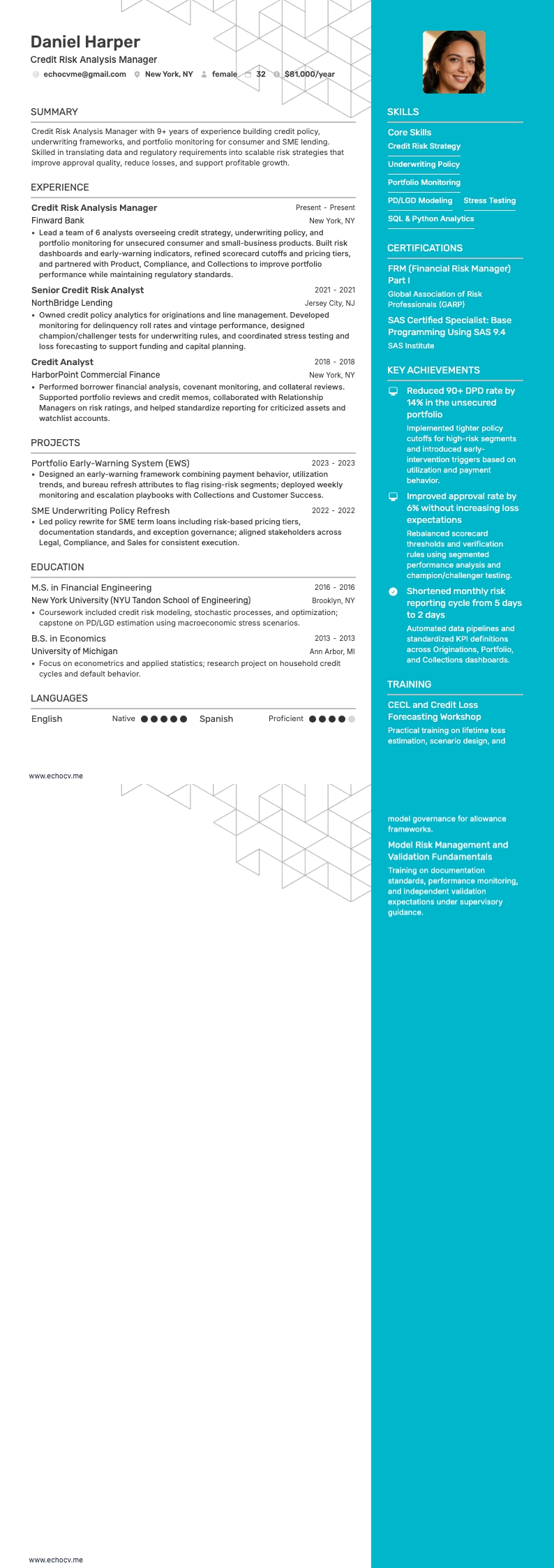
Once you’ve organized your resume with the right structure, focus next on writing your credit analyst experience section to show how you’ve applied those elements in your work history.
How to write your credit analyst resume experience
Your experience section proves you can assess creditworthiness, manage risk, and deliver sound recommendations that protect a lender's portfolio. Hiring managers prioritize demonstrated impact—approved credit facilities, refined scoring models, reduced default rates—over descriptive task lists that only recount daily duties. Building a targeted resume that reflects each employer's priorities makes this section far more effective.
Each entry should include:
- Job title
- Company and location (or remote)
- Dates of employment (month and year)
Three to five concise bullet points showing what you owned, how you executed, and what outcomes you delivered:
- Ownership scope: the credit portfolios, borrower segments, risk rating systems, or underwriting pipelines you were directly accountable for.
- Execution approach: the financial modeling techniques, credit scoring platforms, ratio analysis frameworks, or regulatory guidelines you applied to evaluate borrower risk and structure lending decisions.
- Value improved: the changes you drove in default rates, approval turnaround times, portfolio quality, loss reserves, or compliance accuracy that strengthened the organization's credit posture.
- Collaboration context: how you partnered with relationship managers, loan officers, risk committees, legal teams, or external auditors to align credit decisions with broader business and regulatory objectives.
- Impact delivered: the outcomes your work produced—expressed through portfolio performance, risk reduction, process efficiency, or revenue protection—rather than a summary of tasks you performed.