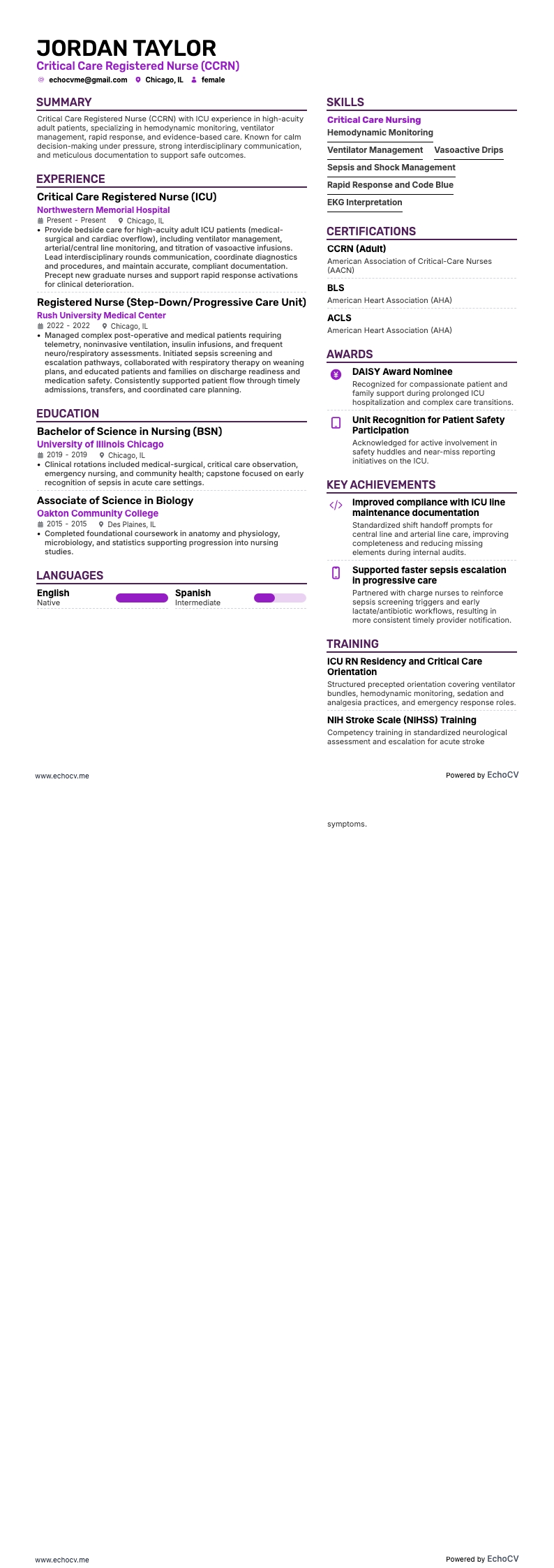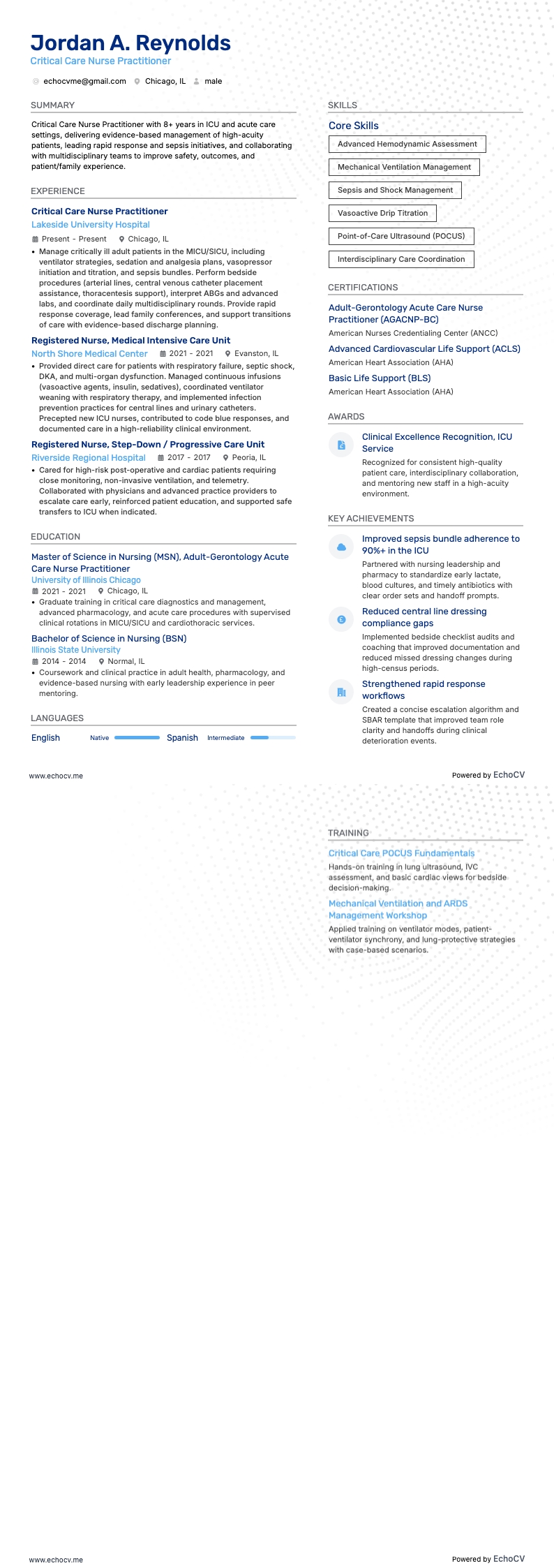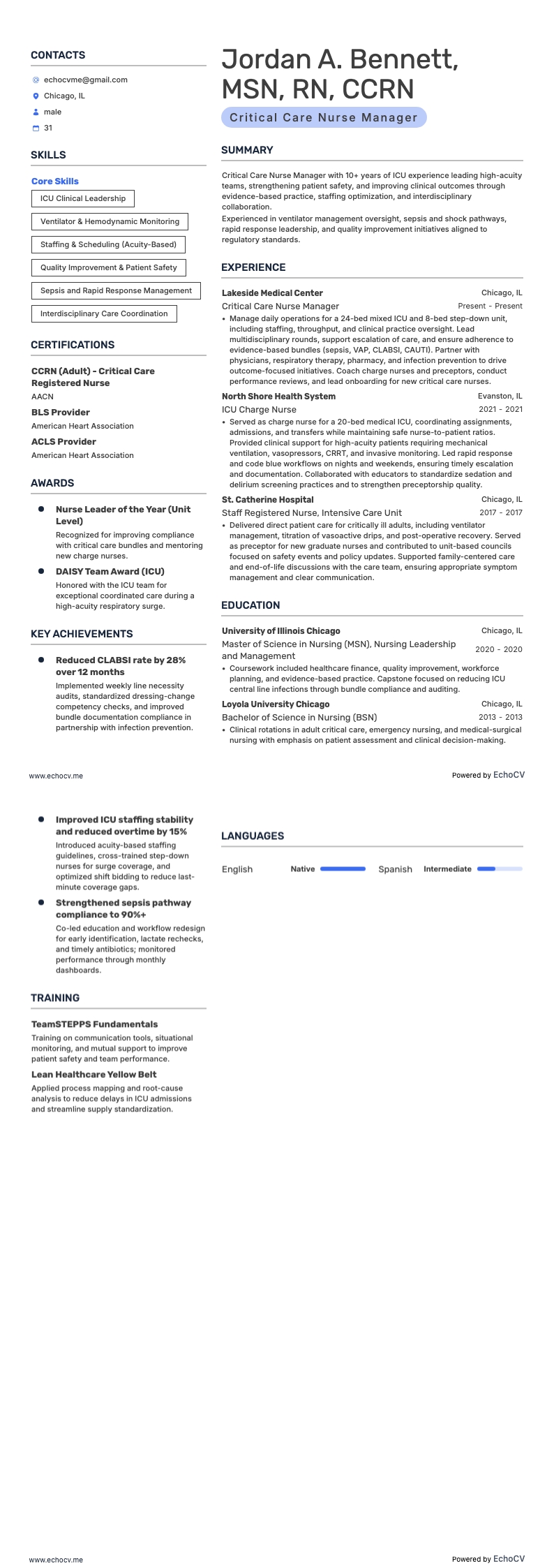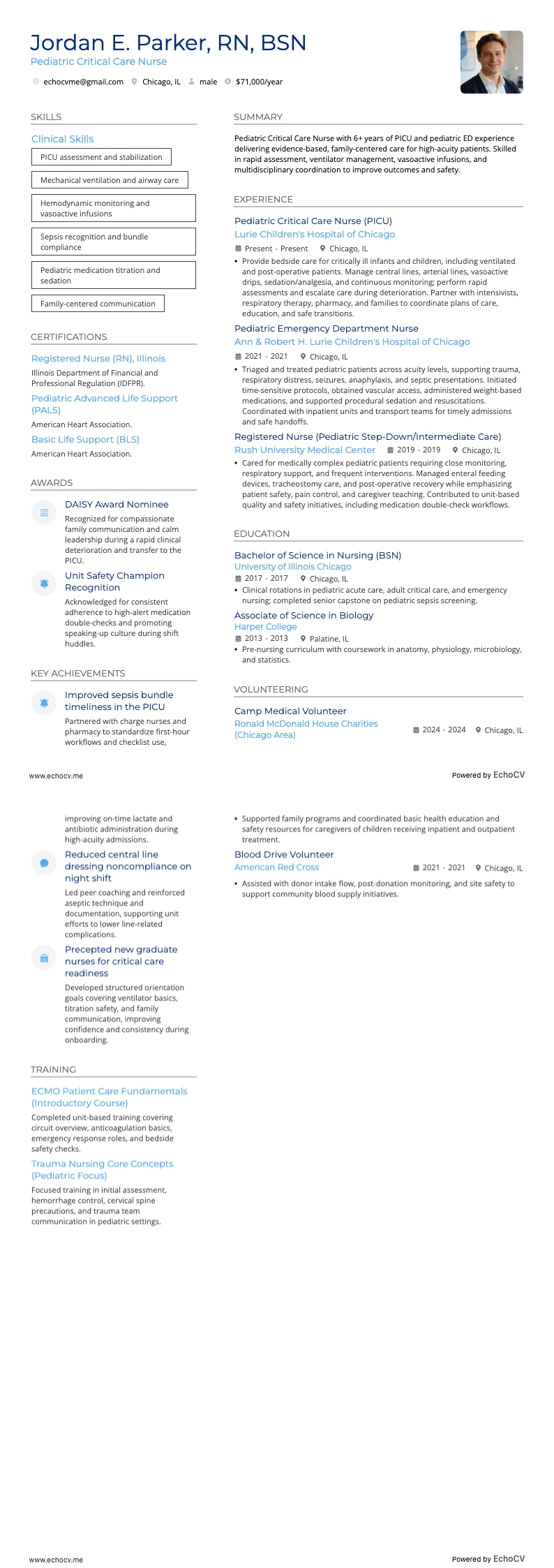
Employment of registered critical care nurses is projected to grow 6% from 2022 to 2032, faster than the average for all occupations according to US Bureau of Labor Statistics. So yes, definitely this profession is in demand and the critical care nurse job market is wide open for candidates.
If you're a critical care nurse, it's certainly not uncommon to fight with the thought "Patients often transition to palliative care later than ideal, leaving me feeling as though I'm causing them more harm than good."
Though the role is undeniably exhausting on both a physical and emotional level, at your core, you recognize its value.
You can be sure that this job will never be boring or at least it won't be often. Admittedly, this role offers a consistently engaging and diverse experience, rarely monotonous. It includes its share of challenges and tough times, yet it is ultimately fulfilling and rewarding professionally.
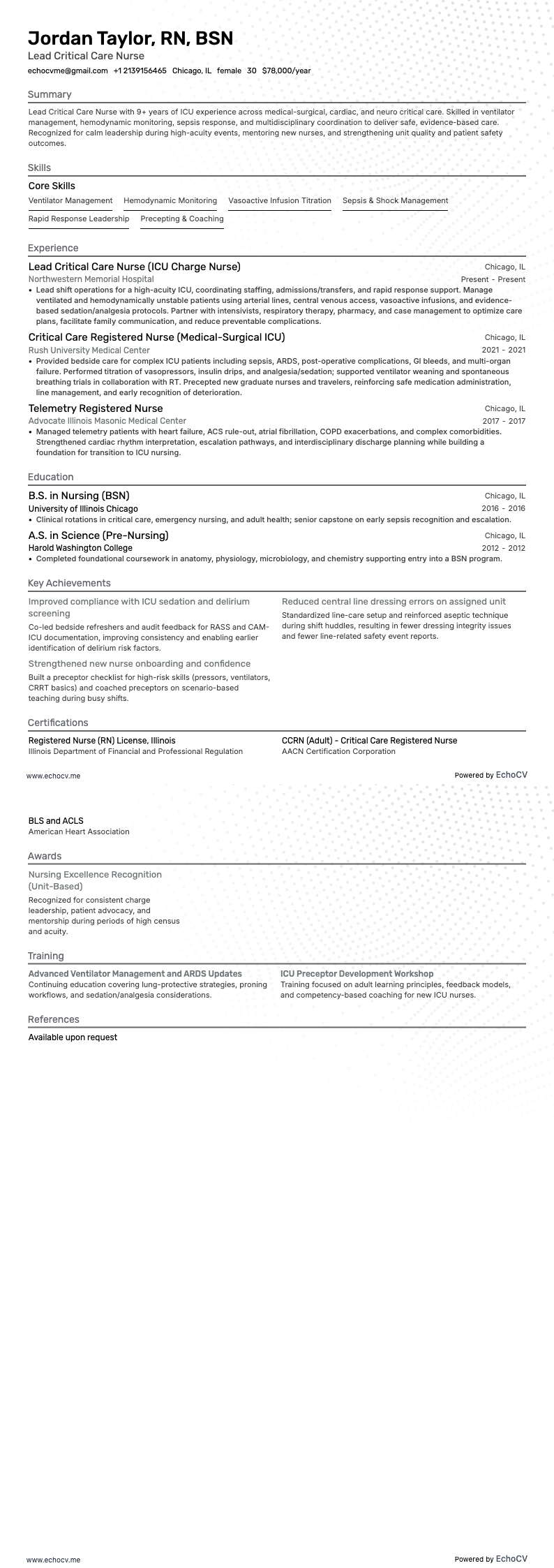
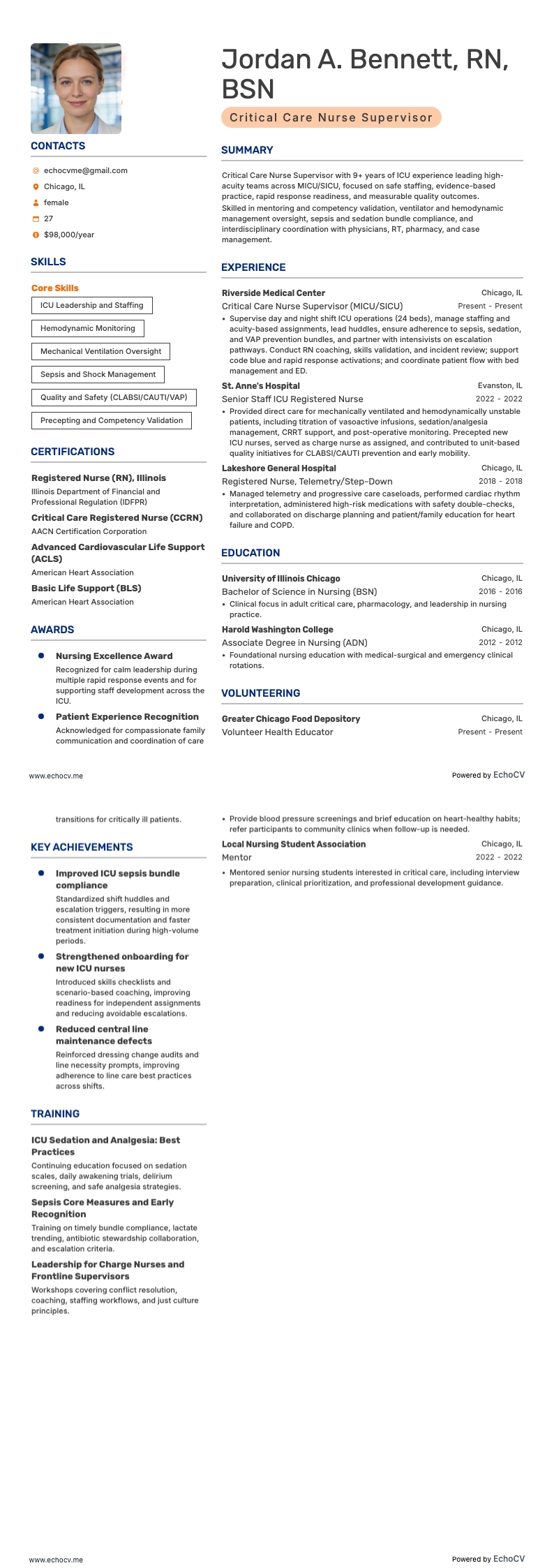
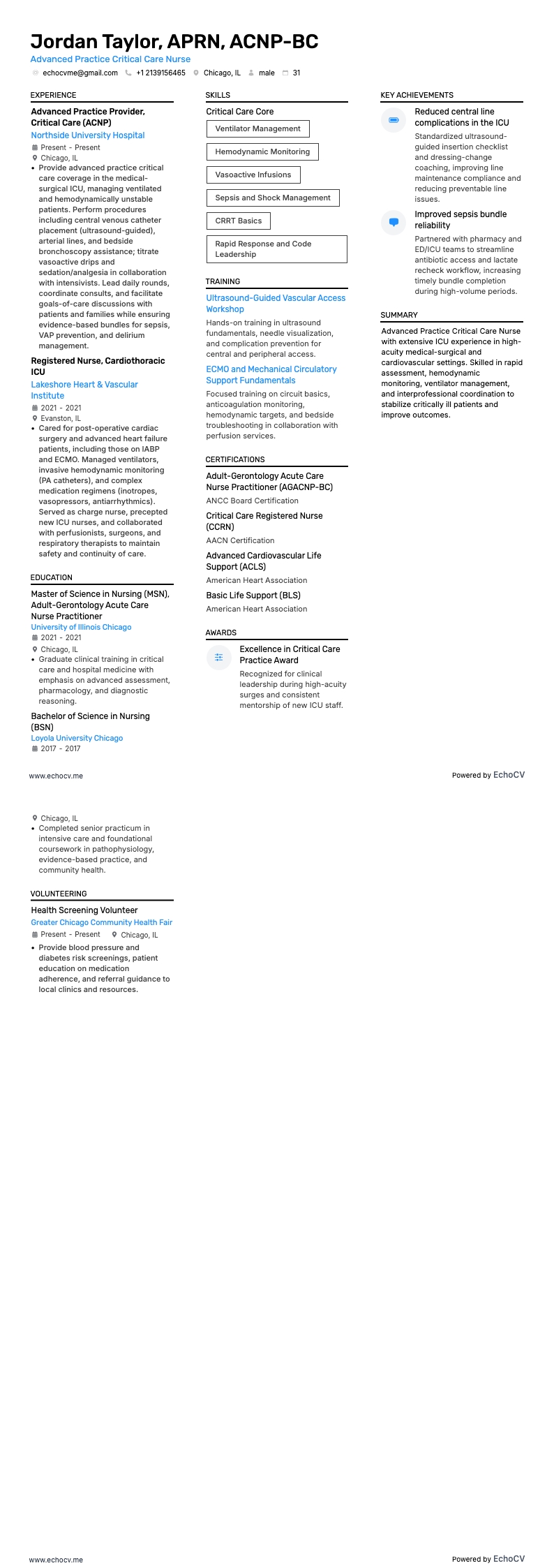
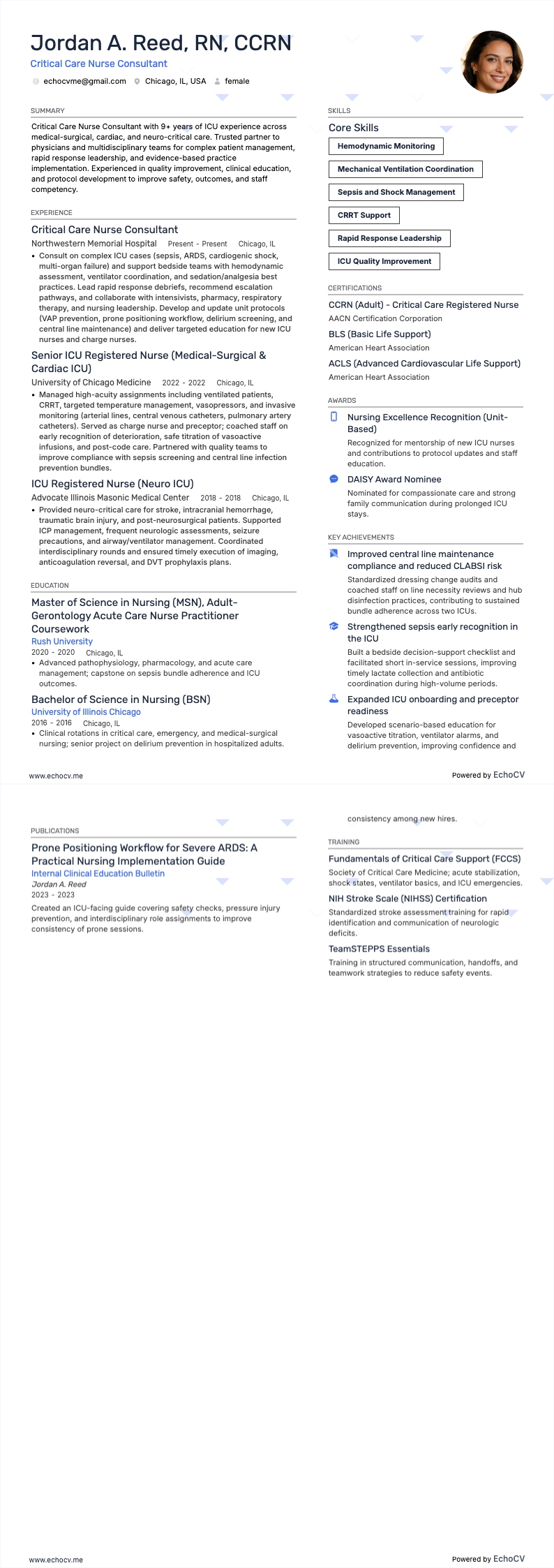
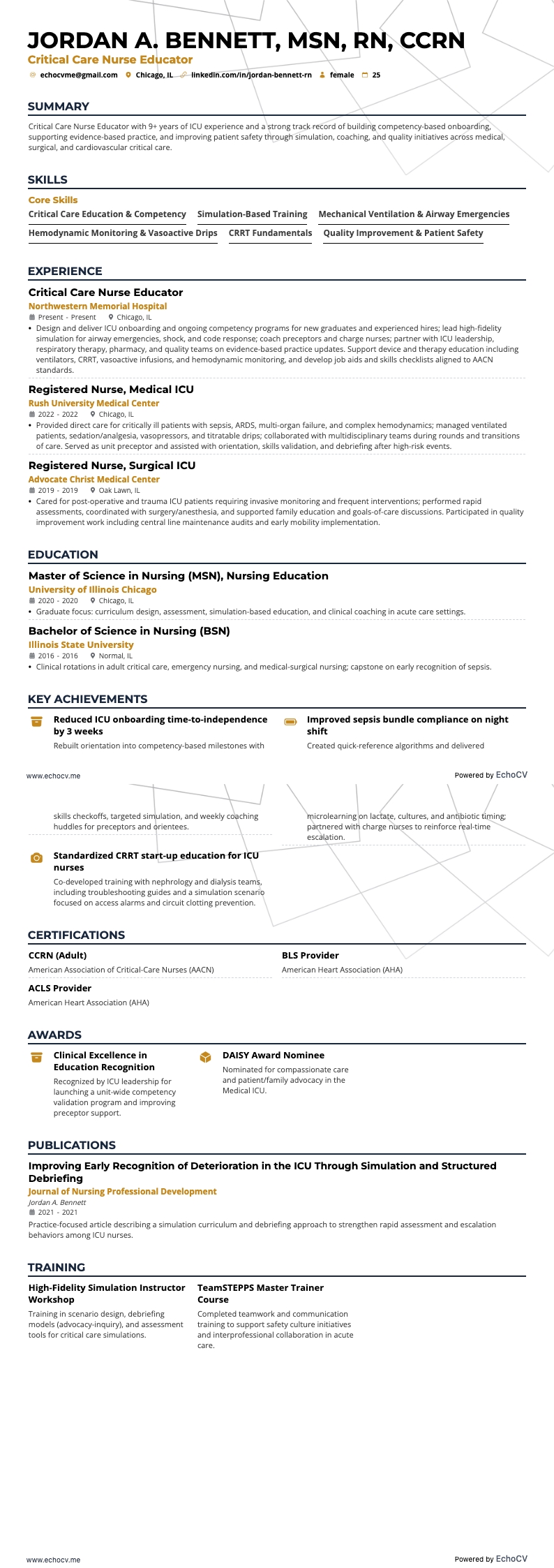
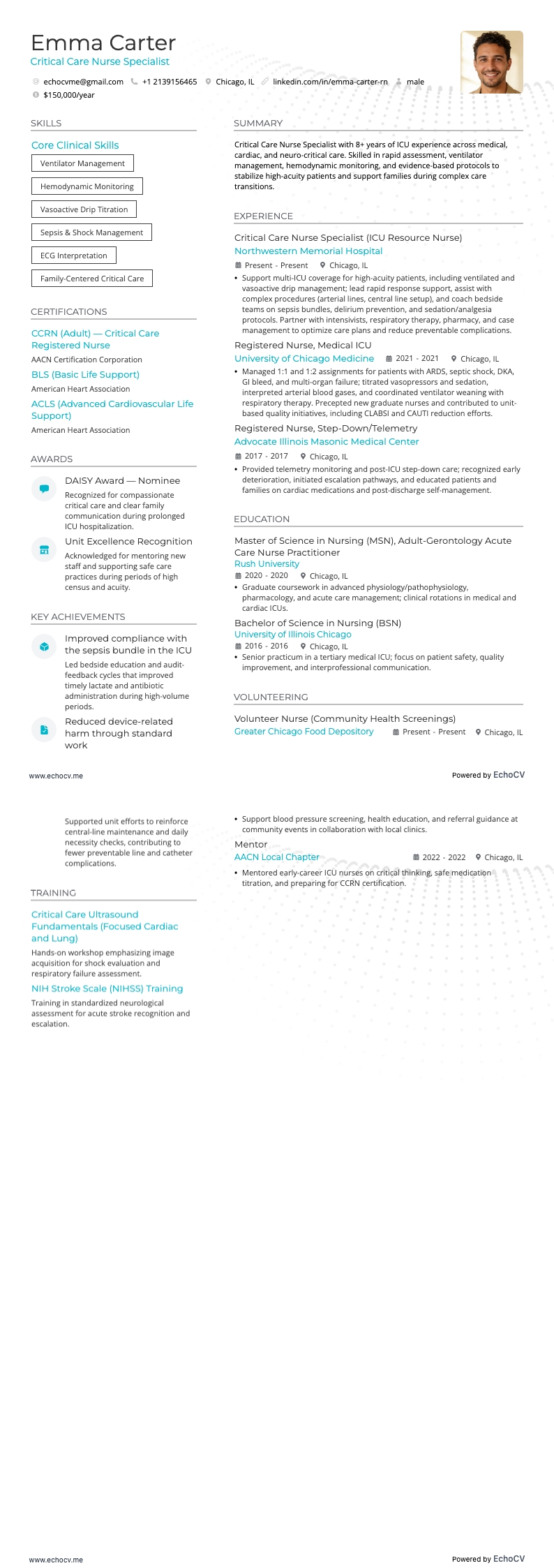
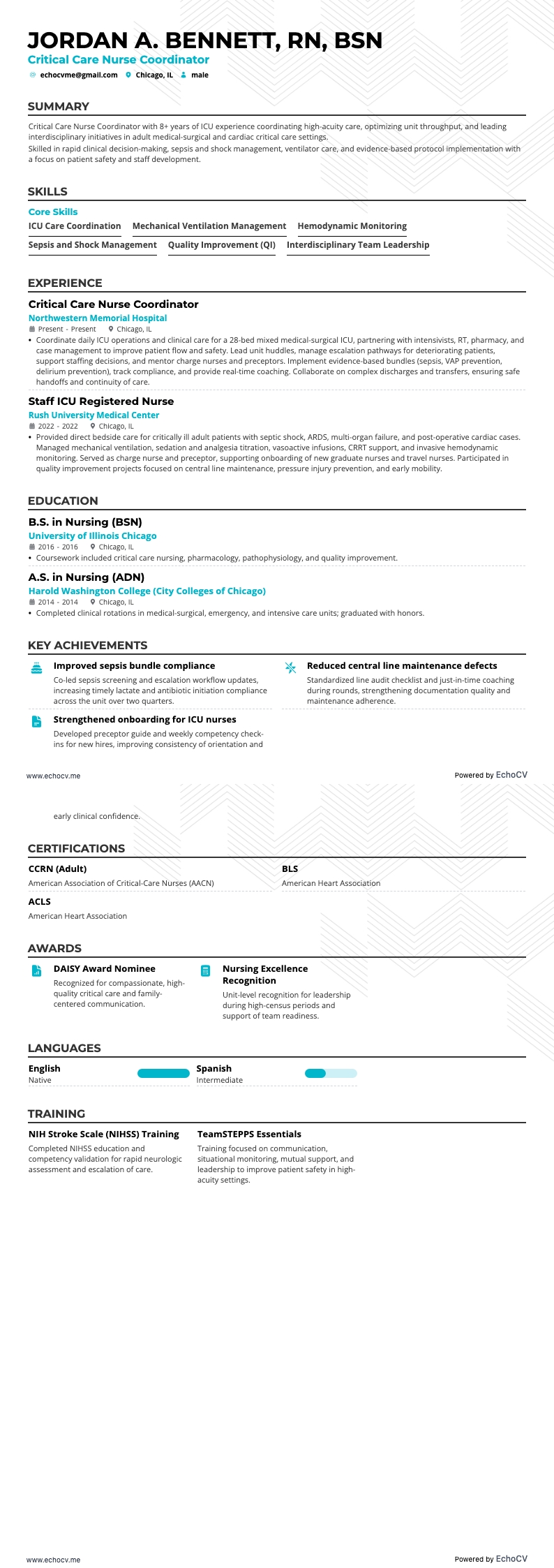
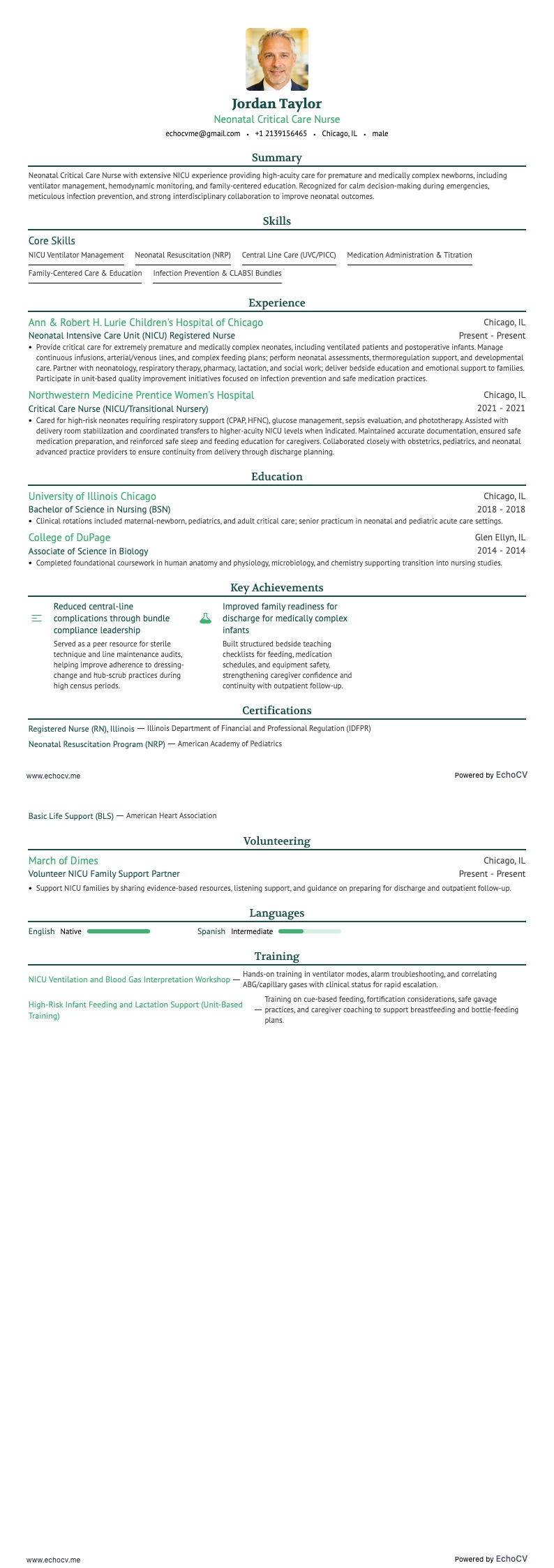
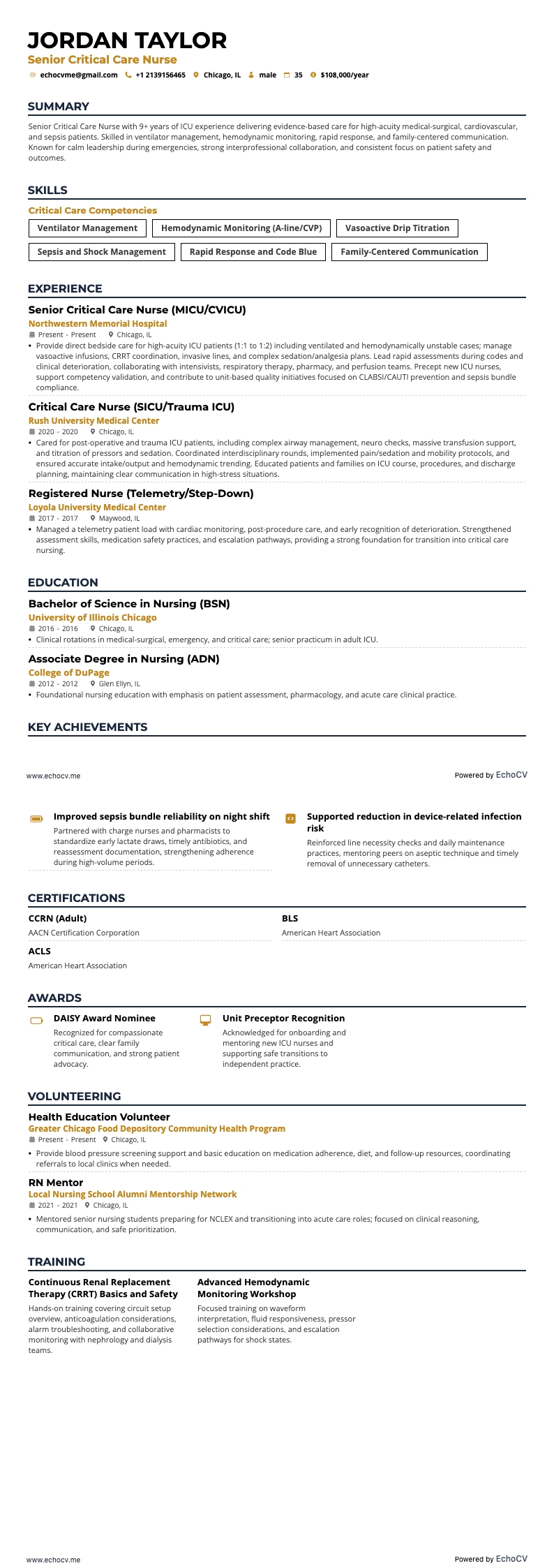
Keep in mind that a critical care nurse's resume requires a specialized format and criteria. On our website, you can find different appropriate resume templates that will help you stand out.
Your resume must clearly demonstrate your extensive range of skills, emphasizing your patient-centered care, evidence-based practice, and a mix of compassion with clinical expertise.
So, how can you achieve that? See how, along with more, in this guide:
- What should be the central focus of your critical care nurse resume
- How to craft an impactful professional summary tailored to nursing
- What experiences you should highlight according to an experienced critical care nurse
- How to make your resume stand out to recruiters in healthcare
- Which skills are essential to include on your resume
Searching for similar resumes and guides? We got you covered:
If these examples provide useful guidance, be sure to incorporate them into your resume. Now, let's explore the effective strategies employed in critical care nursing resumes.