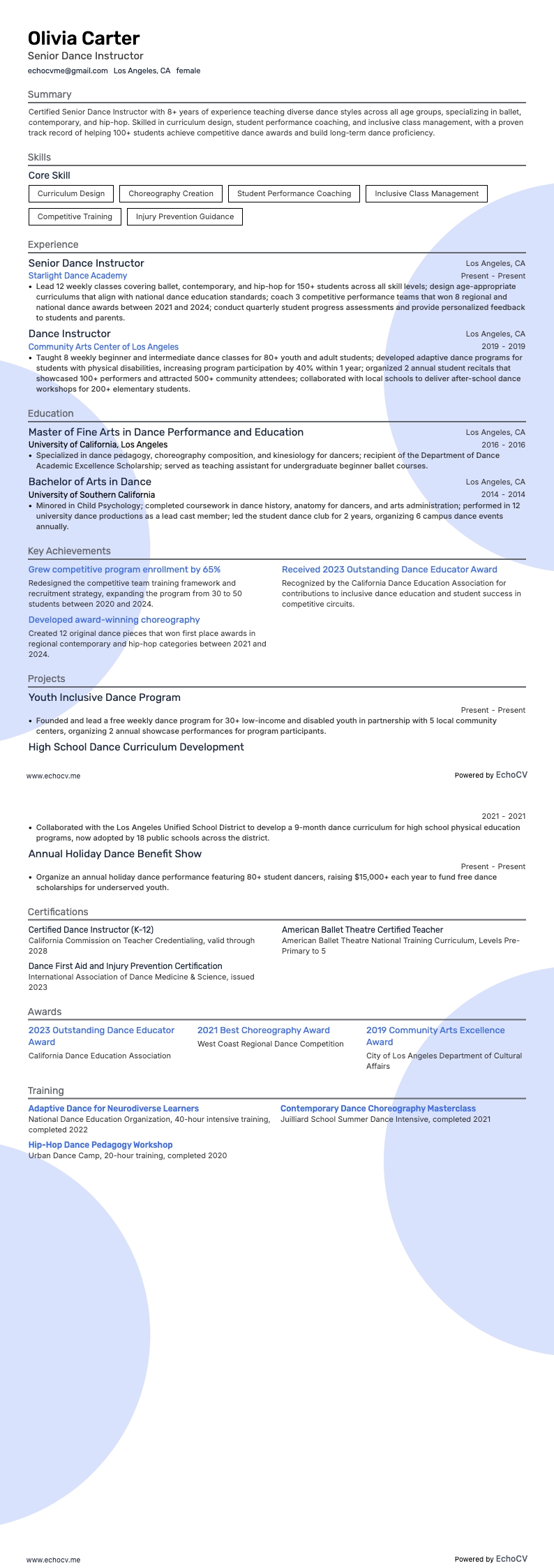
It works because it mentions:
- The experience section includes specific metrics, such as a 30% increase in student enrollment and a 20% improvement in student performance scores, demonstrating the candidate's effectiveness in their role.
- Highlighting collaboration with a team of dance teachers and leadership in directing annual performances aligns with the job ad's emphasis on teamwork and leadership experience.
- Mentioning participation in professional development workshops shows a commitment to continuous improvement and aligns with the job ad's requirement for engagement in training with school leaders.
Now that we’ve covered professional experience, let's focus on quantifying your achievements to stand out.
How to quantify your experience on resume
Quantifiable achievements on a dance resume spotlight a dancer's ability to deliver tangible results, which can be particularly compelling to directors and choreographers seeking proven talent. Including specific metrics, such as the number of performances, roles, or awards won, not only validates a dancer's skills but also sets them apart in a competitive field. Below, you can find a few ideas how to list numbers on your resume:
- Indicate your proficiency in multiple dance styles to demonstrate your adaptability and skill breadth across genres.
- Mention the significant roles you have performed to highlight your experience and responsibility level in past productions.
- Specify your attendance at professional dance workshops or programs to signal your ongoing commitment to improving your skills.
- Include your total hours of weekly practice to reflect your dedication and discipline, which are crucial for a professional dancer.
- Mention the number of successful auditions to reveal your perseverance and competitive edge, desirable traits for challenging dance roles.
- You can win recruiters over with your skill set regardless of your experience level. See how in the next section.
How do i write a dance resume with no experience
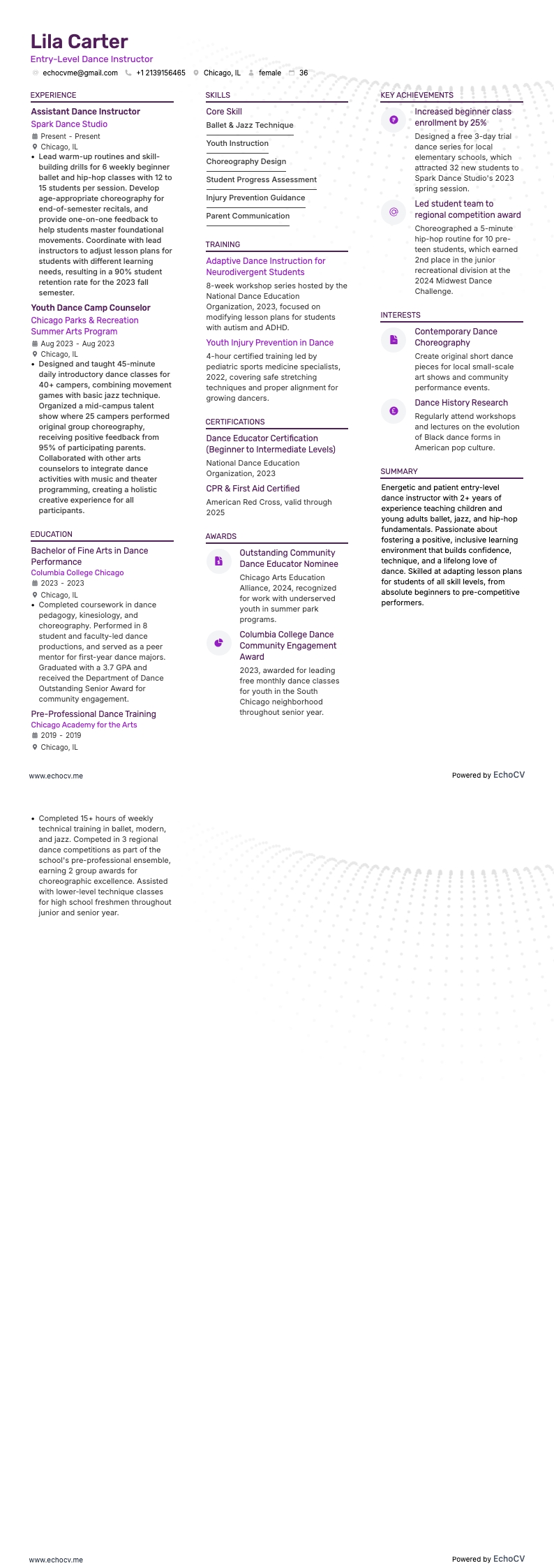
Even if you’ve got limited experience as a professional dancer, you can still shine. We bet you’ve been dancing from a young age, which has given you enough time to develop your skills. But how do you structure your experience section?
- Choose the skill-based resume format to bring attention to your strengths. This one’s perfect for entry-level candidates as it doesn’t put that much focus on experience.
- Mention any dance trainings and classes you’ve attended. Include the specific styles or techniques learned.
- Highlight transferable skills like flexibility, choreography, and musicality. Or soft skills such as teamwork and communication.
- List your performances, even if they were informal or school-related.
- Include any volunteer work that involved dance, such as teaching dance at community centers or participating in dance-related charity events.
- Mention any hobbies or interests that demonstrate your passion for dance and your commitment to personal growth. Perhaps you create unique dance routine in your spare time?
Resume objective
Finally, write a brief statement about your goals and what you aim to achieve in your dance career. Your resume objective should include:
- Up to 3 sentences emphasizing your goals and aspirations.
- A quick overview of your skills and achievements.
- A clear statement on what you bring to the company.