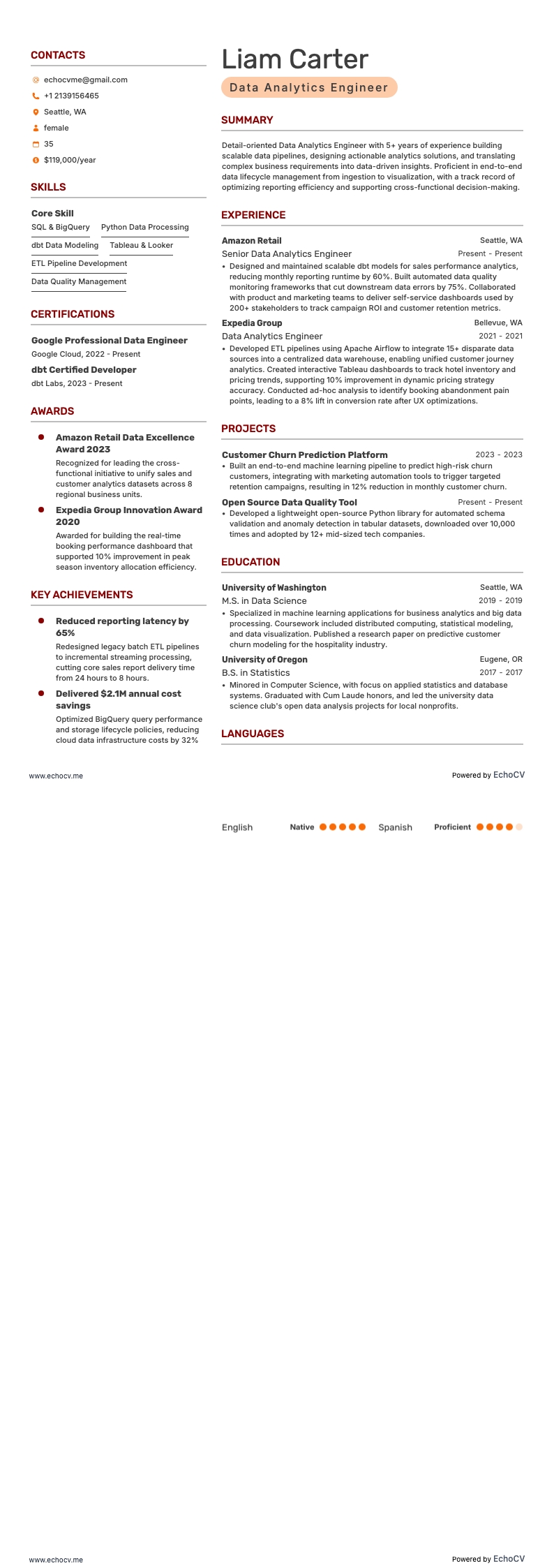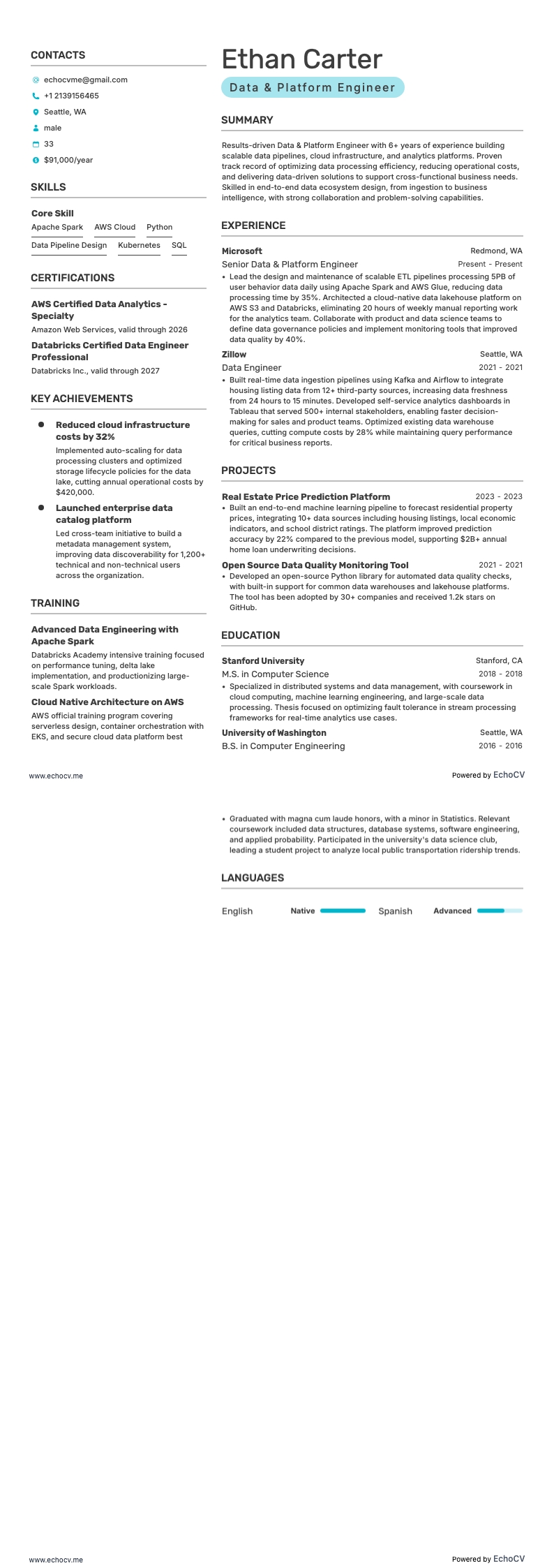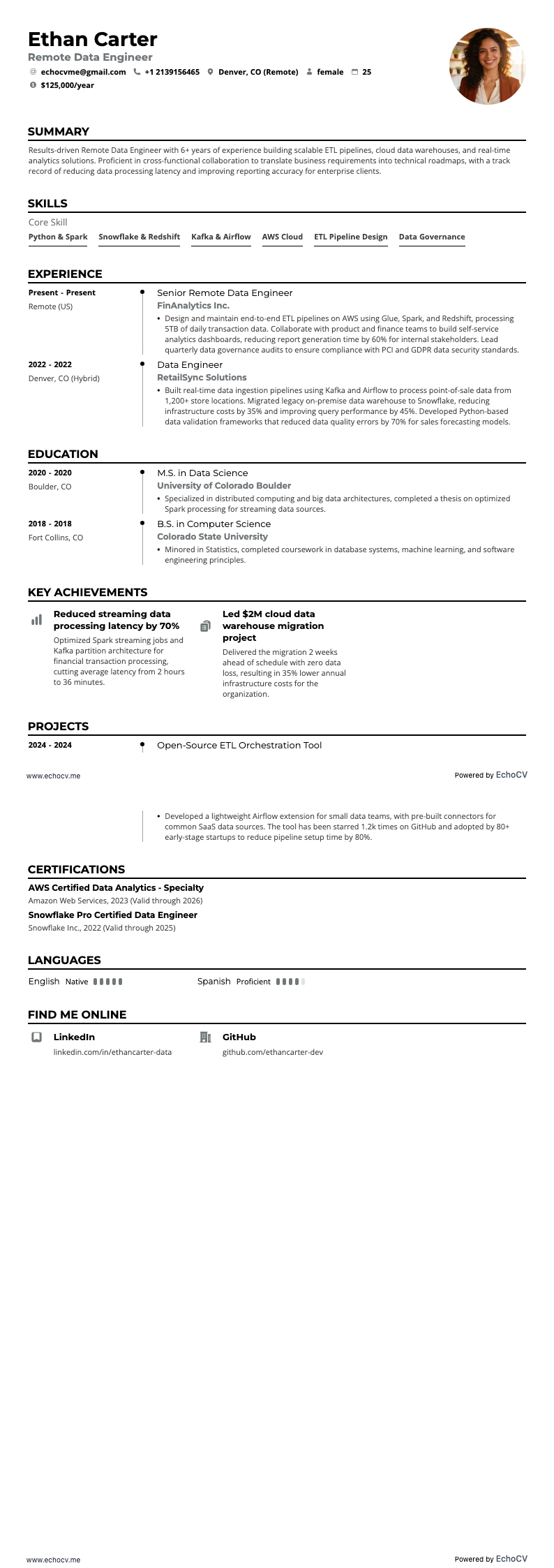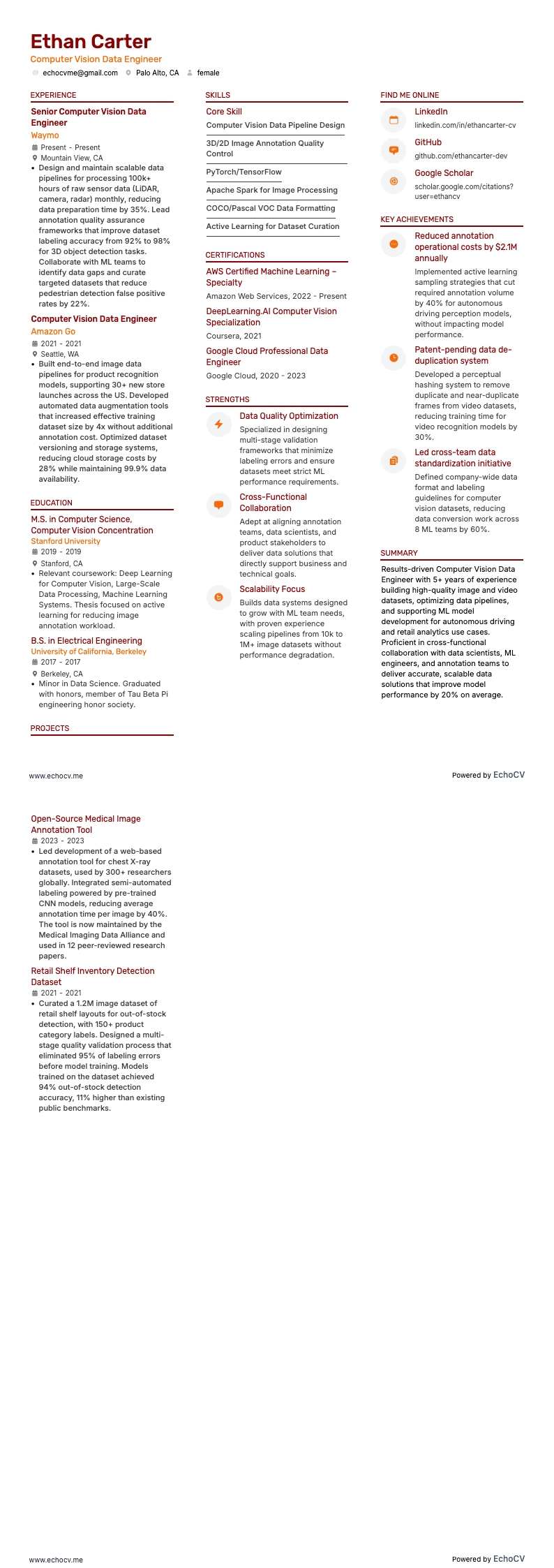
How to quantify impact on your resume
In your profession, you've learned that data can give depth and significance to any statement, claim, or conclusion. The same principle applies when building your data engineering resume. Measurable impact is the best way to showcase your contributions and value to potential employers.
Here's a list of quantifiable data engineering responsibilities with examples to feature on your resume:
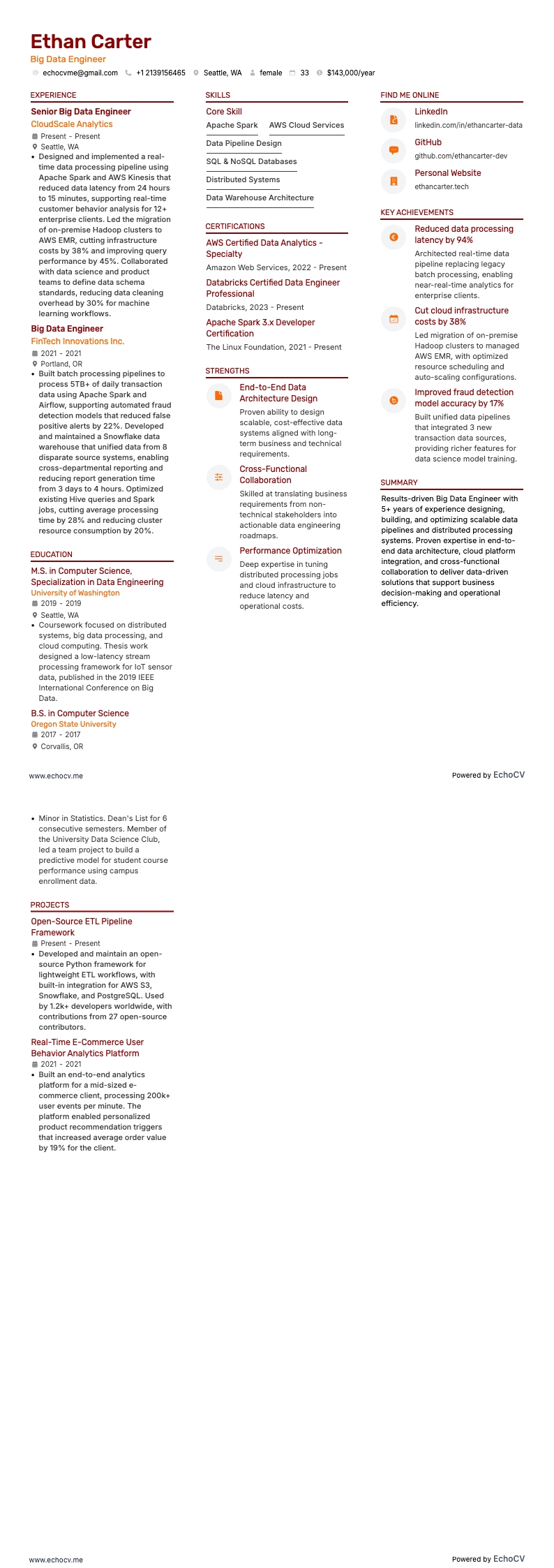
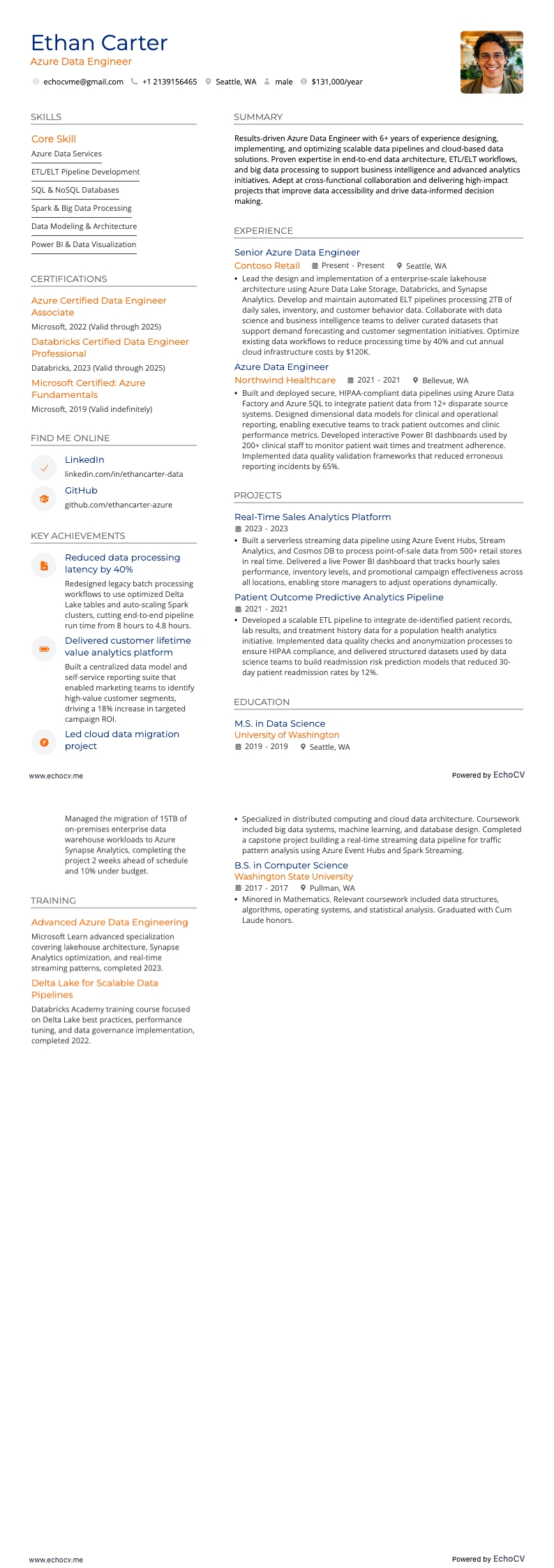
- Data processing: Reduced data processing time by 18% by optimizing algorithms.
- Pipeline construction: Designed and implemented 15+ data pipelines, improving data flow efficiency by 27%.
- Database management: Managed and maintained a database of over 1.5 million records with 99.9% uptime.
- Data cleansing: Enhanced data quality by implementing automated cleansing procedures, reducing errors by 22%.
- Cloud integration: Migrated 3+ terabytes of data to cloud platforms, resulting in a 33% reduction in infrastructure costs.
- Query optimization: Improved query response time by 32% through performance tuning.
- Data modeling: Developed 12+ data models that supported business decision-making and increased revenue by 17%.
- ETL processes: Automated ETL processes, leading to a 47% reduction in manual data handling tasks.
- Collaboration: Collaborated with cross-functional teams on 5 major projects, leading to a 16% increase in project delivery speed.
- Training: Conducted 7 workshops on best data practices, enhancing team productivity by 25%.
How do I write a data engineer resume with no experience
The demand for data engineers continues to surge as more companies are recognizing the value of data-driven insights in decision-making. However, breaking into well-established firms or securing high-paying roles can be tough when you don't have experience.
The good news is that with the abundance of jobs, many startups and small businesses are open to hiring entry-level applicants as long as they have the right profile.
So how do you land a job successfully even if you lack experience?
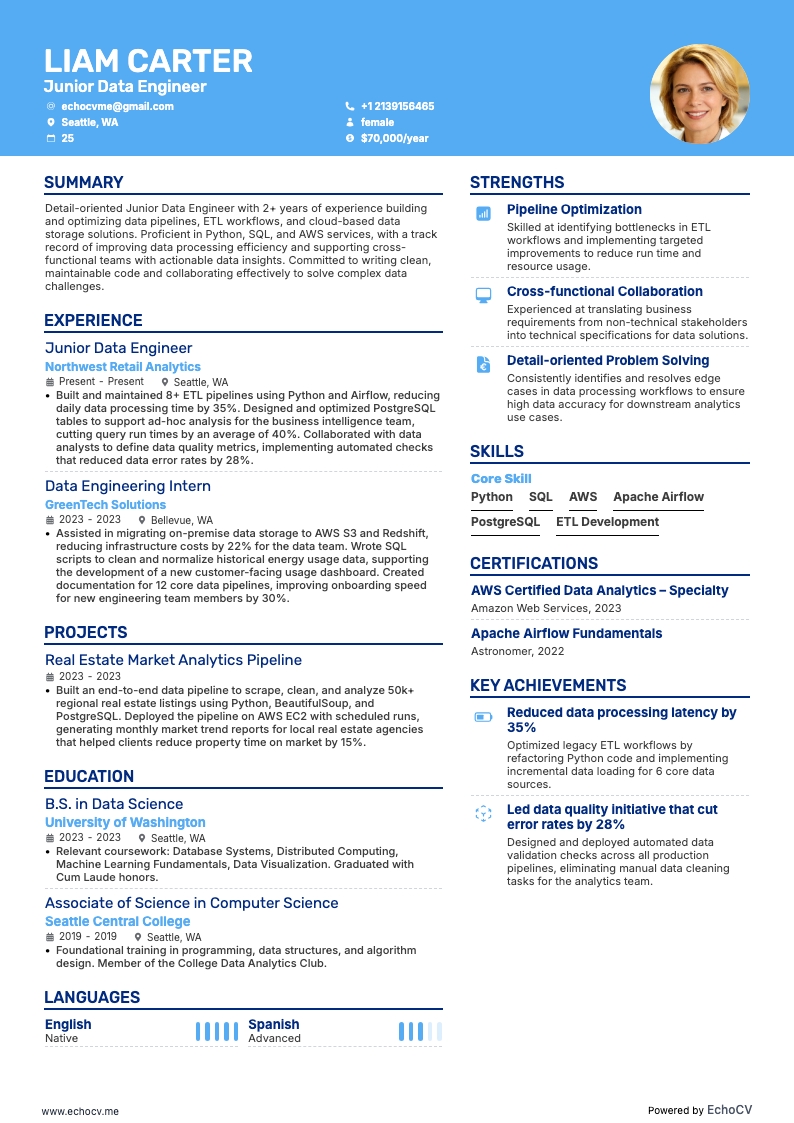
- Instead of a resume summary, feature an objective at the top of your resume to clearly state your career goals and aspirations.
- Prioritize your educational background, especially courses and projects that align with data engineering concepts and tools.
- Showcase relevant data engineering certifications to demonstrate your commitment to the field.
- Spotlight soft skills and transferable talents, to make up for your lack of practical experience.
- Include additional sections such as workshops and online courses to further bolster your application.
How to list your hard skills and soft skills on your resume
Resume skills are a great way to demonstrate how you can add value and support informed business decision-making. Your skills also show that you've bridged the gap between academic qualifications and real-world application.
Before we get into more details on how to best list skills on your resume, let's first understand what soft/core skills are and how they differ.
- Soft skills: are the interpersonal traits that determine how you interact with colleagues and approach challenges. For data engineers, important soft skills include communication, teamwork, and problem-solving.
- Hard skills: are the core and technical abilities you've acquired through education, training, and work experience. In your case, this could include proficiency in programming languages and data analysis tools.