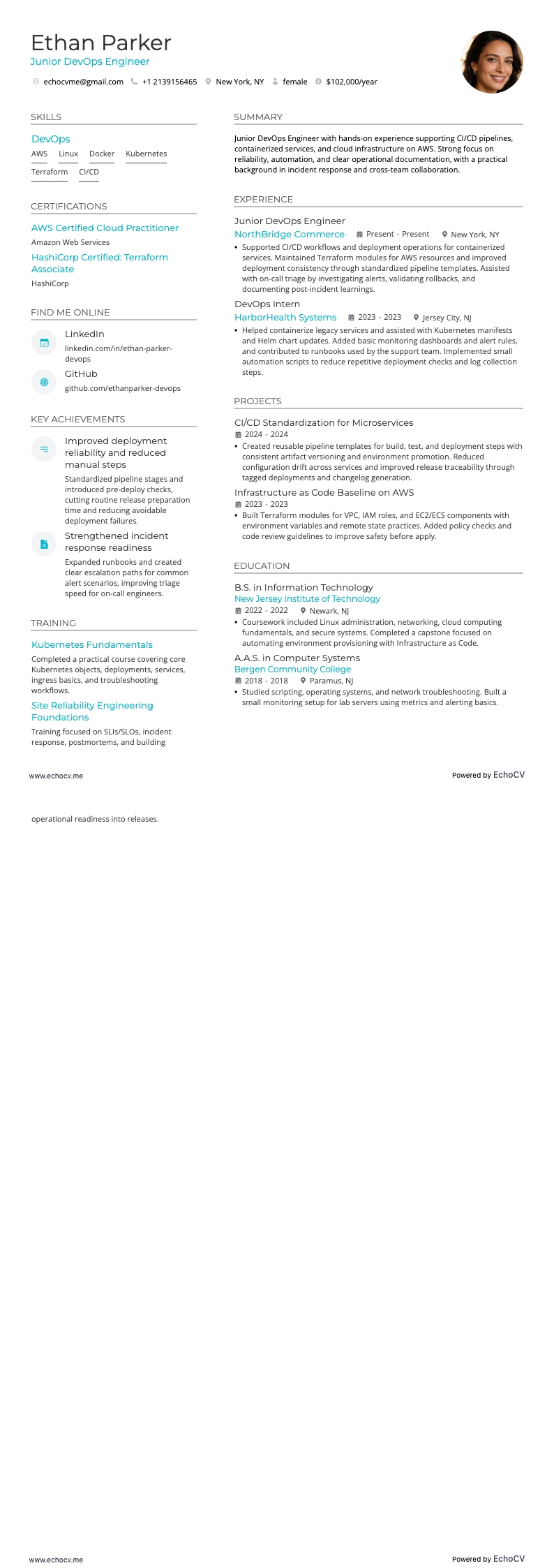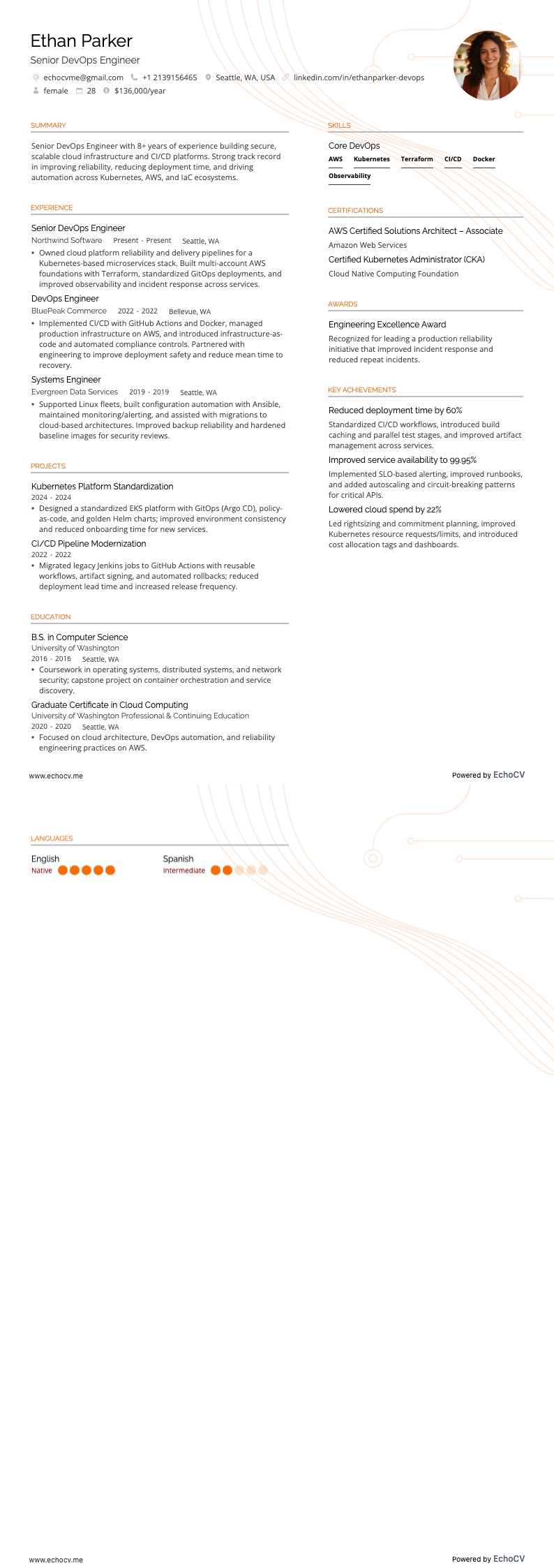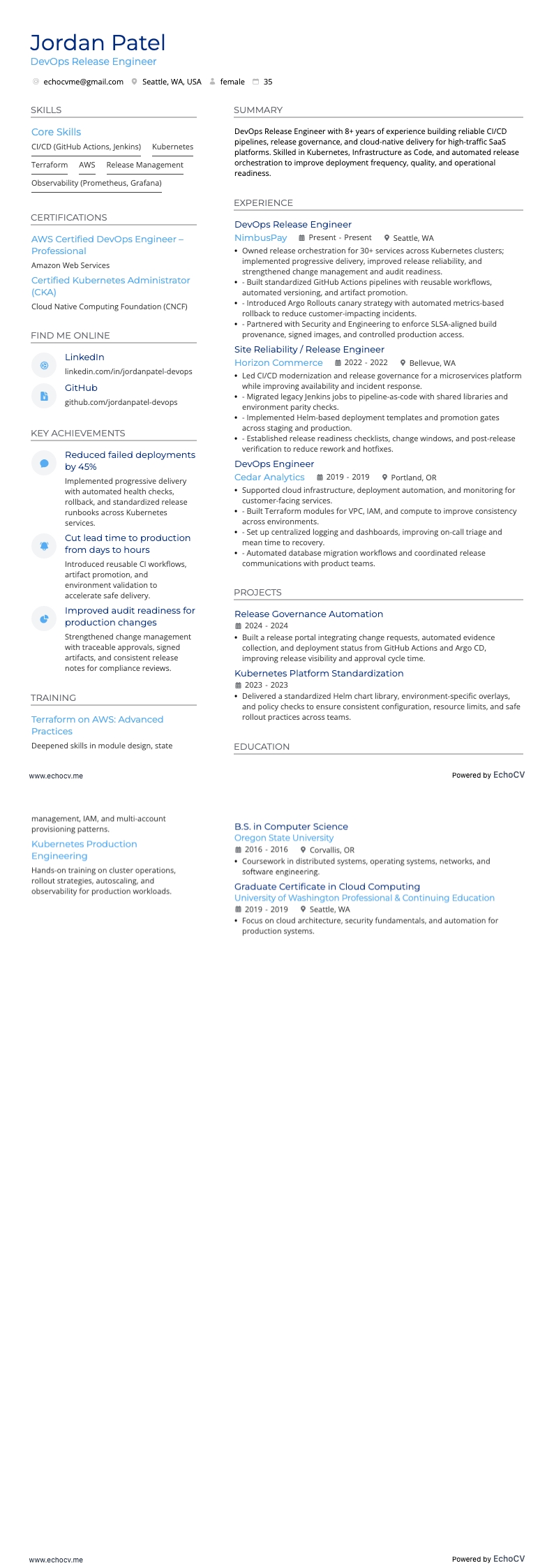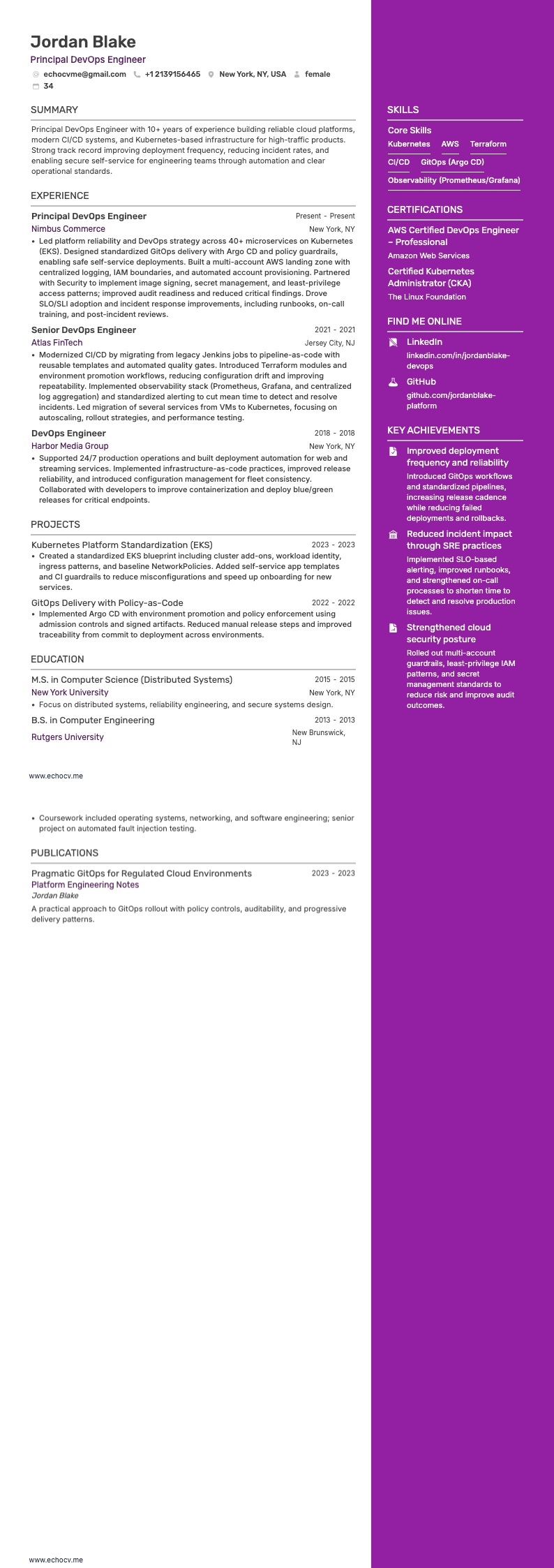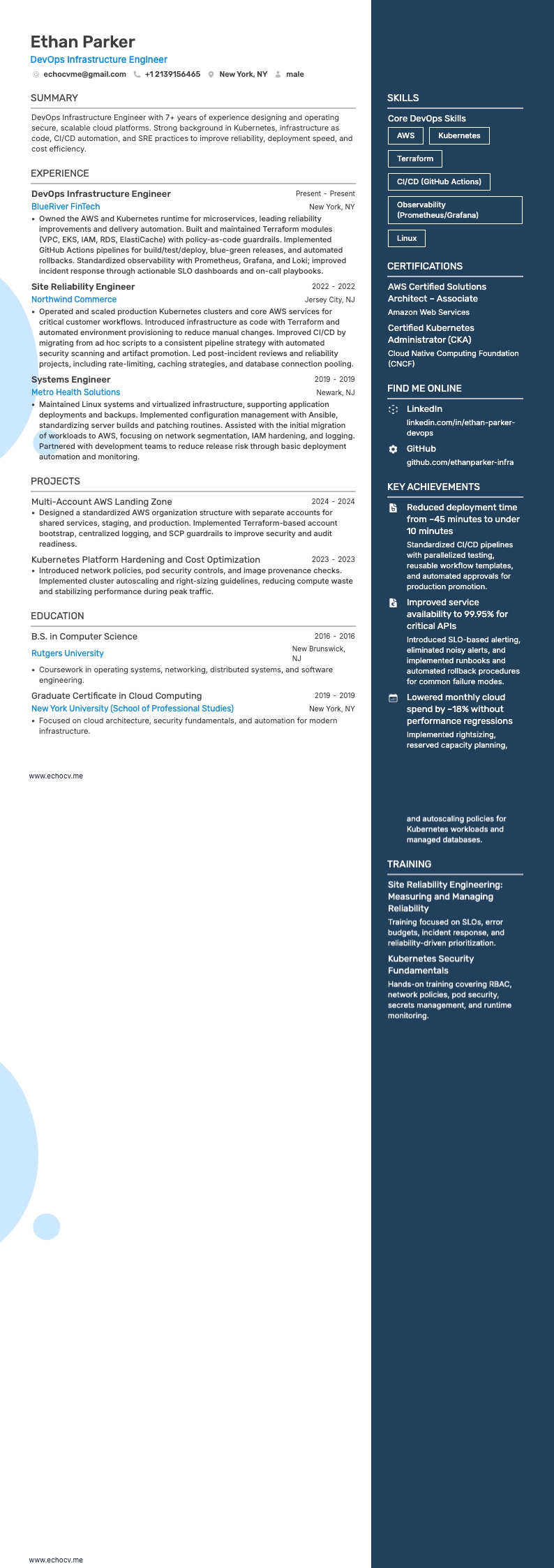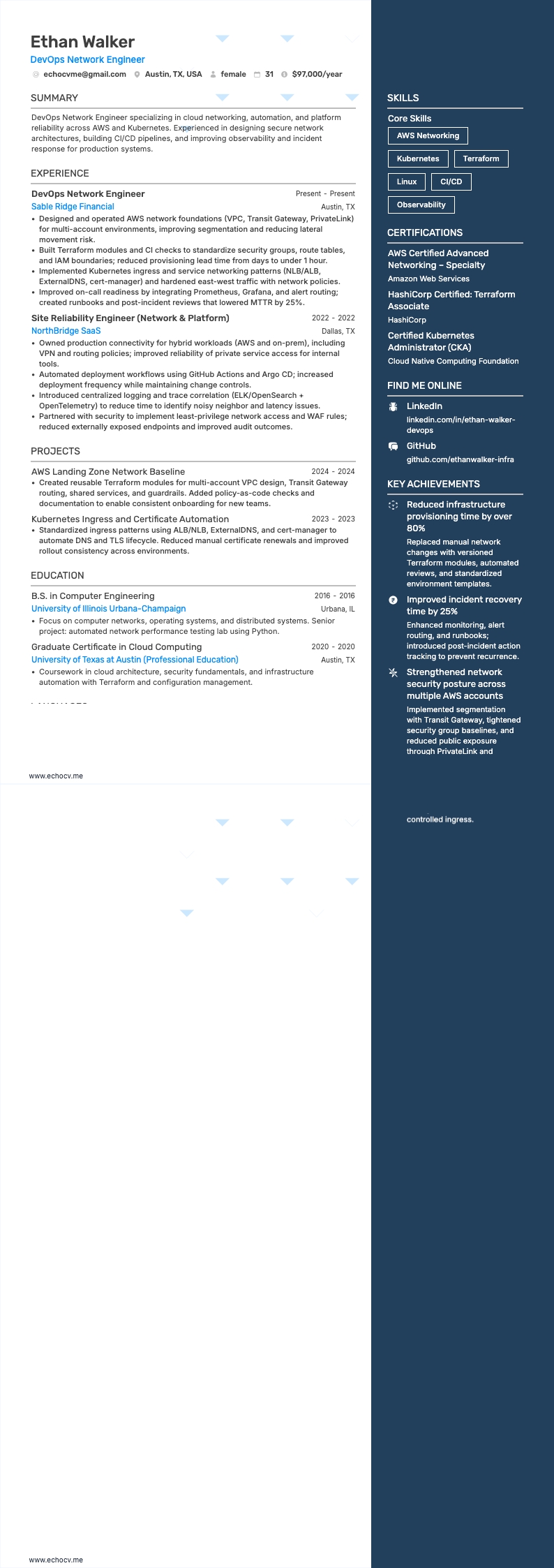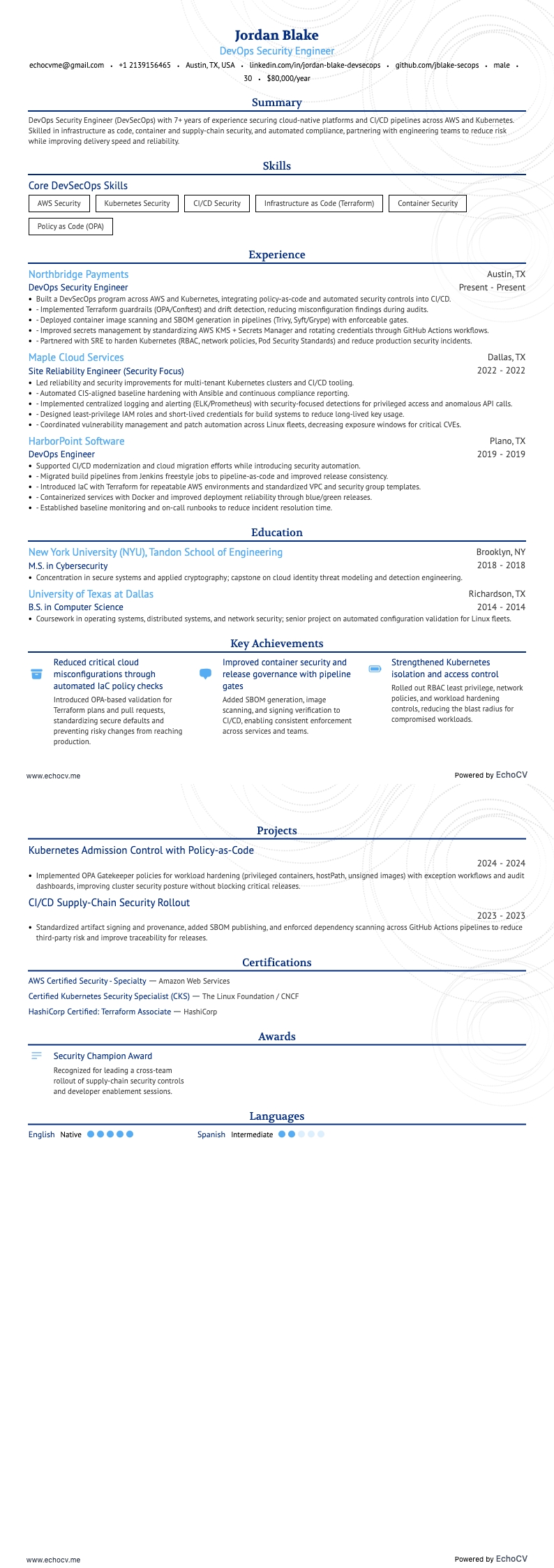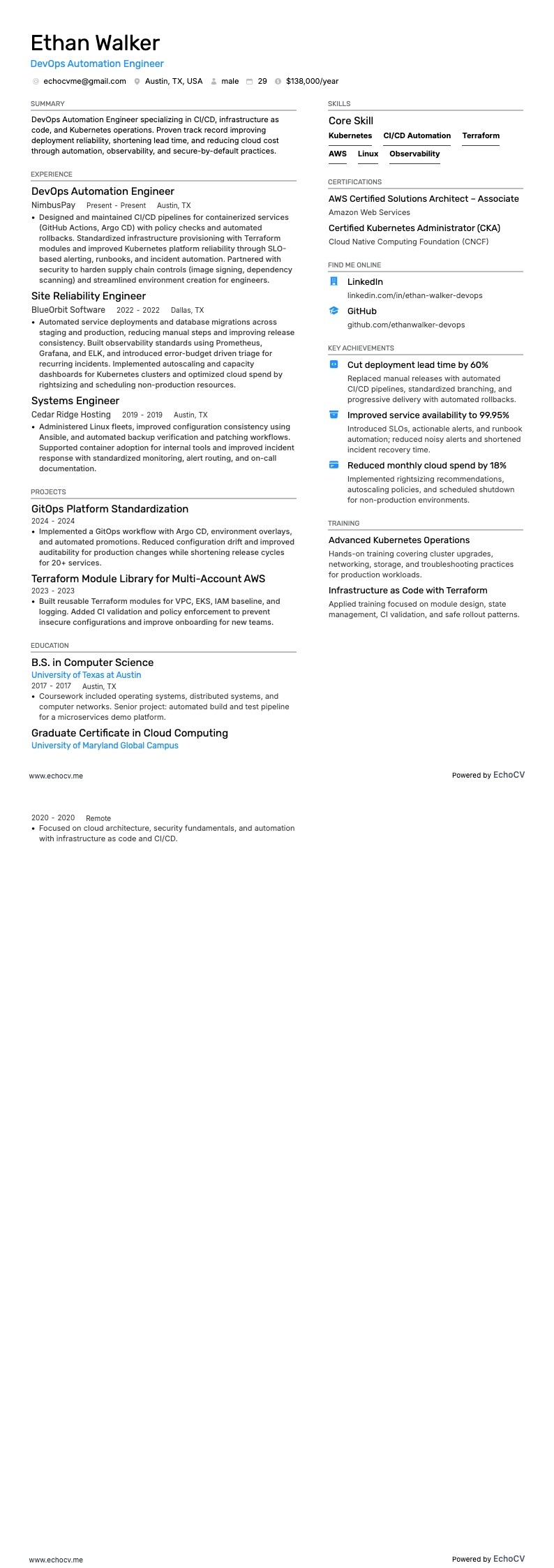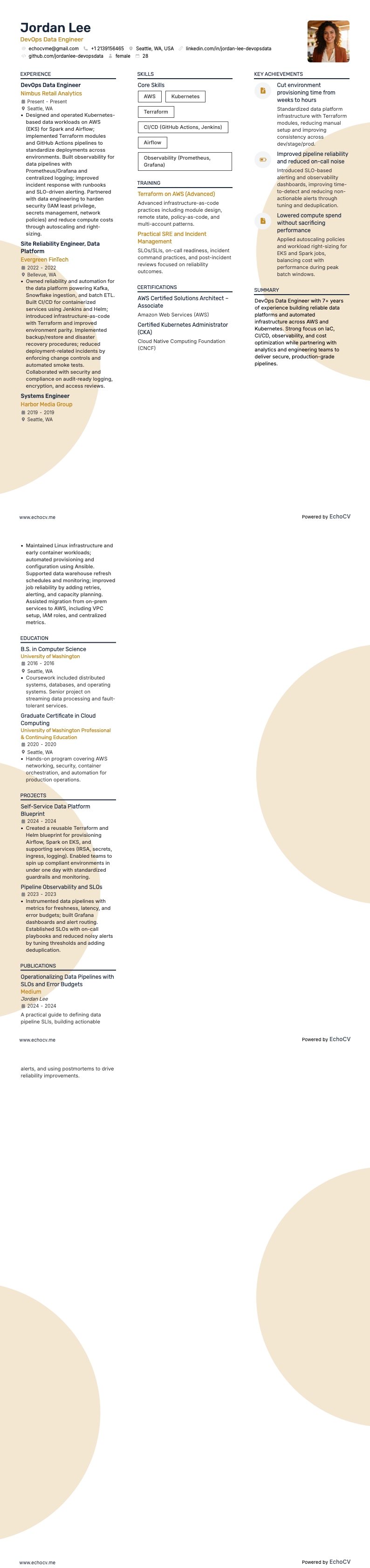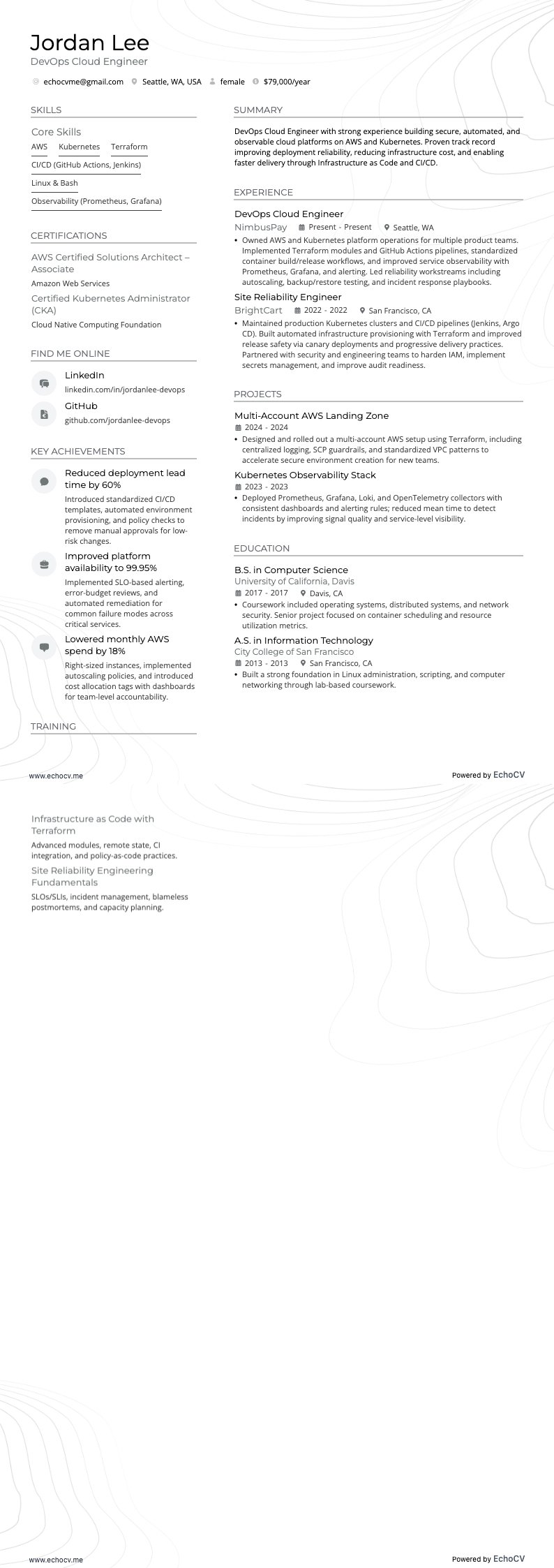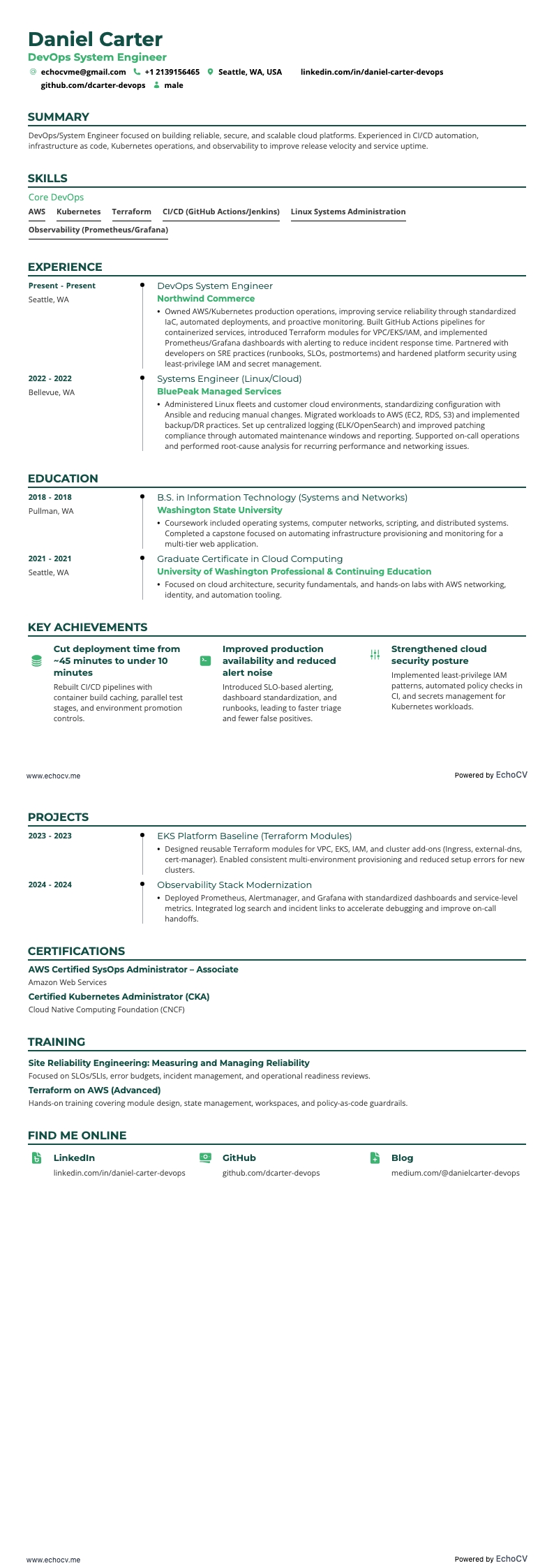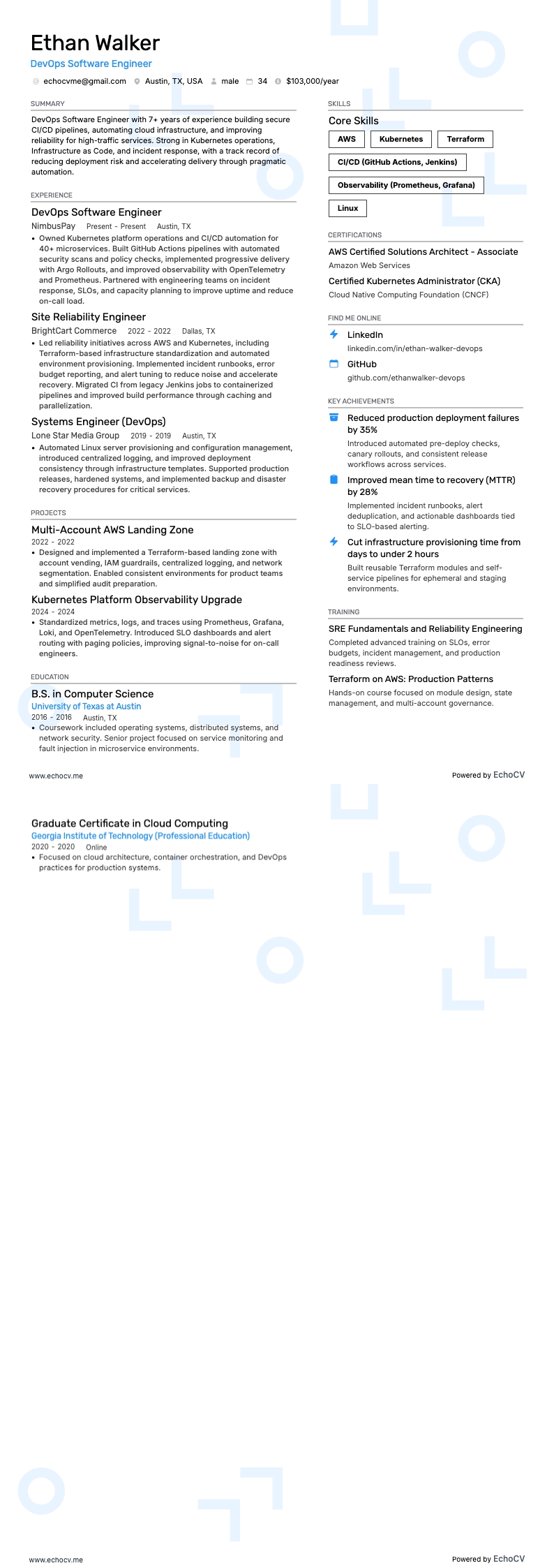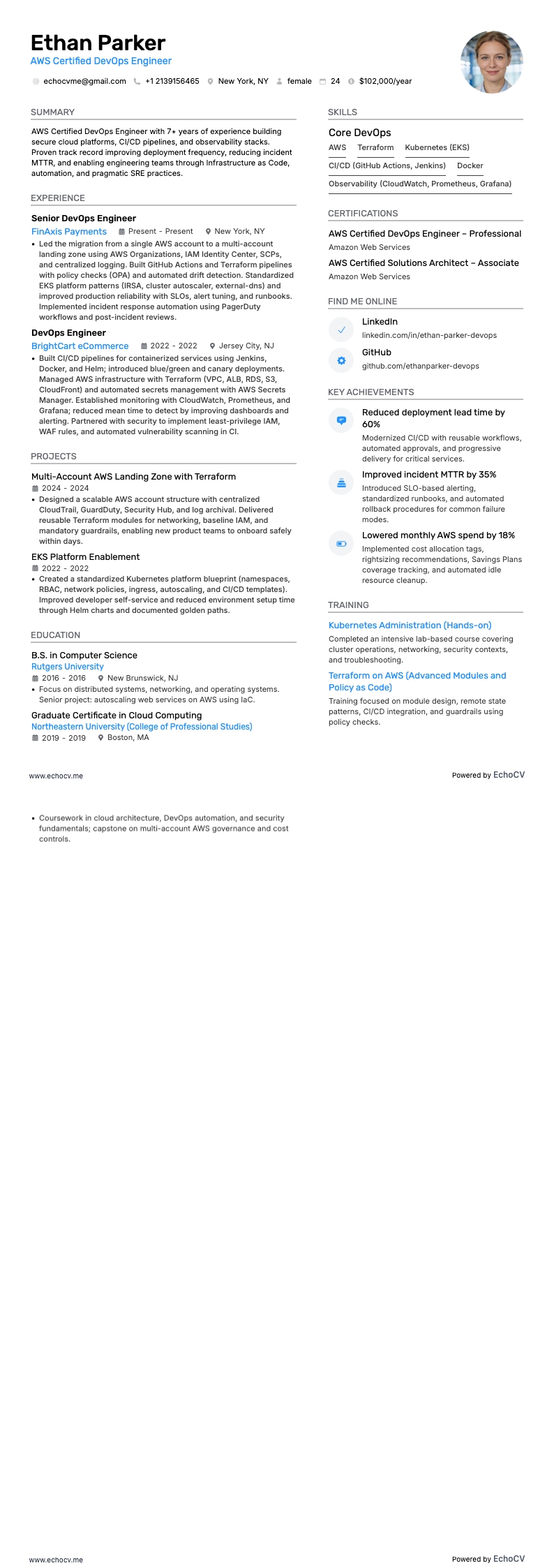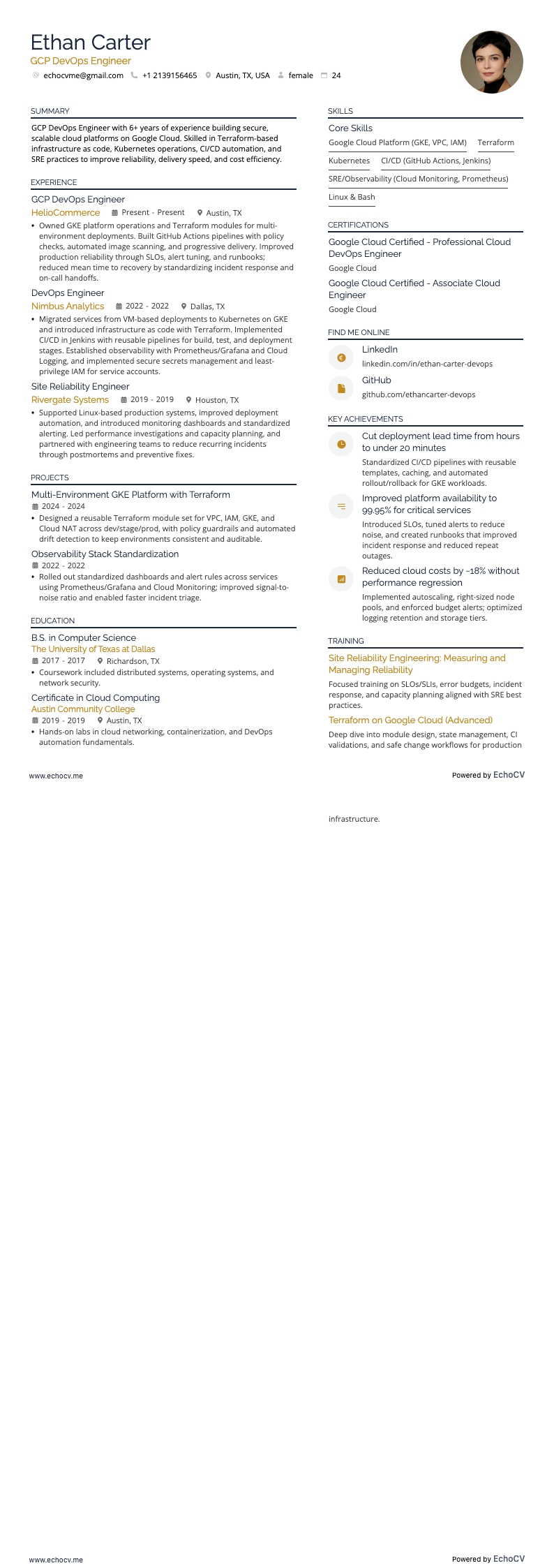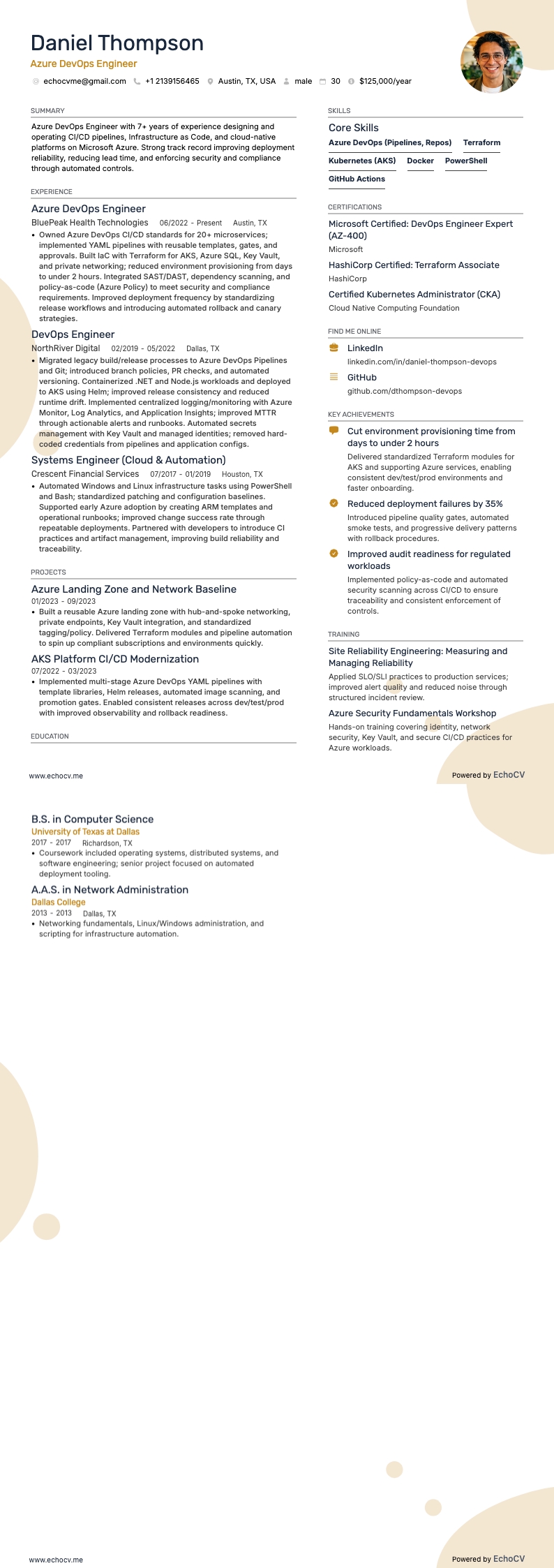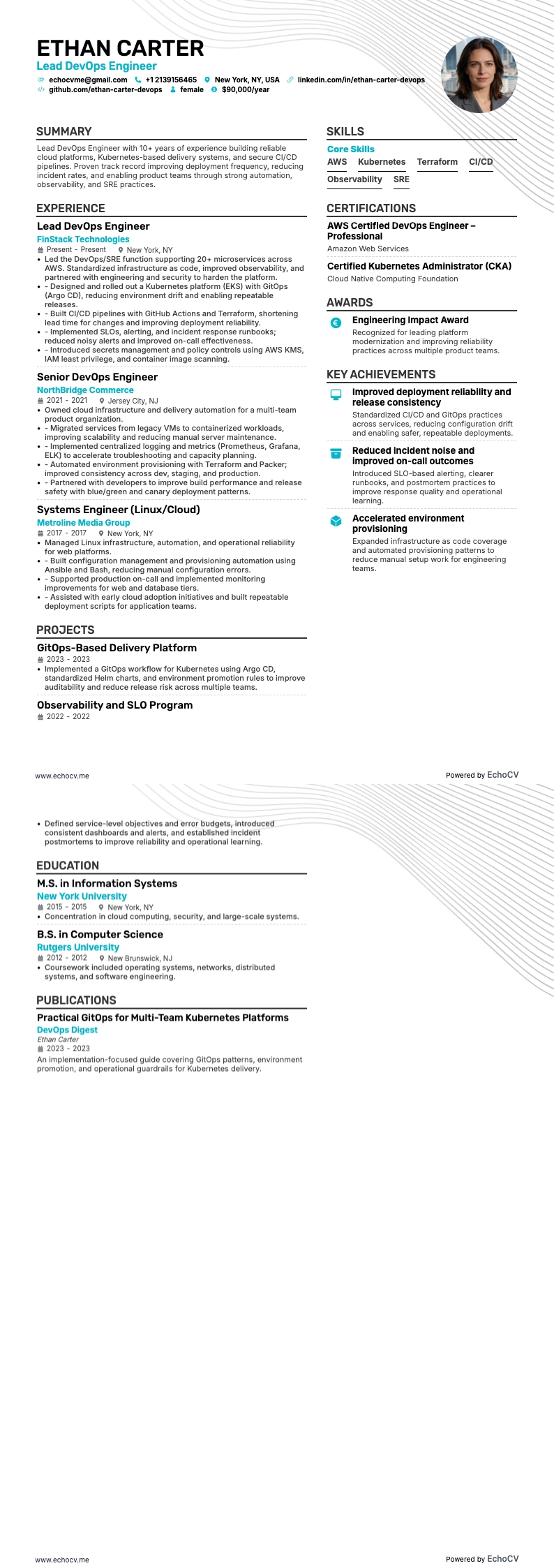
What works in this example:
- Uses metrics and numbers - “increased productivity by 25%” and “maintained 14 databases while staying under budget” provide measurable results that show hiring managers exactly what you accomplished
- Shows industry keywords - terms like AWS, SQL relational database model, and Certified Agile Practitioner show industry specific knowledge and improve ATS optimization for your target job
- Includes specific achievements - included specific awards and project outcomes show potential employers how you will impact success at their company
How to quantify impact on your resume
DevOps engineers must translate their technical achievements into business impacts. Potential employers want to see how your practical experience results in successful project implementations.
Quantify the impact on your DevOps engineer resume by using real numbers and data. Showcase project outcomes and efficiency improvements.
Here are a few things to consider when quantifying the impact on your DevOps engineer resume:
- Include the number of servers managed or automated, demonstrating scalability and management skills.
- State the percentage reduction in deployment time achieved, highlighting efficiency improvements.
- Mention the number of containerized applications developed, showing expertise in modern application packaging.
- Quantify the decrease in system downtime achieved, reflecting reliability and uptime enhancements.
- Provide the number of automated tests written, indicating a commitment to quality and thoroughness.
- Detail the percentage increase in system performance, showcasing optimization and tuning abilities.
- Indicate the size of the infrastructure budget managed, reflecting financial and resource allocation skills.
- Report the number of team members led or mentored, demonstrating leadership and team management capabilities.
How do I write a DevOps engineer resume with no experience
Writing a DevOps engineer resume with no DevOps engineer experience can be intimidating. If you’re making a career change or new to the industry, you’ll need to rely on transferable skills instead of work history.
Use the following steps to write an entry-level DevOps engineer resume:
- Choose a functional resume layout
- Focus on transferable skills
- Use additional sections to highlight skill development
- Only include information that is relevant to your target job
A functional resume layout focuses on transferable skills rather than experience. This is a great way to show potential employers that you’ve learned deployment processes, system architectures, and orchestration technologies in other ways.
Don’t pad your experience section with irrelevant jobs just to fill space. Only include roles that are relevant to your target position and focus on transferable skills.
Software engineer, development manager, and other IT positions are all great roles to showcase technical skills.
Even customer service and management jobs can be helpful in highlighting interpersonal and communication skills.
How to list your hard skills and soft skills on your resume
Showing interpersonal skills and technical expertise is crucial to an impactful DevOps engineer resume.
DevOps engineers need the technical skills for continuous integration and deployment, as well as the communication skills for collaboration between development and operations teams.
Skills on your DevOps engineer resume will be in two categories - hard skills and soft skills.
Hard skills are the technical knowledge and abilities needed to perform job duties. Soft skills are the interpersonal and communication skills needed to interact with others.
The main difference in these two sections on your resume is presentation. Hard skills are listed while soft skills include examples.
Look at an example of hard skills on a DevOps engineer resume.