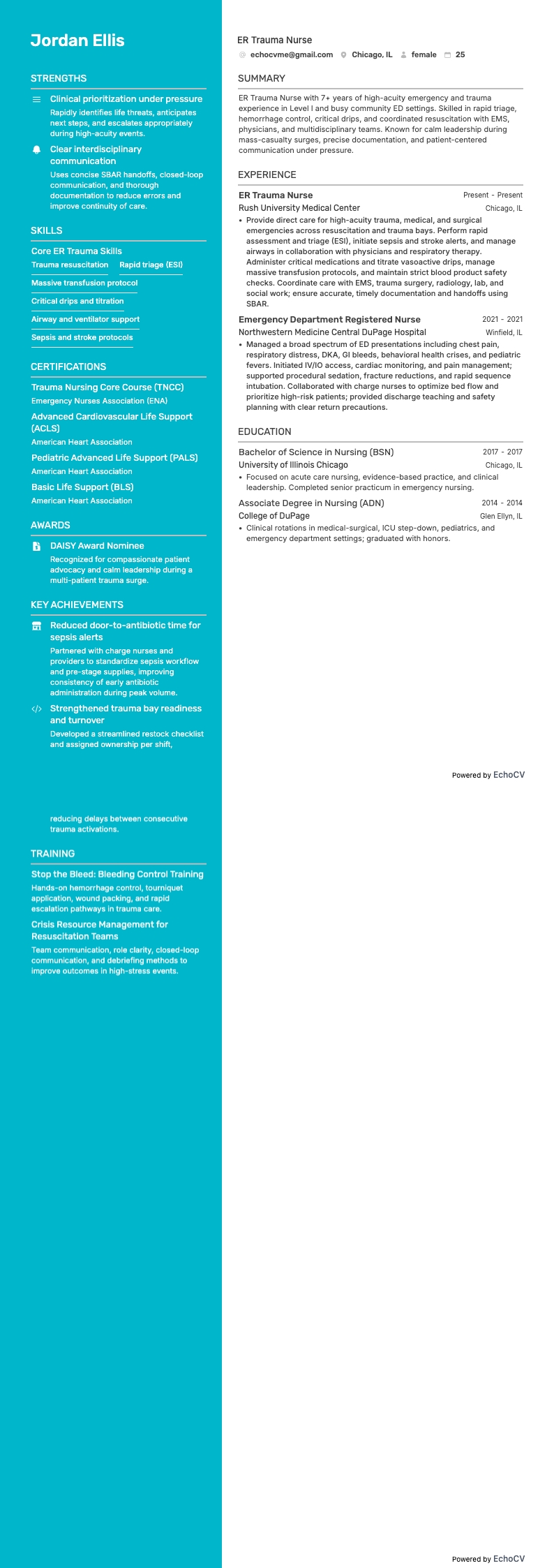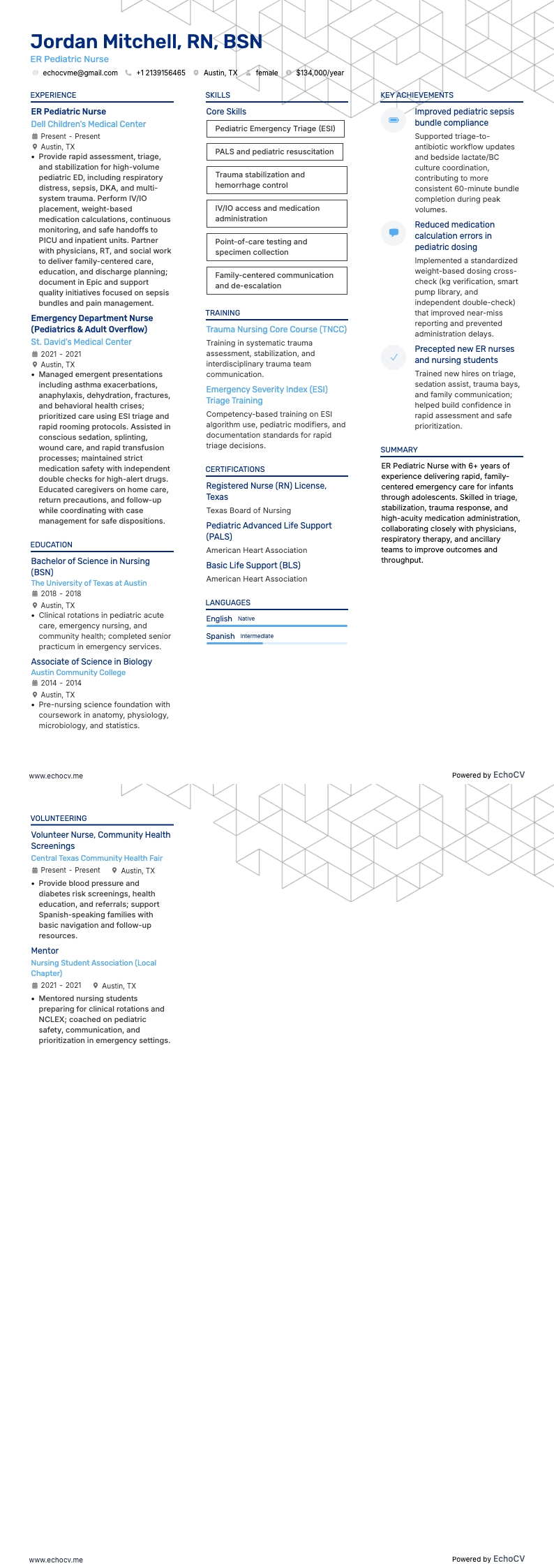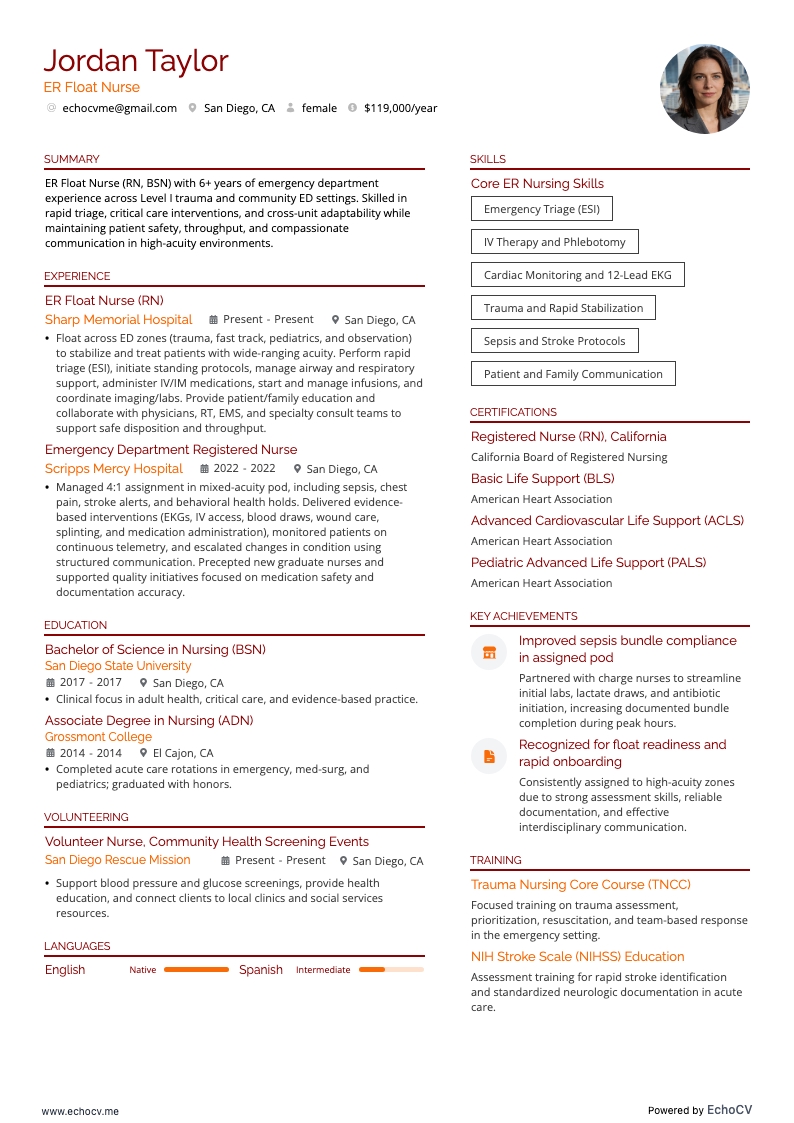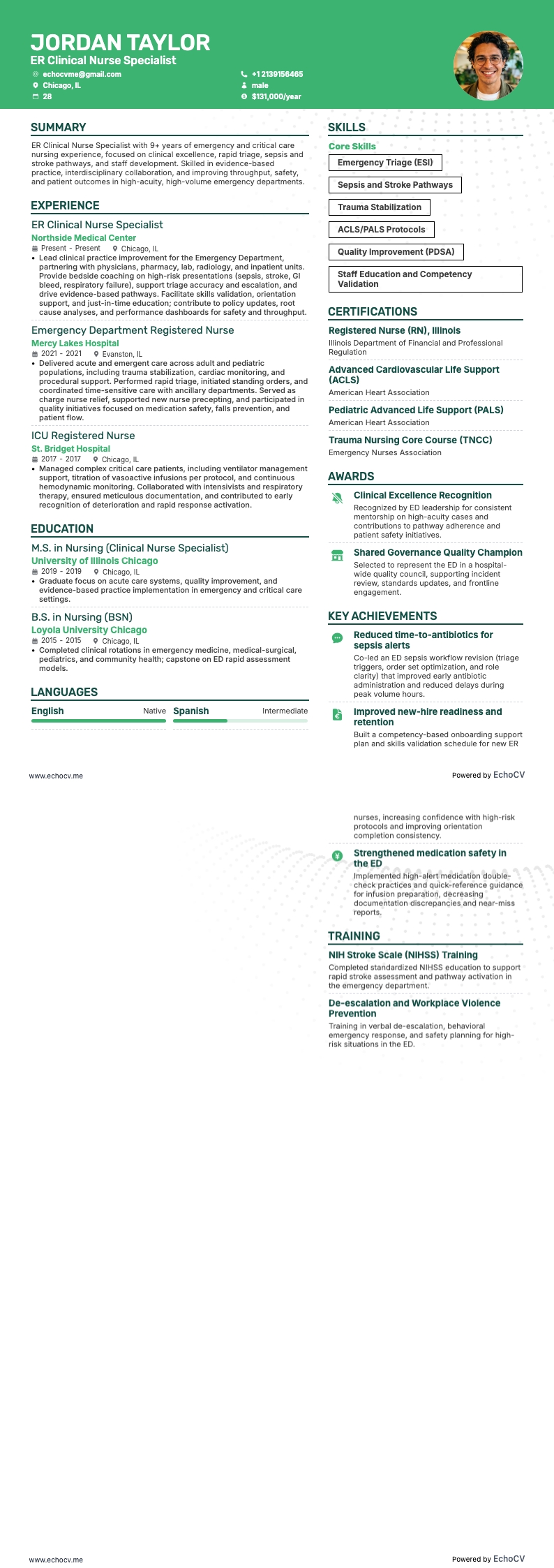
How to quantify impact on your resume
To boost the impact of your ER nurse resume, include quantifiable evidence of your skills in experience descriptions. These are tangible, measurable, or verifiable details that highlight your accomplishments in past jobs, illustrating your abilities for employers.
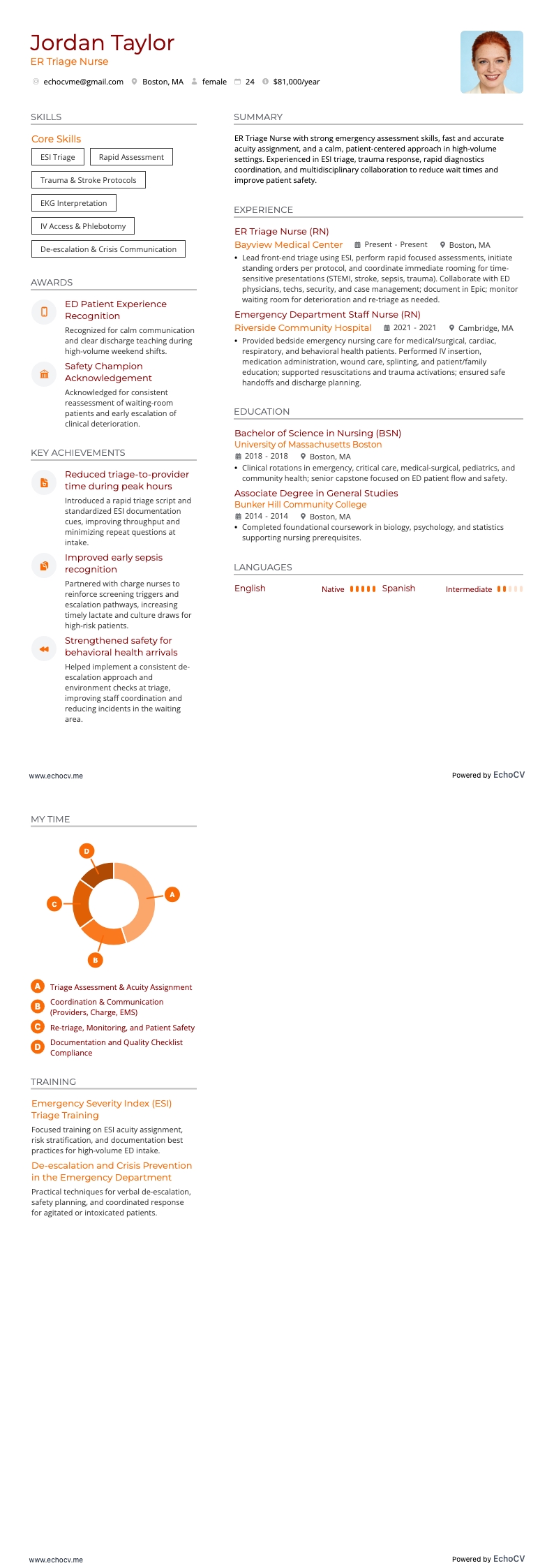
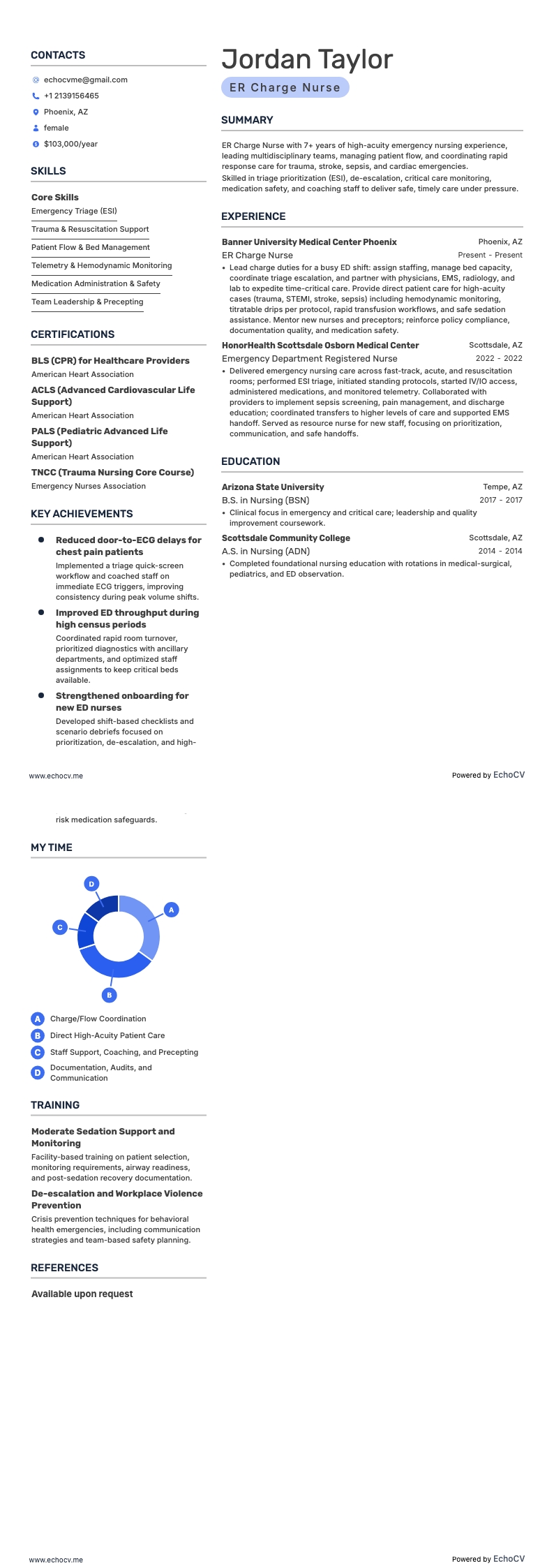
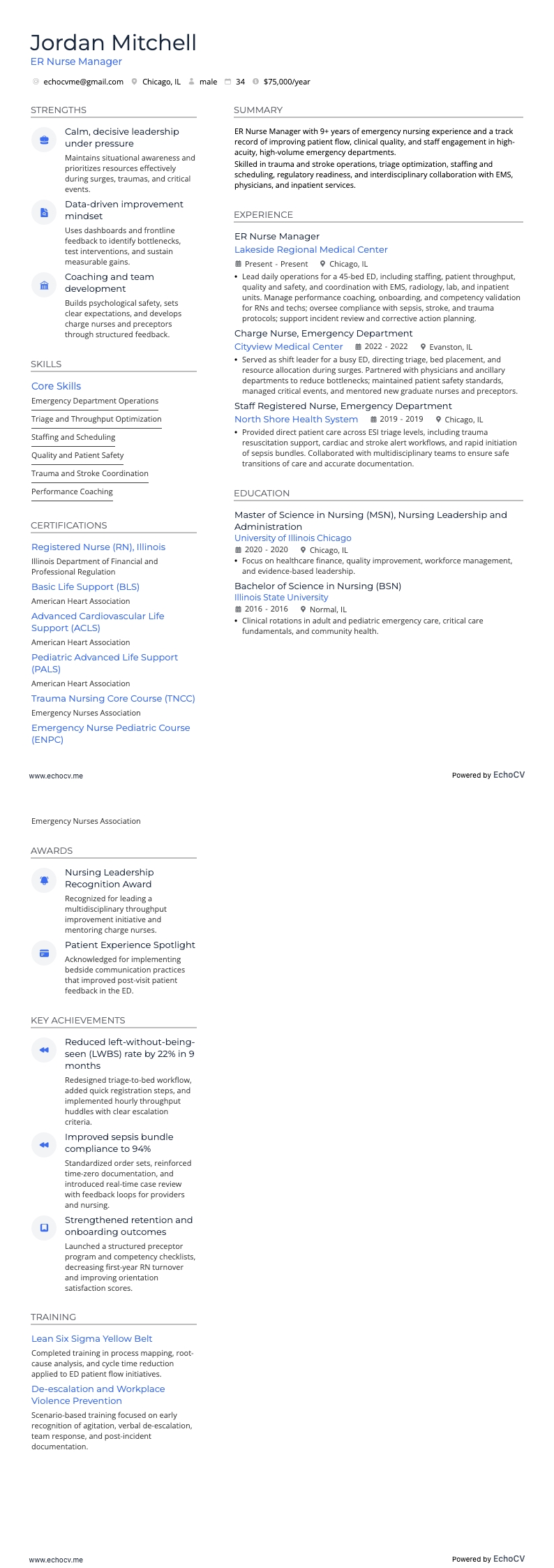
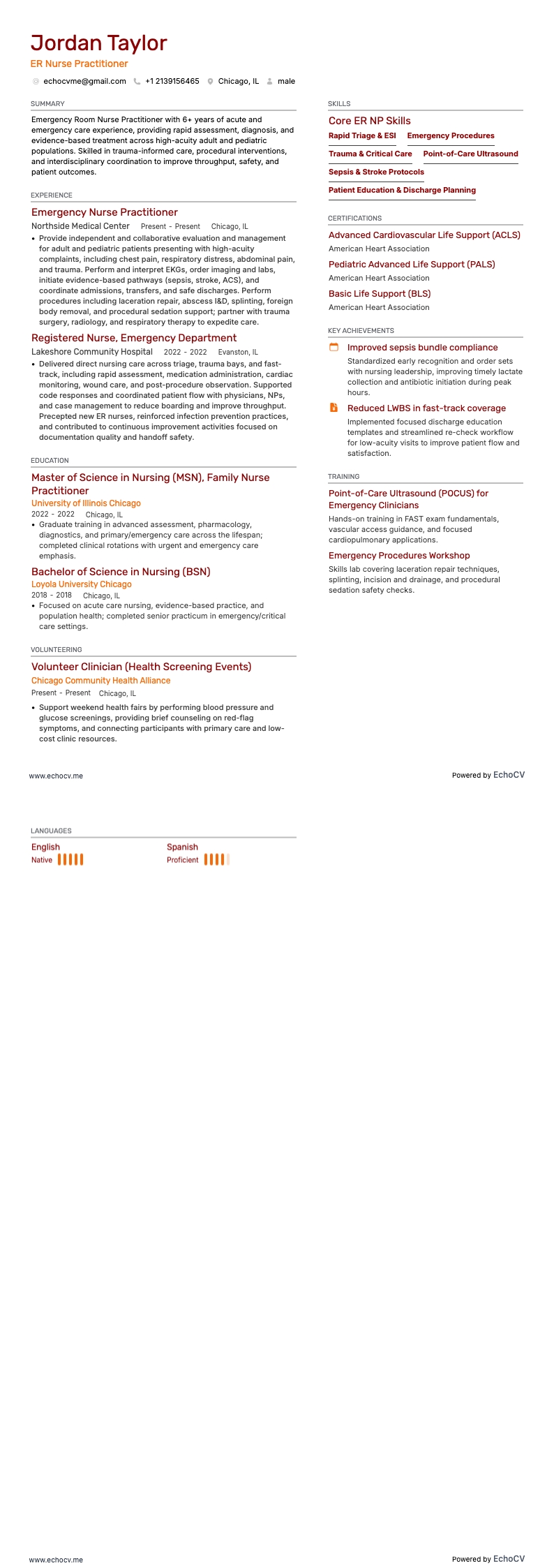
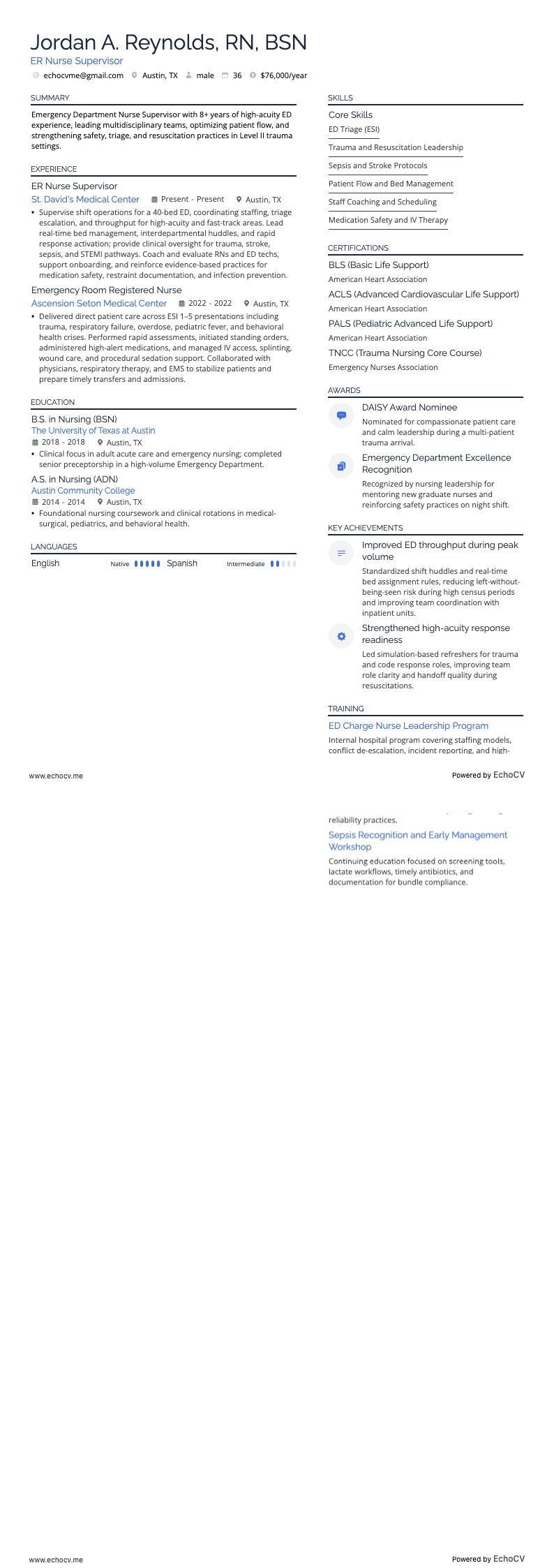
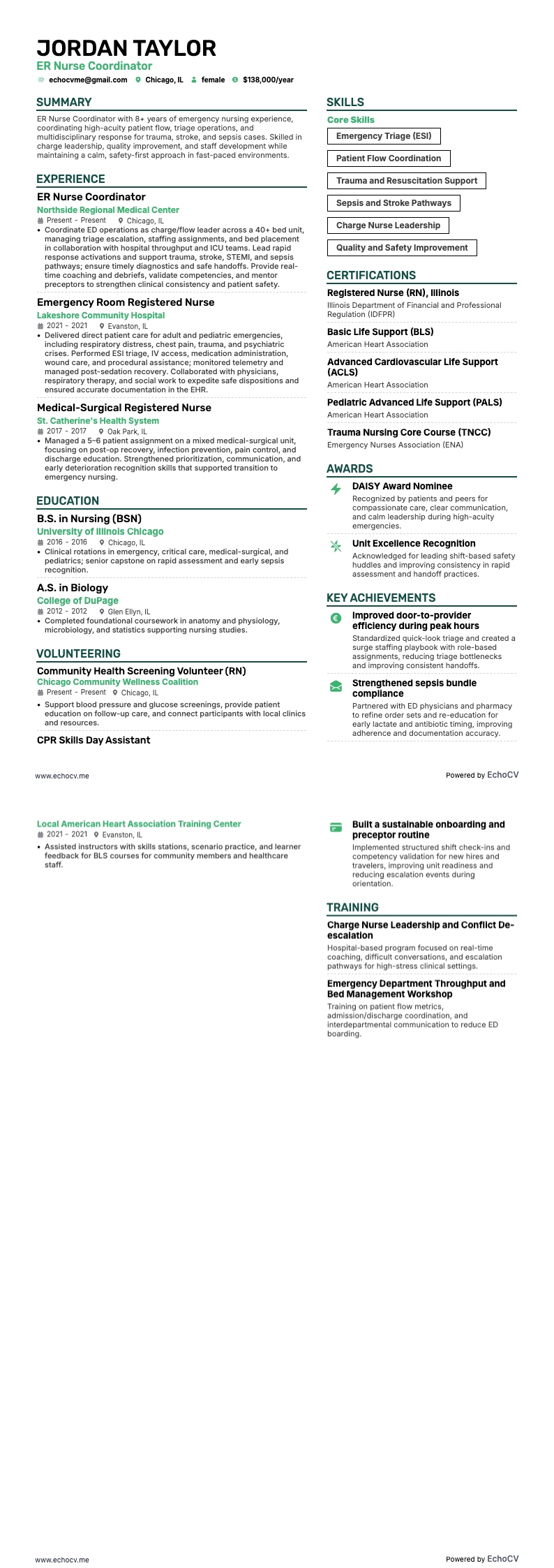
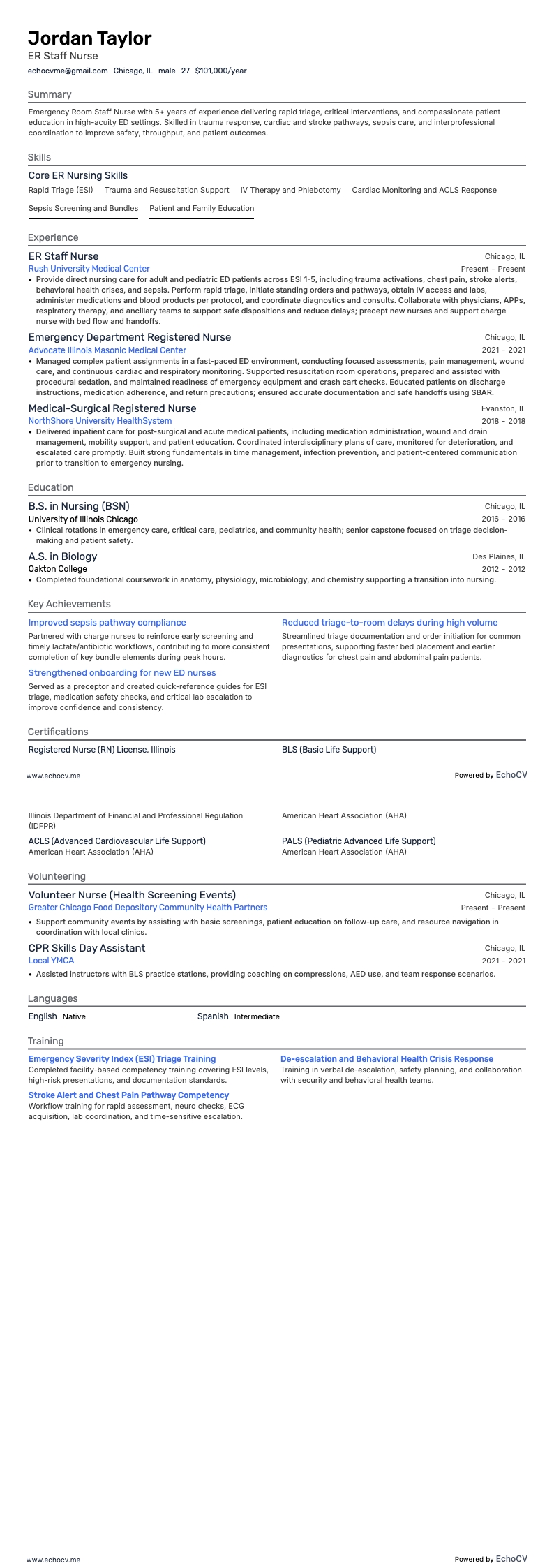
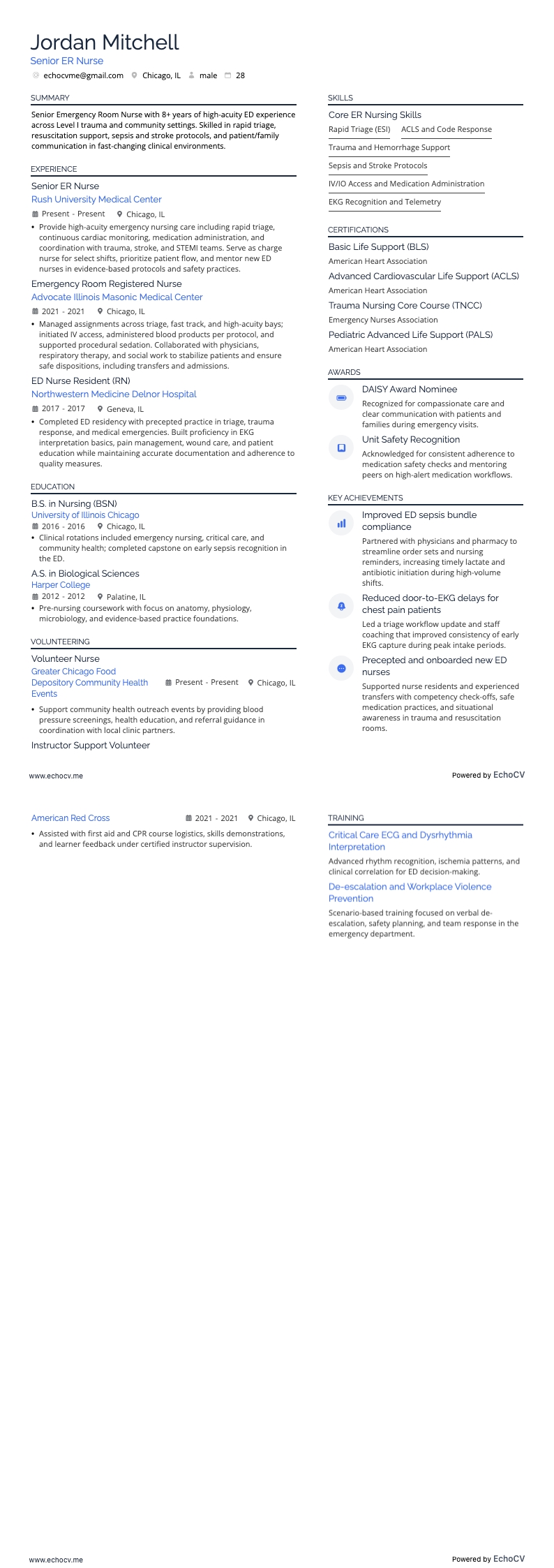
The example above provides several excellent examples of using numbers and percentages to bolster descriptions. For example, stating the average number of patients treated daily quantifies the applicant's perception of a "fast-paced" environment.
Many other ways exist to quantify experiences on an ER nurse's resume. Here are a few additional options:
- Percentages indicating improvements in patient satisfaction scores showcase your commitment to patient care.
- The volume of trauma cases you've dealt with illustrates your expertise and experience in managing emergencies.
- The size of the team you've worked with or led reflects your teamwork and leadership skills.
- Reduced treatment waiting times under your purview indicate your efficiency and management abilities.
- How many years worked as an ER nurse demonstrates your commitment to the specialized field.
- Quantifiable results from initiatives you've implemented show your ability to drive change and improvement.
- The number of hospital departments you've coordinated with underscores your collaborative abilities in complex organizational structures.
How do I write an ER nurse resume with no experience
The experience and certification requirements required to become an ER nurse mean that writing a resume without prior employment in the specialization shouldn’t be overly challenging.
The key to writing an experience section without ER nursing experience is to select closely related nursing jobs that showcase highly transferable skills—for example, experience in fast-paced medical environments or working with patients in high-stress situations.
To write a nurse resume that establishes your potential to succeed as an ER nurse without experience, follow these steps:
- Compile a list of keywords from the job description.
- Brainstorm previous positions, such as general nursing and practical clinical experiences, internships, and volunteer experiences showcasing the same keyword skills and knowledge from your list.
- Utilize the keywords from the job description in your transferable experience descriptions.
- Avoid including irrelevant work experiences.
- Add credibility by including tangible evidence of transferable skills, such as certifications and quantifiable data.
- List experiences in reverse chronological order to ensure your most recent and relevant examples appear first.
How to list your hard skills and soft skills on your resume
“Diverse” doesn’t seem to be a strong enough adjective to describe the skill set necessary for emergency nursing. Besides standard nursing skills such as medical expertise, effective communication, and the ability to perform clinical tasks, ER nurses need physical stamina, quick decision-making under pressure, and unparalleled patience and empathy.
Your skills section requires a blend of hard and soft skills to provide employers with an accurate understanding of your abilities.
Hard skills are the technical skills that require study, training, and practice. In nursing, these skills typically require certifications, such as CPR and triaging critical patients.
Reference the list below list for the most in-demand hard skills to include on your ER nurse resume: