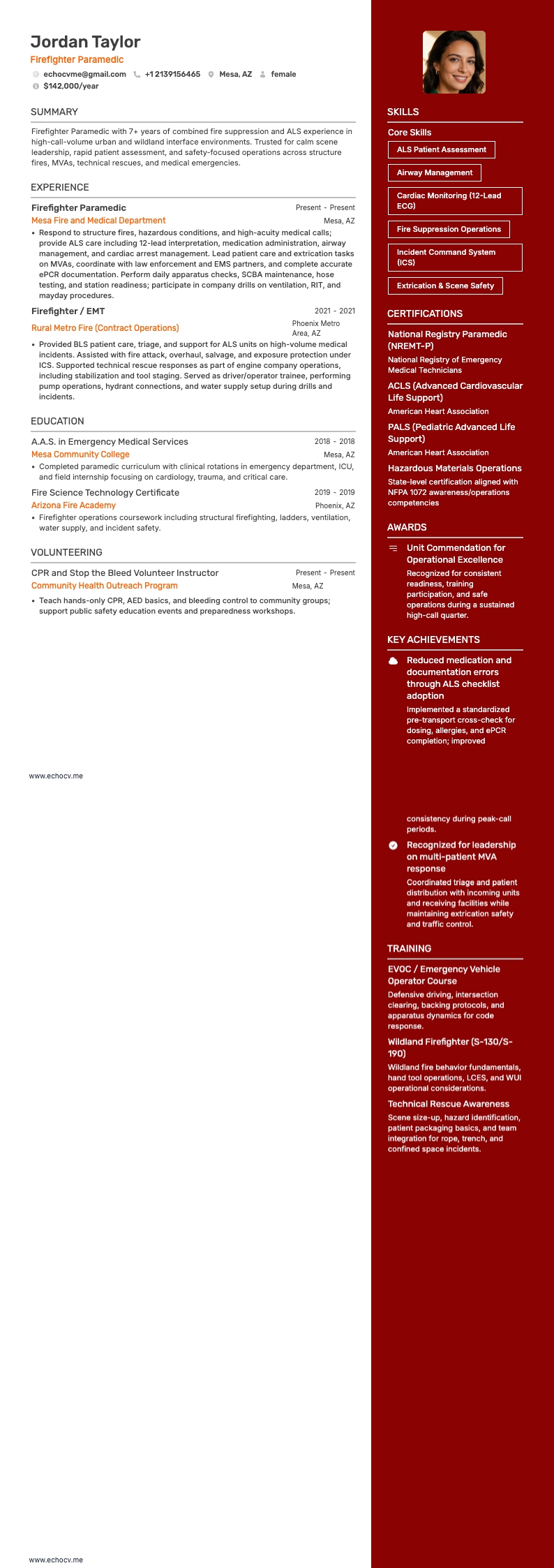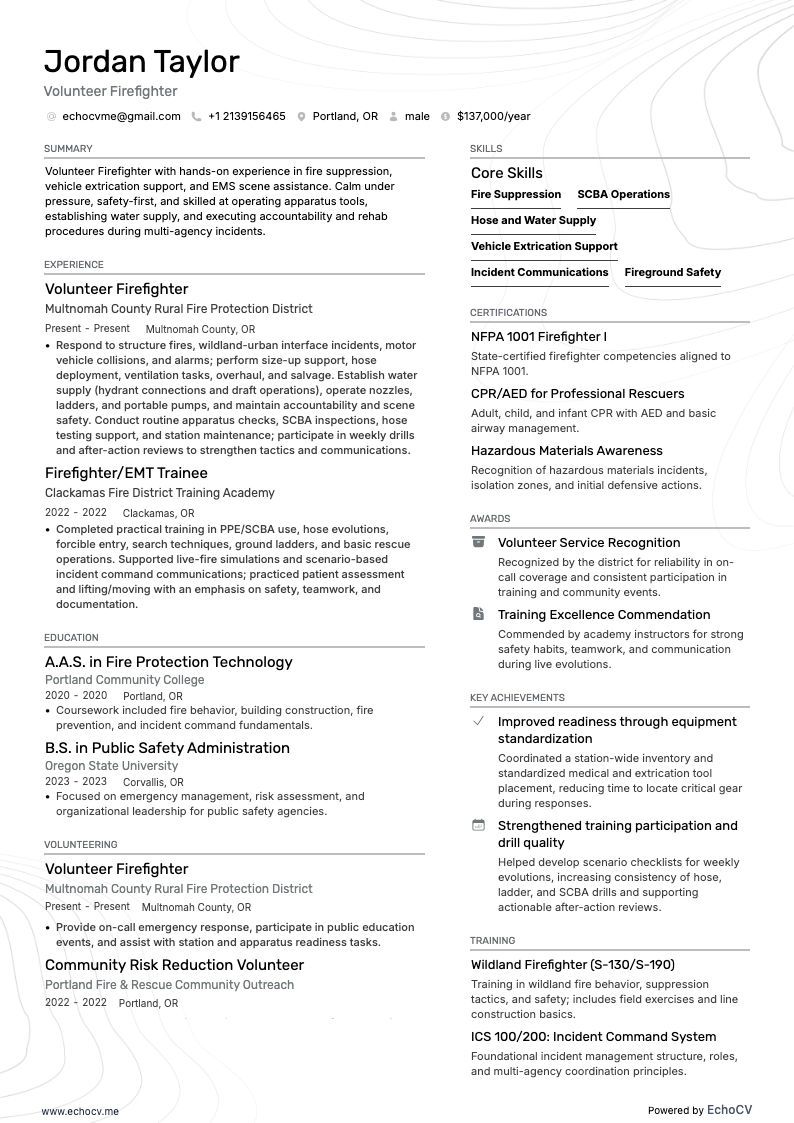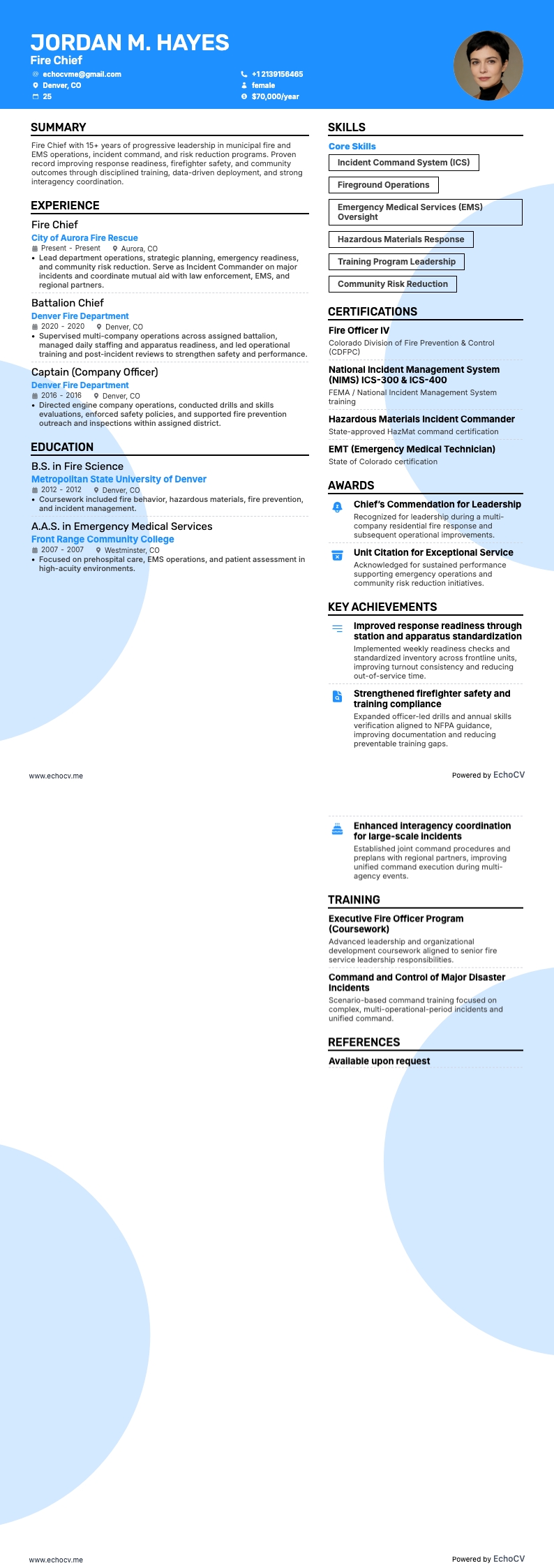
With wildfires becoming more frequent and intense, it's clear the challenges in firefighting are evolving. Climate change is pushing us to adapt and rethink how we manage these disasters. The need for skilled firefighters who are ready to face these challenges head-on has never been more critical.
If you're considering a career in firefighting, you're looking at an opportunity to make a real difference. The job now involves not just battling blazes but understanding and responding to the broader impact of climate change on our environment. It’s about being part of a new generation of firefighters who are as committed to sustainability as they are to saving lives and property.
But here’s the question: how do you capture your readiness and your diverse skills in a resume? How do you make sure your application stands out in a field where the demands are as dynamic as the fires you’ll be fighting?
Our guide is designed to tackle this challenge. After reading the article below, you'll build a resume that not only shines a light on your unique blend of courage and commitment but also opens doors to new opportunities. Here’s what we’ll cover:
- How to build a readable and concise resume that passes ATS and recruiters’ assessment.
- How to translate your front-line experience into a compelling narrative that highlights transferable skills such as leadership, crisis management, and teamwork.
- How to quantify your achievements and impact, turning your everyday heroics into measurable milestones that catch a recruiter's eye.
- How to play around with resume sections and organize them in the best way possible, demonstrating your suitability for the role you’re applying for.
Whether you're aiming to advance within the fire service or pivot to a new career path, building a resume that fully captures your experience, skills, and bravery is no small feat. Let’s get started.
Are you considering any other public safety role? Check out some other related resume examples.
- Volunteer firefighter Resume
- Police Officer Resume
- Entry-level Police Officer Resume
- Public Safety Officer Resume
- Law Enforcement Resume
- Firefighter Cover Letter
How to format a firefighter resume
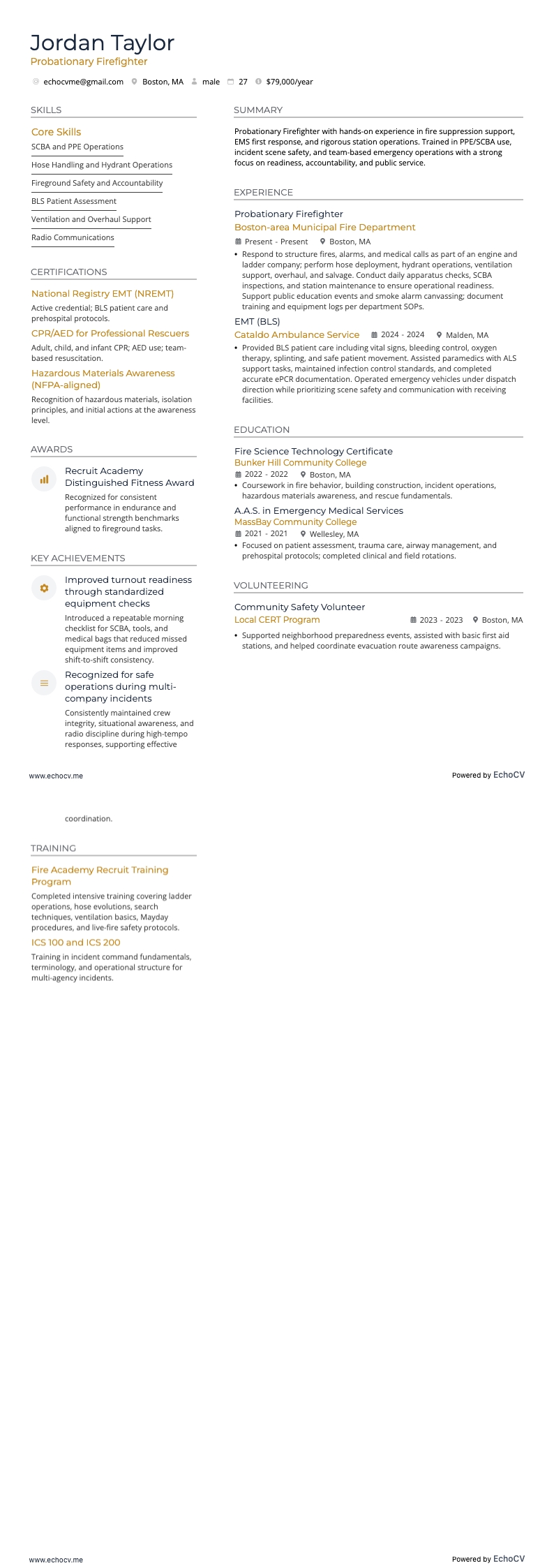
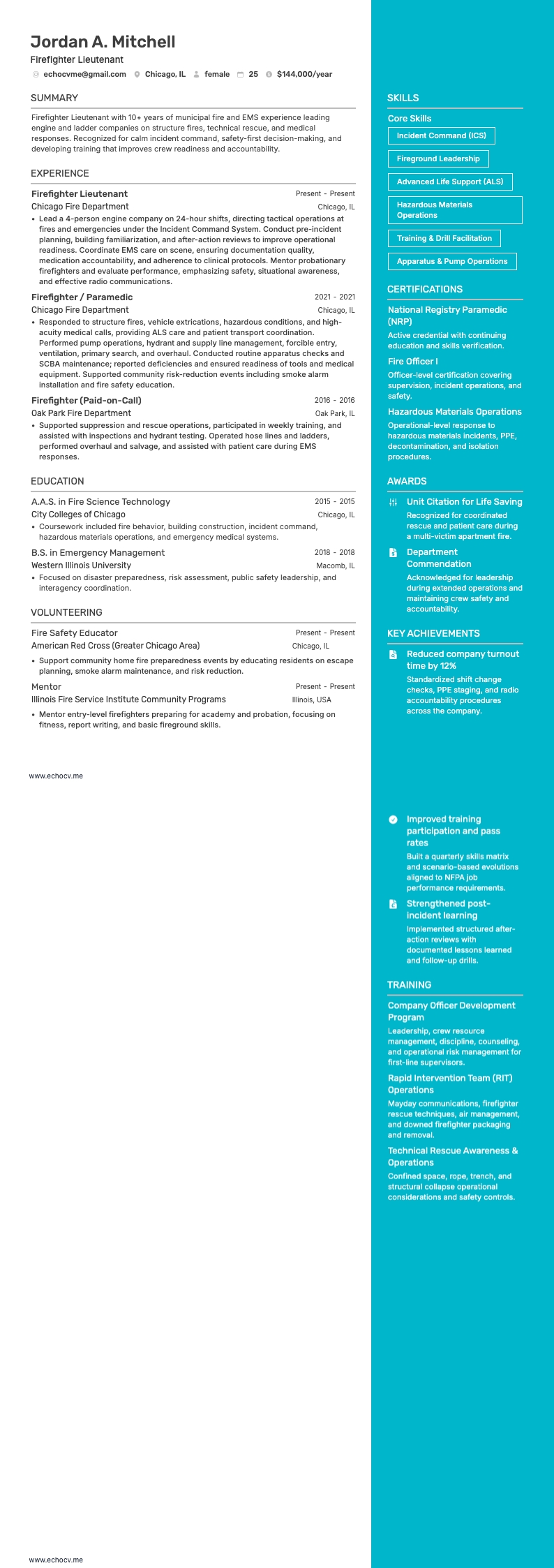
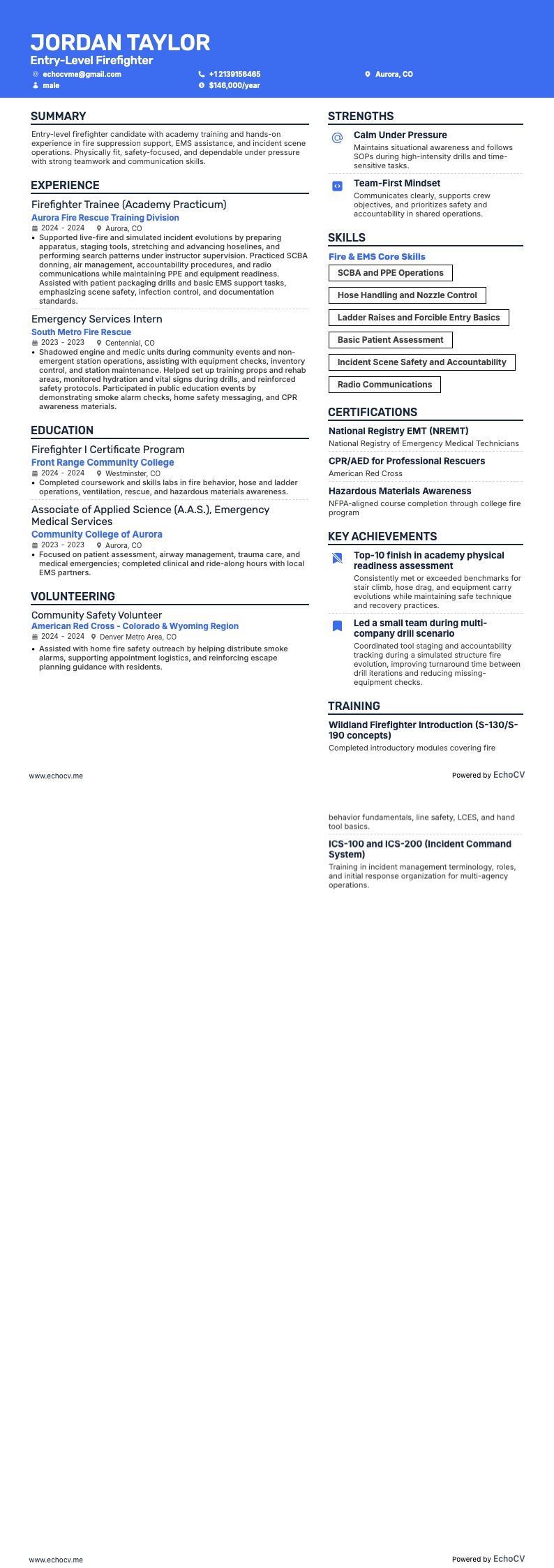
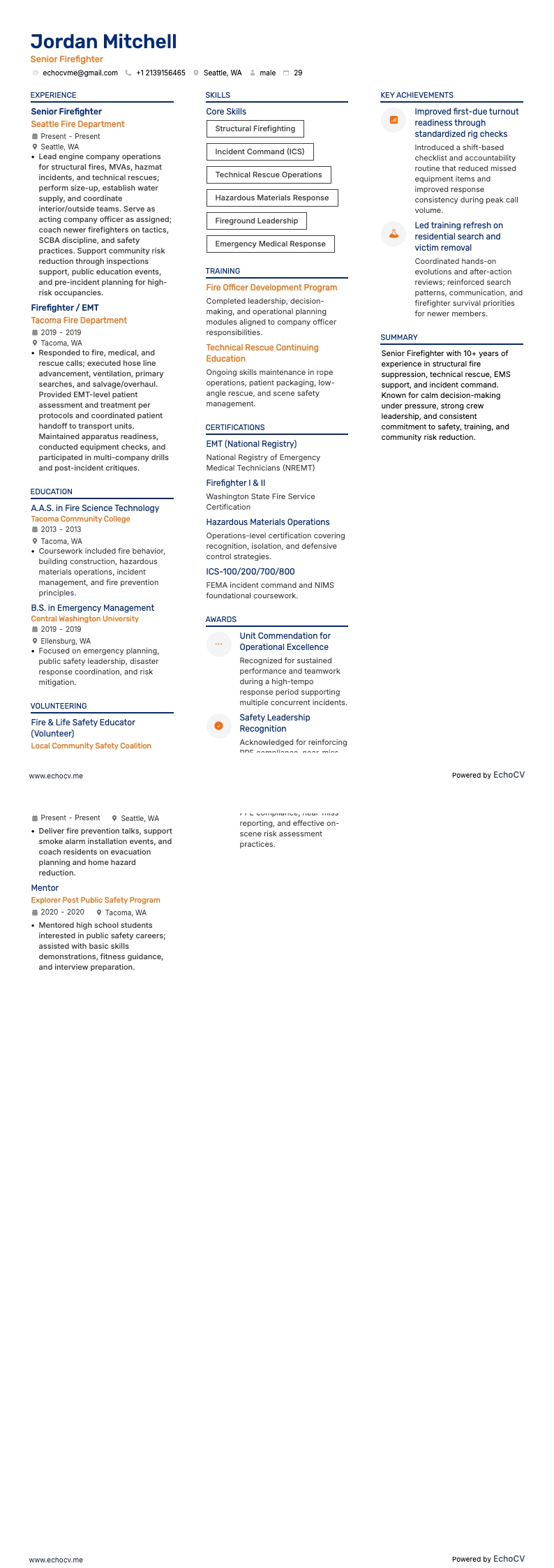
Usually, we talk about three main types of resume layouts. The reverse chronological resume lists employment history starting with the most recent positions first and is best suited for individuals with extensive experience. The second one is the functional resume, which emphasizes skills over chronological work history. It’s ideal for entry-level candidates or those with career gaps.
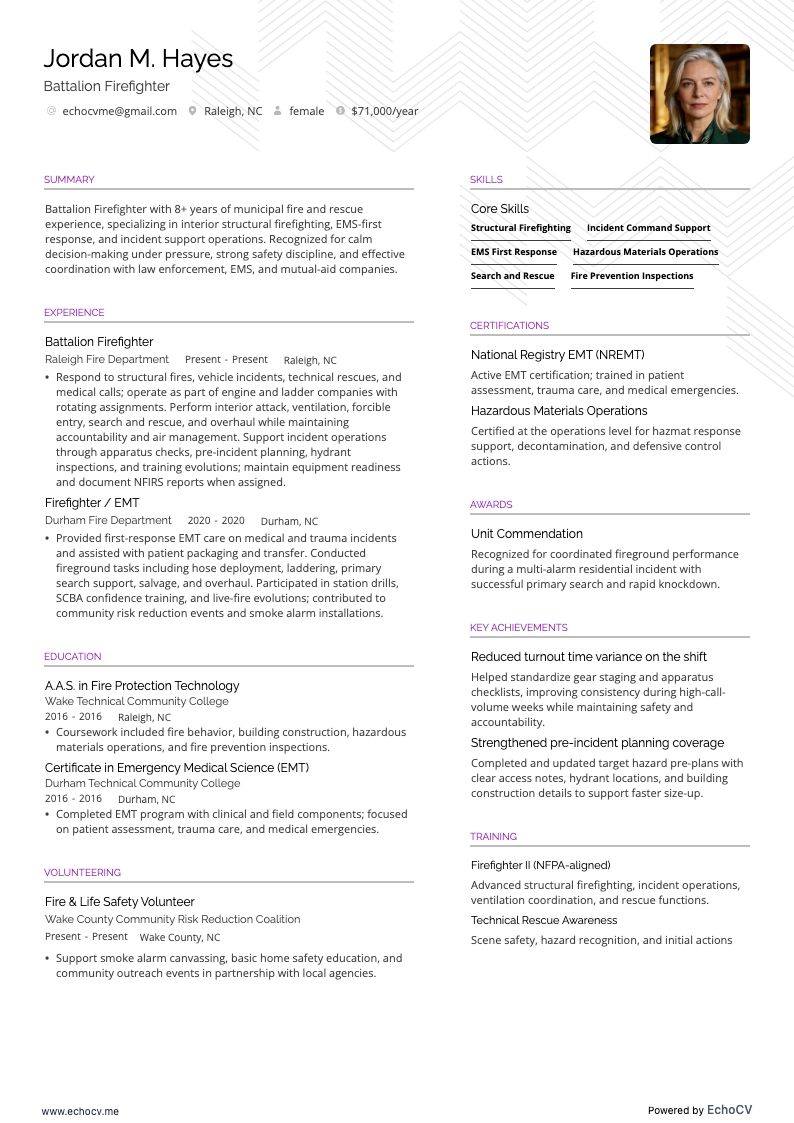
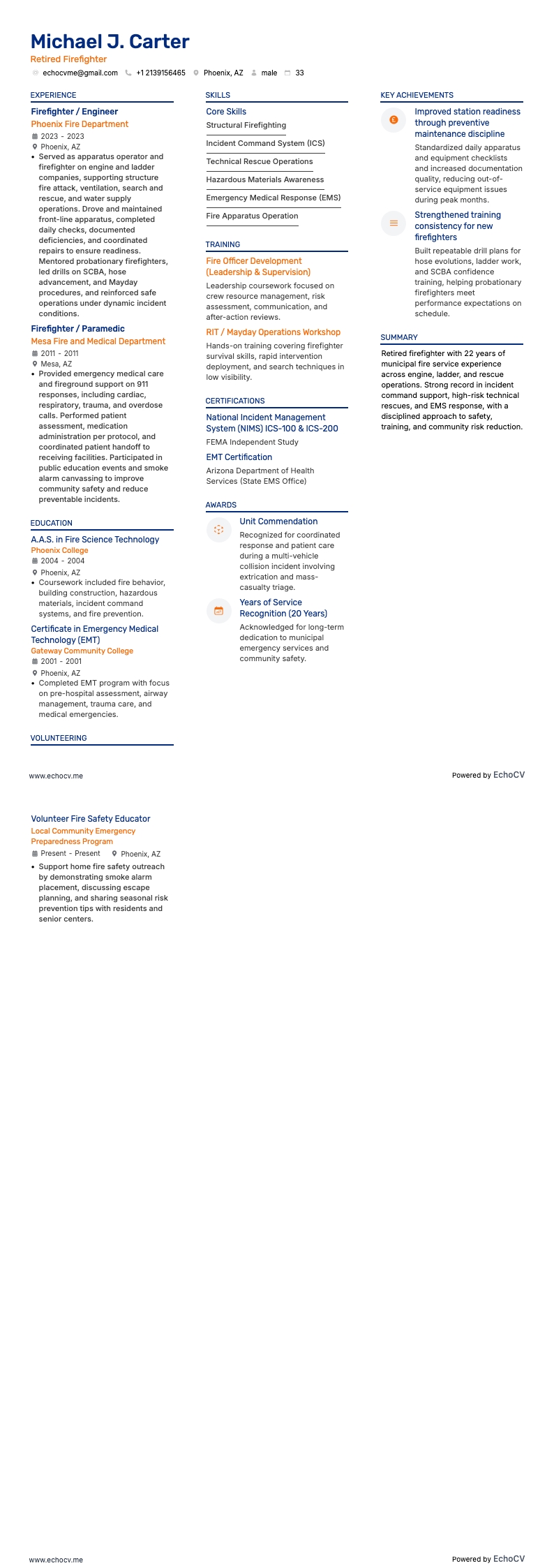
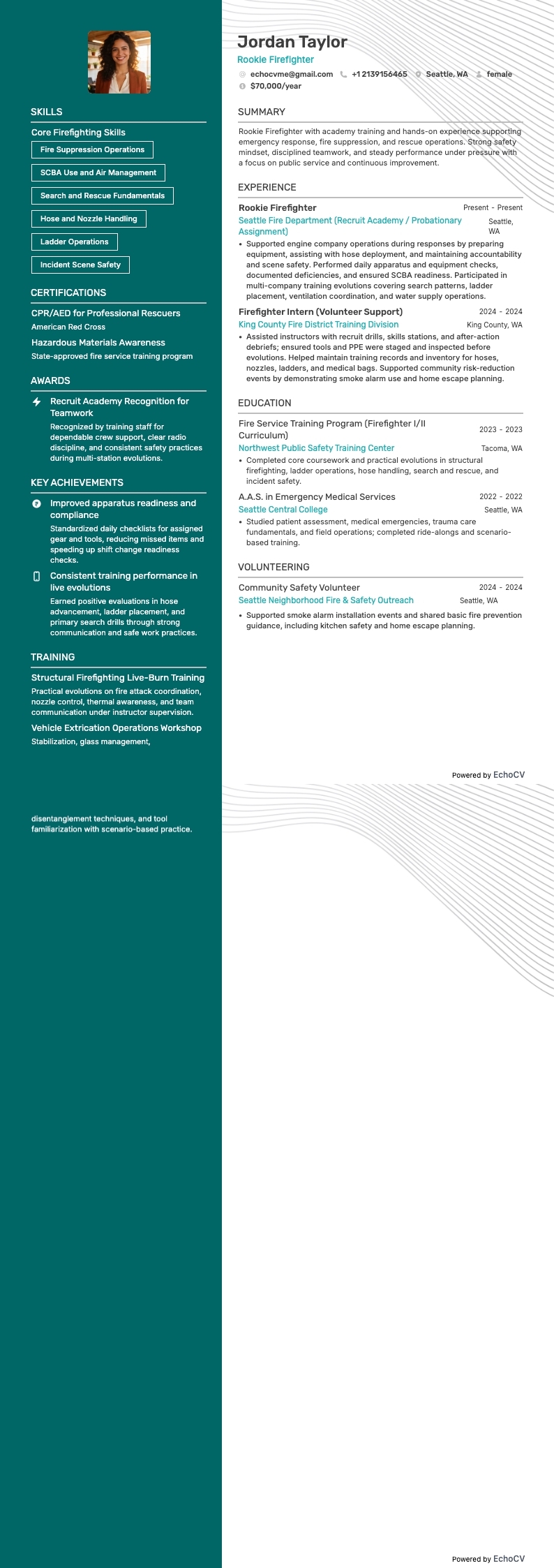
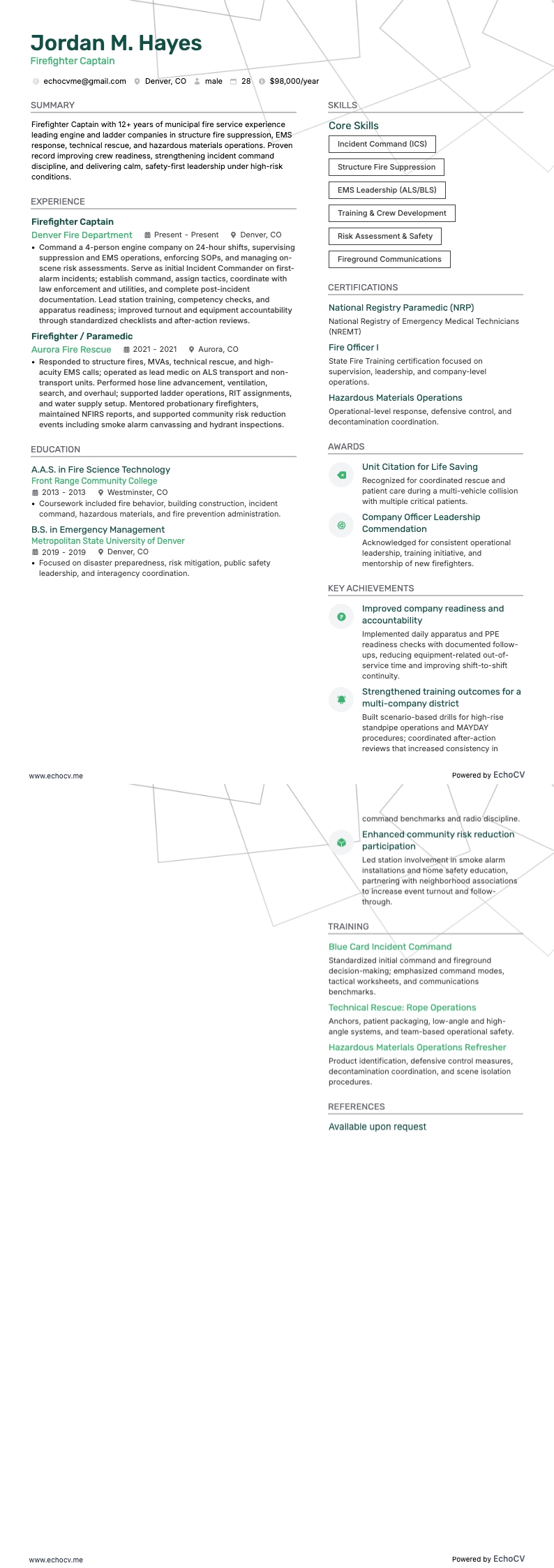
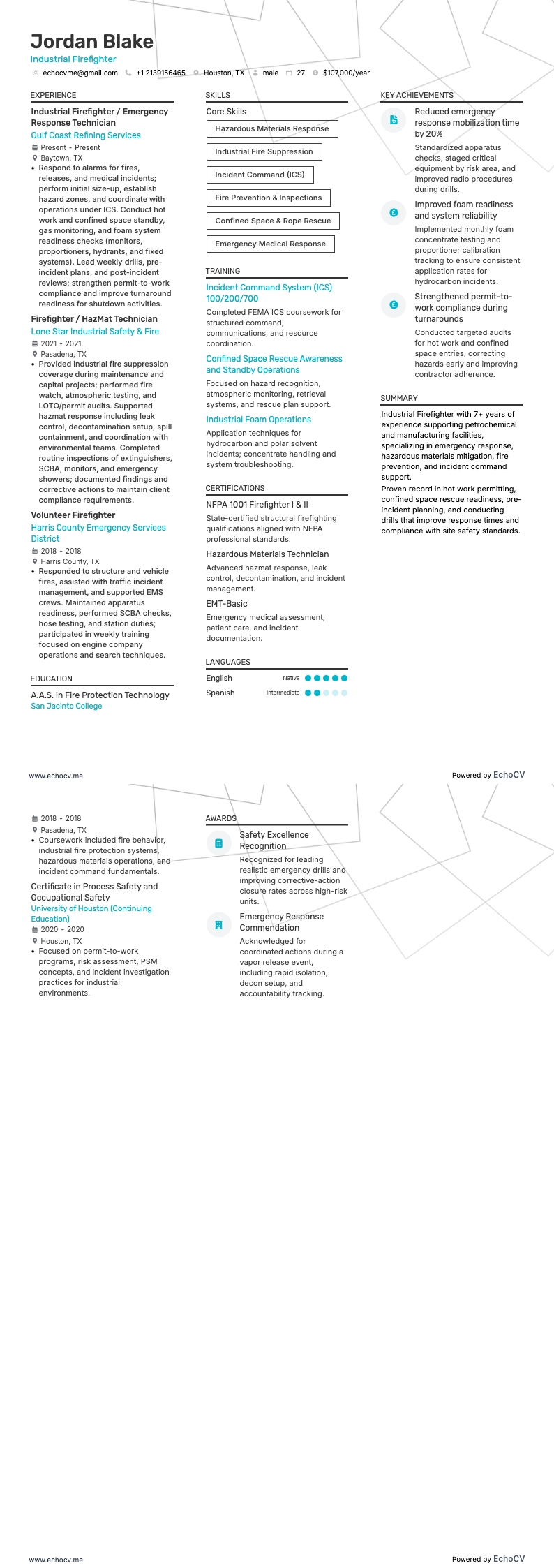
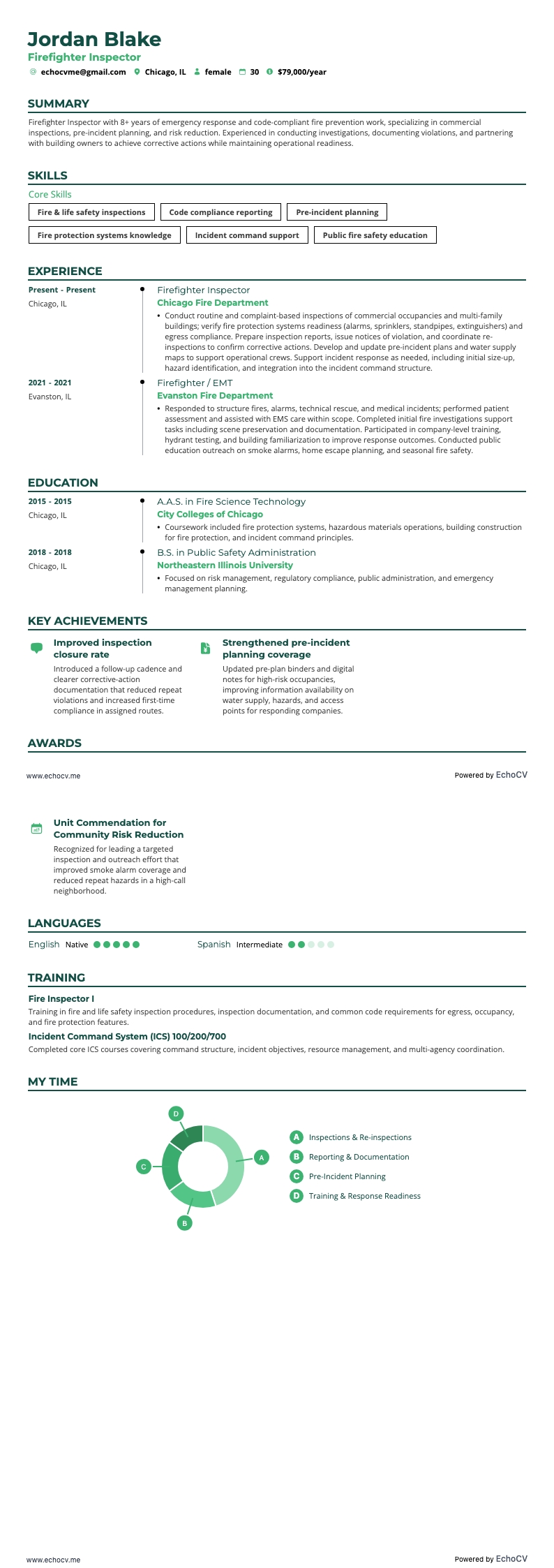
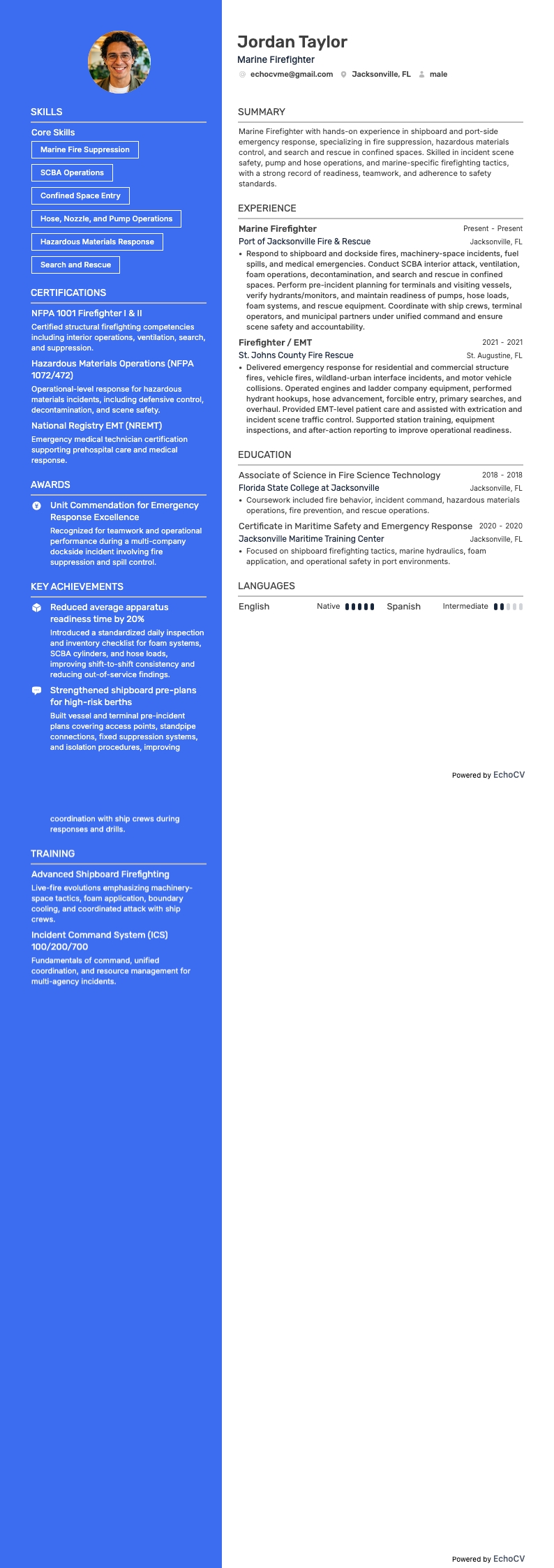
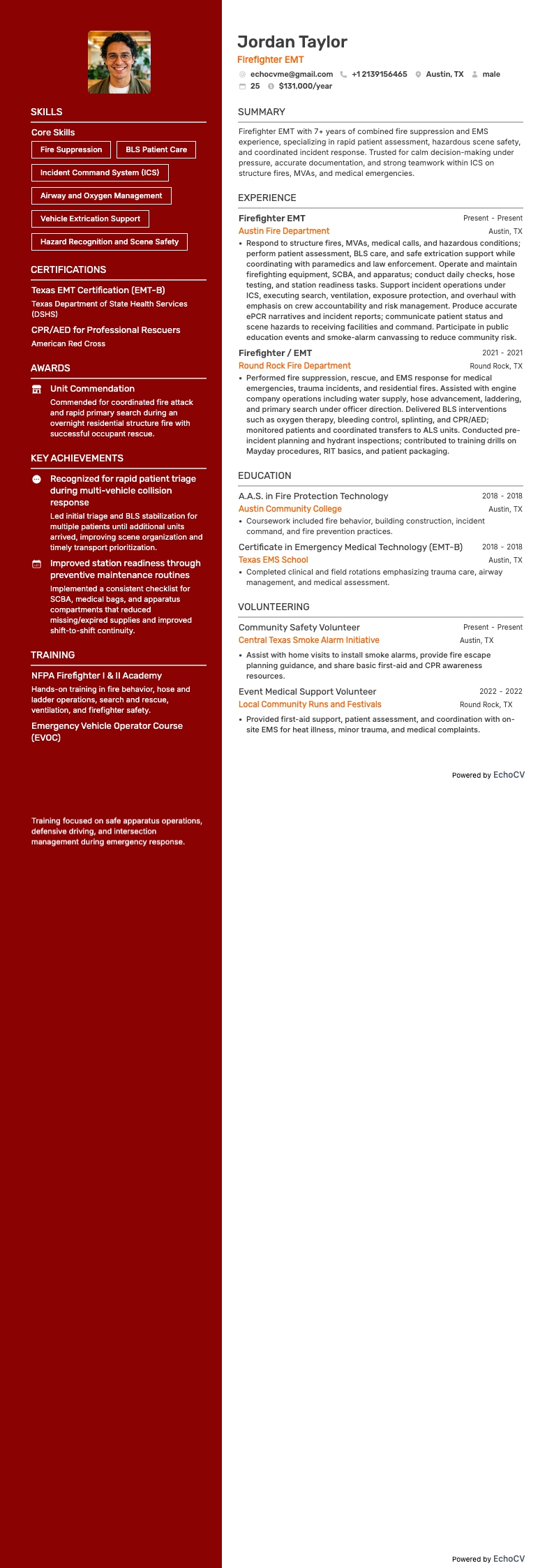
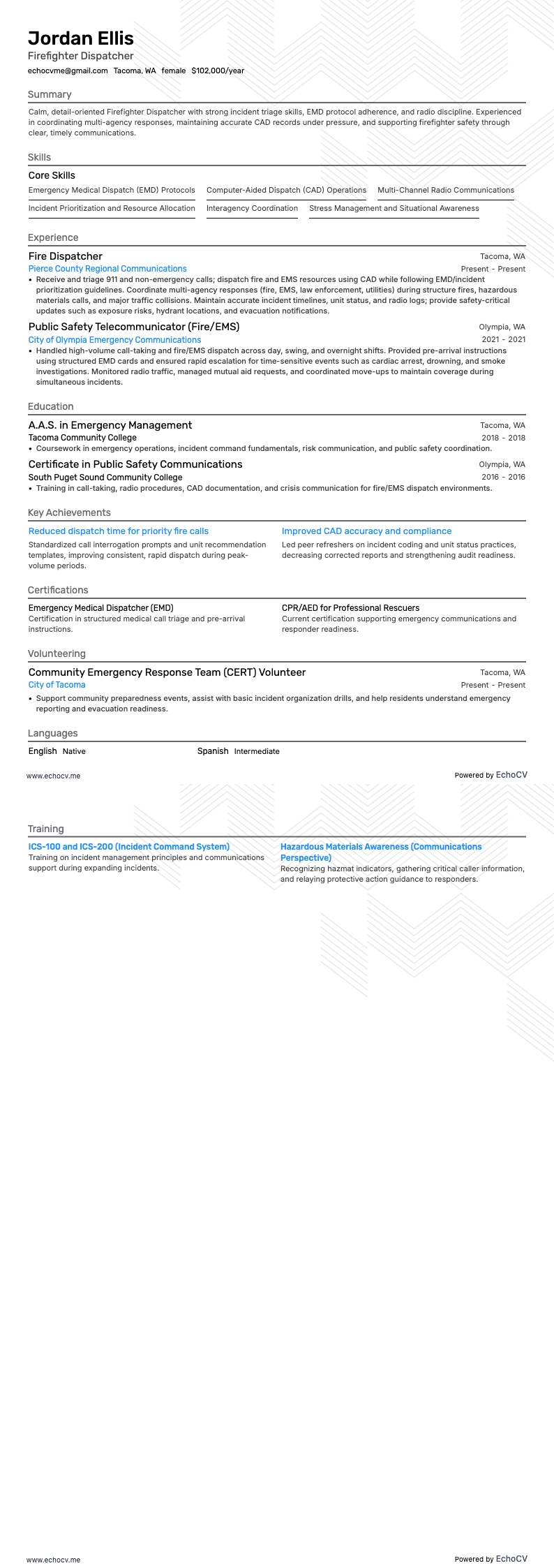
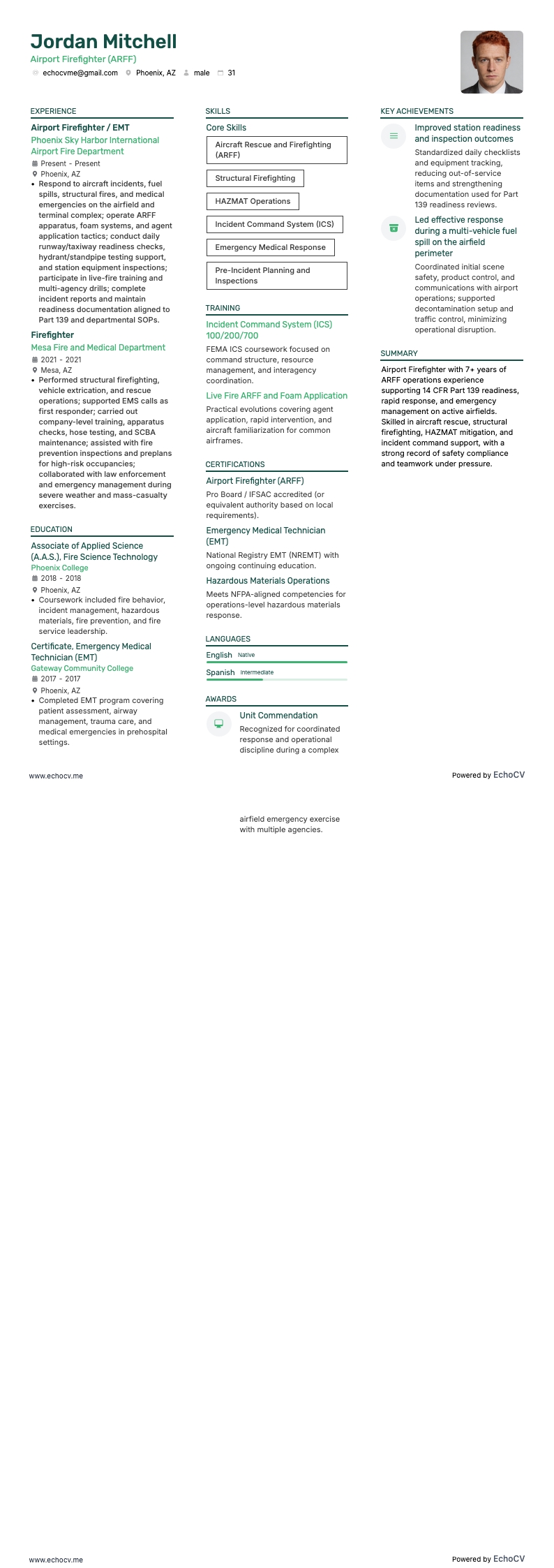
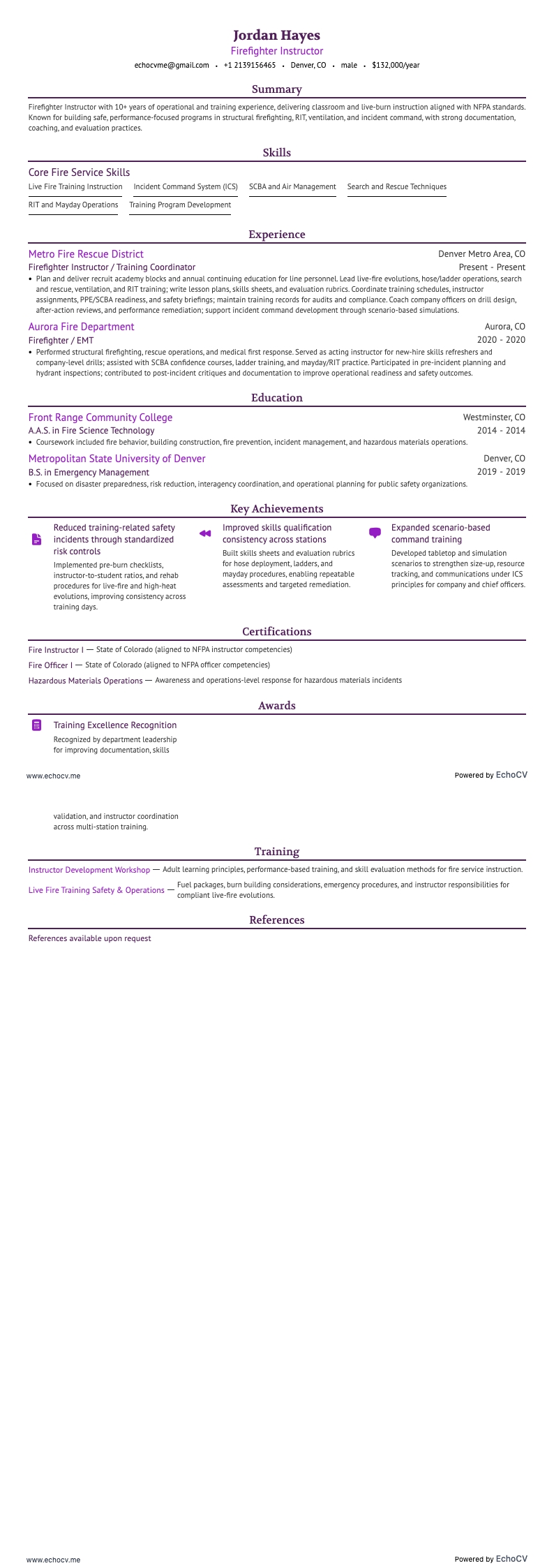
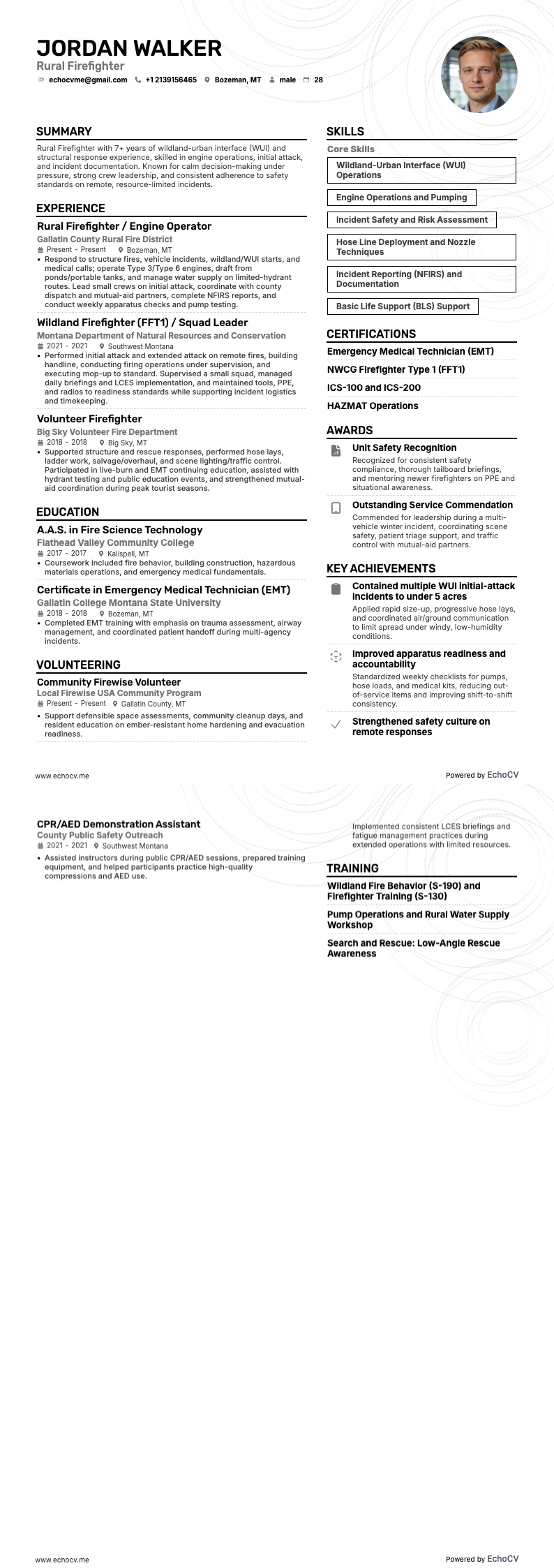
In the case of firefighters, however, the most reasonable choice is the combination, or hybrid, resume. This format allows for a dedicated section to highlight your transferable skills upfront, such as crisis management, teamwork, leadership, problem-solving, and effective communication. The hybrid resume is also particularly beneficial for firefighters looking to advance within the fire service or transition into new roles where emphasizing the applicability of their skill set is crucial.
Formatting tips for a job-winning resume
A resume demands paying attention to some very specific details like ATS-friendly fonts and acceptable file formats. Below, we break down the formatting principles you should follow when building your firefighter resume.
Think about the market’s preferences – a Canadian resume, for instance, could have a different layout.
- Resume header: Include your name, contact information, and location. This is also the ideal place to put a link to your LinkedIn account.
- Fonts: Go with a professional, readable font that can be easily recognized by applicant tracking systems. Lato, Arial, Rubik, or Calibri, size 10-12 pt would work perfectly for a firefighter resume.
- Margins: This part of your resume should comply with industry standards and shouldn’t be less than 1 inch wide. Margins provide white space on a resume and make it easy to read.
- Layout: Go for a clean layout (a single- or double-column resume) and keep your resume length no more than 1 page long.
- Language: Proofread your resume for typos and grammar mistakes. If you’re not confident, use our resume checker—it’ll do the necessary optimization for you.
- PDF format: Many people have expressed frustration with their resumes failing to pass the ATS assessment. In many of those cases, the file format is the reason. So, make sure you save your resume as a PDF file to preserve the layout across all devices and platforms.
If you already have a resume built, chances are it might not be ATS-friendly. Click the button below to see if it passes the test or not.