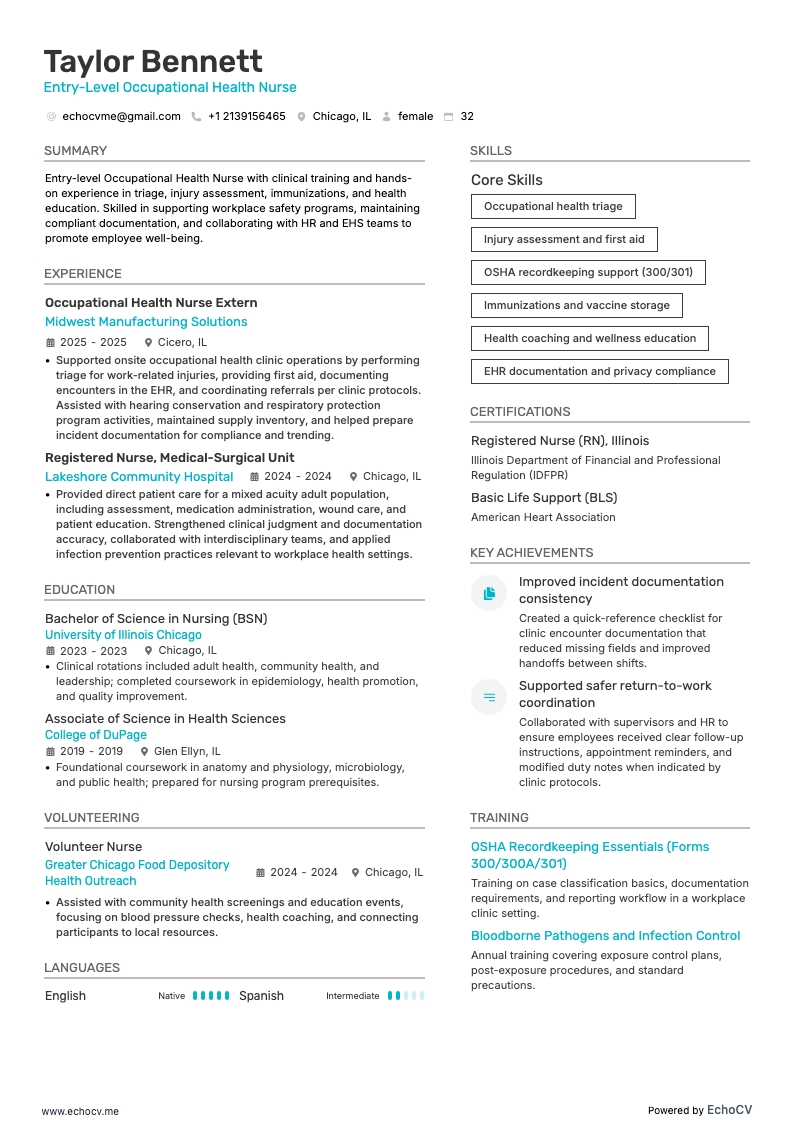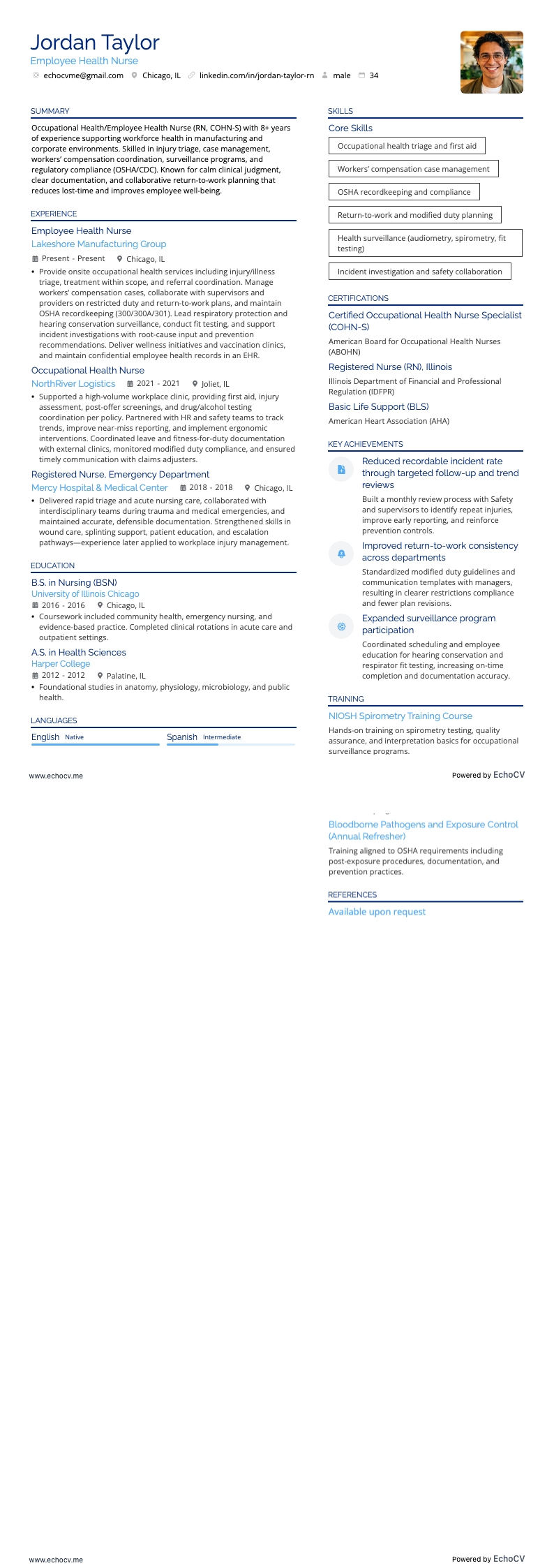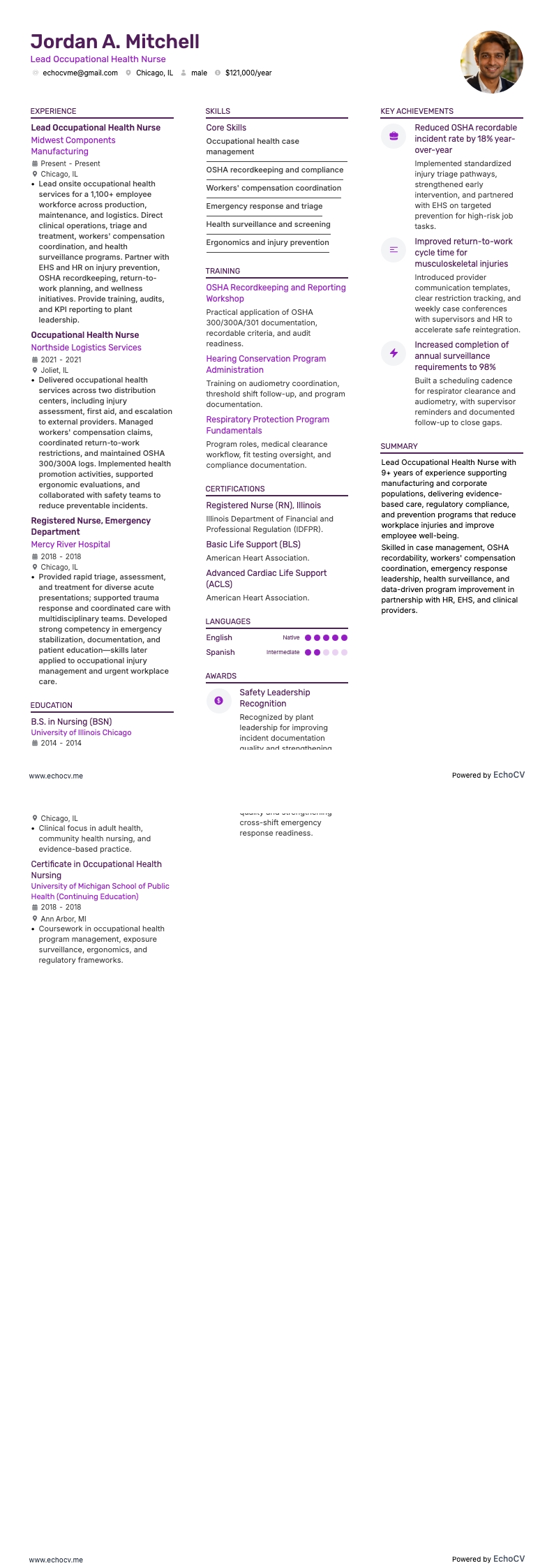
Once you’ve organized the key resume components, the next step is to write your occupational health nurse experience section so those details translate into clear, job-relevant impact.
How to write your occupational health nurse resume experience
The experience section is where you prove you've delivered real results as an occupational health nurse—through clinical interventions, workplace safety programs, regulatory compliance efforts, and employee wellness initiatives that produced measurable outcomes. Building a targeted resume means hiring managers see demonstrated impact over descriptive task lists, so every bullet should reflect work you shipped, tools or methods you applied, and the tangible difference you made.
Each entry should include:
- Job title
- Company and location (or remote)
- Dates of employment (month and year)
Three to five concise bullet points showing what you owned, how you executed, and what outcomes you delivered:
- Ownership scope: the employee populations, workplace health programs, injury prevention initiatives, case management caseloads, or clinic operations you were directly accountable for as an occupational health nurse.
- Execution approach: the clinical assessment protocols, surveillance tools, electronic health record systems, OSHA compliance frameworks, return-to-work methodologies, or ergonomic evaluation techniques you used to guide decisions and deliver care.
- Value improved: changes to workplace injury rates, employee health outcomes, regulatory compliance status, return-to-work timelines, program accessibility, or organizational risk reduction tied to your occupational health nursing practice.
- Collaboration context: how you partnered with safety teams, human resources, industrial hygienists, physicians, insurance carriers, union representatives, or external regulatory agencies to advance health and safety objectives.
- Impact delivered: outcomes expressed through reductions in recordable incidents, improvements in workforce wellness metrics, successful audit results, or cost containment—framed as results and scale rather than activity.