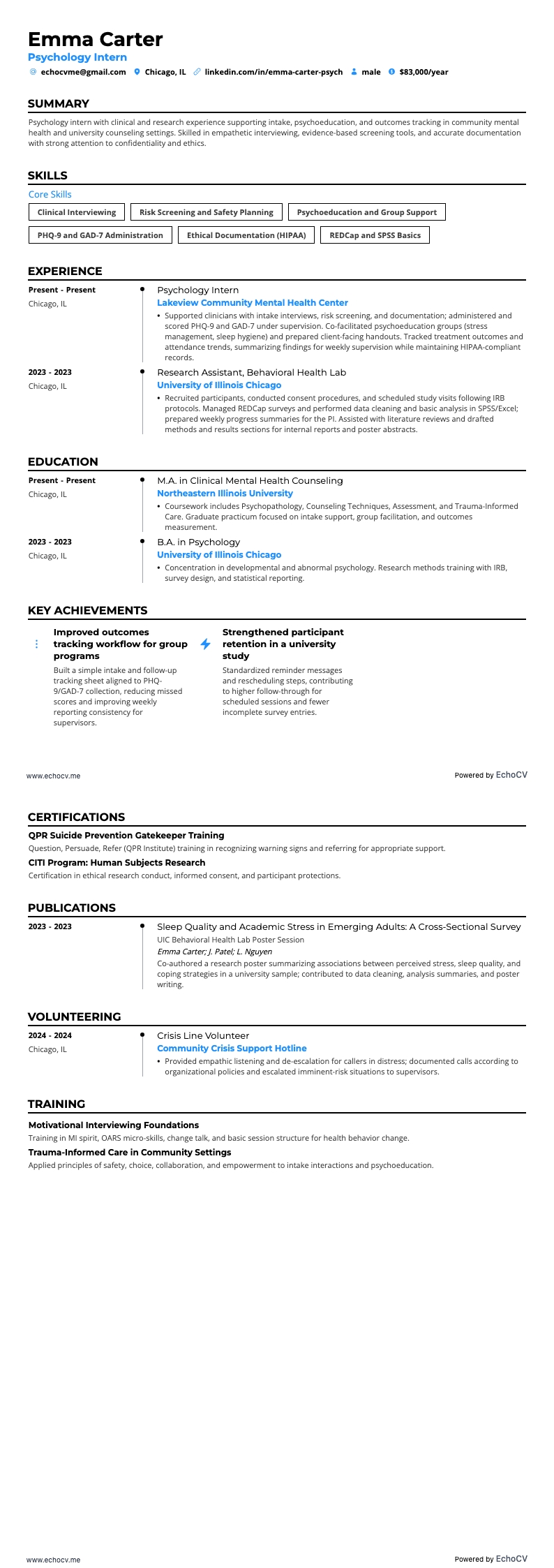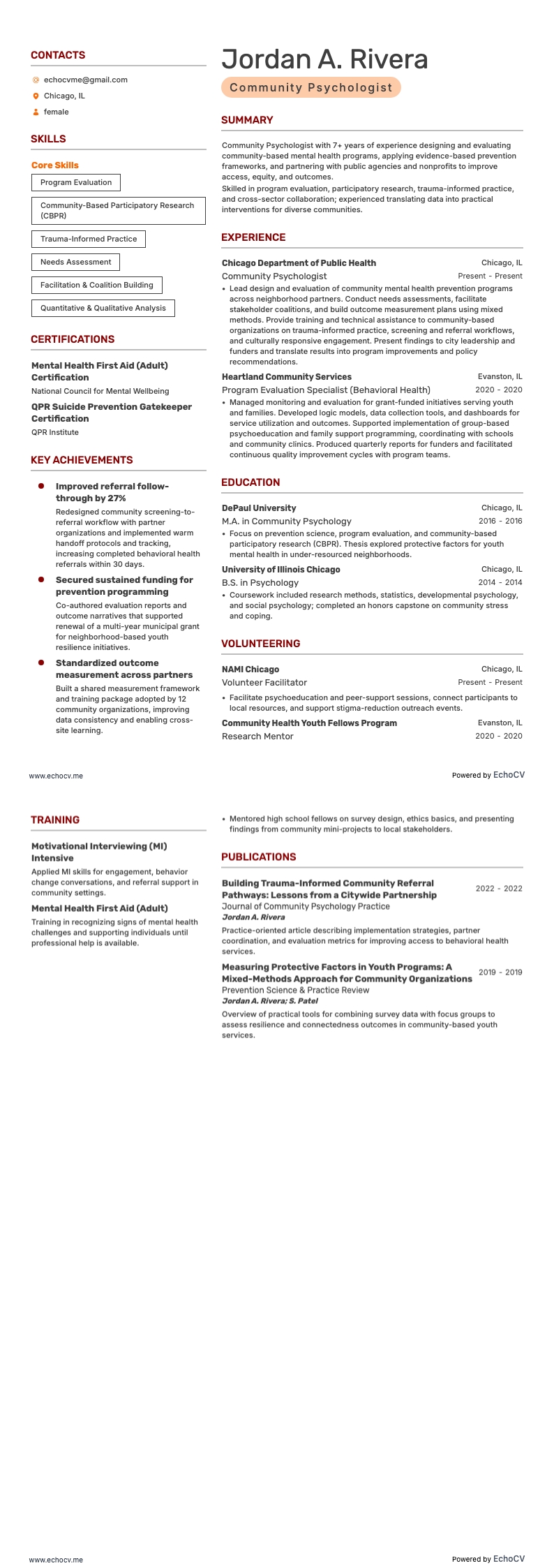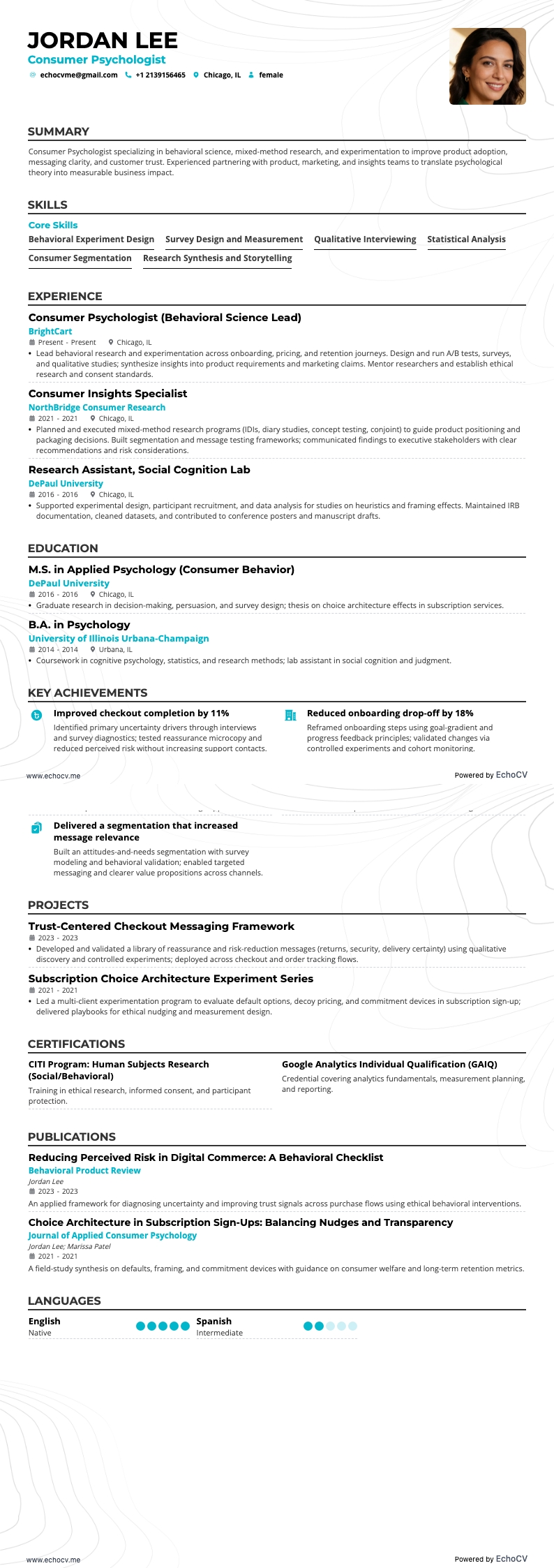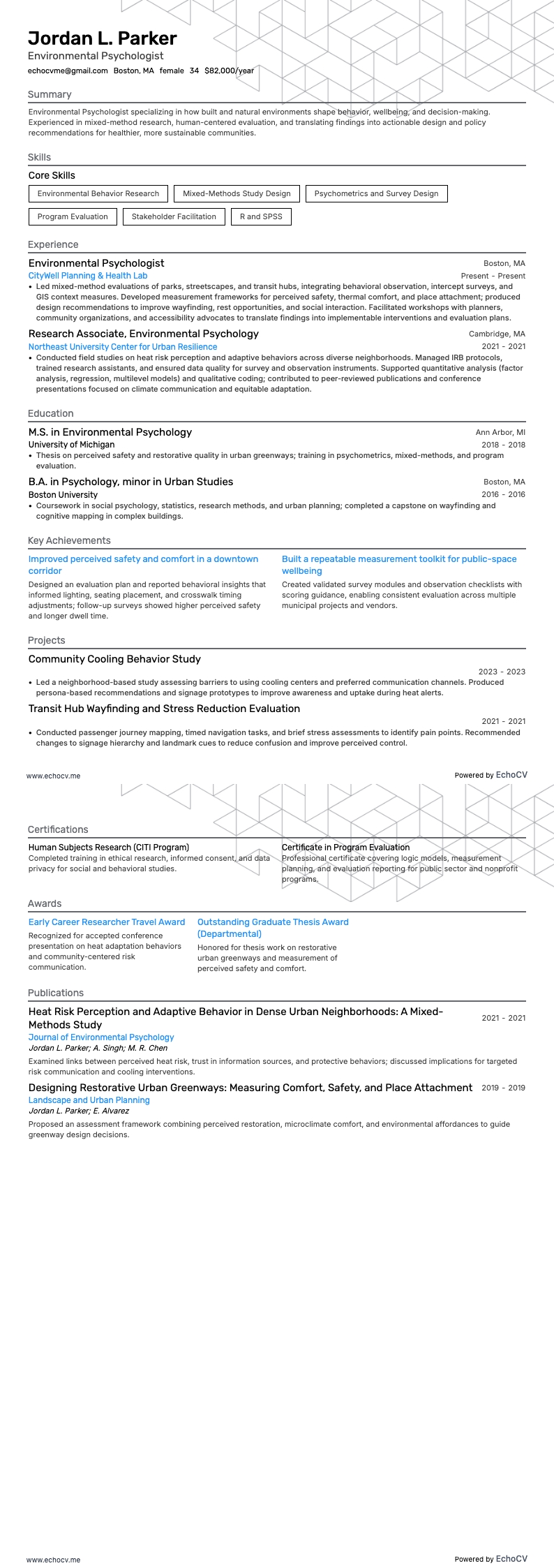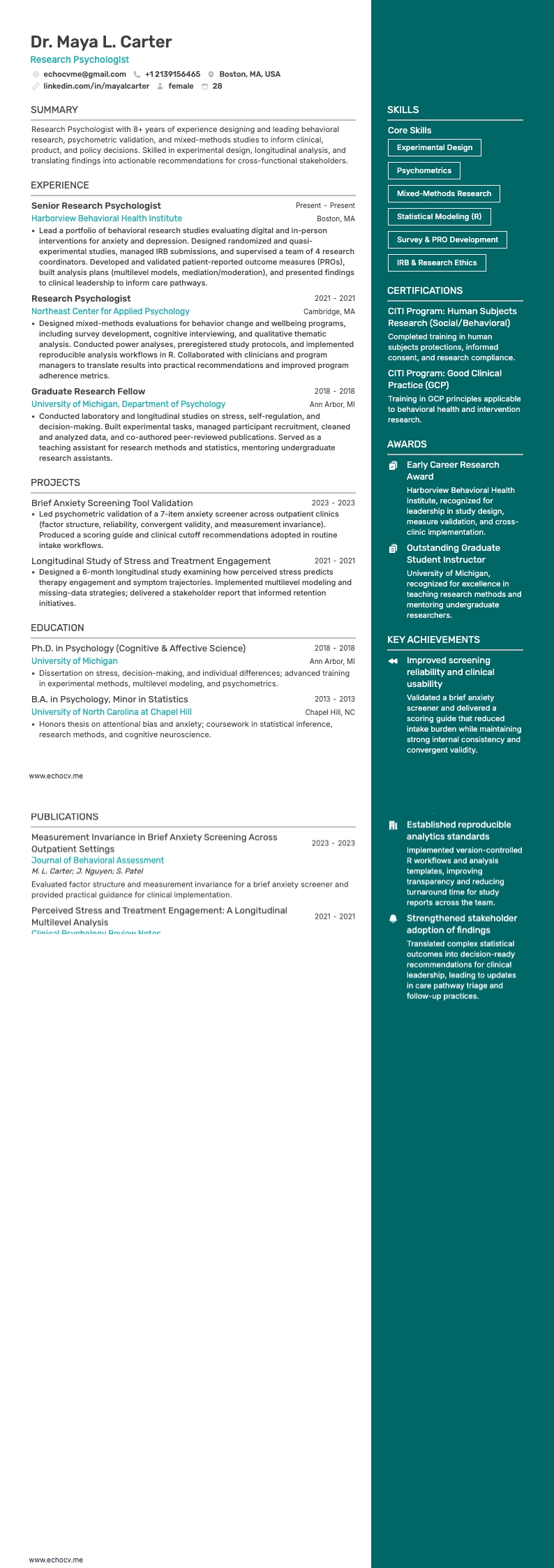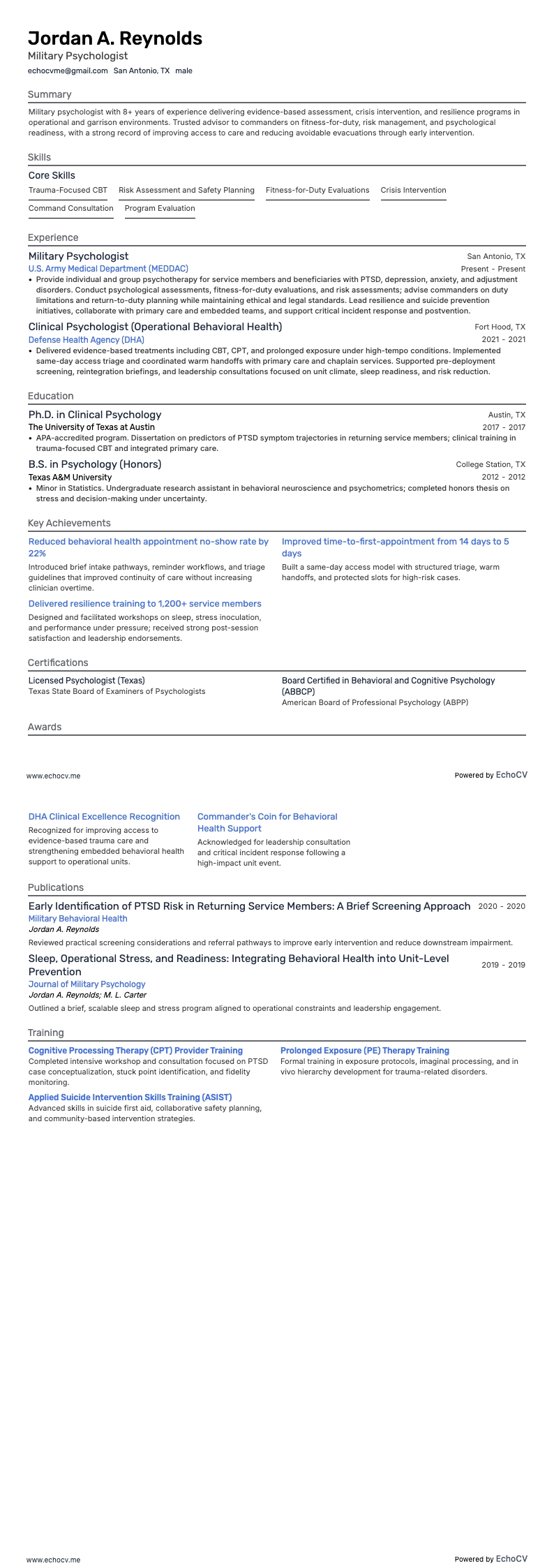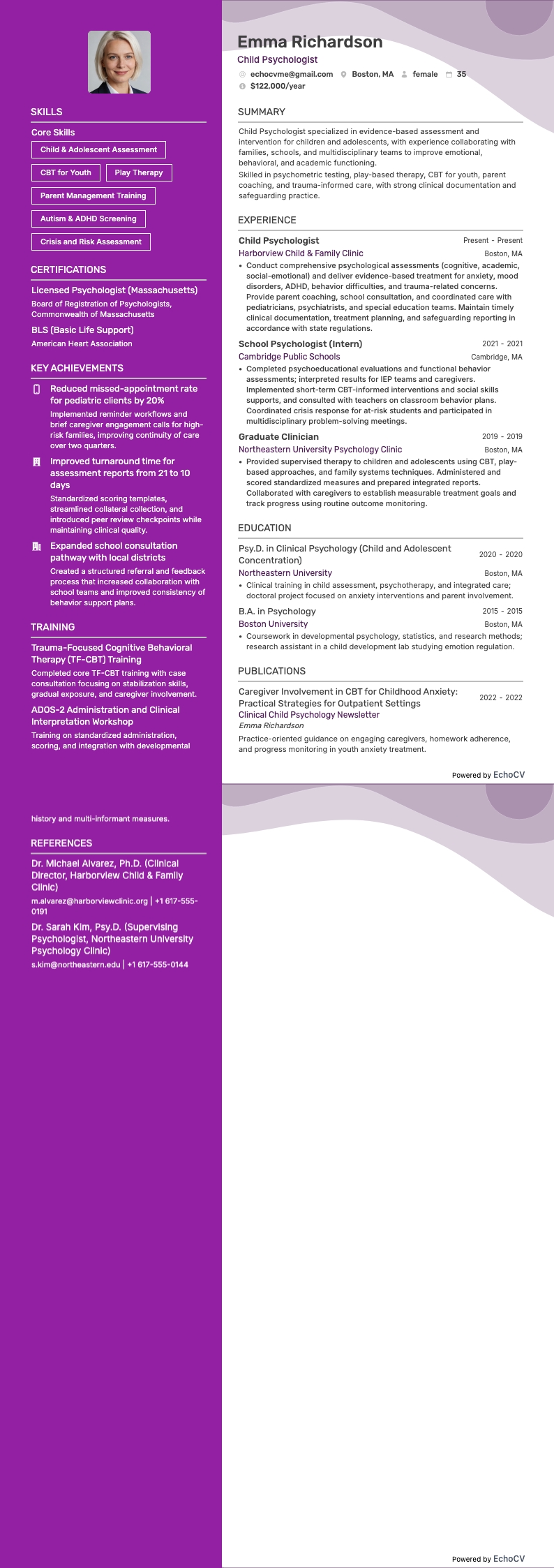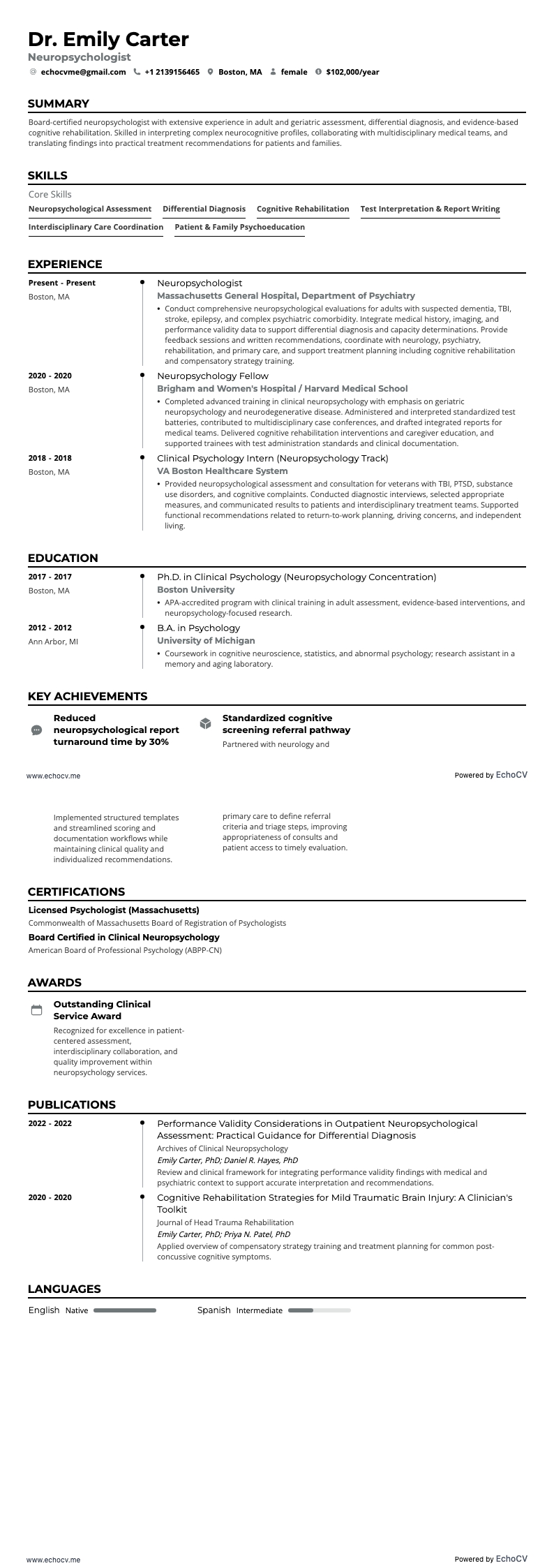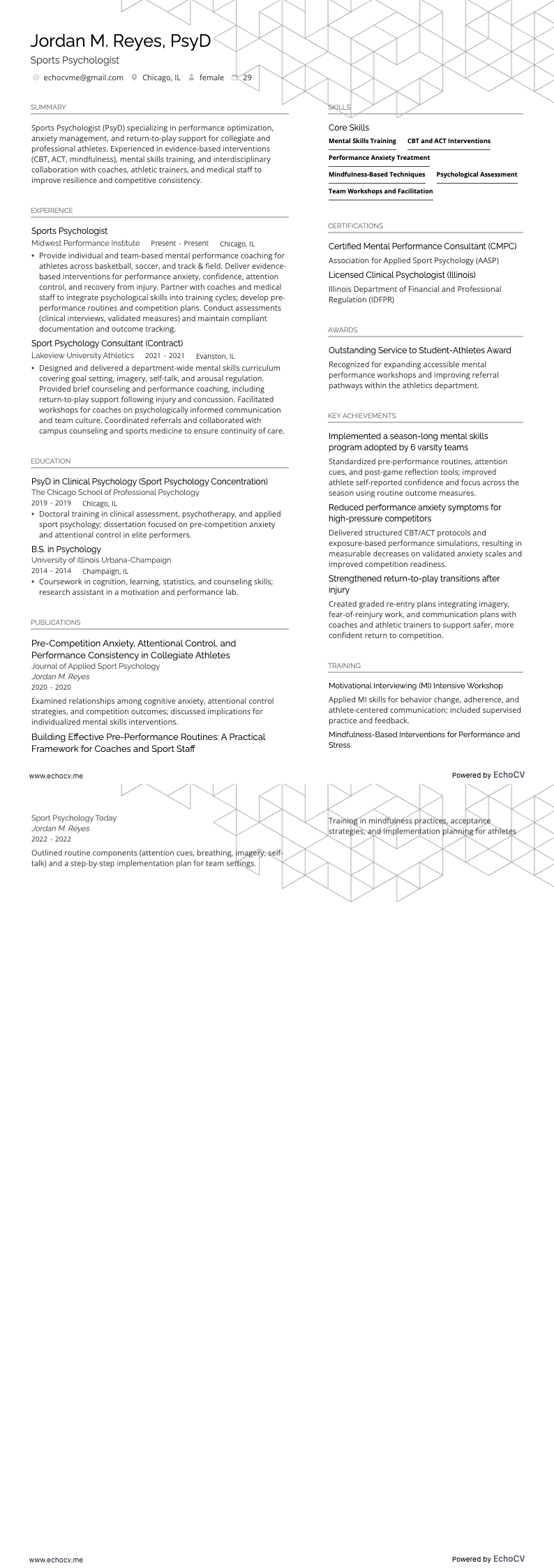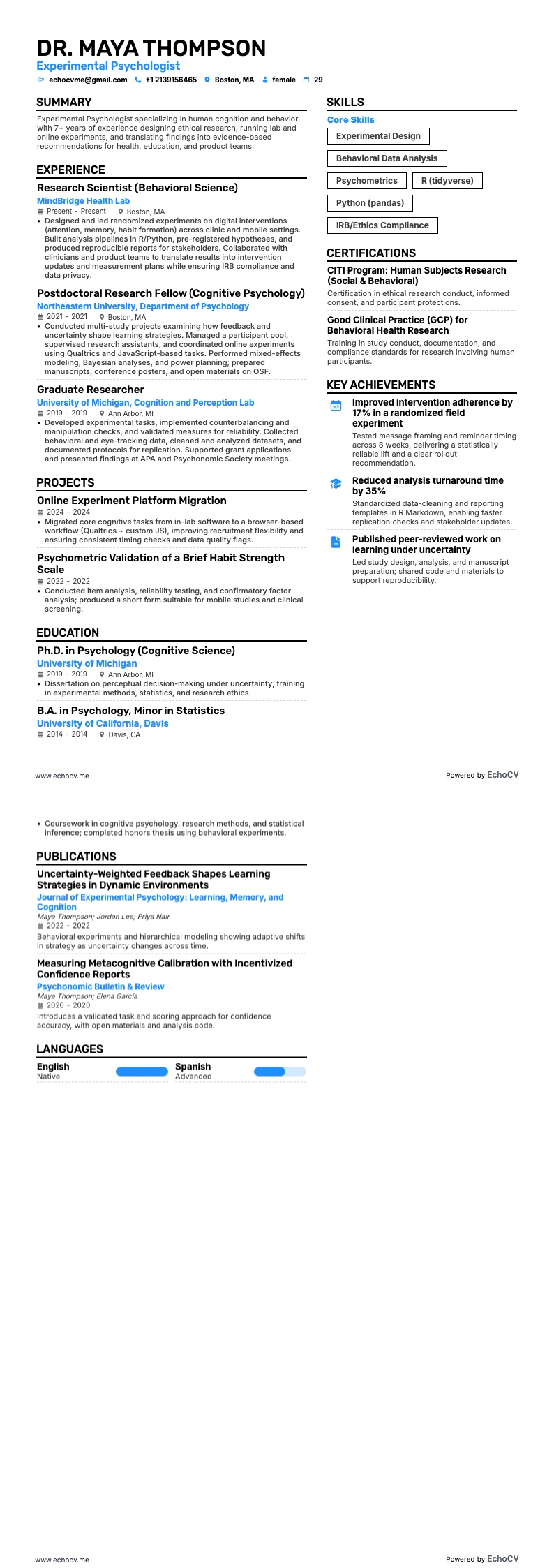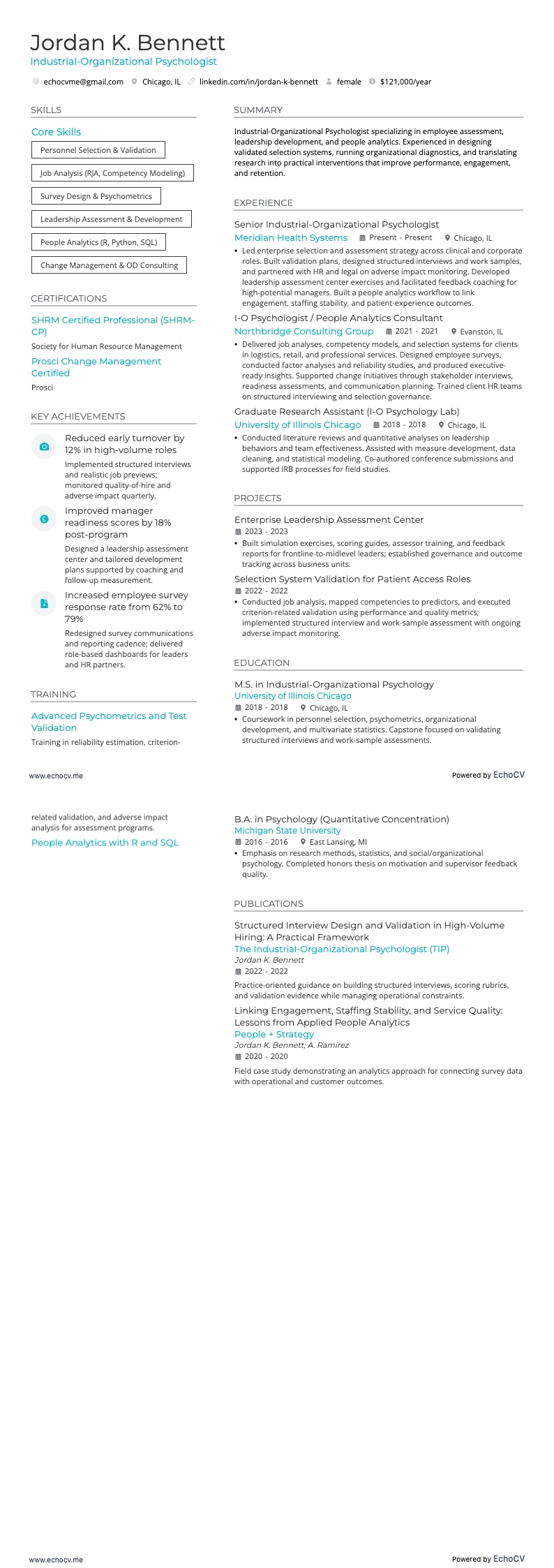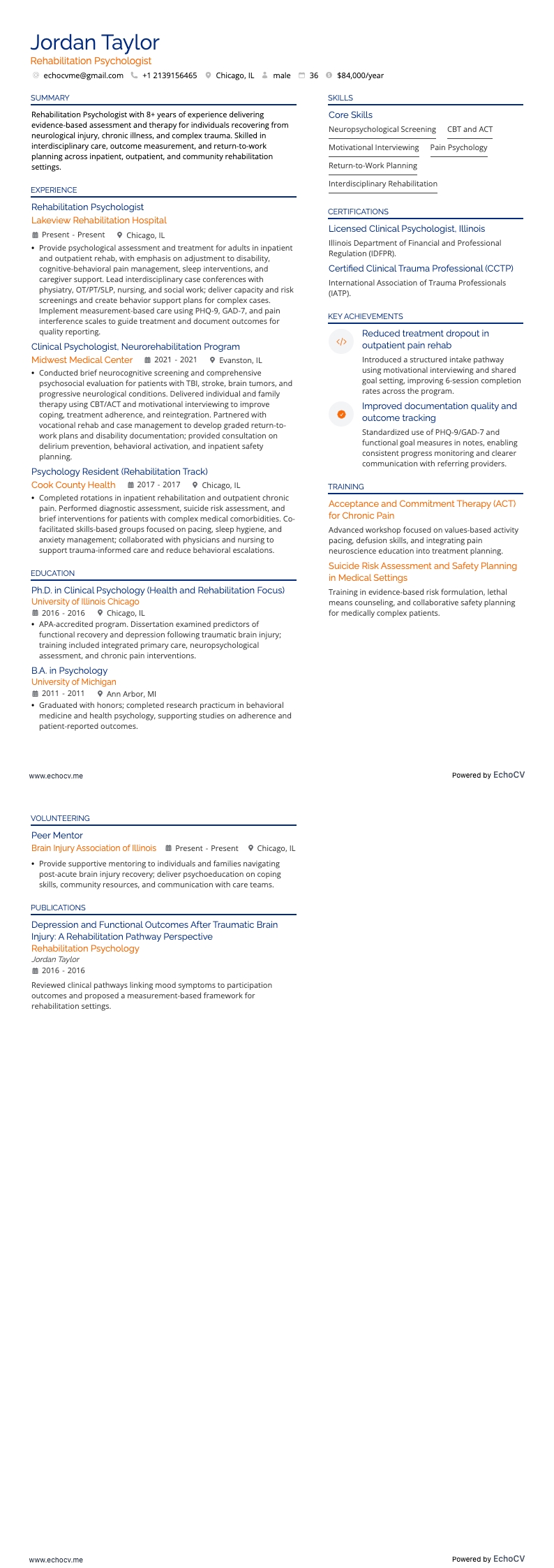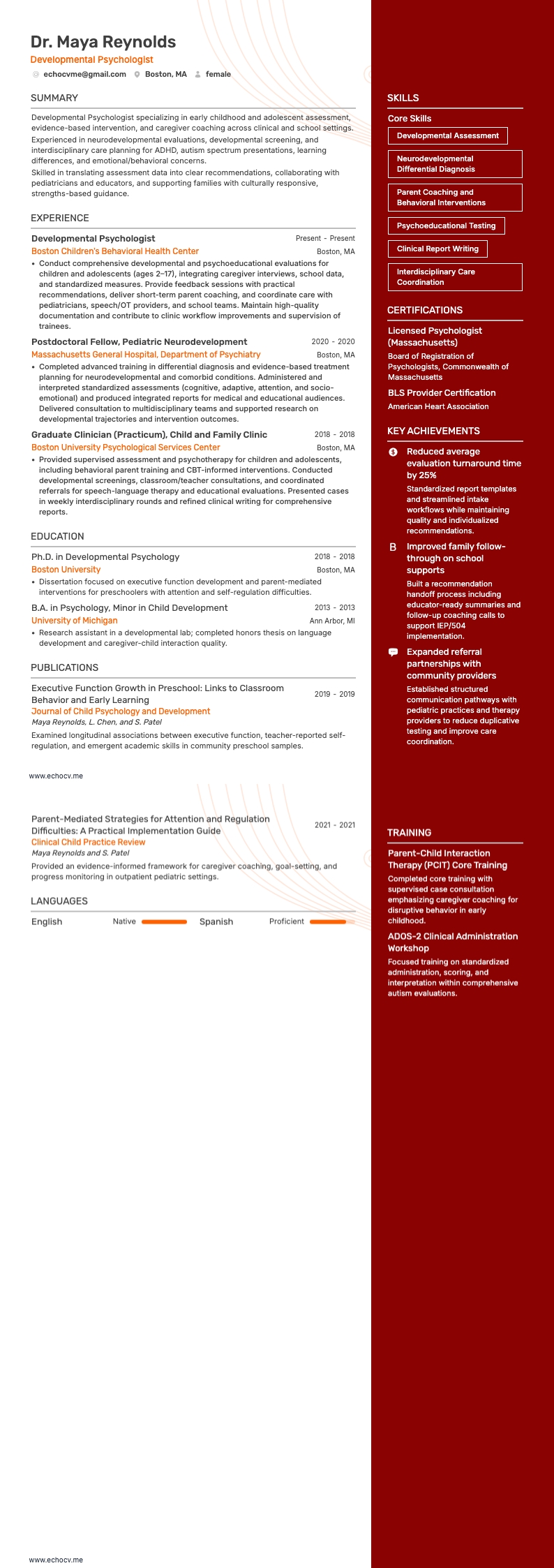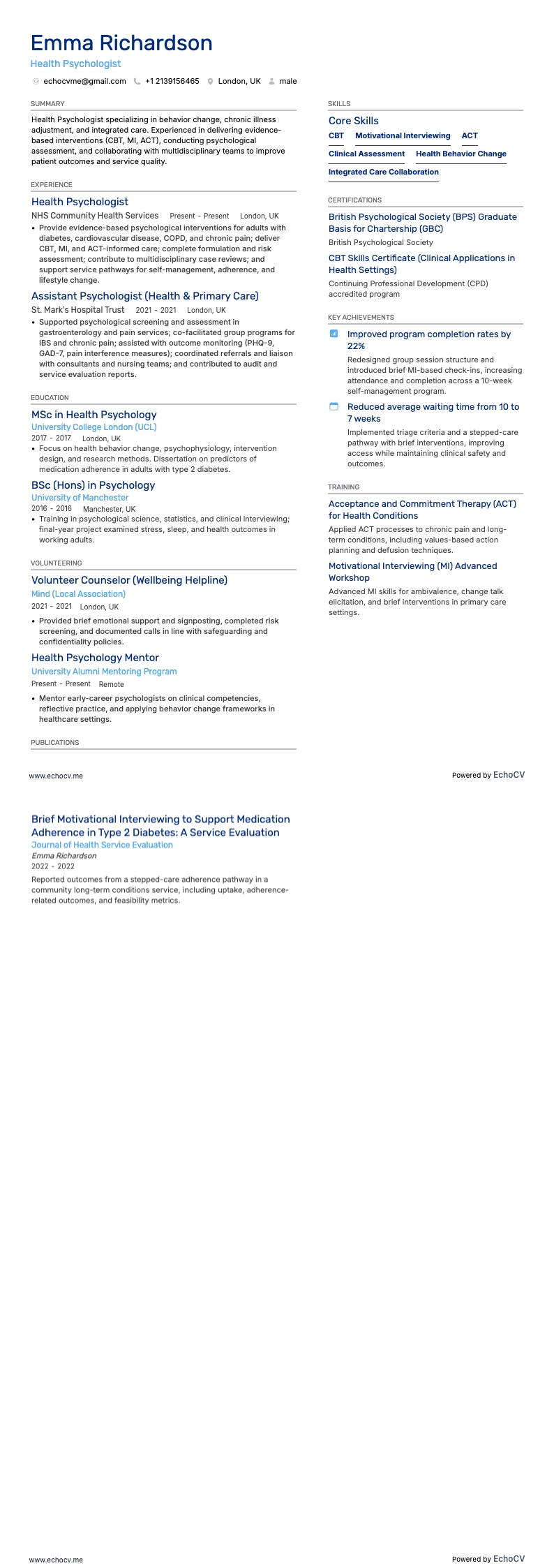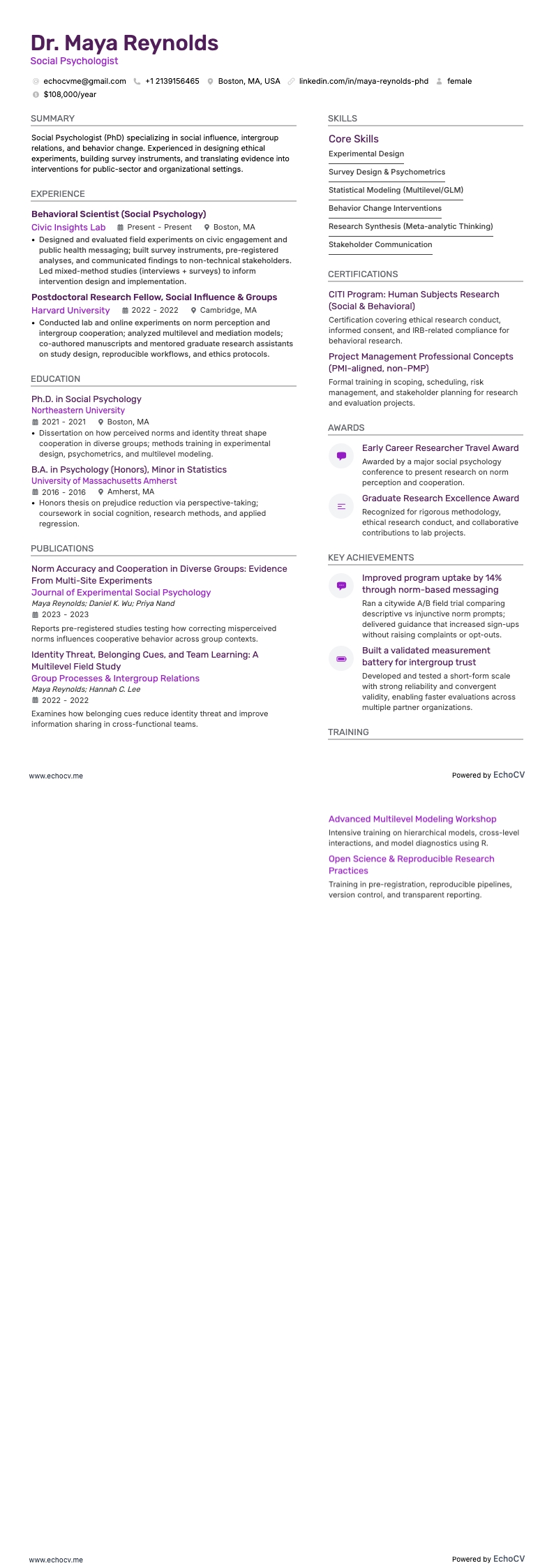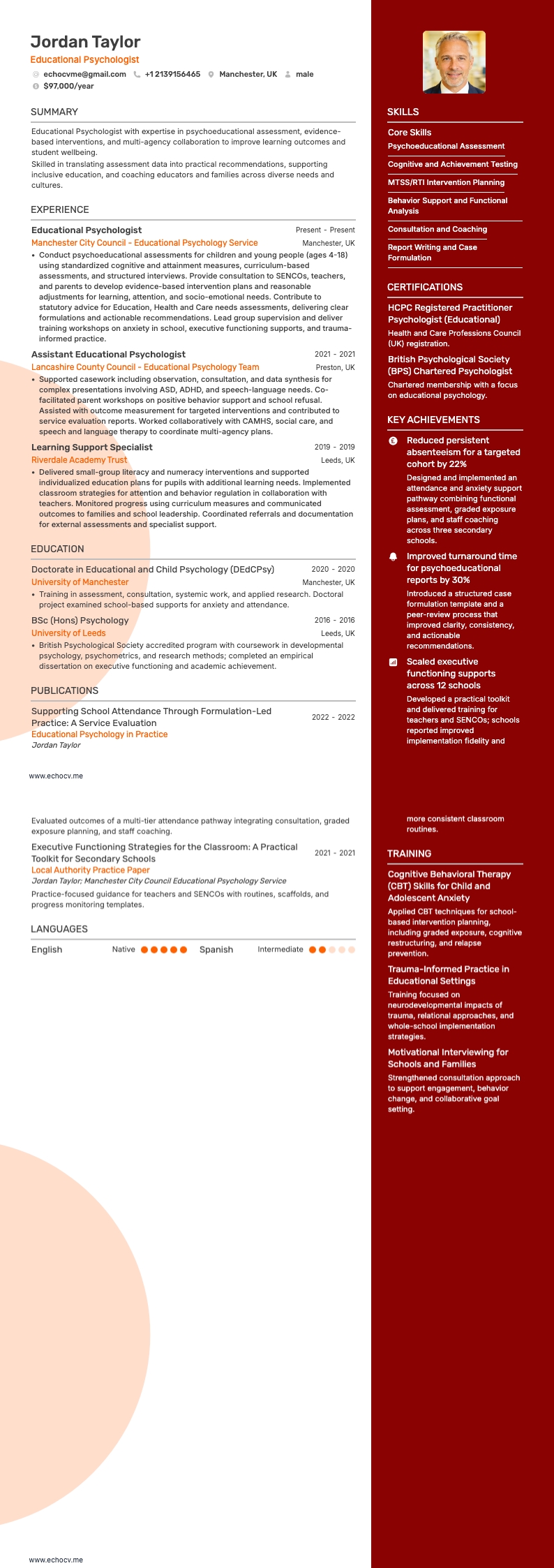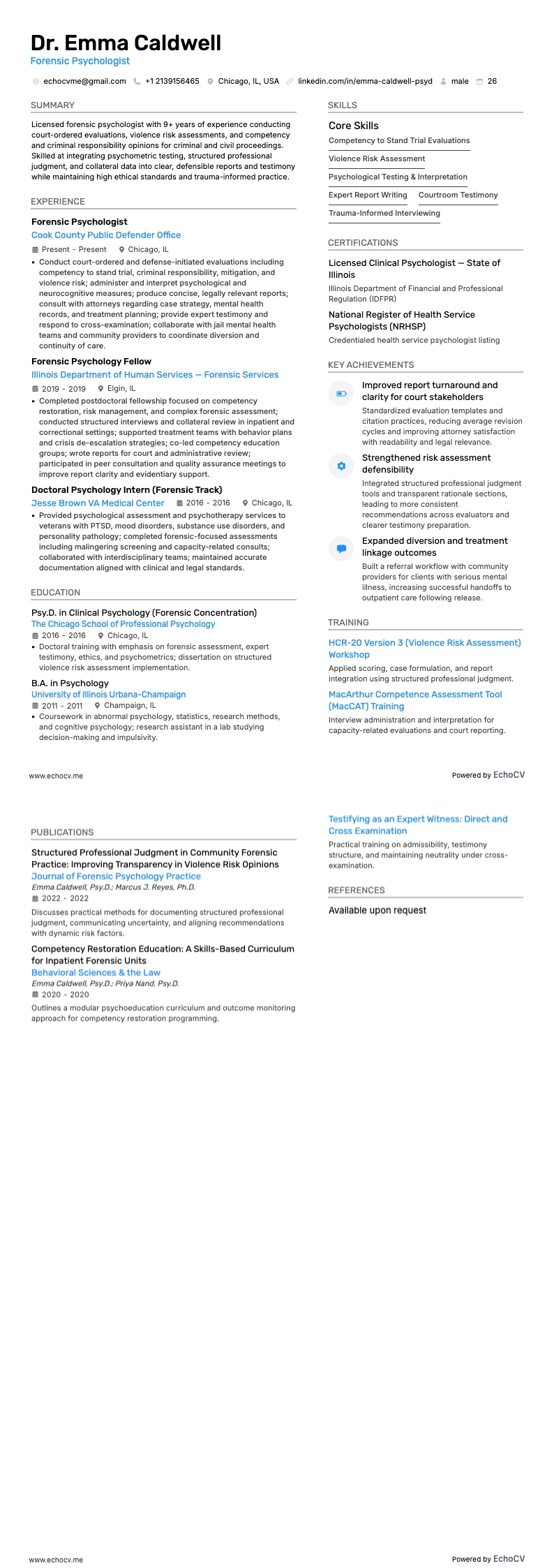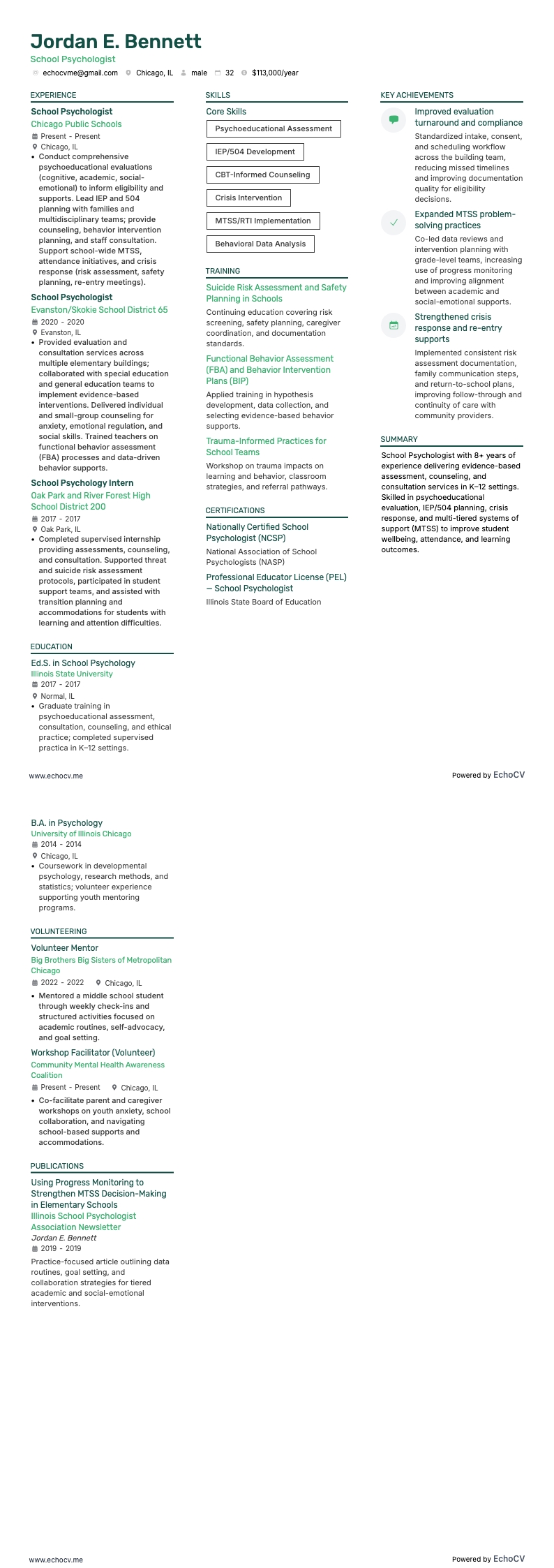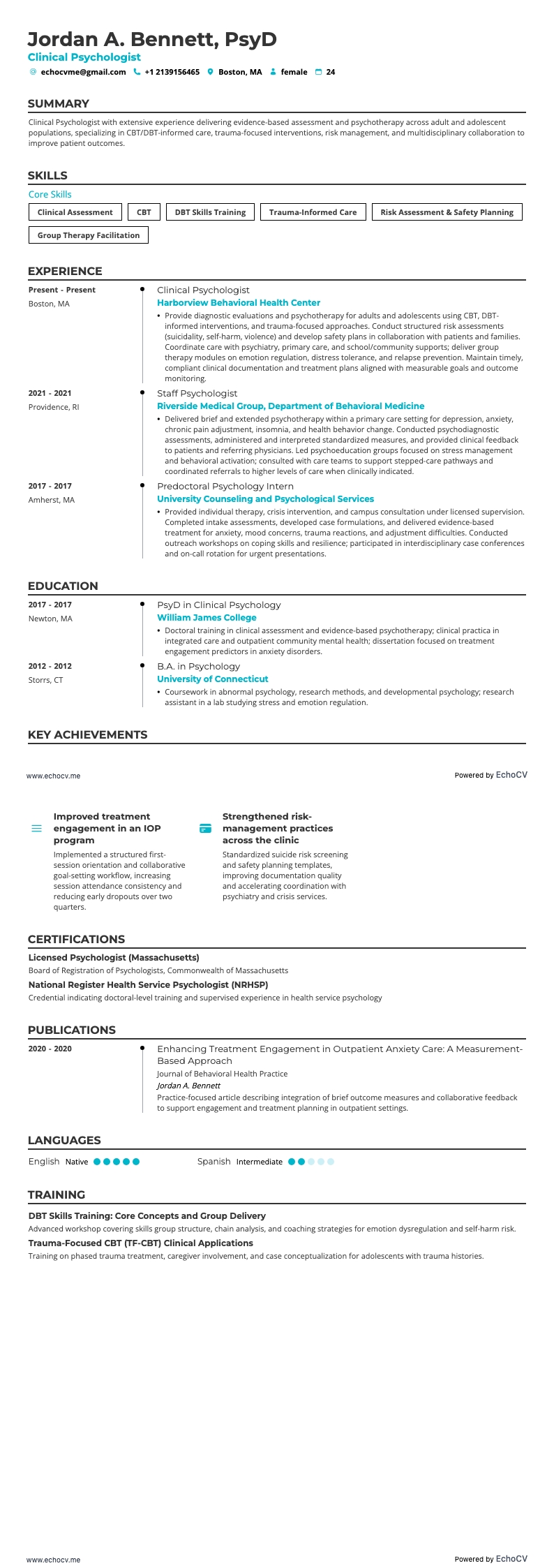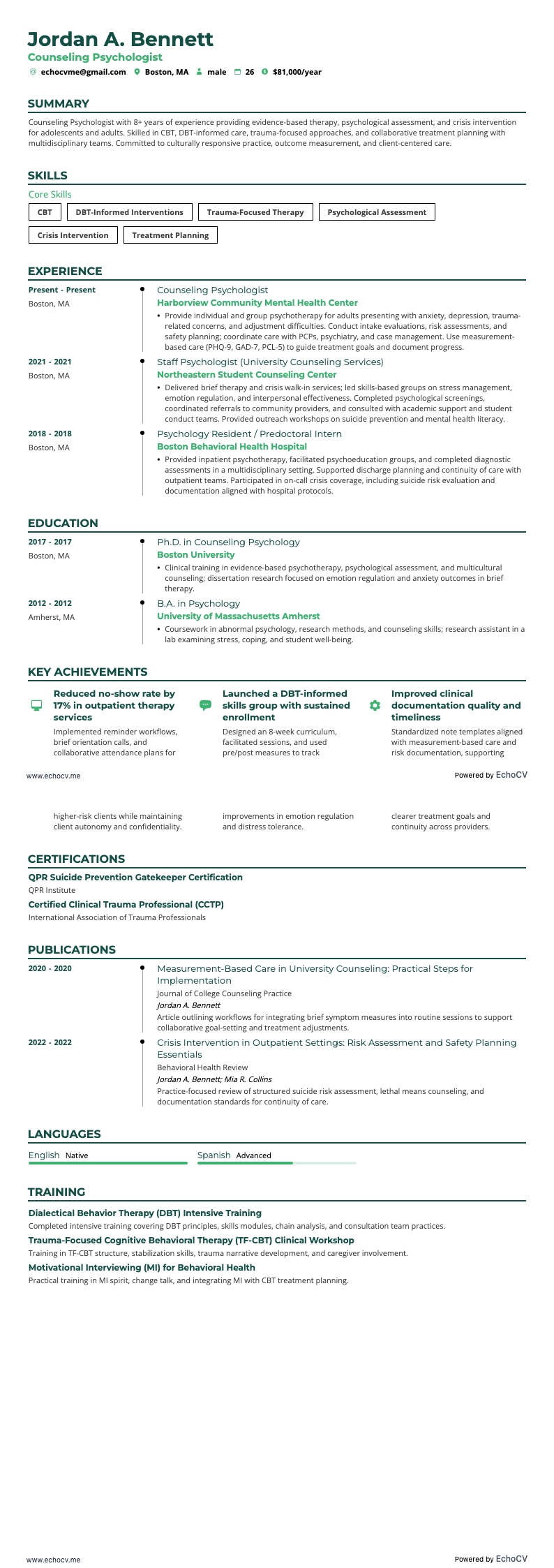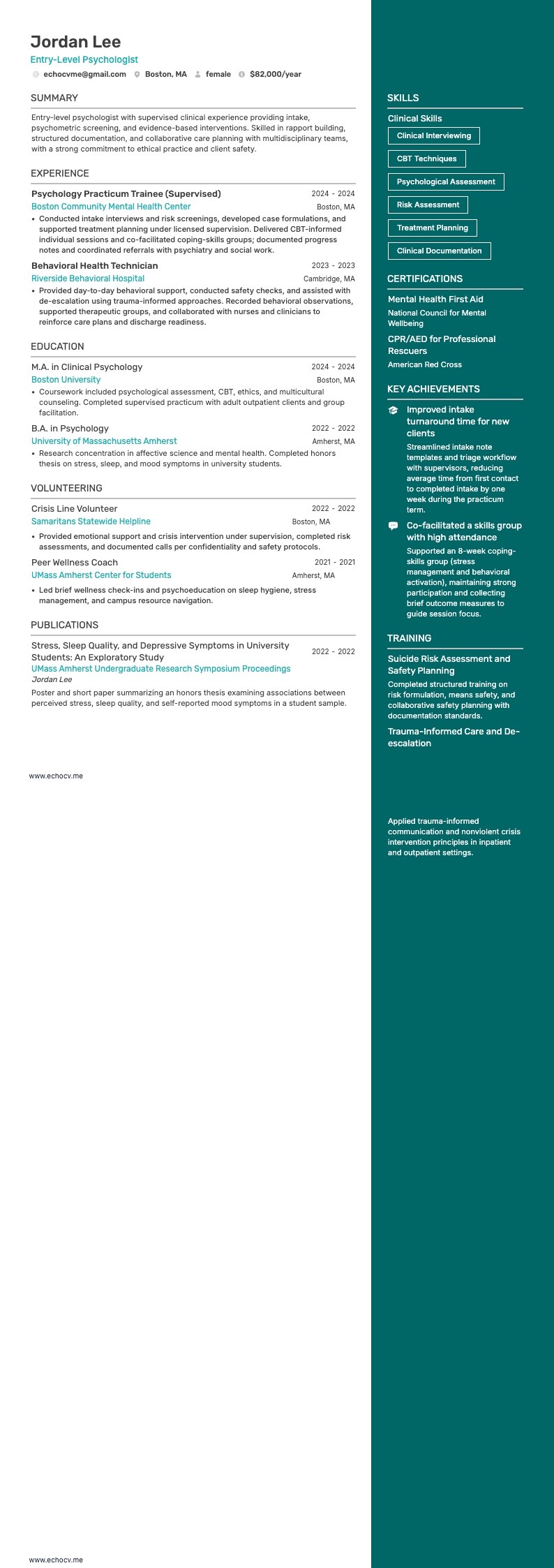
There’s a diverse range of career opportunities for graduate psychologists. From private practices through academic environments to corporate settings, psychologists engage in various activities that improve individual and organizational outcomes.
Still, many psychology professionals find it hard to craft a resume that gives justice to their education and experience. After investing countless hours in earning degrees and conducting research, they find it hard to fit all that rich knowledge into their resume.
The U.S. Bureau of Labor Statistics predicts that there will be around 12,000 job openings for psychologists each year. The goal of today’s article is to help you get one of them by building a resume that gives credit to your accomplishments, skills, and research interests.
Here’s what we’ll cover in this psychology resume guide:
- How to format your resume so it looks neat, organized, and skimmable;
- How to tailor the experience section to the job you’re applying for;
- How to showcase your soft skills throughout different sections of your resume;
- How to choose which academic achievements to include and which can be left off;
- What additional sections are worth featuring on a psychologist's resume.
Before we dive in, you might want to consider a few more psychology-related resume examples:
- Clinical social worker resume
- School social worker resume
- School counselor resume
- Occupational therapist resume
- Mental health coach resume
- Psychiatrist resume
How to format a psychologist's resume
Depending on your circumstances, you can choose between three resume format types:
If you have more than 5 years of experience, opt for the reverse-chronological resume. The truth is that recruiters spend around 6 seconds scanning through a resume before making a quick decision. The reverse-chronological layout presents your most recent (and relevant) experience at the top, making the job of the hiring manager easier.
If, on the other hand, your work history isn’t as long or you’re pivoting to a new career path, then the best option is the hybrid resume. This format provides a perfect balance between experience and transferable skills.
For entry-level roles, the functional type is the best choice as it is more focused on skills, rather than experience.
Different markets have specific resume styles – a Canadian resume, for instance, may require a different approach.