With your resume structure in place, you can now focus on writing your relationship manager experience section to align your work history with the roles you’re targeting.
How to write your relationship manager resume experience
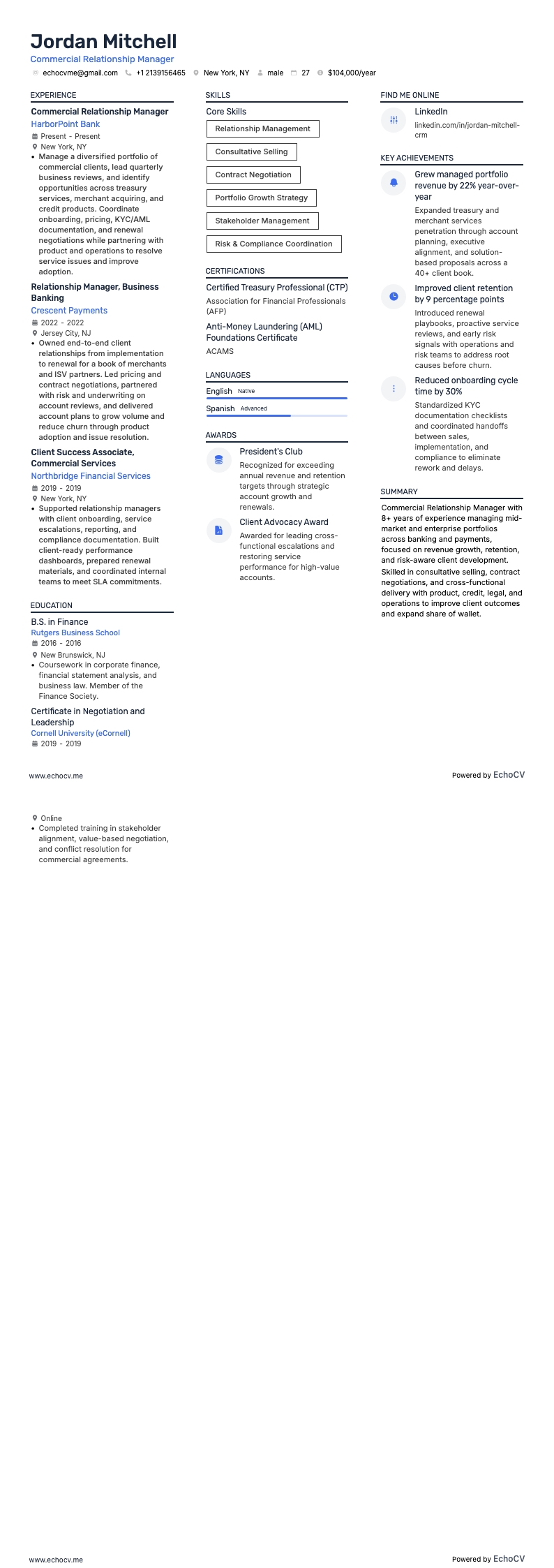
The experience section is where you prove you can manage client portfolios, deepen relationships, and drive revenue—not just describe daily tasks. Hiring managers prioritize demonstrated impact, so every bullet should highlight delivered results, the CRM platforms or advisory methods you used, and measurable outcomes tied to retention, growth, or satisfaction. Building a targeted resume ensures each entry speaks directly to the role you're pursuing.
Each entry should include:
- Job title
- Company and location (or remote)
- Dates of employment (month and year)
Three to five concise bullet points showing what you owned, how you executed, and what outcomes you delivered:
- Ownership scope: the client portfolios, account segments, geographic markets, or product lines you were directly accountable for as a relationship manager.
- Execution approach: the CRM systems, financial planning tools, needs-assessment frameworks, or consultative selling methods you used to guide client strategy and deliver solutions.
- Value improved: changes to client retention rates, portfolio performance, onboarding efficiency, service quality, or risk mitigation that resulted from your work.
- Collaboration context: how you partnered with internal teams—such as underwriting, compliance, product, or sales—and external stakeholders to structure deals, resolve escalations, or expand accounts.
- Impact delivered: outcomes expressed through revenue growth, book-of-business expansion, client satisfaction improvements, or cross-sell results rather than routine activity descriptions.