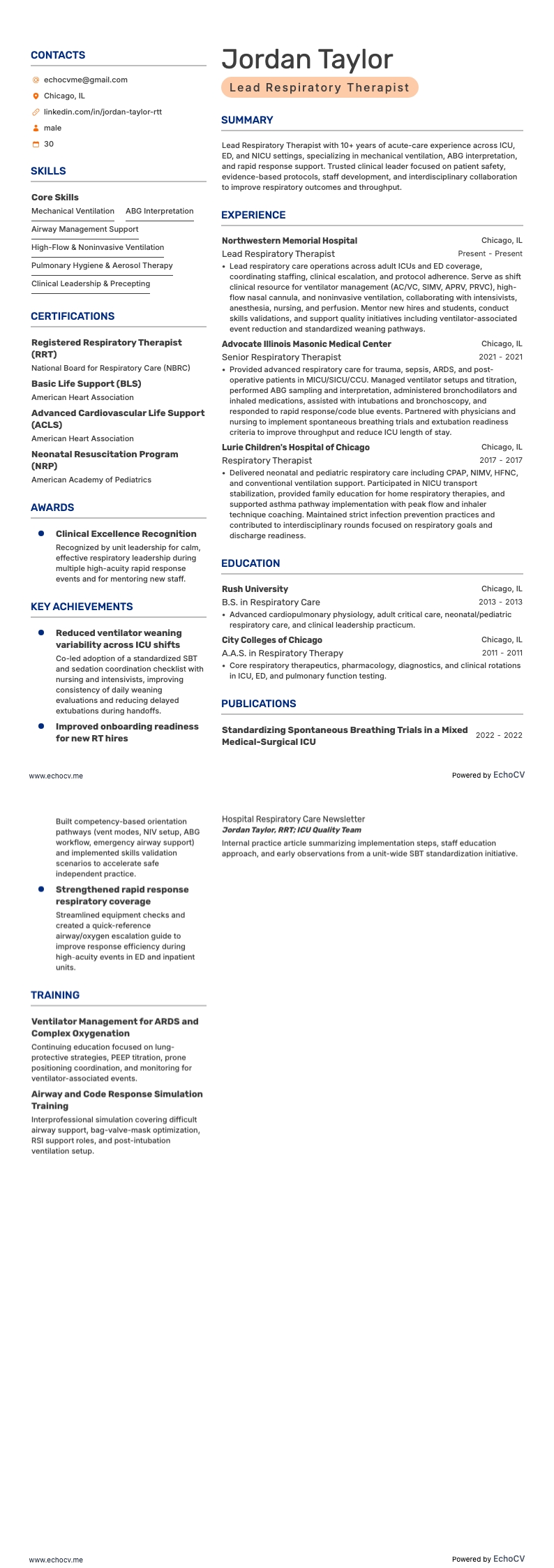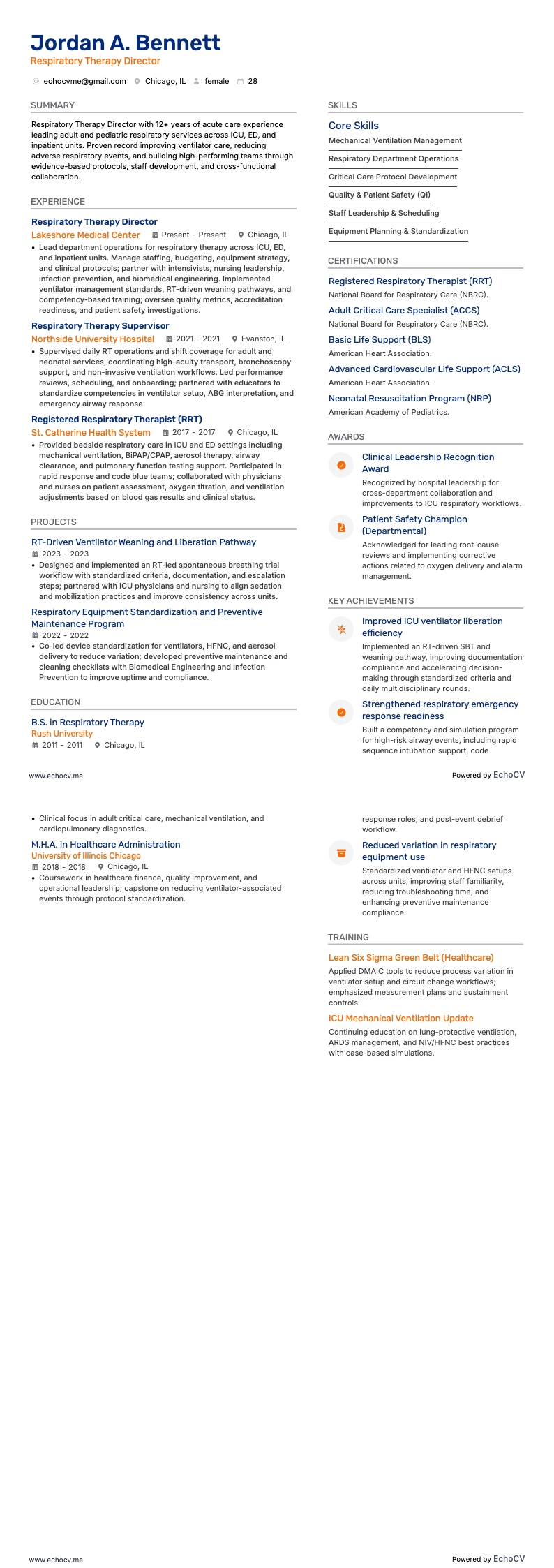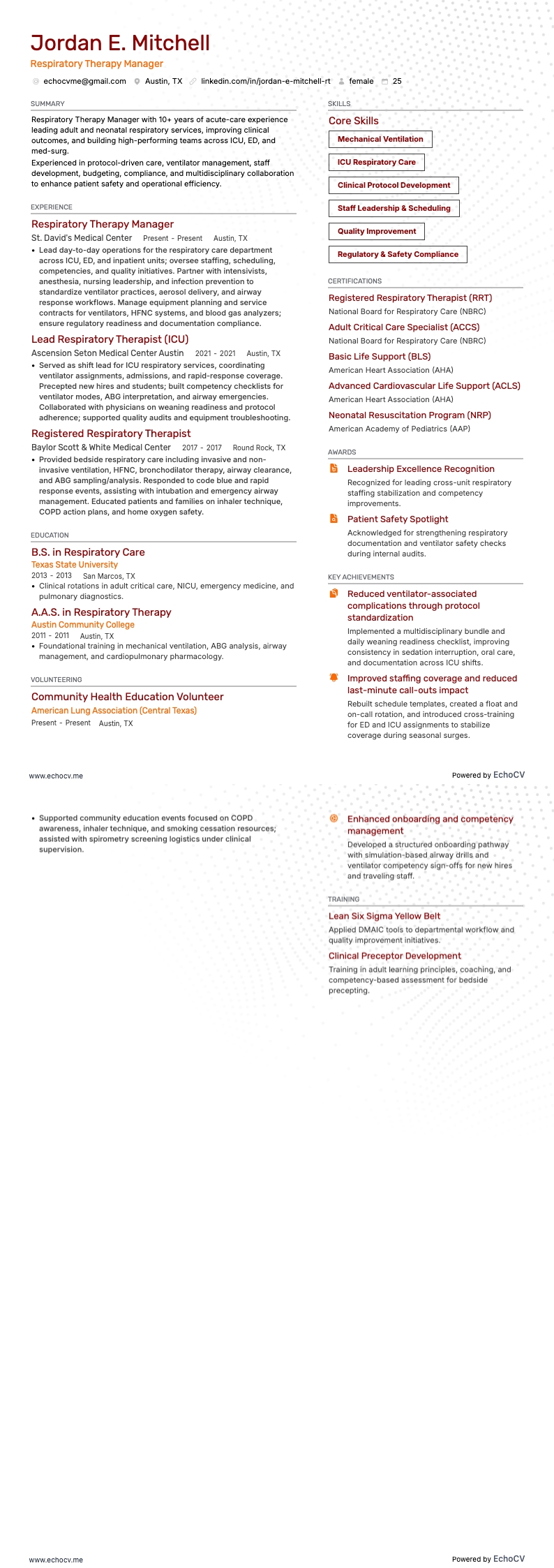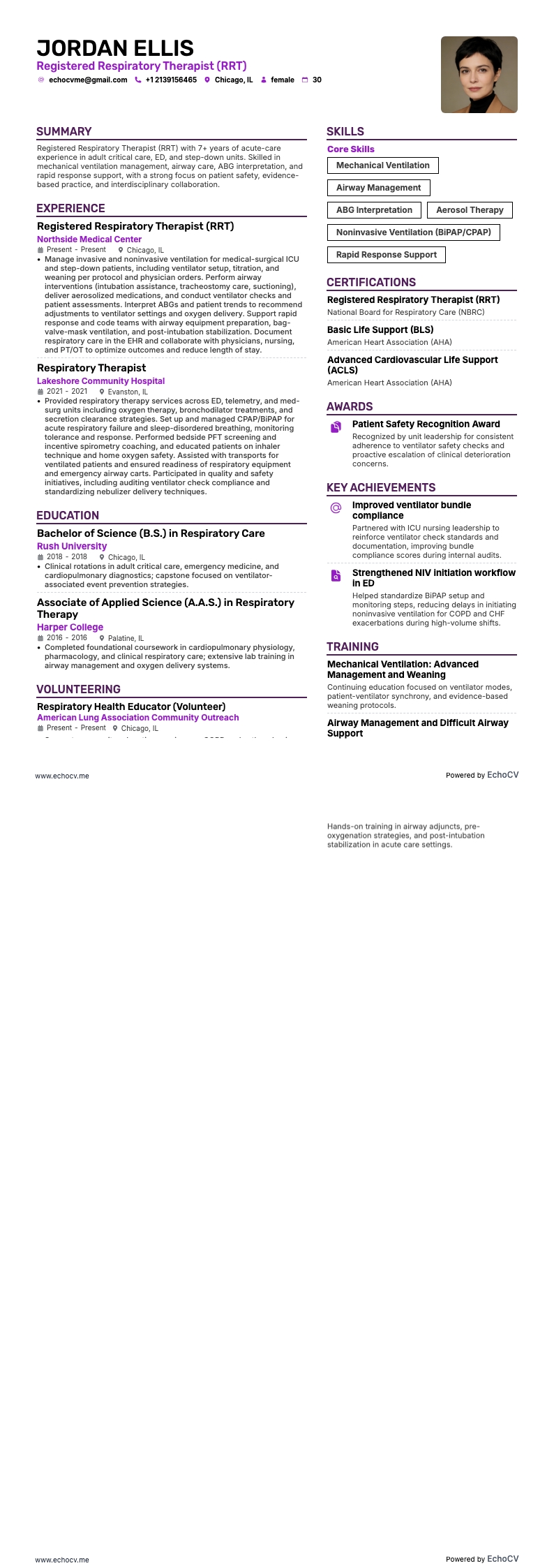
Respiratory therapists continue to play a key role in healthcare even after the pandemic as many still suffer from Long COVID symptoms and other chronic lung diseases.
Hence, not only is the demand for pulmonary specialists growing, but the job requirements scope is expanding with each passing year. The perfect respiratory therapist candidate has to demonstrate experience working with a combination of medical equipment in a variety of settings, including critical care.
In this article, we’ll look at:
- Several respiratory therapist resume examples to guide you in your writing process.
- What pitfalls you must avoid when listing your degrees and certifications.
- How to pick a resume format that best represents your specialization and experience.
- How to tailor your application to align with the role demands.
- How to build an eye-catching resume profile.
Explore our other related guides:
- Physical therapist assistant resume
- Physical therapist resume
- Occupational therapist resume
- Therapist resume
- Respiratory therapist cover letter
How to format your respiratory therapist resume
Given that respiratory therapists work in various environments and as part of larger medical teams, your work history is bound to include diverse roles. As such, a common problem among job seekers is to fit every relevant position on your resume and explain how your experience relates to the offered position. That’s often a result of poor layout choices.
Picking a resume format depends on your qualifications and amount of clinical experience. To determine which one will serve you best, let’s review the three most applicable resume formats for respiratory therapists.
Reverse-chronological resume format
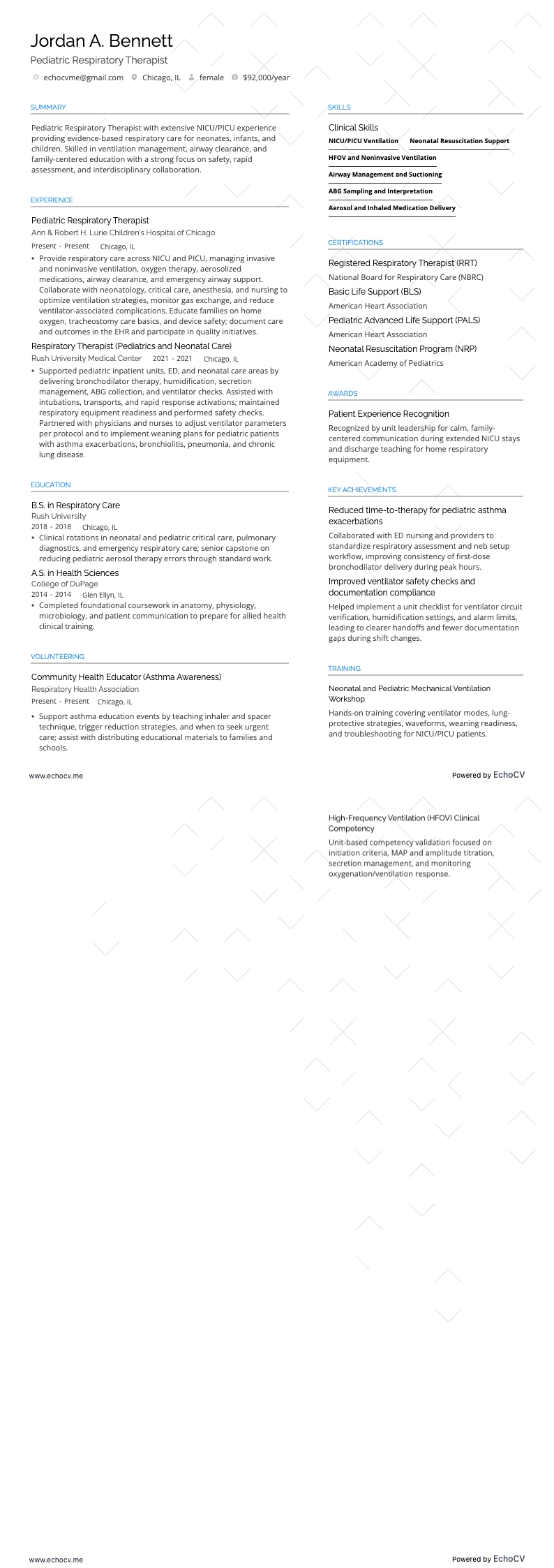
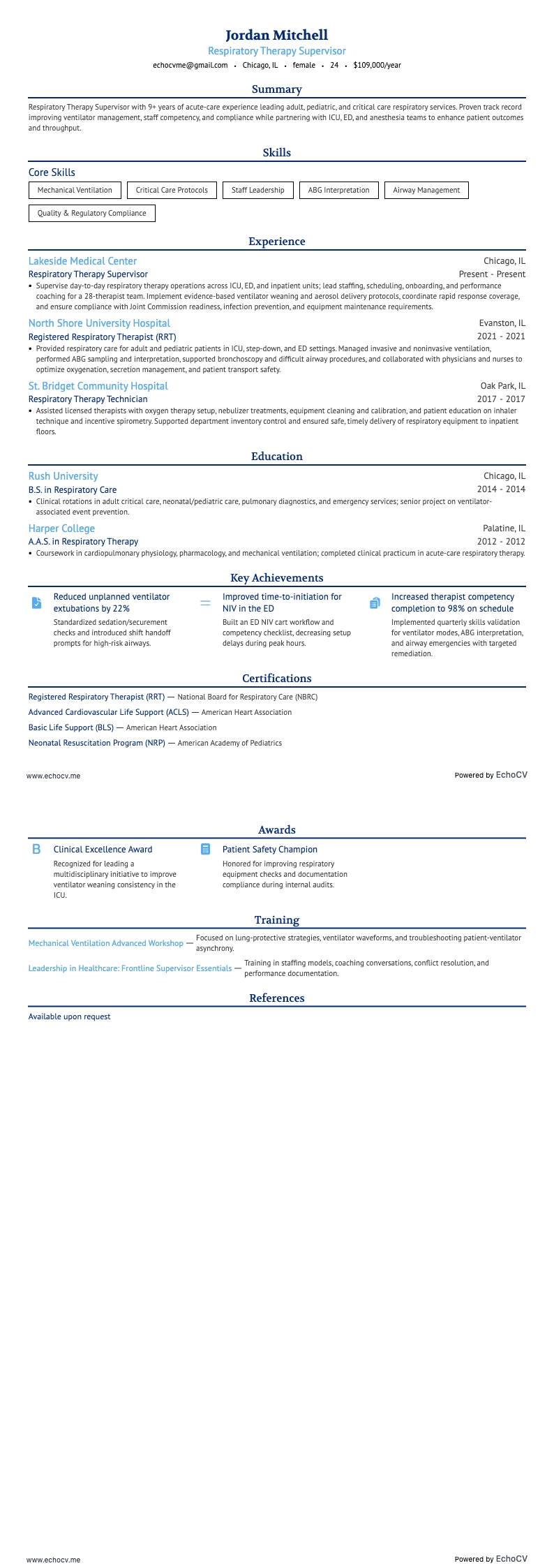
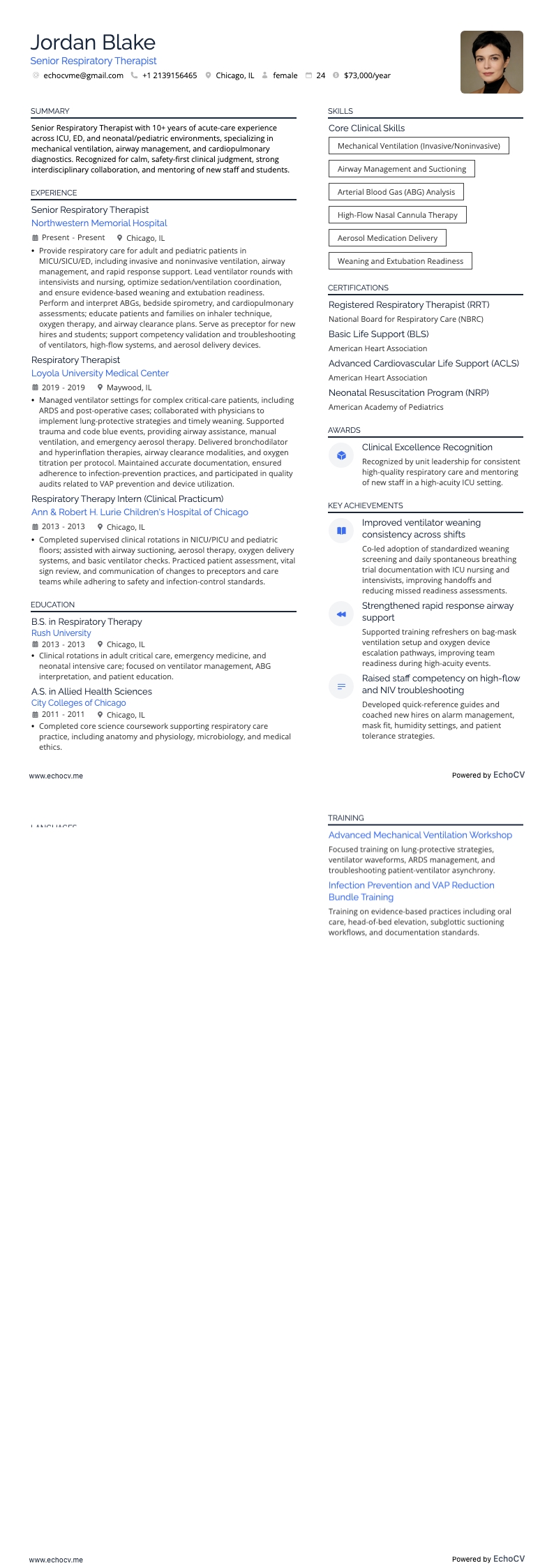
If your career is rather linear and you have more than five years of work experience, select the reverse-chronological resume format. This layout allows you to emphasize the current scope of your expertise and demonstrate how you’ve grown over time as a respiratory therapist.
A clear career progression, such as being promoted at the same medical facility, indicates to recruiters your reliability and professionalism. It will also suggest your growth plans as a pulmonary specialist, helping employers see if your goals match their needs and how well you might fit into their facility.
The format is favored by hiring managers and is compatible with Applicant Tracking Systems (ATS).
Hybrid (combination) resume format
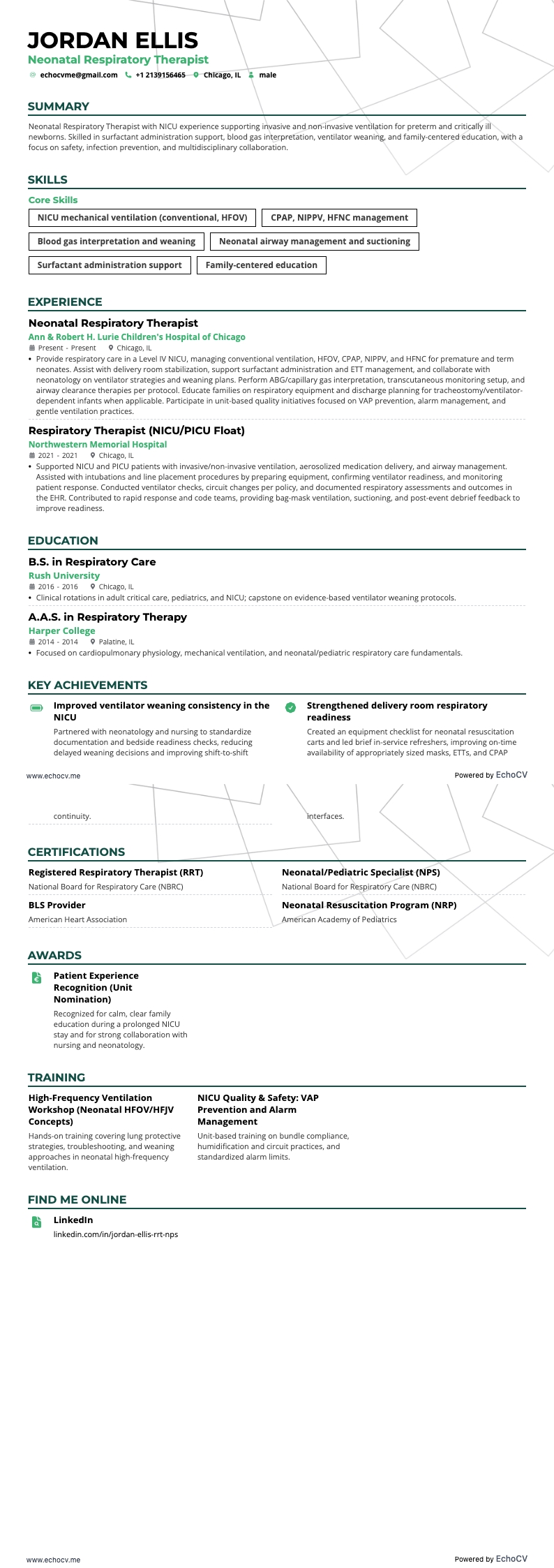
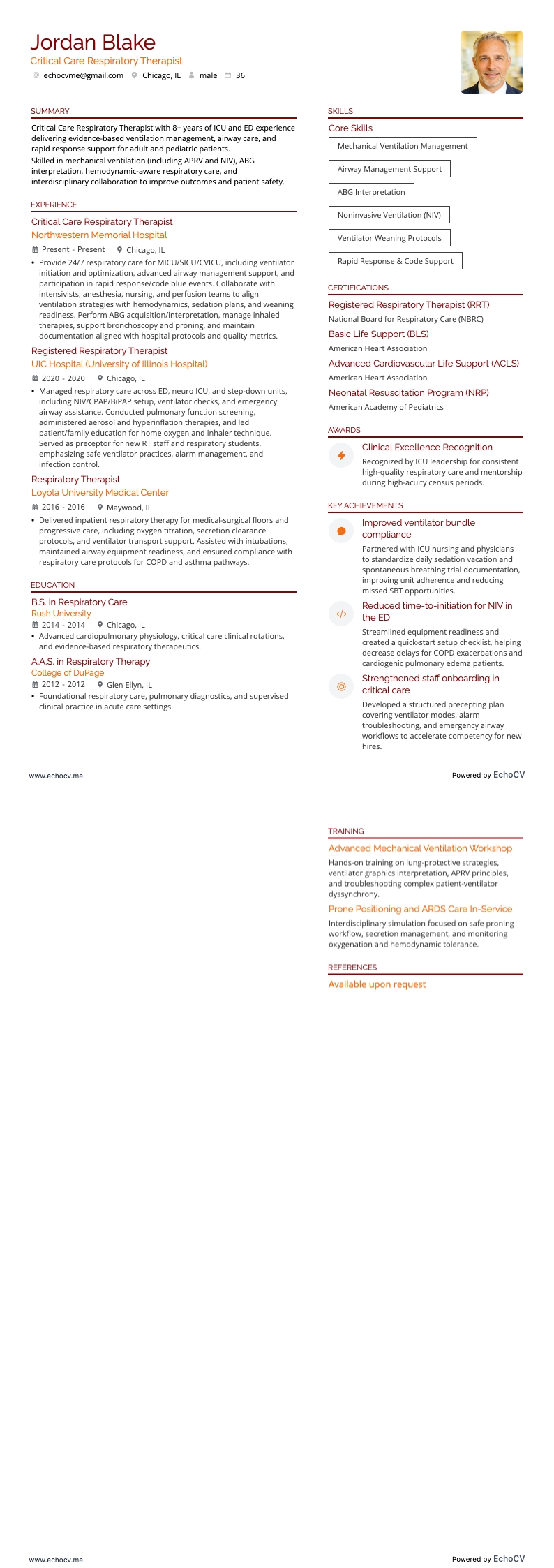
It’s difficult to summarize your experience or decide which positions to display on your resume if you have a diverse employment background and your jobs frequently overlap. If this is your case, opt for the hybrid resume format. As its name suggests, the layout offers a balanced overview of your expertise by drawing attention to your most relevant past roles and your top skills.
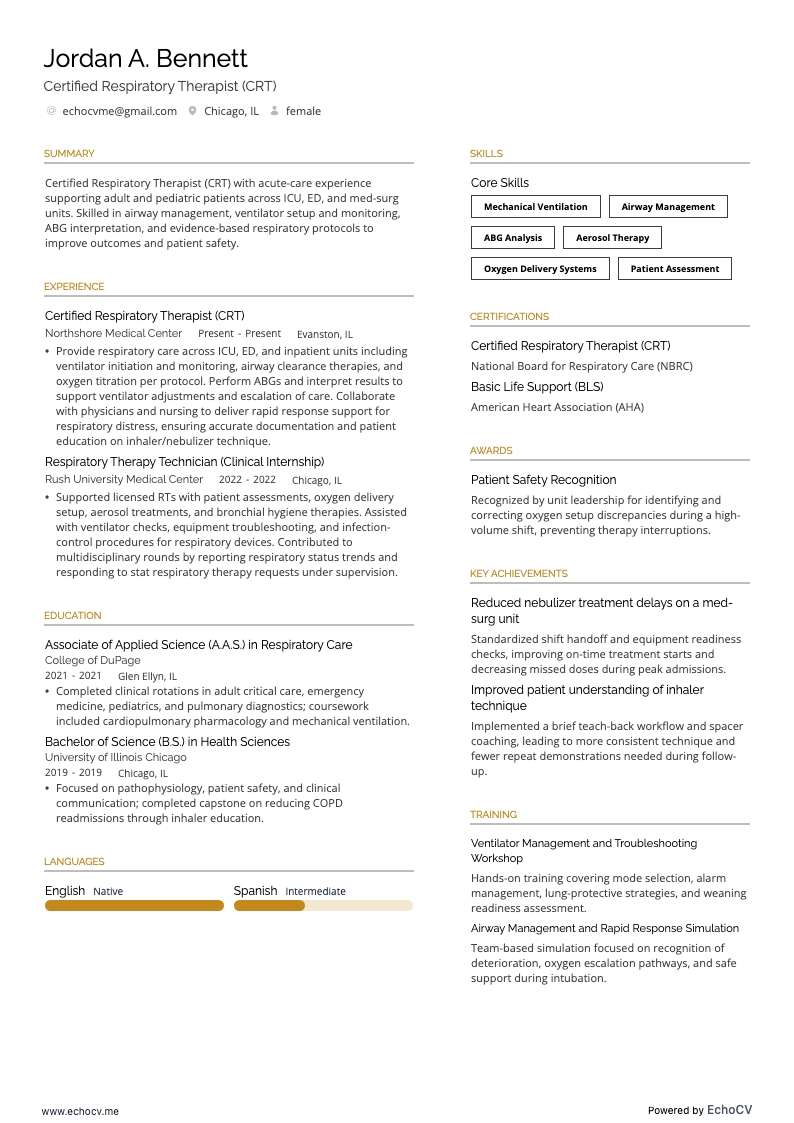
That’s what makes it more suited for respiratory therapists who have experience both in a clinical environment and as home carers. It’s also perfect for candidates with less than five years of experience because the format will underscore your medical capabilities instead of any gaps in your work history.
Note that you’ll have to be selective about the positions you add to your resume because you won’t have as much space as with the traditional format.
Be mindful of regional differences in resume formats – a Canadian layout, for instance, might vary.