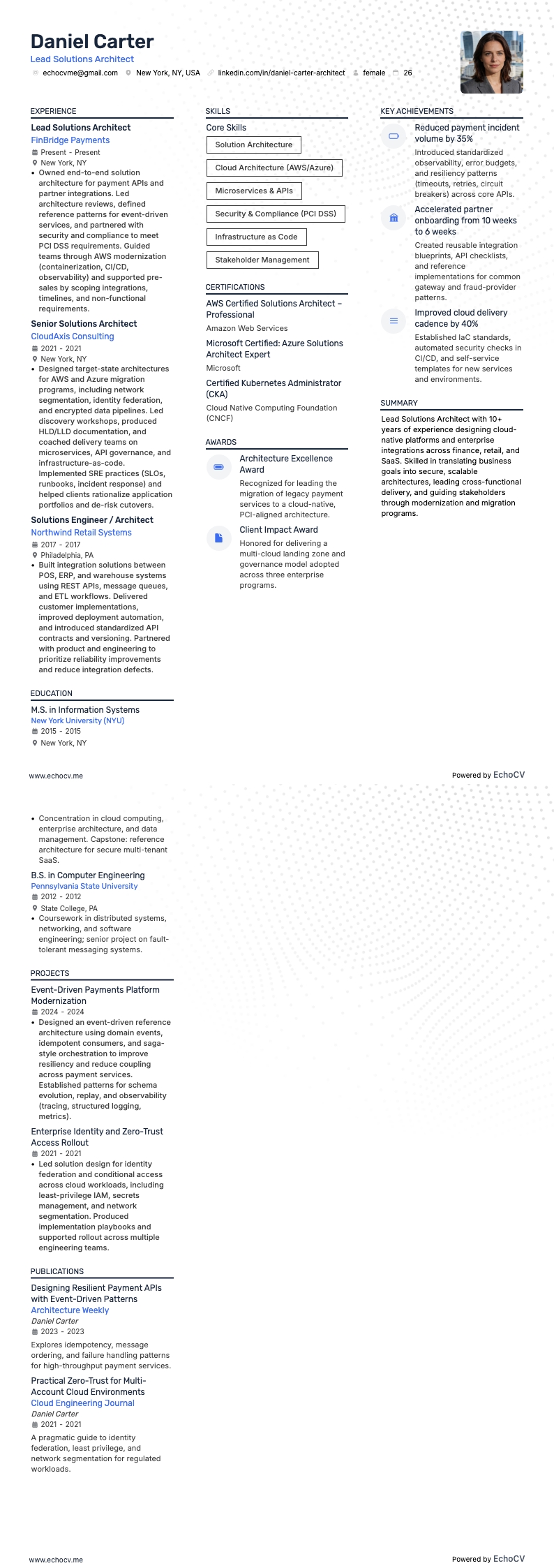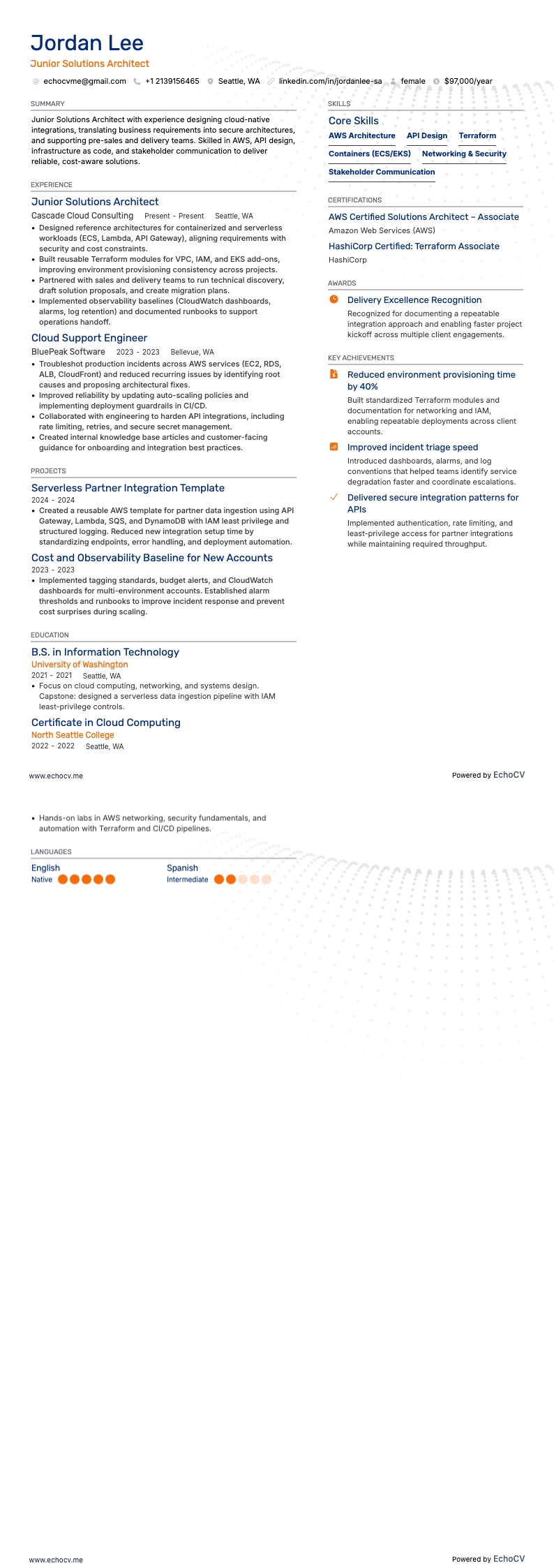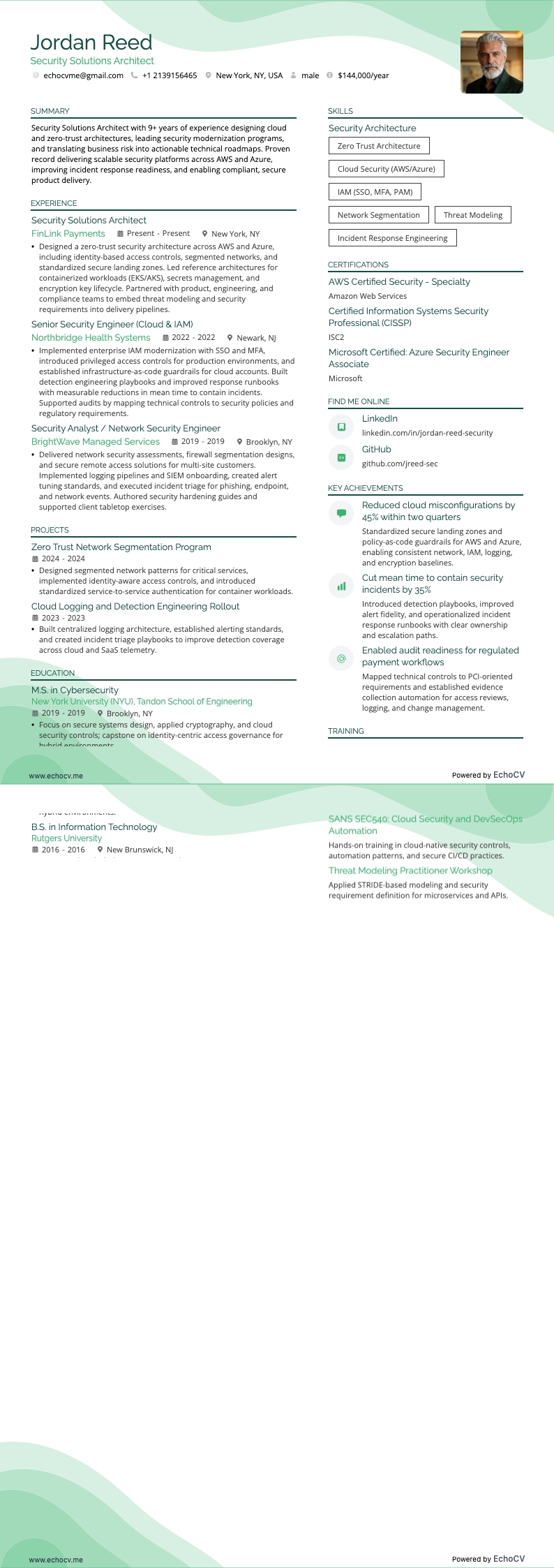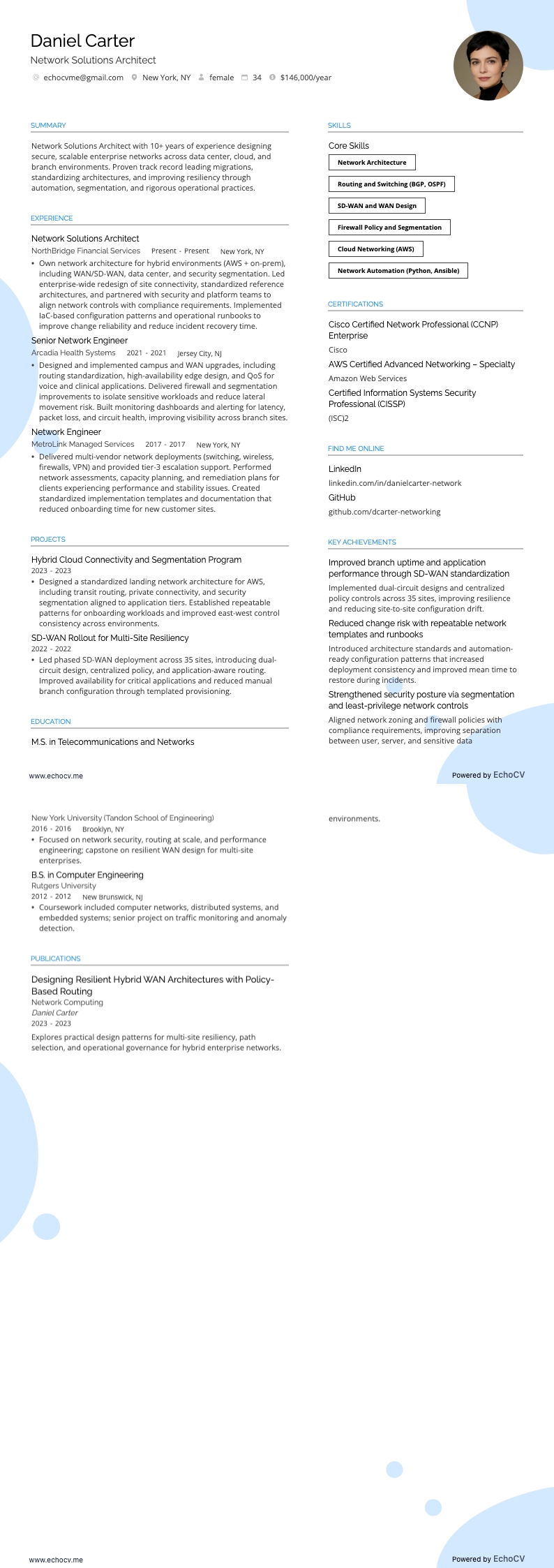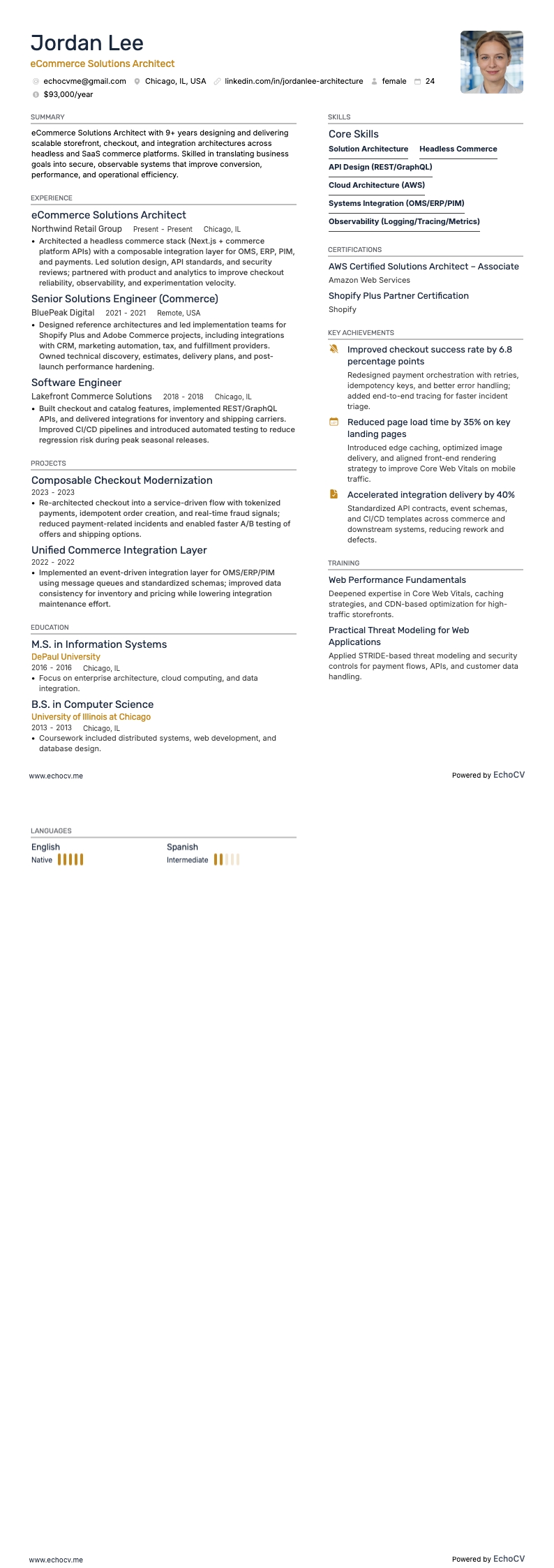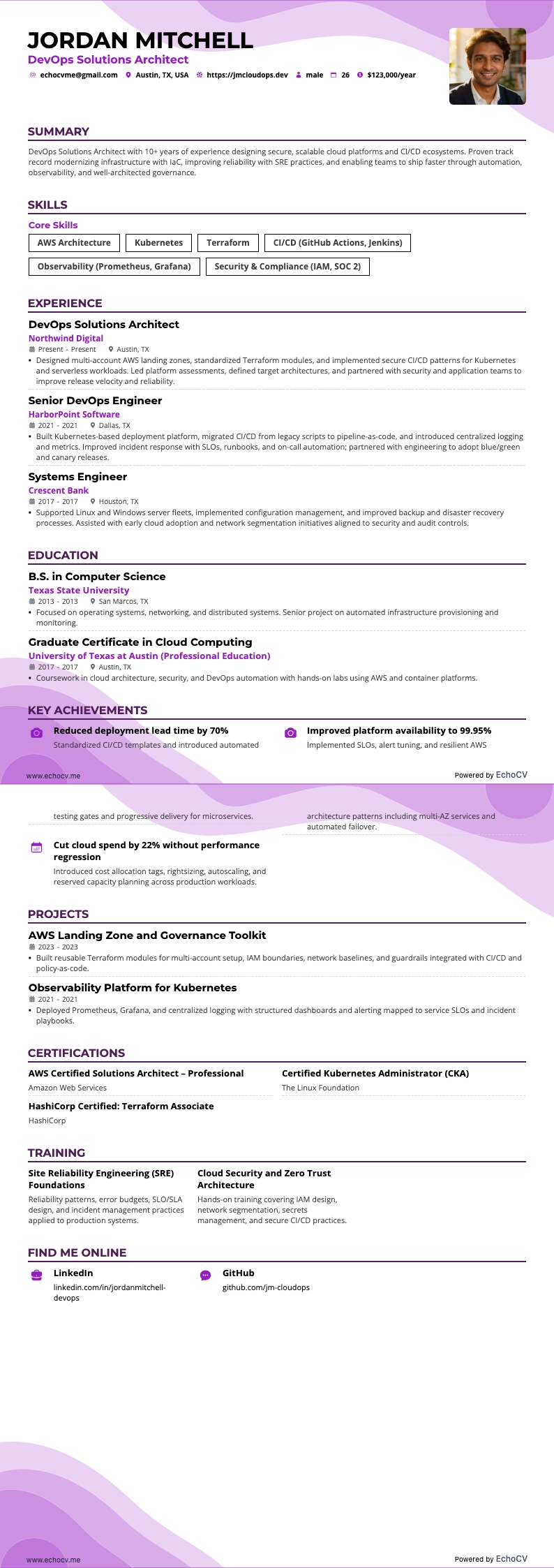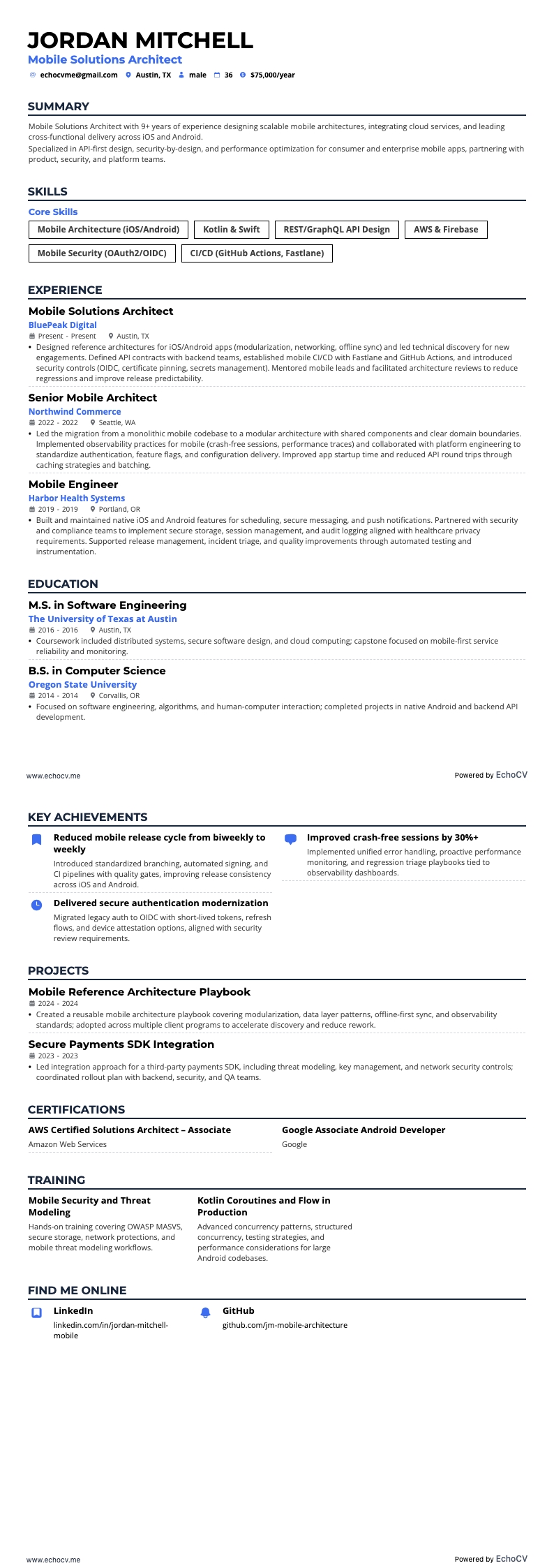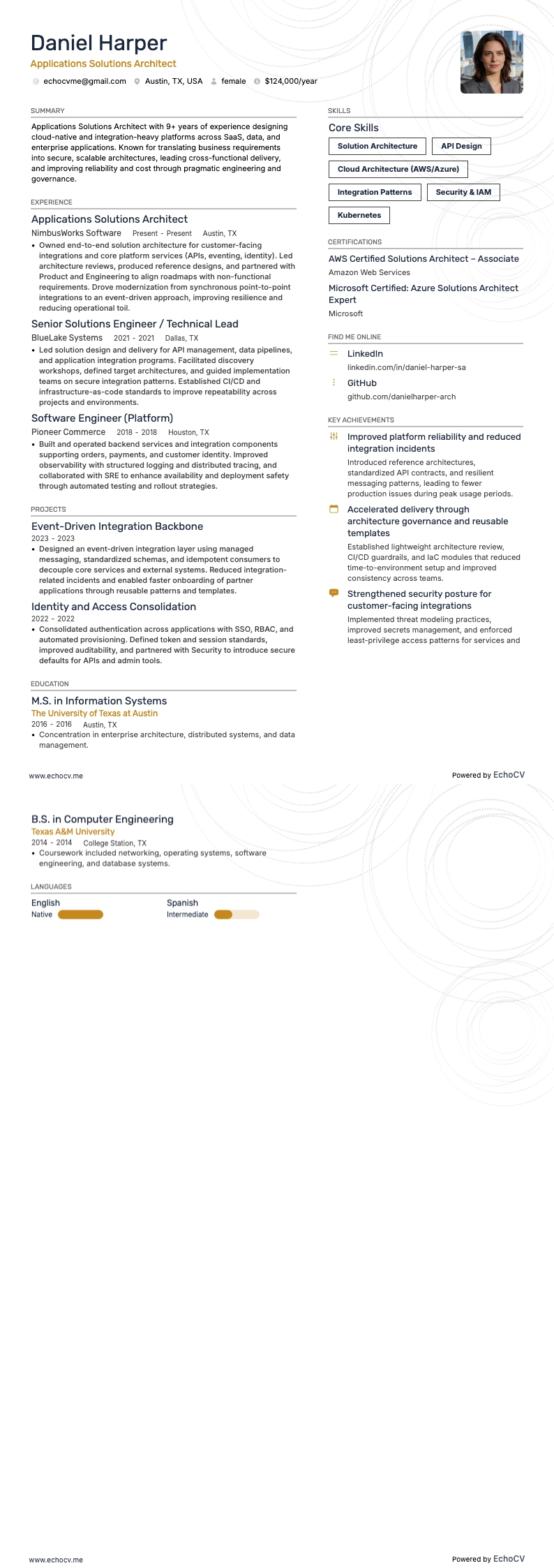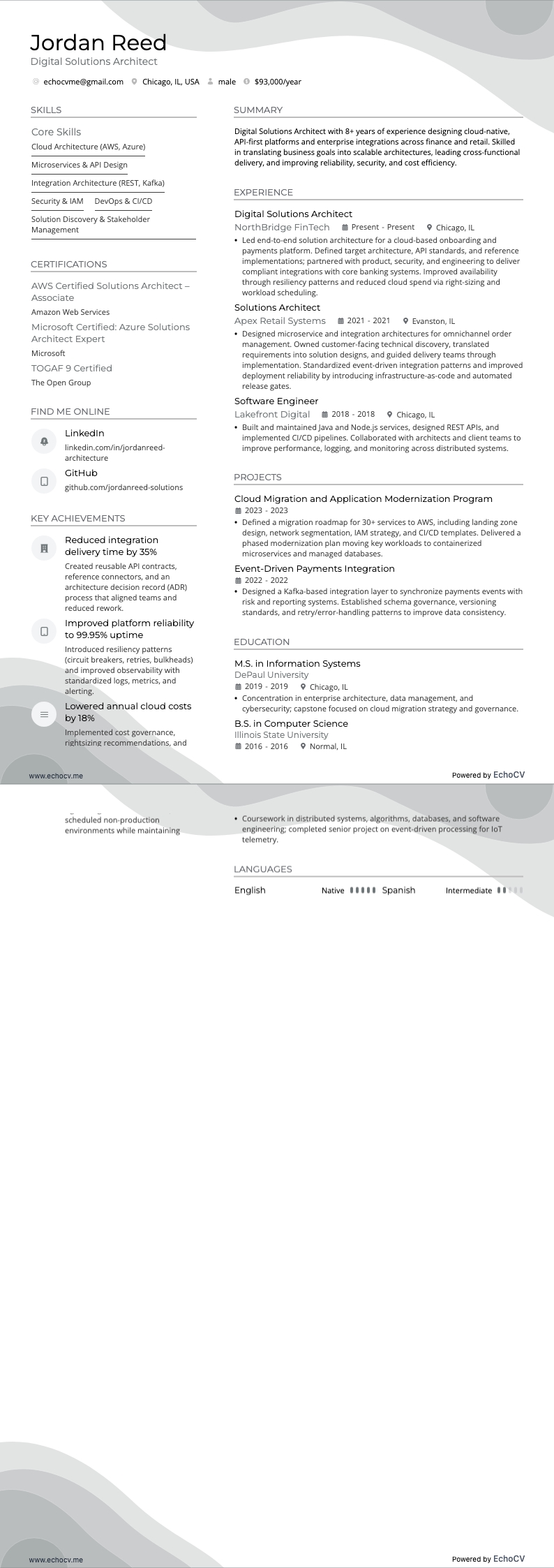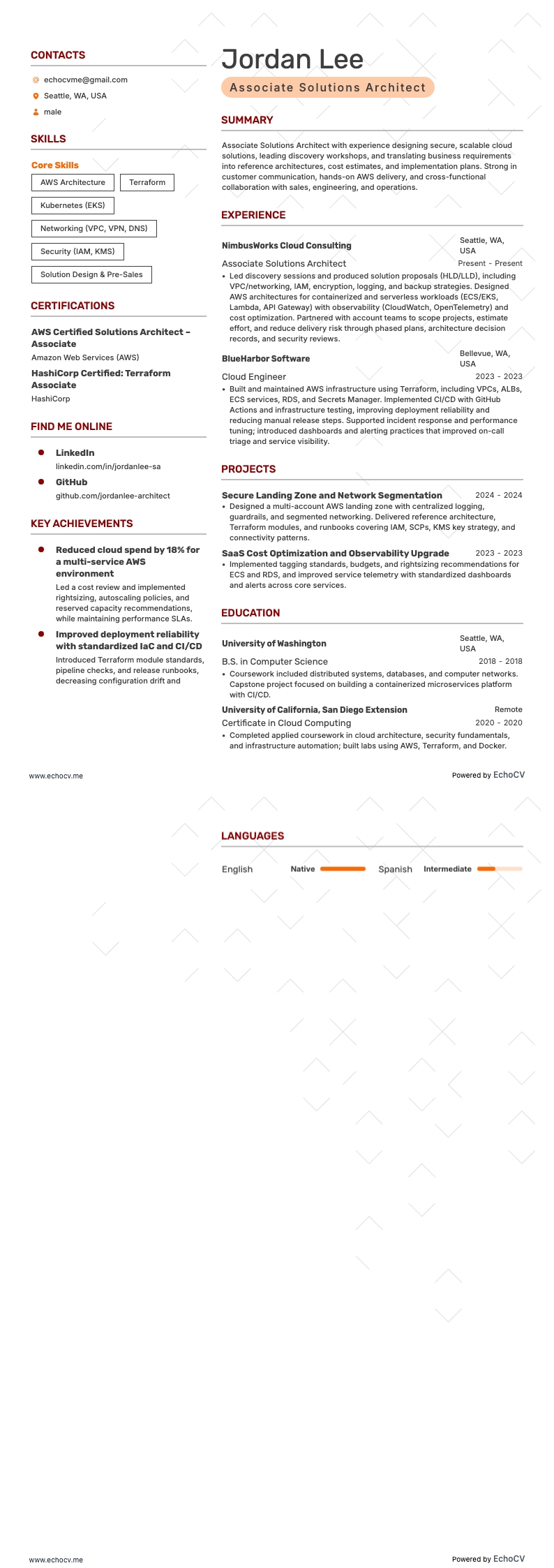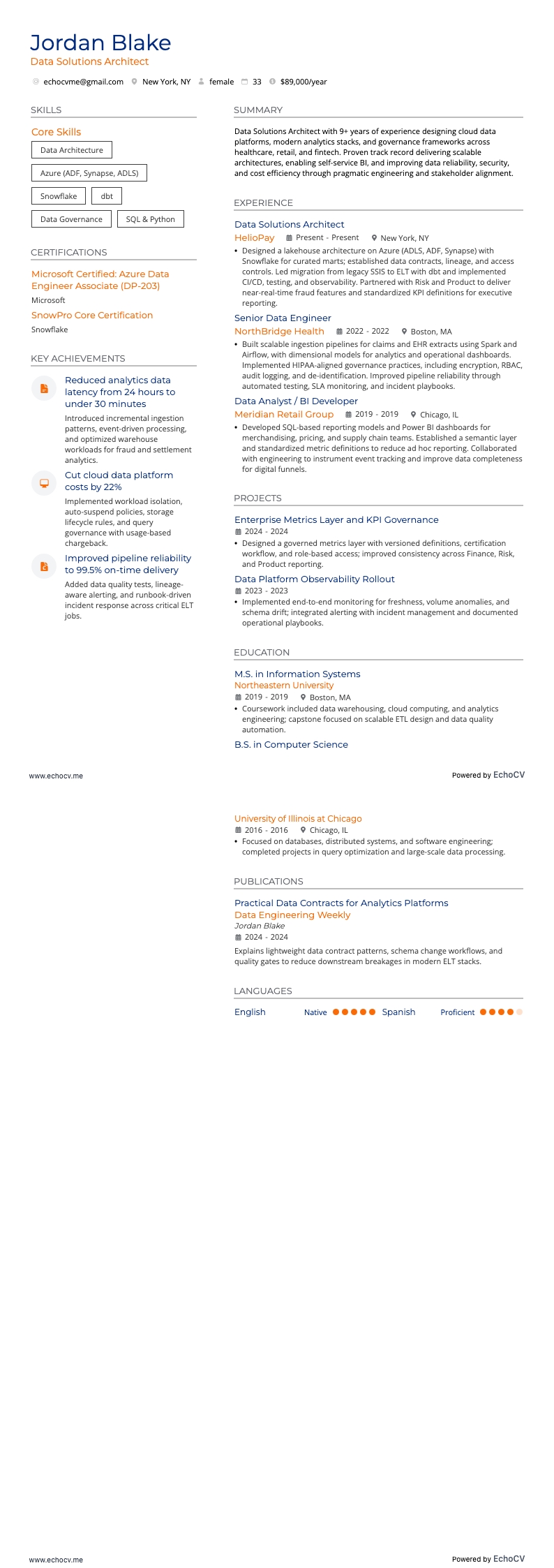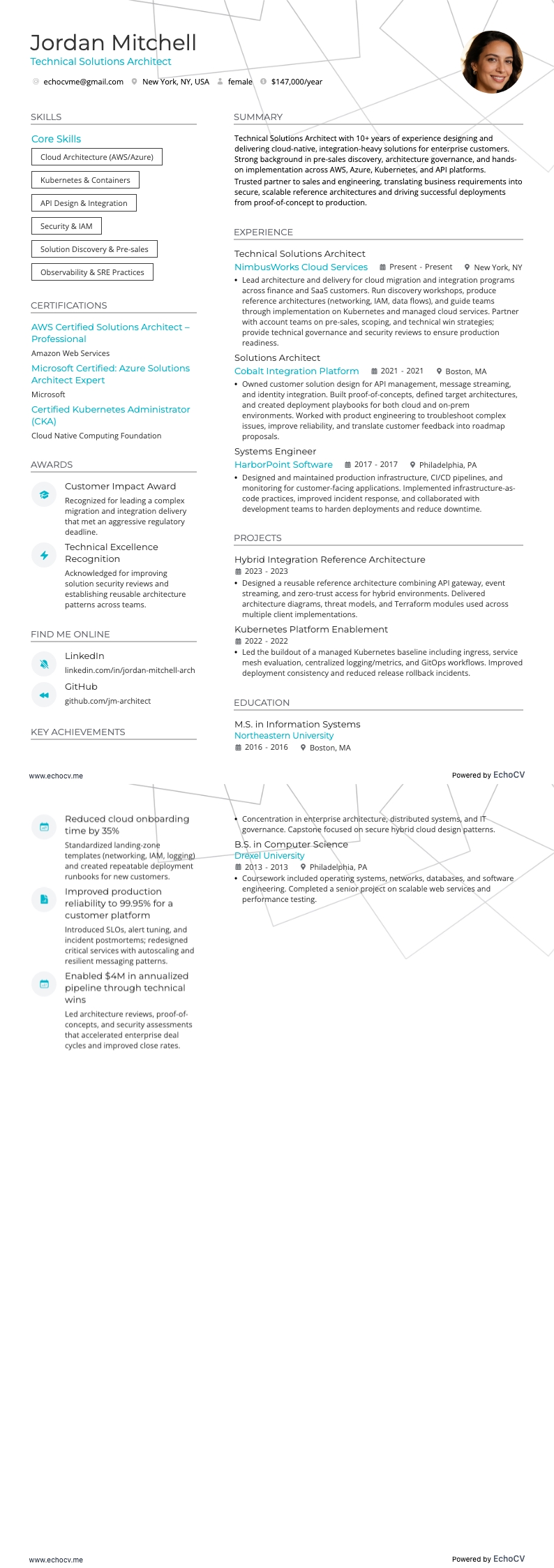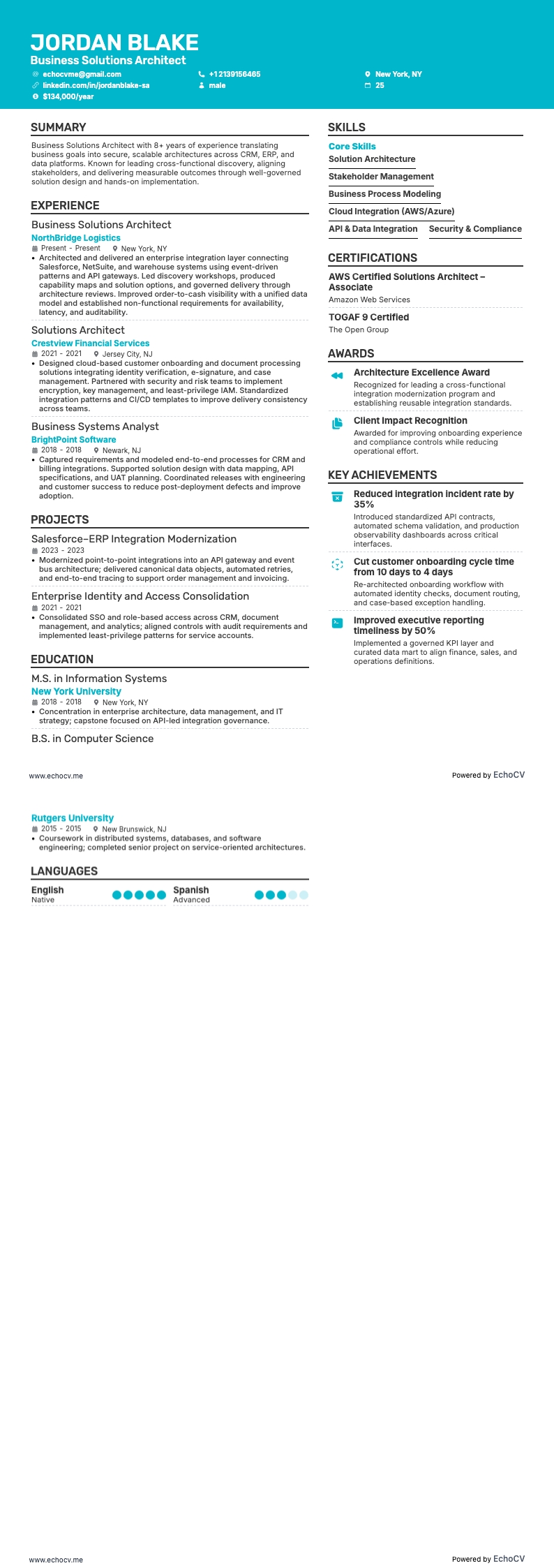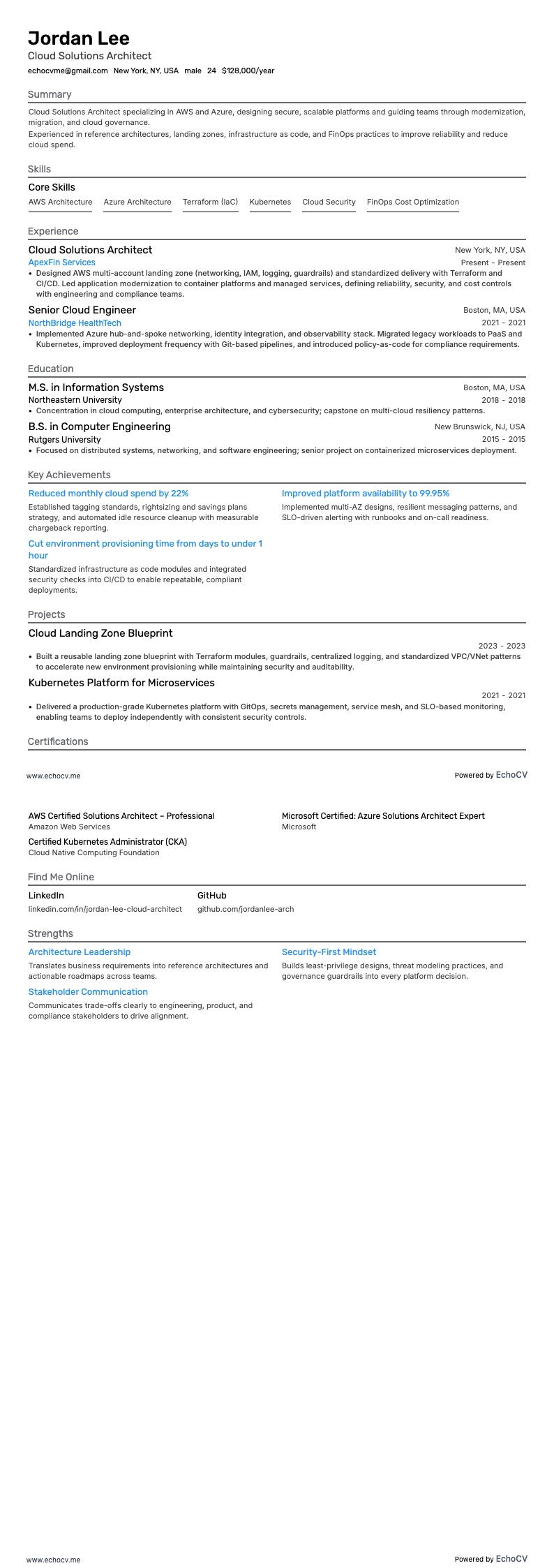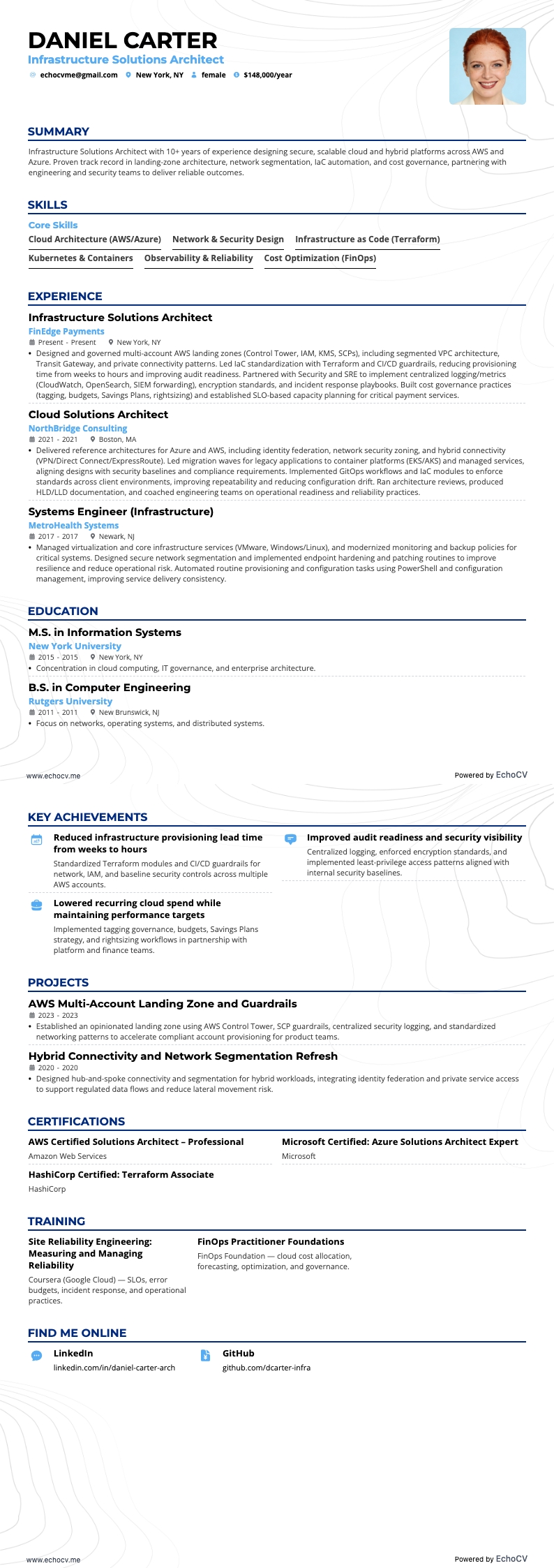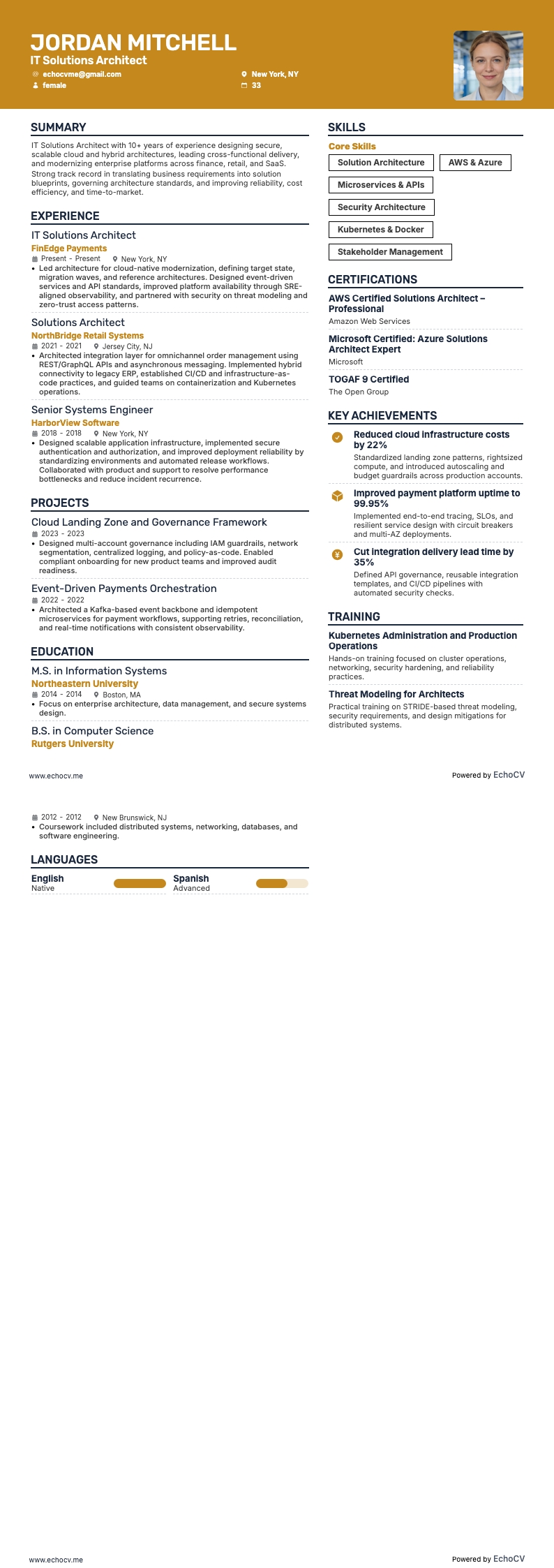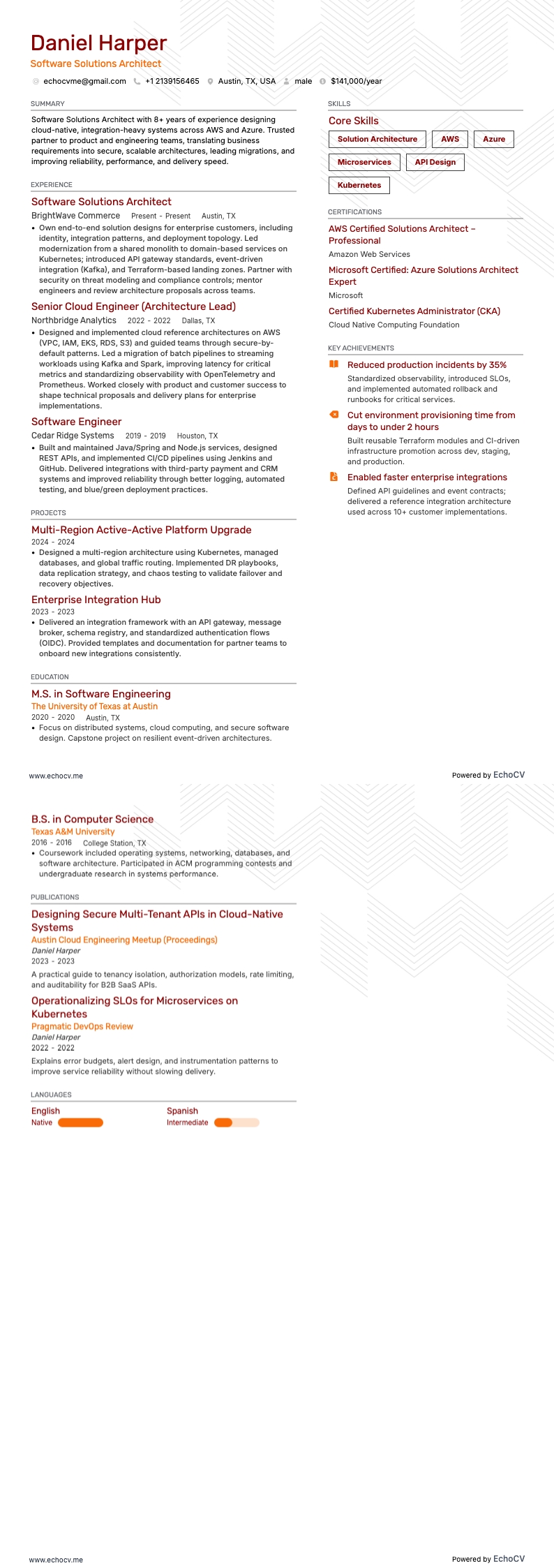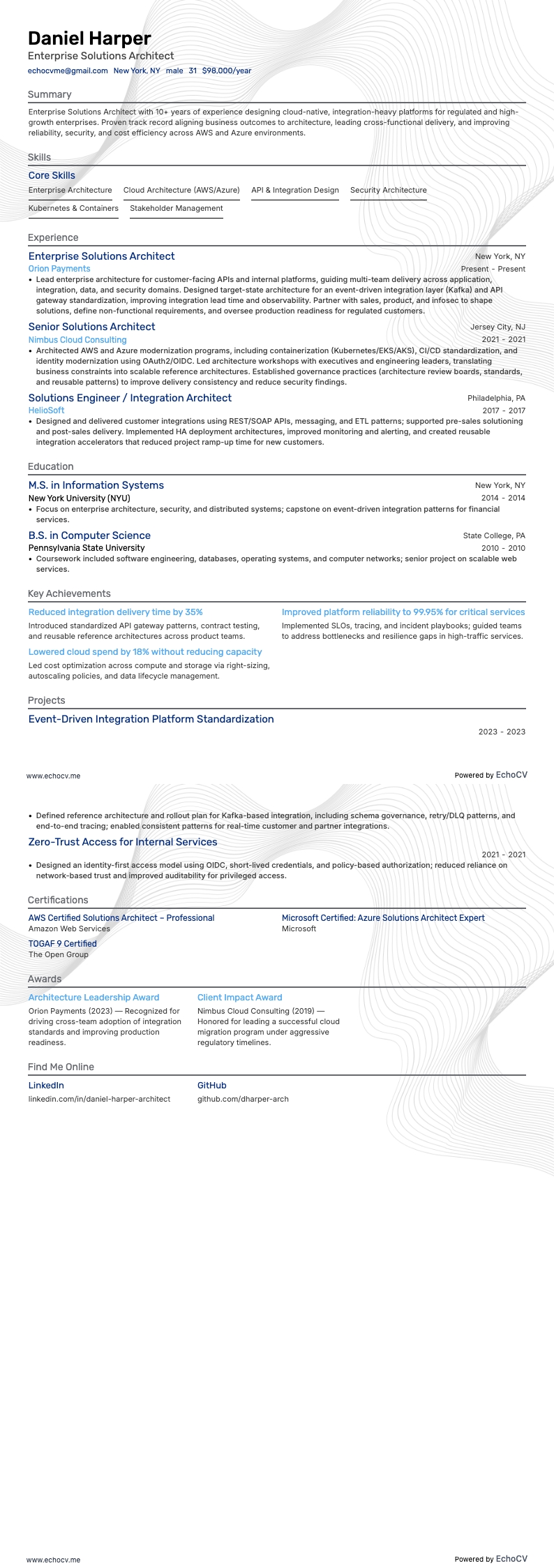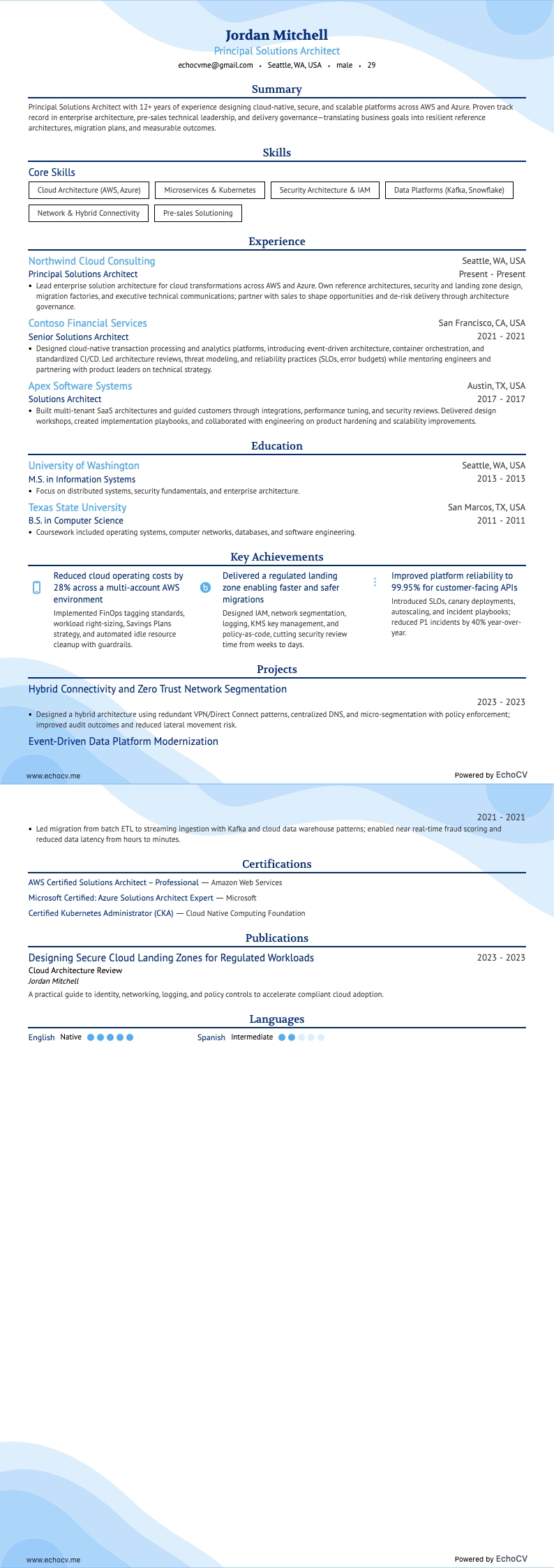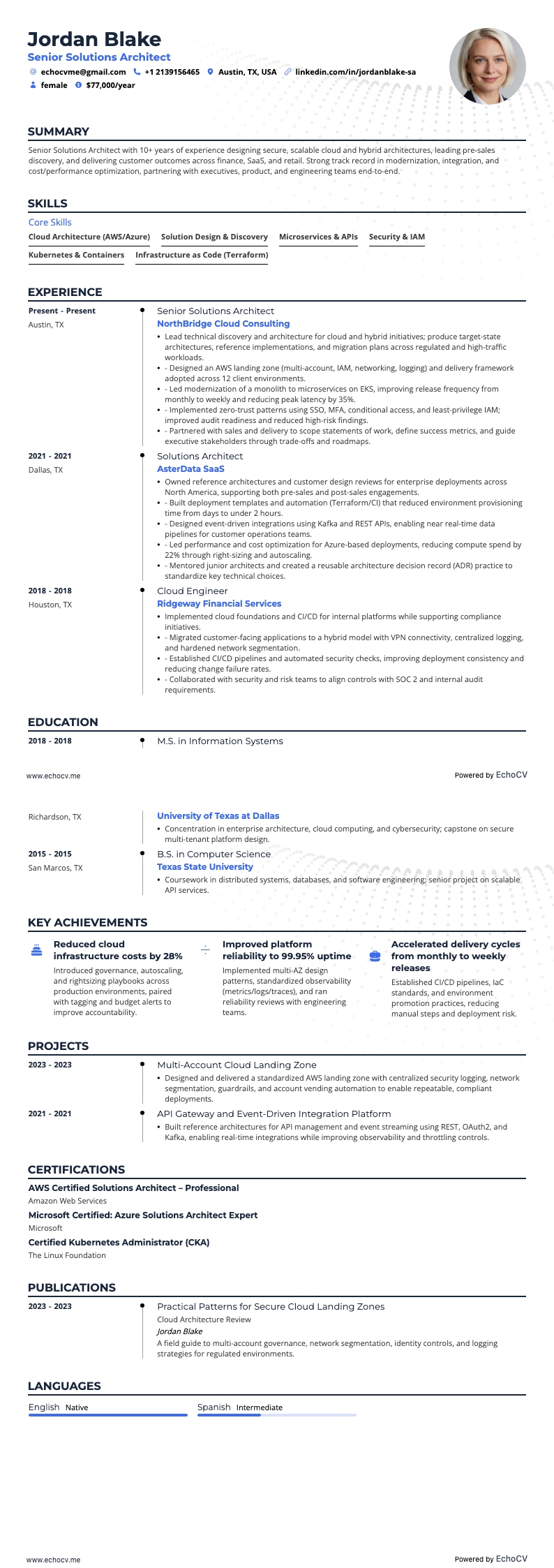
That’s more like it. Any recruiter or hiring manager reading this gets a clear picture of their industry experience, the job duties they performed, and how those duties affected the company.
This example does a good job of:
- The Job Title highlights their years of experience and which platform they have experience with.
- Uses specific keywords like ‘machine-learning capabilities’ and ‘architect AWS solutions’ that ATS software tracks.
- Details their commitment to learning new technologies and business practices.
- Indicates they have experience with large infrastructures and can handle multiple tasks simultaneously.
A small note about creating a targeted resume. When using abbreviations like COTS and VPN, remember that not every recruiter will be familiar with these terms.
When using these terms, include the full name:
- Commercial-off-the-shelf (COTS)
- Virtual private network (VPN)
The above example is from a Senior AWS solutions architect. We’ll cover how to add relatable resume experience for those with no experience later.
How to quantify the impact on your resume
Another common mistake Solution Architects make when adding their resume experience is showing how their coding and programming skills created measurable results.
You want to include numbers and percentages to showcase how you increased data processing times, limited redundancies and drops in usage, and improved overall system performance.
Check out these specific examples that use quantifiable data to show how your work benefited the company:
- Include the size of managed projects – “Collaborated with cross-functional teams ranging from 10-15 people to define and document system requirements, resulting in a 30% increase in project success rate and a 20% reduction in project delivery time.”
- State the number of users impacted by your solutions – “Redesigned AWS cloud-based solutions to better manage a customer base of 150,000+ users.”
- Quantify cost savings or efficiency improvements – “Provided technical guidance and support to other teams, resulting in a 25% increase in team productivity and a 20% reduction in technical issues.”
- Number of cloud migrations completed – “Managed the implementation of 7 data migrations, resulting in a 60% increase in processing times and a 30% reduction in data loss.”
- Amount of data managed or processed – “Supervised the design and development of 12 new data warehouses of 100TB each to support BI initiatives, which led to a $30M annual revenue.”
- Number of stakeholders or clients you have direct interaction with – “Coordinated and ran weekly in-person and virtual meetings with all 20 stakeholders, 10 CEOs, and 6 IT teams ranging from 10-15 employees.”
- List the number of patents or publications, if applicable – “Usable Information Architecture, SitePoint, February 2019.”
When using numbers, write the actual number instead of spelling it out even if your grammar checker is telling you to do so.
How do I write a solutions architect resume with no experience
Even the most experienced solutions architect once faced applying for a job with no real-world experience.
If this is your first time applying for a solutions architect position, you will use your past networking or software development experience to showcase your relatable skills.
Follow these tips on creating a resume with no work experience:
- Header job title – Use a relatable job title like Network Administrator, Software Developer, or Tech Consultant.
- Summary/Objective – Write a brief resume objective that highlights your education, relatable skills, and passion for designing IT systems to solve complex business solutions.
- Education – Place the education section after your resume objective if you recently graduated and only have one or two years of relatable experience.
- Resume experience – Use a reverse chronological order to list all related job experience.
- Search for keywords in the job description that match your transferable skills, and be sure to include them in the job details.
- Certifications – Include certifications that you have and are currently working on.
- Hard and soft skills – List all related hard and soft skills, starting with the skills listed in the job description first.
Past work experience that is ideal for solution architect positions includes network administrators, software developers, system engineers, technical consultants, software developers, and project managers.
Most employers want a minimum of 3-5 years of work experience to qualify for entry-level solution architect positions.
How to list your hard skills and soft skills on your resume
Solution Architects wear many hats and need a mix of hard and soft skills that range from technical to interpersonal.
Hard skills are the technical skills you pick up through school, internships, and work experience. They include necessary skills like Amazon web services (AWS), Azure, or Google Cloud design and implementation, Java programming language, and networking architecture and security protocols.
Soft skills are more personal and based on different life experiences. This is where you can list your excellent communication and interpersonal skills, along with highlighting how flexible and adaptable you are to any situation.
When you include hard and soft skills on your resume, you want to include those skills that are in the job description first. These are the skills that recruiters enter into applicant tracking systems, and you need to match how they are listed.
If the job requirements list “Artificial Intelligence” and your resume has “AI,” ATS software may not mark you as having that skill.