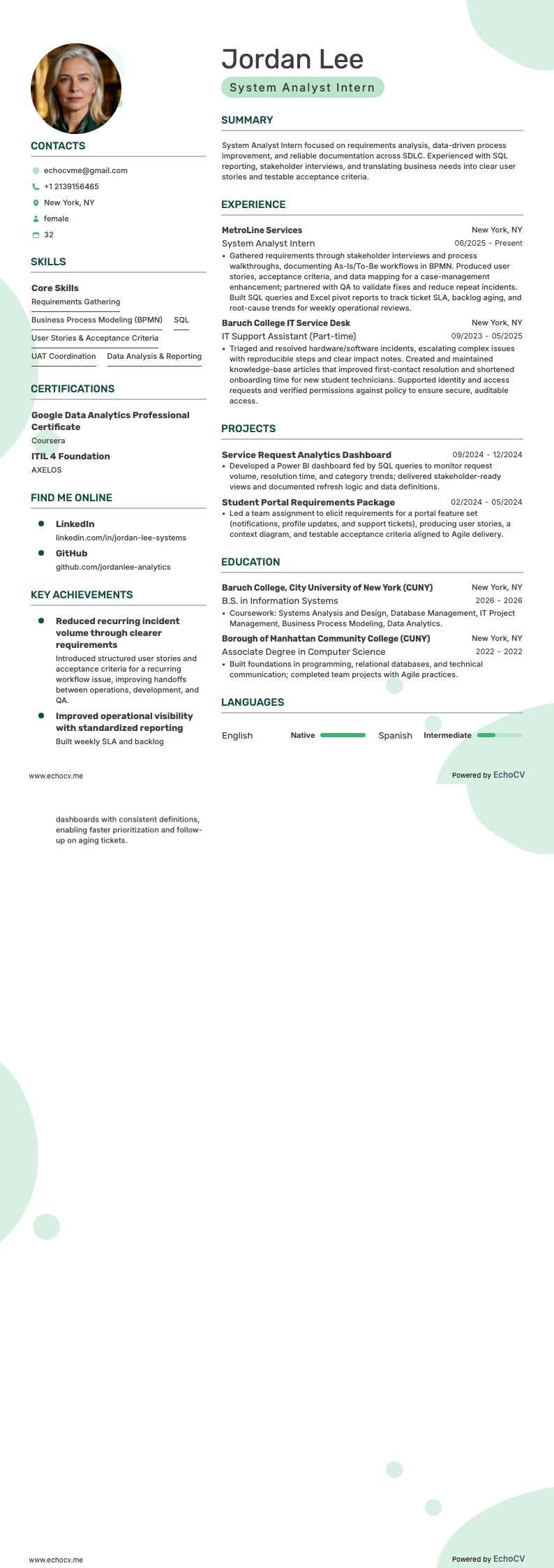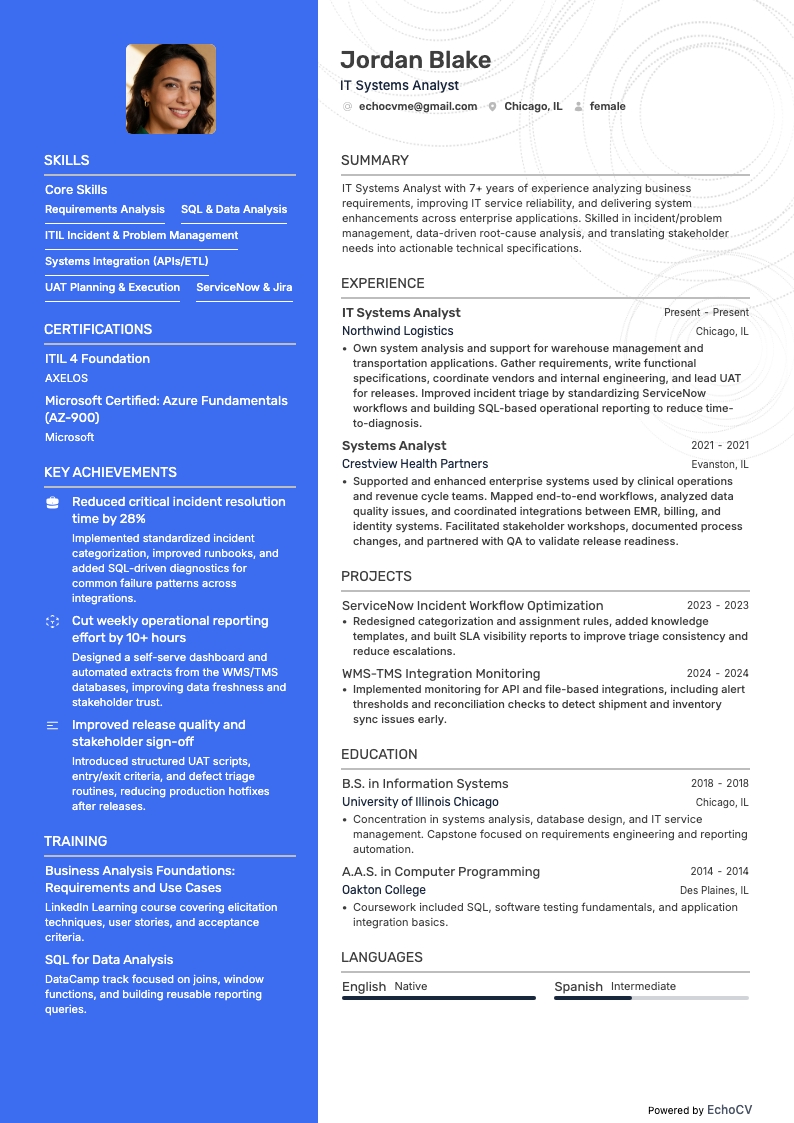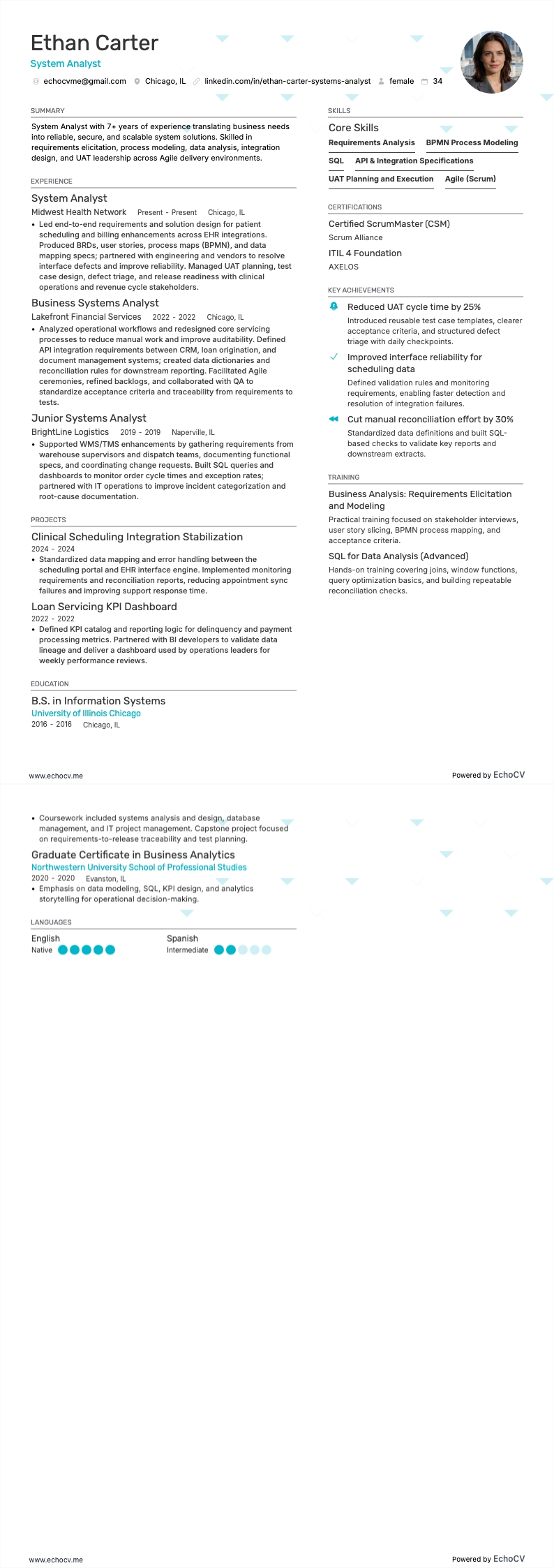
Now that you know which sections to include on your system analyst resume experience, the next step is learning how to write your system analyst resume so each section is clear, relevant, and easy to scan.
How to write your system analyst"
Both words are regular English words, so no capitalization changes are needed.
system analyst resume experience
Your experience section is where you prove you can do the work, not just describe it. Hiring managers reviewing system analyst resumes prioritize demonstrated impact—requirements you gathered that improved a system, processes you redesigned that reduced errors, platforms you helped implement—over generic task lists that read like a job description.
Each entry should include:
- Job title
- Company and location (or remote)
- Dates of employment (month and year)
Three to five concise bullet points showing what you owned, how you executed, and what outcomes you delivered:
- Ownership scope: the systems, applications, databases, or business processes you were directly accountable for analyzing, designing, or improving.
- Execution approach: the tools, frameworks, and methods you used—such as requirements elicitation techniques, data modeling tools, SQL, UML diagrams, or specific system development lifecycle methodologies—to drive decisions and deliver work.
- Value improved: changes you made to system performance, data accuracy, process efficiency, user accessibility, or operational reliability that moved a measurable needle for the organization.
- Collaboration context: how you worked across departments—partnering with developers, database administrators, business stakeholders, QA teams, or vendors—to translate business needs into technical specifications and working solutions.
- Impact delivered: outcomes framed as results rather than activities, showing the scale of systems you touched, the complexity of problems you solved, or the business value your analysis unlocked.
Every bullet should connect clearly to the system analyst role. Describe what you owned, how you executed it, and what changed because of your work. Strip out anything that doesn't reinforce your ability to analyze requirements, bridge business and technical teams, and deliver system solutions that work.