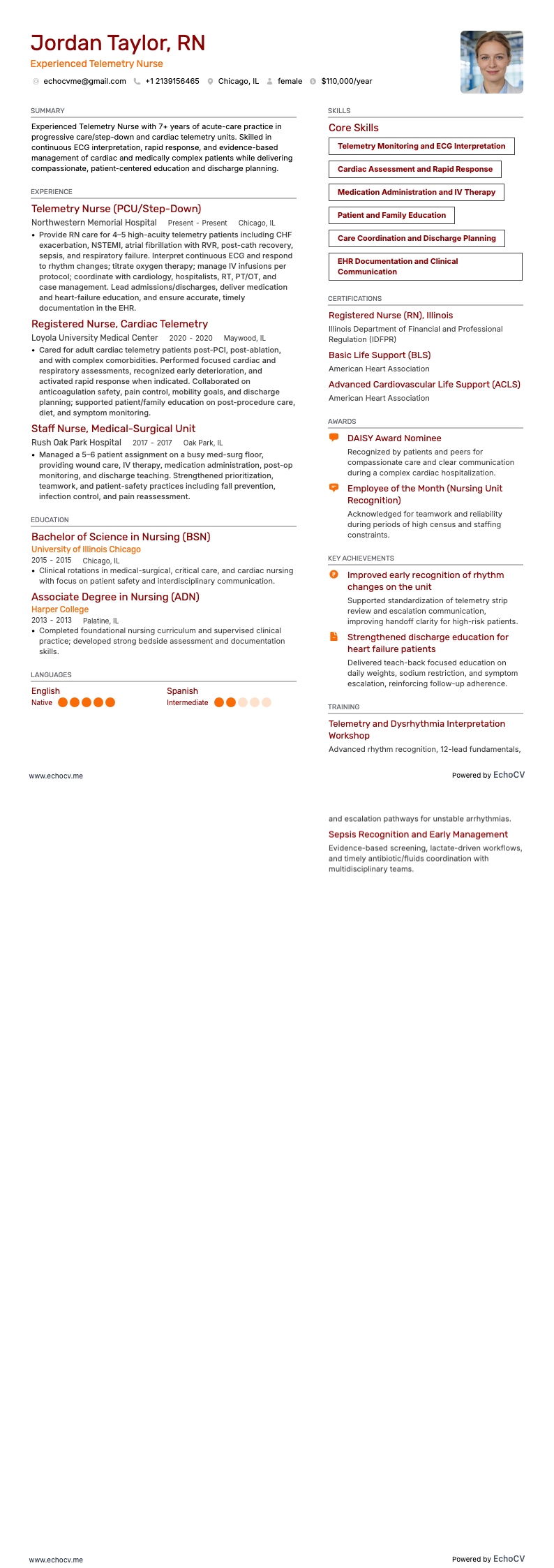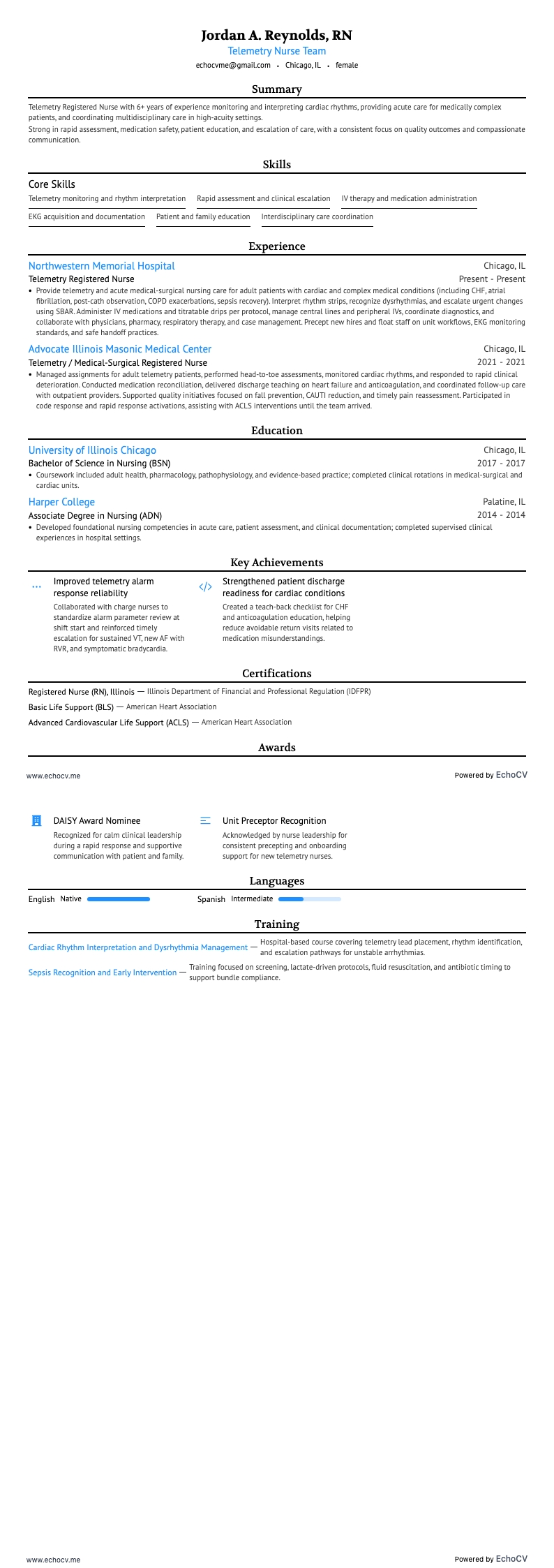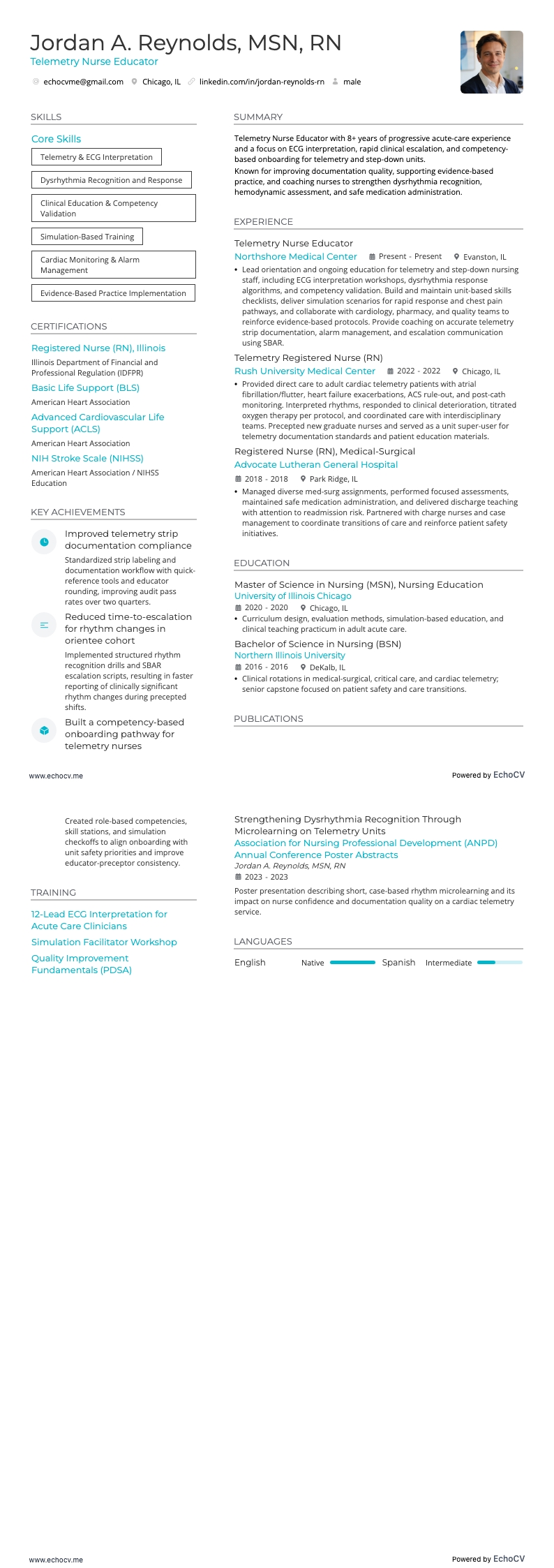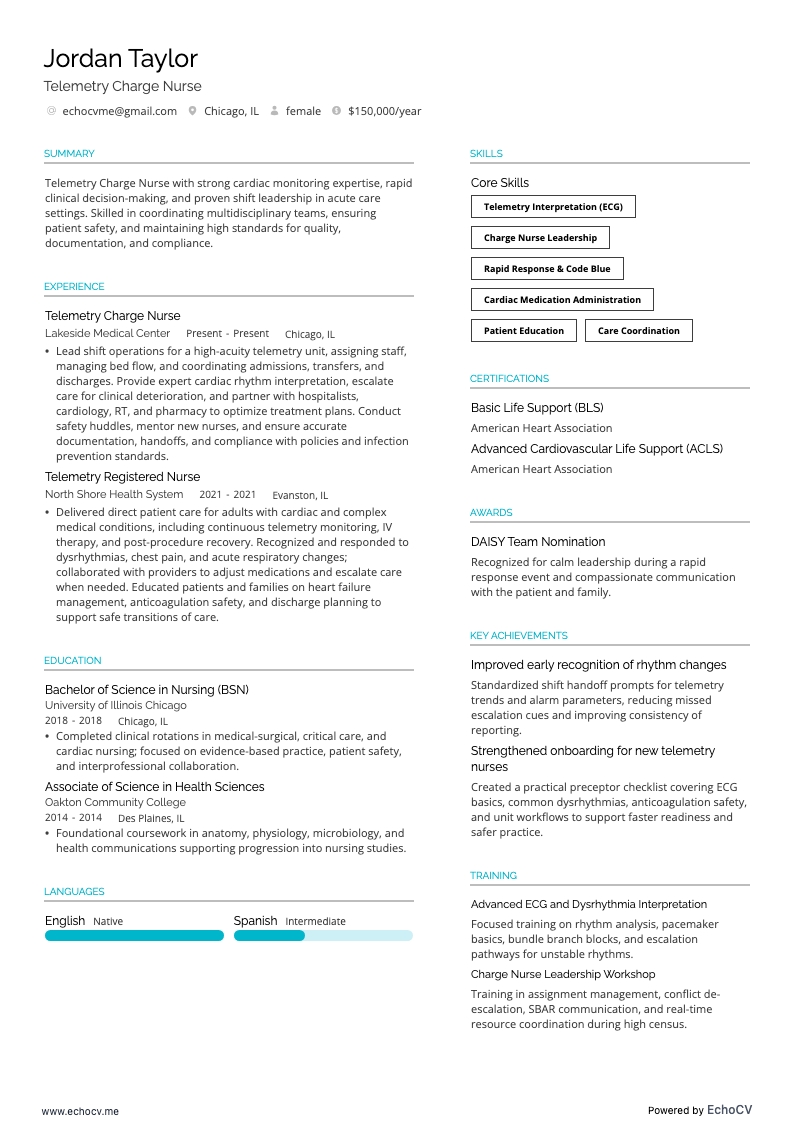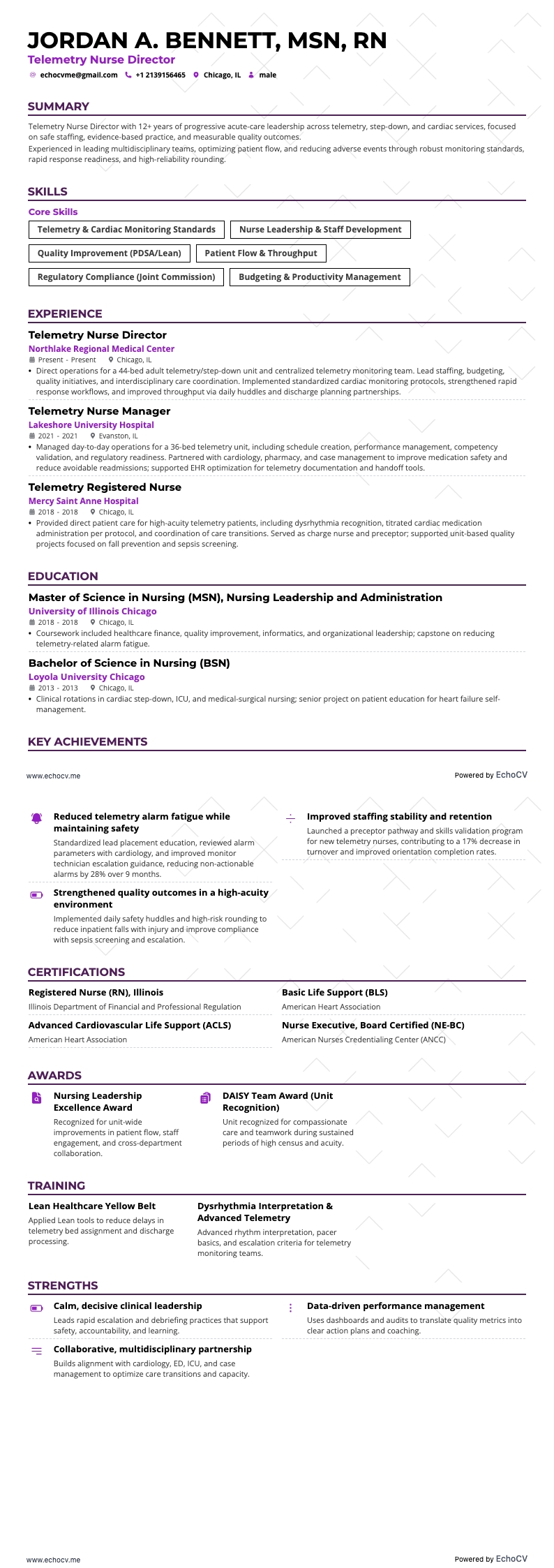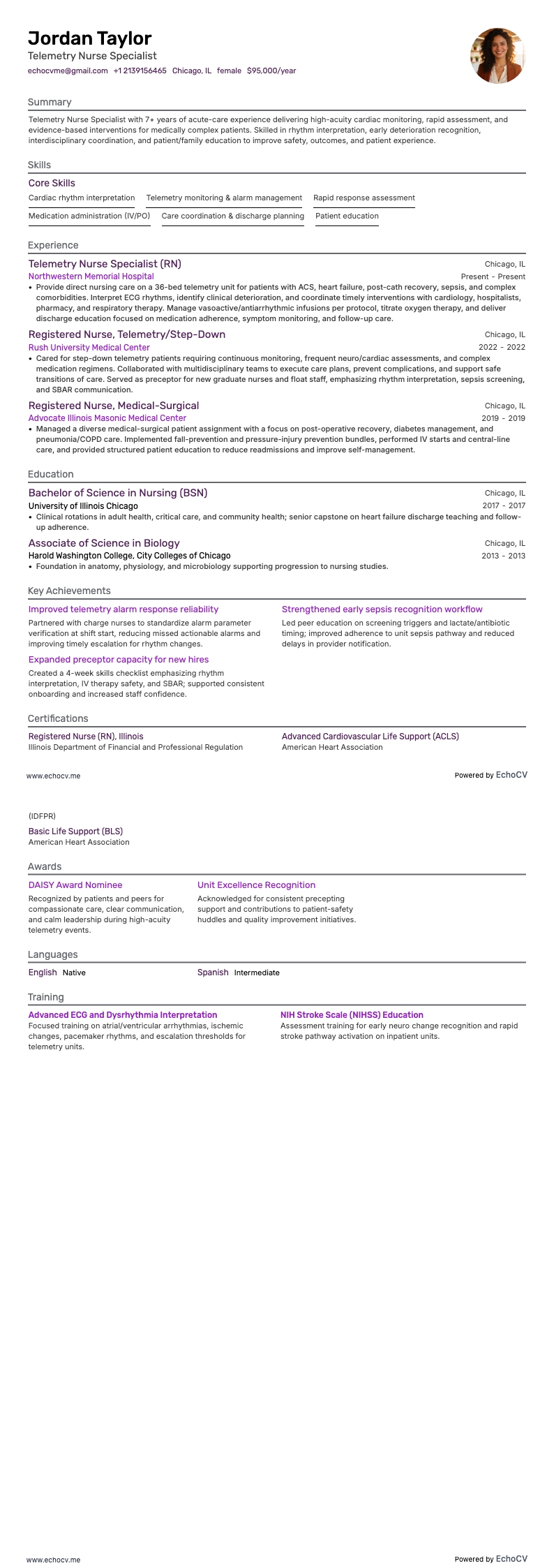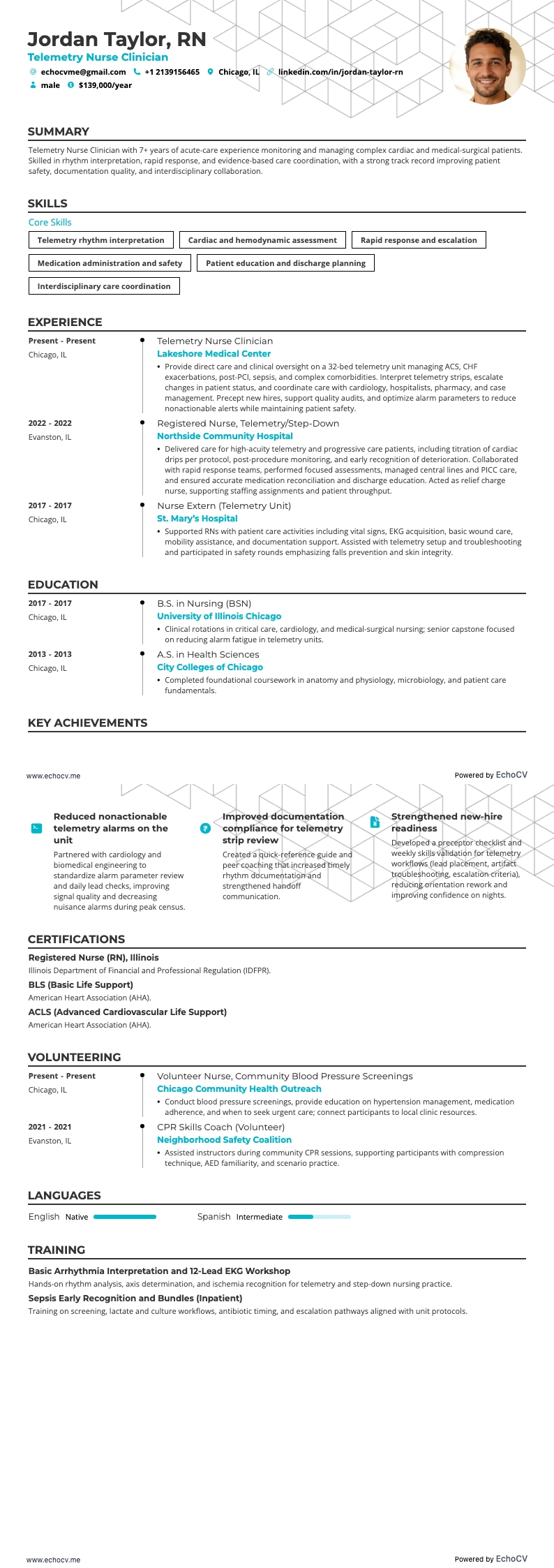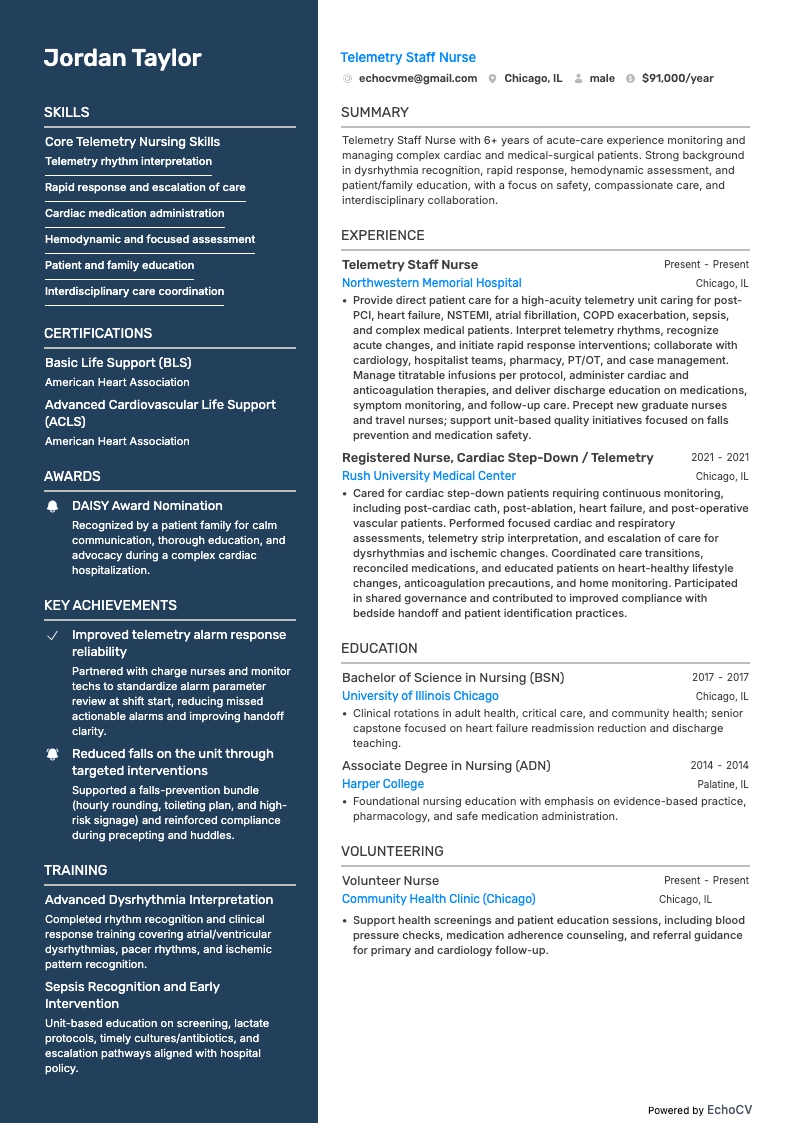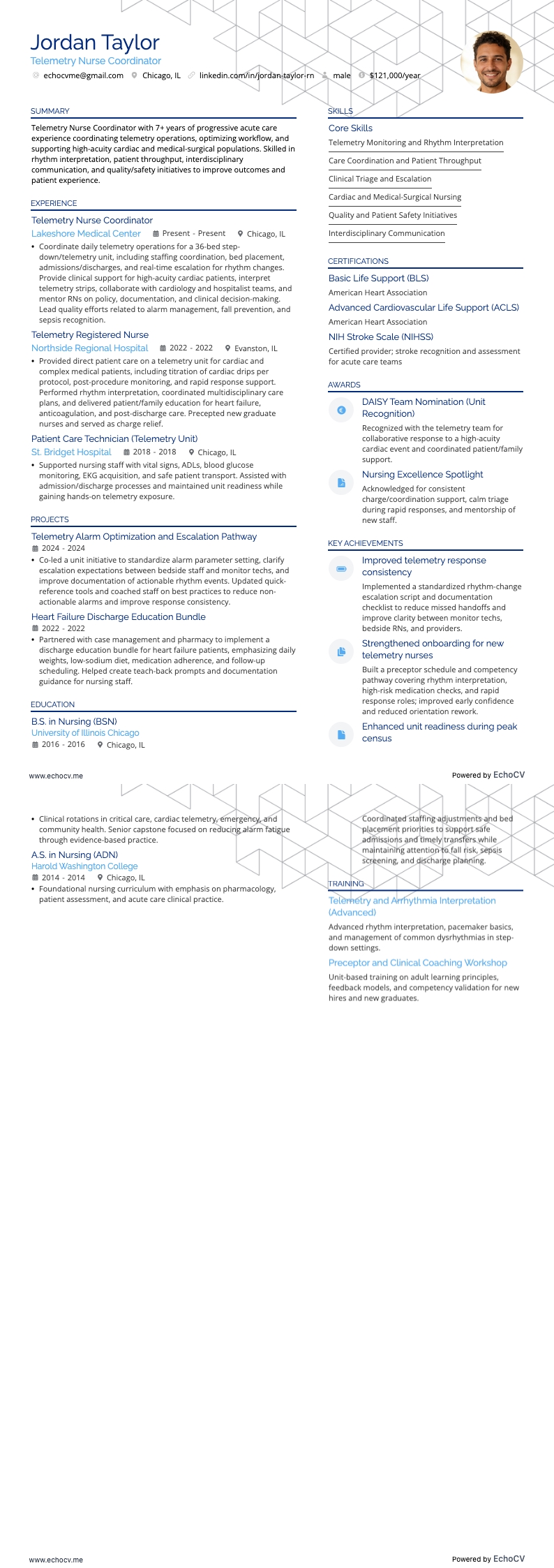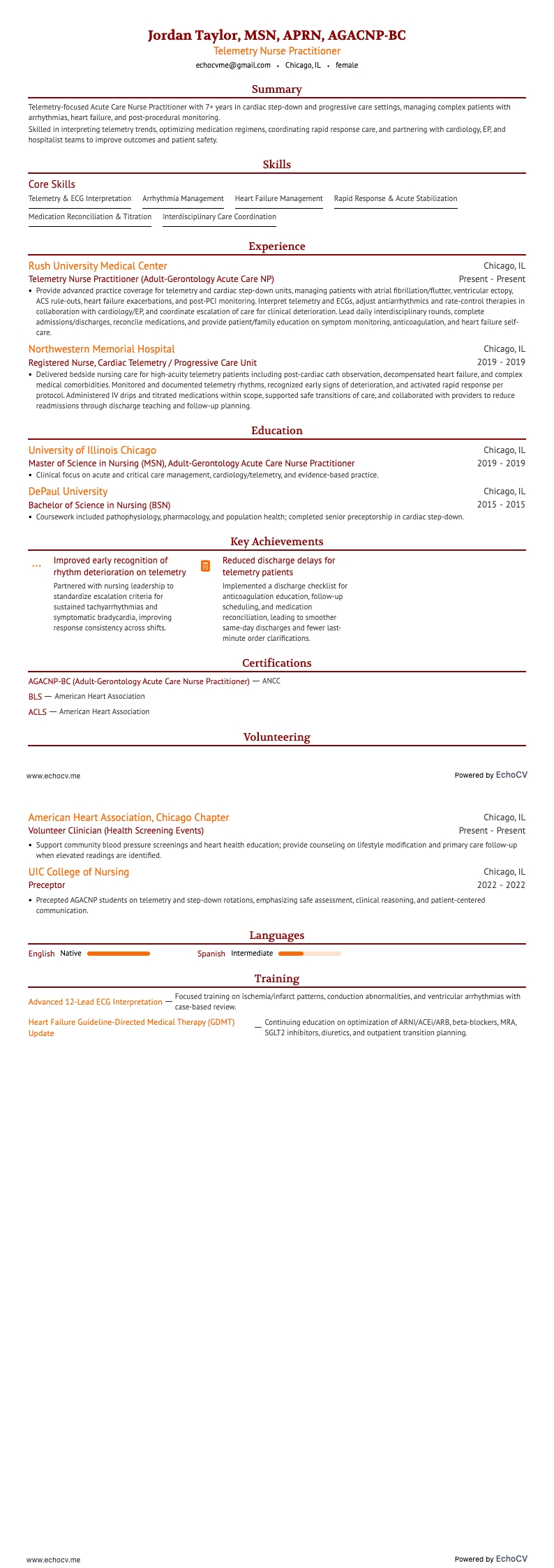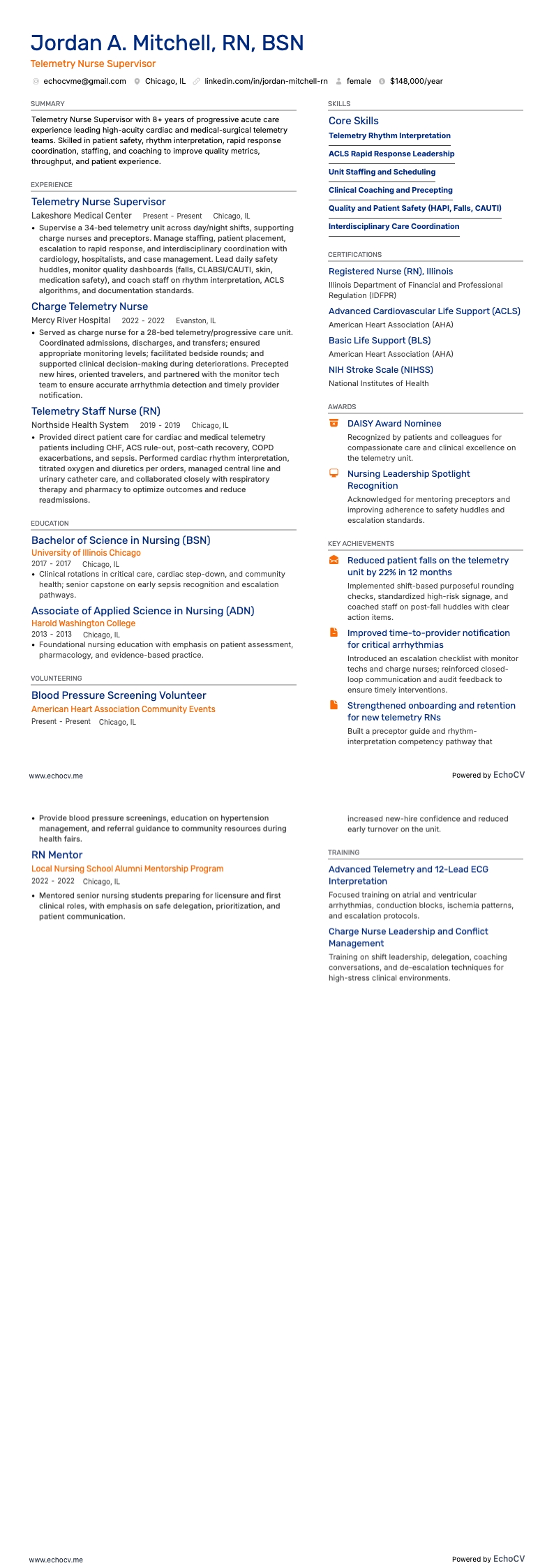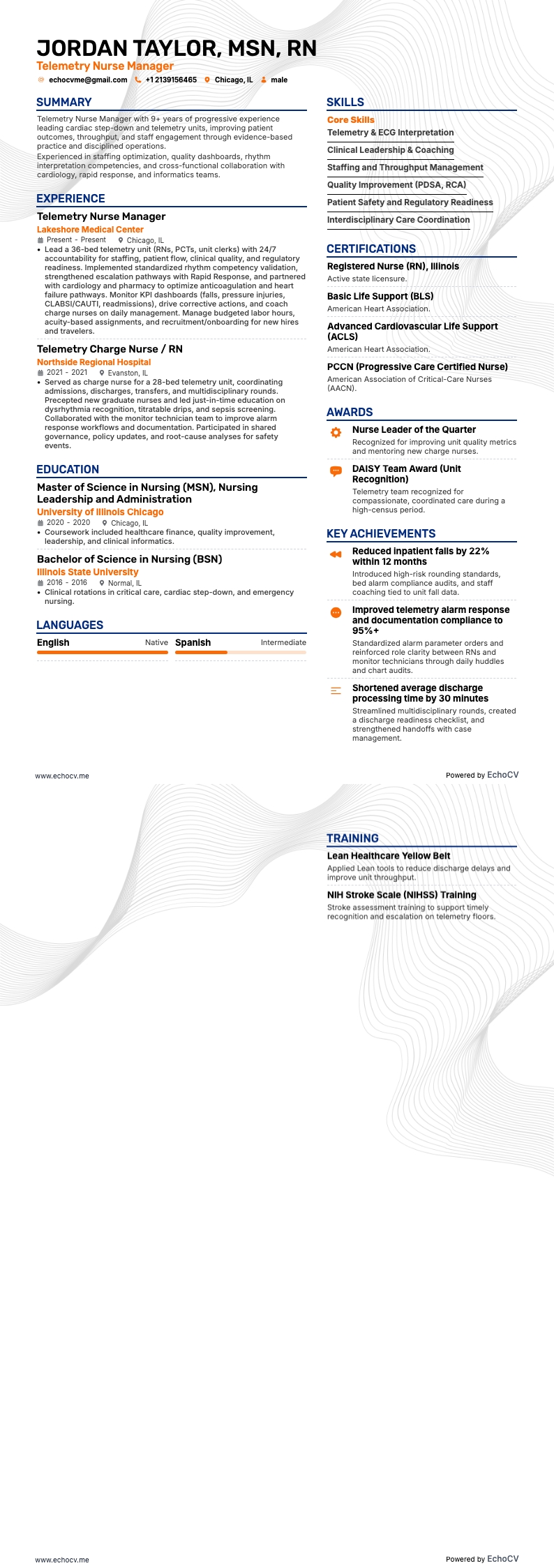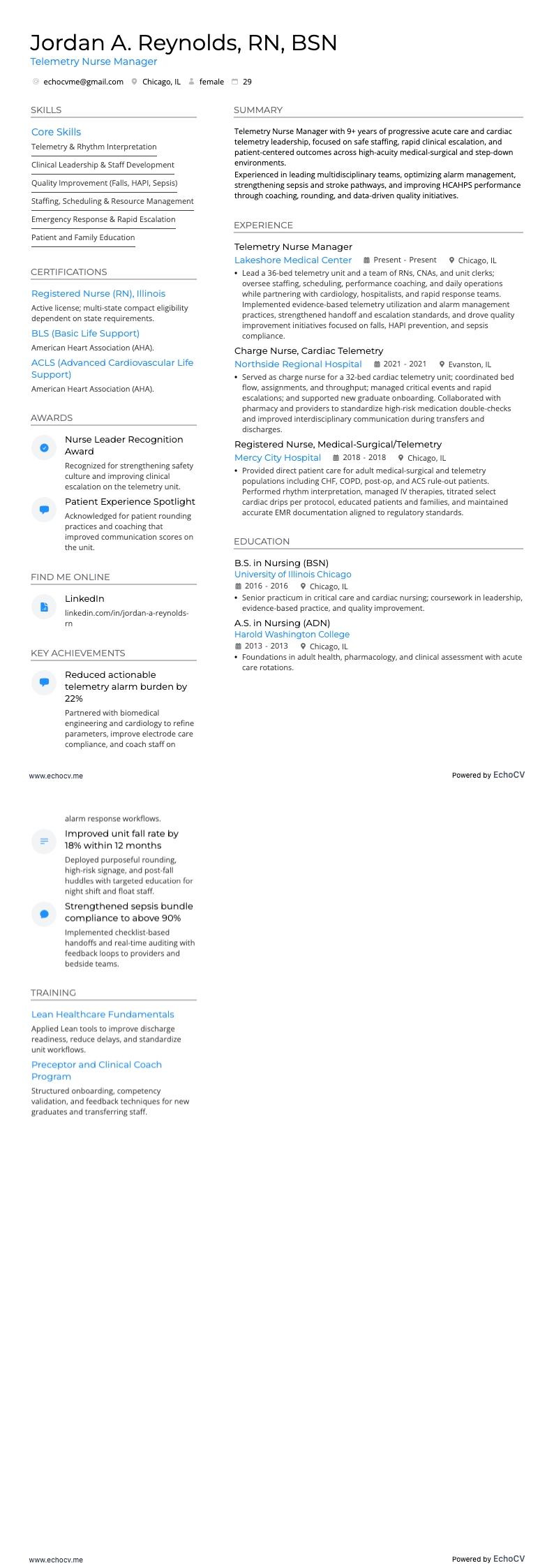
Although having the right combination of skills is essential to practically any job, for telemetry nurses the education section is of equal importance.
How to list your certifications and education on your resume
Detailing your education, certification, and licensure is crucial on a telemetry nurse resume. These elements demonstrate your foundational nursing knowledge, specialized training, and legal eligibility to practice nursing, respectively.
They provide employers with evidence of your qualifications and assure them you meet the necessary standards for patient care and professional practice in a specialized area like telemetry nursing.
Education shows your academic background, certifications highlight specialized skills and knowledge in areas relevant to telemetry, and licensure confirms your legal authority to practice as a nurse, all of which are fundamental to establishing your competency and credibility in the field.
Which section goes where?
On a resume, the placement of the education, certification, and licensure sections can vary depending on your level of experience and the relevance of each to the job you're applying for. Here are the general guidelines:
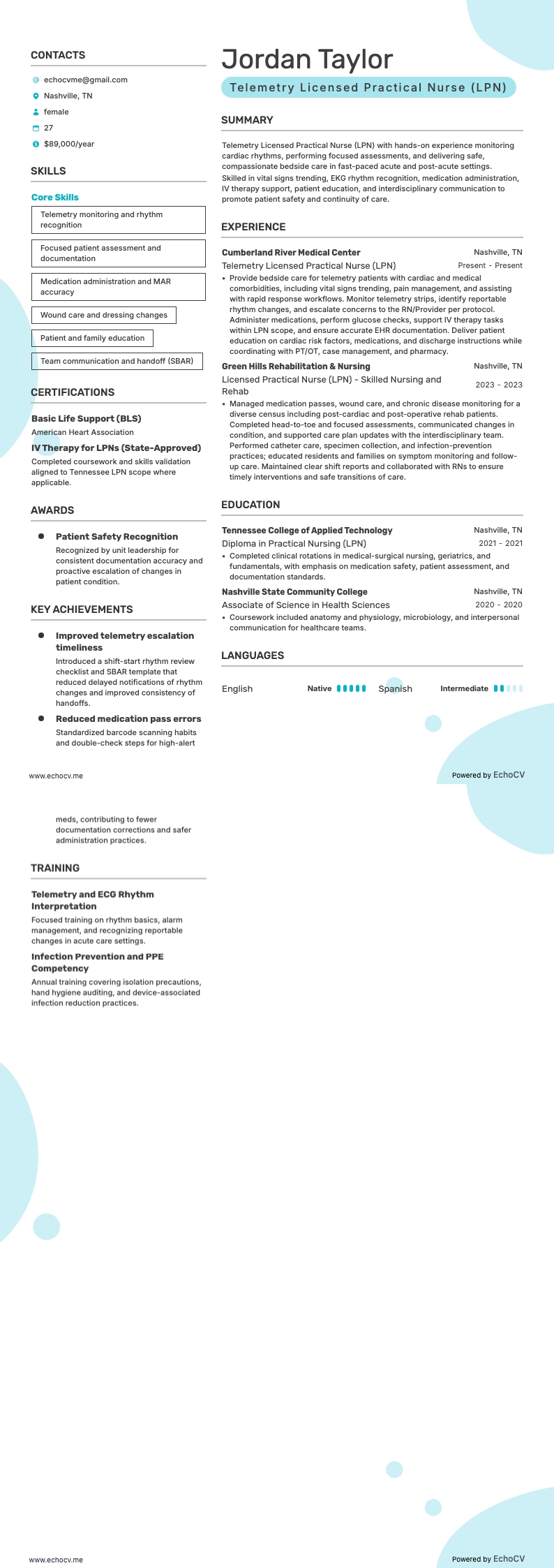
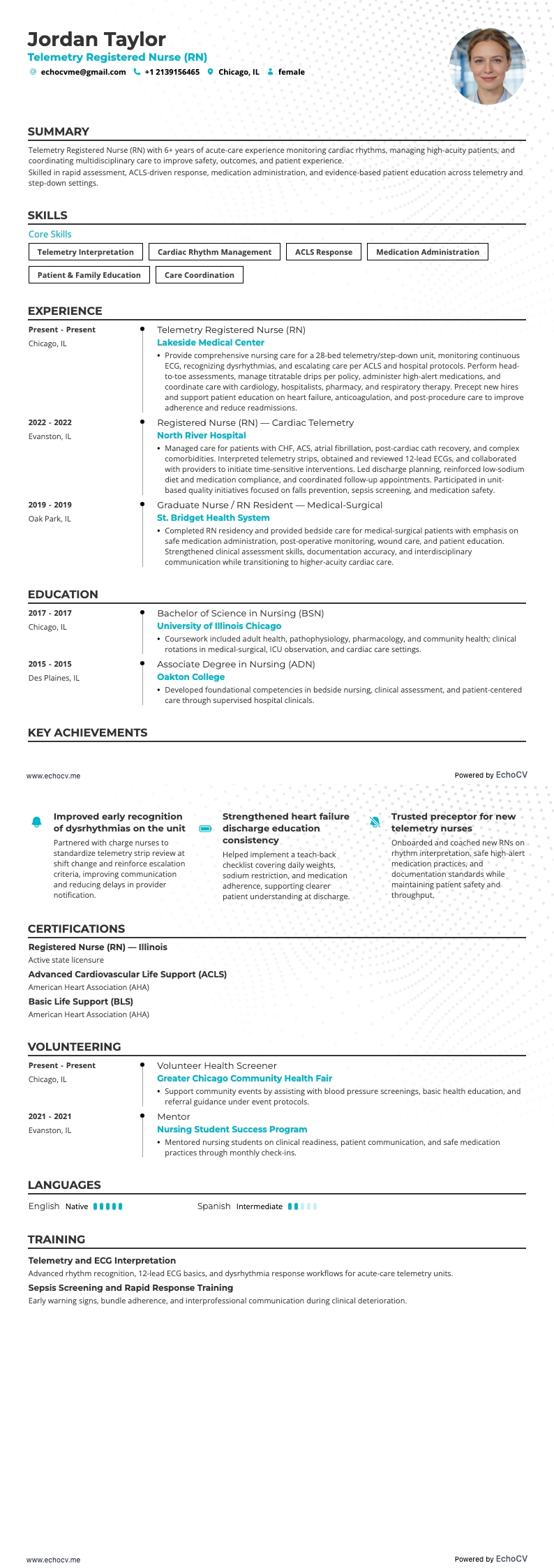
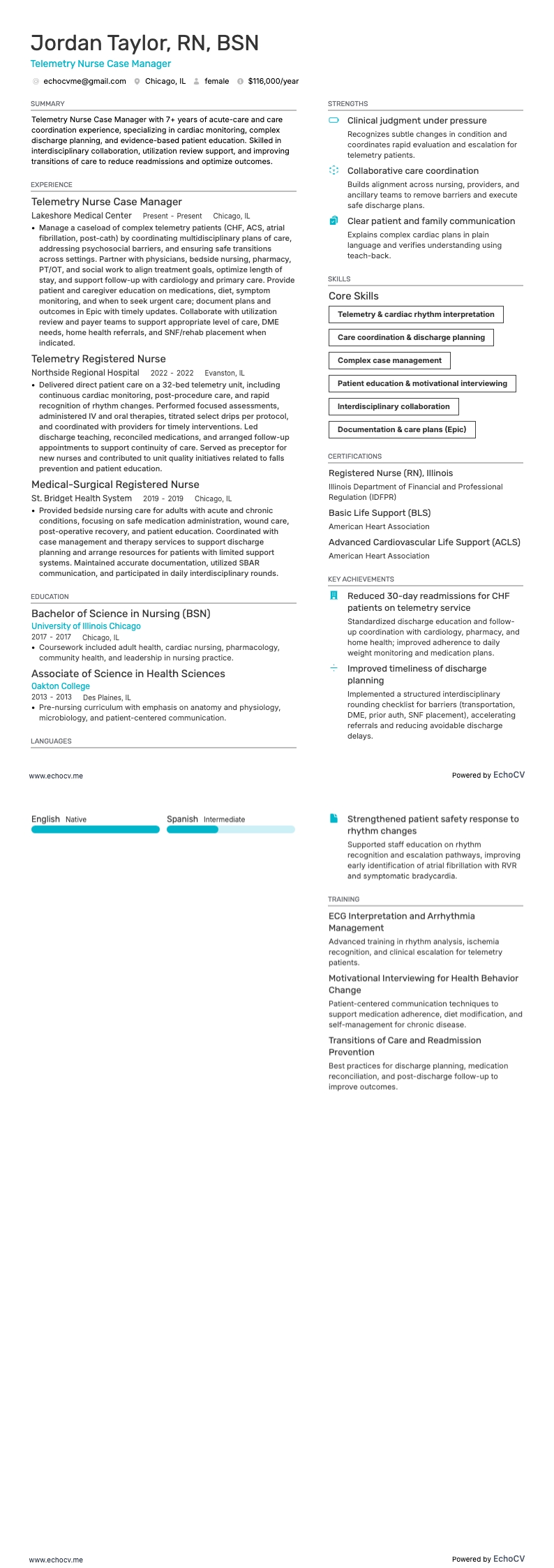
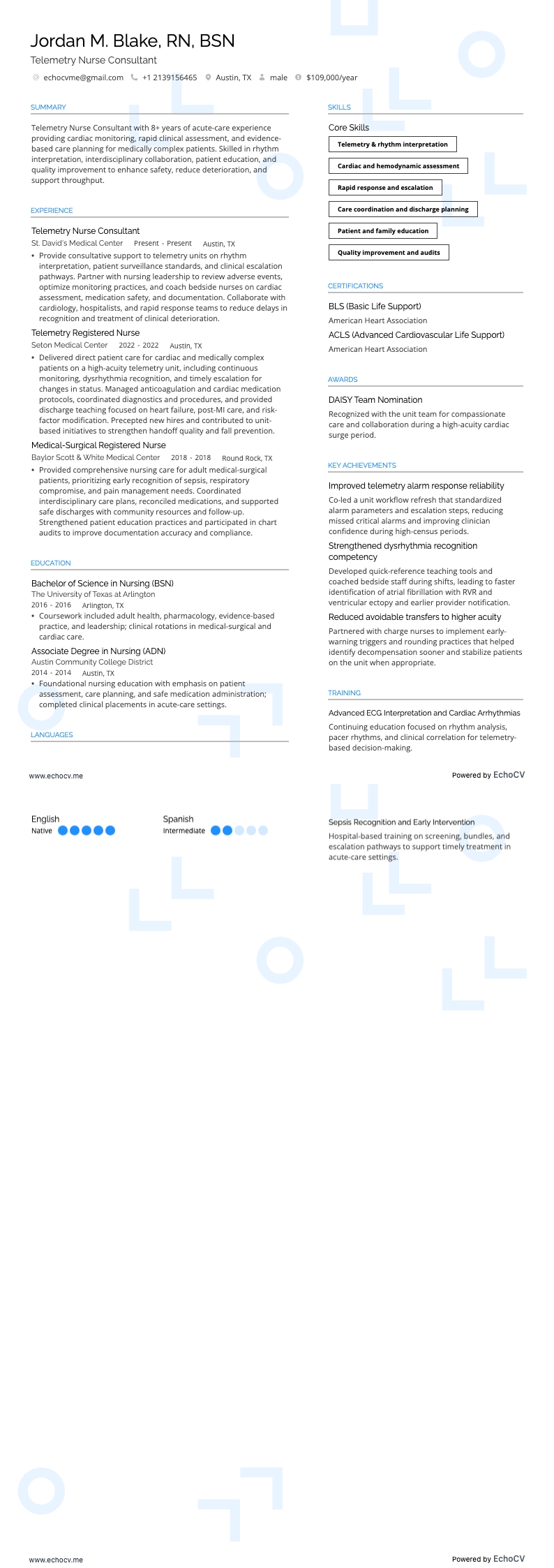
- Education section: Typically, this section goes towards the end of the resume for experienced professionals who have several years of work history, as their practical experience is more relevant to potential employers. For new graduates or those with less work experience, the education section can be placed higher, often directly after the objective or summary, to highlight academic achievements and relevant coursework.
- Certification section: This can be integrated into the education section or listed separately, depending on the number of certifications and their relevance to the job. If the certifications are directly relevant to the position you're applying for, you might place this section more prominently, possibly before your work experience, to catch the employer's attention early.
- Licensure section: Licensure details can be included within the education section or under a separate licensure section, especially if having a specific license is a requirement for the job. For roles where licensure is critical, such as in nursing or law, you might choose to highlight this information near the top of your resume, after your summary.
Ultimately, the key is to prioritize the placement of each section based on what will most strongly appeal to your potential employers, considering the specific requirements and qualifications valued in your field.
Now, let’s look at some examples. First, we’ll see what a proper education listing should look like. Be sure to include the following in your entries:
An education entry on a resume should include the following key pieces of information:
- Degree: Specify the type of degree earned.
- Major/Field of study: Indicate your major or field of study.
- Institution name: Provide the name of the educational institution from which you graduated.
- Graduation date: Include the month and year of graduation.
- GPA (optional): You may include your GPA on your resume if it's strong (typically, 3.5 or above) and you're a recent graduate. For most experienced professionals, the GPA can be omitted.
- Relevant coursework (optional): Listing specific courses can be helpful, especially for recent graduates with limited work experience or if the courses are highly relevant to the job.
- Honors/Awards (optional): If you graduated with honors (cum laude, magna cum laude, summa cum laude) or received any notable awards, include these as well.
The education entry should be concise yet informative, providing potential employers with a clear understanding of your academic background and qualifications.