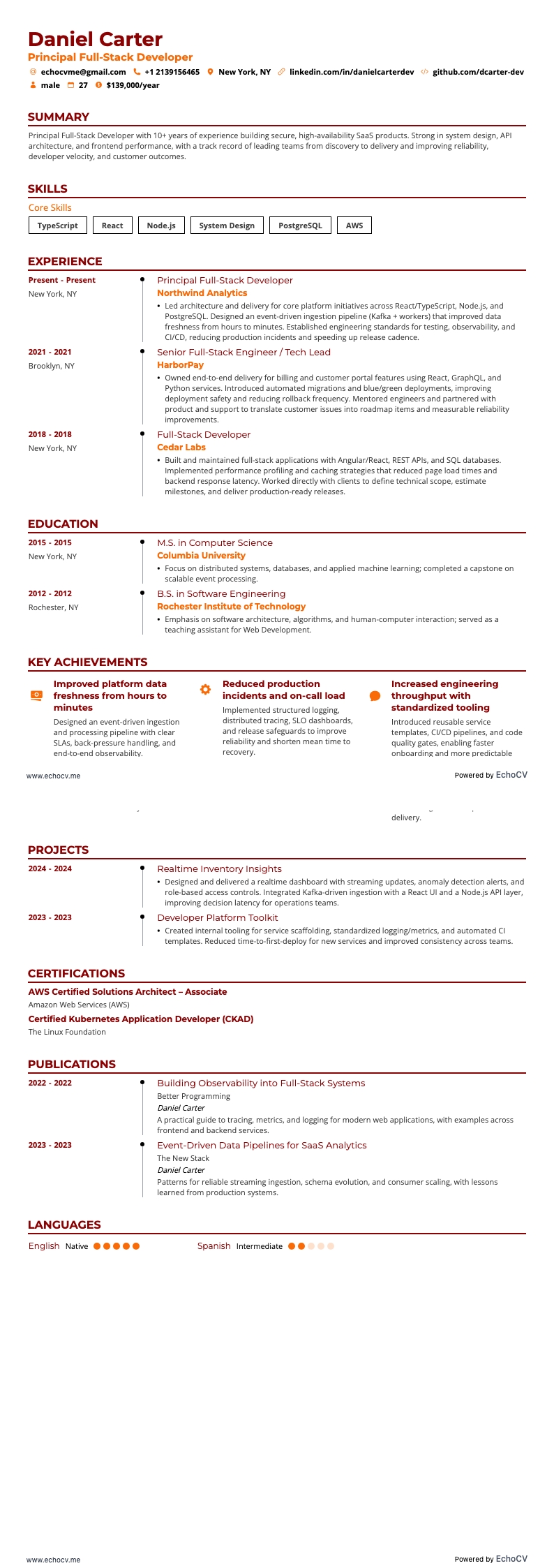
Xem trước đầy đủ Lập trình viên Full-Stack chính

13 mẫu CV lập trình viên full-stack

EchoCV

Được viết bởi đội ngũ EchoCV

Cập nhật: 8/21/20238 min read

Xem tất cả ví dụ CV trong hướng dẫn này hoặc tạo ví dụ CV của riêng bạn với prompt cá nhân hóa

Lập trình viên Full-Stack chính example resume
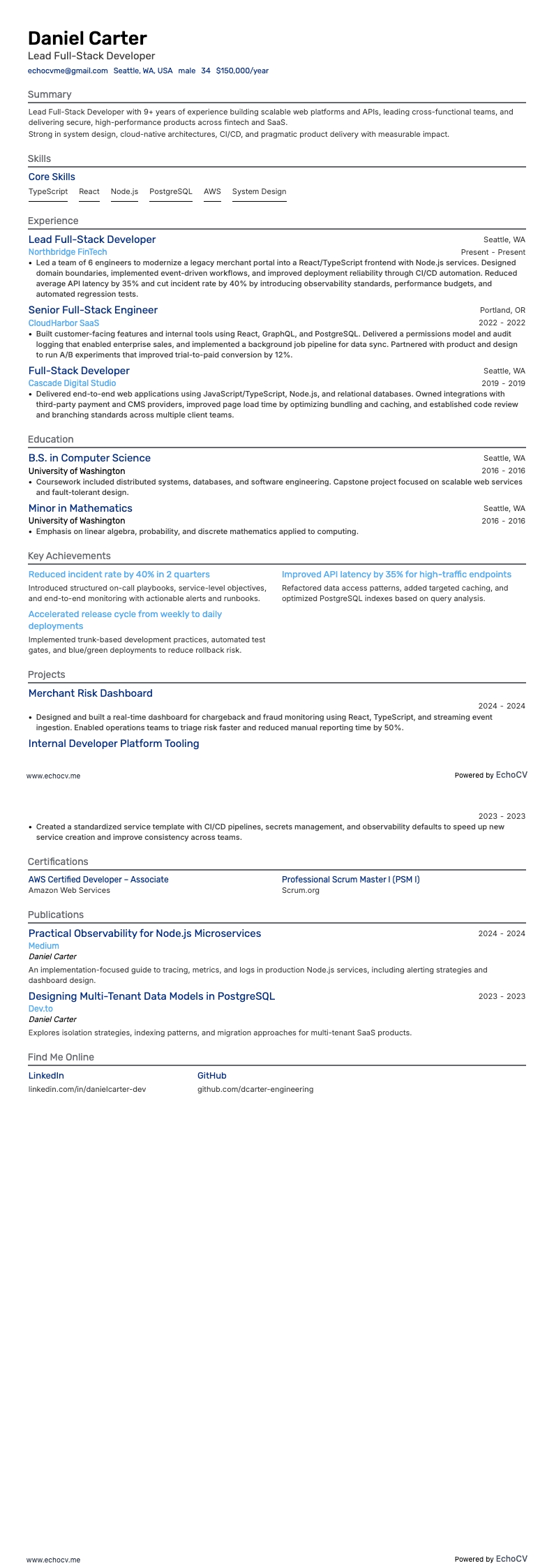
Lập trình viên Full-Stack chính

Lập trình viên Full-Stack chính example resume
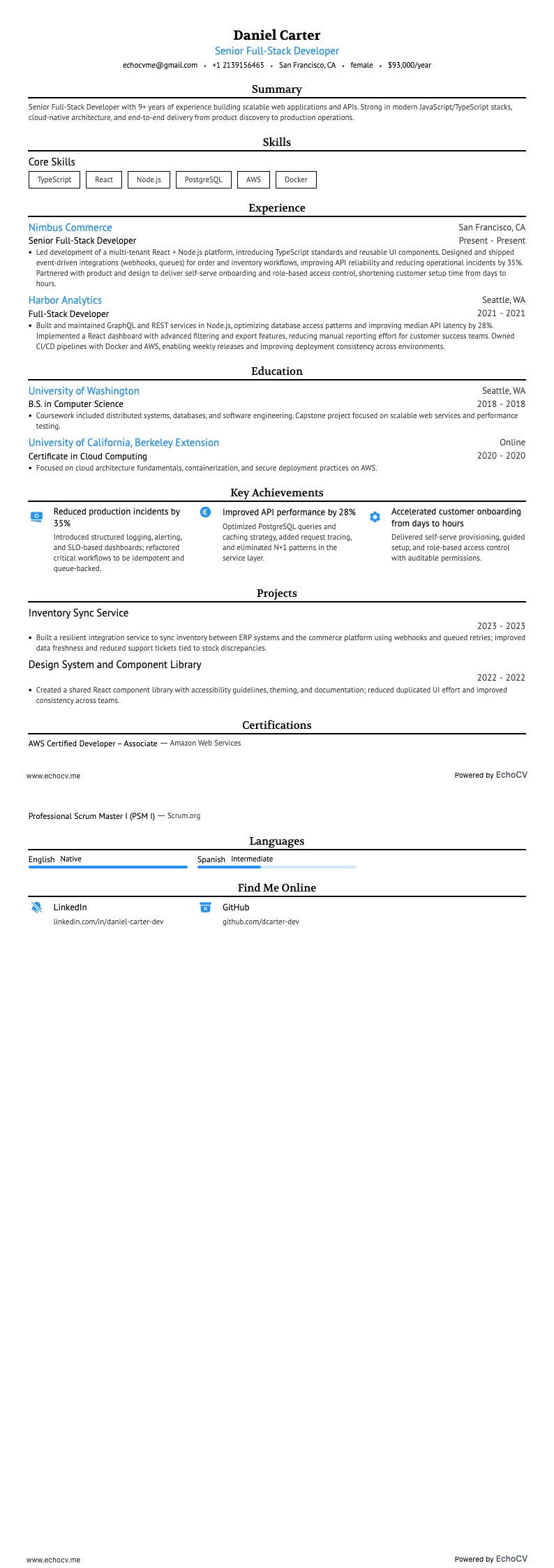
Lập trình viên Full-Stack chính

Lập trình viên Full-Stack Cấp cao example resume
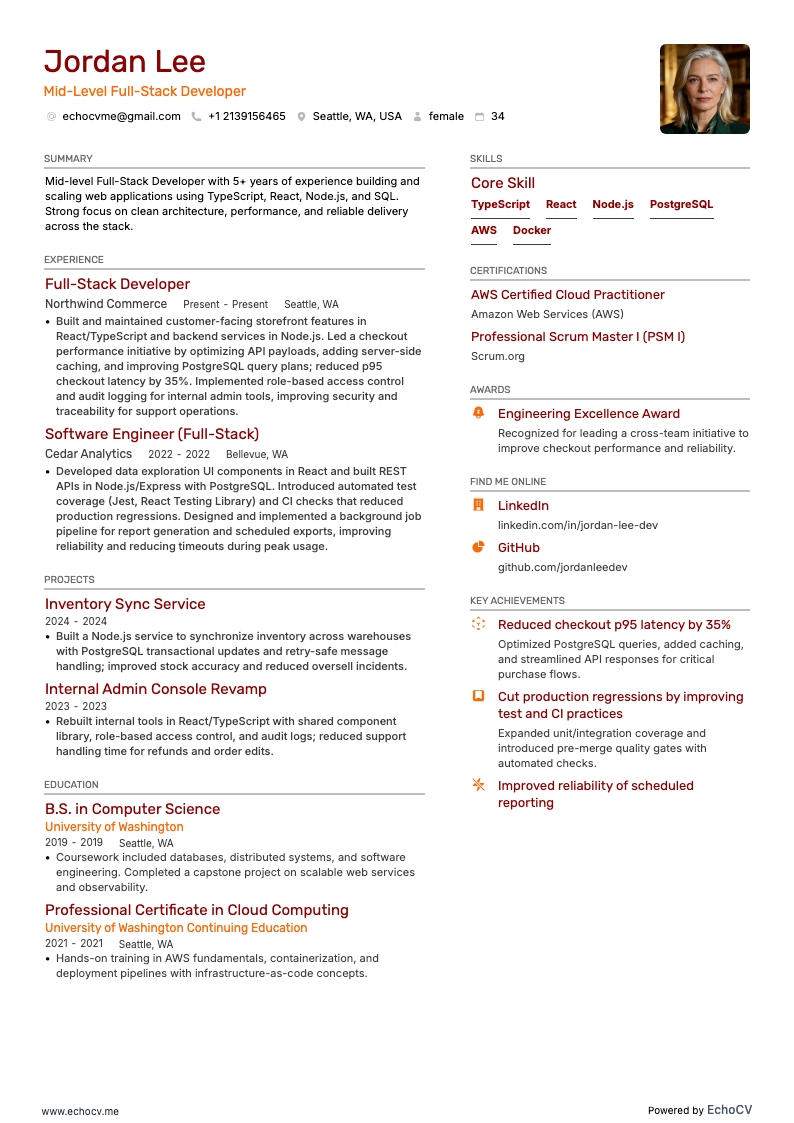
Lập trình viên Full-Stack Cấp cao

Lập trình viên Full-Stack cấp trung example resume
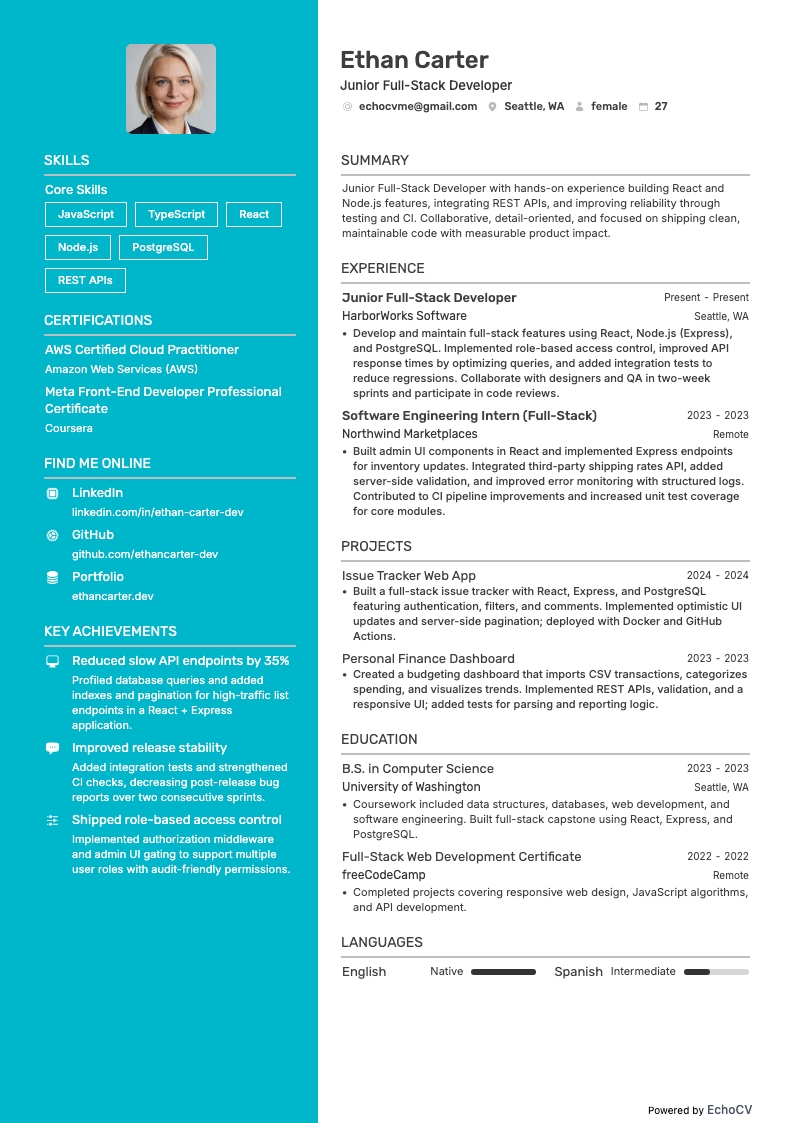
Lập trình viên Full-Stack cấp trung

Lập trình viên Full-Stack Junior example resume
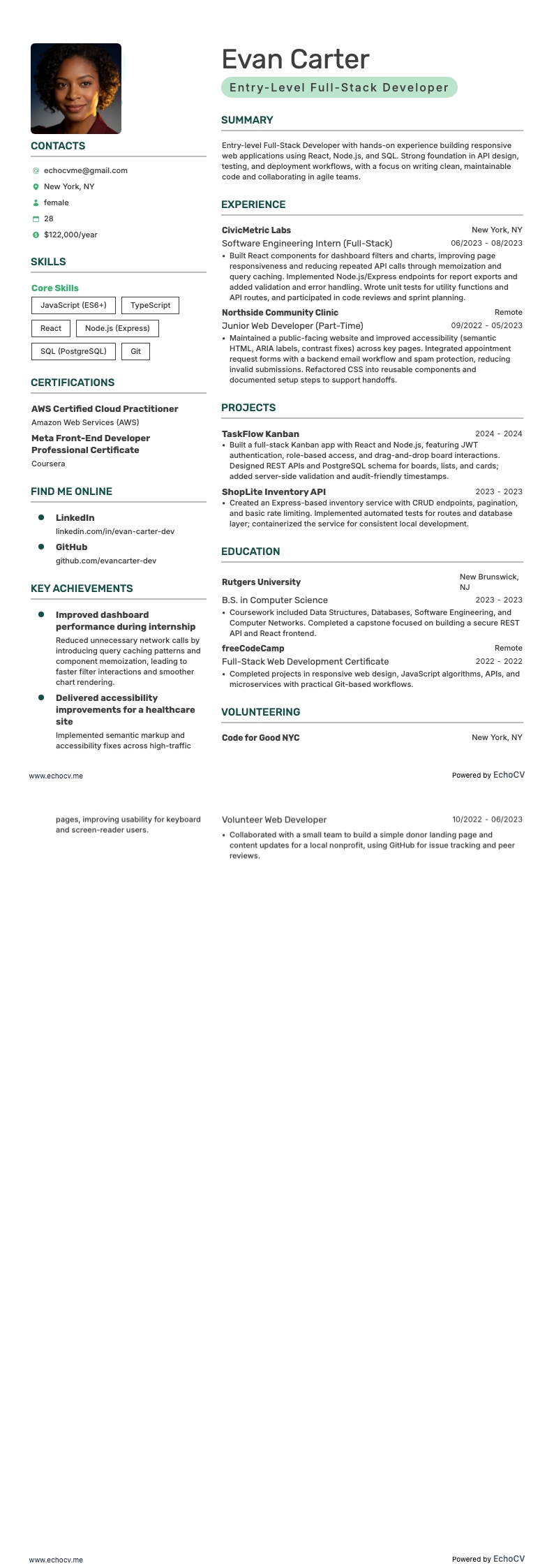
Lập trình viên Full-Stack Junior

Lập trình viên full-stack mới vào nghề example resume
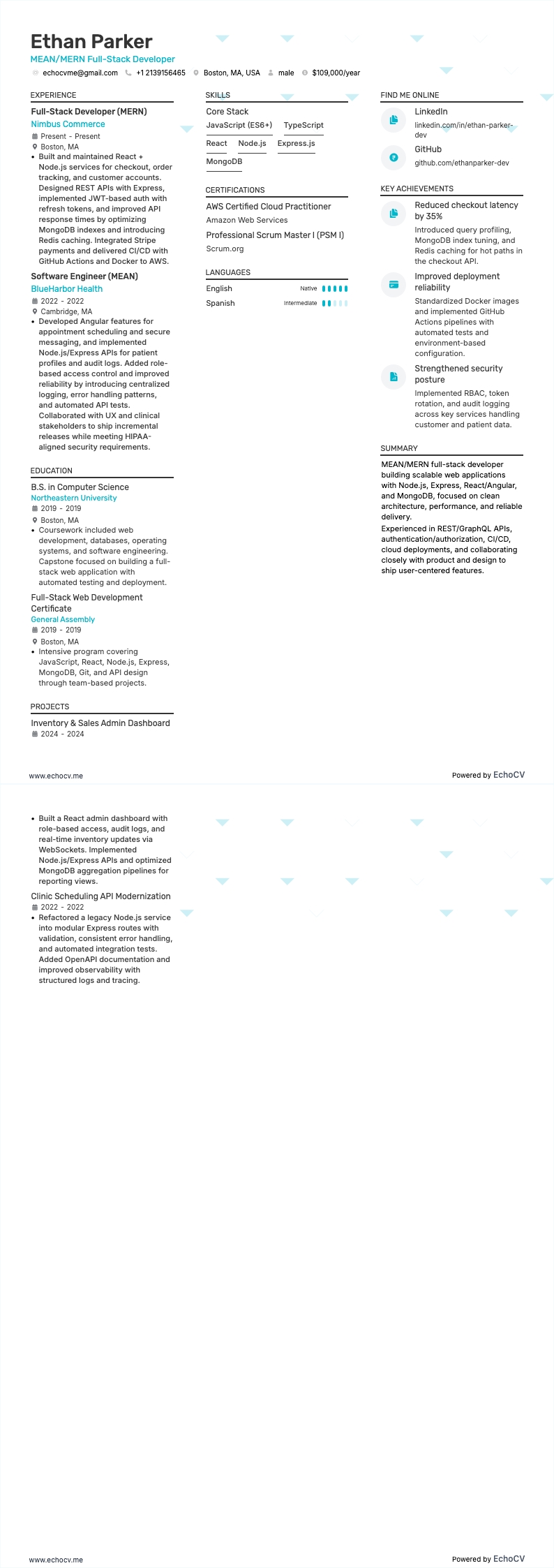
Lập trình viên full-stack mới vào nghề

Lập trình viên Full-Stack MEAN/MERN example resume
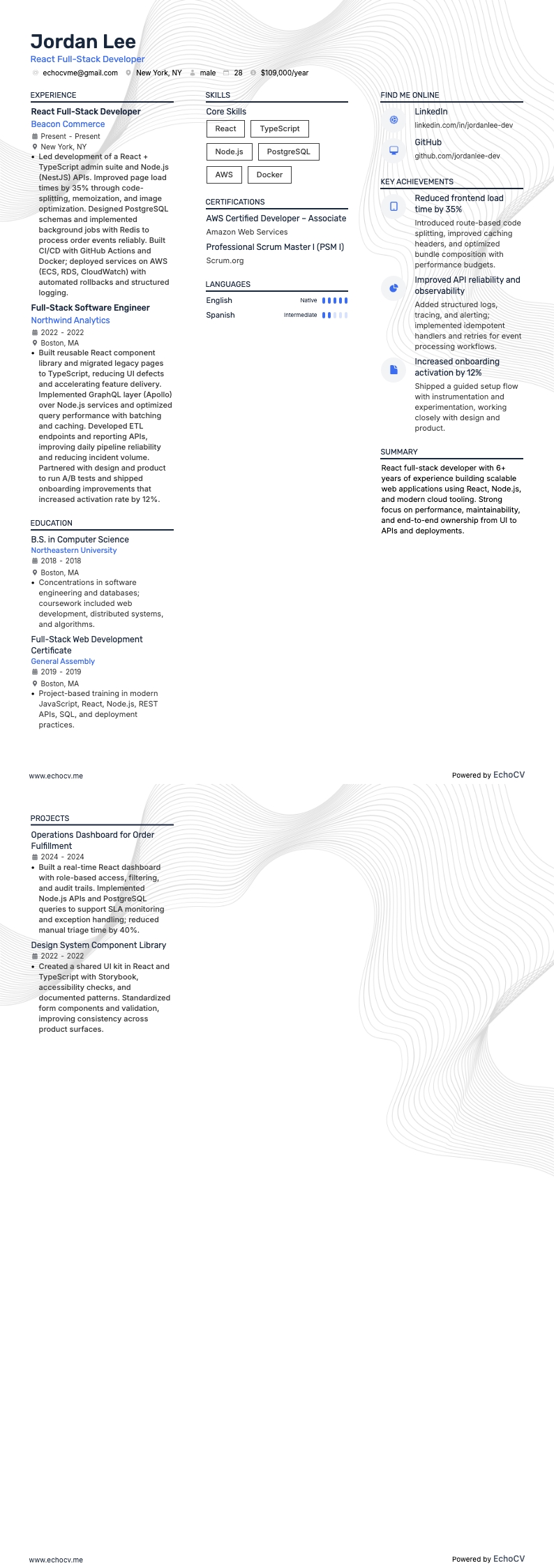
Lập trình viên Full-Stack MEAN/MERN

Lập trình viên Full-Stack React example resume
Lập trình viên Full-Stack React

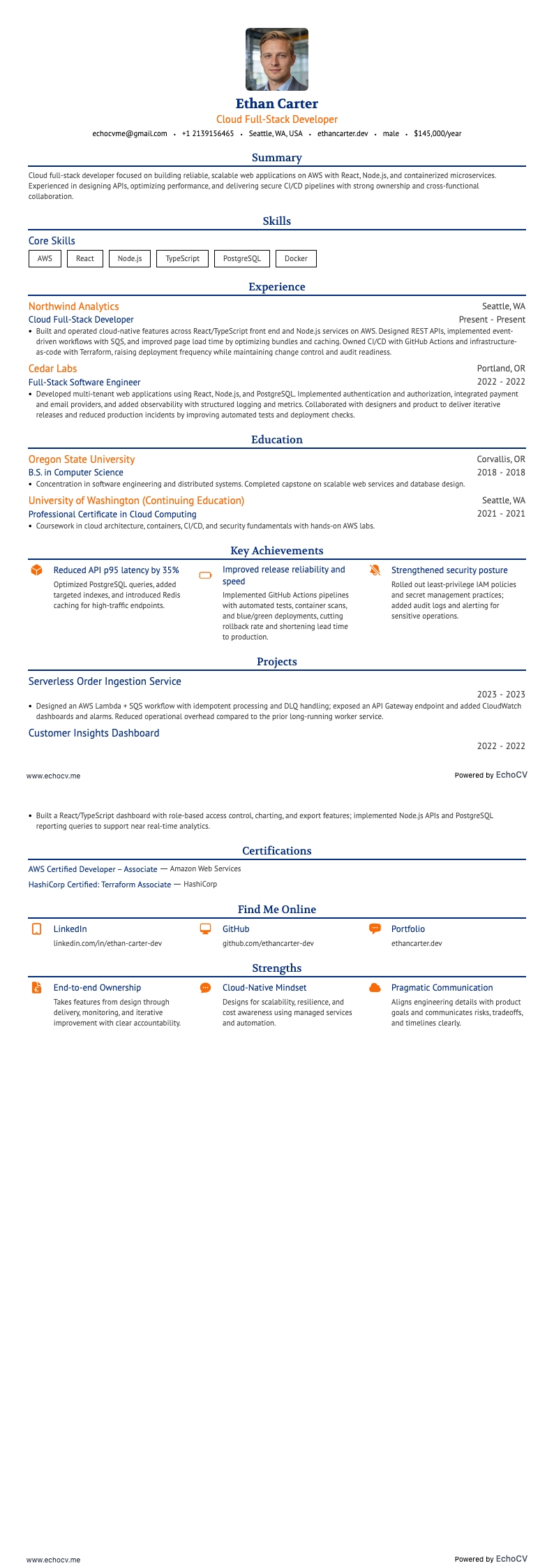
Lập trình viên full-stack đám mây example resume
Lập trình viên full-stack đám mây

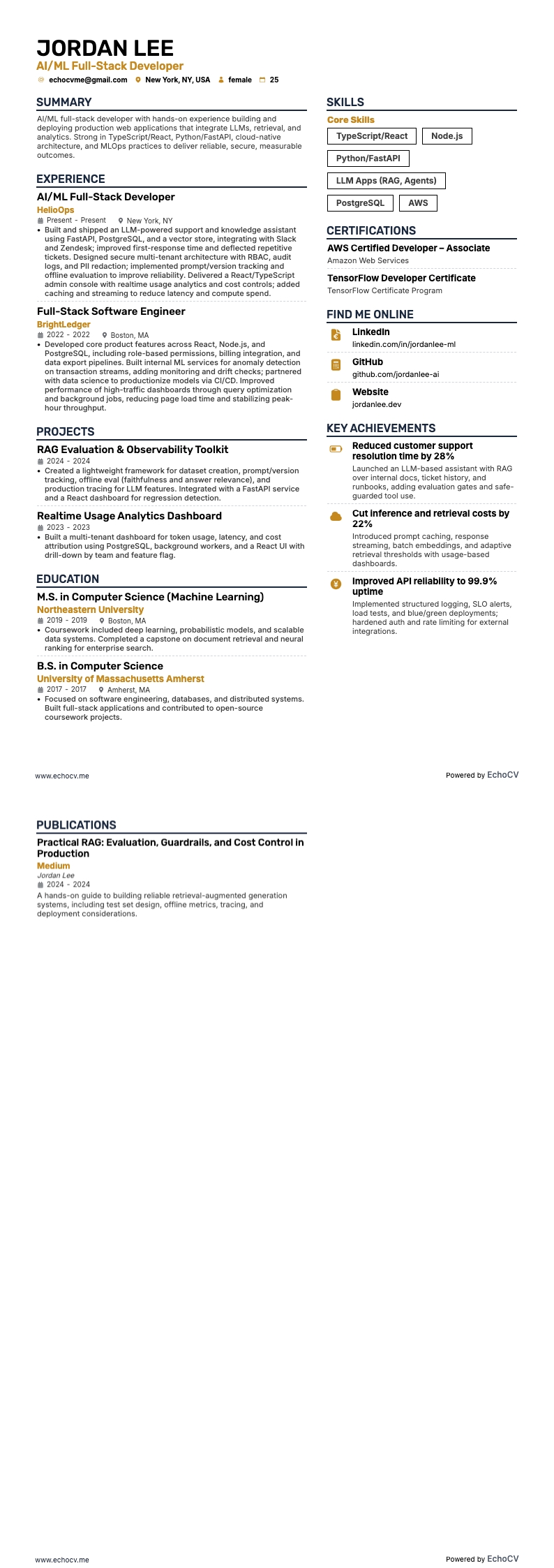
Lập trình viên Full-Stack AI/ML example resume
Lập trình viên Full-Stack AI/ML

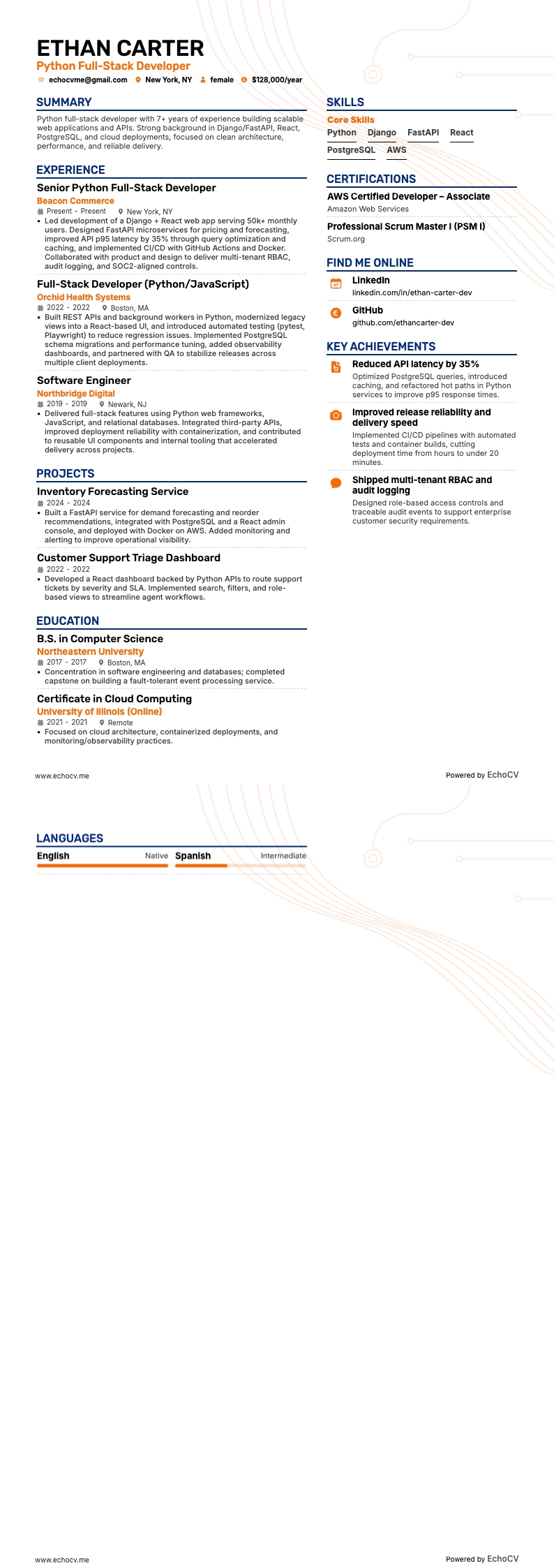
Lập trình viên Python full-stack example resume
Lập trình viên Python full-stack

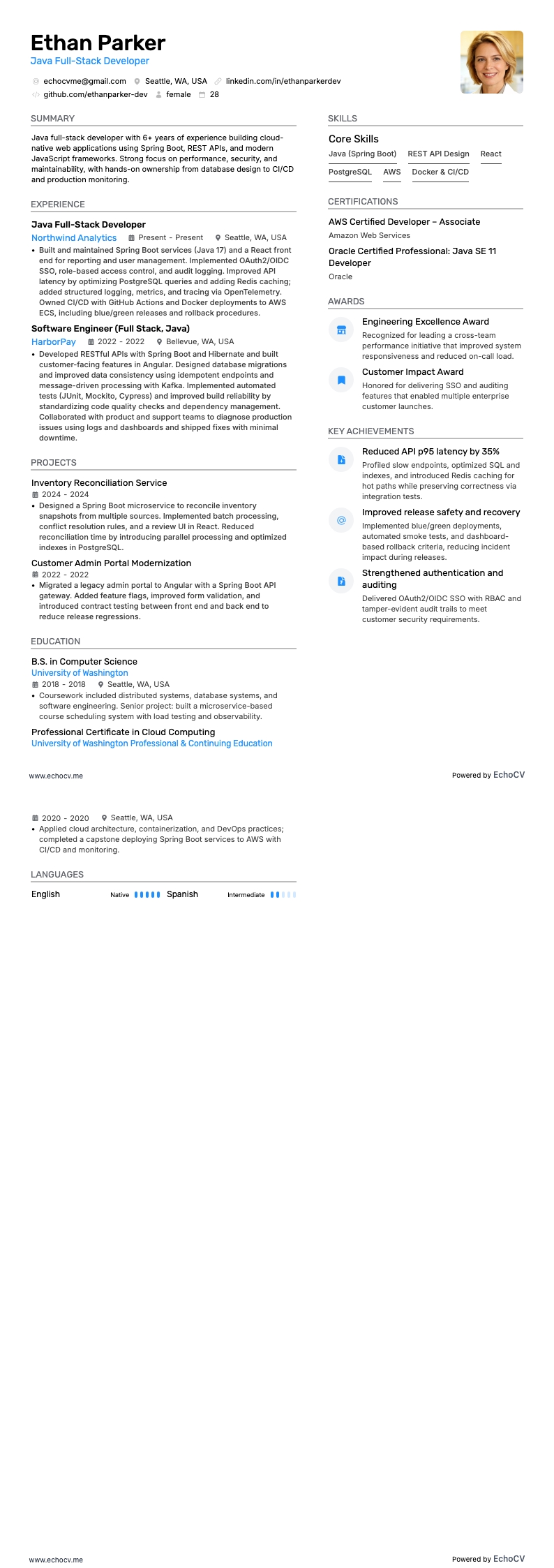
Lập trình viên Full-Stack Java example resume
Lập trình viên Full-Stack Java

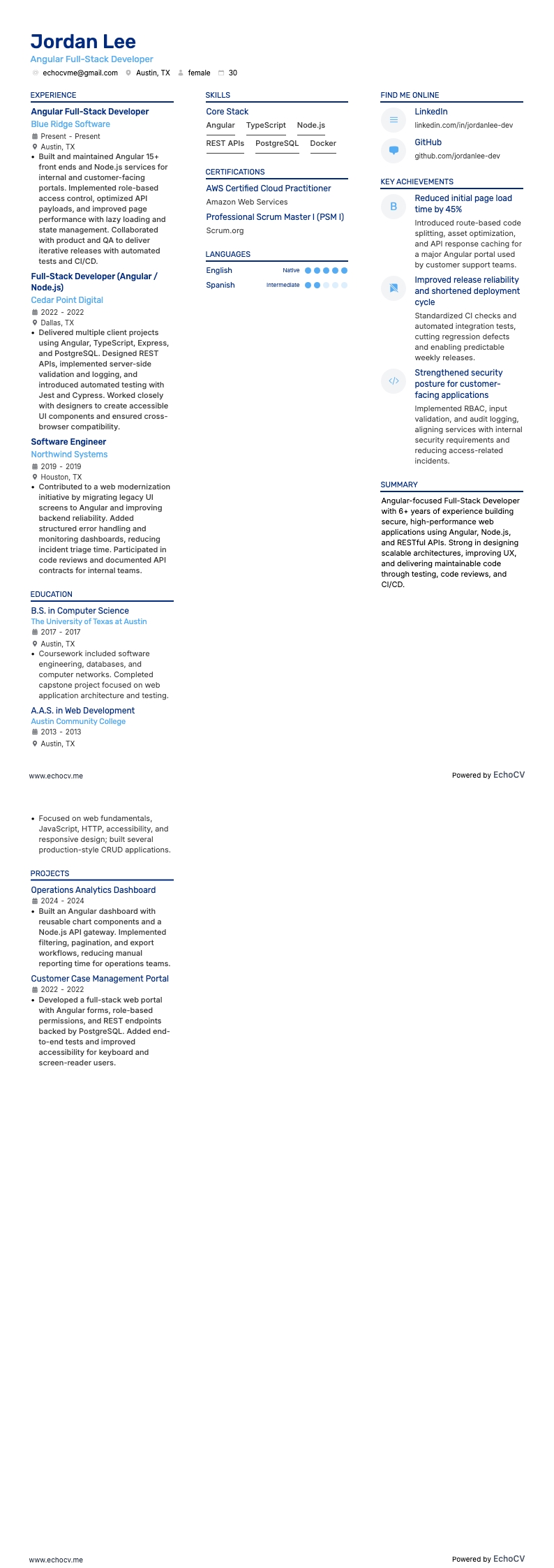
Lập trình viên Full-Stack Angular example resume
Lập trình viên Full-Stack Angular

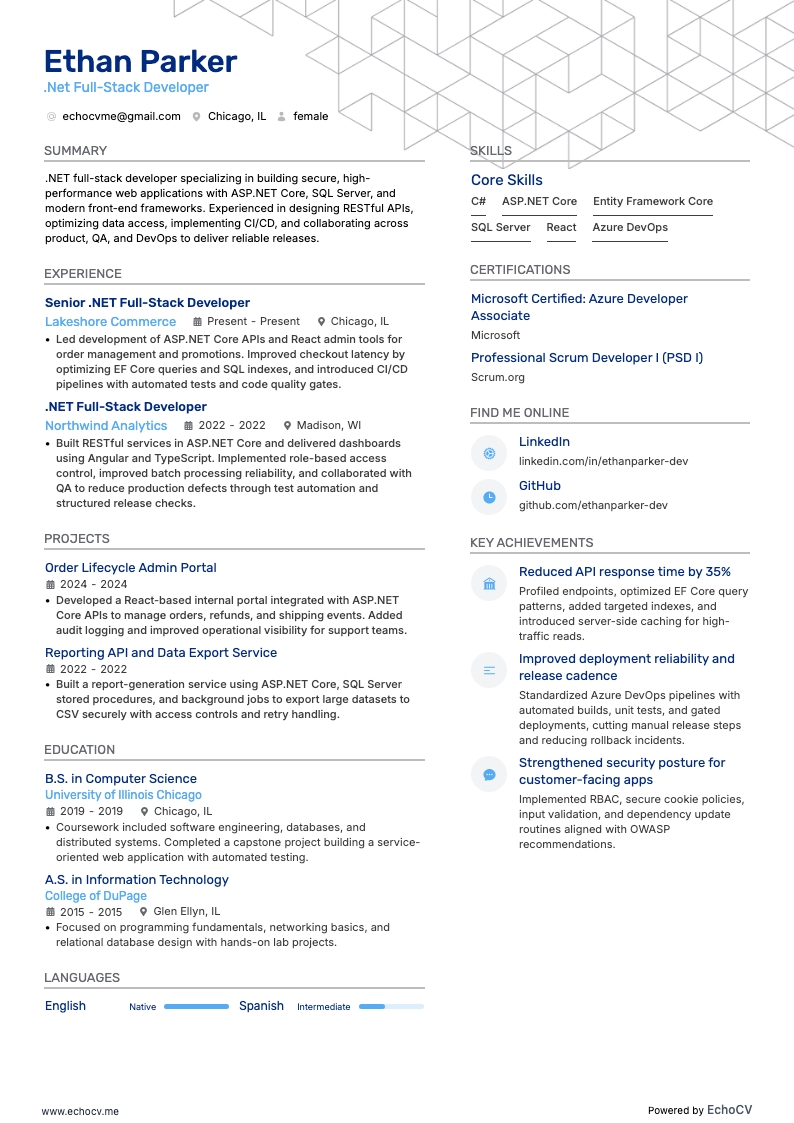
Lập trình viên full-stack .Net example resume

Lập trình viên full-stack .Net

Full-stack developers work at the crossroads of design and infrastructure, building products that run smoothly from concept to launch. You’re used to switching between front-end polish and back-end logic, but capturing that range on a resume is another challenge.

Recruiters don’t just want a list of frameworks and tools—they need to see how your skills translate into results. Too often, resumes get buried in technical detail and miss the bigger picture—apps launched, performance improved, teams aligned.

This guide will show you how to present the full stack of your impact so hiring managers can’t miss it.

Key takeaways

  • Choose a hybrid format to showcase both your skills and career progression. Go functional if you’re just starting out.

  • Organize sections logically—skills, projects, and achievements should be easy to scan alongside work history.

  • Always quantify impact (uptime, load time, user growth) rather than listing duties.

  • Weave soft skills into your summary or experience bullets.

  • Use Echocv’s tools like the Resume Checker and Tailoring Tool to refine structure and align your resume with each job ad.

Ready to deploy your own career story? Explore these full-stack developer resume examples built to match different roles and goals.

How to choose the best full-stack developer resume format

The best tech resumes don’t just show what you know—they show how you’ve applied it. For full-stack developers, that means choosing a format that makes both your technical range and the results of your work easy to spot.

Recruiters need to see the throughline: the projects you’ve owned, the value you’ve delivered, and how your skills stack up for the role at hand. The right format shouldn’t leave anyone guessing about your capabilities—not even non-tech recruiters.

Which resume format should a full-stack developer use?

The combination (hybrid) format is your best bet as a full-stack developer. It puts your technical skills front and center while leaving room to highlight projects, results, and career growth. That balance makes it easy for recruiters to scan for core competencies without losing sight of the bigger picture.

99% of the time, you should choose the combination resume. This format is a fit for almost any candidate applying for almost any IT job.

Baron Fendler, author of How to Write an Amazing IT Resume

If you’re just starting out as a full-stack developer, the functional format can be a smart alternative. Instead of spotlighting limited work history, it pushes your skills, projects, and training to the forefront.

For someone fresh out of a bootcamp or with strong personal projects but no professional titles yet, this format helps you prove you can code, collaborate, and deliver, even if you haven’t held the job title before.

What sections should go on a resume for full-stack developers?

In а hybrid resume, a full-stack developer with more than two years of experience might want to organize their sectionslike so:

  • Resume header (name, title, contact info): Keep it clean and professional so recruiters know exactly who you are and how to reach you.
  • Summary: A short snapshot that highlights your technical range and the business value you’ve delivered.
  • Skills section: Split into front-end and back-end tools so your technical breadth is obvious at a glance.
  • Work experience: Focus on achievements tied to projects, collaboration, and measurable results—not just coding tasks.
  • Education: List your degree or bootcamp training, keeping it brief and to the point.
  • Certifications: Extra proof of expertise—cloud platforms, security, or framework-specific credentials can add weight.

Not sure if your resume structure works? Run it through Echocv’s free Resume Checker and get instant feedback.

Let’s break down each section so you know exactly what to include and what to leave out.

How to write your full-stack developer resume experience

Your experience section should prove you can build, launch, and optimize products that make a difference. Recruiters want evidence of scale, tools, and measurable results.

Keep the structure clear, then back it up with data. Include:

  • Job title and company: Be specific about your level (Junior, Mid, Senior) and give context on the company, whether it’s a startup, agency, or large enterprise.
  • Dates of employment: Use a consistent date formatting style.
  • Location: Add it if it helps highlight your remote setup or willingness to relocate.
  • Up to five bullets: Spotlight scope, tools and frameworks, collaboration, and measurable successes in three to five bullet points.

Look at a well-structured example:

Good example of a full-stack developer experience section

Full-Stack Developer

Stripe Inc. | San Francisco, CA

Jan 2023 – June 2025

  • Architected and deployed a microservices-based payments API using Node.js and Express, handling 2M+ transactions monthly with 99.98% uptime.
  • Introduced serverless functions (AWS Lambda) to offload batch jobs, reducing processing time from 4h to 30m (≈ 87% faster).
  • Built front-end dashboards in React + Redux, improving load times by 45%.
  • Implemented CI/CD pipeline with Docker + GitHub Actions, slashing deployment windows from 60 min to 6 min.
  • Mentored 4 junior engineers in code reviews and architecture decisions, reducing bug rate by 30% across the team.

What makes this entry strong is how it ties every responsibility to a clear metric, showing both technical depth and business impact.

Now, let’s look at how you can tailor your own work history section so it speaks directly to the job description in front of you.

How to tailor your full-stack developer resume experience

Tailoring your resume is about proving you’re the right developer for this role, not just any role. Tech stacks vary wildly between companies, so showing that you’ve already worked with the same frameworks, deployment methods, or product scale makes you stand out immediately.

Here’s how to do it:

  • Match the stack: If the posting calls for React, Node.js, and PostgreSQL, make sure those tools appear in your bullets (if you’ve actually used them, of course).
  • Mirror the product type: Highlight e-commerce builds, SaaS platforms, or payment systems if that’s what the company is hiring for.
  • Show scale: Emphasize metrics related to keywords like user growth, response times, or system uptime. This proves you’ve handled challenges at the right level.
  • Weave in soft skills: If the ad stresses communication or mentorship, show it in context (e.g., “partnered with designers to cut feature delivery time by 20%” or “mentored 3 junior developers through code reviews”).
  • Reflect collaboration style: If they mention Agile, pair programming, or cross-functional squads, call out your experience in the same setup.

Now, let’s see how a generic bullet can be reshaped into one tailored for a full-stack role.

Resume tailoring examples for full-stack developers

Job description excerptUntailored bulletTailored bullet
Lead the development and implementation of enterprise-class websites and information systems.Worked on company website projects.Led the end-to-end development of an enterprise e-commerce platform using React and Node.js, scaling to 500K+ monthly users with 99.9% uptime.
Build software using agile methodologies with iterative development cycles informed by user feedback.Participated in a few agile projects.Built and shipped new features in 2-week sprints, collaborating with designers and PMs; integrated user feedback that boosted adoption by 18%.
Proven ability to multitask and prioritize in a fast-paced environment with changing priorities; adaptable to change and a quick learner.Handled multiple tasks on different projects.Juggled 4 concurrent microservice deployments across AWS, quickly adapting to shifting priorities and cutting release delays by 30%.

With Echocv’s Tailoring Tool, you can customize your resume in seconds—just paste the job ad, and it suggests matching experience entries you can fine-tune with your own numbers.

How to quantify your experience on a full-stack developer resume

Speaking of numbers, they give your resume credibility. Every strong bullet follows the STAR method (situation–task–action–result), and it’s the results recruiters zero in on. Show the scale of what you built, the performance gains you delivered, or the user impact your work created.

For full-stack and DevOps-heavy roles, quantification might look like this:

Examples of how to quantify project manager achievements on your resume

How to quantifyExample bullet point
Show performance improvements in the applications you built.“ Optimized React components and database queries, reducing average page load time by 42% across the platform. ”
Highlight uptime or reliability gains after your work.“ Redesigned API architecture, boosting system uptime from 97% to 99.95% and cutting error rates by 28%. ”
Demonstrate scale by referencing user growth or traffic handled.“ Developed microservices in Node.js to support a SaaS product scaling from 50K to 250K active users within one year. ”
Quantify speed of deployments or development cycles.“ Automated CI/CD pipeline with Docker and GitHub Actions, reducing deployment time from 45 minutes to under 5 minutes ”
Show measurable impact of collaboration or user feedback.“ Partnered with designers to rework checkout flow, improving conversion rates by 19% and reducing cart abandonment. ”

For equally sharp, deployment-ready experience entries, try out our Bullet Point Generator.

How to list skills on а full-stack developer resume

A full-stack developer’s skill set is the story of how you turn ideas into working products.

Hard skills show you can code, deploy, and maintain, while soft skills prove you can collaborate, troubleshoot, and adapt when priorities shift. Both belong on your resume, but in different ways: a dedicated skills section makes them easy to scan, while your experience bullets should bring them to life in context.

Technical chops aren’t enough on their own—soft skills are what make a full-stack developer effective on real teams.

Here are the ones recruiters value most:

Simply listing soft skills won’t get you far. They have more weight when woven into your summary or experience sections, backed by real-world examples of how you work with others.

Here’s an experience entry that shows collaboration in action:

Experience
Coordinated with DevOps to implement a CI/CD pipeline, cutting deployment time from 30 minutes to under 5.

Next, let’s see how your formal training can be positioned on your resume.

How to list your certifications and education on your full-stack developer resume

For full-stack developers, both education and certifications can carry weight—but their importance depends on your career stage.

If you’re early in your career, your degree or bootcamp training may do the heavy lifting in showing you’re qualified.

For mid-level and senior developers, certifications often matter more because they prove up-to-date expertise in specific technologies, frameworks, or cloud platforms.

As a rule of thumb:

  • Place education first if you have less than three years of experience.
  • Lead with certifications if you’re established in the field and have credentials that directly match the role (e.g., AWS, Azure, Kubernetes).
Education entry sample

Bachelor of Science in Computer Science
University of Washington | Seattle, WA
Graduated: 2019

  • Focused coursework in Software Engineering, Database Systems, and Web Development.
  • Senior capstone: built a full-stack e-commerce platform (React, Node.js, MongoDB) used by 200+ students.
  • For certifications, list the name, issuing body, and year. Link to the credential if it can be verified online.
  • Only include certifications that are current and relevant to full-stack development.
Certification section sample
  • AWS Certified Developer – Associate
    Amazon Web Services | 2023
  • Certified Kubernetes Application Developer (CKAD)
    Cloud Native Computing Foundation | 2022

Certifications can validate your expertise beyond what a resume bullet can show. Recruiters often look for one or more of these:

Now that the main sections are in place, it’s time to pull them together into a professional summary that makes your resume instantly clear and compelling.

How to write your full-stack developer resume summary

Your summary is the headline of your career—the part recruiters scan first to decide if they should keep reading.

For full-stack developers with more than three years of experience, it’s about showing the blend of technical breadth and real-world impact you bring to a team.

A strong summary should:

  • State your current level (e.g., Senior Full-Stack Developer) and years of experience in building end-to-end solutions.
  • Highlight the scale and type of systems you’ve worked on—high-traffic SaaS, e-commerce platforms, or enterprise-grade apps.
  • Call out the core stack you specialize in (e.g., React, Node.js, Python, AWS, PostgreSQL) to match the role’s requirements.
  • Quantify achievements that matter in tech: user growth supported, latency reduced, uptime maintained, or deployments accelerated.
  • Demonstrate how you’ve collaborated with designers, DevOps, or product managers to ship features faster or improve user experience.

Look at a good example:

Example summary

“Senior Full Stack Developer with 7+ years of experience building and scaling SaaS platforms and e-commerce systems. Skilled in React, Node.js, and AWS, with a track record of reducing API latency by 35% and supporting applications used by 1M+ monthly users. Adept at working across product, design, and DevOps teams to deliver features faster and improve customer experience.”

This professional statement balances technical depth with measurable outcomes. It shows the stack, the scale, and the impact—all in just a few lines.

Want a summary that hits the same notes? Try Echocv’s Summary Generator to craft one that highlights your strengths in seconds.

Not every full-stack developer comes with years of experience—and that’s okay. If you’re just starting out, your resume can still show you have the skills and mindset to succeed.

How do I write a full-stack developer resume with no experience?

Even without professional titles on your resume, you can still prove you’ve got the skills to contribute. The key is to shift the focus from formal work history to projects, training, and transferable experience.

Here’s what to include:

  • Projects: Spotlight personal, bootcamp, or open-source work that shows you can build and ship full applications.
  • Training: List your degree or bootcamp training, and add relevant coursework if it reinforces your expertise.
  • Certifications. Place prominently any cloud or framework-specific credentials to establish credibility early on.
  • Volunteer work or internships: Emphasize teamwork, problem-solving, or client interaction.
  • Professional statement: A short 2–3 sentence intro that says who you are, what you’re good at, and how your career goals align with the company. You can label it “Profile” or “Summary” instead of “Objective” for a more modern feel.

Tóm tắt

Use a functional resume to put your skills front and center. Lead with a strong skills section that showcases your stack (languages, frameworks, databases, cloud tools), then back it up with projects and any experience you have.

MẸO CHUYÊN GIA

If you’re light on experience, stick to a single-column template. It spreads your content evenly across the page, making your resume look more substantial without drawing attention to what’s missing.

Frequently asked questions about full-stack developer resumes and job applications

Here are some common questions full-stack developers have when writing their resumes and how to approach them.

What’s the best resume layout for developers with project-heavy backgrounds?

A two-column layout is a smart choice. It allows you to keep projects and work experience together in the main column, while using the second column for skills, certifications, and extras. This way, your projects get the visibility they deserve without making the page feel uneven or sparse.

Should I include a cover letter if the job ad doesn’t ask for one?

If the posting explicitly says “resume only,” respect it. If nothing is mentioned, when you’re emailing your application, you can use a short e-note in the body of the email to highlight one or two key points—without attaching a full cover letter.

How can I show salary readiness without listing numbers?

You can hint at your market value by showcasing certifications, quantified achievements, and experience with high-demand stacks (React, Node.js, AWS). Recruiters know what those skills are worth.

Do full-stack developers need certifications to land a role?

Not always, but relevant ones (AWS, Kubernetes, Node.js) can help you stand out, especially if you’re early in your career or moving into cloud-heavy environments.

How can I show career progression as a developer?

Even if your titles don’t change much, emphasize growing project scope, new frameworks mastered, or added leadership responsibilities like mentoring juniors.

Is it okay to list GitHub or portfolio projects as experience?

Absolutely—if you’re short on professional roles, projects are your proof of skill. Just make sure they’re polished, documented, and relevant to the stack the company uses.

Should I include freelance work on my resume?

Yes, if it’s relevant. A freelance project that demonstrates end-to-end development, collaboration, or deployment at scale can be just as valuable as a formal role.

How do I show remote collaboration skills?

Highlight tools (Slack, Jira, GitHub, Zoom) and results (delivered features across distributed teams, coordinated sprints in different time zones). Recruiters want proof you can thrive in a modern team.

In conclusion

Your resume isn’t just a catalog of frameworks and jobs—it’s proof you can take an idea and ship it into the world. Show the stack, show the impact, and don’t let your results hide behind jargon. Whether you’re new to the field or scaling into senior roles, the goal is the same—make it impossible for a recruiter to miss what you bring to the table.

Ví dụ CV Lập trình viên Full-Stack

Khám phá thêm các ví dụ và hướng dẫn CV Lập trình viên Full-Stack để xem điều gì phù hợp với cấp độ kinh nghiệm hoặc vai trò của bạn.

Theo kinh nghiệm

Lập trình viên Full-Stack chính

Xem trước CV Lập trình viên Full-Stack chính

Lập trình viên Full-Stack chính

Xem trước CV Lập trình viên Full-Stack chính

Lập trình viên Full-Stack Cấp cao

Xem trước CV Lập trình viên Full-Stack Cấp cao

Lập trình viên Full-Stack cấp trung

Xem trước CV Lập trình viên Full-Stack cấp trung

Lập trình viên Full-Stack Junior

Xem trước CV Lập trình viên Full-Stack Junior

Lập trình viên full-stack mới vào nghề

Xem trước CV Lập trình viên full-stack mới vào nghề

Ví dụ CV Lập trình viên Full-Stack

Khám phá thêm các ví dụ và hướng dẫn CV Lập trình viên Full-Stack để xem điều gì phù hợp với cấp độ kinh nghiệm hoặc vai trò của bạn.

Theo vai trò

Lập trình viên Full-Stack MEAN/MERN

Xem trước CV Lập trình viên Full-Stack MEAN/MERN

Lập trình viên Full-Stack React

Xem trước CV Lập trình viên Full-Stack React

Lập trình viên full-stack đám mây

Xem trước CV Lập trình viên full-stack đám mây

Lập trình viên Full-Stack AI/ML

Xem trước CV Lập trình viên Full-Stack AI/ML

Lập trình viên Python full-stack

Xem trước CV Lập trình viên Python full-stack

Lập trình viên Full-Stack Java

Xem trước CV Lập trình viên Full-Stack Java

Lập trình viên Full-Stack Angular

Xem trước CV Lập trình viên Full-Stack Angular

Lập trình viên full-stack .Net

Xem trước CV Lập trình viên full-stack .Net